Thursday, December 25, 2025
Home Blog Page 3105

Bolton’s Removal to Give Iran, US Breathing Room for Diplomacy

Image by The Transnational

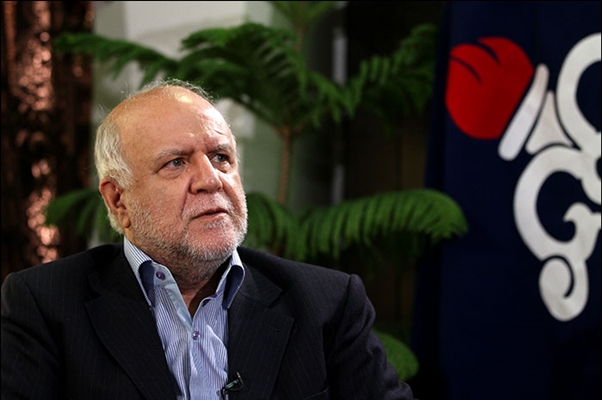
Nosratollah Tajik has, in an interview with the Entekhab news website, weighed in on the reasons behind and the repercussions of the dismissal of US National Security Advisor John Bolton.

He says Bolton’s dismissal can create some room in the diplomacy arena; however, it does little to make a meeting happen between Donald Trump and Hassan Rouhani.

“The supposition that Bolton’s dismissal is a positive signal to Iran for talks seems unrealistic and wrong,” he added.

According to Tajik, Bolton’s thoughts were focused on violence, bellicosity and extremism, and that he has always banged the drum for war.

“Therefore, his dismissal can be evaluated as fresh air for diplomacy,” he added.

He further noted the major reason for the removal of Bolton can be sought in the differences of opinion between him and Trump.

“As it is evident from Trump’s tweet, Bolton and Trump have had serious differences of opinion about global security issues such as North Korea, Venezuela, Iran, etc.,” said Tajik.

“Two key and determining players in the US foreign policy are the White House (advisors and Department of Homeland Security staff) and State Department, but it seemed that the State Department had been sidelined from ongoing developments, and the White House circle had assumed the major role,” said the analyst.

“The trend of equations in recent developments shows that Secretary of State Mike Pompeo has got closer to Trump. Pompeo listens to Trump more and tries not to irritate him. As a result, we witness the balance tipped in favour of Pompeo,” says Tajik, a former Iranian ambassador to Jordan.

“The reality is that with the dismissal of Bolton, the State Department will assume a [more active] role in determining the United States’ national security strategy and diplomacy,” he added.

“Still, the dismissal of the US national security advisor can be evaluated mostly within the context of having different tastes, so we cannot speak of a change in the United States’ general foreign policy toward international issues,” said the analyst.

“Bolton was the ideological representative of members of a current who are influential and have a role in the US foreign policy apparatus at this juncture,” the expert noted.

“The US foreign policy is determined by institutions, not people; so it is unlikely that a general strategy is set for the US foreign policy,” he said.

Iran, China to Enhance Military Relations: Top General

General Baqeri, who is in China on a three-day visit, told reporters that Tehran and Beijing will form a joint technical and industrial commission, which is to hold its meeting in the Chinese capital in the near future.

Education and training, further exchange of professors and university students, and the participation of a Chinese fleet in the joint trilateral naval drills by Iran, China and Russia in the Sea of Oman will be discussed in the meeting of the commission, he added.

According to Baqeri, Iran will shared with Chinese university students the valuable experiences that its military forces have had in naval battles in defending the country in the Persian Gulf and the Sea of Oman or in the fight against terrorists in Syria and Iraq.

He also pointed to his visit to China’s National Defence University in Beijing, and said that the strategies and stances of the Islamic Republic of Iran on security of different regions and strategic defence topics were elaborated for students of the university and it was agreed that the two sides cooperate on sharing experiences and exchanging university students and professors.

During the three-day trip to China, General Baqeri also visited a naval base and headquarters of maintaining the security of the South Sea.

“The goal of the visit is to develop military cooperation, and peace and stability in the region,” he added.

Iran’s Non-Oil Exports Rise by 136%

A senior industry official says some $12.697 billion worth of non-oil commodities were exported through the customs of the southern Hormozgan province in the five months to August 2019, showing a 136% growth year on year.

“The goods mainly included iron ore, polythene and tar oil as well as mineral and chemical fertilizers, which were exported to China, the United Arab Emirates, Thailand, India, Oman and Ghana,” said Khalil Qassemi, the head of the Industry, Mines and Trade Organization of Hormozgan province.

Enemy Pressure Making Iran Stronger: IRGC Commander

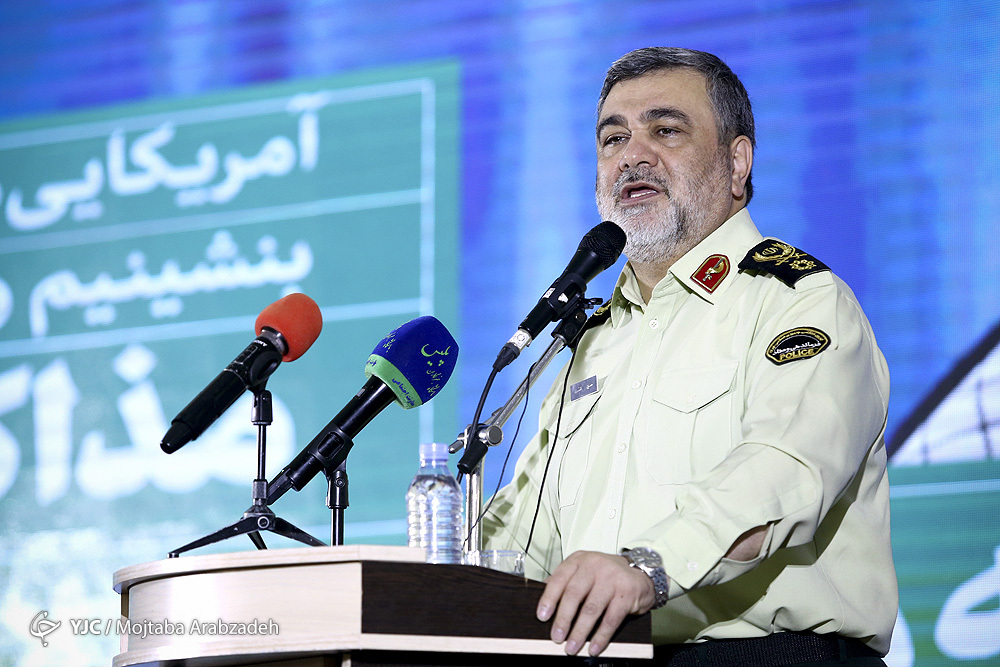
Major General Hossein Salami said the pressure exerted by the enemy will only reinforce Iran’s Islamic revolution, boost the morale and motivation of Iranian people to reconstruct their country, and expedite national progress.

He said the enemy pressure will also make the country safer, more independent and more self-sufficient.

“We are a nation that will never submit to enemy demands under any circumstances because we have willpower, we are powerful and we have a great leader,” said General Salami, the commander of Iran’s Islamic Revolution Guards Corps (IRGC).

“Islam has given us power, dignity, strength, brilliance, security, progress and freedom. We will always remain under the banner of Islam and will continue to move on this path,” he added.
The top general noted that Iran is engaged in an economic war with the enemies, and noted the IRGC will make every effort to protect people against hardships.

He said the IRGC has emerged from within the people.

“The IRGC is from people, with people, and for people in problems and hardships,” he said.

General Salami underlined that the IRGC serves the people without expecting anything in return and is a strong bulwark to defend the people.

He made the remarks during a ceremony to deliver hundreds of newly-built homes to the flood-hit people of Golestan province in northern Iran.

A Look at Iranian Newspaper Front Pages on September 12

A Look at Iranian Newspaper Front Pages on November 19

Aftab-e Yazd:
1- Ali Babacan’s Emergence Price of Erdogan’s Crackdown!
2- Bloomberg: Bolton’s Opposition to Easing Iran Bans Reason for His Removal
3- Macron, Rouhani Agree to Continue Consultations

Iran Aftabe Yazd Daily

Besharat-e Now:
1- Oil Market’s Reaction to Dismissal of Trump’s Anti-Iran Advisor
2- Refusing to Adopt FATF Standards Is Self-Sanctioning

Iran Besharateno Daily

Etemad:
1- Big Loser: Why Bolton Was Fired from White House
2- P5+1 Talks Only If Sanctions Removed: Rouhani in Phone Call with Macron

Iran Etemad Daily

Ettela’at:
1- Talks with US under Sanctions Meaningless: Rouhani to Macron
2- Bolton’s Dismissal Hailed in US, Other Parts of the World
3- Merkel: We’ll Work with Iran on De-Escalation of Tension in Region

Iran Etelaat newspaper

Jomhouri Eslami:
1- Al-Rai: Europe Seeks to Hold Talks between Iran, US in Kuwait
2- Reactions to Bolton’s Dismissal; Anti-Iran Background of His Successor
3- Indian-Occupied Kashmir: The Unheard Screams
4- Netanyahu Runs Away for Fear of Palestinian Rockets

Jomhouri Eslami daily

Kayhan:
1- John Bolton Is Past Its Expiry Date, Thrown into Trash Bin by Trump
* Reactions to Dismissal of US National Security Advisor
2- Washington Examiner: Trump’s Maximum Pressure Policy Collapsing
3- Axis of Resistance Progressing While Enemy Falling Down
* West Asia Map 180 Degrees Opposite of What US Wanted

Kayhan daily

Mardom Salari:
1- Government OK with Women’s Presence at Stadiums: Spokesman
2- Iran to Continue Reducing Commitments If Europe Fails to Fulfil Obligations
3- Mideast Breathes a Sigh of Relief after Removal of Trump’s Most Hawkish Friend
4- Scotland Court Rules against Suspension of UK Parliament

Mardom Salari daily

Iran Dismisses Arab Quartet Committee’s ‘Hackneyed’ Claims

A file photo of a 2018 meeting of the Arab Quarter Committee, which wrapped up with an anti-Iran statement

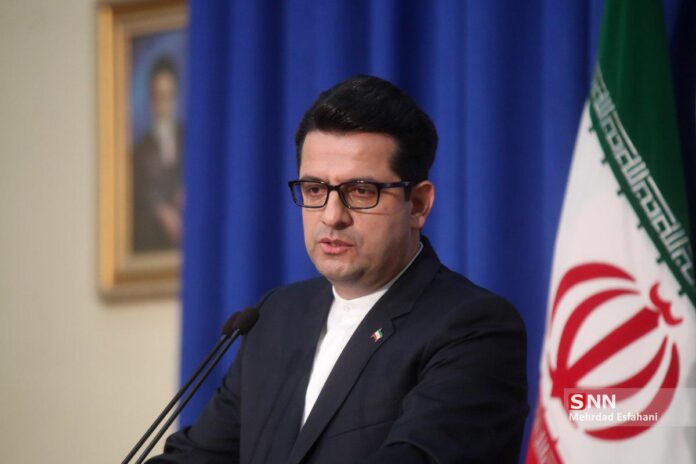
In a Thursday statement, Mousavi dismissed the “worn-out and rejected” accusations contained in the final declaration of the 12th meeting of the Arab Quartet Committee in Cairo against the Islamic Republic of Iran.

He said futile attempts by some Arab countries in making baseless allegations amount to insistence on pursuing the same past political mistakes.

“The rehash of groundless accusations against [Iran’s] eternal ownership of its three islands in the Persian Gulf and the blame game by some Arab countries whose regional policies have failed are, in the Islamic Republic of Iran’s view, the reason behind their failure to understand the realities of the region and the world,” the spokesman added.

“It is regrettable that some [countries], instead of relying on the power of Persian Gulf states, make divergent, unfounded and undocumented allegations about the security of the region and welcome foreigners with their desperation,” Mousavi noted.

He said insistence on useless past mistakes at a time when the region needs wisdom and realism is tantamount to moving on the wrong path, which will only increase problems in the region.

In a meeting in Cairo, the Arab Ministerial Quartet Committee issued a statement, accusing Iran of supporting attacks by Yemen’s Ansarullah against Saudi targets, and interfering in the internal affairs of Arab countries.

The statement also contested Iran’s ownership of the three Persian Gulf islands of Greater and Lesser Tunbs and Abu Musa.

The meeting was attended by Saudi Arabia, Bahrain, the United Arab Emirates, Egypt and Ahmed Aboul Gheit, the secretary general of the Arab League.


How Iran Can Benefit from Bolton’s Dismissal

Foad Izadi has, in an interview with the Entekhab daily, weighed in on the reasons behind the dismissal of Bolton, and its possible benefits for Iran.

The expert says Bolton’s dismissal can be good news for Iranians.

“The reality is that within the US government, there was no one more hardline than him in opposition to Iran, and now, the inefficiency of Bolton’s anti-Iran policies may prompt the person replacing him to move toward reforming his policies,” said the analyst.

Elsewhere in his interview, Izadi expressed his opinion about how much of a positive signal Bolton’s dismissal can be for US-Iran talks.

“So far, there has been no official more hardline than Bolton with regards to Iran,” he said.

“Based on a report by New Yorker, the concern of this American politician over the past 20 years has been to topple the Islamic Republic of Iran,” Izadi noted.

“There is no official in the United States who has more animosity toward Iran than Bolton does. Now, the same person who claimed Iran will not survive to see its 40th anniversary, didn’t [remain in office enough to] see his second anniversary of becoming the White House national security advisor,” he added.
“The issue of having a meeting with [Iranian President Hassan] Rouhani is another issue, and it somehow seems incorrect to link it to the dismissal of the US national security advisor,” he said.

The analyst further noted that the major reason behind Bolton’s removal is the inefficiency of the consultations he gave to US President Donald Trump. Moreover, the most important case handled by Bolton was that of Iran.

“Bolton had said the Islamic Republic of Iran would not [survive to] see its 40th anniversary, and had evaluated the US withdrawal from the JCPOA as a reason to make Tehran retreat and give concessions,” said Izadi.

“Bolton had predicted that either Iran’s political system would be toppled, or the country would agree to give major concessions,” added the analyst.

“He even called for military action in dealing with Iran and evaluated such a move as being very easy; however, the ongoing developments, especially Iran’s downing of a US drone, showed all options that he had in mind, even military action, were wrong,” the expert said.

According to Izadi, Bolton’s policies vis-à-vis Venezuela also failed. Bolton believed US pressure would lead to the ouster of Venezuelan President Nicolas Maduro and bring Western-backed Juan Guaido to power, but his predictions failed to come true.

All these developments, said the analyst, led Trump to arrive at the conclusion that Bolton was not efficient enough as a national security advisor, which is an important position in the US.

Trump Considering French Plan to Give Iran $15bn Credit Line

The Daily Beast, an American news and opinion website, quotes four sources with knowledge of Trump’s conversations with Macron as saying that Trump has hinted he is actively considering a French plan to extend a $15 billion credit line to the Iranians if Tehran comes back into compliance with the nuclear deal.

“Two of those sources said that State Department officials, including Secretary Mike Pompeo, are also open to weighing the French proposal, which would effectively ease the economic sanctions regime that the Trump administration has applied on Tehran for more than a year,” the report said.
The deal put forth by France would compensate Iran for oil sales disrupted by American sanctions.
The $15 billion credit line would be guaranteed by Iranian oil. In exchange for the cash, Iran would have to come back into compliance with the nuclear accord it signed with the world’s major powers in 2015.

The report claims Tehran would also have to agree “not to threaten the security of the Persian Gulf or to impede maritime navigation” in the area. Lastly, Tehran would have to commit to regional Middle East talks in the future.”

On Wednesday, Bloomberg cited sources, saying that Trump earlier this week, on Monday, discussed easing sanctions on Iran with an aim to secure a meeting with Iranian President Rouhani, which caused National Security Adviser Bolton to argue against it and eventually resign.

Iran Exporting Biopharmaceuticals to Russia, Turkey, Malaysia

Iranian knowledge-based enterprises have made such great progress in the biotechnology, particularly in the medical sector, that not only have met the domestic demands, but also export biopharmaceuticals to other countries, said Mostafa Qanei, the secretary of Biotechnology Development Headquarter at the Iranian Vice-Presidency for Science and Technology.

He noted that the Iranian biopharmaceuticals are being exported to major customers like Russia, Iraq, Syria, Pakistan, Malaysia, and Turkey, adding that plans are underway to transfer the Iranian biopharmaceuticals technology to Argentina.

The biotechnological products made in Iran are worth $1.2 billion, Qanei added, saying efforts are underway to increase that amount with proper planning.

According to the official, biotechnology-related products make up 50 percent of the Iranian knowledge-based companies’ earnings, and 60 percent of the total export of goods produced by those companies.

He finally described biotechnology as a value-creating business, saying it could boost economy in a broad range of fields, such as algae production, bio-agriculture, and biofuels technology.

Biotechnology is known as one of the state-of-the-art technologies in 21st century and is among the seven key industries which will determine the socioeconomic destiny of communities in the coming decades.

According to the data released by the Iranian Vice-Presidency for Science and Technology, Iran ranked 14th in the world in 2015 in terms of the number of articles published in the field of biotechnology in indexed journals.

Also, Iran’s share of biotechnology articles in 2015 as compared to regional countries and the world is 27.22% and 1.27%, respectively.

The Iranian government plans to use biotechnology to meet the country’s strategic demands for food, public health, environment, and energy, while exploiting the technology’s capabilities as a green industry for environmental protection and restoration.

Iran Condemns Netanyahu’s ‘Sinister’ Annexation Plan

Iran Says What IAEA Wants to Access “Not A Site”

In a statement on Wednesday, Seyyed Abbas Mousavi said while certain Arab countries, who claim to be leading the Arab world, are dealing with marginal issues, are busy with war and fratricide in Yemen under the aegis of supporters of the Israeli regime, have formed a friendship with the Zionist regime, and have allied themselves with Netanyahu, the infanticidal regime has been given an opportunity to publicize its evil intentions.

“Netanyahu is seeking to win votes for staying in power and proceeding with expansionism and aggression by making allegations against the Islamic Republic of Iran one day, and expressing his sinister intention to annex more parts of Palestine the other day,” Mousavi deplored.

The spokesman also pointed to an upcoming session of the Organisation of Islamic Cooperation (OIC), adding, “The Islamic Republic of Iran would support any collective action by Muslim countries to prevent the continuation of acts of aggression and expansionism of the regime that has usurped Palestine.”

Netanyahu promised on Tuesday to annex the Jordan Valley in the occupied West Bank if he wins next week’s general election, drawing sharp criticism from Middle Eastern countries.

The Jordan Valley and the northern Dead Sea constitute almost 30 percent of the West Bank. Some 65,000 Palestinians and about 11,000 illegal Israeli settlers live in the area.