Wednesday, December 24, 2025
Home Blog Page 3083

Yemen Provides Details of Large Operation against Saudis

Speaking at a press conference on Sunday, Brigadier General Yahya Saree provided details of the Yemeni operation, codenamed God’s Victory, which destroyed several Saudi-led brigades and marked the largest operation by Ansarullah over the past five years.

Almasirah TV quoted the general as saying that the operation had begun on August 15 in various directions at the battlefield in Najran, southwest of Saudi Arabia, and involved various units of the Yemeni Armed Forces who launched “surprise” attacks on the enemy.
Yemen Provides Details of Large Operation against SaudisHe said the Yemeni infiltrators among the enemy forces played a major role in the operation.

Saree noted that the Yemeni forces launched 9 missile attacks during the first phase of the operation to hit the enemy’s military bases and airports, adding that the Yemeni Army’s drone unit also carried out more than 20 operations, one of which targeted a sensitive military center in Riyadh.

Yemen Provides Details of Large Operation against SaudisAccording to the general, the Yemeni Air Defense has forced the Apache helicopters and the fighter jets from the Saudi-led military coalition to leave the operation zone.

During the first phase of the operation, 350 square kilometers of lands were liberated in the area, including a number of military bases, Saree noted, saying more than 500 hostile forces have been killed or wounded in the attacks.

He said three brigades of the Saudi-led coalition were destroyed in the operation, while their weaponry and equipment have been seized as the spoils of victory.

More than 200 hostile forces killed in the operation have lost their lives when fleeing or surrendering themselves amid the aerial attacks by the Saudi-led coalition’s warplanes, he added, noting that the Yemeni forces provided first aid to the enemy’s injured fighters.

The Saudi-led coalition’s fighter jets were trying to prevent their own forces from retreating on the ground and committed “genocide” against the Saudi-sponsored mercenaries by intensifying the airstrikes, the Yemeni general explained.

He further added that more than 2,000 forces of the enemy have been captured in the operation, expressing regret that there are children among the prisoners.

Saree said the enemy had recruited the Yemeni children for fighting wars in various fronts, such as Jizan, Asir and Najran.

Highlighting the large number of light and heavy weapons as well as armored vehicles confiscated in the operation, the spokesman said 15 other armored vehicles of the enemy have been destroyed in the operation.

Saudi Arabia and a number of its regional allies launched a devastating campaign against Yemen in March 2015, with the goal of bringing the government of fugitive former president Abd Rabbuh Mansour Hadi back to power and crushing the Houthi Ansarullah movement.

The US-based Armed Conflict Location and Event Data Project (ACLED), a nonprofit conflict-research organization, estimates that the war has claimed more than 91,000 lives over the past four and a half years.

The war has also taken a heavy toll on the country’s infrastructure, destroying hospitals, schools, and factories. The UN says over 24 million Yemenis are in dire need of humanitarian aid, including 10 million suffering from extreme levels of hunger.

Iranian Mathematician Wins France’s Academic Award

Siamak Yasemi is a faculty member of Mathematics, Statistics and Computer Sciences at the University of Tehran.

He is the first Iranian mathematician who has been elected as a permanent member of the World Academy of Sciences.

The Ordre des Palmes académiques is a national order bestowed by the French Republic to distinguished academics and figures in the world of culture and education.

Originally established in 1808 by Emperor Napoleon as a decoration to honour eminent members of the University of Paris, it was changed into its current form as an order of merit on 4 October 1955 by President René Coty.

In 1866, the scope of the award was widened to include major contributions to French national education and culture made by anyone, including foreigners. It was also made available to any French expatriates making major contributions to the expansion of French culture throughout the rest of the world.

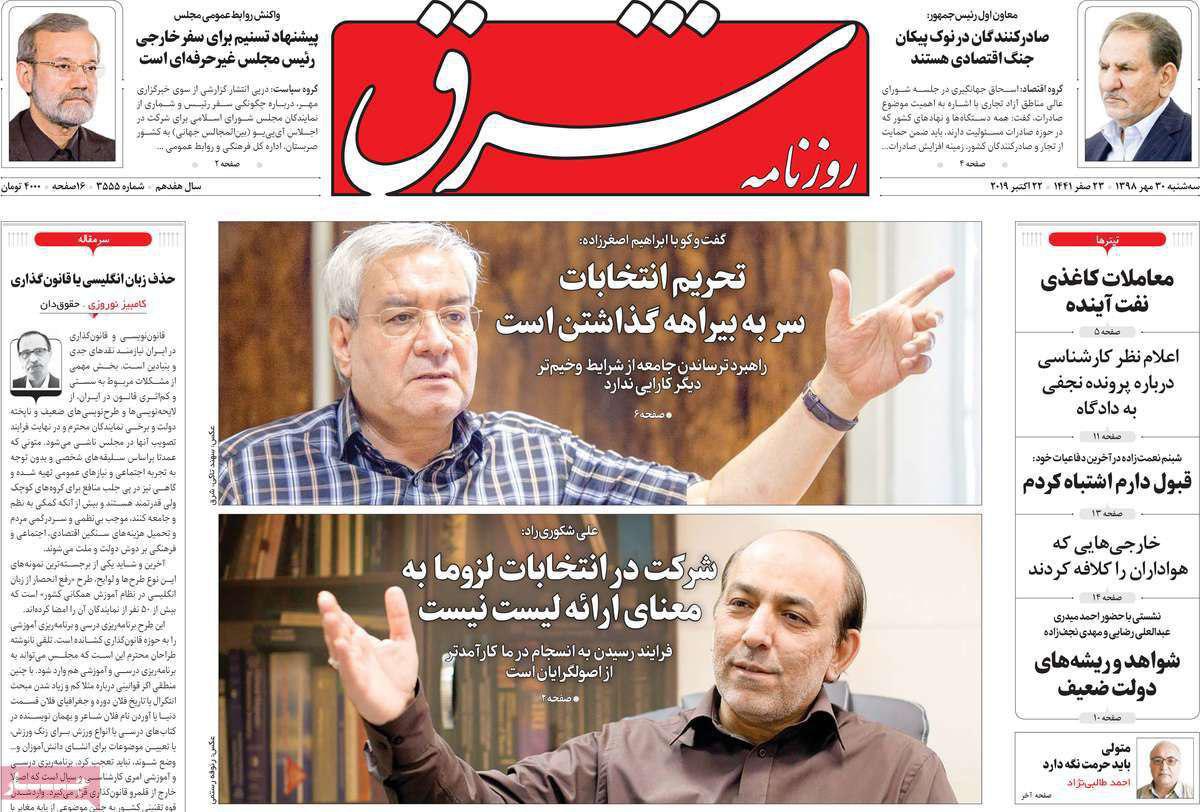
A Look at Iranian Newspaper Front Pages on September 29

A Look at Iranian Newspaper Front Pages on November 19

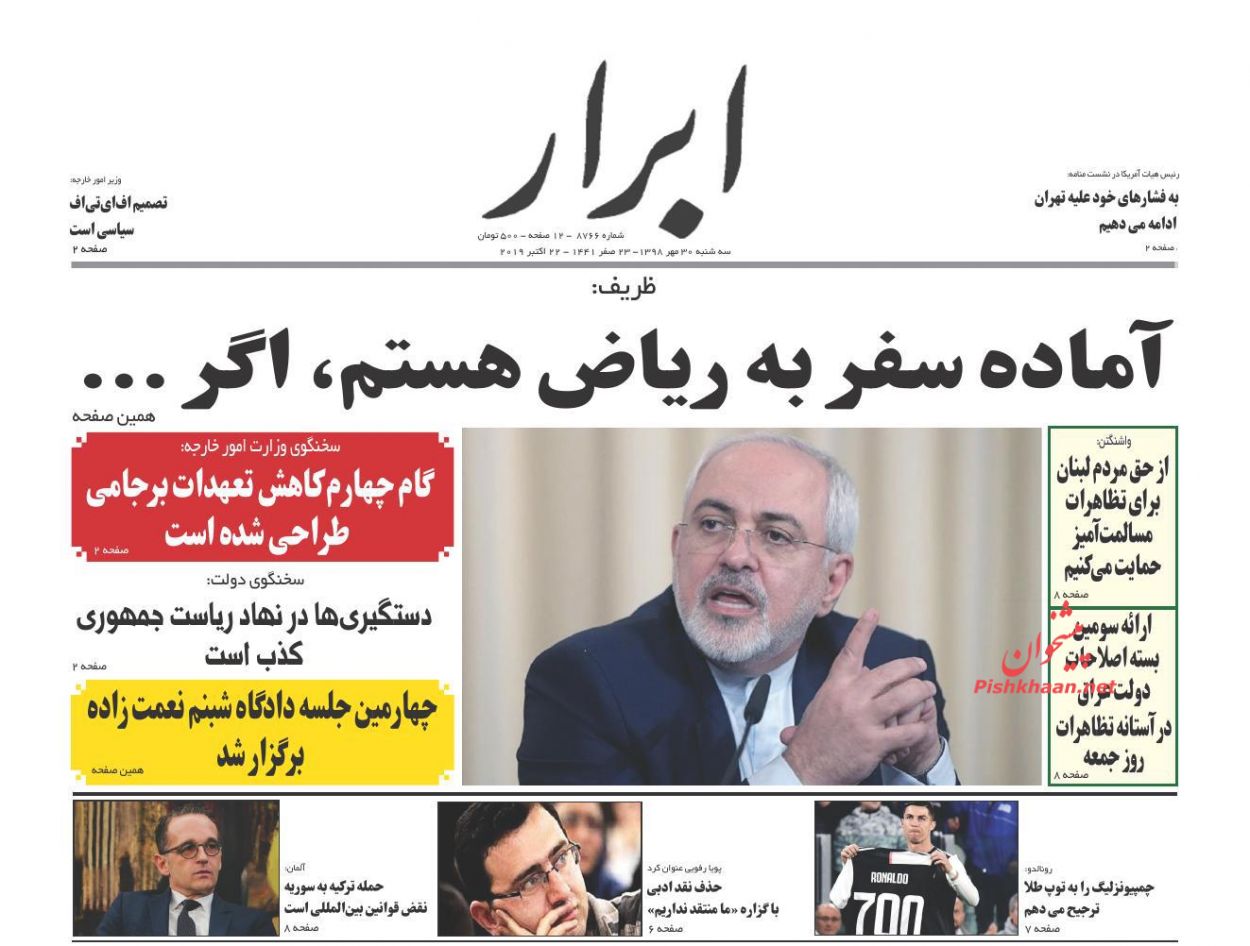
Abrar:
1- Imran Khan Warns about Blood Bath in Kashmir
2- Trump: I Won’t Lift Sanctions for Sake of Talks with Iran

A Look at Iranian Newspaper Front Pages on September 29


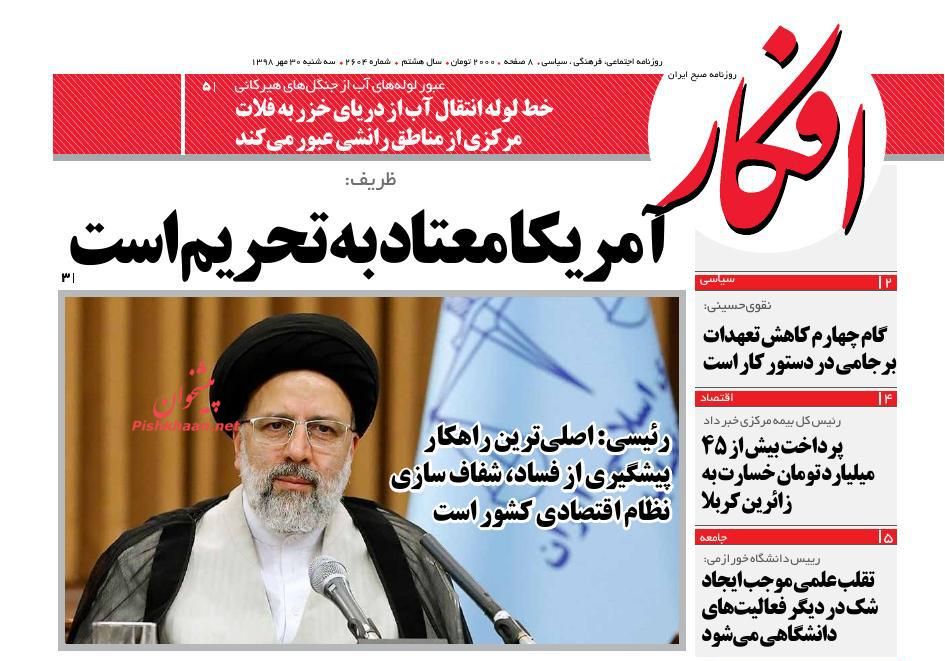
Aftab-e Yazd:
1- It Is Possible to Change Location of UN HQ? Sochi Ready to Host

A Look at Iranian Newspaper Front Pages on September 29


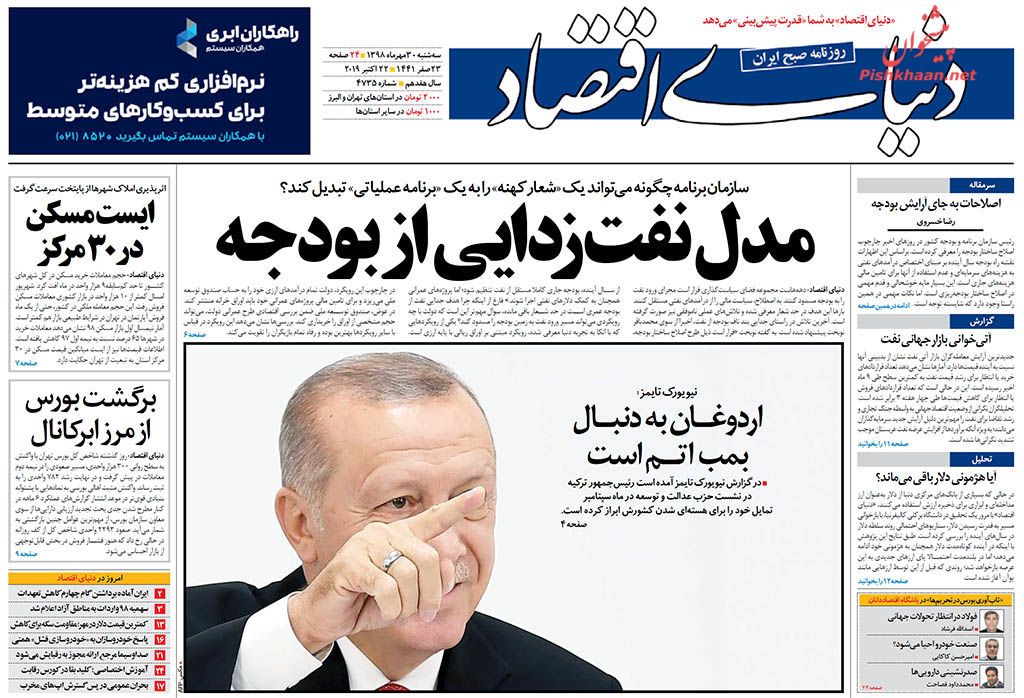
Donya-ye Eqtesad:
1- Baghdad Trying to Mediate between Tehran, Riyadh
* Abdul-Mahdi: The Two Sides Don’t Want War, but Situation Complicated

A Look at Iranian Newspaper Front Pages on September 29


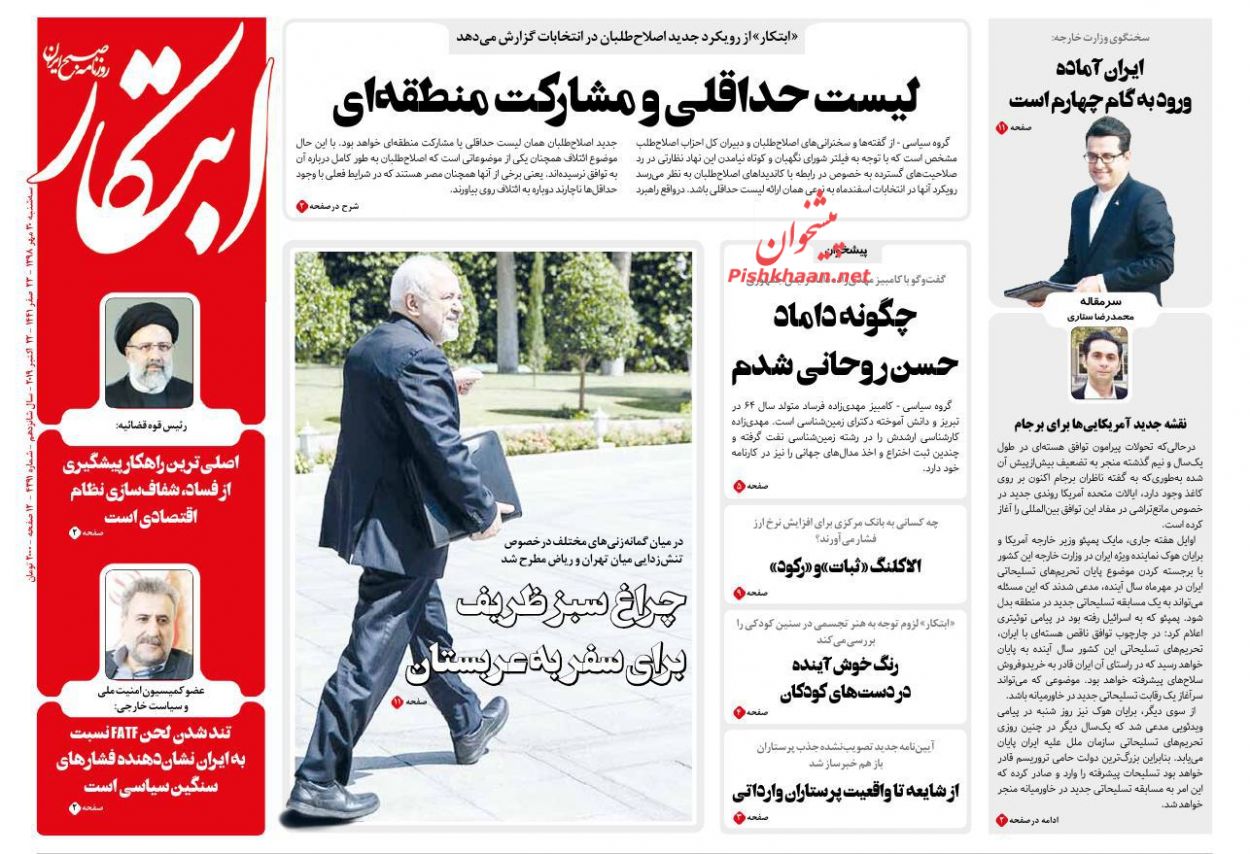
Ebtekar:
1- Elections Held amid Bloodshed: A Report on Afghan Elections

A Look at Iranian Newspaper Front Pages on September 29


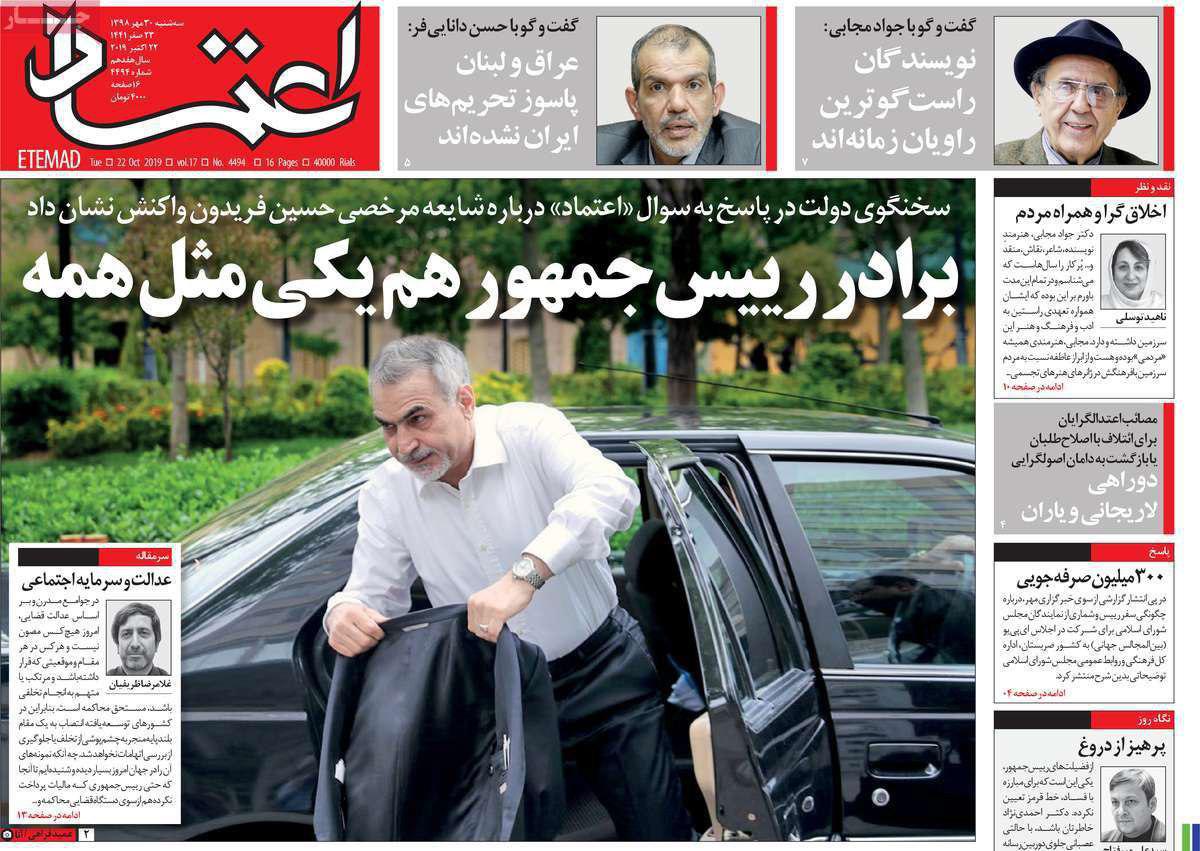
Etemad:
1- Iraq Afraid of Turning into Battlefield
* Iraqi PM to Visit Tehran, Ammar al-Hakim to Meet UAE
2- Hundreds of Saudi Forces Captured in Najran
* Ansarullah: We Implemented Biggest Operation of Yemen War

A Look at Iranian Newspaper Front Pages on September 29


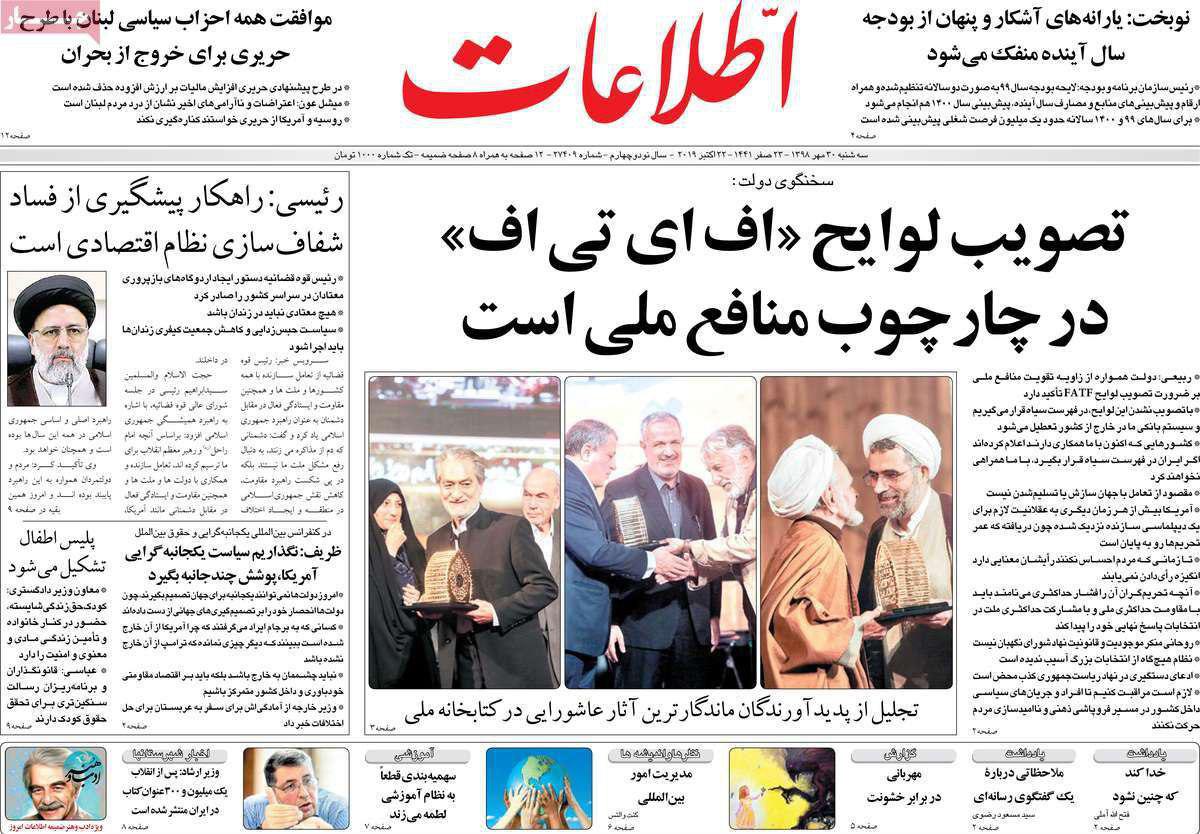
Ettela’at:
1- Increased Requests for Impeachment of Trump after Ukraine, Russia Scandals
2- Iran Slams US Efforts to Change Int’l Rules during ECO Summit
3- Biggest Military Operation of Ansarullah in Saudi Arabia

A Look at Iranian Newspaper Front Pages on September 29


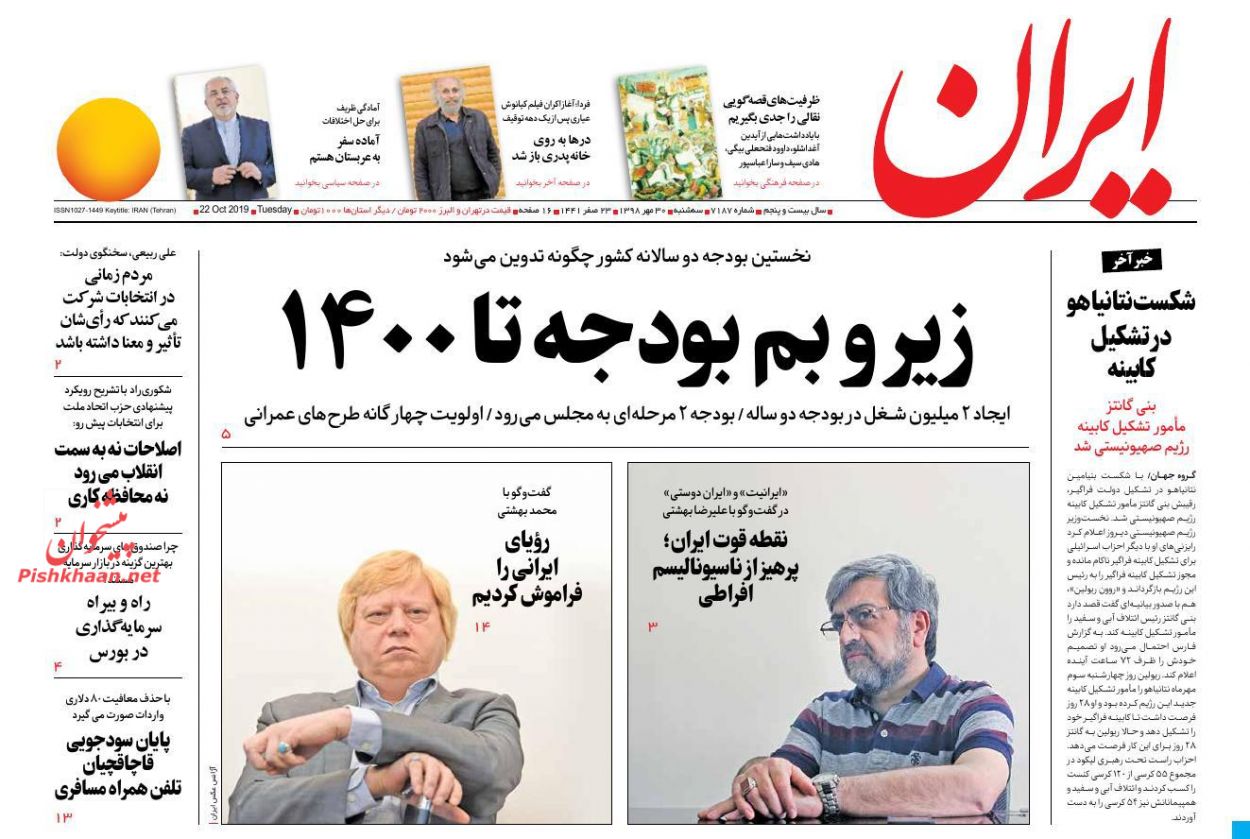
Iran:
1- Women Pioneers of Democracy in Afghanistan
2- National Interaction Must Replace Partisan Competitions: Experts

A Look at Iranian Newspaper Front Pages on September 29


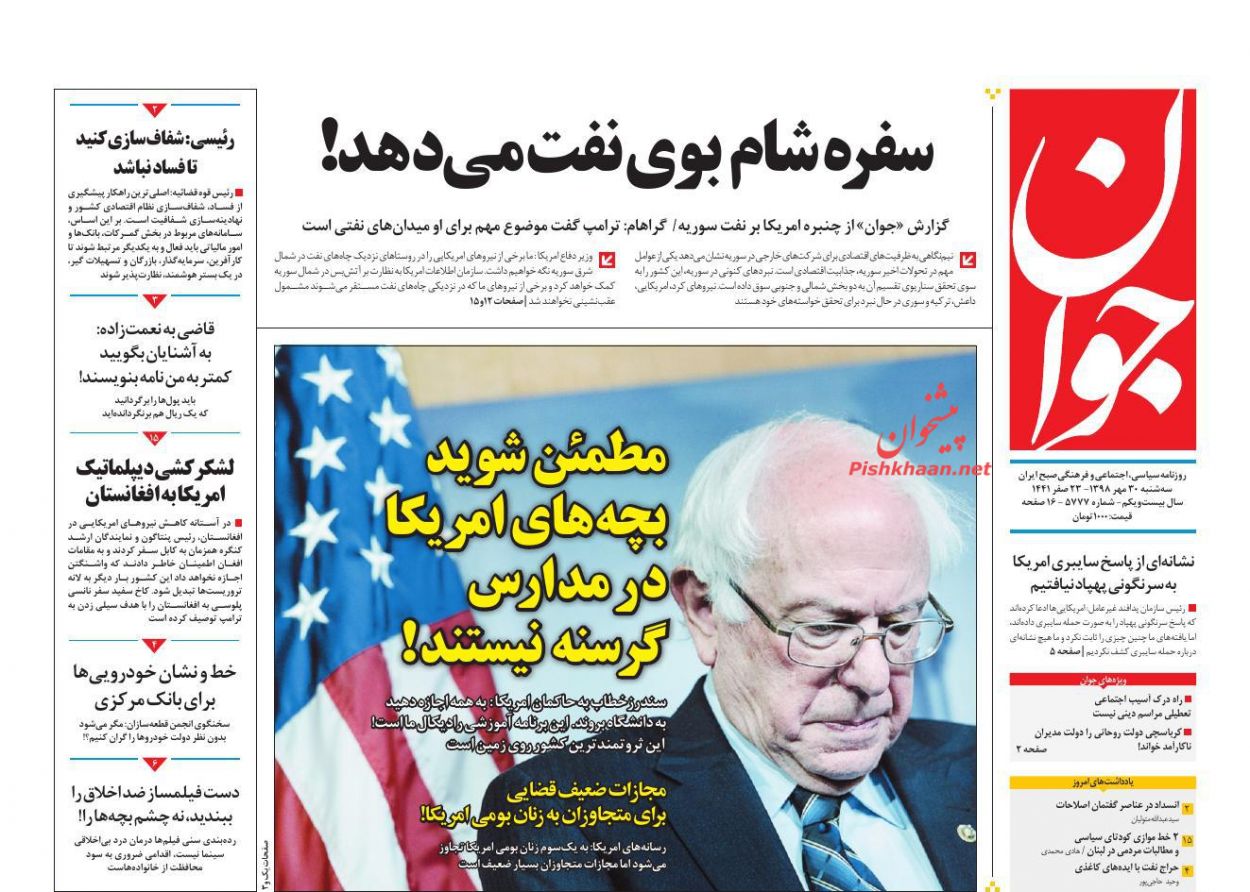
Javan:
1- Ansarullah’s Biggest Conquest
* Yemenis Capture 2,000 Saudi Hirelings, 3 Full Brigades in Biggest Ground Counterattack
2- Trump’s Impeachment Gains Momentum

A Look at Iranian Newspaper Front Pages on September 29


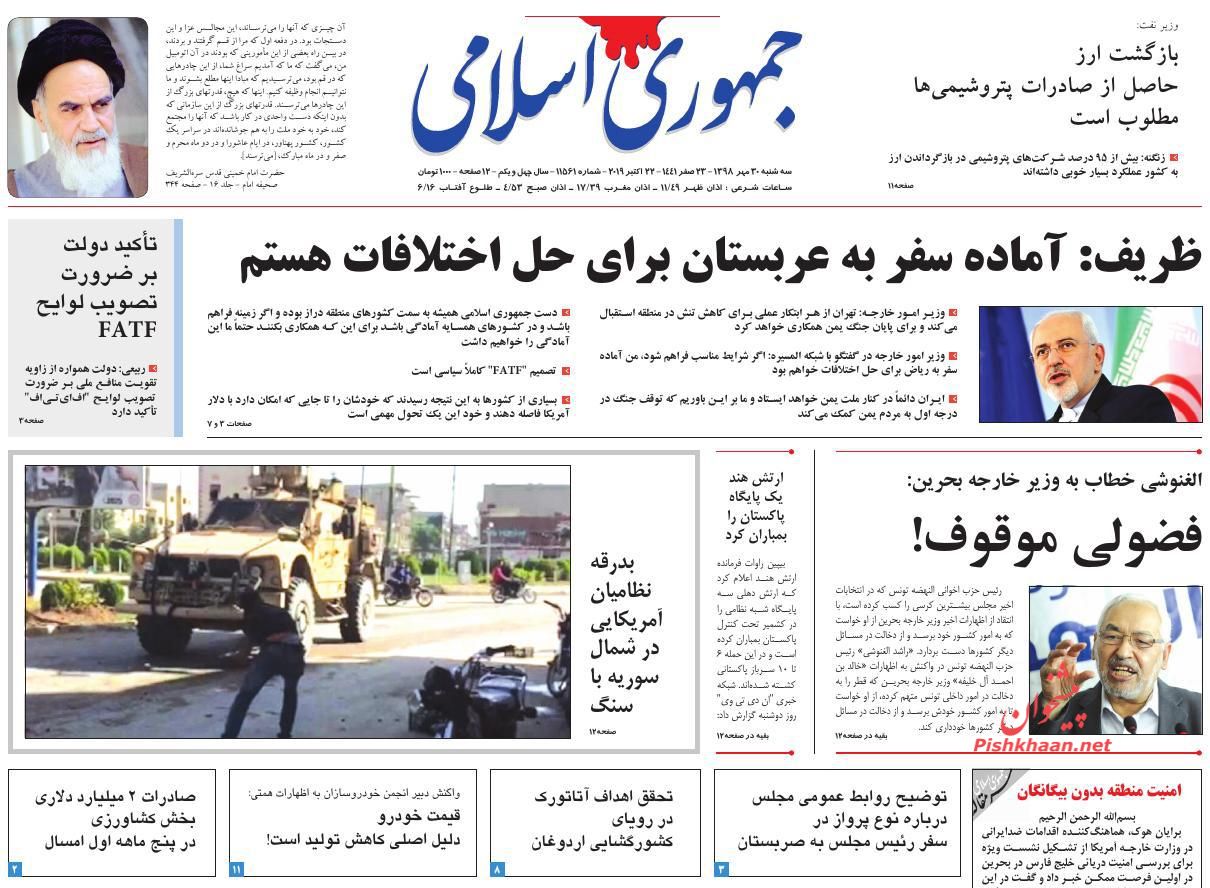
Jomhouri Eslami:
1- Yemen’s Big Operation in Saudi Arabia
2- Democrats Officially Start Considering Trump’s Impeachment
3- 72 Schools Opened in Kermanshah’s Quake-Hit Areas

A Look at Iranian Newspaper Front Pages on September 29


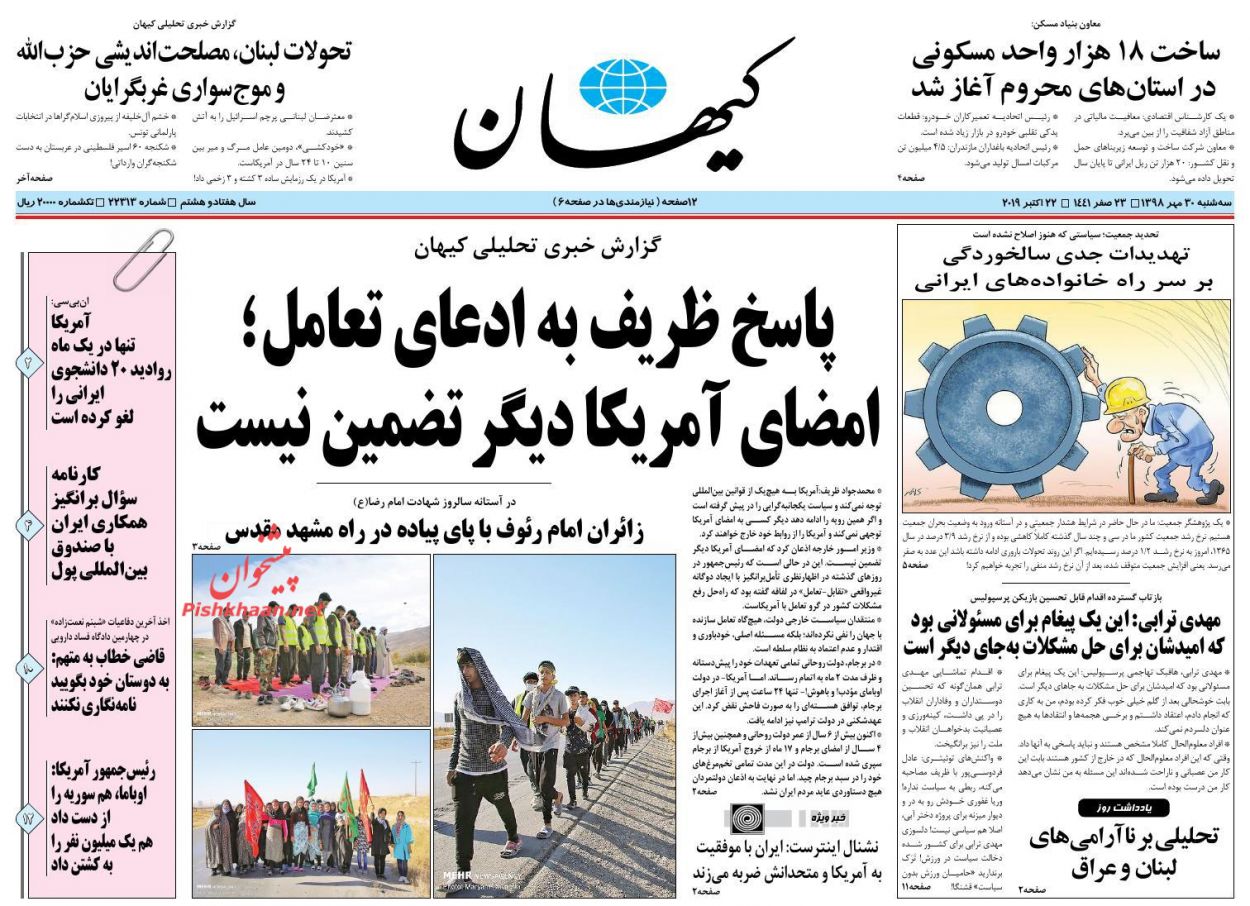
Kayhan:
1- Three Saudi Army Brigades Totally Destroyed in Yemeni Revolutionaries’ Big Operation
2- New Scandal Shakes White House
* What Trump Told Putin, Bin Salman, Ukraine President?
3- Lessons of New York Visit: From Issuing Visa to Visiting Patient

A Look at Iranian Newspaper Front Pages on September 29


Khorasan:
1- UN Fabricating Statistics Regarding Birth Rate in Iran: Plot against Population Growth

A Look at Iranian Newspaper Front Pages on September 29


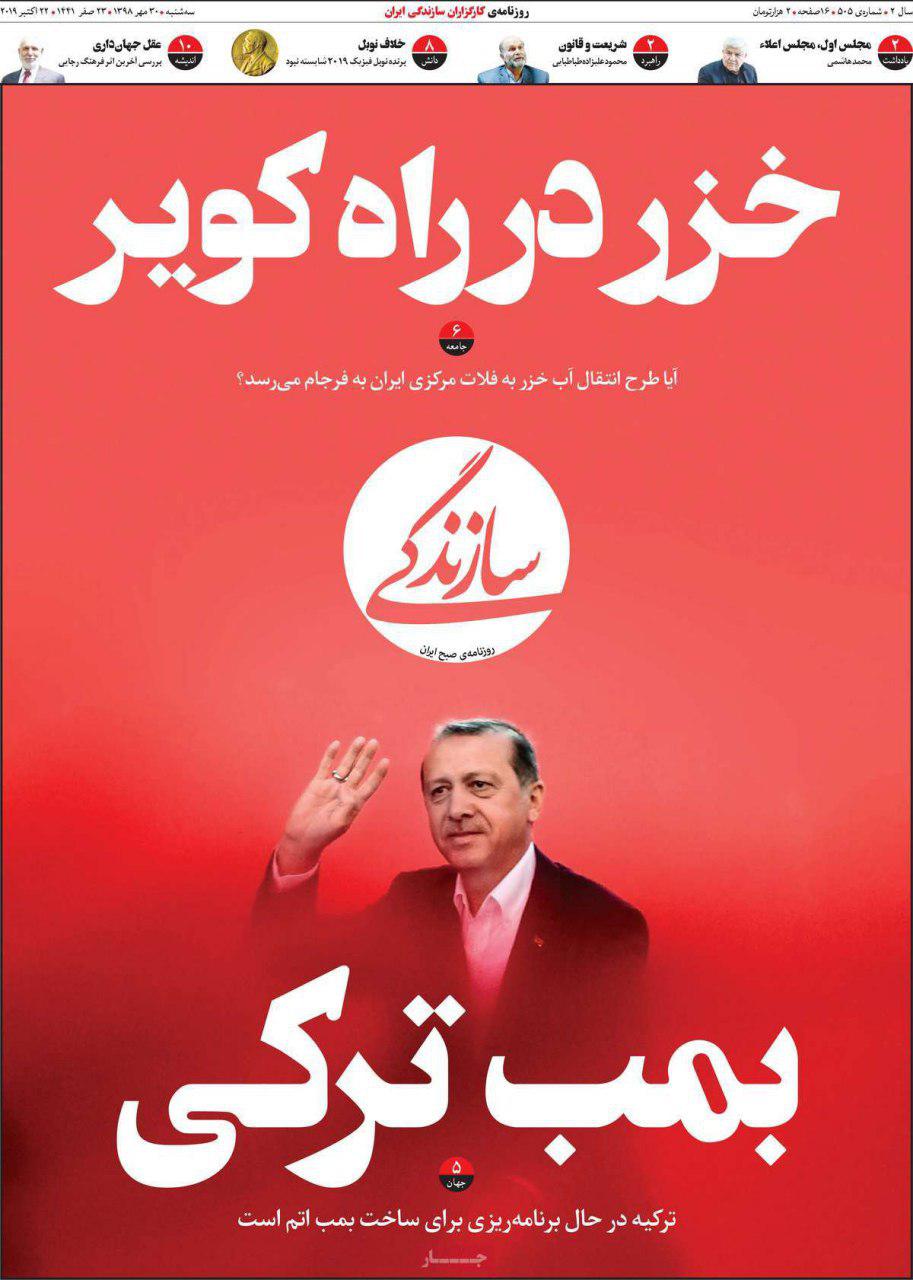
Sazandegi:
1- Trump on Edge of Abyss
* Trump’s Historic Impeachment on Charge of Abusing Power

A Look at Iranian Newspaper Front Pages on September 29


Shahrvand:
1- Trump’s Scandal Worse than Nixon’s
2- Trump’s Fate Unclear Even If He’s Re-Elected

A Look at Iranian Newspaper Front Pages on September 29


Shargh:
1- Americans’ Condition for Meeting Ill Ambassador
2- Troublesome Secrets of Trump

A Look at Iranian Newspaper Front Pages on September 29

Iranian Feature Wins Top Award at North Korean Festival

The film received its award at the closing ceremony of the 17th edition of the Pyongyang International Film Festival, which was held on September 27 at the North Korean capital’s International Cinema House.

Representatives of the Embassy of the Islamic Republic, art lovers, diplomatic community and cultural officials of the country attended the event.

Orange Days narrates the story of Aban, a 45-old woman who finds jobs for seasonal workers.

The cast are Hedieh Tehrani, Ali Mosaffa, Mehran Ahmadi, Ali-Reza Ostadi, Zhila Shahi, Roya Hosseini, Sadaf Asgari, Leila Farhadpour, Akram Alamdar, Amin Golestaneh, and Siamak Adib.

Alireza Qassemkhan is the producer of the film and Shahnam Shahbazzadeh is the advisor and executive producer of the project.

The Pyongyang Film Festival is an international cultural event aimed at expanding friendly relations with the international community.

Iranian Feature Wins Top Award at North Korean Festival

Ranger Portrays Pristine Nature of Golestan National Park

Golestan National Park, or Golestan Forest, is a protected area in northeastern Iran, located in the east of Golestan and the west of North Khorasan provinces.

With a biodiversity greater than that of some European countries, Golestan Forest is undoubtedly Iran’s most valuable area in terms of both quantity and diversity of flora and fauna. Golestan province is named after this region.

It is the oldest registered national park of Iran; a unique wildlife sanctuary that accommodates 1,350 plant species and 302 animal species, including half of Iran’s mammals, in an area of 900 square kilometres; therefore, it has been registered in the UNESCO World Heritage Sites list as a biosphere reserve.

Golestan National Park is one of the best habitats for large mammals such as leopard, brown bear, wolf, lynx, red deer, roe deer, wild sheep, wild goat, Persian deer and boar. The area is especially known for its large population of Urial.

The valuable forest and its wildlife needs to be protected against hunters and wood smugglers. This is what the rangers do, even though their occupation isn’t well known to the public.

If we ask our children about the job they want to have in the future, they are less likely to choose to become ranger.

The same is true for adults. Although many of us love travelling through nature and the environment around us, we know little about rangers and their job; an occupation that, although provides the opportunity to live and travel in nature, is full of difficulties that only passionate environmentalists are eager to face.

What follows are Mehr News Agency’s interesting photos of Golestan National Park taken by Haddadi, a man who has devoted his life to protecting Golestan wildlife:

US Will Deprive Iranians of Water and Oxygen If It Can: DM

Cartoon the re-imposition of US sanctions against Iran by Shadi Ghanim / Retrieved from The National

“Today, the US strategy against us is maximum pressure, which means that Americans will deprive the Iranians of oxygen and water if they can, and that is not a slogan,” Brigadier General Amir Hatami said Sunday.

However, he added, Iran’s resistance forced the enemies to change their policy from Maximum Pressure to Maximum Begging.

Speaking at an event to commemorate the Sacred Defence Week, he further referred to Iran’s downing of an intrusive US Global Hawk drone, and said the move sent the message that any aggression will be strongly dealt with.

Hatami said targeting the US drone showed that the Islamic Republic is able to manufacture the defence equipment it needs.

He warned that the Islamic Republic will decisively respond to any act of aggression and in case of repeated aggression the enemies will receive a more decisive response.

Hatami said the only path forward to resist the enemy’s existential threats is reliance on domestic capabilities.

Elsewhere in his remarks, he also rejected the accusation that Tehran was behind recent drone strikes on Saudi Arabia’s Aramco oil facilities, which were claimed by Yemen’s Ansarullah forces.

The general said Riyadh thinks it will be spared the embarrassment if it blames the attacks on a stronger opponent.

FM Zarif Says Contacted by Several Members of US Congress

Mohammad Javad Zarif said the lawmakers talked with him on the phone as his stay in New York was too short and the members of Congress were unable to arrange meetings with him.

Speaking in an interview with the Islamic Republic of Iran Broadcasting (IRIB) before leaving New York, he said the US lawmakers were busy impeaching the US president, but he did not discuss the issue with them as Iran does not interfere in the US internal affairs.

Elsewhere in the interview, Zarif responded to a question about Tehran-Riyadh tensions, and a message by Saudi Crown Prince Mohammed bin Salman delivered by Pakistan Prime Minister Imran Khan to President Hassan Rouhani in New York.

Asked if Iran had, in turn, sent any messages to Riyadh in response, Zarif said, “All of our messages are open and public, and that is, we have told all of our neighbours and we tell them again that they cannot obtain security by purchasing weapons from the United States and paving the way for the Americans’ presence in the regions and triggering endless wars with their neighbours.”

“Security is ensured through people relying on themselves and cooperating with their neighbours. Mr. Rouhani’s repeated proposal at the General Assembly was in order for Iran to once again put forward, at the highest level, the idea of regional dialogue for peace,” said the foreign minister.

Necessity of Ending Yemen War

He hailed those who brought messages for Iran and who tried to stem the spread and escalation of tensions.

“But the way to stop the escalation of tension is clear under the current circumstances. End the war on Yemen,” said the top Iranian diplomat.

“End the war on Yemen. It means end the killing of hundreds of thousands of people killed so far; 2.3 million have contracted cholera, 20 million are starving. If you end tension in the region, it will also stop Saudi Arabia from being discredited more. This is the best solution,” he said.

The Problem Is Europe, Not US

Zarif was asked about the reason behind the numerous meetings between European authorities and Iranian officials in New York.

“They failed to deliver on their commitments under the JCPOA and also they failed to fulfill their obligations after the US withdrawal from the JCPOA. They think the solution would be for us to hold talks with Mr. Trump,” he said.

“It is no our problem that they have difficulty living up to their commitments, or that they lack enough willpower to make good on those obligations. They need to work out a solution for this problem,” he added.

“We do not intend to subject the economy and future of the people to a show meeting with a president who has not remained committed to his obligations so far and has reneged on all of his commitments,” he said.

US Should Lift Sanctions

The Iranian foreign minister reiterated Tehran’s stance that Washington should lift all of its sanctions against the Islamic Republic.

“We have said time and again, as the Supreme Leader has, that if the Americans want to get the chance to hold talks with the Islamic Republic of Iran, they should return to their commitments and stop sanctions,” Zarif noted.

Fate of INSTEX

Zarif also touched upon the fate of the Instrument in Support of Trade Exchanges (INSTEX), which is a European special-purpose vehicle (SPV) established in January 2019 to facilitate trade with Iran despite the US sanctions.

“It depends on the Europeans. The fate of INSTEX really depends on the point that Europe should come to realize that it cannot get permission from the US for anything it wants to do,” he said.

Italian Embassy Hosting Joint Iran-Italy Art Project

Two Iranian and Italian artists have drawn the paintings on the walls in a project called “Urban Art: An Opportunity for Unity” to depict proximity between Iranian and Italian cultures.

A ceremony to unveil the project was held at the residence of the Italian Ambassador to Tehran Giuseppe Perrone Thursday evening.

He touched upon the importance of arts, saying art is a key communication method among world nations.

The top diplomat underlined that the project is slated to run until 2020. He said two works of art by Iranian and Italian artists are scheduled to be displayed on the exterior wall of the Italian Embassy every two months.

He said the project aims to boost cultural proximity between the two countries, and added cooperation between Iranian and Italian artists is interesting.

Meanwhile, an Iranian official described art as the common language of nations.

“There are many cultural commonalities between Iran and Italy, and the Italian Embassy’s move to hold such ceremonies show authorities at the Italian Embassy in Iran are so prudent, and I hope that this project will continue in other cities as well,” said Hamid Moqaddami, the mayor of District 1 of Tehran.

Mahdi Qadyanloo, an Iranian artist who has participated in this project, says what motivated him to contribute to the artistic initiative was the current political situation in Iran.

“As a graduate of Arts, I am very interested in the Italian art,” he said.

The Italian painter who has taken part in this program also said he and his wife found out after travelling to Iran and Iranian people are very hospitable. He added urban art makes cities beautiful, and said he hoped the project would continue.

UAE Seems Angered by Oman’s Support for Iran’s Peace Plan

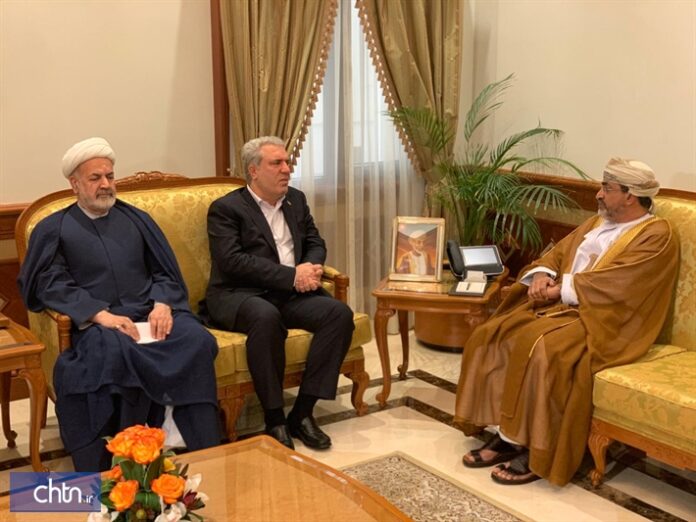
In an interview with Al-Monitor on the sidelines of the UN General Assembly, Yusuf bin Alawi said “We haven’t seen it, but if the theme of that [plan] is based on stability, of course, we will support it.”

However, the impartial position of Oman Sultanate in the face of regional crises, its refusal to enter into the Saudi-UAE coalition against Yemen and Qatar, as well as its good relations with the Islamic Republic of Iran have led the Emirati media to launch a sharp attack against Muscat.

Reports say that Emirati media have started a campaign of criticism against Oman, accusing it once of colluding with Iran and once of colluding with Qatar, and also of plotting against Egyptian president Abdel Fattah El-Sisi.

Salim Hamid, author and director of Al-Mezmaah Studies and Research Centre of the UAE, claimed that Muscat plotted against the Arab Umma through collusion with the Iranian government.

“Oman is a country that is unfamiliar with diplomatic techniques. Muscat keeps silent when it must adopt a unified stance on the Persian Gulf security. This country is a loyal ally of Iran and a transit bridge for that country,” Hamid wrote in an op-ed.

He has criticised Oman for not participating in the Saudi-led military coalition against Yemen and for not joining sanctions against Qatar and countering Iran’s regional influence.

“The Kingdom of Oman is silent on any issue concerning the Arab world, but is very active when Iran is exposed to international sanctions or when Iran’s security is threatened. Here’s the question: Is Oman really an Arab country? Or has its traditional ties with the Iranians isolated this kingdom?”

Iranian President Rouhani briefly described his initiative during his Sept. 25 speech at the United Nations, saying that Hormuz Peace Endeavour (HOPE) is designed to include all countries of the region and aims to expand cooperation beyond regional security.

President Rouhani Due in Armenia to Attend Eurasia Summit

Hassan Rouhani - President of the Islamic Republic of Iran
Iran's President Hassan Rouhani arrives to address the 74th session of the United Nations General Assembly at UN headquarters in New York City, New York, US, Sept 25, 2019.

Hassan Rouhani is scheduled to deliver a speech at the event, which will also be attended by his Russian counterpart Vladimir Putin.

According to Rouhani’s deputy chief of staff for communications and information, Parviz Esmaeili, the president will address the EAEU high-profile summit on Tuesday.

“In addition to delivering a speech at the summit and discussing Iran’s extensive potential and capabilities for trade cooperation with the EAEU, the president will hold bilateral meetings with Armenian prime minister and other senior officials,” said Esmaeil.

The most important issues regarding Tehran-Yerevan relations, as well as the latest status of the implementation of joint agreements and projects, will be discussed during the meetings, he noted.

On the sidelines of the summit, President Rouhani will also hold separate meetings with a number of participating leaders to exchange views on topics of mutual interest, as well as regional and international developments.

A high-ranking politico-economic delegation will be accompanying Rouhani on this visit, said Esmaeili, adding that the president will return to Tehran on Tuesday night.

Rouhani’s participation at the EAEU summit was confirmed by Armenian Foreign Minister Zohrab Mnatsakanyan on Sept. 7, who said in an interview that “we have a wide-scale agenda with Iran, and we are looking for frameworks and effective ways for cooperation in the fields of regional security, development of infrastructure, and energy diversity to reach a positive result that would benefit all of our countries.”

“Armenia’s membership at the EAEU will provide the condition for us to expand cooperation with Iran, as well as Singapore and Egypt,” he had noted.

The EAEU meeting of leaders in Yerevan is a major regional event which is said to help Tehran increase its non-oil exports amid US sanctions.

The invitation came more than a month after Iran ratified a parliamentary bill to launch a free trade zone with EAEU members, namely Russia, Belarus, Kazakhstan, Armenia and Kyrgyzstan.

The agreement is expected to hugely boost Iran’s trade transactions with countries to the north of a region in northern Asia and Eastern Europe called Eurasia.