
The festival was held at the Foreign Ministry’s Institute for Political and International Studies in cooperation with the wives of foreign ambassadors living in Tehran.
What follows are photos of the festival retrieved from IRNA:
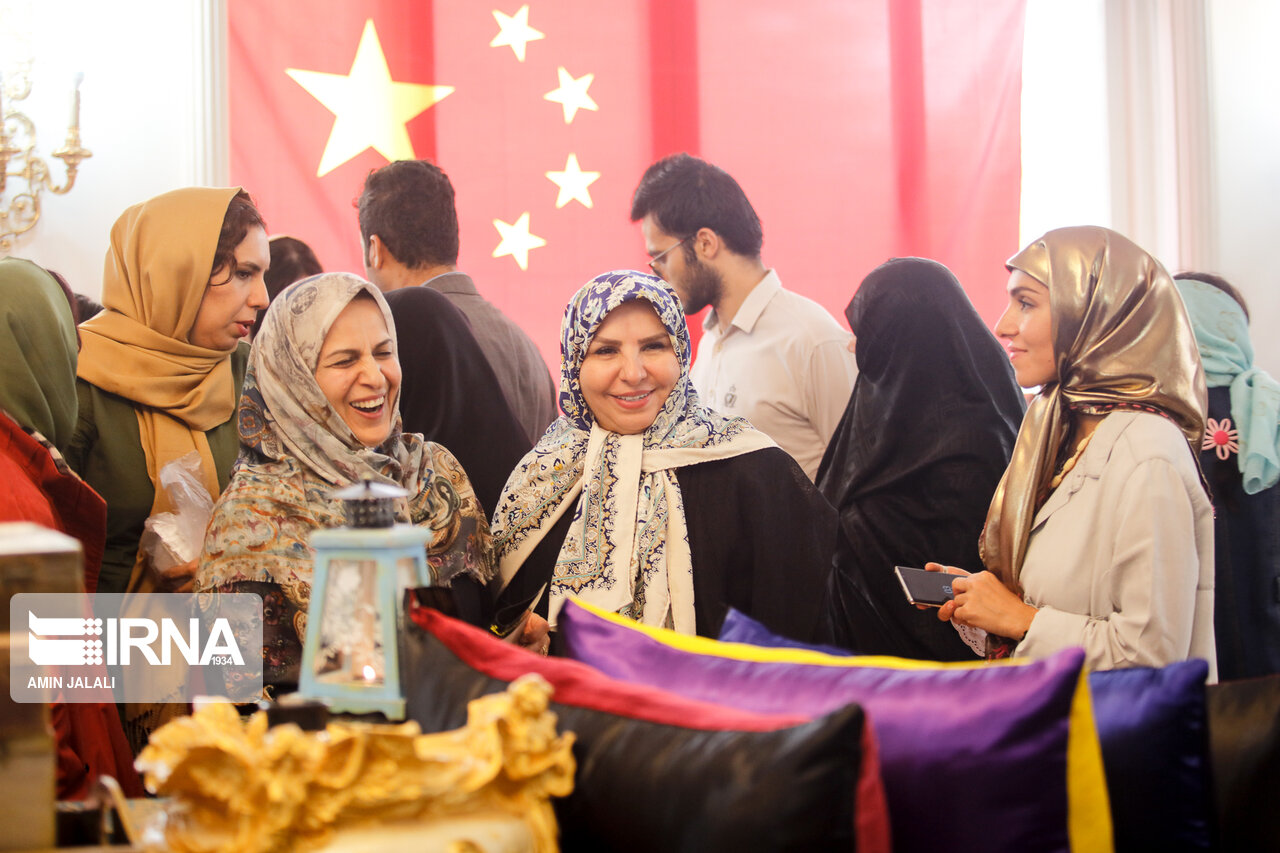
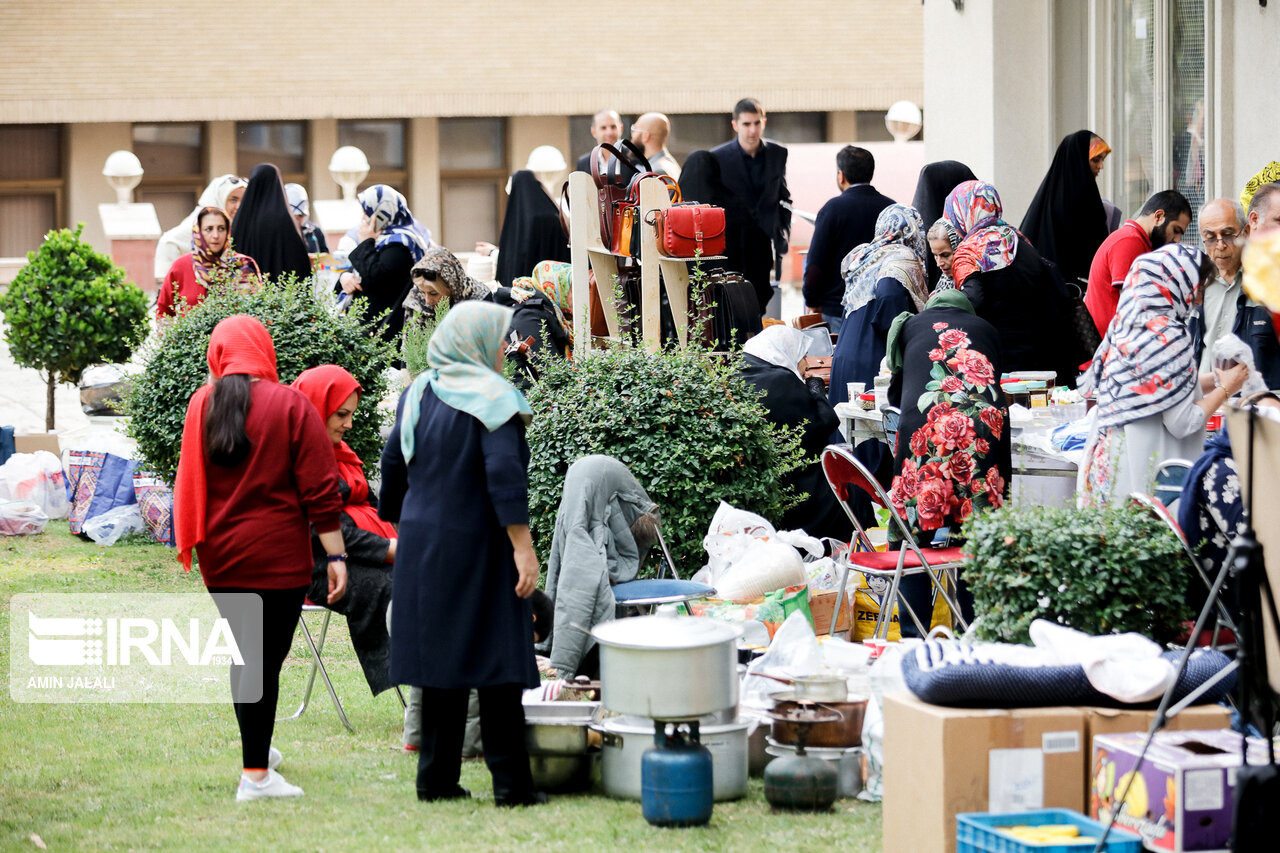
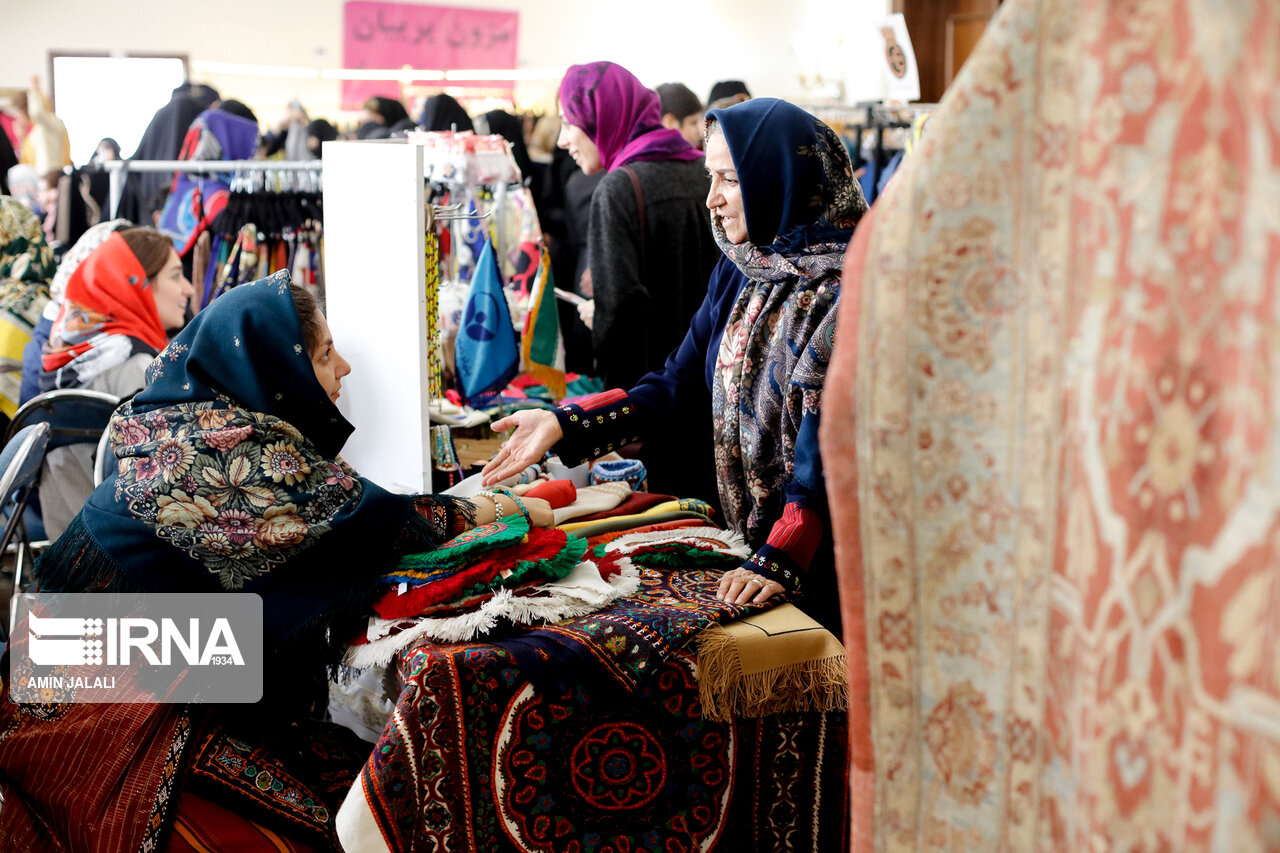


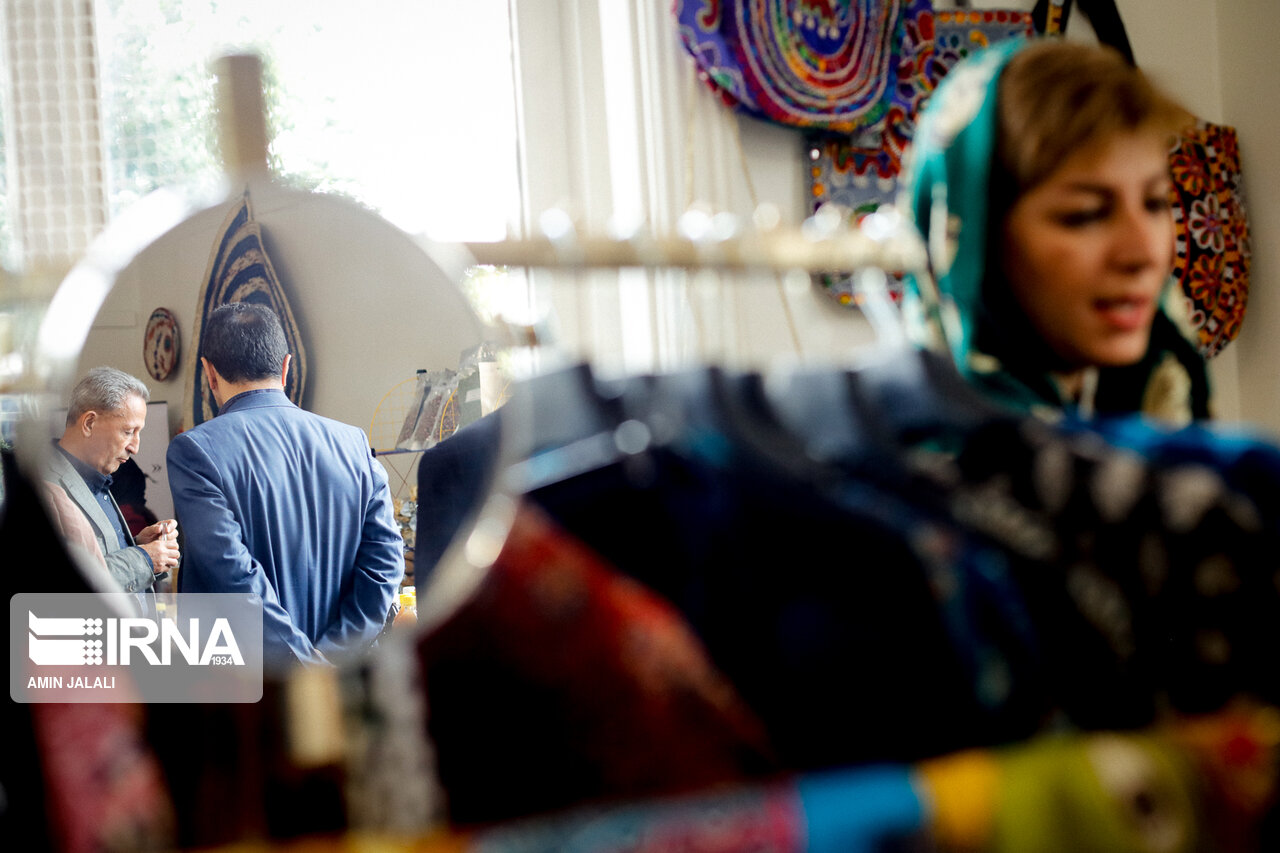
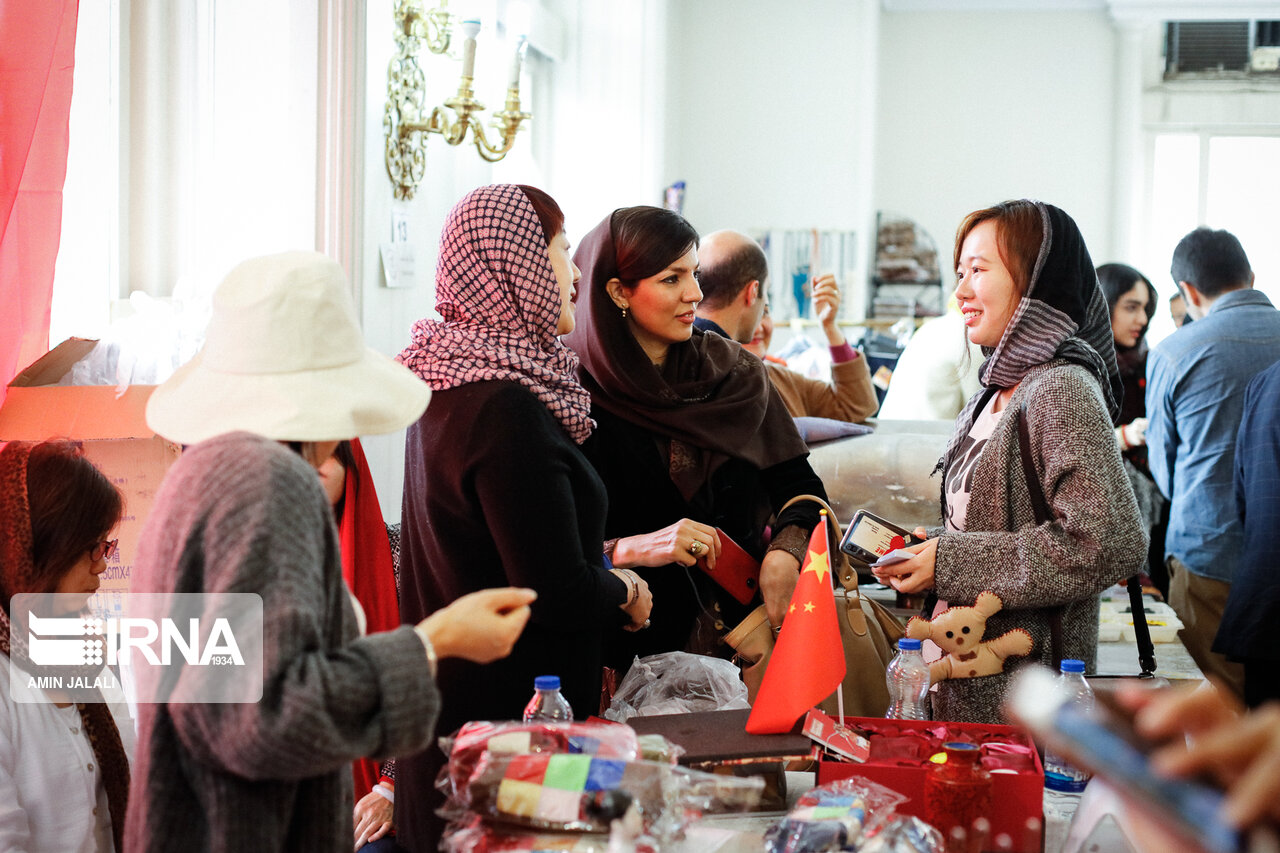
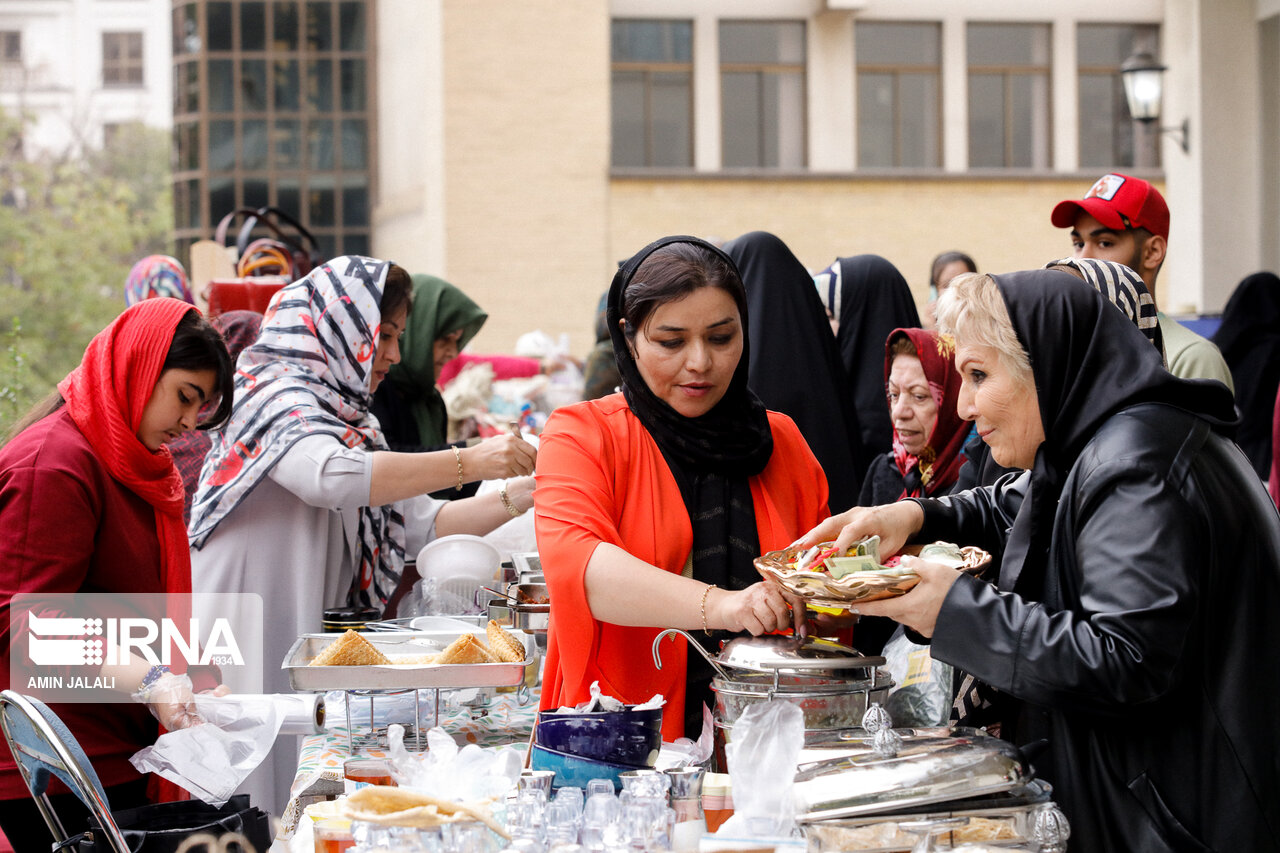
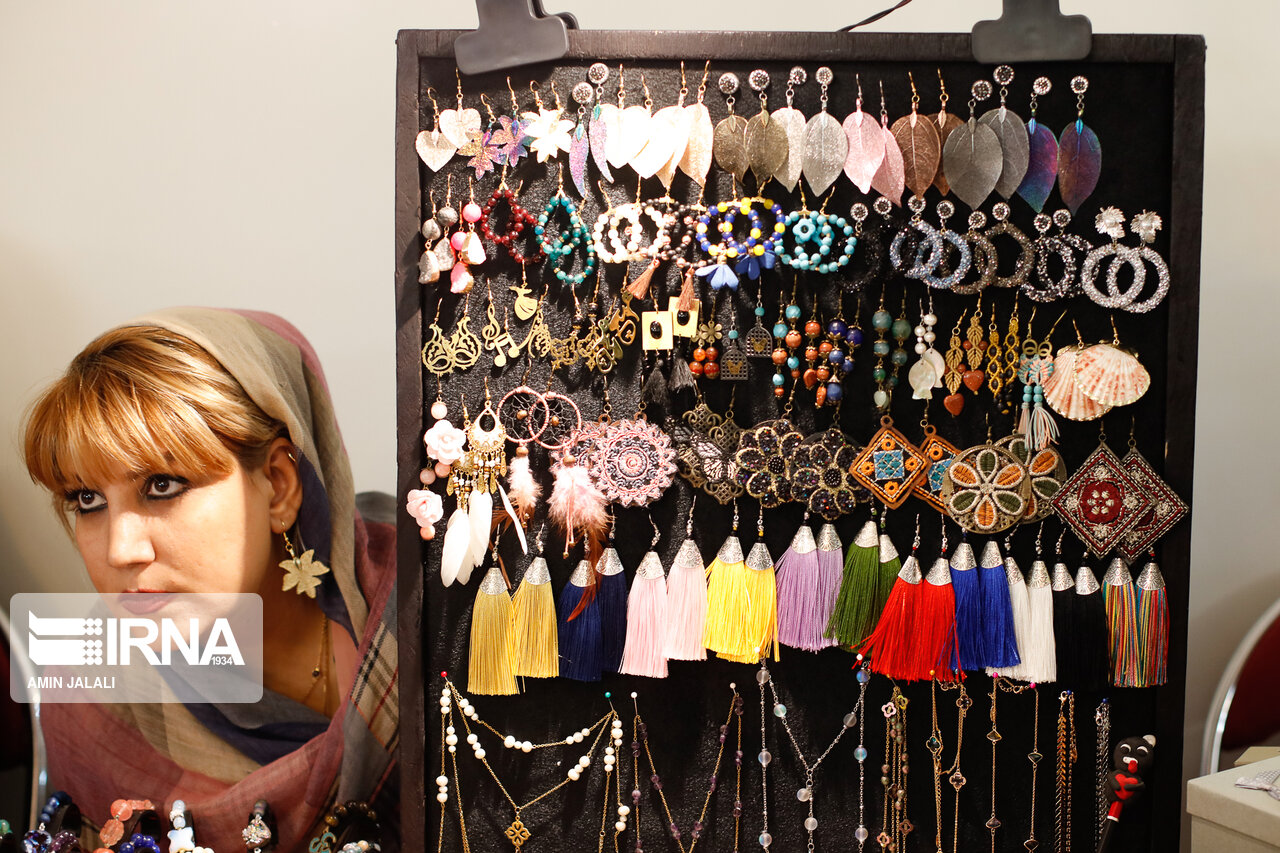
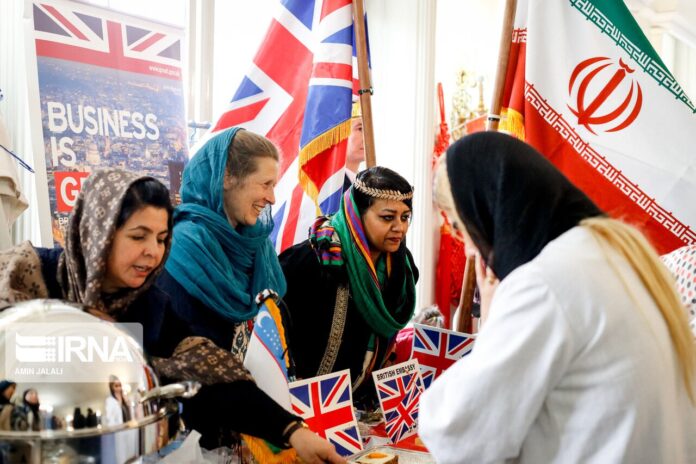
The festival was held at the Foreign Ministry’s Institute for Political and International Studies in cooperation with the wives of foreign ambassadors living in Tehran.
What follows are photos of the festival retrieved from IRNA:
Chairman of the Iranian Chamber of Commerce Gholam-Hossein Shafei said the opening of the office in Russia is one of the good developments that will contribute to Iran’s trade with the Eurasia.
Other positive developments in this regard include the opening of a Silk Road chamber of commerce with 67 members, he added.
Also the first Silk Road conference will be held in China in November 2019, Shafei said in a meeting attended by government officials and private sector authorities.
In late October, a preferential trade agreement between Iran and the Eurasian Economic Union (EEC) came into force.
The two sides launched preferential trade on 826 items of goods on October 27, 2019. Of that number, 360 include commodities on which Iran has granted preferential tariffs to Eurasia, and 502 are goods on which the EEC has offered Iran preferential tariffs.
The economic indicators of Eurasia include the first spot in oil extraction (14.5% of the global amount), the first spot in natural gas production (20.2% of global output), the fourth spot in generating electricity (4.9% of global production), fourth spot in iron production (4.7 % of global output), and the fifth spot in steel production (5% of global output).
Iran’s preferential trade agreement with the EEC is reportedly the most elaborate and comprehensive deal that Iran has signed so far and contains 9 chapters including general rules as well as regulations on trade and relevant topics.
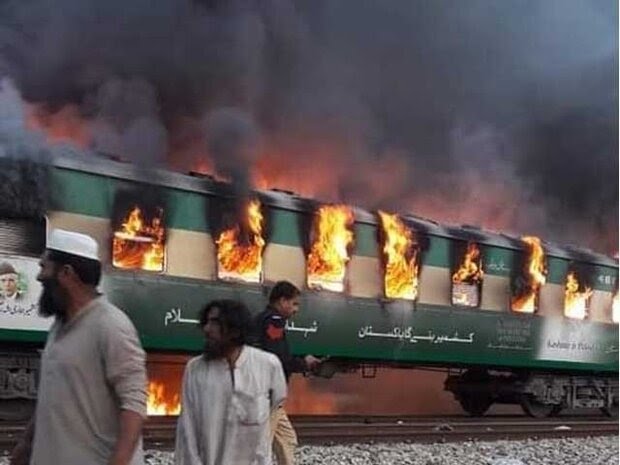
Foreign Ministry Spokesman Abbas Mousavi condoled with the Pakistani government and people as well as the bereaved families of those who lost their lives in the blaze and wished those injured a rapid recovery.
A blaze engulfed a train in Pakistan’s Punjab province, killing dozens and wounding nearly a hundred people. The fire broke out after a gas canister that passengers were using to cook breakfast exploded. The fire destroyed three of the train’s cars. Police said most deaths occurred from people jumping off the train. There have been other train accidents in Pakistan over the past months. Eleven people were killed in an accident in July, and four others in another incident in September.
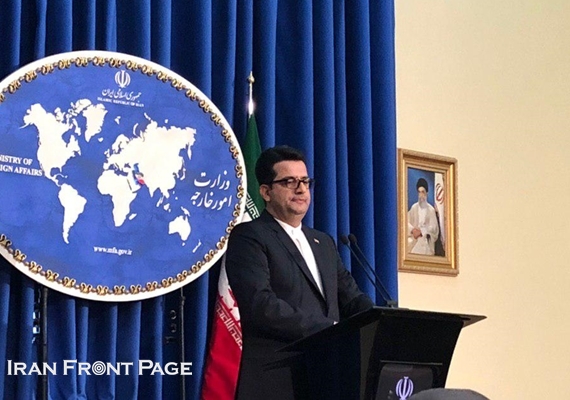
Asked about the reports of banking restrictions imposed on Iranians in Malaysia, Iran’s Foreign Ministry Spokesman Seyyed Abbas Mousavi told reporters on Thursday, “Sadly, a number of Malaysian banks have placed a series of restrictions on opening accounts and offering banking services for Iranians, under the influence of the United States’ economic terrorism.”
“In this regard, our country’s Embassy in Malaysia has put the issue on the agenda in constant and intensive arrangements with Malaysia’s government bodies and banking officials, and multiple negotiations have been held with the relevant authorities, and figuring out a solution and resolving the problem is still on the agenda,” the spokesman added.
Mousavi further noted that the banking restrictions have created problems for the presence and activities of Iranians in Malaysia, particularly the participation of Iranian elites and university students in Malaysia’s scientific and academic sphere as well as those involved in the trade and business sector.
“We hope that the friendly state of Malaysia would work out solutions to settle the problem, considering the Malaysian government’s goodwill and explicit and recognized stances on the unilateral (US) sanctions, and that the problems that have arisen in Iranians’ bank accesses would be resolved with consultation and on the basis of the legal frameworks available for the issue,” he concluded.
His comments came after reports that banks in Malaysia were closing the accounts of Iranian individuals and companies.
Many Iranians said they knew of dozens of compatriots who had received notices from Malaysia’s CIMB and RHB Bank.

“Returned from Geneva where I met with Russian & Turkish FMs, & UN’s Geir O. Pedersen, on eve of inauguration of Syria Constitutional Committee,” Zarif tweeted on Wednesday after returning to Tehran following multilateral talks with his Russian and Turkish counterparts and the UN envoy for Syria in Geneva.
“After years of devastating war, path to rule of law begins— thanks to Astana process. Difficult road ahead, but no other alternative,” he added.
His comments came a few hours after the opposing sides joined the UN’s Pedersen for face to face talks in an attempt to resolve the ongoing crisis in the war-torn Arab country.
A total of 150 delegates representing the government, opposition and civil society on Wednesday met at a constitutional committee meeting held inside the Council Chamber of the United Nations office in Geneva, Switzerland.
The members of the constitutional committee, which took almost two years of consultations to be formed, are tasked with reforming the Arab country’s constitution before it is put to the vote of the Syrian people.
The UN hopes this will be a chance to begin formulating tangible agreements between the rival side, but Russia and Iran have warned this is just the beginning of a long and difficult process.
In a joint communiqué released at the end of a separate meeting with Pedersen on Tuesday, Iran, Russia and Turkey stressed that Syria’s long-awaited constitutional committee must work independently and far from any foreign interference in order to draw maximum support from all walks of the Syrian nation.
Addressing the Wednesday meeting with Syrian groups, Pedersen acknowledged the enormously difficult task ahead. “I know it is not easy for all of you to be here together in this room.”
“But the fact you are here, face to face, is a powerful sign of hope for all Syrians, everywhere,” he added.
The UN envoy said reforming the country’s constitution is the first step toward the beginning of a political process that will lead to UN-supervised elections under UN Resolution 2254.
However, he said, the process will have to be Syrian-led and Syrian-owned. “Do not expect me or my team to tell you what to write in your constitution. The future constitution belongs to Syrians, to the Syrian people and them alone.”
The formation of Syria’s constitutional committee and its inception in Geneva on October 30 was the culmination of over two years of efforts by the three guarantor states of the Syria peace process – Iran, Russia, and Turkey – who initiated the Astana Process in January 2017 on the back of a Syria-wide ceasefire between the government and armed groups.

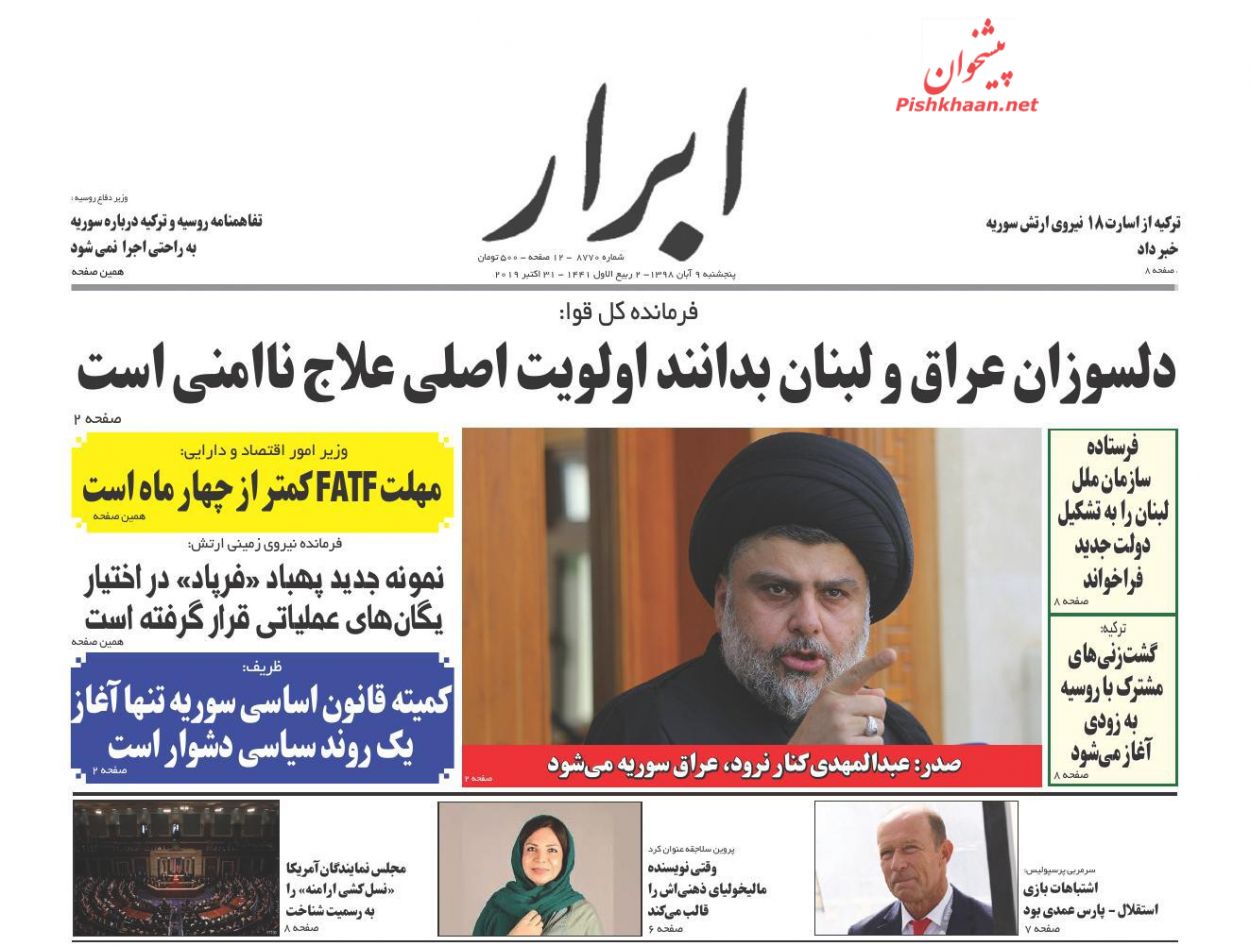
Abrar:
1- Turkey Says 18 Syrian Free Army Forces Captured
2- Zarif: Syria Constitutional Committee Only Beginning of Difficult Political Path
3- UN Envoy Calls on Lebanon to Form New Government
4- Muqtada al-Sadr: Iraq Will Turn into New Syria If Abdul-Mahdi Refuses to Resign
5- Turkey: Joint Patrols with Russia to Begin Soon
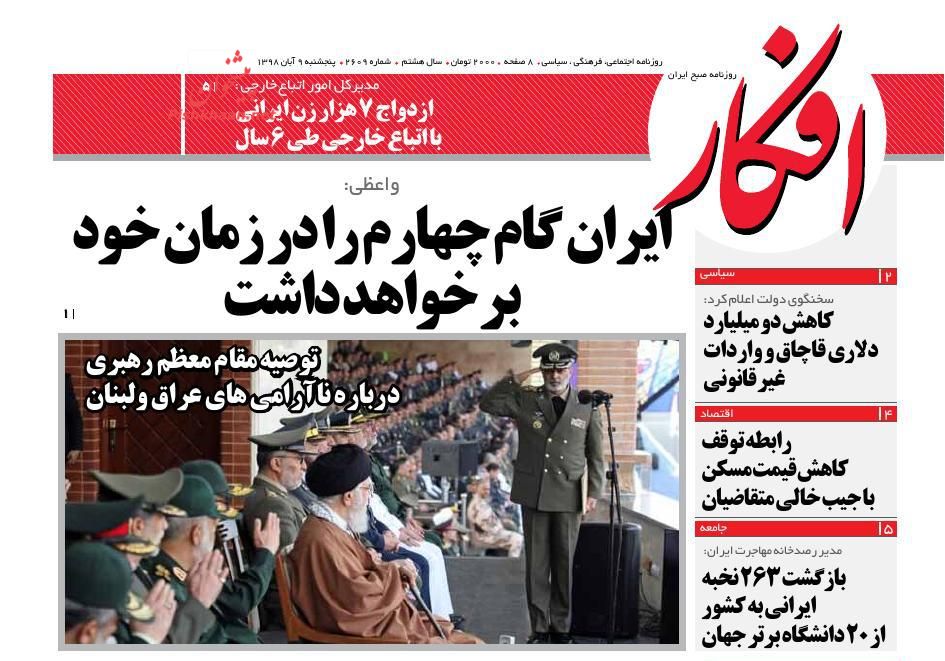
Afkar:
1- Iran to Take Fourth Nuclear Step in Due Time: Rouhani’s Chief of Staff
2- Iran Leader’s Advice on Iraq Unrest
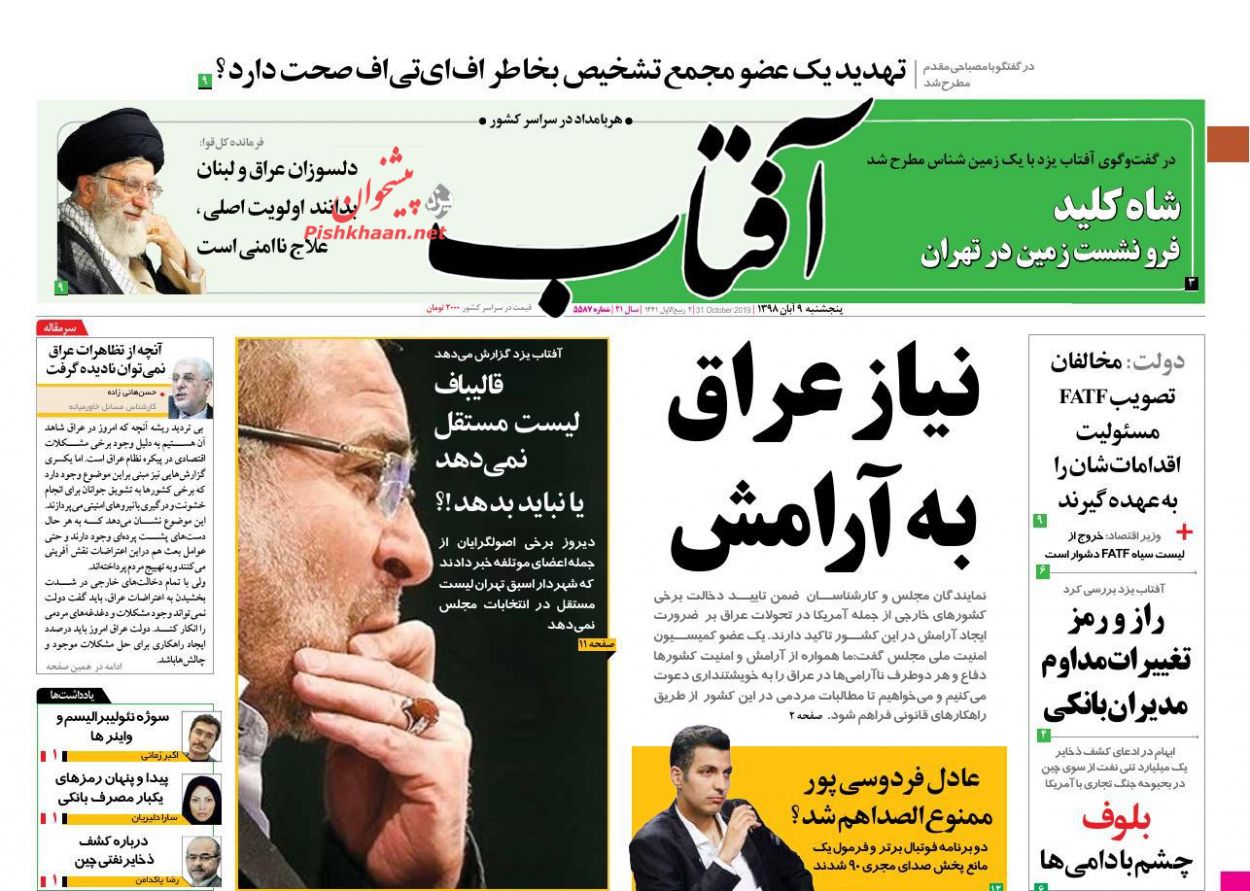
Aftab-e Yazd:
1- Iraq Needs Calm
* MPs, Experts Say Some Foreign States Like US Meddling in Iraq Developments
2- China’s Bluff: Beijing Claims It’s Found One Billion Tonnes of Oil Reserves amid Trade War with US
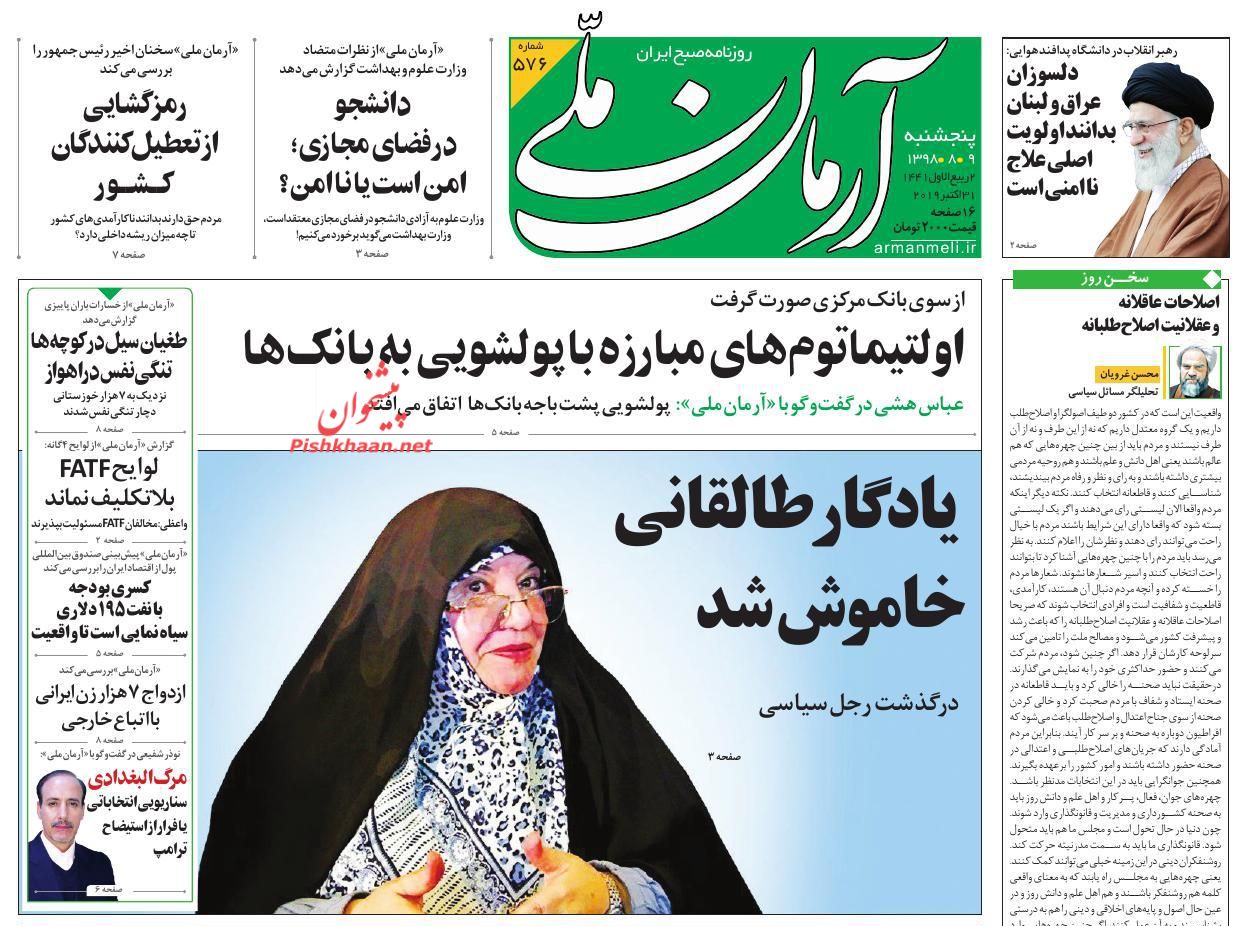
Arman-e Melli:
1- Iran Leader: Main Priority in Lebanon, Iraq Is to Settle Insecurity Problem
2- Al-Baghdadi’s Death: Election Scenario or Deflecting Attentions from Trump Impeachment
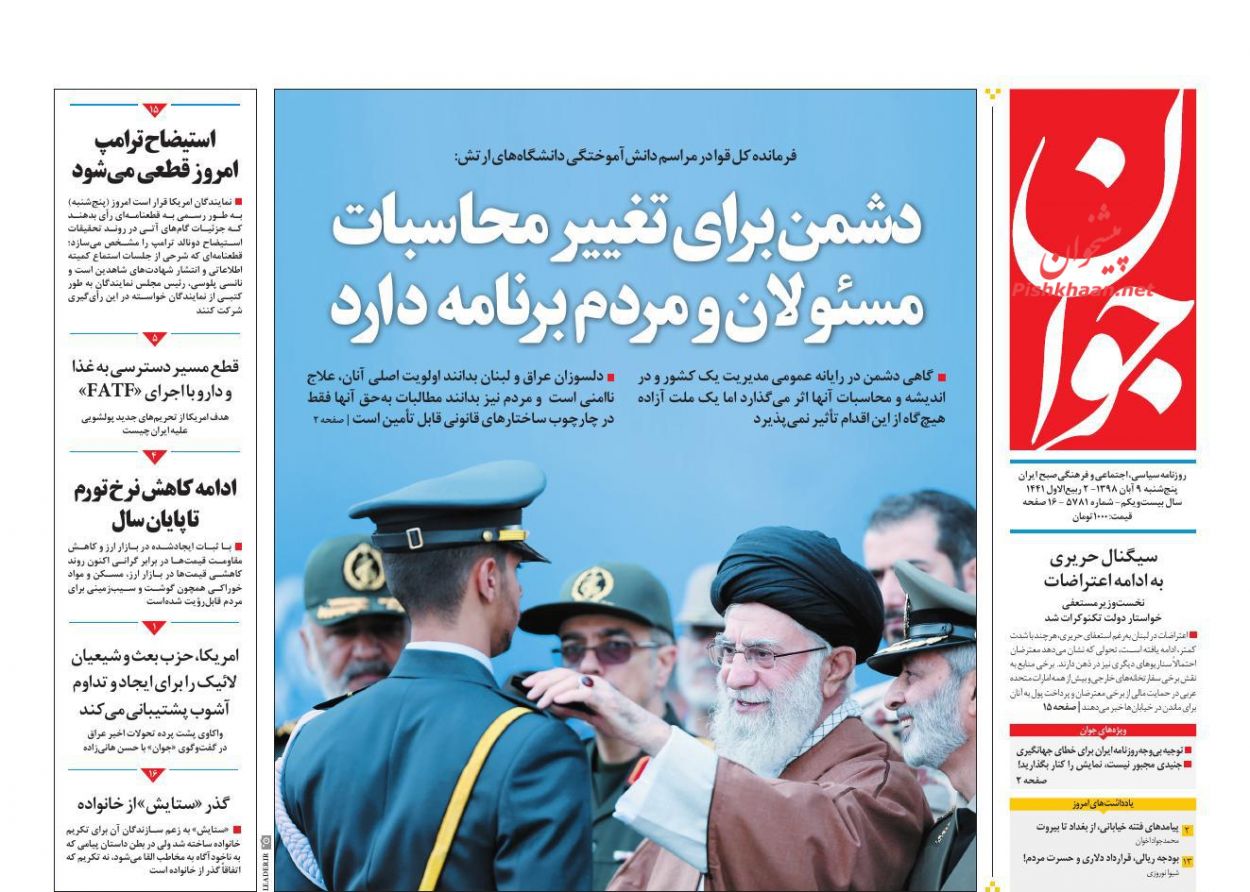
Javan:
1- Trump’s Impeachment to Be Finalized Today: US House to Vote for Resolution on Trump’s Fate
2- US Supporting Baath Party, Laic Shiites to Provoke Chaos in Iraq
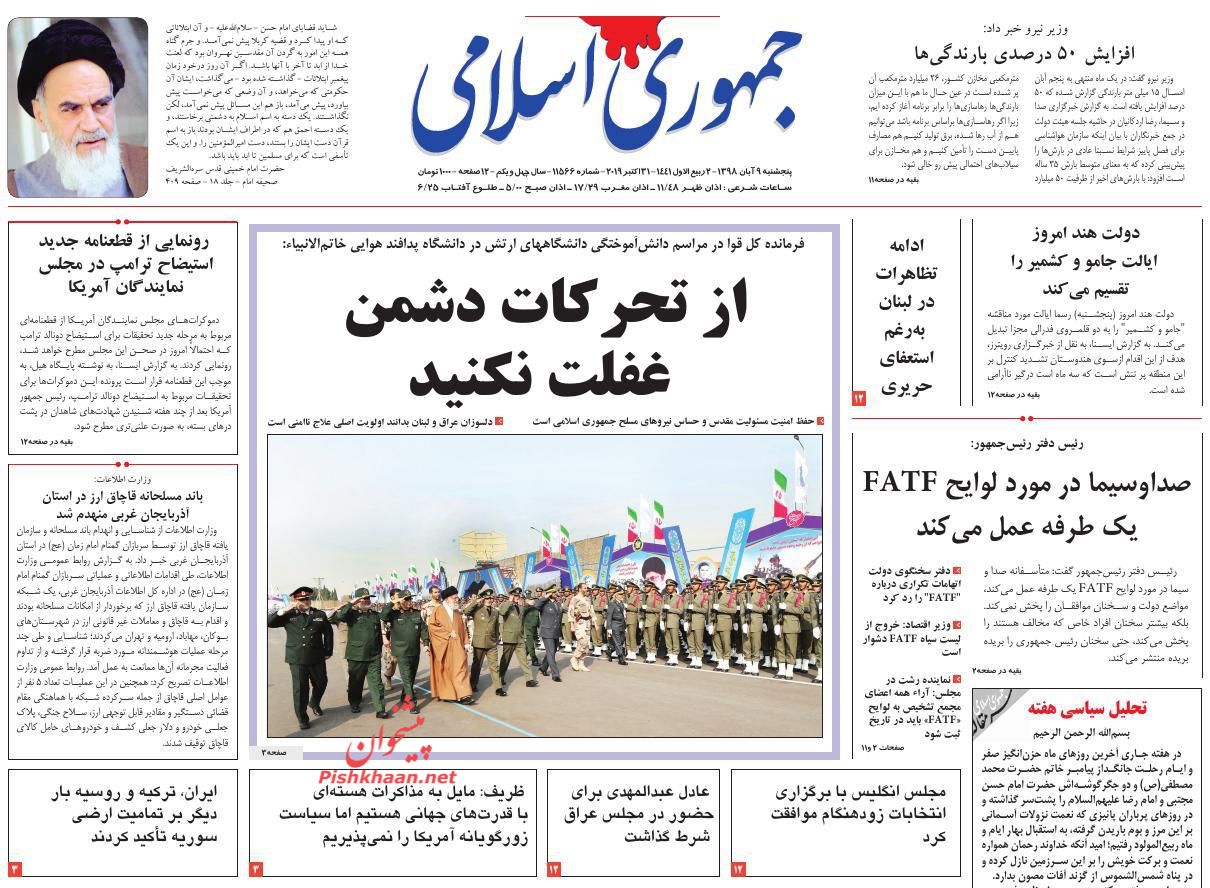
Jomhouri Eslami:
1- India Government to Split Jammu Kashmir State Today
2- Continued Protests in Lebanon Despite Hariri’s Resignation
3- Don’t Take Enemy’s Moves for Granted, Iran Leader Warns
4- Zarif: We’re Keen to Hold Nuclear Talks with World Powers, but Won’t Accept US Bullying
5- UK Parliament Agrees to Holding Early Elections
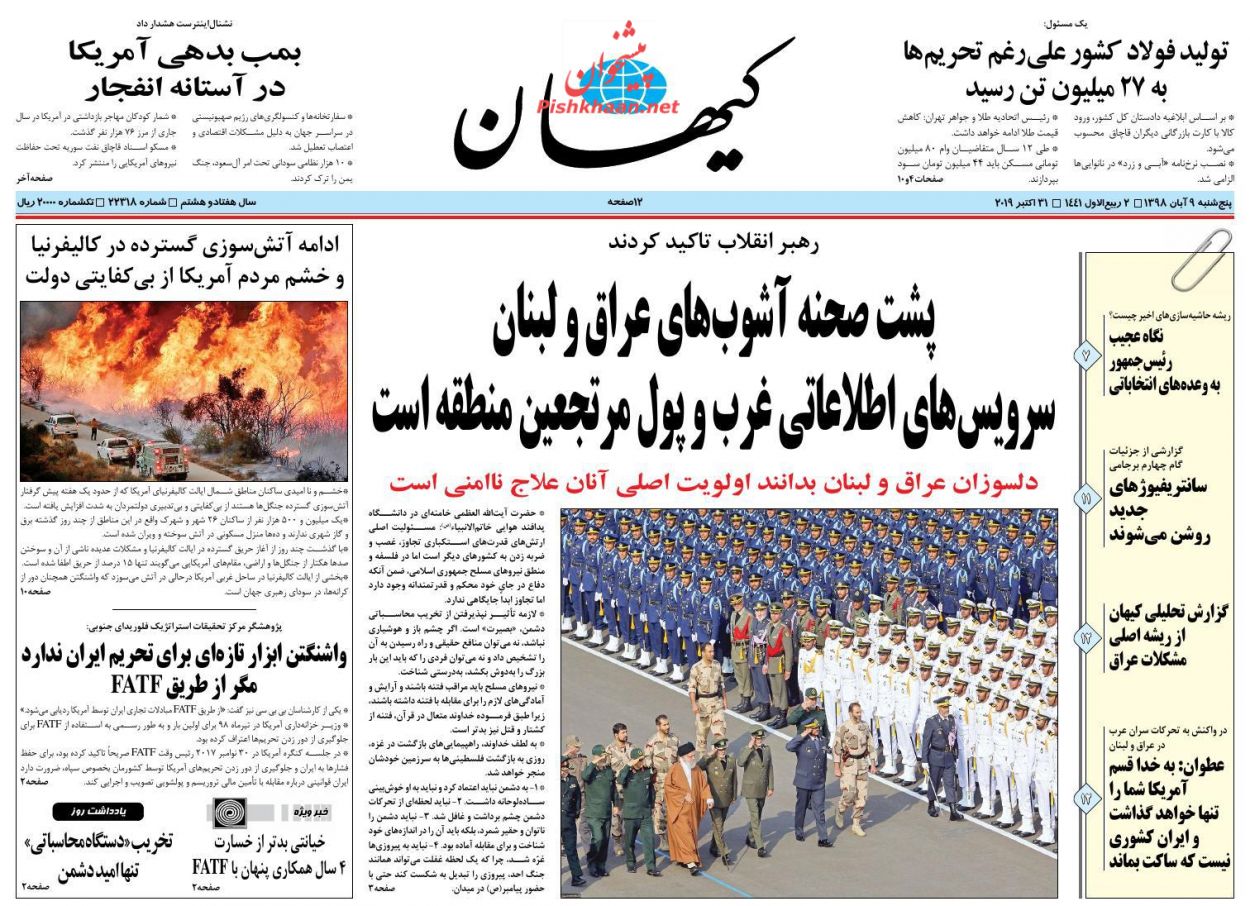
Kayhan:
1- Washington Has No New Instrument for Banning Iran Except Through FATF
2- Western Intel. Services, Reactionary States’ Petrodollars behind Chaos in Lebanon, Iraq: Leader
3- Atwan’s Reaction to Arab Leaders’ Moves in Iraq, Lebanon: US Will Leave You Alone
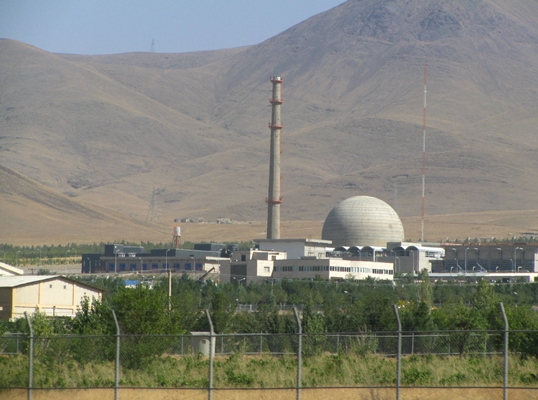
Iranian Foreign Ministry Spokesman Abbas Mousavi said on Thursday efforts by the Europeans, especially France, to fulfill their commitments under the nuclear agreement have failed to produce tangible results yet.
He said a committee at Iran’s Supreme National Security Council is planning the fourth step, adding, “If the situation remains the same, we will take the step.”
However, he said diplomacy still remains an option.
“The door to diplomacy is open, as it has always been, and a series of measures and movements are underway in that regard,” said the spokesman.
Iran has already taken three separate calibrated steps away from the deal, and has warned it will take a fourth in November unless the Europeans fulfill their commitments under the JCPOA.
Iran says it has been taking advertised, reversible and calibrated steps away from the deal as a reprisal for US sanctions, including its ban on Iranian oil exports, and the failure of the EU to do more to build trade with Iran. Tehran is due to take a fourth step on 7 November.
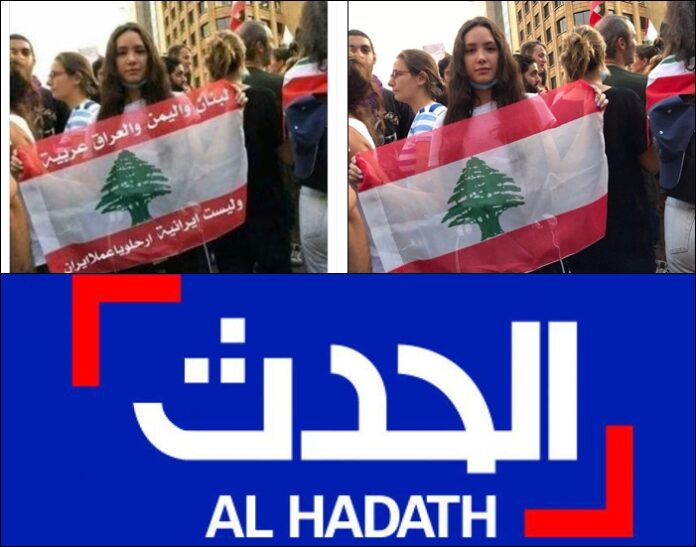
On its Twitter page, the Saudi network posted a photo of a Lebanese protester with the country’s flag on which a slogan reads “Lebanon, Iraq and Yemen are Arabs, not Iranians; Get out, Iranian mercenaries!”
It is claimed that the slogan is a result of the crises in Iraq, Lebanon and Yemen!
However, the original photo shows no such slogan and reveals the Saudi network has added it to the flag using Photoshop.
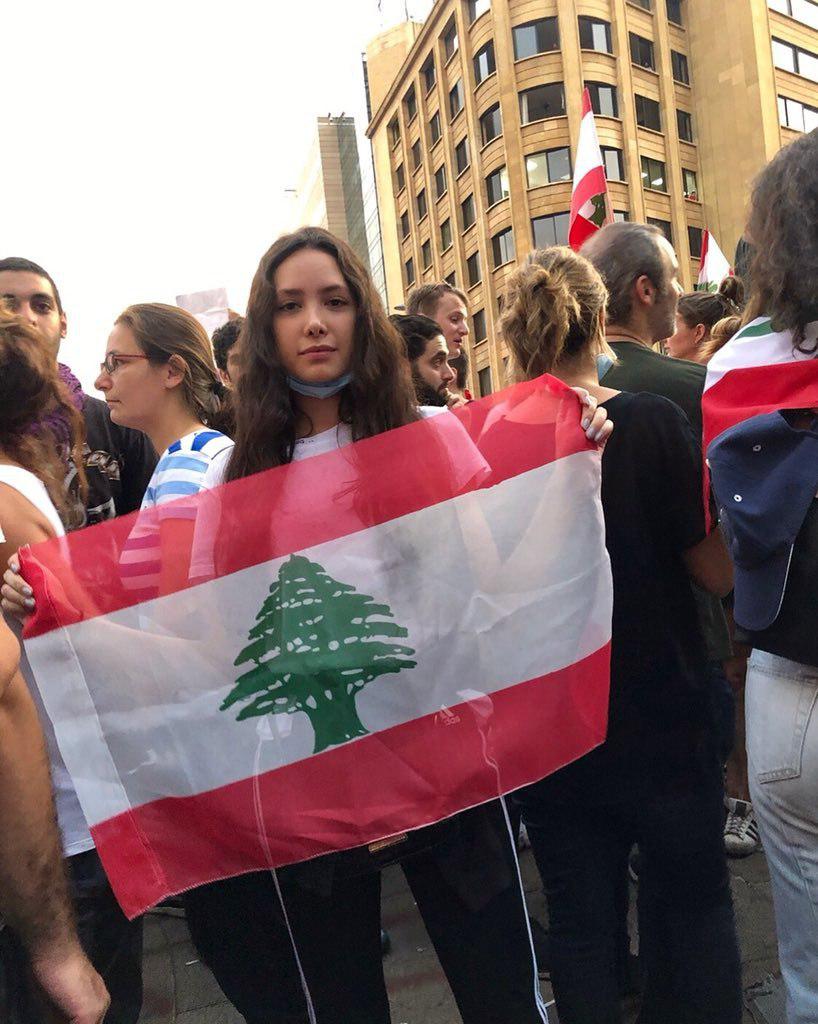
Social network users in reaction have tweeted the protester’s original photo, saying that even the propagandists of the network even do not know how to work with Photoshop.
Other users have also made fun of this network.
Iraq has suspended Saudi Arabian state-owned broadcasters Al-Hadath TV and Al Arabiya.
Al-Hadath said, as reported by Reuters, that the Iraqi authorities have stopped its activity and the activity of Al Arabiya because they have no work permits in Iraq. The Iraqi authorities’ decision was made after the two channel allegedly tried to instigate chaos in the Arab country.
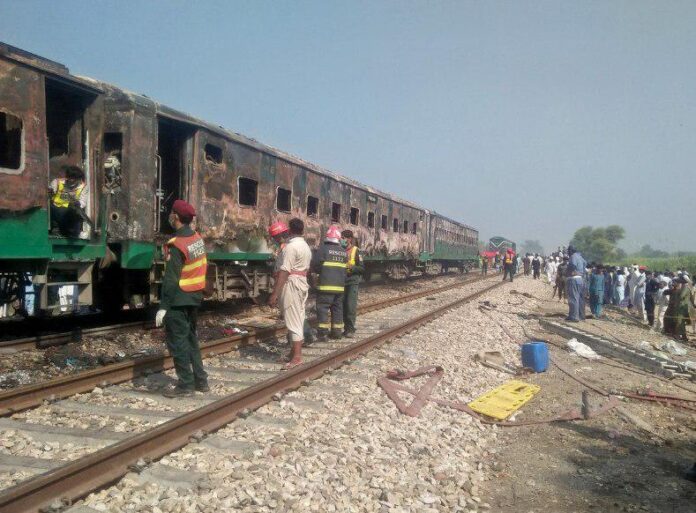
The fire destroyed three of the train’s carriages near the town of Rahim Yar Khan in the south of Punjab province. It was on its way from the southern city of Karachi to Rawalpindi, near the capital, with many people going to a religious conference, Reuters reported.
The confirmed death toll was 64, Minister for Railways Sheikh Rashid Ahmed told Geo television.
“Two stoves blew up when people were cooking breakfast, the presence of kerosene with the passengers in (the) moving train further spread the fire,” he said.
“Most deaths occurred from people jumping off the train,” he added.
Television pictures showed fire and black smoke pouring from the train’s windows after it came to a stop on a stretch of line flanked by fields.
“People were jumping off, some of them were on fire,” a witness told Geo.
Thirty people were injured, the minister said.
People sneaking stoves onto trains in order to prepare meals on long journeys is a common problem, he said.
Many of the passengers were heading to a conference organised by the Tablighi Jamaat Sunni Muslim missionary movement, he said.
Pakistan’s colonial-era railway network has fallen into disrepair in recent decades due to chronic under-investment and poor maintenance.
Eleven people were killed in an accident in July and four in another accident in September.
About 130 people were killed in 2005 when a train rammed into another at a station in Sindh province, and a third train hit the wreckage.
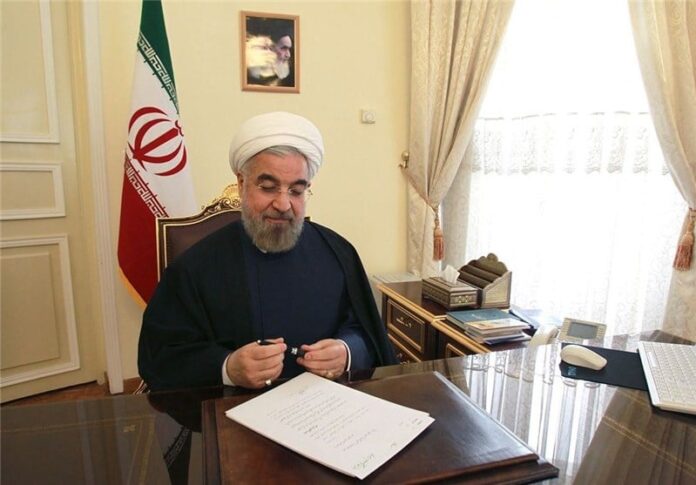
In his message, Rouhani also noted that cooperation between Tehran and Ankara can ensure regional security.
The full text of the message follows:
In the name of God, the Compassionate, the Merciful
Mr. Recep Tayyip Erdoğan, the President of Turkey
I wholeheartedly congratulate you and the people of your country on the anniversary of the independence of the Republic of Turkey.
Fortunately, historical, friendly and cordial relations between the Iranian and Turkish nations have always been growing. The formation of the [Iran-Turkey] High Cooperation Council as well as regular meetings together with the sessions of different specialized commissions held between the two countries such as those of the Joint Economic Commission, the Joint Transportation Commission and the Strategic Agriculture Committee have given fresh impetus to mutual relations.
Developments in the region over the past decade and the prominent role of the Islamic Republic of Iran and the Republic of Turkey in helping settle issues show cooperation between the two major neighbours can be instrumental in ensuring peace, security and stability of regional countries.
I ask God Almighty to grant you health and success and bestow prosperity on the people of the Republic of Turkey.
Hassan Rouhani, President of the Islamic Republic of Iran
© All Content by IFP News ( Iran Front Page ) is licensed under a Creative Commons Attribution 4.0 International License.
