Friday, January 2, 2026
Home Blog Page 3051

Iranian Female Painter Wins Award at Harvard Art Gala

Iranian Female Painter Wins Award at Harvard Art Gala (1)

The Massachusetts General Hospital Frontotemporal Disorders Unit (MGH FTD) hosted an annual gala, “A Night with the Arts for FTD,” at the Royal Sonesta Boston hotel in Cambridge, Massachusetts, on October 18.

Held to support the Alzheimer’s disease and dementia research, the annual gala and art show was organized by Dr. Brad Dickerson, director of the MGH FTD Unit.

Artists and participants in this year’s gala displayed their works of art about the Alzheimer’s disease and frontotemporal dementia disorders.

At the conclusion of the art show, a painting from young Iranian artist Sara Ashrafi was chosen as the best work of art.

Ashrafi has held several exhibitions in various state-sponsored and private galleries in Switzerland and other European countries in recent years.

Sara began her art career as a painter by publishing works of art in Iranian daily newspapers, Kayhan and Abrar, when she was a teenager.

She creates extremely personal and surreal moods in her paintings, which reflect a broader aspect of human mentality and behavior despite appearing to be fantastical or personal.

“I was thrilled to be invited to participate in the show given its theme, because paintings about the patients with Alzheimer’s disease is very exciting for me. From my viewpoint, the Alzheimer’s disease endows the patients with extraordinary capabilities in exchange for the sufferings. They include flying in the reveries and breaking the boundaries of reality forever. The endless fantasies they (patients) would live with,” Ashrafi said of her painting.

“It was the only subject that didn’t need any research to know about. One can ask anybody and just listen to the memories that will be never forgotten,” she added.

Sara said she has painted acrylic on canvas to create the 200×85 cm painting that depicts eight figures, each carrying an element of the Alzheimer’s diseases above their heads.

“When I was painting each of those characters, I had no plan for the next one, and was just thinking about the only one I was working on, and this was challenging for me,” she added.

“When I talked to people and relatives about their memories of the Alzheimer’s patients, they had many similar experiences. For instance, the most important one was that most of the patients didn’t believe their real age, and were living part of their life in which they had better feelings, under the age of 30 in most cases. They are frozen in the most beautiful part of their life. That’s why I depicted all eight figures as young persons, some of whom may be 14 or 15 years old,” Ashrafi explained.

Iranian Female Painter Wins Award at Harvard Art Gala“I believe that dementia patients are like people that call you and want to show you stuff from an old small suitcase that are very precious to them. So I named the painting ‘The Small Suitcase of Dream in Mind’,” she added.

The Night with the Arts for FTD is more than a fundraiser. It celebrates the patients, caregivers, families, staff, clinicians and colleagues who make up the FTD community.

The annual event also provides an opportunity for families to create new memories of joy while living with frontotemporal disorder.

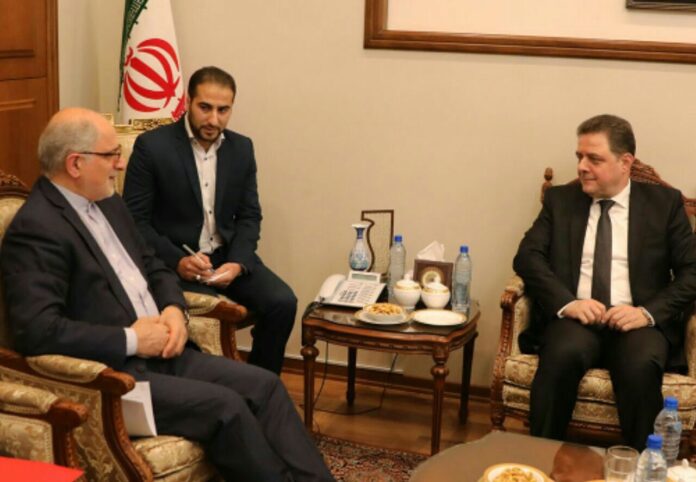
Iran Appoints Jalali as New Ambassador to Moscow

Iran Appoints Jalali as New Ambassador to Moscow

In an open session on Sunday, Iranian lawmakers accepted Jalali’s resignation with 146 yes votes and 58 no votes. Nine MPs also abstained from voting.

Addressing the parliamentary session, Parliament Speaker Ali Larijani expressed hope that Jalali would play an effective role in the development of Russian-Iranian relations.

Jalali is widely seen as one of the closest allies of Larijani, who is not going to run in the parliamentary elections this year, after several terms in Majlis.

He served as a lawmaker for five four-year terms. He was the chair of Iran-Russia parliamentary friendship group in the seventh Parliament and the head of Iran-EU parliamentary friendship group in the eighth, ninth, and tenth terms. He also served as the head of the Parliament’s Research Centre from 2012 to 2019.

The former ambassador to Moscow Mahdi Sanaei had taken the post in 2013 at the beginning of President Hassan Rouhani’s term in office.

Arab States Give Iran ‘Good Feedback’ after Receiving Its Letters

Iran Vows Appropriate Response to US Interception of Mahan Air Flight

Speaking in a press conference in Tehran on Sunday, Mousavi said the Hormuz Peace Endeavour (HOPE) initiative and its details, unveiled by our president during the UN General Assembly, have been submitted to “seven regional countries” as well as the UN Secretary General.

“It has yielded good reactions. We have received good feedback both from regional countries and the UN and Security Council member states. There are details which we prefer not to mention for now. But in general, the reactions are good,” he noted.

“Discussions are underway in those countries. As far as we know, these countries will even collectively review the plan proposed by Iran. God willing, we hope this benevolent step by the Islamic Republic of Iran will be welcomed by these countries, and we would hopefully witness security and stability in our region, especially in the Persian Gulf,” he went on to say.

“Let me give the details once the process is over and the time is ripe for making it public.”

Iranian EB Patients Losing Their Lives over US Sanctions: NGO

Hamid Reza Hashemi-Golayegani, the head of the NGO that helps such patients, said Sunday that at least 15 Iranian children with epidermolysis bullosa (EB) have died since the US launched its new sanctions on Iran in August.

That is because Swedish medical companies which provided protective bandages for such patients have halted supplies due to the restrictions, he said.

Often known as butterfly children because their skin is as fragile as the wings of a butterfly, EB patients need special care. Even mild frictions or bumps cause severe blistering of the skin which is very painful.

They often have difficulty with their daily activities, such as walking, eating and even breathing, but without proper protective bandages, their agony would be heartbreaking.

The trade of humanitarian goods, such as food, medicine and medical devices, is on paper allowed by the US, still European companies refuse to do business with Iran, fearing secondary American sanctions.

Since the reimposition of sanctions, Swedish medical products firm Molnlycke Health Care has stopped delivering Mepilex dressings which are trusted around the world to treat a wide range of chronic and acute wounds, including in EB patients, Iranian media reports say.

“EB patients are in desperate need of this dressing and unfortunately there is no alternative treatment for them,” Hashemi said, calling on related international bodies to convince the US into exempting food and medicine from its illegal sanctions on Iran.

Last year, President Donald Trump unilaterally pulled the US out of the 2015 nuclear deal with Iran, officially named the Joint Comprehensive Plan of Action (JCPOA), and unleashed the “toughest ever” sanctions against Tehran.

Washington claims the sanctions target the government, but ordinary Iranians are the ones who suffer the most.

Last November, the Islamic Republic of Iran Medical Council (IRIMC) said illegal economic sanctions have negative impacts on the country’s health sector.

In a tweet in early March 2019, Iran’s Foreign Minister Mohammad Javad Zarif announced that 66 Iranian scientific medical societies had written to the UN chief in condemnation of the “inhumane and medieval” American sanctions targeting Iran’s health sector.

Scholars, scientists and academics of 66 Iranian scientific societies highlighted that the unilateral US bans have “deliberately targeted” patients, healthcare sectors, academic research centers, healthcare providers, medical equipment suppliers, active pharmaceutical ingredients providers, pharmaceutical equipment suppliers and heath regulators.

The International Court of Justice (ICJ) – the principal judicial organ of the United Nations – ordered the US in October 2018 to halt the unilateral sanctions it had reimposed on “humanitarian” supplies to Iran.

Iran Ranks First in Artificial Intelligence in West Asia: Report

Iran Ranks First in Artificial Intelligence in West Asia Report

Since 2009, the SIR has published its international ranking of worldwide educational and research institutions based on their performance and the number of articles they have published in internationally recognized publications.

The SIR ranks higher education and research institutions based on indicators such as research performance, innovative achievements, universities’ websites and their social impacts. The SIR ranks some 5,000 institutions annually.

Iranian scientists kept making progress in the field of AI in 2018. Iran ranks ninth among 155 countries when it comes to artificial intelligence.

For a brief review of Iran’s achievements in various fields of science and technology, check the book “Science and Technology in Iran: A Brief Review – 2019

AI has found a major non-hardware market in recent years given the development of information technology, mobile phone applications, the Internet, cab-hailing services, games and online sales, says Majid Nili, the secretary of the Cognitive Technologies and Sciences Development Board of the Iranian Vice-Presidency for Science and Technology.

“At the moment, projects run by university students and universities are related to the incorporation of AI activities into new businesses, and this matter has resulted in a leap in the applications of artificial intelligence in the country,” he said.

AI is supposed to assist human beings and make life easier for us. AI is supposed to be like an instructor in the domain of health. It is supposed to analyze factory data. The pace of progress in the AI domain is the harbinger of a major scientific leap. As for other scientific areas, the development of this technology, too, requires and formation of a proper environment, one in which knowledge-based companies and other players play a major role.

Small Group Tours of Iran with Saadat Rent

Small Group Tours of Iran with Saadat Rent

Many different Iran tours are held every year in four seasons in this beautiful country. But in recent years that Iran tourism is more known between tourists from around the world, people prefer to travel in Iran private tours instead of Iran group tours. In this article, Saadat rent is going to talk about why we also think Iran private tour is better and where you can find the best Iran small group tours.

Private tours of Iran

As we mentioned at the beginning of our article about small group tours of Iran, these days, tourists who travel to Iran prefer to attend the private tours. They want to travel around Iran in small group tours with their friends and families and experience a safe and comfortable Iran tour here.
This made us think about the fact that why Iran private tour now is becoming more popular between the people and what are the advantages and also the disadvantages of an Iran small group tour. In continue we are going to talk about all of these issues about an Iran private tour, so don’t miss it.

Why to take private tour of Iran

Traveling to this country in an Iran small group tour can bring you a different experience from Iran group tours that most of the travel agencies in Iran provide for their customers. But what are the advantages and disadvantages of an Iran private tour:

Advantages of Iran private tour:

  • By traveling in an Iran small group tour, you have more flexibility in your time and your Iran tour itinerary: You can choose the places, cities, and attractions that you rather visit in your Iran private tour and also you can change the time tables more easily in an Iran small group tour. But in group tours, you cannot change the time tables and your Iran tour itinerary most of the time and if you want to change it, all of the people that are in that Iran group tour should be agree with you that usually, it is impossible.
  • You can choose the people you want to travel within your Iran private tour: Actually, Iran small group tours are more requested by tourists who prefer to travel with their friends and families. From 2 to 5 people you can join in an Iran private tour, so it is an unbelievable chance to travel by people you love and make the best memories in Iran.
  • You can manage the costs more easily in an Iran private tour: actually, most of the people think that Iran small group tours are more expensive than Iran group tours. but it is wrong. As we mentioned Iran private tours are more flexible so you can choose how much you want to spend on your trip to Iran. You can choose your transportation in Iran, the kind of accommodation in different cities and meals you are going to have in Iran. So you can plan your trip depend on your budget and change your Iran tour itinerary if you think it is necessary.

Disadvantages of Iran private tour:

  • If you travel on a small group tour, you may lose the chance of meeting new people. Many people who travel to Iran in group tours, meet new people from different countries that also join that Iran tour and make new friends. By traveling on Iran private tour, you may lose this chance but instead of that, you can make many Iranian friends.

Saadat rent Iran private tours

Saadat rent as one of the biggest car rental in Iran companies now is here with the best small group tours of Iran for its customers and tourists from around the world. We can help you with the best Iran private tour itineraries to have an unforgettable experience in your travel to Iran. You can choose between many themed Iran private tours and the best Iran small group tours. But that’s not all, Saadat rent can also help you to plan your desired tour itinerary, all based on what you want and cities you want to visit. So don’t miss this chance.

New Large Oil Field Discovered in Iran: President Rouhani

New Large Oil Field Discovered in Iran President Rouhani 1

Hassan Rouhani further said the country’s petroleum exports are growing as is national economy.

The president further underlined Iranian people’s resistance against the enemy’s pressure.
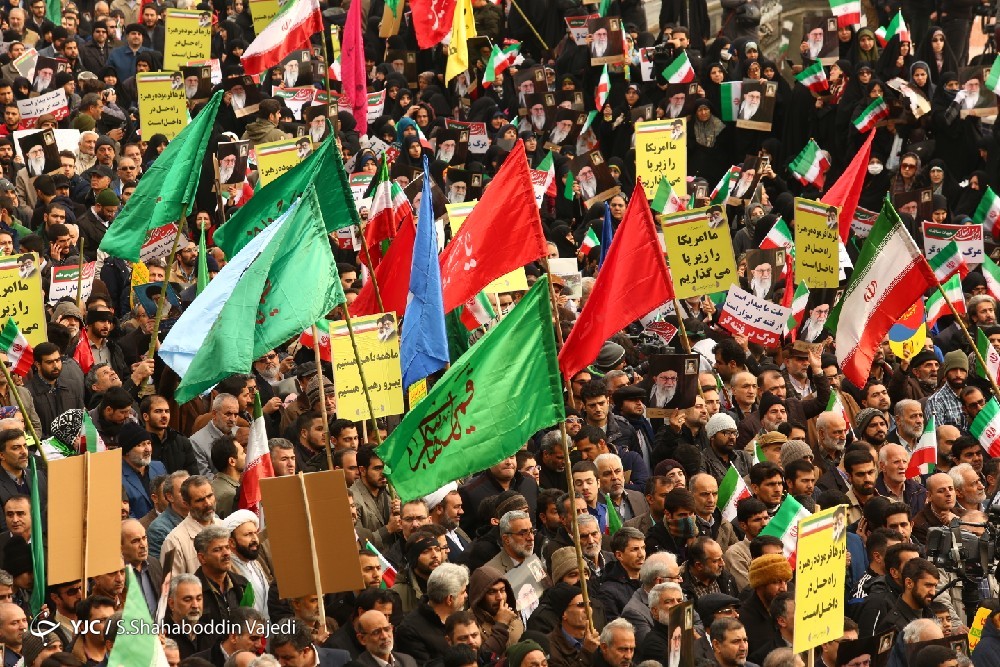
“Over the past year, we stood up to foreigners and our people passed tough days; our people had very difficult days in terms of the economic situation,” said Rouhani while addressing a huge crowd of people in the city of Yazd.

“Our people’s resistance and unity together with our efforts today have brought us to a point where, in my opinion, the US has become disappointed,” he added.

“Despite all attempts made by the United States and enemies against the Iranian nation, these people are more prepared than ever to make sacrifices for their country,” said President Rouhani.

He noted that despite the enemy’s pressure, Iran has managed to curb inflation, which means “entrepreneurs, farmers, workers and engineers across the nations have increased their efforts.”

Caspian Sea Generous Source of Income for Local Fishermen

Caspian Sea Generous Source of Income for Local Fishermen

Fishing in the Caspian Sea starts in the autumn, when the nature changes its colourful clothes, and continues until April. The sea welcomes hard-working fishermen generously and offers them plenty of mullet fish that makes the fishermen able to provide for themselves and their families.

Caspian mullet is olive green and silver in colour. It’s an oystercatcher fish fed on snails, algae, worms and decaying material on the seabed.

What follows are YJC’s photos of fishing in Caspian Sea:

FM Zarif Due in Kazakhstan to Attend Astana Club

Zarif

The visit was announced on Sunday by Foreign Ministry Spokesman Seyyed Abbas Mousavi in a press conference in Tehran.

The Astana Club is a global issues dialogue platform based on Chatham House rules and convened by Nursultan Nazarbayev.

The club has partnered with international think tanks the Institute of World Economy and Politics, the Carnegie Endowment, the German Council on Foreign Relations, the China Institute of Contemporary International Relations, and the Russian International Affairs Council. Club participants include scholars, businesspersons and former members of the U.S. Congress.

FATF Bills: In the Interest or to the Detriment of Iran?

Foreign Ministry Condemns FATF’s Blacklisting of Iran

Sa’eed Leilaz says as long as the Islamic Republic’s role in the international arena is not fully defined within the existing global order, it cannot discharge its obligations to support such movements as Hamas, Hezbollah and Yemen’s Ansarullah.

“After four years, the FATF bills have not yet been approved by Iran’s Expediency Council, which ignores some of the consequences of not approving the bills, and its members do not consider the impact of such decision in their calculations.”

However, economic and political analysts not only find it necessary to pass FATF-related bills, but believe that rejecting them will impose more pressure on the economy of the country. They say non-approval of these bills will lead to negative interpretation of world public opinion about Iran.

Speaking in an interview with Khabar Online, Leilaz diacussed the consequences of not adopting the FATF bills. He said that in the first place, the issue of enacting bills known as combating money laundering should be demystified. It means, it should be clarified that whether the approval or rejecting the bills, especially under current sanctions, would have positive or negative effects.

“Despite the pressure on the economy and the Iranian people due to sanctions, the approval of these bills can have an effect on the economic situation of the country and be very useful in the current circumstances,” he noted.

He noted that such a decision will improve Iran’s situation in the international arena in terms of public diplomacy and public relations.

“We should not forget that, in the first round of sanctions, due to the failure of public diplomacy and the loss of public opinion’s support, the image of Iran in the international arena was severely damaged.”

Although at that time the amount of pressure was far lower than the present time, as we had acted in the foreign policy in such a way that a global consensus set up against our country. Therefore, we were unable to prove the innocence and rightfulness of the Islamic Republic and we could not defend the Iranian nation in the international arena, stressed Leilaz.

Since the endorsement of the nuclear agreement between Iran and the P5+1, the Islamic Republic has adhered to international agreements, and even up to now, Tehran has complied with the deal.

In contrast, the United States has not fulfiled its international commitments and agreements it has signed. Currently, both the governments and the world’s public opinion know that this fact plays a very important role.
“So, if we assume that we are confronted with the equation that the signing and approval of the FTAF bills can improve Iran’s economic situation on the international arena and people’s livelihoods, this will not only not make things worse, but will also resolve them.  Secondly, in terms of public relations and international public opinion, whether regarding nations or governments, the world will guarantee the legitimacy of Iran,” reiterated Leilaz.

My recommendation is that it is certainly better to approve these bills, underlined the analyst.

“On the other hand, we will be charged if we do not approve such international bills. It may form the impression that the Islamic Republic is a supporter of money laundering in the world! As we know, none of the Islamic Republic’s international and regional aid and even no other country’s aid in the world are implemented through the normal international banking channels. That is, if a country wants to help another country or organisation, none of these helps are carried out through the international banking network. Either it would be Hezbollah, Hamas or Yemen, that of course, I know this doesn’t happen in Iran right now. Even the help that the US is now providing for its favourite groups in different countries of the world is not carried out through these channels. So we cannot say that the adoption of FATF bills can hamper our helps,” said Leilaz.

According to this political analysts, the approval of the FATF bills in the first place does not undermine Iran’s international and regional obligations, and in the second place it tactically improves Iran’s economic conditions and reduces the pressure on the people, and in the third place, it will help Iran a lot in winning the public opinion and preserving its legitimacy on the international arena. Therefore, the approval of these bills is far more to the benefit of the Islamic Republic of Iran, he underlined.

In response to a question that whether we will not be able to have economic relations with our neighbours if we do not accept these bills, he said, it is true that the Iranian economy is locked in the international arena now. However, if we do not accept and enforce these bills, the day the sanctions will be lifted, then we will see there are other barriers beyond them.

“There are very few governments in the world that have not accepted these bills, while most of the countries we know have illegally given aid to influential groups in their regions or internationally; countries such as Russia, the US, Saudi Arabia and China.”

The approval of these bills will not cause any breach in advancement of Iran’s regional and international goals, which I would oppose them if they were so.

“We must fulfil our international commitments. As these assistances will carry Iran’s interests far beyond their ideological effect. I think these helps are necessary. These policies have been one of Iran’s deterrence means in the past 40 years. I am very much in favour of these policies, but I don’t think the approval of these bills will stop Iran’s assistance,” highlighted Leilaz.

As far as I know, countries like Russia, China and even Turkey will not be able to work with Iran then.  That means, the public opinion in the world will turn against us. In this way, we will not only achieve nothing, but the pressures on us would be mounted under the current circumstances. At the moment, we are not in a position to even add a little to these pressures. If approved, not only will these pressures be reduced to some extent, but they will not harm any of the Islamic Republic’s international and regional commitments and relations, concluded this Iranian political expert.

The global anti-money-laundering watchdog has increased pressure on Iran to meet its standards while giving the country more time to do so.

The Financial Action Task Force that sets standards for anti-money-laundering and counterterrorism financing rules, extended until February a deadline for Iran to implement certain measures or face further restrictions. The earlier deadline was June 2019.

The Islamic Republic in recent years has passed legislation to address money-laundering and terrorist-financing issues, but bills ratifying treaties related to combating these problems have not come into effect, the FATF said. The watchdog added that it considers only fully enacted legislation when studying a country’s efforts.

The international body warned that if Tehran doesn’t meet its standards by February, it will put back in place further restrictions on the country that are currently suspended.