Sunday, December 21, 2025
Home Blog Page 3036

Where Is the World’s Hottest Place?

Hottest Place in the World

The hottest place in the world is somewhere in the middle of Iran. It is actually in the center of Lut Desert.

According to data from NASA’s satellite, the Lut Desert is home to the hottest recorded spot on the earth’s surface.

However, there are some doubts about this idea, so let’s take a deeper look into this matter.

Where Is the World's Hottest Place?The Lut Desert

The “desert” is a large salt desert. Lut is actually the world’s 27th-largest desert with an area of 51,800 square kilometers (20,000 square miles). In Farsi ‘Lut’ literally means bare land without water and devoid of vegetation.

Lut desert is situated in the south-east of the country. The eastern part of the desert displays a low plateau covered with salt flats, while the center displays a series of parallel ridges and furrows. Strong winds sweep this arid area From June to October.

The main attraction areas of Lut desert, include Gandom Berian, Shahdad Kalut, and Rig Yellen. In addition, the desert is home to diverse animal life, including insects, reptiles, and desert foxes.

Iran UNESCO’s World Heritage List inscribed the Lut Desert in 2016.

If you are planning to travel to Iran and would like to book your Iran Tour Packages in advance or submit your Iran Visa application through an Iranian travel agency, feel free to contact us at your convenience.

Where Is the World's Hottest Place?Where was the previous hottest spot in the world?

In 1913, scientists in Death Valley, California measured a temperature of 134°F (56.7°C) and declared it the hottest temperature ever recorded. In 1922, a weather station in Libya recorded a temperature of 136.4°F (58.0°C).

The World Meteorological Organization (WMO) recognized this observation as the hottest temperature recorded on Earth for some time.

However, according to another research by the University of Montana, using data from the U.S. Geological Survey’s Landsat satellites, neither is the world’s hottest place.

In a statement by NASA from a team member, “Most of the places that call themselves the hottest on Earth are not even serious contenders”.

Is Lut Desert actually home to the world’s hottest place?

To find a proper answer to this question, we have to look at the scientific evidence.

Running and his colleagues examined infrared data from the Landsat satellites during seven years. They found that the winner in five of those years — 2004, 2005, 2006, 2007 and 2009 — was actually the Lut Desert in Iran.

A temperature of 159.3°F (70.7°C) was measured in 2005- the highest temperature ever officially confirmed for a location on Earth.

However, the Lut Desert did not encounter the highest temperature every year.

So why didn’t the Lut Desert previously named as the world hottest spot? Because “the Earth’s hot deserts — such as the Sahara desert, the Gobi, the Sonoran, and the Lut — are climatically harsh and so remote that access for routine measurements and maintenance of a weather station is impractical,” said team member David Mildrexler.

Queensland, Australia had the highest temperature in 2003, with the record of 156.7°F (69.3°C), and in 2008, Turpan Basin in China had the highest temperature on the earth with the temperature of 152.2°F (66.8°C).

It is worth knowing that the Turpan Basin is covered with dark red sandstone that heats up the extreme temperature, especially in the afternoon sun.

A number of factors influence the land surface temperature (LST). For instance: changes in solar radiation, changes in land cover and changes in atmospheric conditions. Therefore, dry, rocky and dark-colored lands absorb heat well, while lighter sand will tend to reflect more sunlight.

However, some scientists argue that the “hottest place” on the earth should be framed in terms of land temperature, not air temperature.

And years of analysis have revealed that parts of Iran and Australia are particularly hot from an LST perspective.

Where Is the World's Hottest Place?What is the best time to travel to the deserts of Iran?

Have you ever imagined yourself trekking, or walking in a silent desert? Do you enjoy watching the stars at night without annoying city lights? Do you want to visit the world’s hottest spot?

If your answer is yes, maybe you want to visit Lut Desert. If you would like to visit deserts of Iran, especially the Lut Desert, and step on the golden sands of this amazing place with breathtaking nature, it’s the time!

From October, till the end of February, it is the best time to visit the deserts of Iran.

We have a piece of good news for you! If you would like to travel to Iran since the first of December, till the end of February, you will get a 20% discount on all of our Iran tour packages.

Don’t miss this opportunity and your chance of visiting Iran with this amazing offer.

Iran Bans Cooperation with British Council

The ministry’s Public Relations Office said Tuesday that “the UK — which has a long history of infiltration, creating networks and generating propaganda in various countries — was planning to implement a project for cultural networking purposes” in cahoots with the British Council in Iran.

With timely action, it said, the country’s intelligence forces prevented Britain from “implementing [the project] and achieving its goal” of infiltrating into Iran’s educational sphere.

The British Council describes itself as the United Kingdom’s “international organization for cultural relations and educational opportunities.”

But to many in the international community, the British Council is merely viewed as a tool of British foreign policy.

According to its website, the British Council is not “physically present” in Iran, but one of its employees has been convicted and jailed in Iran for espionage.

It has long been suspected that British Council facilities and programs abroad are used as talent spotting and recruitment tools for the Secret Intelligence Service, better known as MI6.

The British Council’s roots can be traced roots to the “British Committee for Relations with Other Countries,” which was formed in 1934.

This foundational role has only intensified in recent years as the Council has established deep roots in over 100 countries, where it ostensibly undertakes a wide range of “cultural” and “educational” activities.

Founded as a charity governed by Royal Charter, the British Council is extensively supported by the Foreign and Commonwealth Office (FCO), a connection that it has never tried to hide.

The Council admits that 15 percent of its budget is provided by the FCO, whilst 85 percent of its turnover comes from “teaching,” “exams,” “tendered contracts” and “partnerships.”

Due to the nature of its work, and specifically its proximity to the FCO and by extension to MI6, the British Council has run into difficulties with host governments.

The most publicized case of the Council’s troubles was in Russia where it was ordered to close down its offices in December 2007.

Farmers in Shahreza Start Harvesting Pomegranate

Over 19,000 tonnes of pomegranate are annually produced in the town of Shahreza, which bring the locals some $5 million in revenues.

What follows are photos of the harvest retrieved from the Young Journalists Club (YJC):

Iranian Delegate Attending China Imports Exhibit in Shanghai

Iranian Delegate Attending China Imports Exhibit in Shanghai

The event opened on November 5, 2019, with a speech by Chinese President Xi Jinping. The ceremony was also attended by Iranian Minister of Industry, Mine and Trade Reza Rahmani, who heads the Iranian delegation at the exhibit.

The event brings together delegations and companies from 150 countries, which are displaying their products at the exhibition.

The international exhibit has three sections, namely countries, companies and the Hongqiao International Economic Forum. A total of 64 countries as well as three international organizations have taken part in the exhibitions section in order to put on show their achievements in the field of trade and investment.

Over three thousand companies from 150 countries are also attending the company section. The exhibitors are displaying items such as state-of-the-art day-to-day appliances, automobiles, equipment, medical devices, medicines, agricultural produce, etc.

The more than 250 firms taking part in the exhibition are either among the top 500 companies in the world or among the best companies in their own business.

China is projected to import $30 trillion worth of goods and $10 trillion worth of services in the coming 15 years.

How Can Iranian Businesses Best Localize Content to Open New Global Markets?

How can Iranian companies “up their game” by translation and localization so that they can earn their fair share of income from new markets? We’ll look at several options: working with professional language service agencies, engaging freelance translators, and doing it themselves with neural machine translation. We’ll consider best practices, tips and tricks as well as the pitfalls in the process to be avoided.

A Global Strategy Starts with Doing Your Homework

If you have a small business and hope to expand your markets, you’ve thought about going beyond Iran’s borders. If you have products and services that can be marketed and sold via the Internet, that expansion does not need to break your budget. We will consider choices that startups and online businesses confront in pursuit of new audiences and increased revenues from abroad.

The first thing to develop is a strategy. Creating a global business is a strategic challenge, so you should map it out with research and expert assistance. If you want to get more insights on how to develop a global marketing strategy, check out this article about international marketing strategy. It’s going to be a lot of work but you will be getting the help you need from your professional translation agency through professional translation and localization services.

Going Global: A Translation and Localization Guide

Now that you’ve done your homework, and begun developing a strategy, here are some points to guide development of your go-to-market plan.

  1. Get your current content and campaigns in order. You probably have basic marketing material and a website with Farsi content. Do an inventory of what is the minimum collection of content and marketing material that tells your story and generates leads for your products and services. Then clean up your act
  2. Select your next languages to open new markets. English may be the default choice as the language of international business, and the default “second language” spoken by many, will nearly a billion speakers. So it’s a safe bet to choose English in your initial translation and localization plans. With 422 million speakers and regional proximity, Arabic may be a logical candidate. But don’t neglect the 1.1 billion Mandarin Chinese speakers. Consider, too, 527 million Spanish speakers, not just in Spain but Latin America. And 267 million Russian speakers should not be neglected either.
  3. Consider costs vs. benefits of additional language. The cost of adding additional languages grows, of course, in absolute terms. But the incremental cost goes down. But – as the Americans say: “In for a dime, in for a dollar.” So if your first localization costs x, the second one may cost x/2, the third x/3 and so on.
  4. Against these cost expectations, consider revenue projections. Which markets are realistically reachable, and where can you expect the highest conversion rates. This calculation should shape your marketing and localization efforts.

  5. Develop a country-by-country marketing and launch strategy. No two countries or language markets are alike, so you need to do your strategic homework to determine how best to adapt and deploy your “local” marketing campaign.

Don’t Go It Alone: The Pros and Cons of Professional Localization Agencies

Don’t be overwhelmed by the many things you need to do to market to a foreign language market. In most cases, the money you pay an international localization company or a provider of localization services is well worth it, saving you and your marketing team valuable time and avoiding costly mistakes.  Anyone knows how to translate a page, but a deep understanding of a language or culture is an expert skill that you can’t learn on the Internet.

Search for and obtain referrals for a top localization agency – this means more than just a language translator or a website translator.  A professional translation accounts for cultural factors so that your language and collateral come across in an appropriate way. Marketing translation services vary in quality, but professional agencies have access to localization experts. This is especially true for software or app developers: localization is a well-developed science for this use and you really need to rely on experts for this.

Typically, with professional language services agencies you work directly with an account manager, who in turn manages an external translation team. This serves as a diplomatic buffer preventing disagreements or unpleasantness with the translator(s). However, it can also prevent direct communications and result in information being “lost in translation” as it passes from one person to another. A tip to avoid this is always to communicate comments and feedback in writing, not orally.

The Freelance Option: How to Save Money without Sacrificing Quality

The other disadvantage of agencies is that you will pay a premium for the additional resources and overhead that localization companies assign to your account. It is tempting to seek out professional translation services from freelancers. In the best case, their rates may be 50-60% lower than those of an agency, but let the buyer beware: you will need to invest more of your personal and staff time to manage each freelance resource.

You can reduce the risk by working through one of the many online freelance marketplaces, like Freelancer, Upwork, or Fiverr. There you can view a translator’s profile, CV, ratings and reviews. You also have the platform as a “middleman” to hold funds in escrow till you approve the work. But still you are working with individuals, who get sick, who take trips, and other things that could interfere with meeting your deadline and hitting your budget. To further reduce risk, hire an additional freelancer in the same language to serve as auditor, and editor of the first, and to be available in case the “primary” translator disappoints.

Welcome to the Machine: Uses and Abuses of NMT

The improvement of neural machine translation (NMT) services like Google Translate has given rise to “cheating” by translators who use these as a shortcut to doing “manual” translation. Make clear contractually that use of NMT is unacceptable and check their work against an NMT or two before accepting their delivery. If you need more context, take a look at this informative post on why AI hasn’t yet mastered language translation.

The last piece of advice is to use NMT yourself. These services are fantastic to give you access to foreign language resources, and you can use them successfully to do research and even first drafts of internal documents, especially if the language is formalistic and structured. But it’s always a good idea to hire a translator to audit and edit machine-translated documents to avoid potential embarrassment.

The Bottom line on Localization for Iranian Entrepreneurs

To go global with confidence, work with top localization agencies if you have the budget, or, if not, make the effort to select a pair of excellent translators per language. Be wary of machine translation, but these services are free – so use them with care.

Tehran’s 90-Year-Old Confectionery Selling Unique Handmade Chocolates

Located on Sa’adi Street for almost nine decades, its pastries are still popular. In 1935, a Ukrainian family, named Pogossians, came to Iran to escape the economic pressures and crises that had plagued Europe during the interwar period. The whole family helped to run a bakery. The world war was finally over and the shadows of famine and unrest disappeared, and living conditions got better. Therefore, the Ukrainian family converted the bakery into a confectionery and did a very professional and good job.

This confectionery has once been the gathering place for famous people in the capital and is still a hangout for many artists and celebrities. So far, it’s been family-run, with two overseas branches run by the grandchildren of the family. Currently the only survivor of this family is Ruben, who runs the Mignon confectionery with his wife.

Ruben’s wife has told Fars News Agency that “my father-in-law started here after the Russian Revolution when he immigrated to Iran. He had a confectionery in Ukraine and decided to continue his job in Iran.

“First off, he launched a bakery and then sweets and chocolates were added and the place turned into a chocolate shop in Tehran.”

Regarding the name of the shop she said, “One of the sons who learned French at St. Louis School selected Mignon. It is a French name meaning “cute”, commonly used to refer to a sweet kid. My mother-in-law, who was a chef and the manager behind the scenes, liked the name and chose it for the shop; a name that still stands on the window. After the death of my father-in-law, my husband’s elder brother, who was a chemistry professor, continued the job, and after that, my husband, Ruben, was in charge here.”

About the shop’s famous chocolates, she said all the chocolates are handmade and made from natural chocolate oil.

“We do not use synthetic and industrial oils in making chocolates. We haven’t raised the price of our products after the rise of expenses to maintain our special customers,” she continued.

“Our usual pastries are always available, but we have a handful of specialty pastries that are made only on special occasions, such as Christmas pastries or Pyrok cakes baked at one of our festivals. This cake is very popular and is also known as luck cake, because we put a coin wrapped in foil inside it. When the families slice the cake, anyone who wins the coin in the portion is considered the lucky person in the coming year.  Another one of our specialty cakes that takes a lot of time to bake is the best-selling Armenian-made cake called Pasca. It is the Easter cake and people stand in long queues to buy it.”

Mignon’s chocolates include almond and orange peel chocolate, pure orange peel chocolate, 70% dark chocolate, plain pure chocolate, truffle chocolate with peanut butter and pure chocolate with fried hazelnut. “Eris”, “Barbaris”, and “Kianushka” are some of these handmade chocolates. There are also Armenian chocolates that are ordered for weddings or baptisms.

“We’ve done our best to keep our business alive in this economic situation, so we still have our old customers. We even have customers from three different generations,” she added.

Iran Says Regional States Must Avoid Meddling in Iraq

Iran Says Regional States Must Avoid Meddling in Iraq

Speaking in a press conference on Monday, Ali Rabiei said the approach adopted by Baghdad to deal with demonstrators is peaceful, adding the unrest is a domestic issue of Iraq.

He urged Iraq’s neighbours not to meddle in their neighbour’s internal affairs.

“Iraq’s neighbours have a duty not to interfere in Iraq’s internal politics, to set the stage for reaching necessary agreements to give the Iraqi nation the rightful status it has had as a bridge connecting the regional nations,” he noted.

Rabiei noted the issue of Iraq is important to Iran, highlighting that “the destiny of Iraqi people is tied to that of Iranians historically and culturally.”

He further lashed at the US and Israel for trying to cash in on the unrest in Iraq.

“Intelligence on the ground as well as Trump’s hasty tweet shows the US and the Israeli regime and some regional countries have waged psychological warfare to piggyback on people’s demands,” he noted.

He said the demonstrations are not a representation of the Iraqi society, expressing hope that “efforts by the Iraqi government and nation will bear fruit, and Iraq’s welfare, security and democracy will be secured through interaction with the Iraqi government.”

The government spokesman further stressed the importance of national will to end the current unrest in Iraq.

“We are confident and Iraqi people’s legitimate demands can be met within the framework of Iraq’s Constitution and through the national will of all ethnic and religious groups and by following top Iraqi religious figures in order to solve problems,” he noted.

Iran Declares Fourth Phase of Reducing Nuclear Commitments

Rouhani

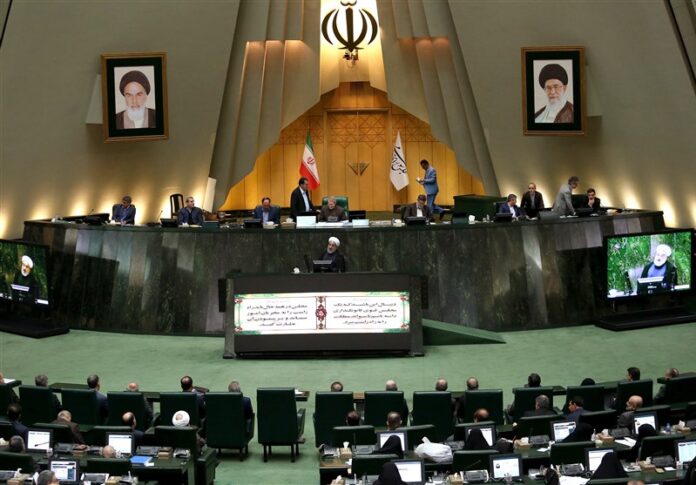
Addressing a ceremony in Tehran on Tuesday, President Rouhani said he will order the Atomic Energy Organization of Iran (AEOI) to start injecting gas into the centrifuges of Fordow nuclear plant as part of the fourth phase.

According to the president, Iran was not supposed to inject any gas into the 1,044 centrifuges it has in Fordow according to the Joint Comprehensive Plan of Action (JCPOA), but it is not going to comply with that restriction any more given the US’ withdrawal from the accord and the European countries’ failure to meet their commitments.

Rouhani said Tehran is well aware of the other parties’ sensitivity to Fordow and the country’s centrifuges, and expect them to make a fuss about the fourth phase.

However, he added, the move is reversible like the previous ones, and Iran is ready to stop injecting the gas once the other parties fulfill their commitments.

He also noted that Iran’s nuclear activities will remain under the supervision of the International Atomic Energy Agency (IAEA).

Iran had earlier taken three separate calibrated steps away from the deal, and had warned it would take the fourth in November unless the US lifts economic sanctions.

Iran Says Will Never Hold Unconditional Talks with Trump

Iran Says Will Never Hold Unconditional Talks with Trump

Mahmoud Vaezi said Tehran’s reduction of its obligations under the Iran nuclear agreement known as the Joint Comprehensive Plan of Action (JCPOA) is in conformity with the provisions of the deal.

“Our steps to reduce our JCPOA commitments are within the rights stipulated in clauses 26, 36 and 37 of the JCPOA,” said Vaezi, the chief of staff of Iranian President Hassan Rouhani.

He said Iran still believes in returning to the JCPOA, and added Tehran’s reduction of its commitments under the deal is aimed at creating an opportunity for other signatories to the deal to fulfill their obligations under the JCPOA.

“It wouldn’t be possible for Iran to remain committed to its obligations under the JCPOA while the other signatories fail to keep their side of the bargain,” he added.

Vaezi also touched upon Iran’s conditions for holding negotiations with the P5+1 group again.

“As Mr. Rouhani has already announced, we are ready to sit at the negotiating table with P5+1 countries in order to secure Iran’s national interests. In fact, we regard talks as a tool to reinforce national interests, but we will never hold unconditional talks with someone who is not morally and legally committed to agreements,” he said.

Vaezi said Iran is now in a position of power, and all countries admit that Iran is right, which is a testament to the failure of Washington’s “maximum pressure” policy on Iran.

He said Europe has proposed different plans in order to keep the nuclear agreement alive. He said Iran is reviewing some of the plans, including the one put forward by French President Emmanuel Macron.

“It needs the consensus of all signatories to save the JCPOA,” he said.

He said Iran will cooperate to preserve the JCPOA only if US sanctions against are lifted.

Iran Condemns New US Sanctions, White House Statement

Iran Vows to Take Action against US Move to End Nuclear Sanctions Waiver

In a statement on Monday, Mousavi condemned the unilateral and futile sanctions imposed by the US Treasury Department against a number of Iranian individuals.

“The US regime’s addiction to unilateral sanctions has put the regime’s statesmen in a totally passive position, in which they announce some hollow sanctions every now and then in order to relieve themselves and escape the frustration caused by their failure against the Iranian nation’s iron will,” the spokesman said.

“As we repeatedly announced earlier, such measures only reveal the regime’s desperation and inability to use diplomatic or logical solutions, which can be evaluated within the framework of the United States’ bullying approach toward other countries and important international and global issues,” he added.

The US Treasury on Monday announced the new sanctions against the financial assets of what the US called the “inner circle of both military and foreign affair advisors” to the Leader of Iran’s Islamic Revolution Ayatollah Seyyed Ali Khamenei, a senior administration official said in a call with reporters to discuss the sanctions.

The US sanctions block any US-controlled property or interests held by those targeted, and prohibit anyone or any entities in the United States from dealing with those sanctioned.
In his Monday remarks, the Iranian spokesman further criticized a statement released by the White House on November 4, describing it as a distortion of reality and flagrant.

“Through propaganda and brouhaha and using an impolite and undiplomatic language, the White House always tries to misrepresent the realities and distort the history by keeping open an already-closed case, which was settled and closed 40 years ago through the Algiers agreements between the two governments of Iran and the US,” Mousavi added.

He went on to say that the US administration cannot hide the crimes it committed against the Iranian nation from those in the 1953 coup and later through robbery, plunder, murder, and economic terrorism through such rhetoric, and replace the positions of the executioner and the victim.

“What the US administration has attributed to Iran is indeed what the Iranian nation and other nations in the world demand from the US government. It is the US administration that must stop [backing] terrorism – especially its support for the state-sponsored terrorism of the Zionist regime which loots other countries’ resources – as well as piracy, economic terrorism, and other abnormal and unusual behaviours, and instead choose a civilized, wise, and lawful path,” he added.

In a statement on Monday, released on the 40th anniversary of the seizure of the US embassy in Tehran, Washington claimed that Tehran targets “innocent civilians for use as pawns” in its foreign relations, and vowed that it will continue to impose its “crippling” sanctions until Iran changes this and what it called its other “hostile” behaviours.