Sunday, December 28, 2025
Home Blog Page 303

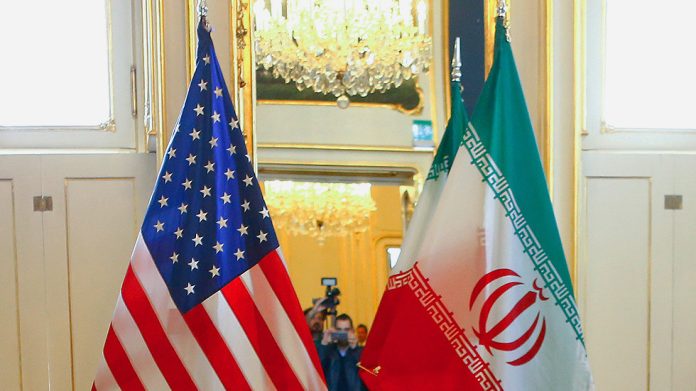
Trump directs his team to attempt meeting with Iranian officials as quickly as possible

Since Israel launched its first wave of missiles last week, the president has maintained publicly that Iran should come to the table to strike a deal with the United States, while privately urging his team to keep lines of communication open with the Iranians and Iranian intermediaries.

In conversations with European leaders at the G7 summit in Canada, Trump told his counterparts that discussions were underway to obtain a ceasefire agreement between Israel and Iran, and signaled he wanted US officials to meet their Iranian counterparts this week.

A US official told CNN that while nothing was set, Israel and Iran were moving in the right direction.

Trump acknowledged that the Iranians had been in touch through intermediaries earlier Monday. Tehran has yet responded to the claim.

“I think Iran basically is at the negotiating table, they want to make a deal,” Trump stated, before his team announced he would depart Canada early to return to Washington to monitor the situation.

He was less candid about what his plans could be should those diplomatic efforts fall short, including whether he would deploy US military assets to join Israel in attempting to dismantle Iran’s nuclear facilities.

As of Monday evening, the White House insisted the US had not joined Israel in attacking Iran.

“American forces are maintaining their defensive posture, and that has not changed. We will defend American interests,” Alex Pfeiffer, a White House spokesman, wrote on X.

Iranian officials stressed that the Israeli onslaught against Iran with the help of the US has practically made the course of negotiations between Tehran and Washington meaningless.

Pezeshkian calls on US to restrain Israel or face Iran’s painful response

In a phone call with Oman’s King Haitham bin Tariq on Monday, President Pezeshkian stated that adversaries mistakenly believe they can assassinate Iranian military commanders, scientists, and civilians to undermine the nation. However, thanks to the guidance of the Supreme Leader of the Islamic Revolution, Iranian armed forces have retaliated swiftly against such aggressions. He cautioned that if these attacks continue, Tehran’s responses will escalate in intensity and impact.

Pezeshkian emphasized that enemies have misjudged Iran’s defensive capabilities and national unity, asserting that they do not truly understand the Iranian people. He noted that recent provocations have not fractured societal cohesion; rather, even critics of the government have come together to defend the nation.

Regarding Iran’s peaceful nuclear program and ongoing indirect negotiations with the US, he highlighted that the Islamic Republic engages in talks to foster trust and transparency concerning its nuclear activities. During these discussions, American mediators explicitly acknowledged their influence over the Zionist regime, asserting that it would not act against Iran without US approval. Pezeshkian asserted that the Zionist regime cannot commit such acts of aggression without the backing of the US.

The president reiterated that Iran has consistently advocated for dialogue rooted in justice, respect for national rights, and adherence to international principles. However, he stressed that negotiations conducted under threats, coercion, and aggression are unacceptable.

Pezeshkian also pointed to the recent unity among Muslim nations as a clear indicator of emerging global solidarity against the aggression of the Zionist regime. He expressed hope that this solidarity would contribute to the promotion of peace, justice, and human dignity in the region.

In response, the Sultan of Oman expressed condolences for the martyrdom of Iranian commanders, scientists, and citizens. He condemned the actions of the Zionist regime and reaffirmed Oman’s solidarity with Iran. The Sultan also voiced concern over efforts to undermine peaceful processes in the region, emphasizing that Oman would remain committed to rationality and solidarity with its brotherly and friendly nations.

Iran vows proportional response to any attacks by Israel

In a phone call with Turkish President Recep Tayyip Erdogan on Monday, President Pezeshkian stated that at any level the Zionist regime attacks, it will be met with an equal response.

He emphasized: “We do not seek to escalate the conflict, but we will defend Iran’s territory against any aggression in a manner that they will regret.”

Pezeshkian said that Iran seeks peace; therefore, it engaged in nuclear negotiations with the US and demonstrated its willingness to reach an agreement within the framework of international regulations. A US representative in the nuclear talks informed Iran’s Foreign Minister Abbas Araqchi that the Zionist regime will act only with US approval, he pointed out that prior to the new round of negotiations, the regime attacked Iran, indicating that the US had given the Zionists the green light for such actions.

The Iranian president also expressed gratitude to his Turkish counterpart for his efforts to promote peace, stating that if the US wishes to continue negotiations, it must first stop Israel’s regional assaults.

In response, President Erdogan reported on his recent conversation with the US President Donald Trump, emphasizing that Israel must halt its attacks, and only then can Iran and the US engage in nuclear negotiations.

He added that Turkey is ready to host these discussions.

IAEA warns Israel-Iran war threatens nuclear facilities, diplomacy

Speaking at an emergency session of the United Nations nuclear watchdog’s Board of Governors on Monday in Vienna, Director General Grossi stressed that the region is at a critical juncture.

“Military escalation threatens lives, increases the chance of a radiological release with serious consequences for people and the environment, and delays indispensable work towards a diplomatic solution for the long-term assurance that Iran does not acquire a nuclear weapon,” Grossi said.

The IAEA chief’s remarks came amid growing concern that the conflict could permanently damage efforts to revive nuclear talks with Tehran, already strained by years of mistrust and United States President Donald Trump’s torpedoing of the 2015 nuclear accord brokered by world powers with Iran.

Grossi also delivered a technical update on the status of Iranian nuclear facilities after Israeli bombardments.

Natanz, Iran’s main uranium enrichment plant, was among the sites hit on Friday. While its underground section was spared a direct strike, Grossi warned that vital equipment may have been damaged due to a power outage triggered by the attack.

He noted that radiation levels outside the facility remained normal and, critically, there was no evidence of contamination spreading beyond the site.

“The level of radioactivity outside the Natanz site has remained unchanged and at normal levels, indicating no external radiological impact to the population or the environment from this event,” he added.

In addition to Natanz, four nuclear installations in Isfahan province were also damaged. However, the Fordow enrichment site, the Bushehr nuclear power plant and a reactor still under construction appeared unaffected.

IAEA personnel remain on the ground in Iran and are ready to resume full monitoring once the security situation allows, Grossi stated.

Meanwhile, Iran’s government is facing pressure at home to take a harder line. A bill reportedly being prepared in parliament could pave the way for Iran to exit the Treaty on the Non-Proliferation of Nuclear Weapons, a move that would deal a severe blow to global nonproliferation efforts.

Ministry of Foreign Affairs spokesperson Esmaeil Baghaei said the draft legislation was still in its early stages and would require coordination with lawmakers. He reiterated Tehran’s longstanding official opposition to developing nuclear weapons.

US aerial tankers headed to Middle East amid Iran-Israel conflict

Tel Aviv and Tehran have entered the fourth day of open hostilities. Last Thursday, Israel launched airstrikes on Iranian nuclear and military targets, killing senior military officials and scientists and prompting retaliatory missile barrages on the occupied territories, including Tel Aviv and Haifa.

The US has expressed support for the Israeli strikes, with President Donald Trump calling them “excellent.” He has also warned that Washington could become directly involved in the conflict if American interests are threatened but has yet to announce any plans to involve US forces.

However, according to flight tracking data, the US has already started deploying KC-135 and KC-46 aerial refueling tankers to the Middle East. Military Watch Magazine has suggested that the aircraft may be intended to support Israeli Air Force operations or refuel US fighters and bombers if Washington expands its role in the conflict.

The report also claims that tankers from other Western countries have participated in Israeli aerial refueling efforts, while the US is believed to have provided intelligence, satellite targeting data, and missile defense support.

On Sunday, Axios reported that Israeli officials had asked the US to directly take part in the military operation, specifically requesting assistance in striking Iran’s Fordow enrichment facility. However, US officials cited by the outlet said the request was declined, with one stating that the Trump administration is not considering any such involvement.

Nevertheless, Tehran has claimed that Washington’s support for Tel Aviv has made the US complicit in Israel’s aggression against Iran. Sources within the Iranian military have also reportedly indicated that Tehran’s response to Israeli strikes would “spread to all areas occupied by this [Israeli] regime and related US bases in the region in the coming days.”

In response, Trump has warned that any Iranian attack on US forces would trigger a military response, writing on his Truth Social platform that “if we are attacked in any way, shape, or form by Iran, the full strength and might of the US Armed Forces will come down on you at levels never seen before.” He also insisted that the US “had nothing to do with the attack on Iran” and called on Tehran to return to negotiations.

Trump says believes Iran would “like to talk, but they should’ve done that before” war with Israel

“Yeah,” Trump told CNN, when asked whether he’s seen any signals or messages from intermediaries that Iran wishes to de-escalate the conflict.

“They’d like to talk, but they should have done that before. I had 60 days, and they had 60 days, and on the 61st day, I said, ‘We don’t have a deal.’”

He continued: “They have to make a deal, and it’s painful for both parties, but I’d say Iran is not winning this war, and they should talk, and they should talk immediately, before it’s too late.”

The comments come after The Wall Street Journal reported that Iran has been “urgently signaling that it seeks an end to hostilities and resumption of talks over its nuclear programs, sending messages to Israel and the U.S. via Arab intermediaries.” The report cited Middle Eastern and European officials.

Trump issued a two-month ultimatum this spring for Iran to strike a nuclear deal or face consequences. On Friday — Day 61 — Israel launched unprecedented strikes on Iran, targeting its nuclear program, military leaders and residential areas. The conflict is now entering its fourth day, with both sides exchanging blows.

Trump declined to say what, if anything, would prompt US military involvement in the conflict, telling reporters Monday, “I don’t want to talk about that.”

And he remained vague when pressed on what intelligence the US is providing Israel.

“We’ve always supported Israel. We have for a long period of time, strongly, and Israel is doing very well right now,” he added.

Israel launched a bombardment campaign against Iran on Friday, targeting military and nuclear sites as well as residential buildings and civilian infrastructure, killing dozens of people, including top military officials and nuclear scientists.

The assault came just days before US and Iranian negotiators were to meet for a sixth round of nuclear talks in Oman.

Iran has responded with hundreds of ballistic missiles, many of which have penetrated Israel’s air defences, causing widespread damage across the occupied territories.

US Navy strike group heading toward Middle East “without delay”: Official

The Nimitz was already intended to replace the other strike group in the Middle East, the USS Carl Vinson Carrier Strike Group. The US official said the Nimitz is moving into the region “within the time window they were supposed to be” relieving the Vinson, but will now cancel a previously scheduled port call to expedite its arrival.

Just days ago, the Nimitz was conducting routine flight operations in the South China Sea, according to a Navy release.

The Vinson is roughly seven months into its deployment. It’s unclear how long the two strike groups will overlap in the Middle East before the Vinson returns home.

The US official added that some naval assets capable of defending against ballistic missiles already in the Middle East are expected to move into the eastern Mediterranean “in the coming days.”

Two US Navy ships intercepted missiles in defense of Israel at least twice over the weekend, the official said.

The Israeli regime attacked a number of residential neighborhoods of Tehran as well as military and nuclear sites in other parts of Iran in the early hours of Friday.

Several top military commanders, nuclear scientists, and dozens of civilians have been killed in the strikes.

The Iranian Armed Forces have launched several rounds of retaliatory missile attacks against the Israeli targets during the past four days.

American senator introduces bill to curb Trump’s power to go to war with Tehran

The measure, put forward by Virginia Senator Tim Kaine on Monday, came amid growing calls by pro-Israel groups for the US to join the Israeli bombing campaign against Iran as the attacks between the two sides intensify.

“I am deeply concerned that the recent escalation of hostilities between Israel and Iran could quickly pull the United States into another endless conflict,” Kaine said in a statement.

“The American people have no interest in sending service-members to fight another forever war in the Middle East. This resolution will ensure that if we decide to place our nation’s men and women in uniform into harm’s way, we will have a debate and vote on it in Congress.”

The bill invokes the War Powers Resolution of 1973, passed during the Vietnam War to constrain unilateral presidential powers to engage in military hostilities.

The US Constitution gives Congress the power to declare war, but successive US presidents have used their positions as the commander-in-chief of the armed forces to mobilise troops, initiate attacks and start conflicts without clear congressional authorisation.

Kaine’s proposal adds to the pressure Trump is facing from antiwar advocates in both major parties, advocates said.

It could also gauge the level of opposition to war with Iran in Congress, especially among Republicans. A growing contingency of right-wing lawmakers has been warning Trump against being dragged into a conflict that they said does not serve US interests.

While Trump’s Republican Party controls both houses of the US Congress, the resolution may pass if conservative lawmakers who oppose foreign military interventions join the Democrats in backing it.

To become law, the bill needs to pass in the Senate and House of Representatives and be signed by Trump, who would likely block it. But Congress can override a presidential veto with two-thirds majorities in the House and the Senate.

During his first term, Trump successfully vetoed two war powers resolutions, including a 2020 bill that aimed to curb his authority to strike Iran, which was also led by Kaine.

Trump has not ruled out US strikes against Iran. “We’re not involved in it. It’s possible we could get involved,” he told ABC News on Sunday.

At the same time, the US president has called for ending the war.

Israel launched a bombardment campaign against Iran on Friday, targeting military and nuclear sites as well as residential buildings and civilian infrastructure, killing dozens of people, including top military officials and nuclear scientists.

The assault came just days before US and Iranian negotiators were to meet for a sixth round of nuclear talks in Oman.

Iran has responded with hundreds of ballistic missiles, many of which have penetrated Israel’s air defences, causing widespread damage across the occupied territories.

Some US lawmakers have also stressed that war with Iran without the approval of Congress would be illegal.

US will not sign joint G7 statement calling for de-escalation between Israel and Iran

The draft statement, which had been spearheaded by European officials at the summit of leading industrialized nations, says Israel has a right to defend itself and that Iran cannot obtain a nuclear weapon.

“Under the strong leadership of President Trump, the United States is back to leading the effort to restore peace around the world. President Trump will continue to work towards ensuring Iran cannot obtain a nuclear weapon,” a White House official said in response to a question about Trump’s plans when it came to the joint statement.

Trump’s decision not to sign on to the statement sets up an immediate divide with his counterparts before the summit even gets underway in the Canadian Rockies.

The Israeli regime attacked a number of residential neighborhoods of Tehran as well as military and nuclear sites in other parts of Iran in the early hours of Friday.

Several top military commanders, nuclear scientists, and dozens of civilians have been martyred in the strikes.

The Iranian Armed Forces have launched several rounds of retaliatory missile attacks against the Israeli targets during the past four days.

Iran says two more Mossad operatives captured

Iran Police

Police say they have arrested two Mossad operatives in separate operations that also led to the confiscation of large amounts of explosives.

Sa’eed Montazer al-Mahdi, spokesperson for the Police Command of the Islamic Republic of Iran, said on Sunday that the two operatives had been identified and arrested in Fashafuyeh, a district of Ray County in Tehran Province.

Over 200 kilograms of explosives, and equipment for 23 drones, launchers, as well as other equipment were confiscated from the two, Montazer al-Mahdi said. A Nissan pickup truck was also impounded.

The Israeli regime began strikes inside Iranian territory, including on residential buildings, in an unprovoked act of aggression overnight on June 13. Operatives of the Israeli spy agency have been attempting acts of sabotage inside Iran since then. Small drones carrying explosives have been used to hit locations.

Earlier on Sunday, two other Mossad operatives were arrested in Savojbolagh County, in Alborz Province, which is adjacent to Tehran Province.

Iran has been conducting punitive strikes deep inside Israel, hitting Tel Aviv, Jerusalem, and Haifa, among other targets, with ballistic missiles and drone. Life has come to a halt in the occupied territories as Israelis have been spending entire days in underground bomb shelters.