Monday, December 22, 2025
Home Blog Page 3027

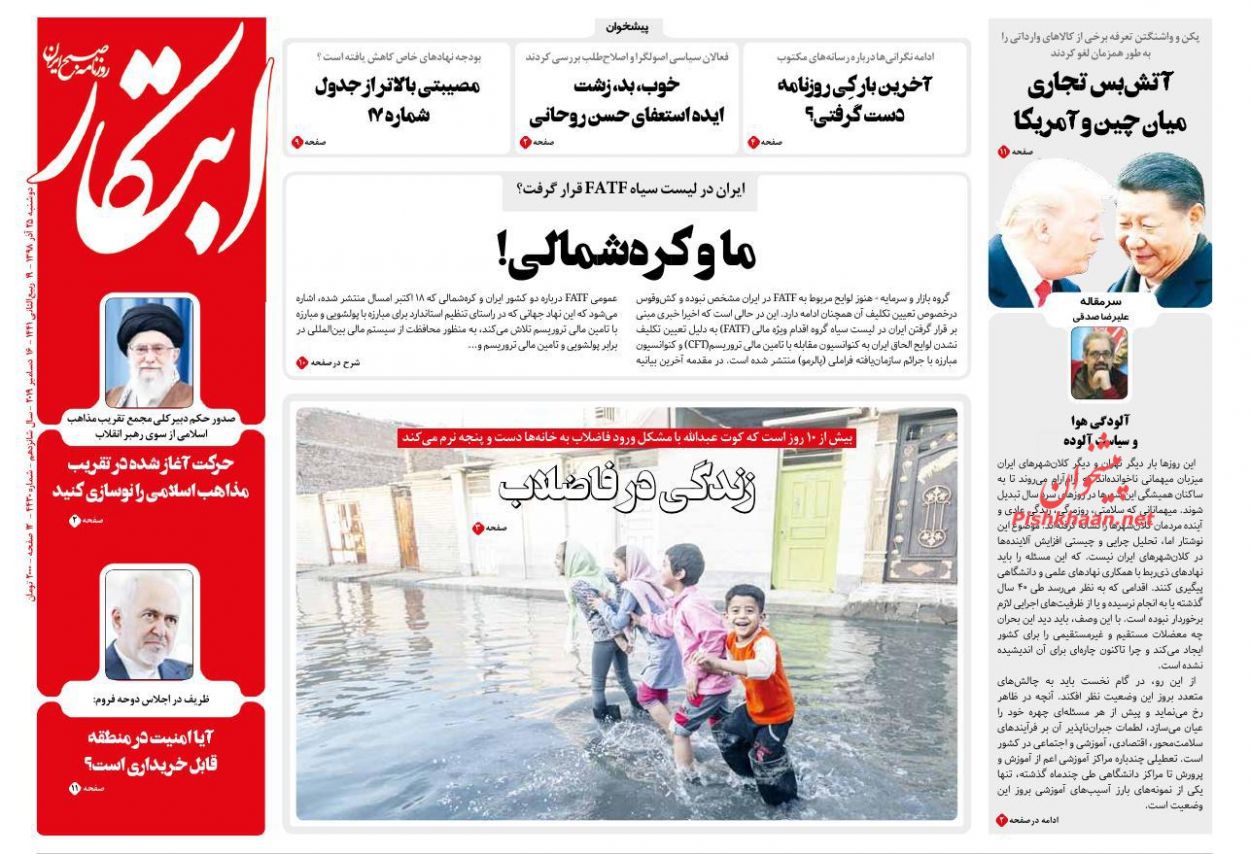
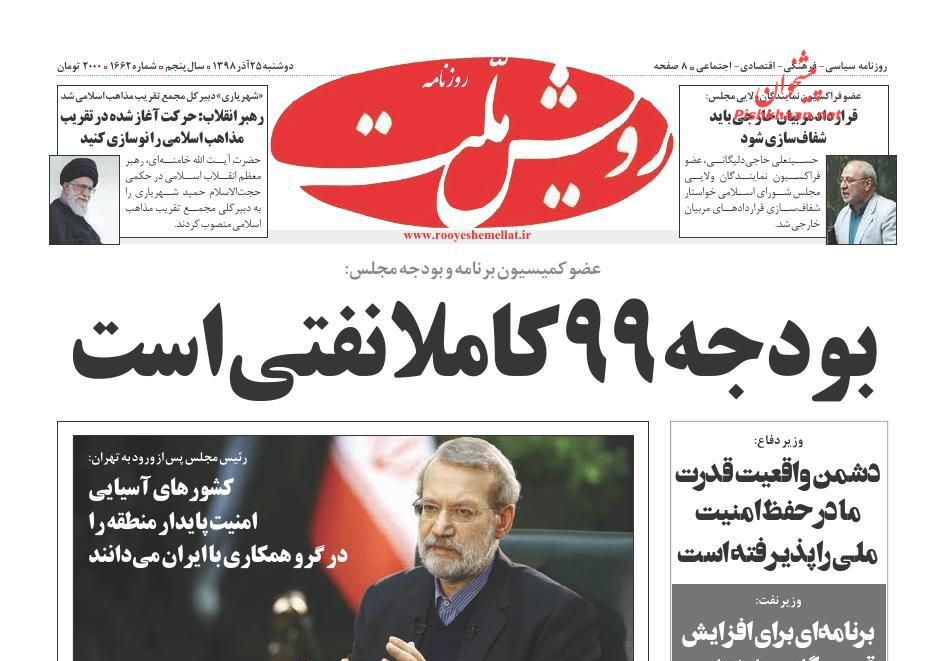
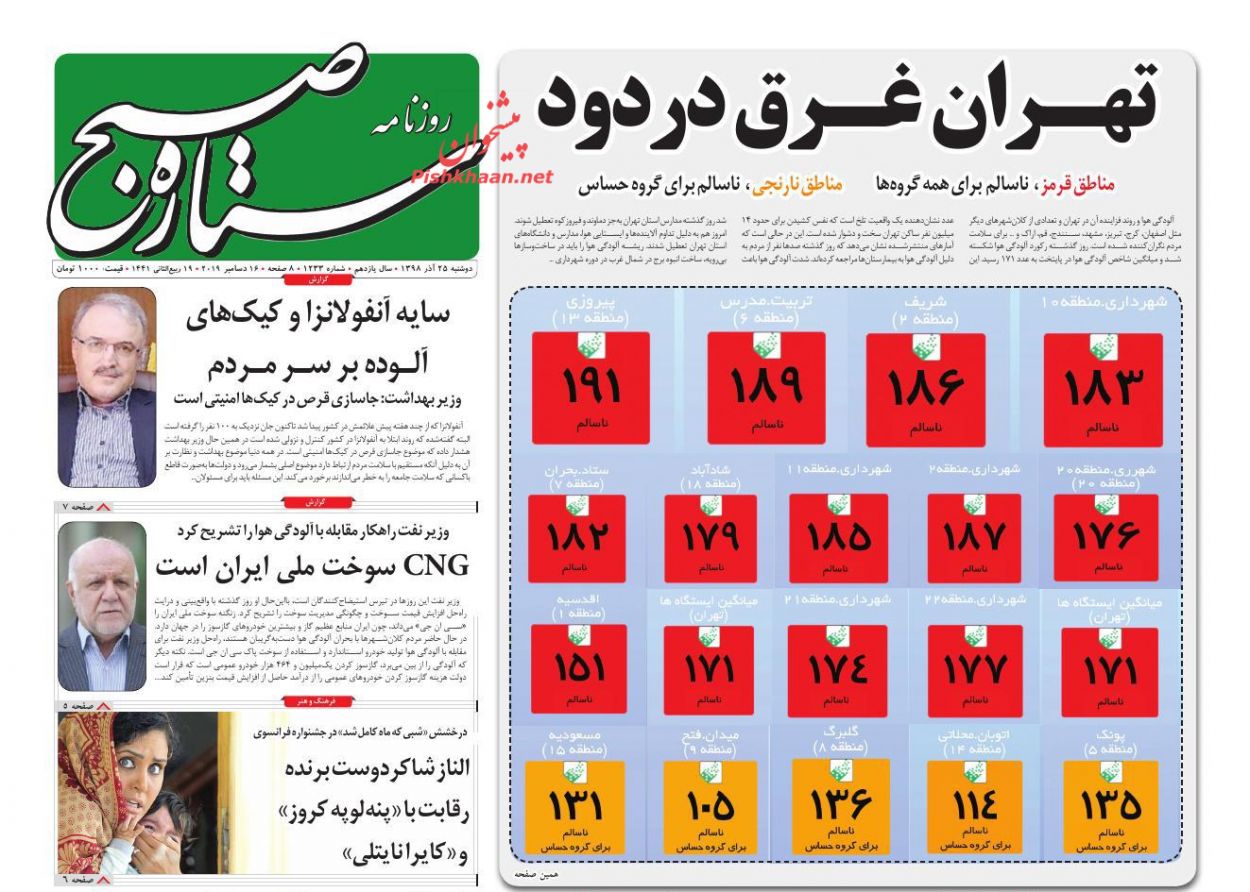
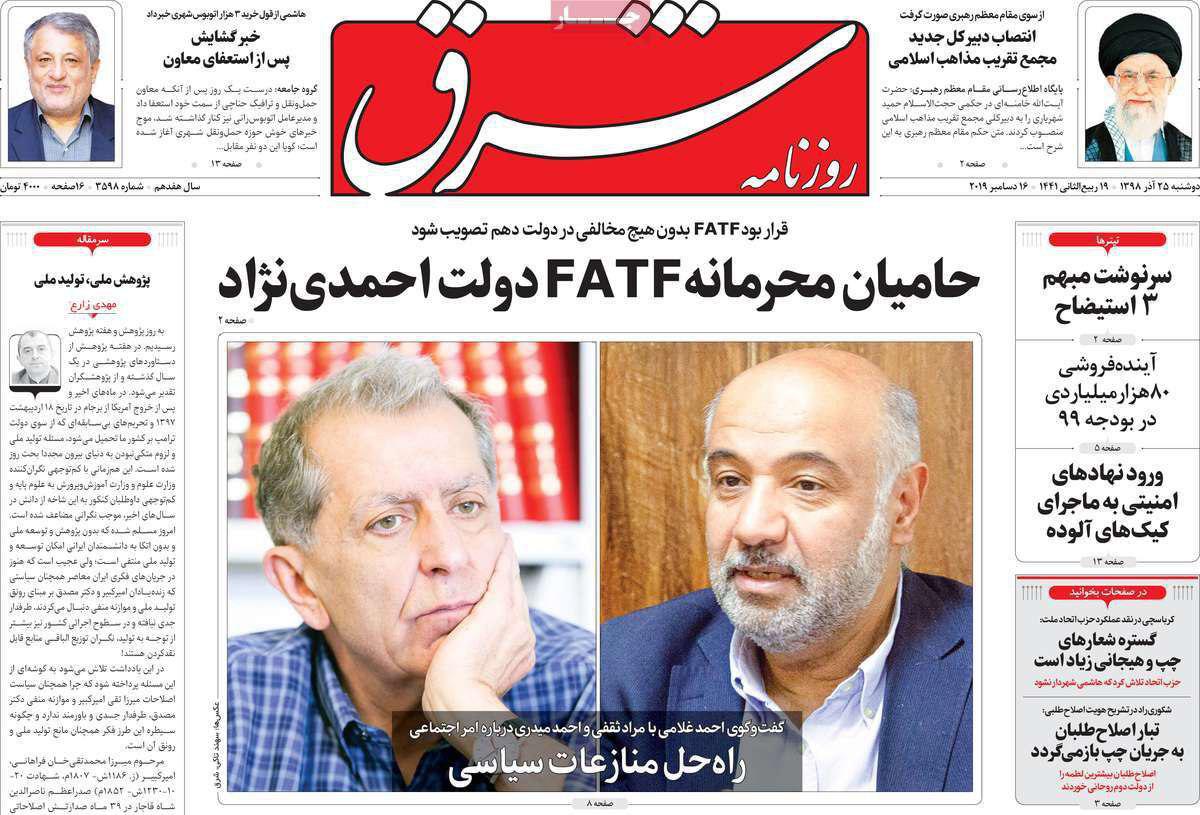
A Look at Iranian Newspaper Front Pages on November 13

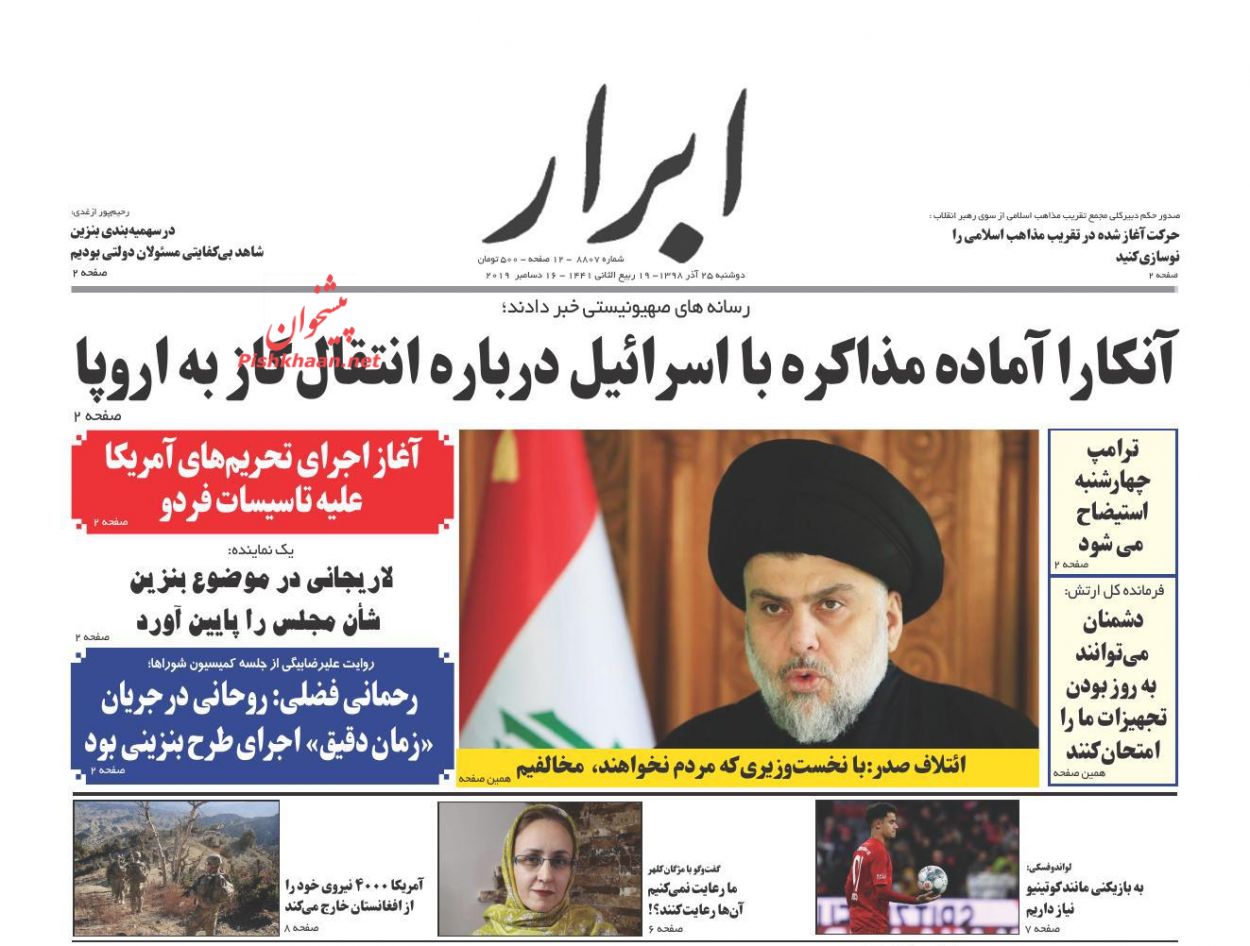
A Look at Iranian Newspaper Front Pages on November 19

Abrar:
1- Netanyahu: Decision to Assassinate Islamic Jihad Cmdr. Taken 10 Days Ago
2- Erdogan: We’ll Start New Era of Ties with US
3- E3’s Statement on Iran’s JCPOA Measures
4- Araqchi: Commitment Cuts Aimed at Saving JCPOA

A Look at Iranian Newspaper Front Pages on November 13


Afkar:
1- US Policies Failed in All Components of Power: IRGC General
2- Rouhani: We’d Negotiate If Another President Was in Office

A Look at Iranian Newspaper Front Pages on November 13


Aftab-e Yazd:
1- Good Offers Made in US, but It’s Hard to Trust Trump: Rouhani

A Look at Iranian Newspaper Front Pages on November 13


Arman-e Melli:
1- Difficult to Keep JCPOA and Have Sanctions Lifted
* A Report on Iran-EU Confrontation after Fourth Step
2- Nicaragua and Venezuela Next Targets of Coup

A Look at Iranian Newspaper Front Pages on November 13


Ebtekar:
1- US Doesn’t Dare to Attack Iran: Araqchi Tells RT
2- E3 Threaten to Return Iran Sanctions
3- We Won’t Leave Negotiation: Rouhani

A Look at Iranian Newspaper Front Pages on November 13


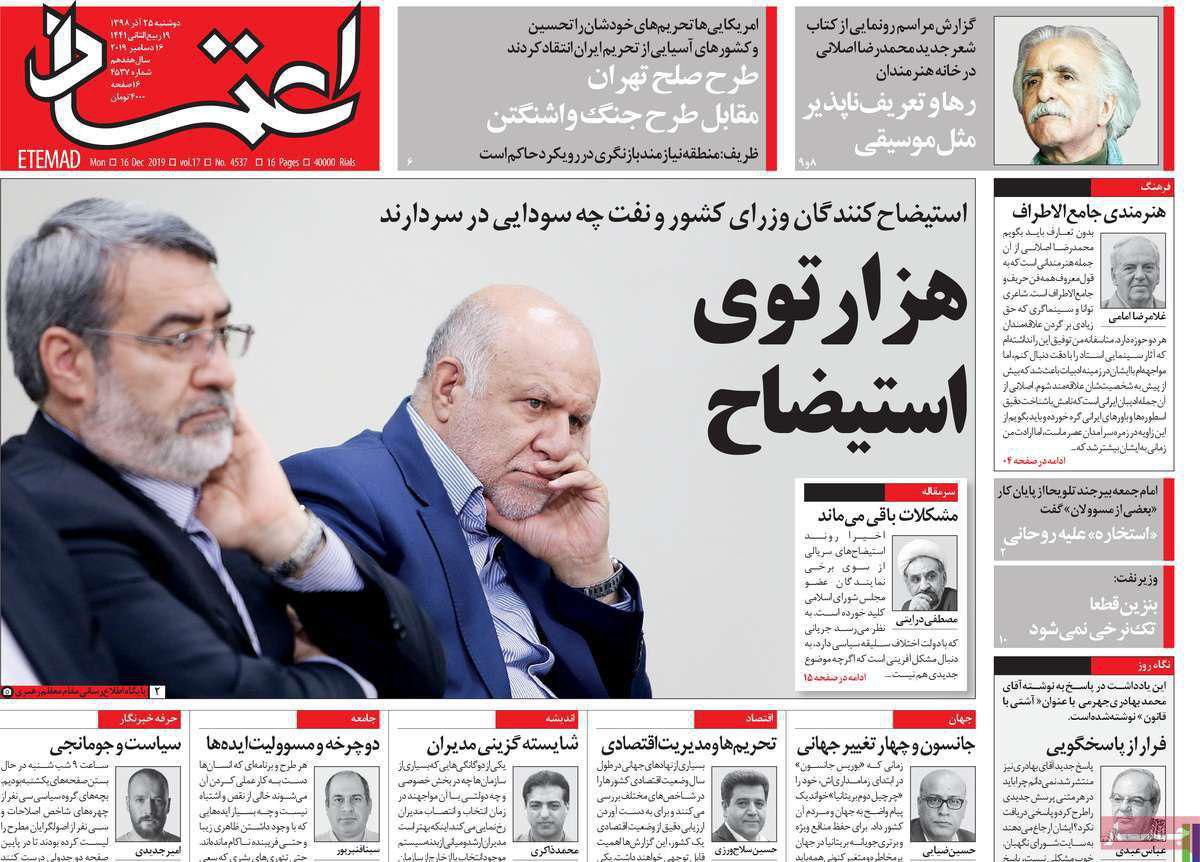
Etemad:
1- Europe’s Forgetfulness on JCPOA: FM Responds to E3’s Threat

A Look at Iranian Newspaper Front Pages on November 13


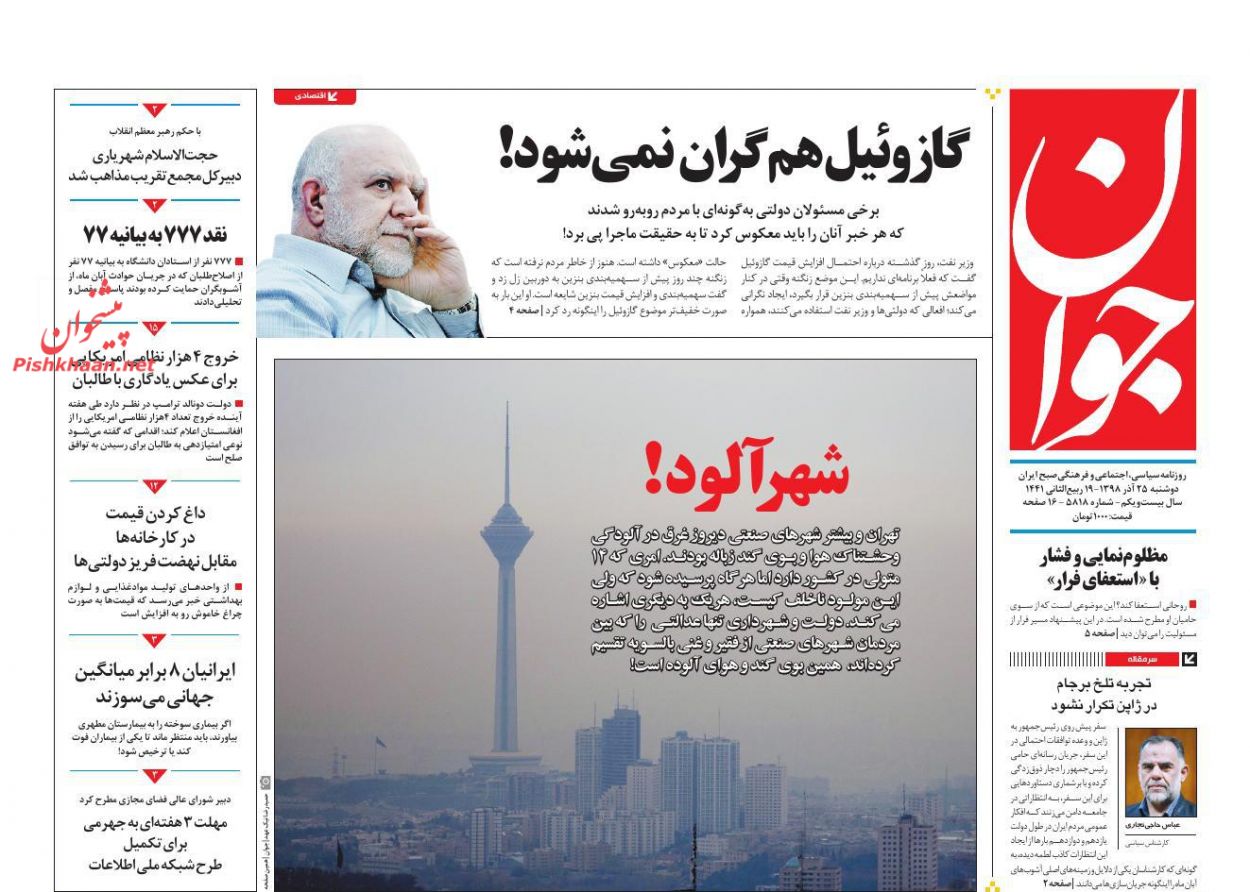
Javan:

1- Russia Ahead of US on Hyper-Sonic Missiles: Analyst

2- Zarif to Europe: Just Show Me One of Commitments You Fulfilled in Past 1.5 Years

3- German FM: Incompletely-Fulfilled JCPOA Better than Its Termination

A Look at Iranian Newspaper Front Pages on November 13


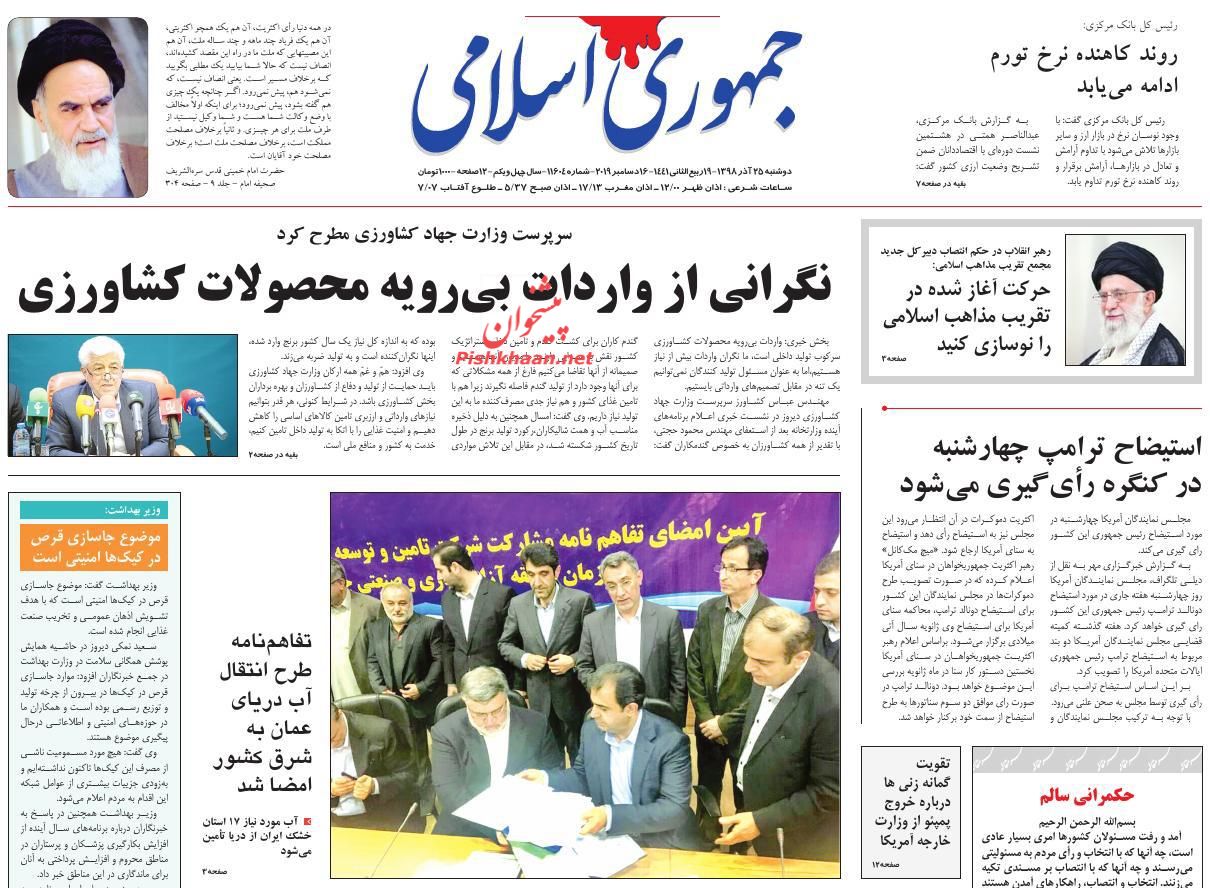
Jomhouri Eslami:

1- Iraq Political Leaders Outraged by US Interference

2- Iran Seeks $1 Billion Trade with Syria in 2 Years

3- Iran’s Mobilization Power Gets US to Strategic Confusion

4- Zarif to E3 Statement on Iran’s JCPOA Measure

5- German FM: Europe Interested in Keeping JCPOA

6- Erdogan: We’ll Extradite ISIS Elements, Whether They Take Them in or Not

A Look at Iranian Newspaper Front Pages on November 13


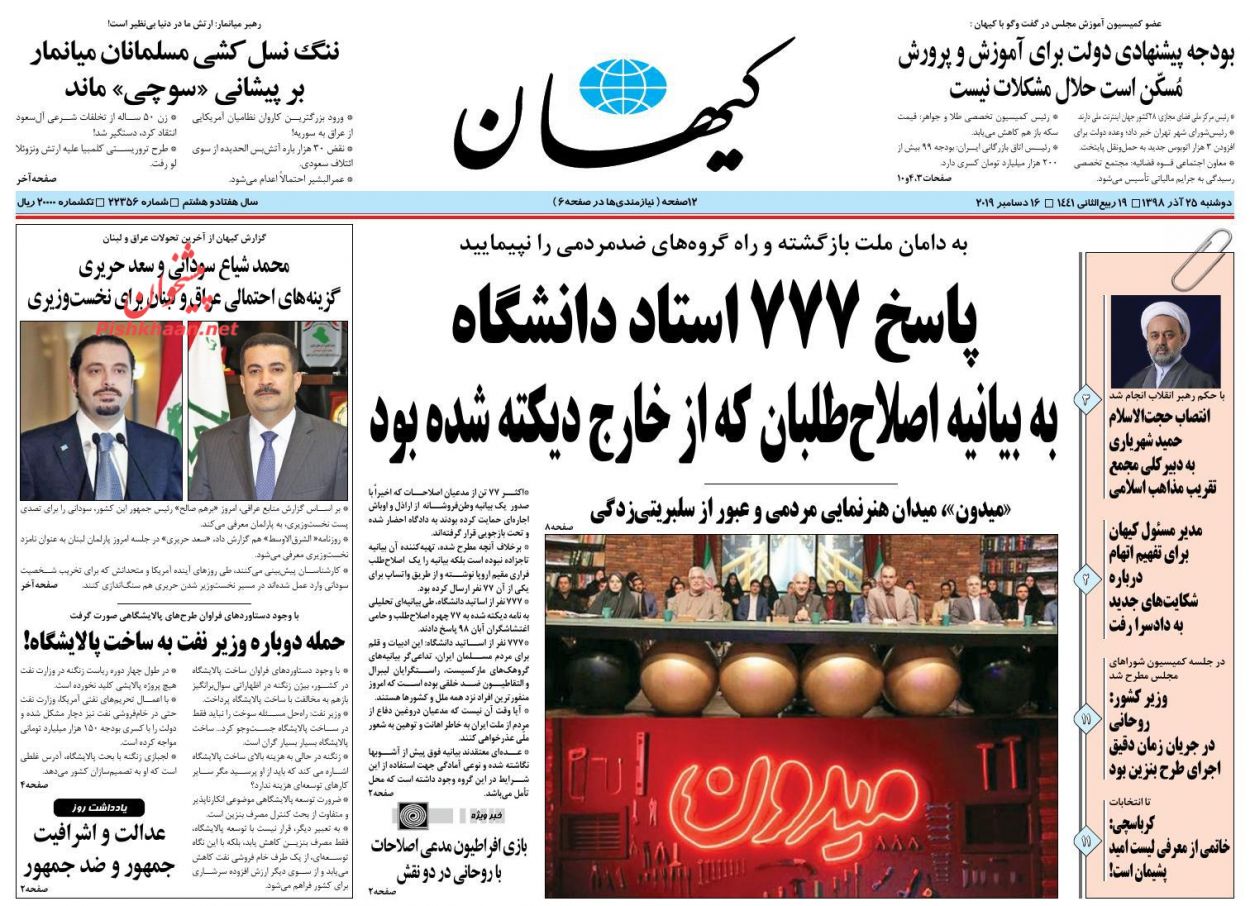
Kayhan:

1- Don’t Interfere in Iraq Internal Affairs, We Won’t Give in to Foreign Dictates

* Strong Response to Iraq, Muqtada al-Sadr to US

2- Shower of Missiles on Israel: One Million Zionist Flee to Shelters

* In Reaction to Assassination of Islamic Jihad Leaders

A Look at Iranian Newspaper Front Pages on November 13

Russian ‘Cultural Days’ Underway in Iran

Russian ‘Cultural Days’ Underway in Iran 1

Five Russian artists have also taken part in the “Russian Cultural Days in Iran” event that got under way on November 9 and will run through November 14.

Mohammad Ai Kiani, an Iranian cultural official, says the cities of Tehran and Qazvin host the cultural officials of the two countries, ambassadors and foreign diplomats residing in Iran.

Russian ‘Cultural Days’ Underway in Iran (6)During the cultural week in Iran, various programs by Russian music bands and artists in the fields of handicrafts, paintings, etc. will be performed and Russian products will also be on display, added Kiani.

The cultural week of Russia kicked off at the Vahdat Hall in Tehran. Addressing the opening ceremony, Chairman of Iran’s Islamic Culture and Relations Organisation (ICRO) Abuzar Ebrahimi Torkaman said Iran and the Soviet Union signed cultural agreement 52 years ago, and since then, both countries have undergone many changes.

“However, this agreement is still in force, and today we are pleased to be hosting our dear friends from Russia,” noted Torkaman.

Meanwhile, on the second day of Russian cultural week in Iran, an exhibition of a collection of Russian lace fabrics was held at the Niavaran Museum Palace Complex. These lace fabrics are kept in the Lace Museum of Vologda region in northern Russia, and will be on display in the Blue Hall of Niavaran Complex for four days.

Director of the Russian Lace Museum said that lace weaving is one of the oldest Russian handicrafts with a 500-year history. She also stressed that the Russian government has launched workshops in Russia to support the ancient industry.

Works on display at Niavaran Palace include lace napkins, lace tableaus, as well as traditional Russian textiles designed by some designers of lace art with floral motifs as well as designs inspired by regional architecture.
Iran Downplays US Sanctions on Its Military as ‘Toothless’

No Obstacle to Development of Strategic Arms in Iran: DM

Speaking on the sideline of Wednesday’s cabinet session, Amir Hatami referred to the military commanders that sanctioned by the US, stressing that the sanctions would have no effect.

“Those sanctioned by the United States are like those who are shot by the enemy. Like the disabled Iranian veterans (Janbaz in Persian), the nation and the armed forces are proud of them,” he underlined in an interview with Iran Press.

The Defense Minister Brigadier General Amir Hatami also added that the US new sanctions would have no effect since the country’s armed forces are run self-sufficiently.

The United States has imposed sanctions on nine individuals and one entity, “who are appointees of or have acted for or on behalf” of Leader of the Islamic Revolution Ayatollah Seyyed Ali Khamenei.

The US Department of the Treasury’s Office of Foreign Assets Control (OFAC) announced on November 4, said that it took action against the General Staff of Iran’s Armed Forces and its Chairman Major General Mohammad Baqeri as well as Judiciary Chief Ebrahim Raeisi, who was appointed by the Leader in March 2019.

It also slapped sanctions on former defense minister and a commander of the Islamic Revolution Guards Corps (IRGC) Hossein Dehqan and the commander of the IRGC’s Khatam al-Anbiya Headquarters Major General Gholam Ali Rashid.

The new sanctions also targeted officials at Ayatollah Khamenei’s Office, including his chief of staff.

90% of World’s Opium Seized by Iran: Official

90% of World’s Opium Seized by Iran Official
A haul of opium seized by the Iranian police in the city of Naein, Isfahan province / Photo by IRNA

Visiting the border city of Mirjaveh on Tuesday, Momeni said according to the UN, the Islamic Republic of Iran’s share of the world’s opium confiscation has jumped from 76% to 90% this year, meaning that Iran alone seizes 90% of the world’s opium and also 67% of the world’s morphine.

“Sistan and Baluchestan province is at the forefront of the fight against narcotics in Iran as well as the world, and has focused all its efforts on the global fight against drug abuse and creating security,” maintained Momeni.

EU Must Brace for Deluge of Narcotics If It Fails to Aid Iran

“Iran has spent billions of dollars to create barriers, fences, border checkpoints, optical systems, barbed wires and canals along two thousand kilometres of the borders, and so far, more than 3,800 security forces have been killed in the fight against drugs.”

The Secretary-General of Iran’s Drug Control Headquarters said many of Iran’s expenditure is in the fight against drugs that are bound for the European countries, while these countries, which claim to be advocates of human rights, don’t help Iran and even hinder the process.

“The establishment of laboratories in Afghanistan this year has led to the production of meth and industrial drugs at its highest level, which is a serious threat to the countries around the world,” Momeni warned.

“It is true that Iran is fighting against illicit drugs, but the world must also do its responsibilities,” he said.

In the first seven months of the current year, about 600 tonnes of narcotics were discovered in Iran, which shows a 15% increase in comparison with the previous year, concluded the Iranian general.

VP Sattari Addresses China High-Tech Forum 2019

VP Sattari Addresses China High-Tech Forum 2019

What follows is the full text of his speech:

Your Excellencies, dizstinguished guests, ladies, and gentleman

Good evening

First and foremost, I would like to express my pleasure for being here and I hope holding such events leads to deepen trade and technology cooperation and bonds between the countries.

I would like to take the opportunity of my presence here in this elite gathering to encourage the countries, more than before, to develop friendly cooperation in high-tech trade.

As you already know, the open exchange of advanced products and technologies at the international level has provided a vital opportunity to meet the challenges facing societies.

Therefore, the cooperation of countries in the development and dissemination of technological innovations is the motivation for the increasing progress of the nations. In this regard, the Islamic Republic of Iran has always tried to use innovation as a tool to support the transition of societies to prosperity and development with an open view to its technological achievements. After many years of efforts by our researchers and scientists and reaching a high position in terms of scientific and technological achievements, on behalf of my country, I would like to express our determination to expand our strategic cooperation in the field of the promotion of innovation, in order to achieve mutual benefits.

I believe that the Islamic Republic of Iran’s experience in utilizing science and technology to meet the country’s needs in facing unfair international restrictions has provided valuable lessons for various countries. Hence, I would like to take this opportunity to share my country’s experience of transition from a natural resource-based and non-reliant on domestic capabilities economy to an economy with a significant share of knowledge-based products. Hoping that the path of development of science, technology and innovation in Iran can provide different countries with an informative experience.

Distinguished guests, ladies and gentlemen;

Iran has always been well-known in public opinion as a rich country in terms of natural and cultural heritage. This fact, on the one hand, provides us with vast opportunities for the country’s development, and on the other hand, it highlights the danger of dependence on the country’s past assets and being contented to irresponsible exploitation of natural resources. For many years we have been faced with this question that at which side of this dual issue we should stay: creating wealth from the ending natural resources and living with past reserves or creating new circles to create value and build the future.

Here today, I can proudly say that we chose the second path. Decades of reliance on domestic capabilities has made it possible for our country to take a big step in changing the picture of its previous economy into a knowledge-based economy, thanks to the tremendous achievements in aerospace, ICT, nanotechnology, biotechnology, stem cells, cognitive science, renewable energies and pharmaceutical and medical technologies.

In the recent past, cheap and easy money obtained from the sale of raw materials had become a mean of inefficiency and waste of the country’s capacities.

The government was getting bigger and bigger with the oil money, and it dampened the motivations for risk-taking as well as creation of added value for universities and domestic industries who accessed those cheap funds that was allocated to them. The outcome of that process could jeopardize the country’s future and frustrate the country’s young and creative forces. Therefore, it seemed that serious changes were needed to be made.

A public call to avoid what is called resource curse, has created a new determination in the Islamic Republic of Iran to ensure the interests of the society: We need to build a creative future through innovation. Since the mid-1990s, innovation has become one of the most important policymaking keywords in Iran.

Since then, changes have been made at the highest levels of the country’s policymaking to integrate the country’s capacities for the development of scientific and technological innovation. High-level policy-making bodies such as the Vice Presidency for Science and Technology, the Supreme Council for Science, Research and Technology, the Innovation and Prosperity Fund, and the Strategic and Emerging Technology Councils have been established in this regard. At the same time, the orientation of national policies in national policy documents was adjusted towards scientific and technological development besides supportive laws and regulations that were ratified and adopted to promote technology penetration in the industry. The country’s Comprehensive Scientific Road Map and the supporting knowledge-based firms’ law are the most important examples that have led to the formation of a major innovation movement in universities and domestic industries.

In line with these changes, the formation of infrastructures such as business incubators, accelerators, science and technology parks, science and technology special zones, research and technology funds and venture capital funds, eliminates the institutional gaps in Iran’s National Innovation System to a great extent.

These changes, which can be described as steps to strengthen Iran’s National Innovation System, have been established by three main logics: (1) prioritizing strategic technologies based on the country’s upstream policies and sustainable development goals; (2) providing simultaneous support for startup businesses to defuse innovation and conventional industries to create innovative outputs, and finally (3) transition from a government-related innovation system to an innovation ecosystem

These policies have been already presenting a new image of the Iranian economy; an economy with the government facilitation and smart financial partnership besides significant share of VC finance provided by private sector. Now, in this picture, there is an acceptable connection between academic researches on the one hand and the needs and demands of the society and industry on the other. Domestic industries are more motivated to enter higher value chains, and young entrepreneurs are showing more opportunities to establish their startup businesses.

Distinguished guests,

I would like to emphasize that my country is now in the middle of a path that, thanks to the efforts of our scientists, entrepreneurs and government support, has created a huge social capital to support innovation policy. As a result of the two decades of scientific development efforts, Iran is ranked 16th in the world in scientific publications, increased by 18 places from 2005. After this successful transition, based on the domestic demands, we have been able to have the most engineering graduates in the world, and as a result of this move, we have promoted to have an export share of high-tech and medium-high tech exports with a significant leap of 1.5 billion $ in 2005 to $ 12 billion in 2014.

In terms of scientific achievements, the Islamic Republic of Iran has more than 229,000 Ph.D. students and a 1.85% share in science production worldwide. For example, in the field of nanotechnology, Iran is in the fourth place after the leading countries of the United States, China and India.

I should point out that these brilliant statistics have all achieved thanks to the country’s development of science, technology and innovation infrastructures. Iran has more than 2,390 universities around the country with approximately 4.8 million students. There are 44 science and technology parks in different cities with over than 4,500 companies based there.

In terms of infrastructure of financial support for innovation, only Innovation and Prosperity Fund with total capital of $ 395 million has supported about 5,400 innovative projects, so far.

I should emphasize here that Iran’s policy transition towards a knowledge-based economy has also had remarkable results in terms of innovation outputs. Since the ratification and adoption of the supporting knowledge-based firms’ law in 2010, about 4,700 companies have been entitled as knowledge based companies according to their technological capabilities. These companies generated $ 11 billion of the total annual value of the Iranian economy in this short time and generating more than 140,000 direct jobs.

Let me just mention a few examples of these technology companies. CinnaGen, as a biotech-based pharmaceutical company, is the largest exporter of bio-pharmaceuticals in the region. Also, as an example of Iran’s remarkable advances in stem cell technology, Kish Tissue Regeneration Corporation is one of the world’s leading companies in the field of bio-implants production. Tuga is a leading company in the design and production of turbines and PR Saadat is one of the largest Iranian knowledge-based companies that has commercialized numerous technology-based medical products. Also, Snapp is Iran’s first unicorn start-up in urban transportation with more than half a million drivers and is considered as the seventh largest startup of its kind in the world.

Dear friends,

It may be better to present more detailed information about what I have stated here so far as the experience of two decades of Iran’s attempts to transition from a resource-based economy to a knowledge-based economy. This is Iran’s dramatic breakthrough in the Global Innovation Index over five years. According to the latest Global Innovation Index report, Iran’s ranking of innovation in 2019 among the countries of the world has been improved by 60 places. The Islamic Republic of Iran has, in almost all respects, reflected the innovation performance at the national level, with a successful transition to create a dynamic innovation ecosystem.

I believe that this great move could not have been possible but with the great determination to cut off dependency on easy resources. At the same time, I emphasize that the current point is not the end of our path. We are now placed in the midst of this way where difficult challenges are ahead. The first and most important challenge is the stabilization of the importance of science, technology and innovation policy and its capability to coordinate across policy sectors and levels.

For a brief review of Iran’s achievements in various fields of science and technology, check the book “Science and Technology in Iran: A Brief Review – 2019

Another challenge is to improve research productivity via funding researches with a competitive rationale based on the performance of research institutes. At the same time, it is a challenging goal to delegate research and development activities from the public sector to the private sector, which in turn enhances research achievements. In addition, unlimited access to international capital resources to finance innovative projects requires a serious international determination that is difficult to achieve. Finally, the dissemination of innovation to the various economic sectors that caused them to benefit from the results of the knowledge-based economy, is a serious policy challenge.

Dear Friends, Ladies and Gentlemen,

The suggestion I offer here in light of the experience of innovation policy in the Islamic Republic of Iran to address these challenges is to deepen international cooperation in order to open access to innovation blessings for all societies. Exchange of scientists, entrepreneurs and technology based on the mutual benefits of the nations, collaboration on major industrial projects based on national priorities, collaboration on the development of creative and startup solutions for different societies’ problems, sharing policy experiences on different innovation ecosystems through policy dialogue and joint cross financing for innovative projects at international level are different types of collaborative efforts that can be effective in fostering the nation’s innovation capacity.

It should be emphasized here that, given the will of the Government of the Islamic Republic of Iran, to expand strategic cooperation with various governments in the field of innovation dissemination, there is now a good opportunity to share scientific, technological, human force, financial and market capacities in Iran. I do believe that realization of cooperation in this area will be possible through serious determination and goodwill of the partner governments.

In the end, I thank you so much for your kind attention, and I hope that holding this event will usher in a friendly and long-term relations between the countries in the field of science, technology and innovation.

Rouhani Hails Iranian People for Standing Up to US Pressure

Hassan Rouhani - President of the Islamic Republic of Iran

Hassan Rouhani said if Iranian people had retreated, the country would not have been able to pull off any success.

“God forbid, [if you had retreated] we would have had to surrender to bullying enemies; but, you put up resistance,” said the president at a Cabinet meeting on Wednesday.

“Today, we have reached a point where the whole world is contacting us and telling us to settle current issues and problems together,” he said.

The president said Iran has always been ready to help solve problems, and this time, too, will “help solve the problem that you created.”

Tensions have been running high between Iran and the United States since last year, when President Donald Trump unilaterally withdrew the US from the multilateral nuclear deal and unleashed the “toughest ever” sanctions against the Islamic Republic.

In response to the US campaign of “maximum pressure”, Tehran has so far rowed back on its nuclear commitments four times in compliance with articles 26 and 36 of the JCPOA but stressed that its retaliatory measures will be reversible as soon as Europe finds practical ways to shield the mutual trade from the US sanctions.

Twitter User Finds Smart Way to Raise Funds for Cancer Kids

Twitter User Finds Smart Way to Raise Funds for Cancer Kids

Here is what the user wrote on his Twitter page on November 11, 2019:

“Hello friends. It’s my birthday today, and I don’t remember having received a present from anybody, so far. As I don’t want this to become an irritating memory for me, I want you to deposit Rls. 10,000 [some 9 cents] at my account with the following bank card number.

N.B.

  1. Rls. 10,000 is not a large sum of money, but it would make me happy.
  2. #Retweet fellow countrymen :)”

And a debit card number appeared at the end of the message.

The message received mixed reactions from users. The majority of Twitter users were suspicious of what he or she was doing and passed different judgements.

Some users described the message as a ploy to gain access to citizens’ bank account data. Some called that person a swindler.

However, the story took a different turn when some users believed him/her and paid the said amount as a birthday gift. Then it transpired that the debit card number the user had mentioned belonged to the Iranian Mahak Society to Support Children with Cancer.

Afterwards, the number of people depositing money increased and some even paid amounts more than Rls. 10,000. From a certain point on, the type of comments changed and the number of such comments increased:

* I’m sorry that I jumped to conclusions. I would have probably not given any money to you as a gift if I hadn’t read the comments. I apologize for my hasty mind. Please forgive me. Many congratulations on your birthday. I hope to see you one day when I will give you a beautiful gift.

* No tweet had ever surprised me as yours did. In this timeline when many are after worthless issues, this birthday tweet was one of the most beautiful signs that love of humanity is still alive.

* First, I really thought it was your own bank card number. I just decided to deposit the money as fun when I suddenly realized that it was in the name of MAHAK. Bravo!

So far, nearly 5,000 Twitter users have liked this tweet, more than a thousand have retweeted it, and some 700 have replied to the post.

The Iranian Mahak Society to Support Children with Cancer is a charity NGO which began its work in 1991 with the aim of helping under-16 children suffering from cancer and their families.

Over its 28 years of activity, the non-profit organization has secured tremendous achievements in charity, treatment and research domains by relying on the contributions of altruistic people and the cooperation of officials. Mahak has now turned into one of the cancer treatment hubs in the Middle East.

Lut Desert Gorgeous Lake in Hottest Spot on Earth

The newly-born lake lies in the Lut Desert some 50 kilometres from the historical town of Shahdad. The lake is hosting migratory birds, turning it into a tourist attraction, not to mention the other beauties of Lut.

These days coincide with the tourist season in the Lut Desert. The hottest spot on earth where temperatures reach up to 72 degrees centigrade draws the attention of every visitor. It is where the world’s highest sand dunes are located along with a salt-water river and a star-lit sky at night, making it all the more mesmerising.

This part of a desert where only a salt-water river was once found has now become a tourist hub. Travel agencies in Kerman are now organizing tours of the Lut Desert named “The Young Lake Fun Tour.”

People have named the lake “young” as they see the creation of a lake in the middle of a desert as a miracle. The lake has not dried up despite the summer heat of Lut Desert, and the start of the raining season has created the possibility of the lake becoming larger.

What created the lake in Lut Desert was the local salt-water river bursting its banks. The point is that the current of water in this river never stops.

The lake has a large reservoir with high salt levels. It is so large that even waves are created there and that it has attracted migratory birds to the desert. The lake covers a considerable area of land.

Lut Desert lake is one of the most eye-catching phenomena of the contemporary era for Kerman province as well as for the Iranian and international tourism industries. It should be introduced to tourists across the globe. The photos and videos published of this natural phenomenon catches the eye of every viewer.

UN Urges US to Comply with ICJ Ruling on Iran Sanctions

Iranian children suffering from a rare skin condition known as EB are losing their lives as US economic sanctions hamper the flow of vital medical products into Iran.

“We encourage all UN member states to follow the decisions of the International Court of Justice,” Farhan Haq said according to Iran Press.

Children with Epidermolysis bullosa or EB, often known as butterfly children, because their skin is as fragile as the wings of a butterfly, need special care. Even mild frictions or bumps cause severe blistering of the skin which is very painful.

They often have difficulty with their daily activities, such as walking, eating and even breathing, but without proper protective bandages, their agony would be heartbreaking.

The head of the NGO that helps such patients, Hamid Reza Hashemi-Golpayegani, has said that at least 15 Iranian children with Epidermolysis Bullosa (EB) have died since the US launched its new sanctions on Iran in August.

“That is because Swedish medical companies which provided protective bandages for such patients have halted supplies due to the restrictions,” he said.

According to Hashemi, about 700 children with Epidermolysis bullosa or EB have been identified in Iran.

Since the reimposition of sanctions, Swedish medical products firm Molnlycke Health Care has stopped delivering Mepilex dressings which are trusted around the world to treat a wide range of chronic and acute wounds, including in EB patients, Iranian media reports say.

EU Must Brace for Deluge of Narcotics If It Fails to Aid Iran

EU Must Brace for Deluge of Narcotics If It Fails to Aid Iran

Brigadier General Mohammad Masoud Zahedian says all other countries should play their part in the fight against narcotics, helping Iran which lies on a major drug route between Afghanistan, Europe and the Persian Gulf states and pays a heavy price fighting drug trafficking.

Speaking on the sidelines of a display of illicit drugs found in Tehran, he said the Islamic Republic’s capacity is limited, and there is an inflow on drug production, while the rate of drug production in Afghanistan is increasing day by day.

185 tonnes of narcotics production in 2001 in Afghanistan has now reached over 10,000 tonnes. Iran’s facilities are not proportionate with this volume, and sometimes the country may not be able to counter well with this inflow, added Zahedian.

“We urge European countries to support Iran’s efforts to combat narcotics.”

Iran is in the forefront of the fight against drug trafficking and thousands of Iranian forces have so far been martyred to protect the world from the danger of drugs.

Afghan and western officials blame Washington and NATO, saying that allies have overlooked the drug problem since invading the country about 18 years ago.