Sunday, December 21, 2025
Home Blog Page 3017

Louvre Museum Hosts Seminar on Iran’s Ancient Sialk Hills

Louvre Museum Hosts Seminar on Iran’s Ancient Sialk Hills

Louvre Museum in Paris held the seminar on Sialk hills at its auditorium on Monday.

According to the Iranian Embassy in France, researchers and Archaeology experts from major international academies and famous museums, such as the Louvre Museum, the British Museum, and top-rated German museums attended the event.

A delegation of officials and experts from the National Museum of Iran attended the seminar. The head of delegation was Jebraeil Nokandeh, the curator of the museum, who was accompanied by archaeologists and researchers working on the Sialk Hills.

Iran’s Ambassador to France Bahram Qassemi was also among the participants at the opening of the seminar. In comments on the sidelines of the event, the ambassador held talks with a number of participants and officials about the efforts to enhance relations between Iran and France.

History of excavation

The ancient archeological site, dating back to around 6000-5500 BC, is one of the oldest cradles of civilization.  It has become a common ground for cooperation between the Iranian and French archeologists and excavators for decades.

French “Roman Ghirshman” was the first archeologist who excavated the Sialk Hills archeological site. His work continued for two seasons during 1930s. Later a group led by “Sadegh Malek Shahmirzadi” started to work on the site in the 2000s.

Louvre Museum Hosts Seminar on Iran’s Ancient Sialk Hills
French archaeologist Roman Ghirshman and his team

The Monday event was part of a series of seminars known as “Sialk, the Heart of Archaeology in Iran”. The purpose of seminars is to highlight the historic value of the ancient site and explore avenues to continue archeological excavation in the site.

Archaeologist estimate that the ancient objects coming from the Sialk Hills date back to 8,000 years ago. Experts regard them as one of the oldest known evidence for anatomically modern humans in the world.

The first edition of the “Sialk, the Heart of Archaeology in Iran” seminars was held in the UK in 2018.  Germany and Iran plan to hold the third and the fourth editions in 2020 and 2021 respectively.

Louvre Museum Hosts Seminar on Iran’s Ancient Sialk Hills
Photo of a relic unearthed in Iran’s Sialk Hills

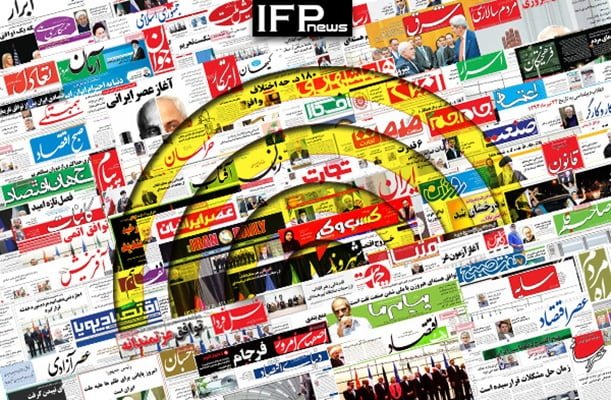
A Look at Iranian Newspaper Front Pages on November 26

A Look at Iranian Newspaper Front Pages on November 19

Abrar:

1- Resolution Issued after Great Gathering of Tehran Residents

2- IRGC General: Riot Would Have Spread across Iran If Internet Wasn’t Shutdown

3- Some New Projects between Iran, IAEA Approved

A Look at Iranian Newspaper Front Pages on November 26


Aftab-e Yazd:

1- Iranian Protesters Stress Need for Maintaining Integrity, Solidarity

A Look at Iranian Newspaper Front Pages on November 26


Ebtekar:

1- A Rival of Trump’s Type

* Famous Billionaire Bloomberg Run for Democrat Nomination

2- People Deal Last Blow to Enemy’s Aggressive Policies

3- Evading Impeachment: Agriculture Minister Resigns to Evade Being Impeached

A Look at Iranian Newspaper Front Pages on November 26


Etemad:

1- Security for All

2- Difficult Test of Saudi Arabia and Iran

A Look at Iranian Newspaper Front Pages on November 26


Ettela’at:

1- Another Epic

2- Saudi Regime’s Good Days Over

A Look at Iranian Newspaper Front Pages on November 26


Hamshahri:

1- Huge Crowds of People Hold Gathering to Defend Security

A Look at Iranian Newspaper Front Pages on November 26


Hemayat:

1- Pompeo and His Lads Slapped in Face

A Look at Iranian Newspaper Front Pages on November 26


Javan:

1- People’s Request from President on Day of Rise against Riot

2- Iranian People Hoist Two Flags

* One against Foreign-Backed Sedition and Another in Defence of People’s Demands from Gov’t

A Look at Iranian Newspaper Front Pages on November 26


Jomhouri Eslami:

1- Tehran Residents’ Huge Gathering in Support for Iran’s Security

2- Iran Increases Gas Extraction from South Pars Field by 50 Million Cubic Metres

A Look at Iranian Newspaper Front Pages on November 26


Kayhan:

1- US Dream Turned into Nightmare

* People Shone: Now It’s Government’s Turn to Make Efforts

A Look at Iranian Newspaper Front Pages on November 26


Khorasan:

1- People of Tehran Rise against Riot

A Look at Iranian Newspaper Front Pages on November 26


Sazandegi:

1- Protest against Vandalism

A Look at Iranian Newspaper Front Pages on November 26


Setareh Sobh:

1- IRGC Chief: War Created in Streets Part of Global Scenario

A Look at Iranian Newspaper Front Pages on November 26


Shargh:

1- IRGC Chief: We’re at Big World War

2- Tradition of Resigning Before Impeachment: Another Reformist Out of Cabinet

A Look at Iranian Newspaper Front Pages on November 26

Tehran Hosts Exhibition of Jean-Claude Carrière’s Paintings

Painting Exhibition

Jean-Claude Carrière is a French novelist, screenwriter, actor, and Academy Award honoree. He was an alumnus of the École normale supérieure de Saint-Cloud and was president of La Fémis, the French state film school.

The French film expert and Rumi scholar was recently honoured for his lifetime cultural achievements by the Persian literary monthly Bokhara at the Centre for the Great Islamic Encyclopedia in Tehran.

French ambassador to Tehran Philippe Thiébaud, in a speech, referred to Jean Claude Carrière’s previous presence in Iran, saying that he came to Iran last year to receive the Farabi Award, and this time there is a commemoration ceremony for him.

“However, this is not the only reason for his presence in Iran. Jean-Claude Carrière has a great talent in designing in addition to writing, screenwriting and translating, and his works are now on show in the Dastaan Gallery,” added the ambassador.
Carrière’s wife, Nahal Tajaddod, is a modern-day Iranian writer and daughter of Mahin Tajadod, a pioneer playwright in Iran who has been conducting research on Rumi.

Tehran Hosts Exhibition of Jean-Claude Carrière’s PaintingsThis led to Jean-Claude Carrière’s translating of Rumi’s works into French that was published by a very prestigious French publication. Currently, Carrière is making a film on Rumi.

According to Nahal Tajaddod, the Persian poet Rumi was living during the Mongol invasion. Therefore, Jean Claude decided to start the movie with a scene where little Rumi is fishing, but hunts a corpse instead.

“At first, we thought we may have troubles making this film inside Iran, and unfortunately outside Iran, Rumi is not known very much, but fortunately this is taking place at the moment.”

During the ceremony, Jean-Claude Carrière said that “I made my best efforts. What I really wanted to emphasise was that when you want to pay attention to a culture you need to love its people, and my wife played a great role in this.”

I have travelled to Iran many times, and every time I went to a different region, but I was well-received and treated with respect, added the French artists.

“I’m an aggressive person, but Iranians are very hospitable,” he continued, “For example, if I am lost somewhere in southern Iran and a farmer is 200 metres away from me and finds out that I am lost, he will leave his job and come to my aid although he knows I cannot speak Farsi. However, in France I do not know a farmer that abandons his job on such an issue. To love a nation you must get closer to them.”

He went on to say that here some people who are not living anymore must be remembered.

“The first person I want to mention is Dariush Shayegan, whom I talked to about Iranian and Indian culture. The second is Ezzatollah Entezami, a great actor and narrator, and the third is Abbas Kiarostami. Abbas was a close friend of mine.”

Carrière pointed to the story of his acquaintance with Kiarostami saying that “At that time nobody knew Kiarostami in France, until once a friend called and said you should watch a movie, but he did not know the director. I went to see that film and was amazed. That was Kiarostami’s ‘Where’s Friend’s House’ and I also watched his ‘Close-Up’ the same day. I watched ‘Where’s Friend’s House’ three times, and I can say it is one of the best movies I’ve ever seen. I saw this movie when I didn’t even know there existed a cinema in Iran.”

An exhibition of paintings by Jean-Claude Carrière was held at the Dastaan Gallery of Tehran on November 8-22. The following photos of the exhibition have been retrieved from Honar Online:

Iran Calls for Reform of UN Security Council

Iran Calls for Reform of UN Security Council

Majid Takht-Ravanchi made the remarks before a United Nations General Assembly meeting in New York entitled “Question of equitable representation on and increase in the membership of the Security Council and related matters.”

The ambassador criticized the structure of the 15-member Council, which is mostly dominated by western countries and, arguing that it needs to be expanded in a balanced way.

“Geopolitically, the Council is dominated mostly by western countries, three of which have veto power, and geographically, while WEOG (the Western European and Others Group) is overrepresented, the main regions are poorly represented in terms of number and have less rights and privileges in terms of veto power or permanent membership,” the envoy said in his speech.

“To date, one-third of UN members have never found a chance to become a Council member while there have been 20 countries that have each served between 10-22 years in this body,” he said.

Takht-Ravanchi said this “disproportionality and injustice must be addressed and rectified”, including by limiting chances for those who have served more and, instead, providing more advantages to those who have never served in the Council or served less times.

“This is essential in ensuring equal opportunities for all States to become a Council member as well as in preventing the domination of a certain regional or geopolitical group over the Council,” he argued.

The ambassador said the Council’s reforms should ensure that its members decide based not on their own national interests but based on the common interests of the entire UN membership.

“The Council must also stop increasing the excessive and expeditious resort to its Chapter VII functions. For instance, it has imposed sanctions in situations where no action was even necessary,” he said.

“Chapter VII must be invoked as a measure of last resort, if necessary,” Takht-Ravanchi noted.

For several years, the Islamic Republic of Iran remained under sanctions based on a Resolution passed by the UN Security Council enacted under the Chapter VII of the UN Charter, until the Resolution 2231 endorsed the 2015 nuclear deal between Tehran and world powers, and took the country out of the Chapter VII.

Iran Exporting Nanofibre Masks to S Korea, Turkey, Thailand

Iran Exporting Nanofibre Masks to S Korea, Turkey, Thailand

Respirators and masks are designed to filter toxic particles and protect the users from inhaling hazardous atmospheres.

Respirators generally fall into two main categories: air purifying and atmosphere-supplying respirators.

While the demand for anti-pollution and industrial respirators has risen in recent years, an Iranian knowledge-based company has succeeded in producing nanofiber masks for public and industrial application.

“Nano Tar Park” company has fulfilled the domestic demand for such high-tech masks and has even started to export its products to South Korea, Thailand and Turkey.

“The company is engaged in producing nanofibers and the products that are based upon nanofibers. The company’s main product is now a mask made of nanofibers,” CEO of Nano Tar Park, Gholam Shahbazi said.

He also noted that the homegrown nanofiber masks, appropriate for both public and industrial purposes, can be used for air pollution, cleaning activities and gardening, and heavy industrial tasks such as the petrochemical, cement manufacturing, or metal industries.

The nanofibers in the layers of the mask filter a higher percentage of pollutants, Shahbazi added, saying finer materials in the mask filter smaller toxic particles.

He noted that only Iran, the US and the Czech Republic have the technical know-how to manufacture nanofibers, stressing that Iran does not need any import of such advanced material.

The products of Nano Tar Park company are being exported to South Korea, Thailand and Turkey, the CEO noted, saying his firm has reaped $20,000 in profit from exports last year.

Shahbazi finally said that his company has provided employment for around 80 people, noting that the masks produced by Nano Tar Park sell for one-sixth the price of similar foreign ones.

Arab Poachers of Houbara Bustard Arrested in Iran

Arab Poachers of Houbara Bustard Arrested in Iran

An Iranian environmental official said on Tuesday that the two foreign illegal poachers have been caught at the airport of Shiraz for hunting and carrying 5 houbara bustards.

He said the hunters have been handed over to the judicial authorities for legal procedures.

Houbara bustard is a large terrestrial bird living in the arid habitats of Iran. The bird, native to Southwest Asia and North Africa, is in danger of extinction mainly due to hunting.

Houbara bustard has become a popular game bird for illegal hunters coming from Persian Gulf Arab states in recent years. As a result, its habitats in Iran has encountered the problem of rich Arab poachers interested in falconry. The bird’s natural habitats are in southern Iran, mainly near the cities of Lar and Lamerd in Fars province.

The illegal hunting of a houbara bustard in Iran carries a fine of up to 200 million rials. The hunters come to Iran from the Persian Gulf Arab countries to hunt the large bird with their trained birds of prey.

The poaching of houbara bustards in wintertime, destruction of its natural habitat and the disappearance of plains for agricultural or industrial application have put it in danger of extinction in the southern regions of Iran; to name, the provinces of Kerman, Hormozgan, Sistan and Baluchestan, Fars, Yazd, Bushehr and Khuzestan.

US Failed to Piggyback on Iran Protests: Official

Ali Rabiei said the US and Israel still do not have a deep understanding of the Iranian society.

The spokesman said Washington’s efforts to piggyback on the popular protests in Iran failed to produce their desired results.

“The Americans intended to turn the Iranian society into a two-polar enemy-enemy society, but failed to do so,” he said.

He made the comments on the sidelines of a pro-government rally in Tehran where demonstrators denounced the recent unrest and chaos triggered by hooligans and rioters in the country.

He said the incidents during the recent unrest were bitter, difficult and unpleasant for people.

The spokesman said part of the incidents were protests by citizens who opposed a rise in gasoline prices, but some organized rioters cashed in on the unrest, inflicted great damage to public property and caused loss of lives.

He said the government, from day one, drew a line between popular protests and rioters who committed acts of sabotage.

He then touched upon a current of alarmism and campaigns launched by foreign media outlets to fuel the recent unrest in Iran.

“Some of them (media) acted like a commission tasked with provoking war and riots,” he said.

Iran, Russia Discuss Cooperation against Chemical Arms

Gholam-Hossein Dehqani

The meeting was held on the sidelines of the 24th session of the Conference of the States Parties to the Chemical Weapons Convention (CWC).

In the meeting, the two sides exchanged views about issues on the agenda of the conference. They also urged closer cooperation between Iran and Russia at the Organization for the Prohibition of Chemical Weapons (OPCW). The two sides further discussed ways to stop the organization from being undermined and to boost the implementation of the convention by member states and the secretariat of the conference.

They also underlined the importance of observing the “consensus” principle in the decision-making process at the organization and remaining committed to the text of the convention when taking action by institutions affiliated with the organization as well as its secretariat.

‘US Seeking to Breathe New Life into Riots, Tension in Iran’

“We consider their support [for rioters] as interference in the internal affairs of the Islamic Republic of Iran, and as part of their hostile policies and the “maximum pressure” the US officials pursue,” Mousavi said in a press conference on Monday.

“The anti-Iran claims they make regarding human rights, free access to the Internet, social media, and messaging apps are clearly far from the realities we see,” he added.

“We believe these remarks and interventions are not out of good will and friendship with the Iranian nation. They are seeking to breathe new life into the tensions and riots, and fuel the tensions inside the country.”
“That’s part of their past strategy – namely pressure from within and pressure against Iranian people, ordinary Iranian people,” Mousavi said.

They seek to pressurize ordinary people and force them to put the government under pressure, so that they [enemies] would achieve their goals at the regional and international level.” He went on to say.