Monday, December 22, 2025
Home Blog Page 3007

Freed Iranian Scientist Says Accused of Being Terrorist in US

soleimani

Masoud Soleimani, behind bars in the US for 14 months, told reporters upon arrival in Tehran that other prisoners had been told that he was going to plant bombs in the United States.

“They (The Americans) are number-one enemies of Iran and Iranians. They (US officials) are so mean that when they took me to prison, they told inmates that I was a terrorist coming to America to plant bombs there, and [told them] that was the reason I had been arrested,” he said.

“After some time, inmates told me that I didn’t look like a terrorist and bomber,” he added.

He said the US has problems with Iran and Iranians and does not want to see Iran make progress on the scientific front.

Soleimani, a top Iranian university professor and researcher in the field of stem cells, was illegally kept at a US jail for more than a year.

He was released on December 7, 2019 and handed over to Iranian officials in Switzerland.
JCPOA Signatories Admit US Root Cause of All Tensions: Iran

JCPOA Signatories Admit US Root Cause of All Tensions Iran

Iranian Deputy Foreign Minister for Political Affairs Seyyed Abbas Araqchi made the comment at the end of a meeting of the Joint Commission on the JCPOA held in Vienna, Austria, on Friday.
“In this meeting, all parties to the deal acknowledged that the United States is the root cause of tensions with regards to the JCPOA. All signatories stressed that this international agreement cannot continue to remain in effect without Iran reaping its benefits,” said Araqchi.

The 14th meeting of the Joint Commission on the JCPOA, which was the commission’s last session in 2019, was held on December 6 in Vienna at the level of deputy foreign ministers as well as director-generals of foreign ministries.

At the end of the meeting, top Russian and Chinese diplomats once again expressed their opposition to activating the trigger mechanism against Iran.

Secretary General of the European External Action Service (EEAS) Helga Schmid, who chaired the session, also said the preservation of the JCPOA is a “collective responsibility” and urged more efforts to maintain the agreement.

In a separate development, Araqchi met with new Director General of the International Atomic Energy Agency (IAEA) Rafael Mariano Grossi, who stressed the agency should maintain its cooperation with Iran.

The IAEA chief also called for Tehran’s full and timely cooperation with the agency on safeguards issues. He also said he will visit Iran in the near future.

JCPOA Signatories Admit US Root Cause of All Tensions: Iran

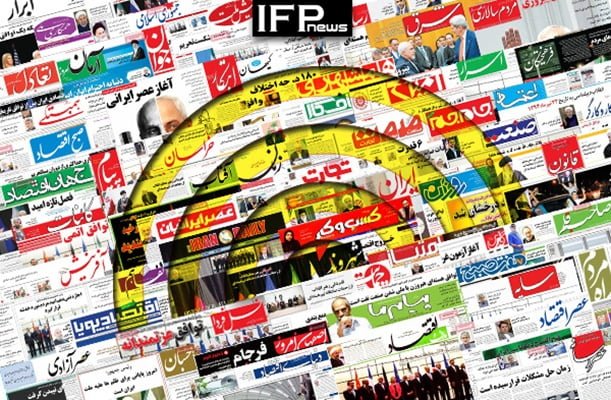
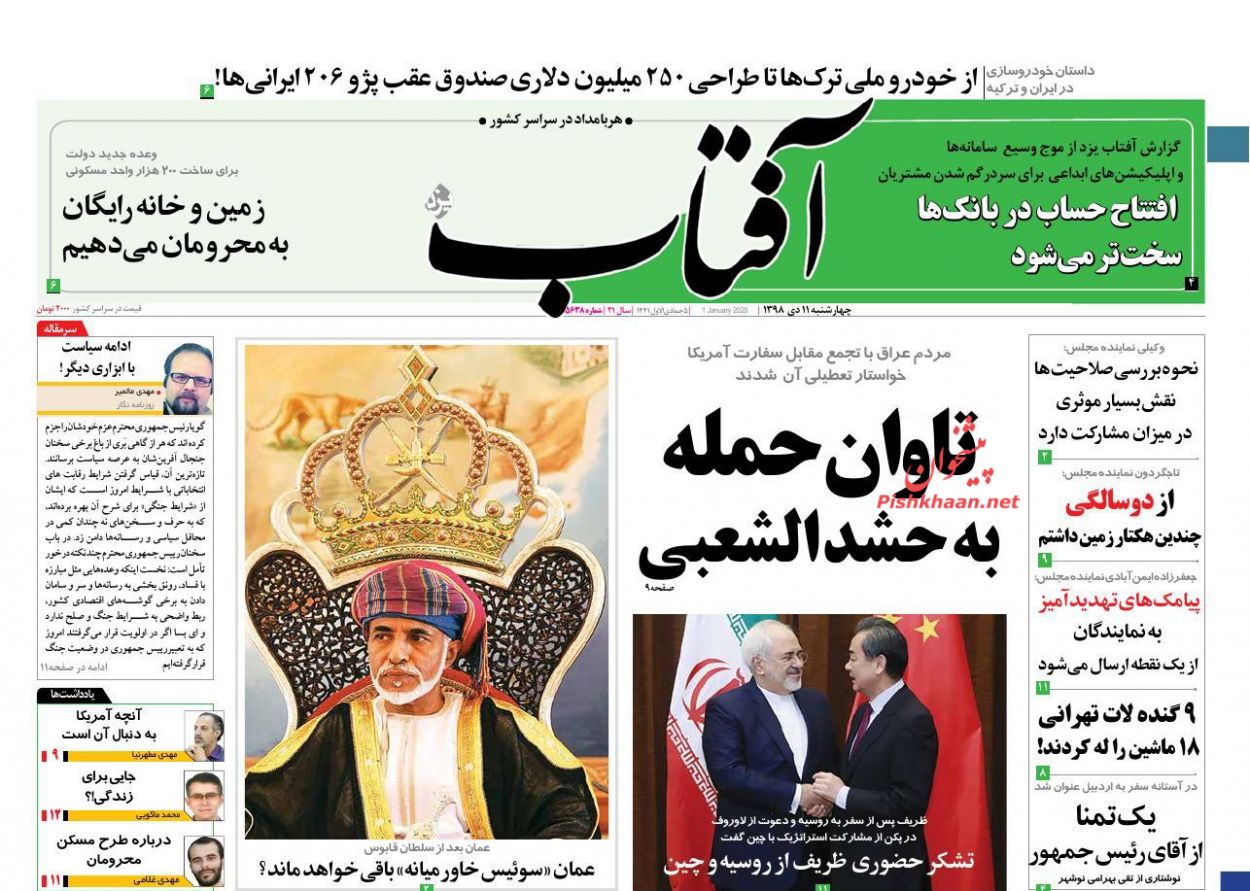
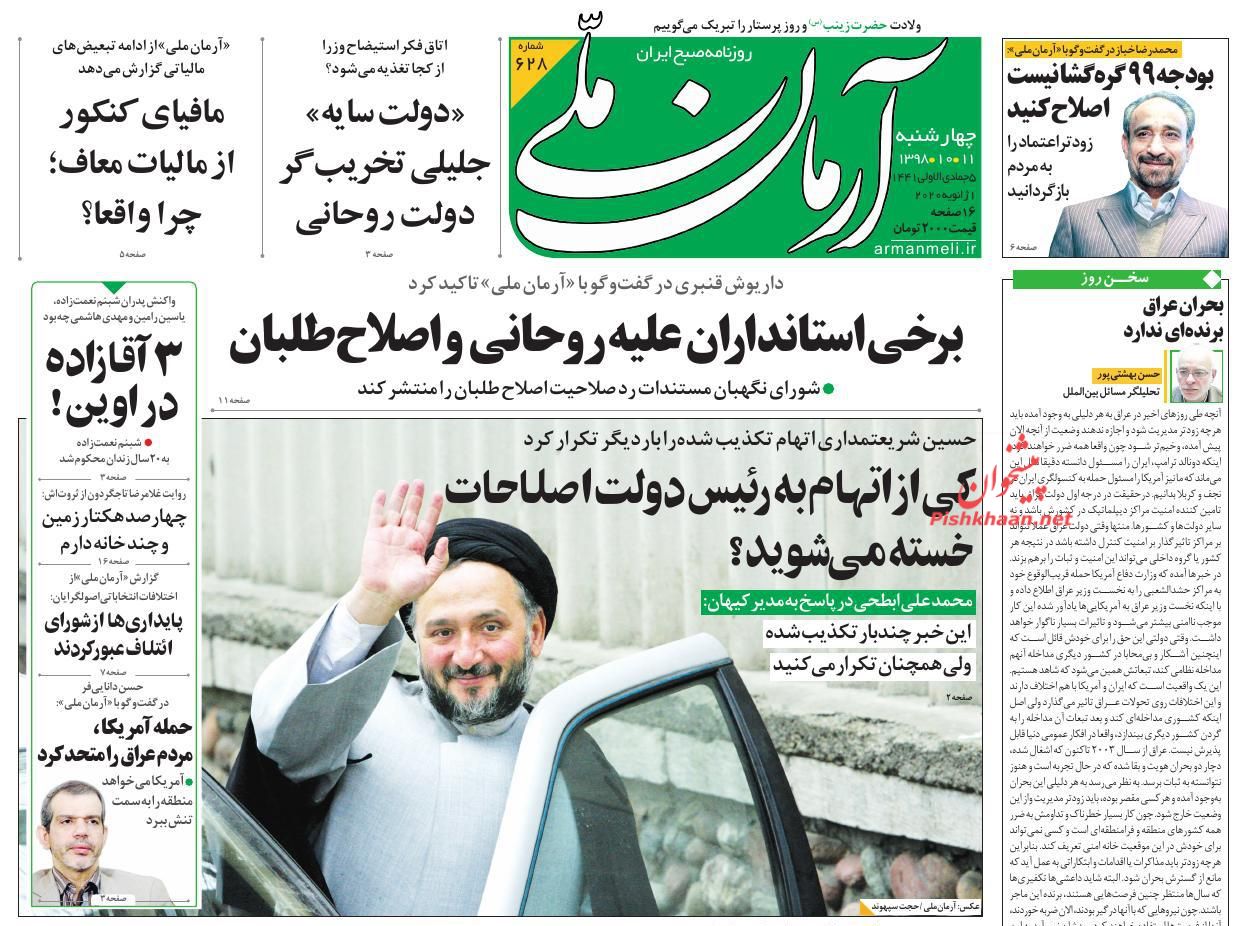
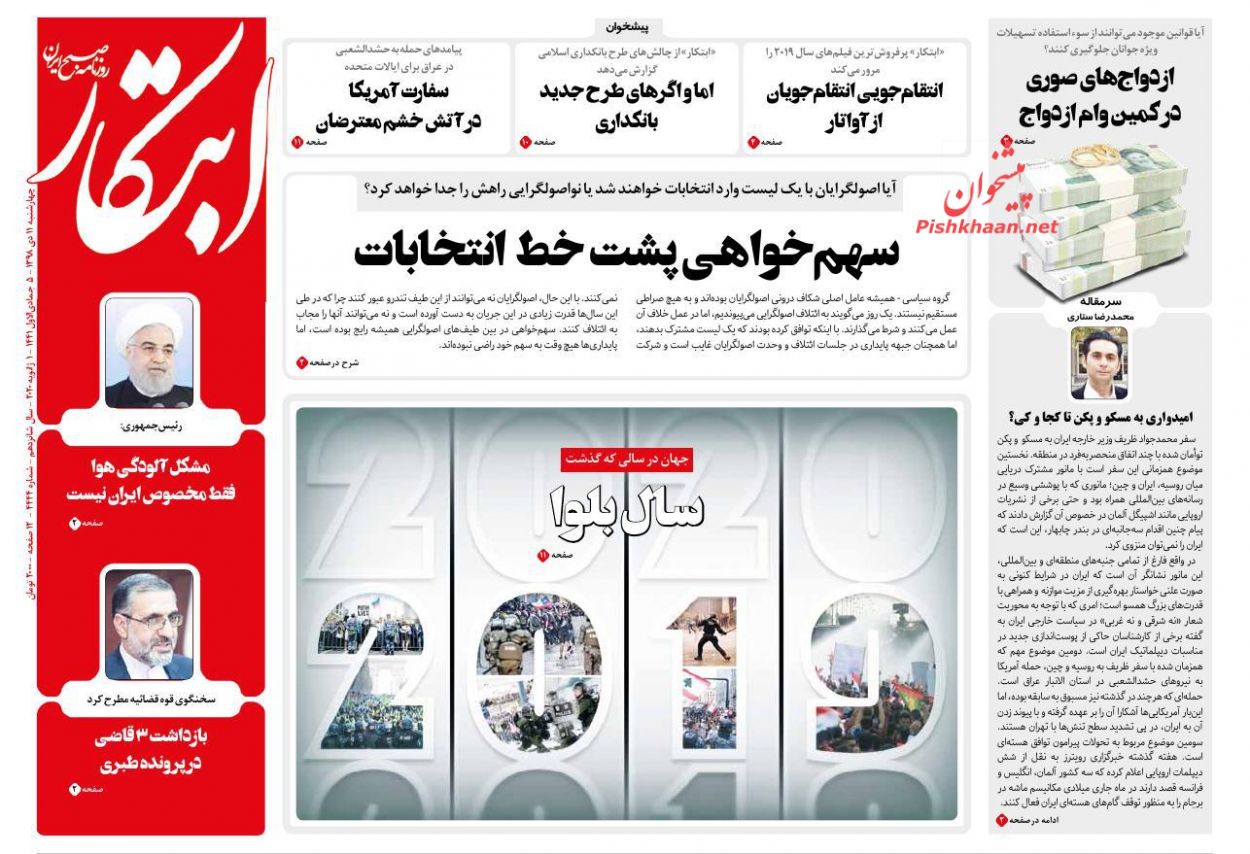
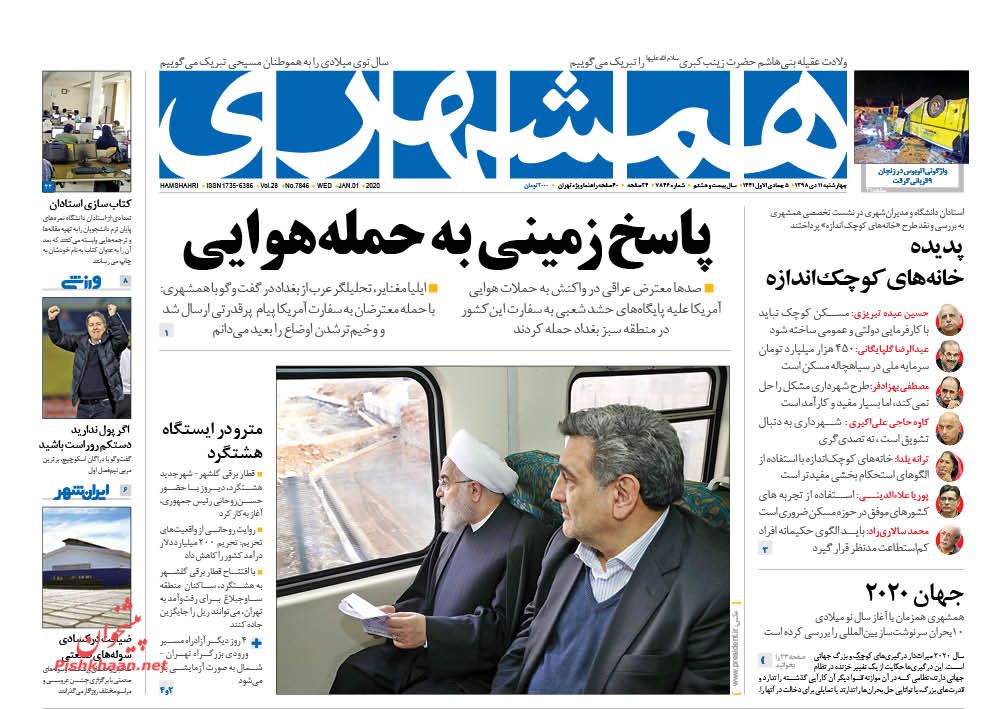
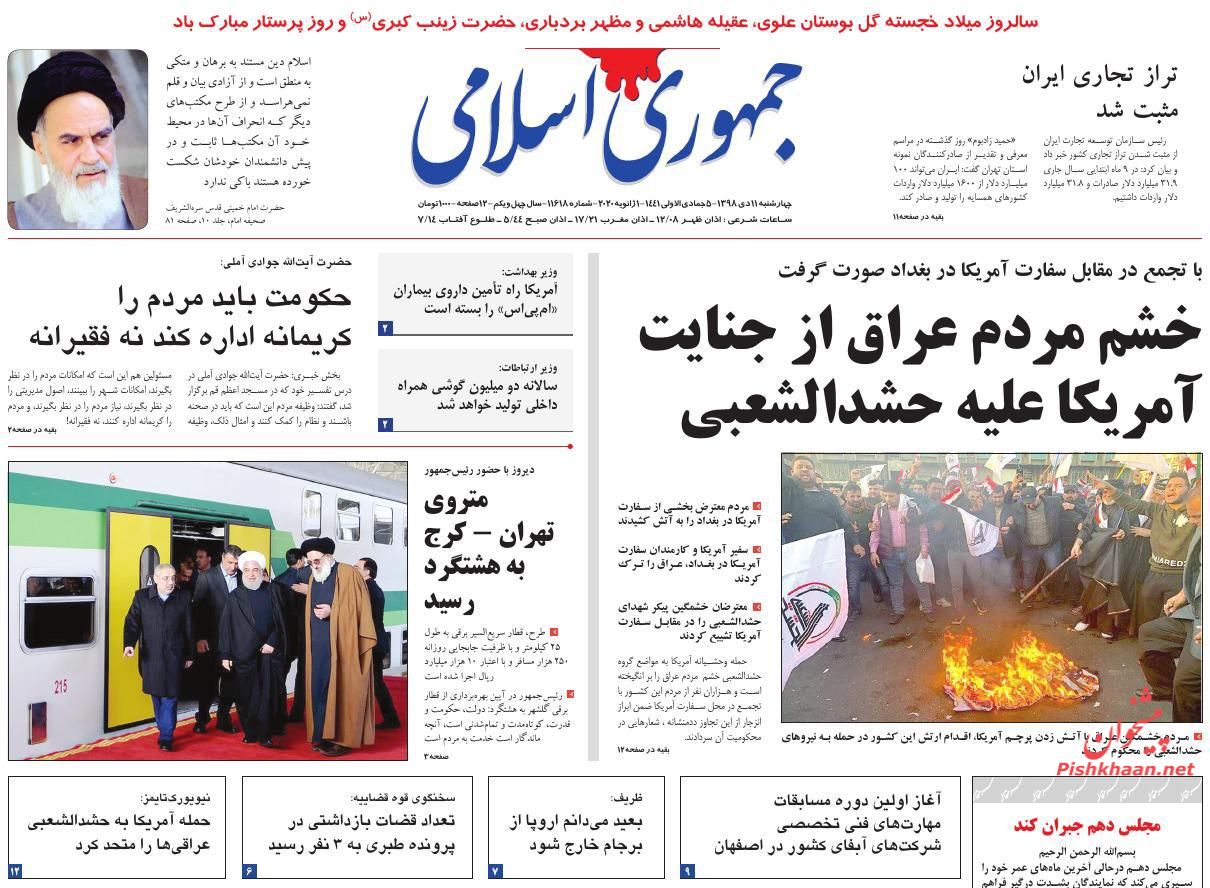
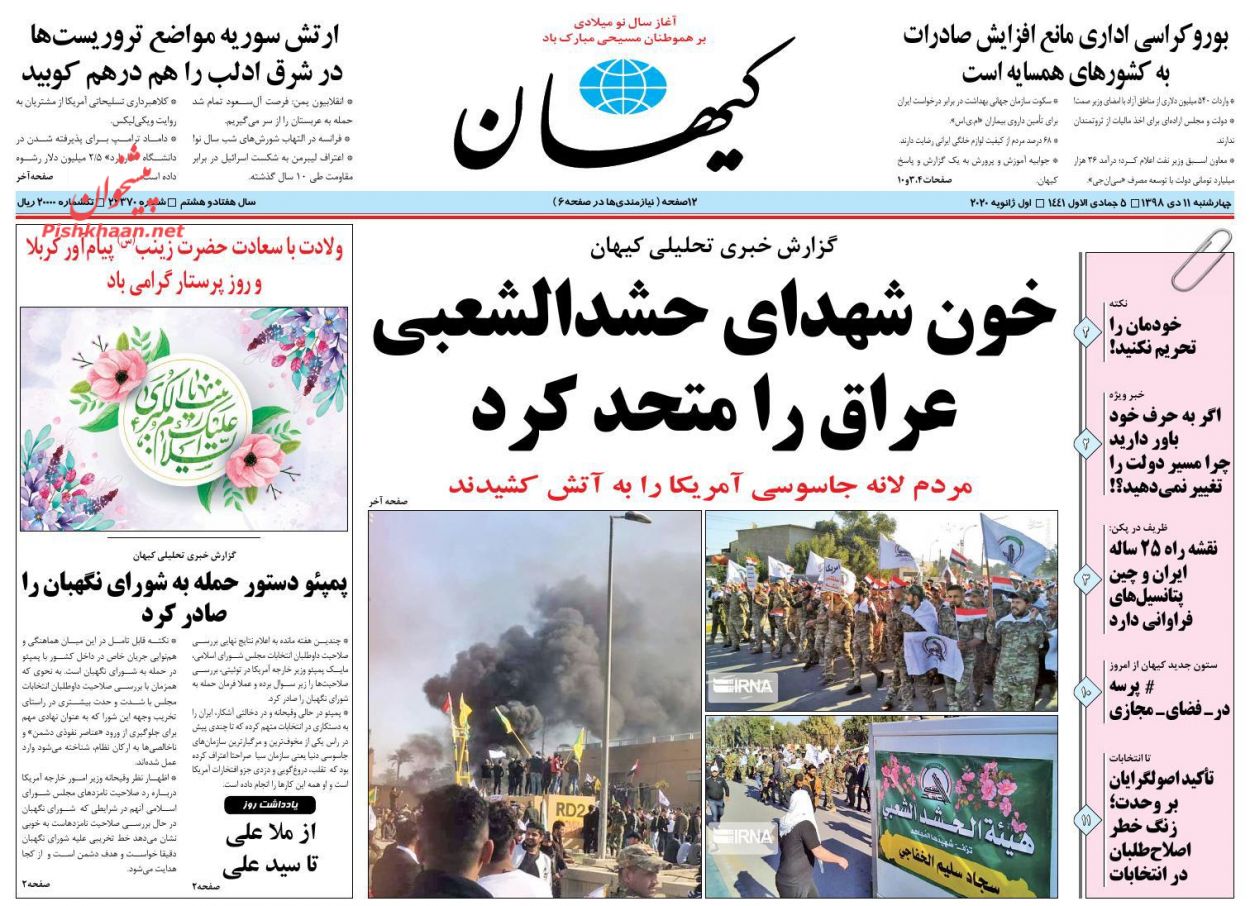
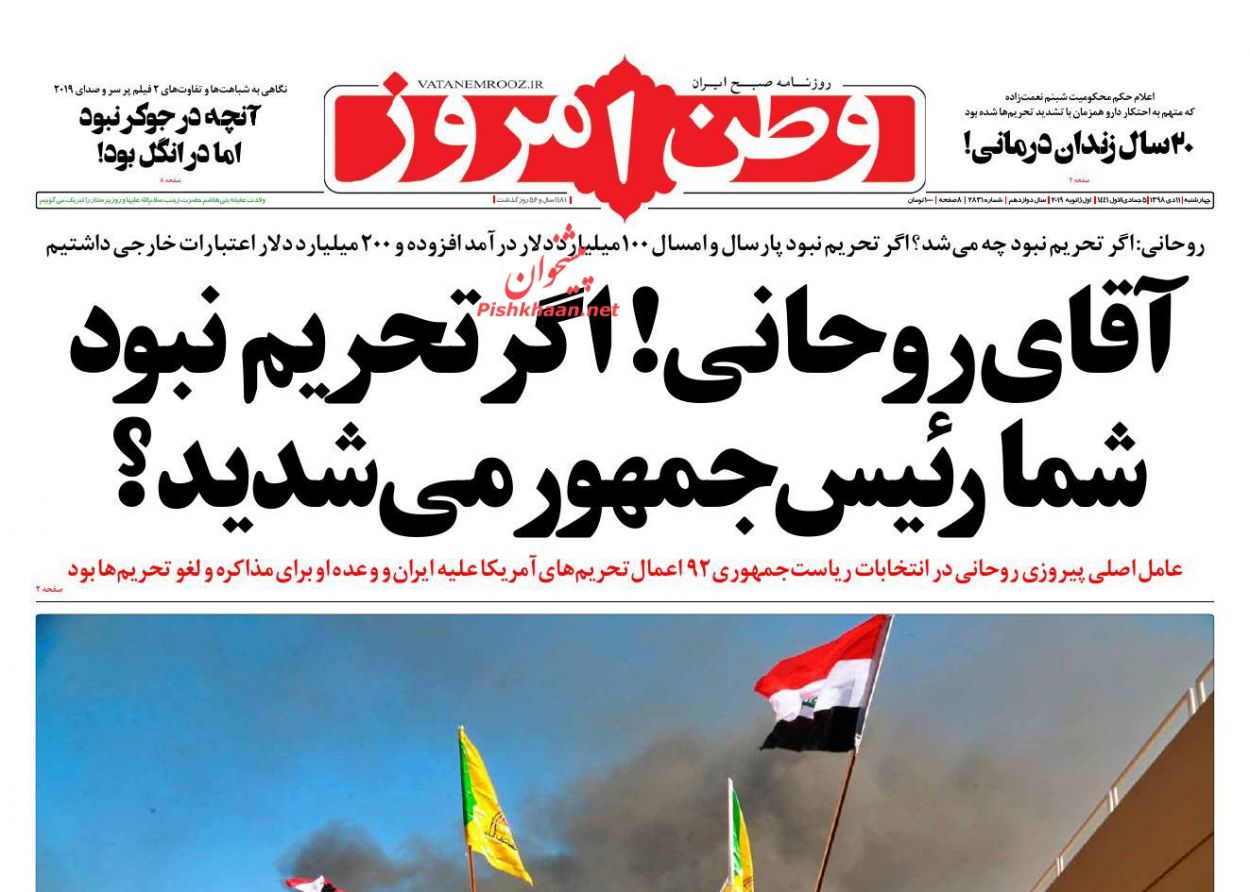
A Look at Iranian Newspaper Front Pages on December 7

Newspaper Headlines

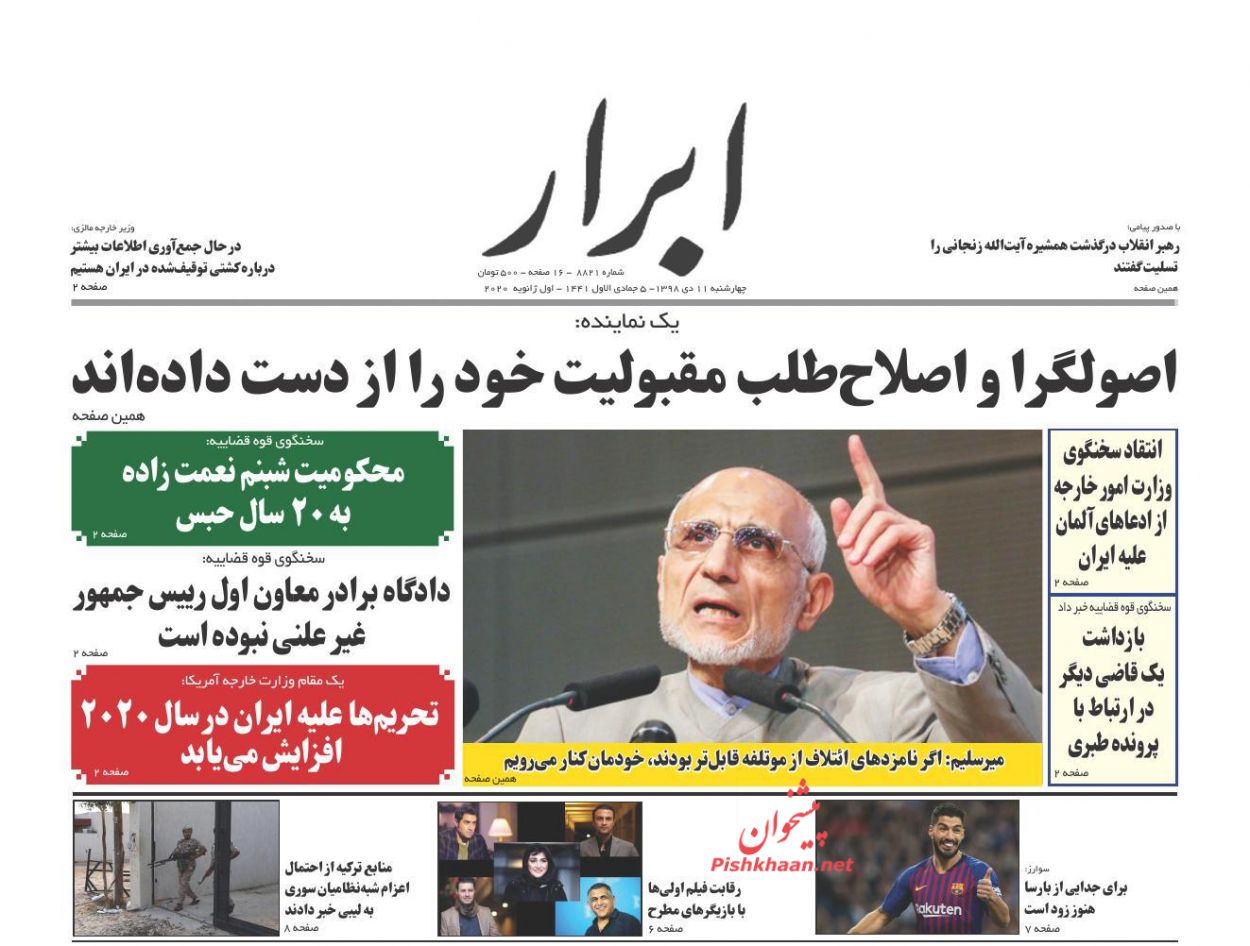
Abrar:
1- Zarif’s Harsh Reaction to E3’s Letter to UN
2- Kuwait: We’re Reviewing Hormuz Peace Endeavour
3- Arab League Chief: New Deal Must Be Signed with Iran

A Look at Iranian Newspaper Front Pages on December 7


Aftab-e Yazd:
1- What Does EU’s Letter to UN Mean?
2- Europe’s Radical Behaviour [Editorial]

A Look at Iranian Newspaper Front Pages on December 7


Donya-ye Eqtesad:
1- Britain’s Nightmare ahead of Christmas
* Will Socialism or Neoconservatism Replace UK Moderates?
2- Saudi Surprise for Market

A Look at Iranian Newspaper Front Pages on December 7


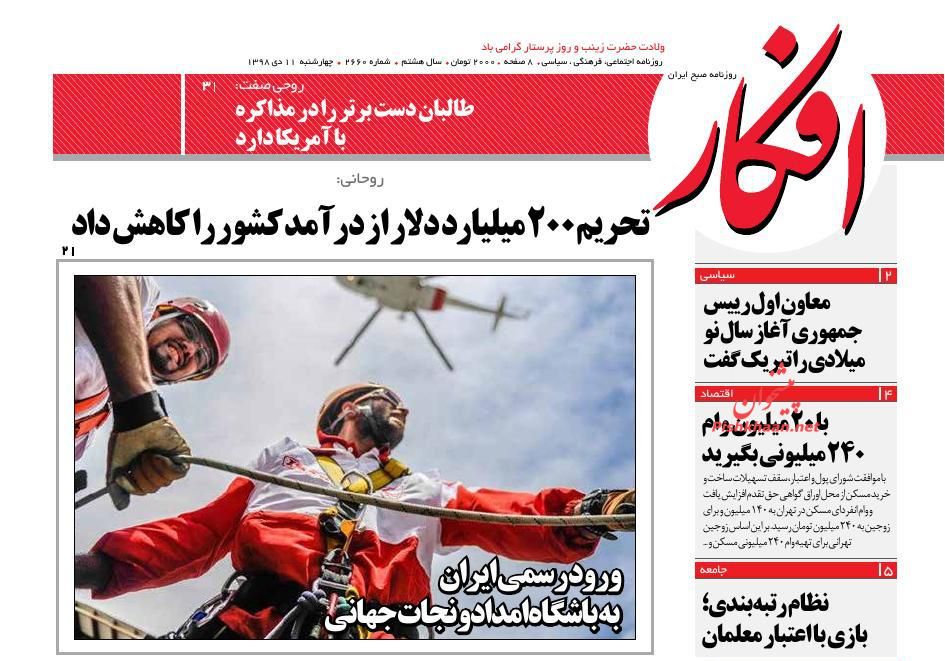
Ebtekar:
1- Latest Efforts to Revive JCPOA
2- Iran Won’t Give Up Its Right: What Happened in OPEC Summit

A Look at Iranian Newspaper Front Pages on December 7


Etemad:
1- First Steps of Reform in Iraq: New Election Commission Law Approved
2- Will New Iraq Be Born?

A Look at Iranian Newspaper Front Pages on December 7


Ettela’at:
1- JCPOA Commission: We Won’t Use Dispute Mechanism against Iran

A Look at Iranian Newspaper Front Pages on December 7


Hamshahri:
1- Mourning at Wedding Time: 12 Killed in Wedding Gas Explosion

A Look at Iranian Newspaper Front Pages on December 7


Iran:
1- Preserving JCPOA Without Trigger: What Happened in JCPOA Commission
2- Iran’s Reaction to E3’s Protest against Its Missile Activities

A Look at Iranian Newspaper Front Pages on December 7


Javan:

1- Zarif: Europe Covering Up Its Clear Incompetence with Sheer Lie

* Iran FM Catches Brian Hook on Europe’s Missile Pressure against Iran

2- Bloody Wedding Leaves 11 Killed, 42 Wounded in Saqqez

A Look at Iranian Newspaper Front Pages on December 7


Jomhouri Eslami:

1- Ayatollah Sistani Calls for Real Reforms in Iraq

* PM Must Be Appointed Without Foreign Interference

2- Iran, P4+1 United in Supporting JCPOA

A Look at Iranian Newspaper Front Pages on December 7


Kayhan:

1- US, Europe Both Terrified by Iran’s Missile Power

2- BBC Persian’s Claim about Arrest of Basij Forces Dismissed

3- Millions of Iraqis Pledge Allegiance to Top Cleric, Foil US Plot

A Look at Iranian Newspaper Front Pages on December 7


Sazandegi:

1- Aref Won’t Run for Parliamentary Votes

2- France Paralyzed

A Look at Iranian Newspaper Front Pages on December 7


Setareh Sobh:

1- 9806 People Run for Parliamentary Elections

A Look at Iranian Newspaper Front Pages on December 7


Shahrvand:

1- European Parties to JCPOA Escaping Forward

2- Massive Strikes in France

A Look at Iranian Newspaper Front Pages on December 7


Shargh:

1- Reformists Run for Parliamentary Elections

A Look at Iranian Newspaper Front Pages on December 7

Acclaimed Iranian Cartoonist Recounts Woes of His 50-Year Career

Acclaimed Iranian Cartoonist Recounts Woes of His 50-Year Career

Alizadeh was born in Ardabil in 1952. Since childhood he loved pencils and crayons and used every opportunity to paint.

He began his job with “Caricature” magazine in 1979 and worked in the Kayhan newspaper during the pre-revolution years.

He launched the magazine “Comics and Caricature” in 1990 and has kept the magazine working despite numerous problems.

Acclaimed Iranian Cartoonist Recounts Woes of His 50-Year CareerAfter half a century of professional work in the field of caricature and nearly 30 years of management in the magazine “Comics and Caricature”, he has talked about his career in an interview with ISNA:

“I took part at university entrance test in 1971. I could not pass the test for medicines, but I passed the test for three majors including visual arts, television and cinema and English translation. I didn’t know which one to choose. My family used to say that there was no end in sight for artwork. They advised me to choose English translation. I did the same. In fact, I translate now, and do the artwork,” he said.

A Reality Beyond Dreams

He says “my parents were very study-oriented, and I enjoyed reading magazines and newspapers alongside them. That interest led me to participate in a cartoon contest as a teenager and send one of my works to them. Despite my young age, the cartoon I had chosen had political content and was about the Middle East war. This led me to work in the press, as the work I had sent to them was published in Mideast magazine in the United States.”

One American reporter comes to Iran. He sees my work in a cartoon magazine, and sends it to “Mideast” and they publish it. I could never imagine such a thing.

Golden Years of Cartoon in Iran

Alizadeh goes to the Kayhan newspaper and starts working there during the days leading to the victory of Iran’s Islamic Revolution.

However, in 1981 he leaves Kayhan because of what he calls some differences. Alizadeh also commented on the best years of cartoons in Iran saying that “It was at the time of Dr. Mosaddeq’a office that the press enjoyed a great freedom, and even cartoons of Mosaddeq was being drawn.”

The next period was in 1978 and the cartoons of all people were being drawn at that time. There was also a period during the presidency of Seyyed Mohammad Khatami, that the press were more open. In 1990, of course, as the war was just over, magazines like “Gol Aqa” and “Comics and Caricatures” were licensed.

Difficulties of Being a Cartoonist

Now, as most political men are clerics, and considering that it is not lawful to draw caricatures of clerics, there is naturally less cartoons about politicians. Personally, though, I don’t think it is necessary to draw a cartoon of them and we can criticise their performance. I believe a professional cartoonist can criticise in any situation.

Acclaimed Iranian Cartoonist Recounts Woes of His 50-Year CareerElsewhere in his remarks, Alizadeh talks about the lasting works he has created. “I was not interested in studying my lessons, but I always welcomed creativity and innovation. When I left Kayhan, I was at home for several years and started reading Einstein’s books. So I decided to look at his topics as my subjects.”

Acclaimed Iranian Cartoonist Recounts Woes of His 50-Year CareerHe goes on to refer to his collection of works about Sadeq Hedayat and says “One of these works of Sadeq Hedayat collection is very famous. Of course, it’s not at all clear that I drew it, because I didn’t sign the work, and that work was published again and again without any signatures.”

About his magazine, he says “Although they hardly gave a licence to ‘Comics and Caricatures’, they didn’t think it would survive. I lose a lot of money in every issue that is published, but love of the work keeps me going. It was very important for me to have an independent magazine. I paid a lot for my opinions and magazine in my life. Naturally, the less it is published, the less I lose. However, I want to keep my journal up to date and continue publishing it until I am alive.”

Five Iranian Films on Screen at Kerala Film Festival

Five Iranian Films on Screen at Kerala Film Festival

The IFFK 2019 kicked off in India’s southern city of Thiruvananthapuram on Friday and will run until December 13.

The festival has picked Iranian actress Fatemeh Motamed-Arya as its jury head.

Moreover, five films by Iranian directors are competing in the World Cinema section of the festival.

The Iranian movies presented in IFFK 2019 include “African Violet” directed by Mona Zandi Haghighi, “The Warden” directed by Nima Javidi, “Just 6.5” written and directed by Saeed Roustayi, “Castle of Dreams” directed by Reza Mirkarimi, “Marghe and Her Mother”, a product of Italy and the UK directed by Mohsen Makhmalbaf, as well as “Hava, Maryam, Ayesha”, a joint production of Iran and Afghanistan directed by Sahraa Karimi and produced by Katayoon Shahabi.

The Kerala film festival, known as one of the major cinematic events in India, presents a selection of the best of World Cinema and a competition section exclusively for films from Asia, Africa and Latin America.

Iran, US Exchange Prisoners with Swiss Mediation

Iran, US Exchange Prisoners with Swiss Mediation

“Dr Masoud Soleimani, the Iranian scholar and university professor, was released moments ago after one year of illegal detention in the US, and handed over to Iranian officials in Switzerland,” the Iranian Foreign Ministry said in a statement on Saturday, December 7, 2019.

“Professor Soleimani, who had been detained on the bogus charge of violating the US’ illegal sanctions and were imprisoned in the US for over a year, … is going to return to Iran over the next couple of hours,” another statement by the Foreign Ministry said later in the day.

“The Iranian professor was released in light of efforts by Iran’s Ministry of Foreign Affairs and cooperation from the Islamic Republic of Iran’s security and judicial organizations in a diplomatic process in cooperation with the government of Switzerland,” it added.

The prominent Iranian scholar was detained by the FBI on October 7, 2018, on a flight to the United States, where he was planning to visit on a research visa after getting an invitation from a research centre in Minnesota.

Iran, US Exchange Prisoners with Swiss MediationThe US authorities had reportedly accused the scientist of violating trade sanctions against Iran in 2016, when such restrictions were non-existent.

Earlier, Foreign Minister Mohammad Javad Zarif had announced in a tweet that Princeton University scholar Xiyue Wang will also join his family shortly, after over three years of detention in Iran on charge of espionage.

“Glad that Professor Massoud Soleimani and Mr. Xiyue Wang will be joining their families shortly. Many thanks to all engaged, particularly the Swiss government,” Zarif tweeted.

“American citizen Xiyue Wang, who was serving a sentence in Iran for espionage, has been released after being shown Islamic mercy and has been handed over to the Swiss officials for repatriation to the US, after approval by Iran’s Supreme National Security Council and cooperation and permission from the Iranian judicial and security institutions,” the Foreign Ministry said in its statement.

A PhD candidate in the Department of History at Princeton University, on 8 August 2016, Wang was arrested in Iran on charges of espionage.

US Secretary of State Mike Pompeo later confirmed his release and said the United States was “pleased that Tehran has been constructive in this matter.”

President Donald Trump also thanked America’s “Swiss partners for their assistance in negotiating Mr. Wang’s release with Iran.”

Iran’s Beauties in Photos: Kariz Underground City

Iran’s Beauties in Photos Kariz Underground City (7)

The complex is called the Kariz Underground City, which once provided the islanders’ drinking water.

What follows are Mizan News Agency’s photos of Kariz:

Iran Joins Club of Ramjet Engine Manufacturers

Iran Joins Club of Ramjet Engine Manufacturers

Despite decades of sanctions and the current “maximum pressure” imposed on Iran, the country today is standing higher than some other countries in various fields of science and technology and has taken major steps in these fields. It will never be forgotten that the youths of Iran stood in the way of strong barriers of sanctions by other countries, and with a double effort, managed to keep the country’s industries abreast of innovative ideas.

One of the achievements these young people made was “designing of an Iranian ramjet engine”.

A group of knowledge-based elites and activists working in the field of eco-technology and innovation have decided to use the country’s aviation industry to circumvent the imposed sanctions and give the next generations a gift of Iranian industry.

As Hossein Pourfarzaneh, head of the Iranian jet engine team, says, “Ramjet engines show up speeds of up to 500 km/h, but they can also fly at supersonic speeds.”

According to him, “the engine has been designed by Iranian specialists and built by a knowledge-based company.”

The knowhow of designing this type of engine was earlier possessed by a handful of advanced countries, but now the Islamic Republic of Iran has joined these countries by producing this ramjet engine.

A ramjet is a form of air-breathing jet engine that uses the engine’s forward motion to compress incoming air without an axial compressor or a centrifugal compressor. As ramjets cannot produce thrust at zero airspeed, they cannot move an aircraft from a standstill. A ramjet-powered vehicle, therefore, requires an assisted take-off like a rocket assist to accelerate it to a speed where it begins to produce thrust.

These engines are used in the aviation industry and are used in almost all aircraft today. Ramjets can be particularly useful in applications requiring a small and simple mechanism for high-speed use, such as missiles. Weapon designers are looking to use ramjet technology in artillery shells to give added range. They have also been used successfully as tip jets on the ends of helicopter rotors.