Monday, April 27, 2026
Home Blog Page 274

Iran refutes US’ accusations concerning insecurity, instability in Red Sea

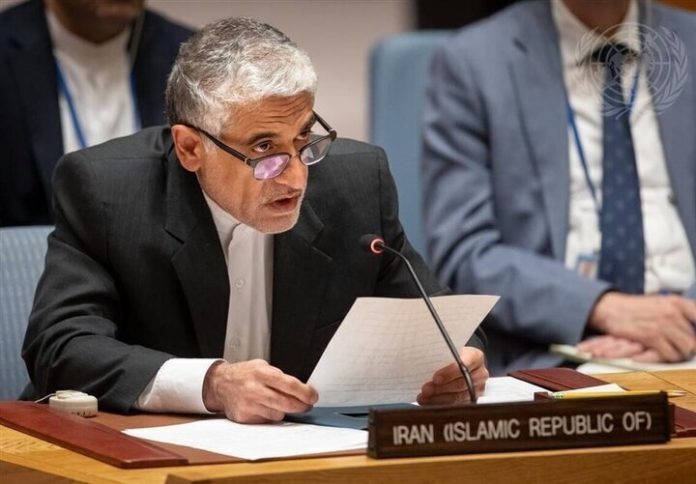
Amir Saeed Iravani

In a letter to UN Secretary General Antonio Guterres and President of the UN Security Council Asim Iftikhar Ahmad on July 16, Saeed Iravani hit back at the US for deflecting attention from its own destabilizing actions, including its military involvement in Yemen and support for Israel’s aggression in Yemen and the entire region.

What follows is the full text of his letter:

In the Name of God, the Most Compassionate, the Most Merciful

Excellency,

I categorically reject the baseless allegations once again made against the Islamic Republic of Iran by the representative of the United States during the Security Council meetings held on 9 July 2025 (9954th meeting) and 15 July 2025 (9958th meeting), under the agenda items “The Situation in the Middle East” and “Maintenance of International Peace and Security,” respectively.

The claim that Iran violates Security Council resolution 2216 (2015) is entirely unfounded, unsubstantiated, and devoid of credible evidence. Iran remains fully committed to its international obligations and relevant Security Council resolutions and continues to support a peaceful, inclusive, and Yemeni-led political process.

It is deeply regrettable that the United States abuses the Security Council platform to deflect attention from its own destabilizing actions, including its military involvement in Yemen and support for Israel’s aggression in Yemen and the entire region.

For nearly a decade, the people of Yemen have suffered the consequences of a devastating war and unlawful blockade imposed by a coalition backed by the United States, resulting in one of the world’s worst humanitarian crises. These violations of international humanitarian law continue with impunity.

The Security Council must not allow the United States’ propaganda to obscure the ongoing Israeli atrocious crimes in Gaza and the region and the root cause of the current situation in the Red Sea. Lasting peace in the region requires addressing the root causes of instability, chief among them, Israel’s illegal occupation, aggression, and systematic violations of international law and Security Council resolutions.

I would be grateful if you would circulate the present letter as a document for the Security Council.

Please accept, Excellency, the assurances of my highest consideration.
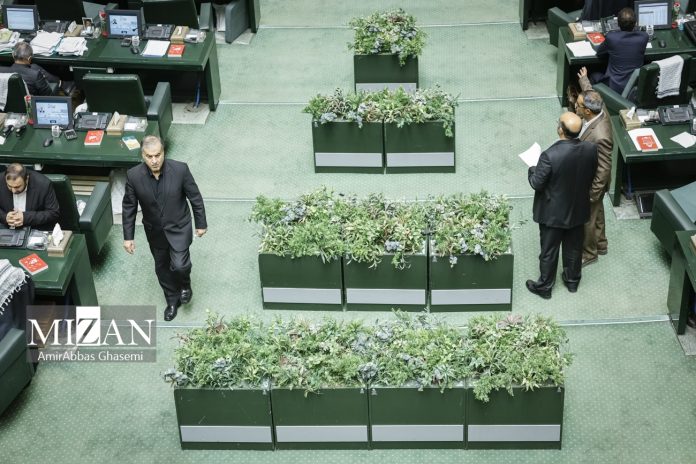
Kayhan urges Iran’s parliament to approve NPT withdrawal to counter snapback threat

Iranian Parliament

The piece, published on Thursday, argues that such a move would send a “clear and proactive” message to European nations contemplating the restoration of UN sanctions.

The snapback mechanism, outlined in Article 37 of the 2015 nuclear deal (JCPOA) and UN Security Council Resolution 2231, allows any participant to unilaterally trigger the reimposition of international sanctions if Iran is found to be non-compliant. This process is not subject to veto and could lead to the automatic return of all pre-2015 sanctions within 30 days.

Kayhan warns that a passive response would only embolden Europe, which may perceive there is no cost to reactivating sanctions.
Instead, it recommends that the Iranian Parliament pass a law that obliges the government to exit the NPT and halt all voluntary cooperation with the International Atomic Energy Agency (IAEA) if snapback is triggered.

Former Iranian ambassador: U.S. talks ‘futile’, Lariijani suitable negotiator for west

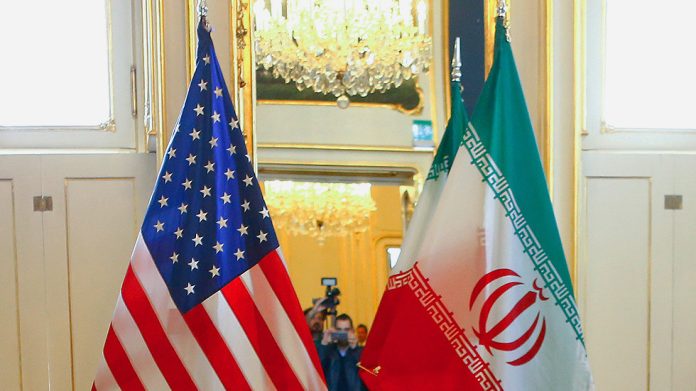
Iran US Flags

In an interview with Khabar Online, Ghadiri Abyaneh stated that while negotiations, even during wartime, are sometimes necessary, any talks with the U.S. should be ruled out due to “repeated betrayals,” including Washington’s withdrawal from the 2015 nuclear deal (JCPOA).

He criticized the current Iranian foreign policy team and proposed that any future negotiations with European countries should be conducted “from a position of strength and equality,” not weakness.

Abyaneh suggested Mohammad-Javad Larijani, a conservative political figure, as a suitable candidate to lead future negotiations with Europe, emphasizing the need for “strong, principled, and fearless” negotiators.

He warned that the West’s ultimate aim is not to contain Iran’s nuclear program, but to weaken the country’s defense capabilities and sovereignty. “America wants to dismantle Iran,” he said, saying Western powers are seeking to divide the country and exploit its resources.

The Iranian government has condemned the U.S. for its ‘betrayal of diplomacy’ in attacking the Natanz nuclear site near Isfahan during ongoing talks, and is demanding assurances from Washington that such actions will not be repeated as a condition for resuming negotiations.

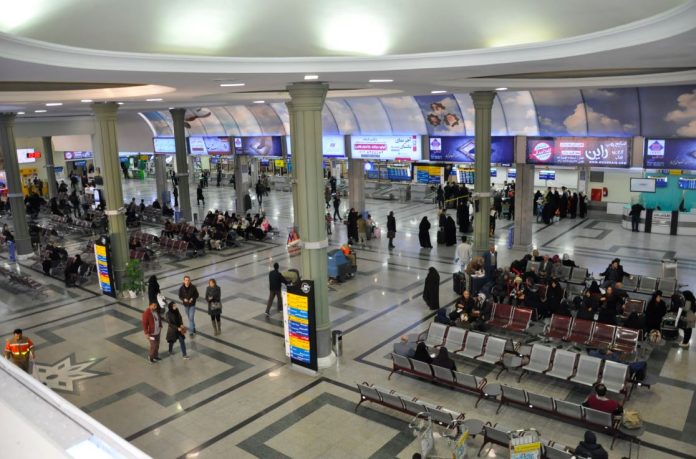
Isfahan International Airport reopens after 34-day closure

In a statement issued by the organization, it was confirmed that the airport has been cleared for operations following thorough on-site inspections and comprehensive evaluations of its technical, operational, and security conditions.

The reopening comes after a 34-day suspension of all flights over safety concerns.

Authorities stated that all flight restrictions have now been lifted and key infrastructure has been fully prepared to support full-scale operations.

The first flight is scheduled to land on Friday morning and the airport will return to normal, offering round-the-clock services to passengers and airlines as before.

Central Bank says Iran’s economy grew by 3.1% in year to late March

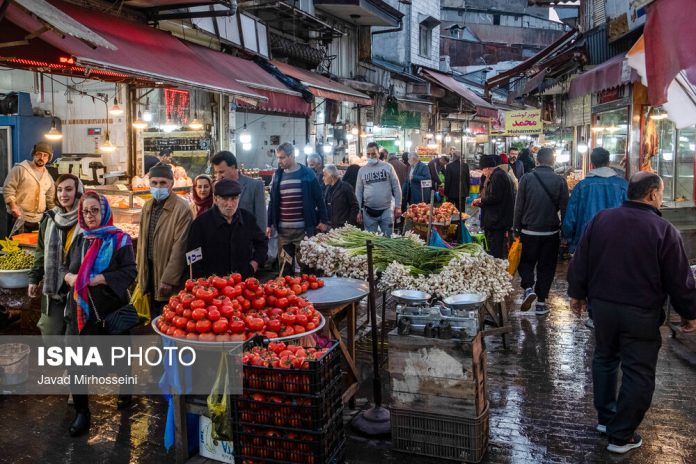
Iran Bazaar

CBI’s initial economic growth figures released on Wednesday showed that Iran’s gross domestic product (GDP) had increased to 78,443.8 trillion rials (over $301 billion) in the year to March 20.

The CBI considers fixed prices from early 2022, when the US dollar was worth 260,000 rials, for its calculation of the GDP. That comes as the current free market price of the US dollar is 880,000 rials.

The lender, whose economic growth estimates are slightly higher than those announced by Iran’s statistics agency SCI, said the Iranian economy had expanded by 3.7% in the last calendar year, considering free-market prices. It had put Iran’s economic growth at 5.0% in the year to late March 2024.

CBI figures showed that the non-oil sector of the Iranian economy had also expanded by 3.0% in the past calendar year.

The data showed that Iran’s GDP had reached 18,412.5 trillion rials in the quarter to late March, up 3.2% from the quarter to late December 2024.

They showed that the oil and gas sector had been the best performer of the Iranian economy in the past calendar year, with a GDP growth of 4.6%, followed by the services sector at 3.9%.

Iran has reported consecutive quarters of economic growth since the second half of 2020, when the country began to recover from the economic impacts of the US sanctions on its oil exports.

Experts believe rising oil exports and a robust economic diversification program have contributed to the expansion of the Iranian economy in recent years despite the continued pressure of the US sanctions on the country.

Second Israeli ultra-Orthodox party to leave government in blow to Netanyahu

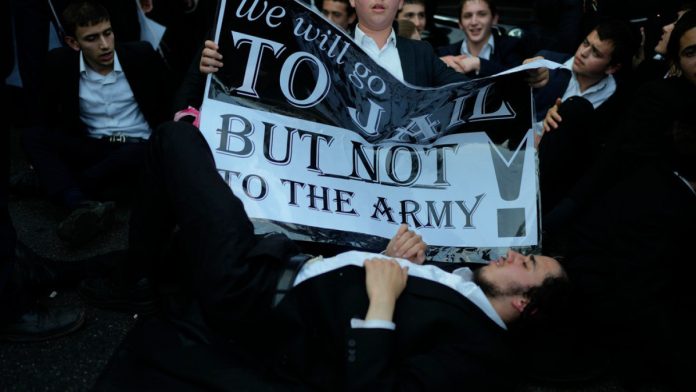
The ultra-Orthodox Shas party announced on Wednesday that it was leaving the cabinet in protest against lawmakers’ failure to guarantee future exemption from military conscription for religious students.

“Shas representatives … find with a heavy heart that they cannot stay in the government and be a part of it,” said the group in a statement.

It was not immediately clear whether the decision would leave Netanyahu with a minority in parliament. Without Shas, Netanyahu’s coalition would have 50 seats in the 120-seat Knesset.

Shas, which has long served as a kingmaker in Israeli politics, noted it would not work to undermine the government once outside it and could vote with it on some laws. It also added it would not support its collapse.

The departure of Shas from the government comes one day after another ultra-Orthodox party, United Torah Judaism (UTJ), resigned from the government over the same issue, which has prompted an explosive debate in Israel after more than 21 months of war with Hamas in Gaza.

While ultra-Orthodox seminary students have long been exempt from mandatory military service, many Israelis are angered by what they see as an unfair burden carried by other groups who serve.

The moves by Shas and UTJ come just before the Israeli parliament starts a three-month recess on July 27, giving the prime minister several months of little to no legislative activity to bring the parties back into the fold.

Ultra-Orthodox Jewish leaders say full-time devotion to holy scriptures study is sacrosanct and fear their young men will turn away from religious life if they are drafted into the military.

Last year, the Supreme Court ordered an end to the exemption. The parliament has been trying to work out a new conscription bill, which has so far failed to meet the demands of both Shas and UTJ.

Iranian officials respond to public concern over ‘tiered internet’ plan

Iran Internet Mobile

Azar Mansouri, head of the Reformist Front, voiced sharp criticism on social media, saying recent statements by government officials and the passage of a new regulation by the Supreme Council of Cyberspace have alarmed and angered the public.

She called on the government to clearly and transparently abandon these plans and accelerate efforts to lift internet filtering and ensure open access.

The controversy follows the Council’s recent unanimous approval of a regulation to facilitate digital business. Critics say the measure marks the beginning of a tiered internet system, potentially limiting access based on user type or role.

Communications Minister Seyed Sattar Hashemi responded by emphasizing President Massoud Pezeshkian’s firm opposition to tiered access. Both officials reiterated that unrestricted internet access is a right for all citizens.

President Pezeshkian stated that the government’s aim is to promote a high-quality and inclusive internet, not impose restrictions. He further warned against policies that would increase reliance on restriction-bypassing VPNs or undermine digital security.

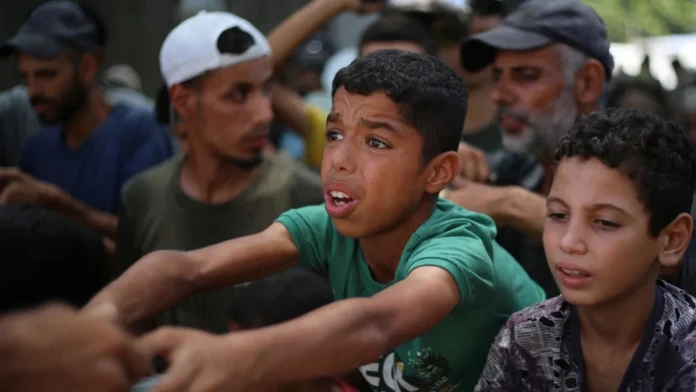
Ten children a day losing a limb in Gaza: Report

According to an update by the UN-sponsored Global Protection Cluster, Israeli attacks on Gaza have “destroyed the protection environment” of the disabled and newly disabled in the enclave.

The report said 134,105 people including over 40,500 children have suffered new war-related injuries since the war began in October 2023.

Twenty-five percent are estimated to have new disabilities requiring acute and ongoing rehabilitation.

“There is no safe space in Gaza. Twenty months of intense hostilities have destroyed the protection environment for persons with disabilities and older persons,” it added.

“Over 35,000 people are believed to have significant hearing damage due to explosions. Ten children per day lose one or both of their legs.”

According to the report, Gaza’s only limb reconstruction and rehabilitation centre became non-functional in December 2023 due to a lack of supplies and specialised health workers, and was severely damaged in air strikes in February 2024, depriving children and adults of life-saving services.

Rights groups and NGOs say the war on Gaza has had a devastating effect on the children of the enclave.

The Palestinian Ministry of Health says that more than 17,000 of the 58,500 Palestinians killed since October 2023 are children and that they account for 30 percent of the total injuries.

An average of 15 children per day acquire potentially life-altering disabilities, the ministry said.

In December, the UN reported that Gaza had the highest number of child amputees per capita globally.

“Gaza now has the highest number of child amputees per capita anywhere in the world – many losing limbs and undergoing surgeries without even anaesthesia,” UN Secretary-General Antonio Guterres stated.

Last week, the UN agency for children, UNICEF, warned that children experiencing acute malnutrition are particularly vulnerable and face a greater “likelihood of dying from simple causes by 10 times”.

Spokesperson James Elder said that access to hospitals in Gaza was no longer safe for ill or malnourished children.

Separately on Tuesday, the UN agency for Palestinian refugees (UNRWA) said one in ten children screened at UN-run health clinics in Gaza is now malnourished.

“Our health teams are confirming that malnutrition rates are increasing in Gaza, especially since the [Israeli] siege was tightened more than four months ago on the second of March,” UNRWA’s director of communications, Juliette Touma, told journalists in Geneva during a briefing via video link from Amman.

Aid agencies have warned repeatedly that famine is looming in parts of Gaza, particularly in the north, where access remains limited.

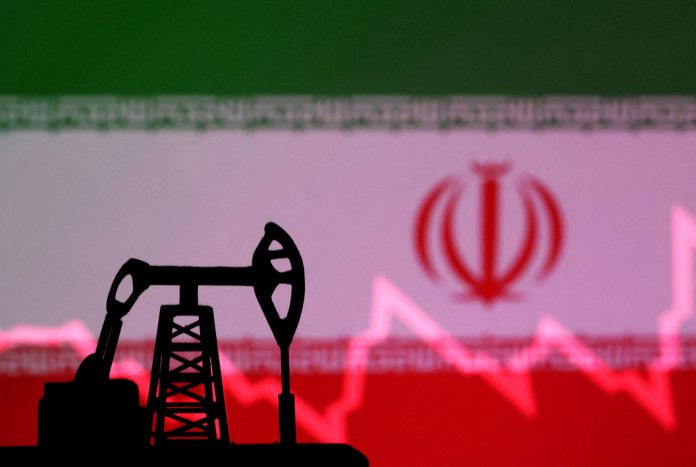
OPEC data shows Iran’s oil output fell slightly in June

Iran Oil

OPEC data cited in a Wednesday report by the IRIB News showed that Iran had produced 3.241 million barrels per day (bpd) of oil in June, down 1.87% compared to figures reported in May.

Iran’s June quarter oil output reached 3.291 million bpd, down from 3.307 million bpd in the March quarter but up from 3.29 million bpd reported in the last quarter of 2024, the figures showed.

The country had produced an average of 3.257 million bpd last year and 2.884 million bpd in 2023, according to the same data.

Total OPEC output rose by 0.81% to 27.235 million bpd in June, amid efforts in the bloc to gradually remove cuts agreed in recent years to stabilize international oil prices.

Despite the fall in output in June, Iran remained the third largest oil producer in the 12-member OPEC, trailing Saudi Arabia at 9.356 million bpd and Iraq at 3.943 million bpd, OPEC tables showed.

However, the average price of Iran’s heavy-grade oil rose $5.88 or 9.2% compared to May prices to reach $69.13 per barrel. That came as average OPEC basket prices rose by $6.11 or 9.6% to $69.73 per barrel in June, according to the tables.

Iran has consistently raised its oil output in recent months despite the growing pressure of the US sanctions on its exports.

The country fought a 12-day war with the Israeli regime starting June 13, which slightly affected shipping activities in the Persian Gulf.

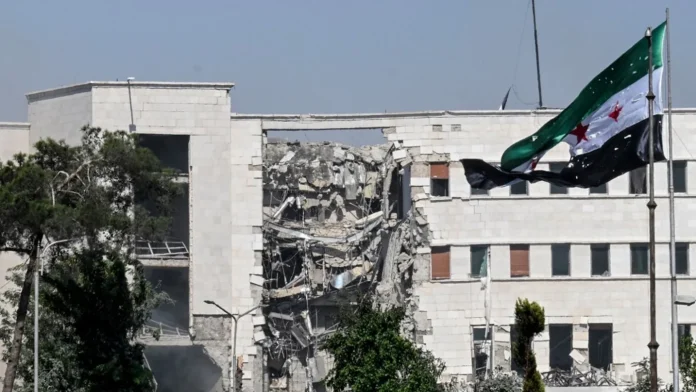
Israeli military bombs Syrian government buildings in Damascus

Footage released on local TV showed an explosion in central Damascus, with huge plumes of smoke enveloping the area around Umayyad Square.

The Syrian state news agency SANA said, citing the country’s health ministry, that one person hadbeen killed and 18 others injured in the attacks.

Israeli Defence Minister Israel Katz posted footage of the bombing on X, writing: “heavy blows have started”.

SANA also added Israel struck targets in the southwestern province of Daraa.

“Starting at 9:30 a.m. Tuesday, Israeli aircraft began flying over Daraa and Sweida provinces, conducting several maneuvers in Syrian airspace before striking the town of Izraa in rural Daraa and launching another airstrike near the town of Al-Mazraa in Sweida countryside,” stated Abu Amin, a military observer in Syria.

Amin told Middle East Eye that in the afternoon, Israeli drones had targeted several vehicles belonging to General Security, followed by strikes on three tanks operated by the Syrian Ministry of Defense.

“F-35 jets carried out multiple airstrikes on the 112th Brigade and the 175th Regiment of the Syrian Ministry of Defense in the Izraa region of Daraa, resulting in casualties and injuries among Syrian army personnel,” he added.

On Sunday, clashes broke out between Syrian government forces and members of the Druze minority in Sweida, a Druze-majority southern province.

Since the new government, led by former rebel Ahmad al-Sharaa, took power in December, Israel has repeatedly struck Syrian military targets, sometimes in response to tensions with the Druze, which it claims it seeks to protect.

The latest deadly clashes in Sweida have prompted further Israeli bombing, though the strikes on central Damascus are a serious escalation.

The Israeli army announced it was preparing for several days of fighting in Syria and would withdraw forces from the Gaza Strip and divert them northwards to protect the border.

Israel’s far-right National Security Minister Itamar Ben-Gvir went a step further and, in a statement, said Israel should kill Sharaa.

“We need to eliminate the head of the snake,” he said in a statement.

The Israeli army noted that several hundred Druze citizens of Israel had crossed the border into Syria on Wednesday in an apparent attempt to support Syrians from their community.

It added that it was working to return them to Israel, and that it had successfully barred Syrian Druze from entering the country via the Hader area of southern Syria.

On Tuesday, the spiritual leaders of the Druze community said in a written statement that it would allow Syrian government forces to enter Sweida city to stop the violence, which has so far killed almost 250 people according to the Syrian Observatory for Human Rights.

The statement called for armed groups to surrender their weapons and cooperate with incoming troops.

But just hours later, Druze spiritual leader Sheikh Hikmat al-Hijri released a video statement in which he said the initial statement had been “imposed” on them and accused the government of bombarding the city with artillery.

Since the overthrow of Bashar al-Assad in December, the government has struggled to pull together disparate factions and communities across the war-torn country.

Sweida and its Druze largely managed to stay out of the Syrian civil war and maintain some degree of independence even under Assad’s authoritarian rule.

In December, Hijri told Middle East Eye that he was looking forward to working with the new authorities and condemned the Israeli attacks and invasion that had been prompted by Assad’s ouster.

Late on Wednesday, Al-Jazeera reported that an agreement had been reached to cease fire in Sweida, but it was again apparently rejected by Hijri and his supporters in a statement.

Khaled, a resident of Sweida, told Middle East Eye that Sweida province and surrounding villages had witnessed widespread looting, the burning of shops, killings, and assaults on civilians following the entry of Syrian government security forces on Tuesday.

“We hope that bloodshed will end, and that an agreement will be reached to ensure weapons are solely in the hands of the Syrian state and to restore security to our city,” he said, adding, “We are an integral part of the Syrian state throughout history, and we reject Israeli occupation or interference in our regions.”