Wednesday, April 29, 2026
Home Blog Page 271

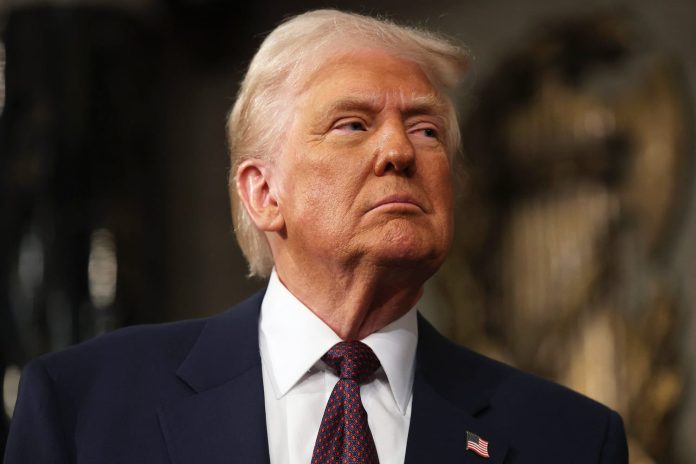
Majority of western Europeans believe Trump is threat to peace: Poll

The YouGov polling of France, Germany, Italy, Spain and the UK was carried out in a dramatic week that left Europe’s leaders scrambling to respond to the prospect of the US pulling long-term support from Ukraine and its European allies.

As the EU debates an €800bn plan to “rearm” Europe, the survey found that only a minority of respondents believed the remaining western allies would be able to support Ukraine if the US withdrew – but relatively few backed greater defence spending.

Most Europeans think it is unacceptable to exclude Kyiv or Europe from peace talks and, while many think Russia would probably attack Ukraine again even after a deal, opinions are divided on Franco-British proposals to deploy European peacekeepers.

After Trump’s apparent alignment with Russia, the polling, carried out between 26 February and 4 March, found majorities in all five countries believed the US president had become a “very big or fairly big threat to peace and security in Europe”.

That sentiment was weakest in Italy at 58%, rising to 69% in France, 74% in Germany, 75% in Spain and 78% in the UK. By comparison, the share of people who said Russia’s Vladimir Putin was a threat ran from 74% in Italy to 89% in the UK.

Trump’s popularity, tested across four countries but not Germany, was also exceptionally low, with majorities ranging from 80% in the UK to 63% in Italy saying they held an unfavourable view of Trump, against a range of 89% to 77% for Putin.

Europeans have become markedly less willing to support the US militarily in the event of it coming under attack, the polling showed, and are also significantly more sceptical that Washington would honour its collective defence commitments under the Nato treaty.

If Russia were to attack the Baltic states and Poland, only between 18% and 39% of people in the UK, France, Spain and Italy believed the US would go to their aid – although people were more confident the US would defend their own respective countries.

Few Europeans think the remaining western allies would be able to support Ukraine enough for it to keep defending itself if the US pulls out: a third of Spaniards (35%) and Britons (33%), and a quarter (24-25%) in France, Germany and Italy.

Many people say they want Ukraine to win the war. In the UK, 67% share that sentiment and say they care a great deal or fair amount that it does, followed by Spain (57%), Germany (52%), France (50%) and Italy (34%). Only 2-7% want a Russian victory.

But while similarly large numbers say current levels of support are not enough to stop Moscow from winning, only a minority in each think that their own country should boost its aid efforts, ranging from 9% in Italy to 24% in the UK.

After European leaders stressed the need for a major and urgent increase in defence spending, recognition that defence budgets would have to rise in the face of uncertain US support has risen, although not to a particularly striking extent.

Britons are the most likely to say so at 46% (up six points), against 39% in France (up 12), 32% in Spain (up six), and just 11% in Italy (unchanged). In December 45% of Germans, who were not asked the question this time, said spending was too low.

The US administration’s decision to seek a peace deal directly with Russia is very unpopular, with majorities (52-78%) in Britain, Spain, France and Italy seeing the exclusion of Ukraine as unacceptable. Large numbers felt the same about Europe.

Most Britons (65%) and Spaniards (55%) think Russia would probably attack Ukraine within 10 years of any peace deal, as do 49% of French respondents and 48% of Germans. Italians were split, with 35% thinking another war likely and 37% not.

The French president, Emmanuel Macron, and Britain’s prime minister, Keir Starmer, have proposed stationing European peacekeepers in Ukraine to counter such an eventuality, and more people support the idea than not in both countries.

About 52% of Britons back the plan, compared with 27% who were opposed, with French respondents 49% for and 29% against. Spaniards were also supportive (53%), but only 36% and 37% were willing in Germany and Italy, with 45% and 47% opposed.

The survey also revealed a widespread belief that Russia would attack other European countries within the next decade. Six in 10 Britons thought this was likely, as did 44-47% of respondents in France, Germany and Spain, though 45% of Italians thought it unlikely.
Putin appoints new Russian envoy to US

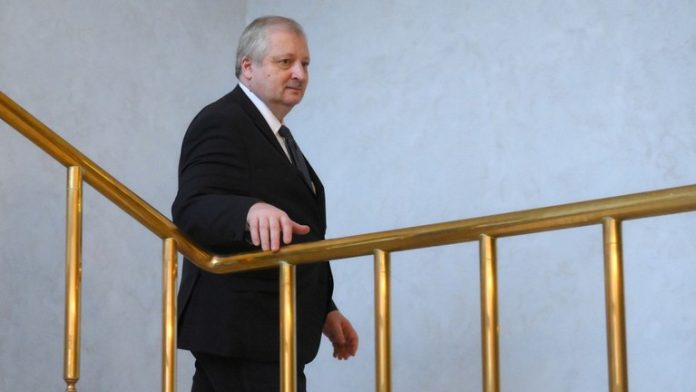
According to the document, published on the state portal for legal information on Thursday, Darchiev will also be Moscow’s permanent observer at the Organization of American States (OAS).

The administration of US President Donald Trump handed over to Russia a note with the approval of Darchiev’s candidacy as ambassador during talks between the sides in Istanbul in late February, which were aimed at restoring the proper functioning of the diplomatic missions of the two countries.

Darchiev, who had headed the North Atlantic Department at the Russian Foreign Ministry since 2021, led the country’s delegation during the meeting.

The post of ambassador to the US had remained vacant since Anatoly Antonov was relieved of his duties on October 10, 2024.

Darchiev, 64, worked at the Russian Embassy in Washington as minister-counselor from 2005 to 2010. He was also the envoy to Canada from 2014 to 2021.

US officials secretly meeting with Zelensky rivals: Politico

Zelensky, whose presidential term expired last year, has suspended elections due to martial law, and has refused to transfer presidential authority to the parliament speaker, contravening the constitution.

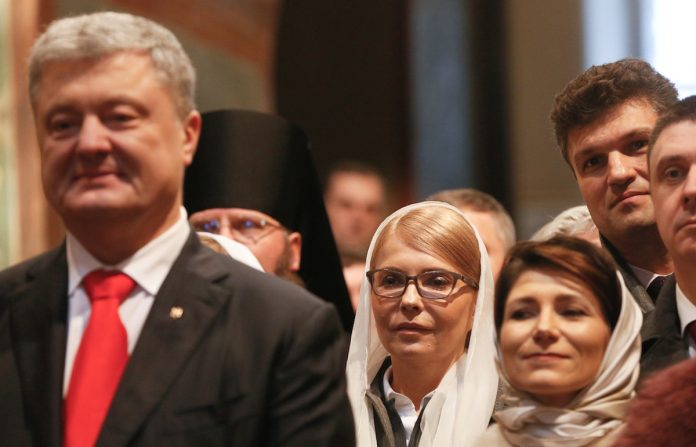
Undisclosed conversations with former Prime Minister Yulia Timoshenko and former President Pyotr Poroshenko have revolved around restarting elections, according to three Ukrainian MPs and a Republican foreign policy expert who spoke anonymously to Politico.

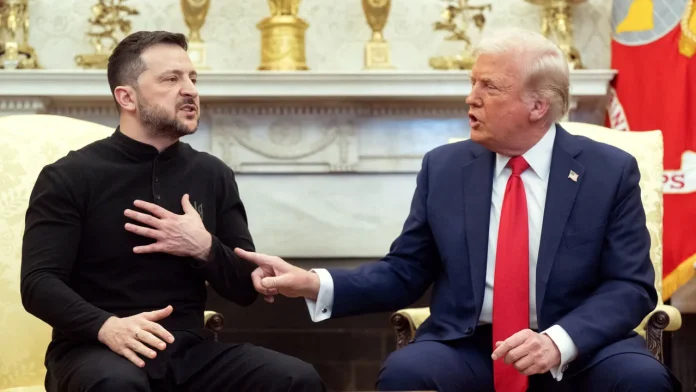
Trump has characterized Zelensky as a “dictator without elections,” while members of his team have accused the Ukrainian leader of obstructing the US president’s peace agenda through his inflexibility. Some American officials have publicly called for Zelensky to step down after a contentious meeting at the White House last Friday.

Publicly, Timoshenko and Poroshenko back Zelensky’s leadership in the conflict with Russia. However, behind closed doors, Ukrainian political figures are reportedly positioning themselves to gain favor with Washington.

Timoshenko was serving a seven-year prison term for abuse of power when the 2014 armed coup in Kiev led to her early release. Last month, Zelensky imposed sanctions on Poroshenko, along with exiled opposition leader Viktor Medvedchuk.

On Tuesday, Zelensky expressed his commitment to a peaceful resolution of the Ukraine conflict, lamenting that his meeting with Trump had not gone “the way it was supposed to.” Although Zelensky has not admitted to any doing anything wrong, the US president referenced his statement in an address to a joint session of Congress later that day.

Ahead of Trump’s speech, the Ukrainian parliament issued its own public message to the US president, commending his leadership and urging him to maintain “unwavering support” for Kiev.

The Trump administration has halted arms supplies to Ukraine and ceased sharing military intelligence. While US European allies have pledged continued support for Kiev, they have also acknowledged that their capacity to assist is severely constrained without US backing. Russian forces already held an advantage in the conflict prior to these policy shifts from Washington.

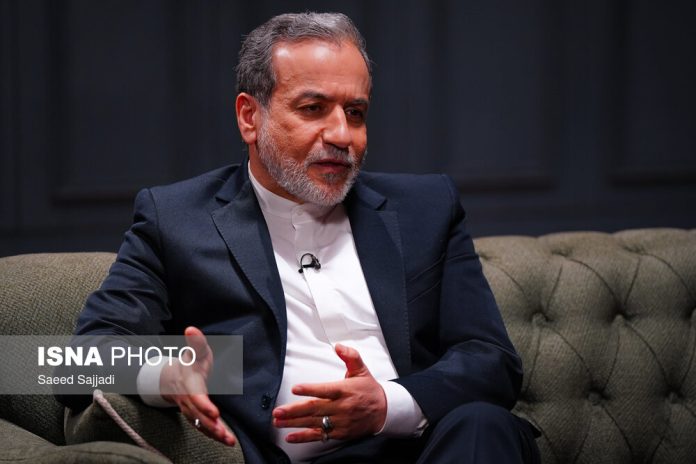
FM: Iran pursues path of independence in a turbulent world laid bare by Trump-Zelensky showdown

Abbas Araghchi

Iran’s Foreign Minister Seyed Abbas Araghchi wrote an op-ed in the Ettela’at newspaper, published on Wednesday, discussing the recent turn of events. Following is the full text of his article:

Chaos in the White House; Dizziness in Global Politics

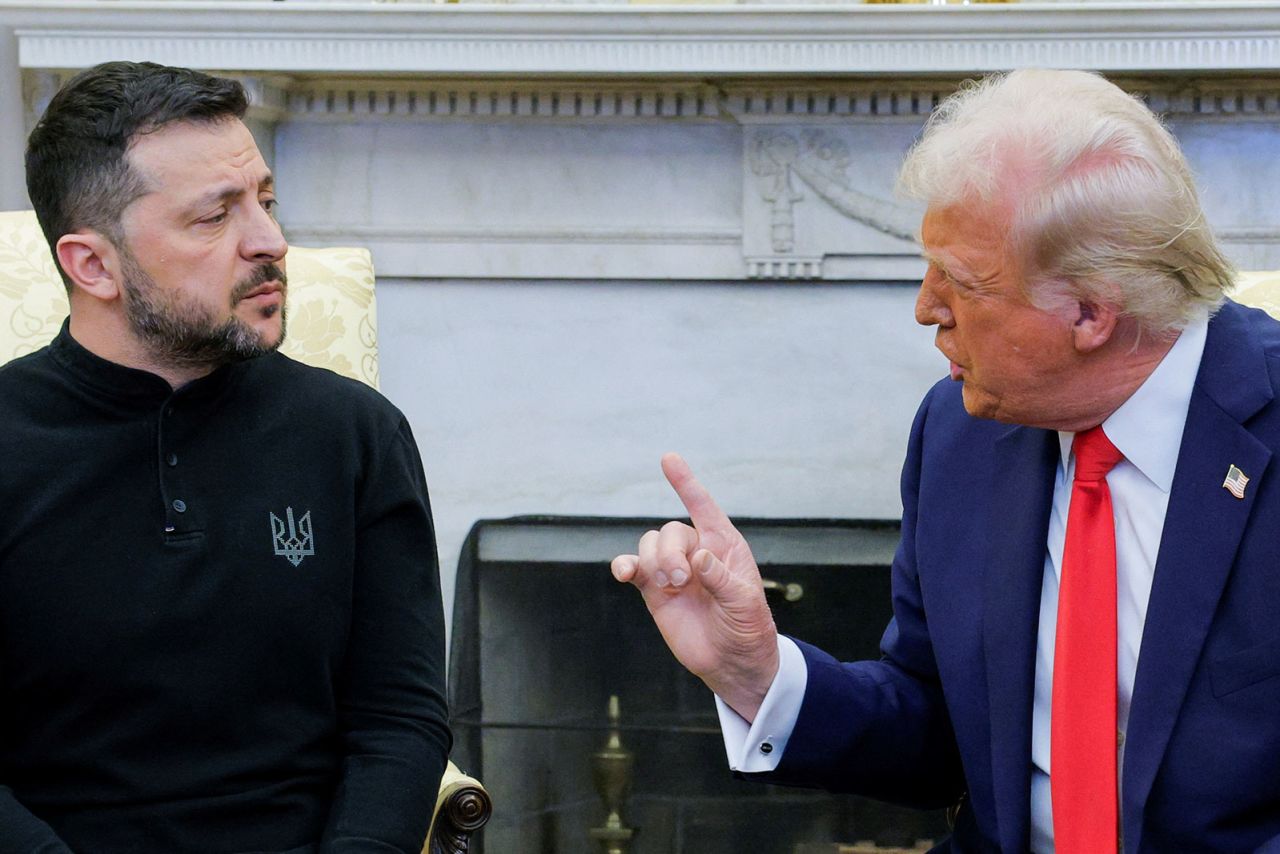
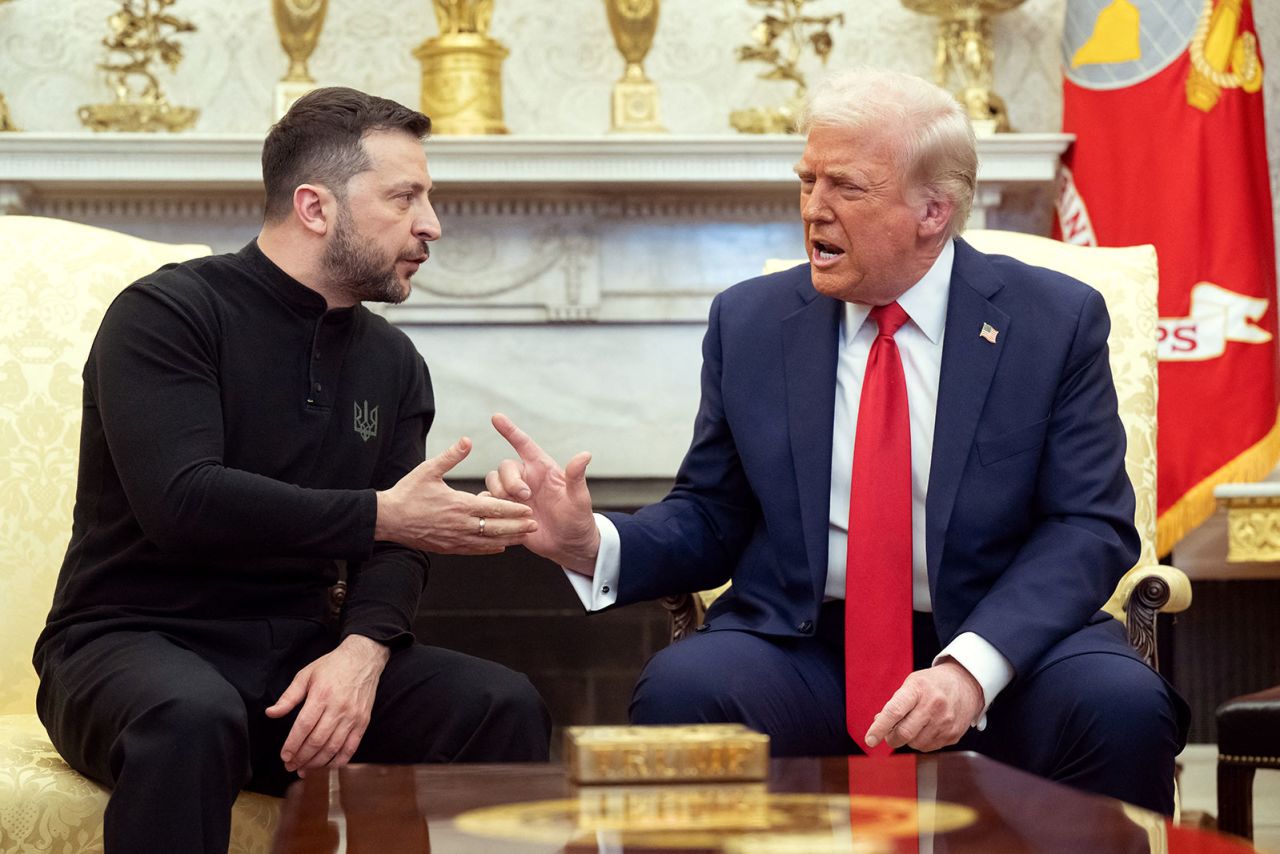
🔹Politics is not a simple game. Sometimes, a single official meeting can reveal hidden realities of power more than hundreds of diplomatic statements. The recent dispute in the White House between Donald Trump, JD Vance, and Volodymyr Zelensky was not just an ordinary disagreement; the event unveiled deep rifts that are expanding within the international system. There is much speculation about this incident. Was the conflict deliberately designed? Or did it spiral out of control? Was the goal to send internal and external messages, or is it a sign of the failure of coordination mechanisms in US foreign policy? What is certain is that this incident painted a picture of a chaotic world where decisions are no longer made in a vacuum.

🔹Crisis at the Heart of Western Power

▪️For years, Washington has presented itself as the axis of decision-making in the Western world. But today, this centrality is no longer unchallenged. The dispute that took place at the heart of the White House is a symbol of strategic doubts, diplomatic uncertainties, and unresolved differences within the Western bloc. The Trump administration entered the global political arena with the slogan of bringing “swift peace.” A promise that many considered overly optimistic has now turned into additional pressure on the US president and his vice president. Trump and Vance face a real challenge: Will they be able to fulfill their commitments in a situation where war has entangled the interests of many players?

🔹Ukraine: From Dependency to Defiance

▪️One of the important messages of the dispute is the shift in Ukraine’s position in the power equations. Zelensky, in the early days of the war, relied more than ever on Western assistance. But today, he stands in the heart of the White House, facing the US.0 president, and delivers a sharp response. This is a sign that even countries that have received support from Washington for years no longer accept being looked down upon. Ukraine, whether as an independent player or as a pawn on the chessboard of global powers, has now shown that even small allies are willing to pay the price to preserve their dignity and position.

FM: Iran pursues path of independence in a turbulent world laid bare by Trump-Zelensky showdown

🔹Europe and the Shadow of New Divisions

▪️Another major question is Europe’s reaction. Will the continent remain united in its support for Ukraine? Or will this dispute reveal deeper rifts within the Western front? France, Germany, and other European allies have adopted a more cautious stance toward the Ukraine war from the beginning. Differences in defense and security policies have existed from the start. Now, with the verbal clash between the White House leaders and Zelensky, these differences have become clearly visible. Europeans, who have viewed developments in Eastern Europe with greater caution fro, the beginning, now face a new question: Does Washington still have the power and will to lead a united Western front?

🔹Moscow: Observer or Designer?

▪️This incident has been closely followed in Moscow. Russia has always believed that the Western alliance is fragile and tense. The recent dispute in the White House, for the Kremlin, confirms the narrative that the opposing front is more unstable than imagined. But beyond this, Moscow is no longer merely a passive observer.

▪️The Ukraine war and recent developments have provided Russia with an opportunity to more carefully design its moves on various fronts. On one hand, Russia’s strategic cooperation with China is expanding; on the other hand, the Kremlin is striving to change the global power equation by strengthening its relations with developing countries. Increased economic engagement with BRICS nations, expanded security cooperation with regional partners, and efforts to reduce dependence on the Western financial system all indicate the approach Moscow has adopted toward global developments.

▪️In the meantime, the dynamics of Russia-Europe relations have also changed. Some European countries, including Hungary and Slovakia, have adopted more divergent positions toward Moscow and are resisting Brussels’ anti-Russian policies. These differences could be a weak point in the cohesion of the Western front that Russia will exploit.

🔹When Domestic Politics Overshadows Diplomacy

▪️One of the most important points revealed by this dispute is the intense overlap between domestic and foreign policy in the United States. While Trump and Vance should be dealing with international challenges, they are entangled in a tense domestic political environment. Elections, partisan rivalries, and internal pressures have caused many major diplomatic decisions to be influenced by domestic calculations rather than strategic interests.

▪️This situation will be challenging not only for the US but also for its allies, as the difficulty of predicting US foreign policy increases under such circumstances.

FM: Iran pursues path of independence in a turbulent world laid bare by Trump-Zelensky showdown

🔹Iran: The Path of Wisdom and Prudence, the Conscious Choice of Independence

▪️In this chaotic environment, the Islamic Republic of Iran carefully and prudently examines developments. Chaos in international politics has always been detrimental to global stability and security. Unlike many actors who are caught up in verbal tensions and hasty policies, Iran has consistently emphasized principles centered on independence, mutual respect, and avoiding unproductive discourses.

▪️However, Iran’s independence is not an accident or the result of imposed conditions; rather, it is a conscious choice, a strategic decision, and an unchangeable principle in the country’s foreign policy. Unlike some countries that have sought their security and stability in dependence on external powers, Iran has long understood that dependence only leads to instability and the loss of national sovereignty. Real security does not come from the support of extra-regional powers but from internal strength, reliance on national capacities, and trust in the people. This is why Iran has chosen a different path; a path where the country’s destiny is not dependent on the decisions of others, and policymaking is based on national interests, not the shadow of external advice.

▪️Maintaining independence comes at a cost, and Iran has always paid that price. From the early days of the Islamic Revolution, economic pressures, sanctions, military threats, and proxy wars were all designed to turn Iran into a subordinate actor in the international system. But Iran, contrary to the predictions of its adversaries, stood firm and demonstrated that it not only does not surrender to pressure but also continues its path of development and progress by relying on internal capacities. This conscious choice has become a principle: Iran does not buy its security; it builds it. We do not depend on others to support us; rather, we defend ourselves by relying on knowledge, power, and internal capacities.

▪️History has shown that countries that have built their security on dependence on others have, in critical moments, fallen victim to the shifting priorities of their patron powers. Examples of this can be seen all over the world; governments that adjusted their policies in the hope of security guarantees from major powers but were ultimately abandoned in crucial moments. However, Iran has learned this historical lesson well. Independence is not just a slogan but an unavoidable necessity. This perspective has led Iran, in its foreign policy, to neither rely on external promises nor be shaken by the threats of its enemies.

▪️While many international actors have tied their security to fragile and temporary alliances, Iran has chosen a different path: a path based on self-reliance, independent progress, and resistance to external pressures. Iran does not need to derive its legitimacy from the approval of others, as its legitimacy stems from the will of its people and independent policies.

▪️Iran chose its path long ago; a path where conditional support from global powers, shaky diplomatic promises, and external threats do not form the basis of decision-making. What matters to Iran is preserving independence, strengthening internal capabilities, and moving in a direction rooted in national interests. In a world where powers are constantly engaged in disputes and unstable rivalries, Iran, with its steadfast policies, has shown that dependence on others is not only a danger but also a strategic mistake.
This is the lesson that history has taught us time and again, and we have not only preserved it but will also pass it on to future generations.

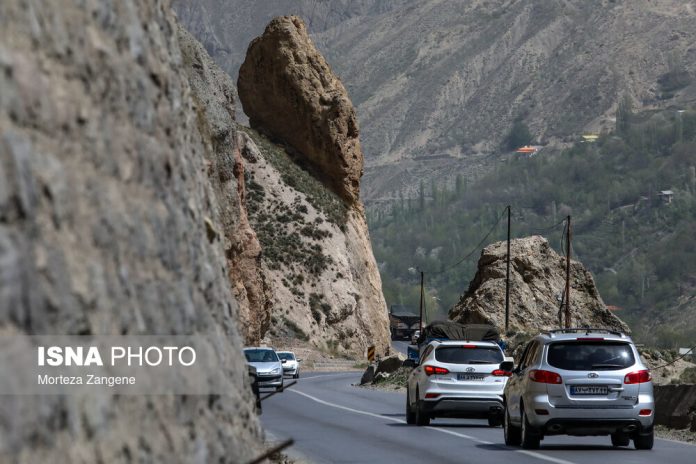
Iran’s president joins national campaign to reduce road accidents, calls for responsible driving

Iran Road

With over 20,000 fatalities and hundreds of thousands injured annually, the campaign aims to reduce preventable tragedies and promote a culture of safe driving.

President Pezeshkian emphasized the need for collective action to curb road accidents, stating, “If we all strive to drive more responsibly, we can save countless lives and prevent heartbreaking incidents.”

He highlighted that reckless driving and poor road behavior are the primary causes of these accidents, which leave families devastated and survivors with lifelong trauma.

The “No to Accidents” campaign, launched ahead of the Nowruz holidays, starting on March 20, seeks to reduce road fatalities through public awareness and stricter enforcement of traffic laws.

Police Chief Teymur Hosseini pledged full support, vowing to utilize all resources to achieve the campaign’s goals.

Health Minister Mohammad Reza Zafarghandi noted that over 1,100 lives were lost during the 15-day Nowruz period, mostly young people.

He stressed the importance of cultural change and public cooperation, adding, “Even saving one life from accidents feels like a victory.”

Trump threatens Palestinian people in Gaza

In a social media post on Wednesday, Trump renewed his warning that there would be “hell to pay” if the captives are not released.

“This is your last warning! For the leadership, now is the time to leave Gaza, while you still have a chance,” Trump wrote.

“Also, to the People of Gaza: A beautiful Future awaits, but not if you hold Hostages. If you do, you are DEAD! Make a SMART decision.”

The president’s comment came hours after the White House confirmed that Washington is engaging in talks with Hamas.

Trump has been calling for the forced displacement of Gaza’s entire population and for the US to “own” the Palestinian territory.

It is unclear how the “beautiful future” Trump promised residents of Gaza would fit into his ethnic cleansing plan. Trump previously said, under his proposal, Palestinians would not be able to return to the territory.

“‘Shalom Hamas’ means Hello and Goodbye – You can choose. Release all of the Hostages now, not later, and immediately return all of the dead bodies of the people you murdered, or it is OVER for you,” Trump added.

“Only sick and twisted people keep bodies, and you are sick and twisted! I am sending Israel everything it needs to finish the job, not a single Hamas member will be safe if you don’t do as I say.”

Israel has held on to the bodies of hundreds of Palestinians over the years to use as a bargaining chip, a practice known as necroviolence.

Trump has issued similar threats in the past, but Hamas has insisted that the captives will only be released as part of the ceasefire agreement.

The first stage of the deal ended last week, but Israel has refused to move forward to the next stage of the ceasefire, which would lead to a permanent end to the war and the release of all captives.

Instead, the government of Israeli Prime Minister Benjamin Netanyahu, backed by Trump, has sought to extend the first phase to free more captives without committing to a lasting ceasefire.

Israel has also sealed off Gaza, preventing the entry of any humanitarian assistance, including food, fuel and medicine – a move that has led to an outcry from the United Nations and countries around the world.

Netanyahu is already facing an arrest warrant issued by the International Criminal Court over alleged war crimes in Gaza, including the use of starvation as a weapon of war.

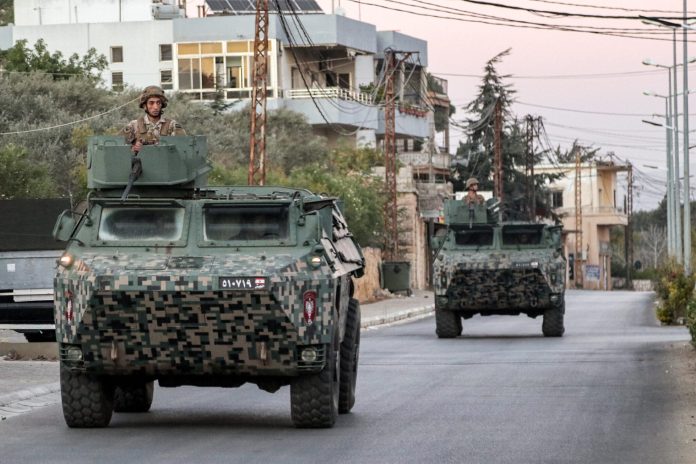
US approves $95mn in aid to Lebanon’s military

Lebanon Army

The approval, confirmed by a State Department spokesperson on Wednesday, marks one of the rare instances of foreign military aid moving through the Trump administration.

In January, the State Department instituted a 90-day funding pause on all aid, with exceptions only for Israel and Egypt. Funding to Ukraine was also recently cut amid the very public differences with Kyiv on ending the war there.

The $95m in aid was originally earmarked for Egypt, but the Joe Biden administration diverted the funds to the Lebanese Armed Forces (LAF).

The funding underscores how the balance of power in Lebanon has been upended since Tel Aviv’s war on Gaza was unleashed after the 7 October 2023 Hamas-led attacks on Israel. Hezbollah started attacking the occupied territories the next day in support of Palestinians in Gaza, but suffered a damaging response at the hands of Israel.

After years of gridlock in impoverished Lebanon, former army chief Joseph Aoun was elected president in January.

The US pushed for Aoun’s election in parliament by using the promise of funding for Lebanon’s reconstruction from Saudi Arabia. He had been opposed by Hezbollah.

Aoun, a Maronite Christian, then selected Nawaf Salam, a scion of a prominent Sunni family, as Lebanon’s prime minister.

Hezbollah still retains widespread support in Lebanon, particularly among the country’s impoverished Shia community. Underscoring Hezbollah’s resilience, hundreds of thousands of people turned out in February for the funeral of the group’s slain leader, Seyyed Hassan Nasrallah.

But Hezbollah has come under pressure from Lebanon’s new government in ways that would have been unimaginable a few years ago.

In February, Lebanon’s government indefinitely suspended flights to and from Iran. The Lebanese army fired tear gas at Hezbollah supporters protesting the move.

At Beirut’s airport, Lebanese security officials recently claimed they seized $2.5m in cash destined for Hezbollah that a Turkish national was carrying.

Reuters also reported that Lebanon’s new government plans to go to the IMF for a bailout, a move long resisted by Hezbollah and other political parties. Lebanon’s economy crashed in 2019 when its currency plunged 98 percent. Most of the country is living in poverty.

The United States has clearly demonstrated that it sees itself as the rising outside power in Lebanon, after decades of having tried and failed to reduce Hezbollah’s influence.

“Hezbollah was defeated by Israel, and we are grateful to our ally Israel for defeating Hezbollah,” US deputy special envoy for the Middle East Morgan Ortagus said in February after meeting Lebanon’s President Aoun in Beirut. Those comments from an American official at the Baabda Palace would have been unthinkable just a year ago.

The LAF have deployed to vast swaths of southern Lebanon that Hezbollah previously controlled. But Israel has maintained troops in five strategic vantage points across southern Lebanon in defiance of a deadline for their withdrawal.

According to reports, France and the US were trying to encourage Israel to fully withdraw by suggesting the deployment of a peacekeeping force or even private security companies in strategic areas. However, Aoun strongly rejected the deployment of private contractors.

Israel announced its decision to stay in Lebanon was agreed on with a US-led ceasefire monitor mechanism.

Lebanon’s government has stressed it will take its complaint to the United Nations and has slammed Israel’s violation of Lebanon’s sovereignty.

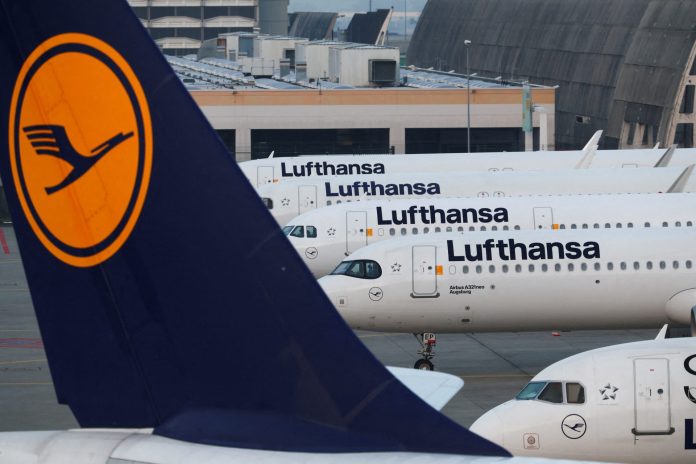
34 foreign airlines operate flights to Iran with no restrictions: IKIA CEO

Speaking to reporters, Saeed Chalandari named major carriers such as Lufthansa, Austrian Airlines, Qatar Airways, and Emirates among those serving the airport in Tehran.

Chalandari emphasized that the airport is open to all airlines seeking to operate flights to Iran, provided they obtain the necessary permits from the country’s Civil Aviation Organization.

He also expressed readiness to cooperate with any agreements made between Iran’s aviation authorities and their international counterparts.

Together, these airlines service 58 to 68 routes, reflecting the airport’s growing role as a regional aviation hub.

IKIA, Iran’s primary gateway for international travel, has been working to expand its operations and attract more global carriers despite harsh US-led sanctions and the Iranophobic propaganda in the West.

VP: Iran’s president refuses to enforce hijab law amid rising tensions

Iran Hijab

President Pezeshkian’s Vice President for Executive Affairs, Mohammad Jafar Qaem Panah, announced in a post on Wednesday on his social media that the president, who has long opposed the mandatory hijab law, emphasized that the law creates problems for citizens and lacks enforceability under Iran’s legal framework.

“I cannot implement it; I will not stand against the people,” Qaem Panah the president as saying.

In his post, Qaem Panah has reminded the general policies of the system regarding the principles of legislation and law writing, which states that the law “must be directed towards real needs, be implementable, and measurable for execution.”

“Accordingly, the law has indicated that the Chastity and Hijab Law does not possess these characteristics and is not implementable,” he argued.

The Khorsan newspaper cautioned against hardline actions, noting that aggressive enforcement could destabilize the country.

It also criticized 209 MPs for pushing the law despite the Security Council’s stance, calling it a misguided move that undermines key decision-making bodies.

Iran’s Supreme National Security Council has reportedly decided against enforcing the law, citing heightened sensitivities following the 2022 unrest and riots.

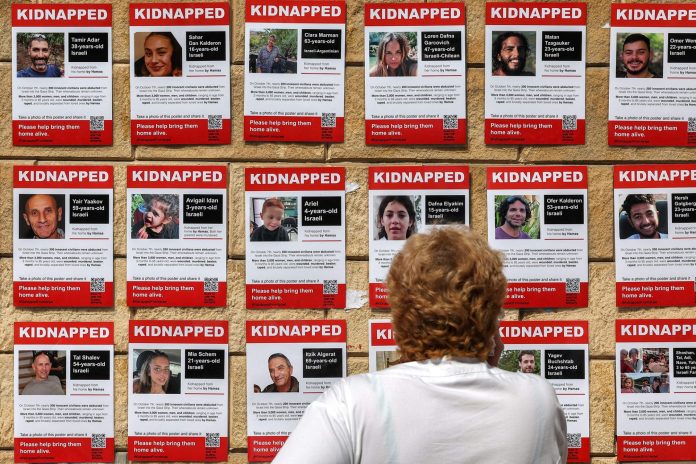
US confirms direct talks with Hamas over Gaza war

Israel Hostages Hamas

“These are ongoing talks and discussions, I’m not going to detail them here, there are American lives at stake,” White House press secretary Karoline Leavitt said on Wednesday, confirming a report by Axios media outlet that talks between the two sides were taking place.

“Look, dialogue and talking to people around the world to do what’s in the best interest of the American people is something that the president has proven is what he believes is [a] good faith, effort to do what’s right for the American people,” Leavitt added.

Adam Boehler, Trump’s nominee to be special envoy for hostage affairs, participated in the direct talks with Hamas.

A Hamas official cited by the AFP news agency confirmed the negotiations over Israeli-US captives held in Gaza.

The US had previously publicly refused direct contact with the Palestinian group since banning them as a “terrorist” organisation in 1997.

Israel announced it had been consulted by the US on the direct talks.

Israeli officials say about 24 living captives – including Edan Alexander, an American citizen – as well as the bodies of at least 35 others are believed to still be held in Gaza.

Confirmation of the talks comes days after the first phase of the Israel-Hamas ceasefire expired, with Israel pushing for an extension while Hamas insists on progressing to the second phase of the deal agreed in January.

The first phase saw Hamas release 33 hostages in exchange for Israel releasing more than 2,000 Palestinian prisoners and detainees.

Israel has said the proposal to extend the first phase of the truce was drafted by the US envoy for the Middle East, Steve Witkoff.

The new plan would require Hamas to release half its remaining captives in exchange for a ceasefire extension and a promise to negotiate a lasting truce. Israel made no mention of releasing more Palestinian prisoners – a key component of the first phase.

After the first phase expired, Israel on Sunday suspended humanitarian aid deliveries, including fuel, aid and medicine, into Gaza, as the government aims to put pressure on Hamas to accept the new terms – a move that the Palestinian group slammed as a violation of the original deal.

France, the United Kingdom and Germany on Wednesday warned Israel against using aid as a “political tool”, calling on it to ensure the “unhindered” delivery of humanitarian supplies to the war-ravaged Palestinian enclave.

“We call on the government of Israel to abide by its international obligations to ensure full, rapid, safe and unhindered provision of humanitarian assistance to the population in Gaza,” the countries announced in a joint statement.

“A halt on goods and supplies entering Gaza such as that announced by the government of Israel would risk violating international humanitarian law,” they noted, adding, “Humanitarian aid should never be contingent on a ceasefire or used as a political tool.”

The three European nations described the humanitarian situation in Gaza as “catastrophic”.