Saturday, May 2, 2026
Home Blog Page 2658

Iran’s Uranium Enrichment Work Enters New Phase: Envoy

Iran’s latest step under its commitments stipulated in the Iran nuclear deal, officially known as the Joint Comprehensive Plan of Action (JCPOA), was to inject the uranium hexafluoride (UF6) gas into IR-2M centrifuges, which was discussed at a seasonal meeting of the Board of Governors of the International Atomic Energy Agency (IAEA). 

Afterwards, the European Troika (France, Britain and Germany) once again issued a statement against Iran and accused Tehran of breaching the JCPOA.

Meanwhile, referring to the IAEA’s recent reports, US President Donald Trump called for an attack against Iran, an irrational demand which was met with opposition.

In an interview the Islamic Republic News Agency (IRNA), Gharibabadi has weighed on these developments as well as other relevant issues.

Highlights of the interview follow.

Europe’s Failure to Take Practical Action

Gharibabadi said Tehran adopts its positions on the IAEA and safeguards issues at the seasonal meetings of the IAEA’s Board of Directors based on three criteria: reports by the IAEA’s director general, the status of the implementation of the obligations of the other signatories to the nuclear deal, and countries’ stances at the Board meeting. 

“As the topic of discussions at the meeting is Iran, we generally elaborate on our stances as the last speaker, so that we would be able to show the necessary reaction to the issues brought up by countries present at the meeting,” he said.

At the meeting, Gharibabadi said, the three European countries expressed regret over the United States’ withdrawal from the JCPOA and the reimposition of sanctions against Iran.

“They also presented a long list of criticisms and concerns about Iran’s scaling down its JCPOA commitments, calling on Iran to return to the full implementation of its obligations,” Gharibabadi noted.

He said the serious challenges facing the JCPOA include Washington’s unilateral and illegal pullout from the deal, the reimpostion of sanctions and Europe’s inaction to compensate for this situation.

“This comes as Iran remained fully and effectively committed to all its obligations for one year after the US withdrew from the agreement,” he said.

Gharibabadi slammed the Europeans for simply expressing regret over Washington’s pullout but taking no action.

“And when it comes to Iran, they voice serious concern over Iran’s reciprocal measures which are in keeping with the IAEA’s provisions,” he noted.

Gharibabdi said the Europeans have, over the past two and a half years, failed to take any special action to make good on their obligations with regards to the lifting of sanctions and peaceful nuclear cooperation with Iran.

He said Iran needs to see the “effects of the lifting of sanctions in practice.”

“As for the Instrument in Support of Trade Exchanges (INSTEX), the Europeans know themselves that it was not an effective tool,” he noted.

“So, the Europeans as well as member states of the IAEA and its Board of Governors should be reminded of these realities, which is, of course, always being done at different levels and on different occasions,” he said.

Gharibabadi said if the Europeans want Iran to reverse its reciprocal moves, they should live up to their commitments under the JCPOA and work towards lifting sanctions.

Iran’s Uranium Enrichment Work

He said the injection of the uranium hexafluoride (UF6) gas is the last step the be taken before the start of the enrichment process and the separation of uranium 238 from uranium 235.

“Accordingly, in addition to first-generation centrifuges, a cascade of 174 new IR-2M centrifuges will be enriching uranium at Natanz nuclear facility,” he added.

“The three European countries had announced their stances on the development of new machines before,” he said.

“In response, we have kept telling them that Iran cannot return to the commitments that it has scaled down as long as it has not reaped the benefits of the JCPOA with the lifting of sanctions,” he said.

Gharibabdi said it is neither logical, nor practical for Iran to implement the JCPOA unilaterally and at its own cost.

Meanwhile, he underscored that Iran remains committed to the IAEA’s safeguards agreements.

“Even if commitments under the JCPOA and the Additional protocol, which is being implemented thereto and on a voluntary and temporary basis, are scaled down in certain cases, safeguards agreements are still complied with,” he said.

“In this special case, i.e., Iran’s injection of gas into centrifuges, the IAEA should be informed in advance as stipulated in the agency’s Comprehensive Safeguards Agreement,” he noted.

Trump’s Talk of Military Action

Gharibabadi touched upon media reports indicating Trump has suggested a possible military attack on Iranian nuclear facilities.

“Such issues are mostly psychological warfare,” he said.

“Iran does not welcome conflict and will not initiate any war, either. But Iran knows well how to defend itself and its interests,” he said.

“The US knows if it makes any wrong move, Iran will show a very strong reaction,” he said.

He noted some have kicked up a fuss, claiming that Iran’s uranium reserves are twelve times as much as what is allowed under the JCPOA.

“They are worried over this proliferation concern, as they put it,” he said.

“If the US was worried about Iran’s moves, why did its pull out of the JCPOA?” Gharibabadi asked rhetorically.

He made it clear the US cannot withdraw from the nuclear deal and, at the same time, expect Iran to remain committed to its obligations.

“Before the JCPOA was signed, Iran possessed around 36 times as much uranium as is allowed under the JCPOA, but it never deviated from its peaceful activities,” he said.

He noted the United States itself is in possession of thousands of nuclear warheads, has proliferated nukes, used nuclear weapons against innocent Japanese people, and is a supporter of the Israeli regime, which is not a signatory to the Nuclear Non-Proliferation Treaty (NPT) and has developed different types of weapons of mass destruction (WMDs).

Hence, he added, is really ludicrous that a country like the US expresses concern over the activities of Iran which remains fully committed to its obligations and whose non-diversion in its nuclear program has been corroborated by the IAEA’s reports.

 

Over 850,000 Iranians Contract Coronavirus: Ministry

In a press briefing on Sunday, Sima-Sadat Lari said the virus has also killed 475 patients since Saturday noon, increasing the overall death toll to 44,802.

She said so far 603,445 patients have recovered from the disease or been discharged from the hospital.

Lari went on to say that 5,796 patients are also in critical conditions caused by more severe infection.

The spokeswoman noted that 5,788,016 COVID-19 tests have been taken across the country so far.

She said the high-risk “red” zones include Tehran, Qom, Mazandaran, East Azarbaijan, Isfahan, Yazd, Ardabil, Khorasan Razavi, Khuzestan, Hamadan, West Azarbaijan, Bushehr, Chaharmahal and Bakhtiari, Kohgiluyeh and Boyer-Ahmad, Alborz, Lorestan, Markazi, Ilam, South Khorasan, Kermanshah, North Khorasan, Semnan, Gilan, Zanjan, Qazvin, Kurdistan, and Kerman provinces.

The “orange” and “yellow” zones also include Golestan, Hormozgan, Fars, and Sistan and Baluchestan provinces, she added.

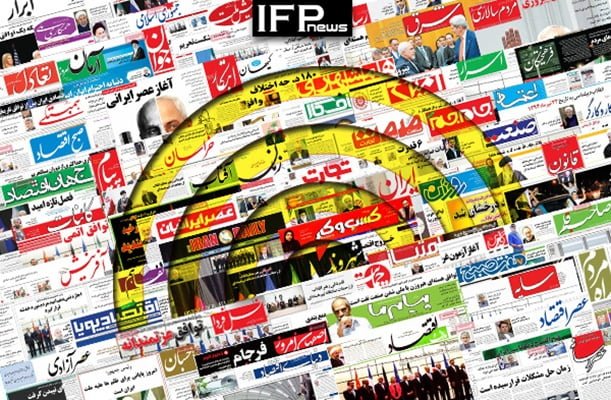
A Look at Iranian Newspaper Front Pages on November 22

Iranian Newspapers

Iranian Newspapers

Aftab-e Yazd Newspaper:

1- Mystery of US Return to JCPOA

2- Afghanistan May Be Cut in Half

3- Pompeo’s Words Uttered by Biden’s Possible Pick for State Department

4- On Strategic Deal with Iran, China Probably Waiting for Next Gov’t

A Look at Iranian Newspaper Front Pages on November 22


Arman-e Melli Newspaper:

1- Last Blow to Trump: Pompeo to Run for President in 2024

A Look at Iranian Newspaper Front Pages on November 22


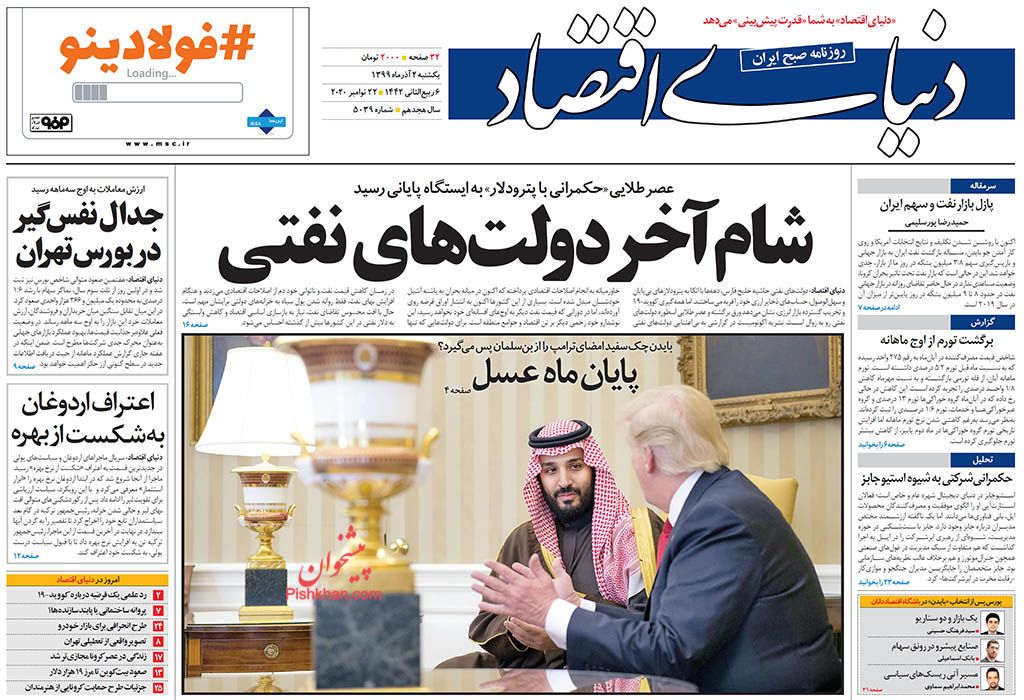
Donya-ye Eqtesad Newspaper:

1- End of Honeymoon

* Will Biden Take Back Trump’s Black Cheque from Bin Salman?

A Look at Iranian Newspaper Front Pages on November 22


Ebtekar Newspaper:

1- Controversies Surrounding Deputy Health Minister’s Resignation

* Why Did Malekzadeh Choose to Leave at Peak of Coronavirus?

2- Rouhani: Government to Provide Financial Aid for 30 Million Iranians

3- Borrell: It Won’t Be Easy to Revive JCPOA

4- China, US Moving Slowly Toward World War III

A Look at Iranian Newspaper Front Pages on November 22


Etemad Newspaper:

1- Infighting amid COVID-19 Outbreak: Deputy Health Minister Resigns

2- Mysterious Hands behind Kabul Rocket Attacks

A Look at Iranian Newspaper Front Pages on November 22


Ettela’at Newspaper:

1- Warning: 83 Percent of People Infected with COVID-19 in Family Gatherings

A Look at Iranian Newspaper Front Pages on November 22


Iran Newspaper:

1- Rouhani: If All People Observe Protocols We Won’t Have Even One Hour of Lockdown

2- Bloody Rocket Attack against Afghan Capital

A Look at Iranian Newspaper Front Pages on November 22


Javan Newspaper:

1- Biden Team’s Trump-Like Conditions for Returning to JCPOA

2- Rocket Attack against Kabul on Eve of US Withdrawal!

A Look at Iranian Newspaper Front Pages on November 22


Kayhan Newspaper:

1- Biden Says Sanction, Reformists Interpret It as Economic Reopening!

2- Questionable Resignation on Eve of Implementing Partial Lockdown

3- Trump Lawyer: Democrats’ Heads Must Be Cut Off!

A Look at Iranian Newspaper Front Pages on November 22


Khorasan Newspaper:

1- Biden Team Sets Preconditions Even Before Taking Office!

2- Controversial Fight in Frontline of COVID-19 Battle!

A Look at Iranian Newspaper Front Pages on November 22


Mardom Salari Newspaper:

1- G20 Summit Overshadowed by Saudi Human Rights Disasters

2- Concerns about Revival of JCPOA from Riyadh to Tel Aviv

A Look at Iranian Newspaper Front Pages on November 22


Shahrvand Newspaper:

1- Untimely Fight

* Deputy Health Minister Shocks Everyone by Resigning Overnight

A Look at Iranian Newspaper Front Pages on November 22


Shargh Newspaper:

1- Impacts of Coronavirus on 2021 Elections

2- Rouhani: Lockdown May Continue If We Don’t Get Desirable Result

3- Political Resignation at Health Ministry

A Look at Iranian Newspaper Front Pages on November 22

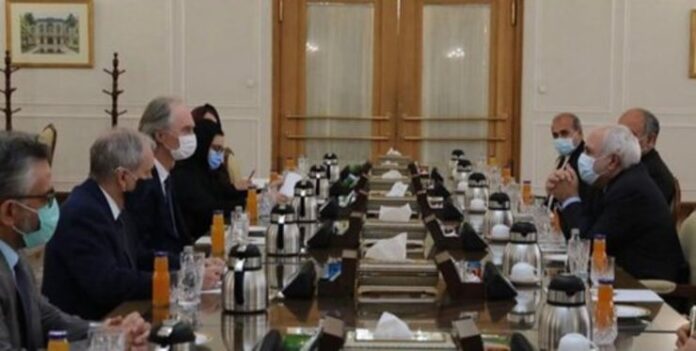
Iran’s Zarif, UN Envoy Discuss Syria Developments

In the Sunday meeting, the top Iranian diplomat touched upon attempts by certain countries to torpedo the trend of the political settlement of Syria issues.

“Good opportunities emerged in recent years to end the Syria crisis, but each time we saw some countries try to neutralize the attempts made and to ruin those chances,” said Zarif.

The Iranian foreign minister also highlighted the necessity of lifting cruel and unfair sanctions against the Syrian government and people, particularly amid the coronavirus outbreak.

Pedersen, in turn, presented a report on the latest status of the Syrian Constitutional Committee as well as his efforts for the committee to hold its next meeting.

Pederson referred to Iran-UN cooperation in resolving the decade-long Syria crisis, stressing the importance of Iran’s role in that trend.

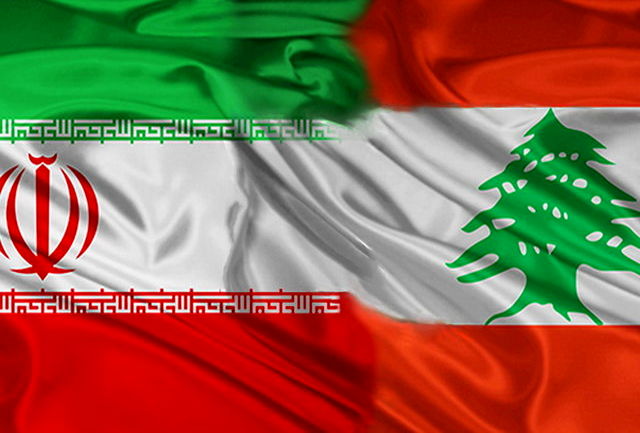
Iran Congratulates Lebanon on Independence Day

In a message on Sunday, President Rouhani appreciated Lebanon’s resistance in the face of hardships.

“Lebanon saw tough days over the past year, but resistance coupled with the existence of wise leaders brought dignity upon Lebanon and showed the whole world that Lebanon’s move on the path to dignity, independence and prosperity is a lasting one during Your Excellency’s presidency, and will remain so thanks to rapport and cooperation among different political groups,” read the message.

“Like before, the Islamic Republic of Iran will stand by the resistant Lebanese government and people, and is prepared to further boost mutual cooperation on all fronts,” he added.
“May God Almighty grant Your Excellency health and success, and the dear people of Lebanon prosperity and dignity,” President Rouhani added.

Lebanese Independence Day is the national day of Lebanon, celebrated on 22 November in commemoration of the end of the French Mandate over Lebanon in 1943, after 23 years of Mandate rule.

PSP Tips for Startup Brokers

There are several PSP solutions for start-up brokers. Unfortunately, your brokerage can not do business without one. This article will explain what they do, why you need one and help you to choose a suitable provider.

What is a payment service provider?

In an increasingly digital landscape, more people are spending money online than ever before. In the old day’s people used to be very wary about sending small amounts of cash online, today millions of dollars are transferred every second from almost anywhere in the world. It has become the new norm. Your brokerage will need to collect deposits from clients on a daily basis and you will need to pay them also, but be careful. There are tricksters and fraudsters out there who are trying to steal from you. Your brokerage needs to afford your clients a safe, secure, and straightforward way to make payments online.

The nature of the forex industry means high transaction volumes and regulations. You will need a PSP that can serve your customers regardless of their location and payment method; otherwise, it will lead to issues and extremely dissatisfied clients. A brokerage needs to be trustworthy, and if a client cannot trust you to handle their money, then you will surely lose them to a competitor.

A PSP is a third-party technology that empowers your company to take payments online via your website, and your provider will need to handle larger than average transactions. Good PSP providers are invaluable to your business.

How to choose a competent PSP?

Of course, there are several considerations to make when choosing a PSP. Things like the provider’s risk profile, coverage, technical aptitude, type of currencies, number of payment channels, charges, holding time, and reliability. These factors can seem innocuous at first but they are important, for instance, a reliable PSP can lead to improved conversion rates, which can significantly improve your performance. A PSP can be a cherished partner or a thorn in your side.

Currently, there are a significant number of providers and new ones are launching all the time so you must be careful and select one that has a proven track record.

At the end of the day, just like choosing a liquidity provider, it can really pay dividends to do your due diligence. Your clients are trusting you to provide a decent transaction speed, ease of use and most importantly, a secure environment for their money and their data. Get it wrong, and it can cost everyone dearly.

Will it work with my trading platform?

If you have proprietary software, you will need to ensure your engineers integrate it with a PSP properly and this process can take many months and cost lots of money. However, if you opt to go with a white label service provider, they will have already vetted most PSP’s and will know perfectly which ones work with their platform. Of course, you can swap, but it is your responsibility to ensure they work bug-free. Always test the system thoroughly before going live.

Industrial Equipment Modifications Due to Modern Needs

What industrial equipment modifications are at the top nowadays? Let us have a look.

Automation Makes the Production More Competitive

Automation is not a new trend, but nowadays, it is very important. Automated solutions allow even small companies to be competitive. To automate your premises, you need equipment from a reliable supplier and proper RPA software. Linear actuators will move robotic arms to perform plenty of operations:

  • Picking objects;
  • Lifting details;
  • Pushing things;
  • Loading and unloading goods, etc.

They all are controlled by special software. If you need to implement any changes to any processes, you just change the code or the data, and the robots will adapt to the new requirements immediately.

Automated solutions allow you to replace human work with robotic labour in many fields. For example, robots can perform repetitive actions without getting bored and losing concentration. Machines work in hazardous environments. Equipment can be used to lift and move weights, and similar.

Machine Integration with Human Workers

Until now, in the majority of factories, robots work in an isolated environment. However, there is a new trend to make machines work along with people. it would reduce the costs of automation solutions implementations immensely. If robots could work along with people, you would not need to create a special infrastructure for them. You would be able to get a robot, program it to perform the needed tasks, and it would complement the work of people in the same space.

AI and Machine Learning

Right now, we are already dealing with AI applications in the industry. This might become one of the main development trends. AI is widely used for QA processes. A robot can compare the final product against plenty of standards. If any modifications are implemented, a robot can be adjusted to follow them.

Now, machines can perform operations based on data that you provide. And again, to implement any changes, you need to change the code, and the machine will follow a new way to work. No training is needed.

However, for now, machines are useless in non-standard situations. As soon as they learn to react adequately in non-standard situations, they will be able to replace people completely. For now, though, it is too early to speak about it.

VR and AR

Virtual and Augmented Reality are still not widely implemented. But their potential is immense. With VR and AR, training sessions will be performed without inviting specialists or sending workers to a different location. The same can be told about maintenance. There will be no need to transport equipment or to invite specialists.

With AR, the safety level in the premises can be much higher. This technology is already used in more demanding industries, such as the construction industry. It is expected that in the future, the benefits of AR will be used everywhere.

About the author: Hayley Mann is a technology enthusiast specializing in automation methods of ergonomics devices. Her engineering background helps her to create interesting articles on technical topics, making them understandable for all readers.

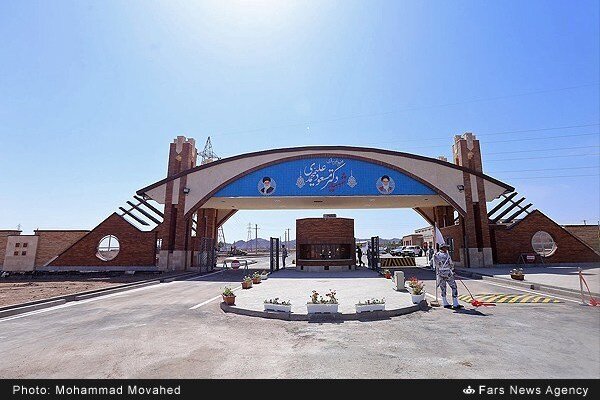
Iran’s Partial Lockdown Shuts Down Major Bazaars

Photos

by Fars News Agency


Those Pursuing Improper Policies in Afghanistan Fully Responsible for Attacks: Iran

Foreign Ministry Spokesman Saeed Khatibzadeh said on Sunday Afghan people’s will and demands should also be respected when it comes to making decisions on the country.

“Full responsibility for the incident falls on those who keep insisting on their inappropriate stances in defiance of Afghan people’s demands,” he said.

Khatibzadeh said the only way to de-escalate the situation in Afghanistan is to hold negotiations involving all Afghan groups.

“We condemn terrorism in any shape or form. We believe the only way to establish permanent and lasting peace in, and the progress and development of Afghanistan is through intra-Afghan talks, i.e., the same talks which the Islamic Republic of Iran has always supported,” he said.

“We believe all parties should remain committed to the provisions of the negotiations and we hope this path will lead to lasting peace in Afghanistan,” the spokesman added.
He underlined that Iran is worried about its wester neighbour and spares no effort to help settle the problems facing the country.

“We are concerned about our dear neighbour, Afghanistan. We have a neighbour suffering from scars of terrorism, war, the US invasion, and the killing of innocent, but proud people of Afghanistan. We are trying our utmost to help Afghanistan tackle these problems,” said Khatibzadeh.

He noted the Iranian embassy in Kabul was struck, but did not suffer much damage in the recent attacks diplomatic location in Afghanistan.

“What happened yesterday was rocket attacks on different diplomatic sites in Afghanistan, and the corner of the Iranian Embassy’s yard was hit as well. Fortunately, those present at the embassy were not hurt seriously,” he explained.