Sunday, December 21, 2025
Home Blog Page 26

Iran’s Hormozgan Province reports first death from H3N2 influenza as transmission wave intensifies

Covid Iran

Pezhman Shahrokhi, president of the university, said the circulation pattern of respiratory viruses over the past three days has moved into a “concerning phase,” marked by rising transmission rates, increasing case numbers and more severe clinical outcomes.

According to data from two designated laboratories between November 29 and December 1, 155 tests were conducted, of which 80 were positive, a positivity rate of 51.6 percent.

Shahrokhi noted that the simultaneous rise in test volume and positivity rate over consecutive days indicates “secondary intensification” of an already established transmission chain. The main warning sign, he said, is the shift toward severe cases.

The confirmed death involved a 26-year-old man admitted last week with approximately 70 percent bilateral lung involvement.

He died the following day from acute respiratory distress syndrome (ARDS). His influenza test was positive, while COVID-19 was ruled out.

Shahrokhi cautioned that the rapid decline of a young patient highlights the virus’s aggressive behavior even outside high-risk groups.

He urged immediate measures including reduced gatherings, improved ventilation, strict infection control in medical centers, and prompt care for vulnerable individuals.

Trump says path to peace in Ukraine unclear

After their hours-long meeting at the Kremlin on Tuesday, US special envoy Steve Witkoff and Trump’s son-in-law Jared Kushner, were set to meet top Ukrainian negotiator Rustem Umerov in Florida on Thursday.

Speaking to reporters in the Oval Office on Wednesday, Trump said Putin would like to make a deal, but “what comes out of that meeting I can’t tell you because it does take two to tango.” The president added that the US had “something pretty well worked out [with Ukraine].”

The Kremlin said on Wednesday that Putin accepted some US proposals aimed at ending the war in Ukraine and was prepared to keep working to find a compromise, but that “compromises have not yet been found”.

Both sides agreed not to disclose the substance of their discussion at the Kremlin, but at least one major hurdle to a settlement remains; the fate of four Ukrainian regions Russia partially occupies.

A Russian official told reporters that “so far, a compromise hasn’t been found” on the issue of territory, without which the Kremlin sees “no resolution to the crisis”.

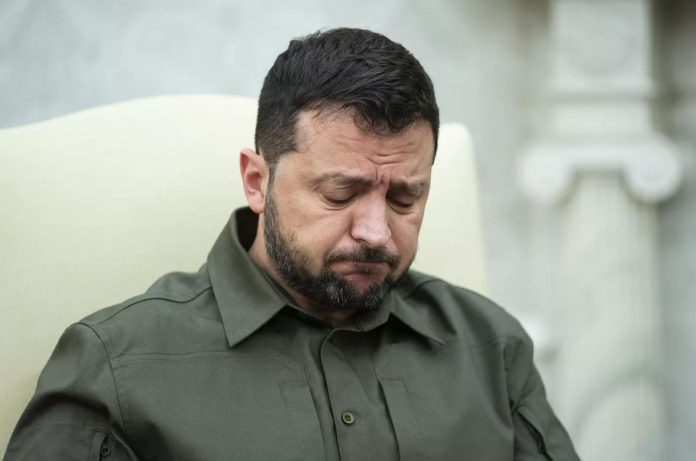
Ukraine’s President Volodymyr Zelensky has ruled out giving up territory that Russia has captured and on Wednesday said his team was preparing for meetings in the United States, adding that dialogue with Trump’s representatives will continue.

“Only by taking Ukraine’s interests into account is a dignified peace possible,” he said.

Ukraine’s Foreign Minister Andrii Sybiha, took a stronger line, urging Putin to “stop wasting the world’s time.”

The negotiations have intensified at a difficult juncture for Kyiv, which has been losing ground to Russia on its eastern front while facing its biggest corruption scandal of the war.

Zelensky’s chief of staff, who had led the Ukrainian delegation at peace talks, resigned on Friday after anti-corruption investigators searched his home. Meanwhile Russia’s advance in eastern Ukraine has gathered pace and Putin has said that Moscow is ready to fight on to seize the rest of the land it claims if Kyiv does not surrender it.

Hamas, Islamic Jihad hand over remains of Israeli captive under Gaza ceasefire accord

The Israeli army confirmed that Red Cross teams received the coffin of a hostage, and were on their way to transfer the body to its troops inside Gaza.

The transfer was part of the ceasefire and prisoner exchange agreement that took effect in Gaza on Oct. 10.

Israel insists that the bodies of two hostages remain in Gaza, claiming that one of the bodies transferred by Hamas did not belong to any of its captives and another set of remains was not new but belonged to a captive whose body had been previously recovered.

After the handover, Palestinian factions called for pressuring Israel to meet its obligations under the ceasefire deal.

They called on mediators and guarantors of the ceasefire agreement to exert pressure on the Israeli authorities to open the Rafah border crossing from both directions, as stipulated in the deal and UN Security Council Resolution 2803.

On Wednesday, the Israeli military body COGAT claimed that the Rafah border crossing will be opened for the exit of Palestinians in the upcoming days in coordination with Egypt.

Egypt, however, denied the claim, noting that any opening is required to be from both directions in accordance with the ceasefire agreement.

Since October 2023, the Israeli army has killed more than 70,000 people in Gaza, mostly women and children, and injured over 171,000 others in a brutal assault that also left the enclave in ruins.


Most EU citizens see ‘high risk’ of war with Russia: Survey

Vladimir Putin

The poll’s findings, based on a sample of almost 10,000 people from the nine countries, come more than three-and-a-half years into the conflict sparked by Russia’s 2022 full-scale invasion of Ukraine and amid fears the war could spread further.

France’s top general Fabien Mandon last month warned Russia was preparing for a new confrontation by 2030. Russian President Vladimir Putin said Tuesday that if Europe wants war “we are ready right now”.

The poll showed 51 percent of respondents believe there is a “high” or “very high” risk that Russia could go to war with their country in the coming years. The study was conducted with a sample of 9,553 people at the end of November.

The countries involved in the study were France, Germany, Italy, Spain, Poland, Portugal, Croatia, Belgium and the Netherlands, with samples of more than 1,000 people in each country.

The fear of open conflict with Russia varied.

In Poland, which has borders with Russia and its ally Belarus, 77 percent of respondents considered the risk high or very high.

This figure dropped to 54 percent in France and 51 percent in Germany.

Meanwhile, 65 percent of Italian respondents considered the risk low or nonexistent.

A large majority of 81 percent, meanwhile, said there is little or no chance of a war with China in the coming years.

With a debate intensifying in Europe over military service and France reintroducing a form of voluntary military service, respondents expressed doubt over the capabilities of their armed forces against Moscow.

Sixty-nine percent said their country would be “not at all” or “not likely” capable of defending itself against Russian aggression.

In France — the only country in the survey to have nuclear weapons — respondents were the least pessimistic, with 44 percent believing their country is “quite” or “fairly” capable of defending itself.

At the other end of the table were the Belgians, Italians, and Portuguese, who overwhelmingly believe — at 87 percent, 85 percent and 85 percent respectively — their countries were incapable of defending themselves.

“Terrorism” remained the most immediate threat in European public opinion. Across the nine countries covered by the survey, 63 percent of respondents considered the risk of open war with “terrorist” groups to be “high” or “very high”, according to the poll.


EU presents plan to use frozen Russian assets for Ukraine as Belgium frets

European Parliament

The European Union’s executive has been drawing up options to help plug Kyiv’s looming budget black holes as Russia’s punishing invasion drags on towards a fourth year.

“Today we are proposing to cover two-thirds of Ukraine’s financing needs for the next two years,” European Commission President Ursula von der Leyen told journalists as she presented the legal proposal for the plan.

“So this is 90 billion euros ($105 billion) — the remainder would be for international partners to cover.”

Von der Leyen said the money would be generated either from EU borrowing or by using Russian central bank assets frozen in the bloc to fund a “reparations loan”, the option pushed by her commission and multiple member states.

She added the financing would allow Kyiv to “lead peace negotiations from a position of strength” as the United States pushes to end Russia’s war.

EU leaders have already pledged to keep Kyiv afloat next year and officials insist they are determined to reach an agreement on where the money should come from at a December 18 summit.

But Belgium, home to international deposit organisation Euroclear, which holds the vast bulk of the Russian assets, has so far rejected the plan over fears it could face crippling legal and financial retribution from Russia.

Belgian Foreign Minister Maxime Prevot said the legal texts put forward by von der Leyen “do not address our concerns in a satisfactory manner”.

“We have repeatedly said that we consider the option of the reparations loan the worst of all, as it is risky, it has never been done before,” Prevot stated, adding, “This explains why we keep on pleading for an alternative, namely the EU borrowing the amounts needed on the markets.”

The Belgian government has insisted it wants solid guarantees from other EU countries that they will share the liability.

The commission insisted that it has put in place a “three-tier defence” to help shield Belgium from any legal jeopardy.

It also announced that it was looking to tap not only Russian assets held in Belgium, but also some 25 billion euros in other EU countries.

The initial size of the plan appears to have been scaled back from an original 140-billion-euro loan floated by the commission.

EU economy chief Valdis Dombrovskis said overall there was 210 billion euros in Russian assets that could be tapped, but the rest would only be drawn from later if needed.

Under the complex scheme proposed by the EU, the loan would only be paid back by Ukraine if and when Russia compensates Kyiv for the destruction it has wrought.

Despite its strong resistance, Belgium may ultimately not be able to withstand the push to use the frozen Russian assets.

Von der Leyen said that the initiative could be approved by a weighted majority of EU countries and would not require unanimity.

Most other EU states back the plan and insist that a solution can be reached.

“We support this and, of course, take Belgium’s concerns seriously,” German Foreign Minister Johann Wadephul stated, adding, “They are justified, but the issue is solvable. Solvable if we stand together and are willing to take responsibility.”


NATO vows major purchases of American arms for Ukraine

Ukraine NATO

Foreign ministers from the 32-nation alliance gathered in Brussels to discuss Washington’s push to end the fighting — but US top diplomat Marco Rubio was skipping the meeting.

The gathering comes after US envoys appeared to fail to make a major breakthrough on efforts to stop the war in five hours of talks with Putin in Moscow.

“The peace talks are ongoing, that’s good, but at the same time, we have to make sure that whilst they take place — and we are not sure when they will end — that Ukraine is in the strongest possible position to keep the fight going,” NATO chief Mark Rutte stated.

As part of those moves Germany, Poland, the Norway, The Netherlands and Canada said they would together commit some one billion dollars more to a scheme to buy American weapons for Ukraine.

Europe has largely been left of the sidelines of US President Donald Trump’s push to end the war and the absence in Brussels of Rubio, who sent a deputy, risked reinforcing that impression.

A string of ministers said that Putin did not appear so far to be willing to make any concessions at talks with Washington’s representatives.

“President Putin should end the bluster and the bloodshed and be ready to come to the table and to support a just and lasting peace for Ukraine,” said British foreign minister Yvette Cooper.

They also pushed back against comments from the Russian president that he did not want conflict with Europe, but was “ready” for war.


Lebanon, Israel hold first direct talks in decades: AFP

Lebanon War

The meeting was taking place at the UN peacekeeping force’s headquarters in Lebanon Naqura near the border with Israel, the source said, as part of a mechanism to oversee the ceasefire that took hold in November 2024.

Morgan Ortagus, the US special envoy for Lebanon, also attended Wednesday’s meeting, the source added. The United States has been piling pressure on Lebanon to rapidly disarm Hezbollah.

Ortagus’s participation came a day after her visit to Jerusalem where she met Israeli Foreign Minister Gideon Saar. Israeli media reported she also met Prime Minister Benjamin Netanyahu.

Until now Israel and Lebanon, which have no formal diplomatic relations, had insisted on keeping military officers in the role.

The United States has pushed for direct talks between the two sides in a bid to stabilise the region and further weaken Hezbollah.

Netanyahu’s office announced he was sending a civilian representative to meet officials in Lebanon, in what it called a first attempt to establish a basis for ties between the two sides.

Lebanese President Joseph’s Aoun office also stated Wednesday that his delegation would be led by former ambassador Simon Karam and that it had been informed that Israel would include “a non-military member in its delegation.”

The appointment of a civilian on the Lebanese side came after Lebanon declared itself ready for negotiations with Israel.

Netanyahu has repeatedly indicated that Lebanon should join the Abraham Accords, under which a handful of Arab and Muslim countries have normalised ties with Israel.

It came days after the first anniversary of the start of a fragile ceasefire between Israel and Hezbollah.

The ceasefire with Hezbollah ended over a year of hostilities that erupted after the group launched attacks in support of its Palestinian ally Hamas.

Israel has repeatedly bombed Lebanon despite the truce.


Taliban: US national guard shooting ‘does not concern’ Afghanistan

Taliban

“The person who committed this act was trained by the Americans themselves,” foreign minister Amir Khan Muttaqi said in a video published by his office, the first official Taliban reaction to the shooting.

“So this incident does not concern the Afghan government or people,” he added.

The suspected gunman, Rahmanullah Lakanwal, 29, pleaded not guilty on Tuesday to the November 26 shootings.

According to US officials, Lakanwal had been part of a CIA-backed “partner force” fighting the Taliban in Afghanistan.

He came to the United States as part of a resettlement program following the American military withdrawal from the country in 2021.

“They trained this man, employed him, and he left Afghanistan through an illegal process that did not match international norms,” Muttaqi stated.

Ukraine’s NATO membership ‘key question’ in talks with US: Russia

Putin’s top aide, Yury Ushakov, made the comment on Wednesday, the day after a five-hour meeting between Putin and Washington officials Steve Witkoff and Jared Kushner failed to deliver a breakthrough in Ukraine peace negotiations.

“The American partners have confirmed their readiness to take into account our considerations and our key proposals,” Ushakov told reporters.

While Kyiv argues it must join NATO to protect itself against future Russian aggression, Moscow says Ukraine must never be allowed to join the military alliance.

Another significant area of disagreement is territory, with Ushakov saying shortly after the Witkoff meeting that “no compromise” has been found on regions Russia captured and plans to keep.

President Volodymyr Zelensky, in a video statement late Wednesday, stated that pressure must be applied on Russia to achieve peace.

“Right now the world clearly feels there’s an opportunity to end the war and that current diplomatic activities must be reinforced with pressure on the aggressor. Everything depends on this combination,” he added.

Ukraine’s European allies later hit out at Russia at a NATO meeting in Belgium, accusing Putin of having no intention of stopping the full-scale war it launched against its neighbour in February 2022.

Kremlin spokesperson Dmitry Peskov said on Wednesday it’s “not correct” to say Russia is against the US peace plan.

“We’re deliberately not going to add anything,” he continued, adding, “It’s understood that the quieter these negotiations are conducted, the more productive they will be.”

Responding to Tuesday’s US-Russian negotiations, Ukraine’s Foreign Minister Andrii Sybiha confirmed that Witkoff, the US special envoy, spoke to the head of the Ukrainian delegation after he met with Putin in Moscow.

“Representatives of the American delegation reported that, in their opinion, the talks in Moscow had a positive outcome,” he said, adding representatives from Kyiv would be invited to the US again soon. The two sides held talks in Florida on Sunday.

Witkoff and Kushner briefed Trump and Ukrainian officials after a “thorough, productive meeting” with Russia’s leader, the White House announced.

UN General Assembly adopts resolution demanding Israel withdraw from Syrian Golan to 1967 line

The draft resolution, which was penned by Egypt, was approved with 123 votes in favor, seven against and 41 abstentions.

The resolution declares that the Israeli decision of Dec. 14, 1981 to impose its laws, jurisdiction and administration on the occupied Syrian Golan is “null and void and has no validity whatsoever.”

It “demands once more that Israel withdraw from all the occupied Syrian Golan to the line of 4 June 1967 in implementation of the relevant Security Council resolutions” and determines that the continued occupation of the Syrian Golan and its de facto annexation constitute “a stumbling block in the way of achieving a just, comprehensive and lasting peace in the region.”