Thursday, April 23, 2026
Home Blog Page 2583

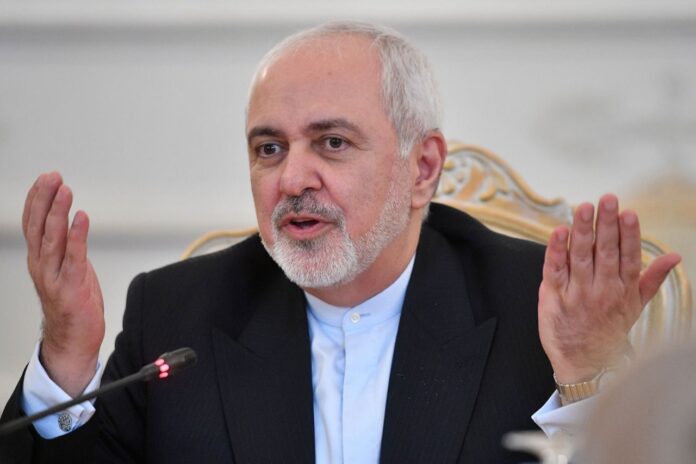
Iran Says Will Press Saudi Arabia’s Hand If Extended

Mohammad Javad Zarif said Iran has always welcomed any such gestures.

“The Saudi foreign minister said recently that they have extended their hand to Iran,” said Zarif in an exclusive interview with Hamshahri newspaper.

“If they have extended their hand, we, too, have always extended our hand; then why don’t these two hands reach each other,” the foreign minister asked.

“The reason is that they want an intermediary between these two hands, and that is an iron fist by others which Saudi Arabia wants them to pound on Iran’s hand,” Zarif explained.

“But this dream will never come true, and this is not something new, either,” he stressed.

“They gave $75 billion to [Iraqi ex-ruler and dictator] Saddam Hussein to be used against Iran,” he said.

“Later, they turned to the US, and now they have turned to the Israelis,” Zarif added.

“Well, extend this hand and don’t look for a fake hand. The hand [you’re looking for] is artificial,” he said.

“Extend the hand of your own as our neighbour,” the foreign minister said.

“Iran has numerous proposals which you can use,” he said.

Cessation of US Arms Sales to Riyadh Could Help Settle Yemen Crisis: Iran  

Iran Condemns Canada’s Human Rights Resolution

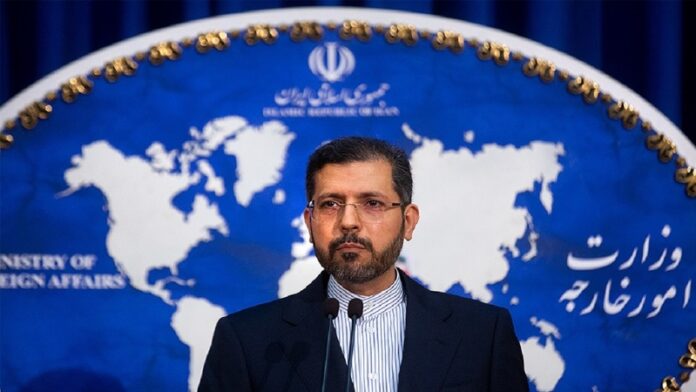
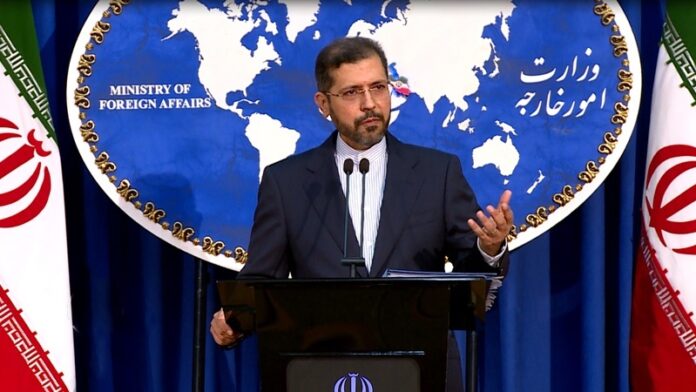
“Dropping support for, and refusing to sell weapons to the Saudi-led coalition can be a step towards correcting past mistakes if it is not a political gambit,” said Saeed Khatibzadeh on Saturday.

“Such a move alone will not resolve the Yemen issue, and it should be followed by the lifting of the air, sea and land blockade which has led to deaths of thousands Yemeni people due to a shortage of food and medicine,” he said.

“Saudi-led military attacks on Yemen by aggressor countries should stop, too,” he added.

He said the international community and some countries which are accessories to Saudi crimes against Yemeni people by providing arms should stop their support for Saudi Arabia as well and not allow this humanitarian disaster to go on.
“Unfortunately, Saudi Arabia became more vulnerable by launching a war on Yemen, and, by levelling unfounded accusations against other countries in line with the United States’ maximum pressure policy, seeks to absolve itself from [any blame for] the military aggression on Yemen and the killing of thousands of women and children,” the spokesman said.
“Meanwhile, we hope hawkish countries will come to realize their strategic mistake regarding the aggression on Yemen, and, by admitting to their mistake over the past six years, put an end to the war and blockade on Yemen and go for a peaceful solution,” Khatibzadeh said.
“Iran welcomes any efforts by the international community to back Yemen and cut off aggressors’ support, and believes its proposed four-item solution is still effective in solving the problem,” he added.

Iran’s COVID-19 Cases ‘Gradually Rising’ as Number of ‘Orange’ Cities Surges

Iran's COVID-19 Cases Hit 345,000: Health Ministry

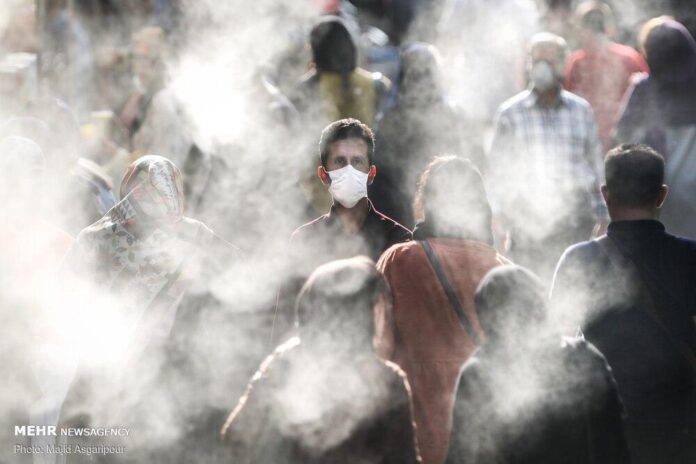
Spokesman for the National Coronavirus Headquarters Alireza Raisi said on Saturday the number of “orange” cities has doubled, though there are no “red” cities in the country at the moment.

Based on a national classification of cities in terms of the severity of and prevalence of the disease, “red” cities are the highest-risk ones followed by “orange” and “yellow” cities respectively.

He urged citizens to keep observing health protocols and avoid family and social gatherings to help contain the spread of the virus.

The official underlined that the first batch of COVID-19 vaccines has arrived in the country, adding vaccination begins soon based on priorities.

He said vaccination could ward off a fourth surge in the disease and help citizens have a happy New Year.

In a separate press conference, the Health Ministry spokeswoman said currently 36 cities are in the “orange” zone, 178 are in the “yellow” zone, and 234 are in the “blue” zone in terms of coronavirus outbreak.

According to Sima-Sadat Lari, the “orange” cities include Amol, Babol, Babolsar, Behshahr, Tonekabon, Juybar, Ramsar, Sari, Savadkuh, Qaemshahr, Mahmoud Abad, Neka, Noor and Nowshahr in Mazandaran province, Astaneh Ashrafieh, Bandar Anzali, Rasht, Rudbar, Some’eh Sara, Rudsar, and Lahijan in Gilan province, Ajabshir in East Azarbaijan province, Ardestan in Isfahan province, Esfarayen in North Khorasan province, Garmsar in Semnan province, Baft in Kerman province, Paveh in Kermanshah province, Bandar Gaz and Kordkuy in Golestan province, Bastak, Bandar Lengeh, and Qeshm in Hormozgan province, Bahar, Tuyserkan and Razan in Hamadan province, and Abarkuh in Yazd province.

She also confirmed 6,983 new cases of COVID-19 infection in 24 hours, increasing the total number of cases to 1,459,370.

Lari said the virus has killed 76 patients since Friday noon, raising the overall death toll to 58,412.

So far, Lari added, 1,247,374 patients have recovered from the disease or been discharged from the hospital.

Lari said 3,802 patients are also in critical conditions caused by more severe infection.

The spokeswoman noted that 9,612,033 COVID-19 tests have been taken across the country so far.

Iran Planning to Replace POS Terminals with Smartphone Payment System

CBI Governor Abdolnasser Hemmati said the move is aimed at phasing out the use of bank and facilitating e-payments.

“This method of payment is compatible with valid international standards and makes it possible, in a very secure manner, for customers to put the data of their bank cards into their mobile phones and make payments without using POS machines,” he said.

“Using mobile phones to make payments while shopping can not only facilitate payment for users, but also help observe health protocols at a time of the coronavirus outbreak,” he added.

Iran Begins Construction Work for Major Petrochemical Facility

Present at the ceremony were Iranian First Vice President Es’haq Jahangiri, Petroleum Minister Bijan Namdar Zangeneh and a number of other top officials.

“This project is one of the most important petrochemical projects in the country and can activate several downstream industries and further boost industrial development in Kermanshah province,” Jahangiri said in the ceremony.

The project is expected to cost $545 million and create more than 5,000 jobs. The petrochemical facility will produce polypropylene from natural gas.

It has a capacity of producing 660 thousand tonnes of methanol, 120 thousand tonnes of propylene and 120 thousand tonnes of polypropylene annually.

Addressing the ceremony, Petroleum Minister Zangeneh described the event as a “memorable” day for him.

“For years I was trying to run this project in the country because we would gain the technology of turning natural gas into valuable forms of plastic,” he said.

“The West Islamabad Petrochemical Complex is a major project worth around $600 million,” said the minister.

“It will create thousands of jobs and upgrade the technological level of the province tremendously,” he noted.

“When the project becomes operations, Kermanshah province will get its fourth petrochemical facility and will rank third in the country as far as the capacity for the petrochemical products is concerned,” he said.

Iran to Begin COVID-19 Vaccination in Coming Days: Rouhani

Next US Administration Should Bow to Iranian Nation’s Will: Rouhani

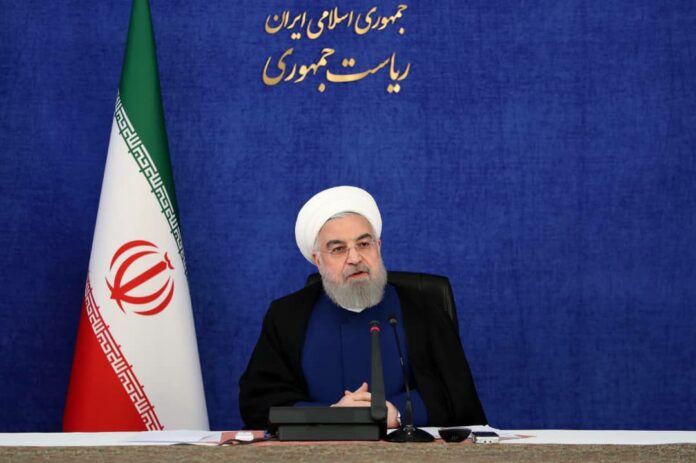
Iranian President Hassan Rouhani announced on Saturday that medical personnel, the elderly and people suffering from underlying health conditions take priority in the inoculation drive.

“All institutions are ready to move forward with the vaccination plan in the country,” he noted.

“With more purchased vaccines getting in, a considerable number of people will receive shots before the start of the Persian New Year [in mid-March],” he said.

Elsewhere in his remarks, he underlined the need to keep observing health protocols.

He said it is alarming that then percentage of people respecting health instructions has dropped from 81% to 75%.

“The more the number of people observing health protocols drops, the more we should expect to see a rise in infections and deaths in the coming weeks,” the president said.

He also urged citizens to observe preventive measures such as wearing masks and washing hands.

Enemy Failed to Halt Iran’s Economic Progress: VP

Mohammad-Baqer Nobakht said the enemy failed to impede Iran’s progress as a whole.

“The enemies put their knees on the neck of Iran’s economy, and they wanted to exert so much pressure that the country’s economy cannot breathe. However, … the enemies failed to stop development and efforts in our country,” he said.

“The country’s policy is to cushion the blow from enemies’ economic pressure,” he said.

The vice president also touched upon attempts by superpowers to keep the Islamic Revolution of Iran from emerging victorious.

He underlined the enemies “imposed numerous domestic and foreign assassinations and wars on Iran.”

“Hegemonic powers failed to achieve their objectives in the military domain; so, it put an economic blockade on its agenda,” he said.

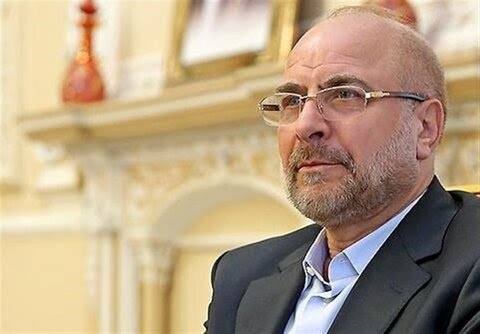
Iran’s Parliament Speaker to Convey Message to Putin in Russia Trip  

During his trip, the top parliamentarian is to sit down with Russian President Vladimir Putin, Chairman of the Russian State Duma Vyacheslav Viktorovich Volodin, and the head of the Russian High Security Council.

In his meeting with Putin, the Iranian parliament speaker is expected to discuss Tehran’s straightforward stances on the 2015 nuclear deal, officially known as the Joint Comprehensive Plan of Action (JCPOA), Tehran’s economic ties with Moscow, oil sales, etc.

He will also present a message to the Russian president.

Iran Welcomes Formation of Executive Council in Libya

In a statement on Saturday, Saeed Khatibzadeh embraced the outcome of political talks between Libyan sides in Geneva, expressing hope the new government will set the stage for holding elections.

He also said he hopes the new government will prepare the ground for establishing stability, tranquility, growth and development in Libya based on national sovereignty, independence and territorial integrity, and without any foreign interference.

The UN-led Libyan Political Dialogue Forum (LPDF) selected an interim Prime Minister and President of its new executive council, marking what the UN Special Representative called another “historic moment” on the road to unification of the war-torn country and national elections in December.

Iran DM Blames Hegemonic Powers for Insecurity in West Asia

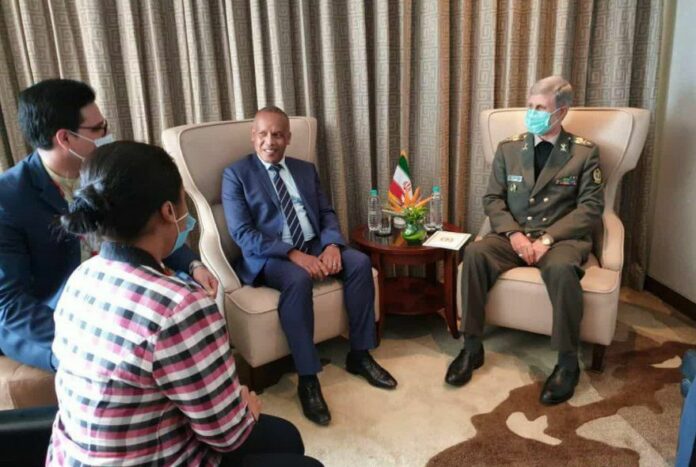
General Hatami made the remarks in a meeting with his Madagascan counterpart in India.
“Unfortunately, the West Asia region is facing numerous instances of terrorism and insecurity,

and foreign interference and hegemonic powers’ intervention are the major reason behind that,” said General Hatami.

He noted Iran and Madagascar have many commonalities and can consider boosting mutual cooperation on different fronts.

“Madagascar and countries in South Africa have a special place in Iran’s foreign policy,” he said.

“The situation of Iran and Madagascar in the Indian Ocean as well as in the two continents of Asia and Africa is of significance,” the Iranian defence chief said.

“We hope relations between two countries will further expand, especially in the military field,” said General Hatami.

Iran’s defence minister also called on the Madagascan government and Coast Guard to help Iranian fishermen which are struck by pirates in waters off the coast of Madagascar.