Sunday, January 18, 2026
Home Blog Page 2567

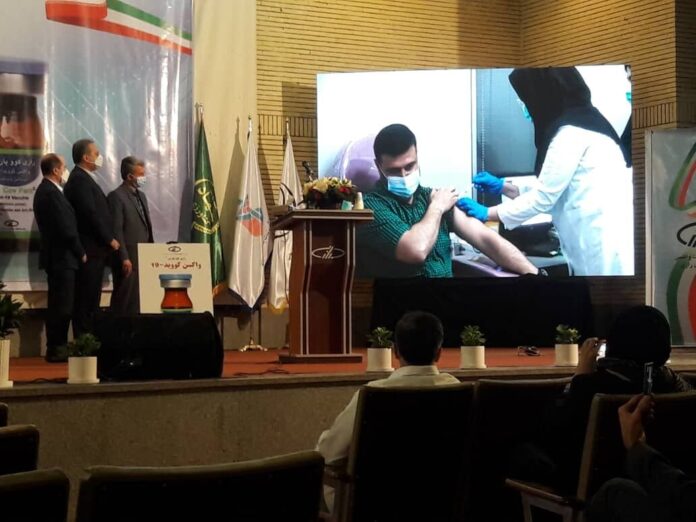
Second Iranian COVID-19 Vaccine Undergoes Human Trial

The vaccine, produced by Iranian experts at the Razi Institute, is the first injectable-inhaled mRNA recombinant vaccine for coronavirus.

Razi COV-Pars was administered to two volunteers at a ceremony in Tehran on Sunday attended by Agriculture Minister Kazem Khavazi and a number of other officials at Tehran’s Rasoul Akram Hospital.

A total of 133 people will get two shots 21 days apart in the first clinical trial of the vaccine. On Day 51, the booster (inhaler) is administered in the form of an intranasal spray, according to the Razi Institute.

The vaccine, which was unveiled by Razi Institute a few weeks ago, has been developed based on the instructions of the World Health Organization (WHO), and is administered in three doses.

Razi COV-Pars was first tested on 500 animals, including pigs, hamsters and monkeys, according to Iran’s agriculture minister.

Iran’s health minister has also described Razi COV-Pars as one of the safest vaccines with very few side effects, saying it will stop the recipient from transmitting the virus to others.

“This vaccine stimulates the immune system with the least side effects and makes the person safe.”
Iranian scientists had earlier unveiled another domestic vaccine, named COVIran Barekat, which is undergoing clinical trials.

‘US Attack on Syria Aimed at Paving Way for Terrorists’ Return’

By attacking Popular Mobilization Units (PMU) on the Iraqi-Syrian border, US President Joe Biden showed that his military decisions are not a far cry from those of his predecessor Donald Trump. The United States’ first military actions under Biden’s leadership was to attack PMU headquarters in Syria. This unusual move came at a time when the Democratic government of the United States has been seeking to define its foreign policy separately from that of Trump. Nevertheless, in an impetuous move, the US president took the same type of actions that his predecessor favoured. The raids were conducted on the Syrian border at a time when the PMU is regarded as part of Iraq’s military, and taking military action against it is considered both a violation of Syria’s territorial integrity and an attack on Iraq’s official military troops.

Following the military assault, the US secretary of state claimed Washington had already coordinated the attack with Baghdad. However, it turned out that his claim was not true. Russia condemned the attack, too, and the UK foreign secretary welcomed that position. Biden himself claimed that the attack on Syria had been designed as a warning to Iran.

Speaking to Khabar Online, Middle East expert Hassan Hanizadeh has weighed in on these developments.

Why did Biden, all of a sudden, decide to do the same thing that Trump would do?

The United States recent attack on PMU forces of the resistance front on the Syria-Iraq common border can be analysed within the framework of Joe Biden’s scheme to disintegrate Iraq. In 2005 when Biden was the head of the Foreign Policy Committee of the US Senate, he presented a plan to then President George W. Bush a plan that would envisage the disintegration of Iraq into three parts: a Shia-populated, Sunni-populated and Kurdish-populated area. However, that plan was not implemented. Now after having won the presidential election, Biden is once again trying to implement that plan.

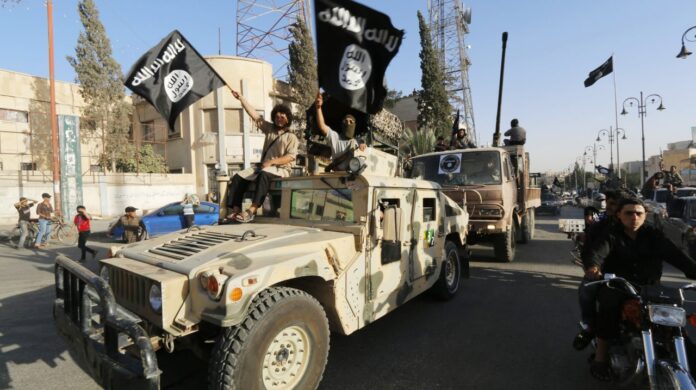
The recent moves include incessant bombardments of PMU troops in Syria and Iraq, the remobilization of Iraqi Ba’ath Party forces and the relocation of ISIS terrorists from Syria to Iraq are part of efforts to create insecurity in Iraq and disintegrate the country. PMU forces in the area prevented the relocation of ISIS terrorists from Syria and Iraq. So, US troops attacked the area to create a secure military corridor for ISIS operatives to return to areas in northern and western Iraq. 

You’re the whole thing has more to do with the scheme on Iraq than Syria?

Yes. Saudi-linked media outlets recently had interviews with top leaders of the Iraqi Ba’ath Party in bid to portray these isolated Ba’ath elements as popular figures. It is said that, in recent days, several individuals from the Ba’ath Party in Mosul and Saladin have been transferred to western Iraq in order to take power.

What repercussions does this saga have for Syria, which itself is at war?

Syria is at war, but PMU troops are the ones mostly stationed on the common border between Syria and Iraq and are present in a location through which ISIS terrorists are usually relocated from Syria to Iraq, so that they will prevent this relocation. The US attack was conducted in order to create insecurity in the region and set the stage for the transfer of ISIS operatives to Iraq. You know, ISIS terrorists are stationed to the east of the Euphrates, and that is why it seems the US attacks were aimed at creating a diversion and deflect the attention of PMU troops.

How will the situation unfold in Syria as an independent country? During the time Trump conducted military operations in Syria, Jen Psaki would denounce such moves, highlighting that Syria was an independent country and the attacks illegal. Can the US raids on the Iraq-Syria common border be reviewed without mentioning the violation of the territorial integrity of an independent country? 

Syria has, time and again, been struck by Israeli and US warplanes, and Syria’s territorial integrity and sovereignty have been violated several times. The same goes for Iraq where US troops are present. The solution is that American forces, as occupiers, should leave Iraq and the Iraqi Parliament’s legislation on the withdrawal of US troops from the country should be implemented.

That is why now Joe Biden and his team are trying to create insecurity in Iraq in order to revive the ISIS terrorist group. Furthermore, Biden is seeking to rebuild fugitive Ba’ath Party forces with the help of Saudi Arabia, the United Arab Emirates and Jordan.

In his latest interview, Joe Biden also mentioned Iran and said he had attacked Syria to give warning to Iran. Does that mean that Washington is seeking rivalry and confrontation with Iran on Syrian soil?

As Iran has to and has undertaken to maintain security in Iraq and Syria, it seeks to promote security and establish stability in both countries. But the United States’ deployment of its military troops from thousands of miles away amounts to a violation of the sovereignty of the two countries. Iran has a common border with Iraq, so it needs to ensure Iraq’s security. This comes as American forces are mainly to blame for insecurity in the Middle East and are now trying to use ISIS as a tool against Iran in Iran and Syria, which is a violation of sovereignty and security in the region. 

Biden’s saying the attacks came as a warning to Iran is similar to what happened during Trump’s tenure. However, the attacks are conducted on Syrian soil most probably in order to disrupt the situation in the region.

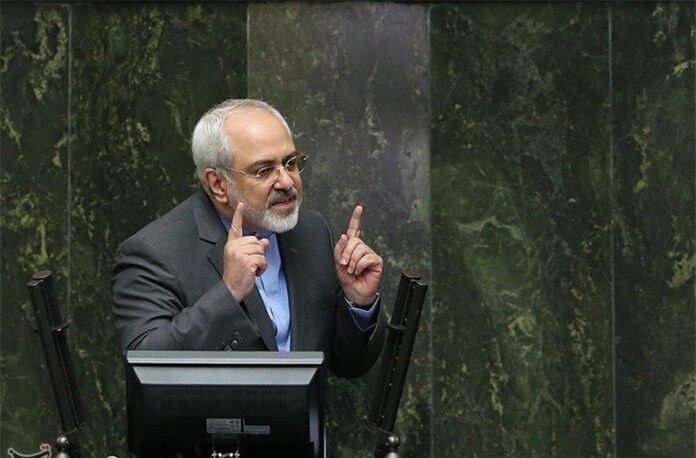
Recent Incidents in Iraq Plot to Strain Tehran-Baghdad Relations: Zarif

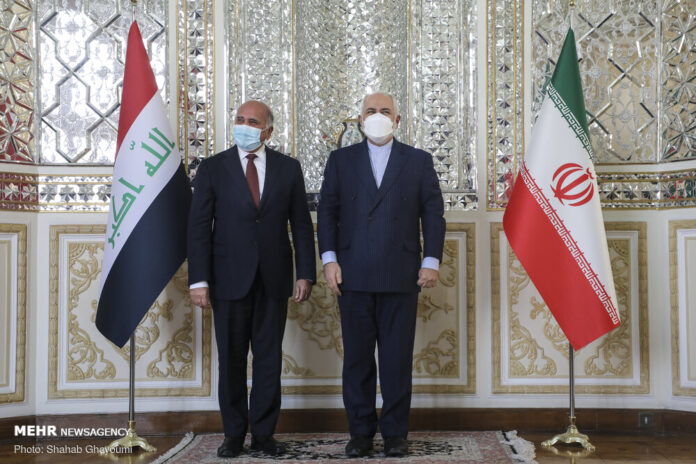
In the meeting, Zarif condemned the United States’ dangerous move to attack Iraqi forces in border areas of Iraq and Syria, dismissing the raids as violation of the two country’s sovereignty.

He described as suspicious the recent attacks and events in Iraq, saying they could be aimed at disrupting Tehran-Baghdad relations as well as security and stability in Iraq.

“We insist that the Iraqi government identify those behind these incidents,” said the top Iranian diplomat. 

Zarif touched upon the problems facing Iranian fuel takers at Tamarchin border area between Iran and Iraq, expressing hope that the travel restrictions facing the tankers will be resolved through the good offices of Iraqi officials.

He further said making arrangements to begin work to build and complete the Shalamcheh-Basra railway will contribute to the enhancement of trade ties between the two countries.

Zarif called on relevant authorities to expedite work to break ground for the railway project as soon as possible.

The Iraqi foreign minister, in turn, urged both sides to work together closely to further boost mutual relations, and said Baghdad stands ready to expand its relations with Iran.

He referred to the headway made with negotiations over Iran gaining access to its financial resources in Iraq, and expressed Baghdad’s readiness to facilitate Tehran’s access to its financial assets in the Arab country.

He gave assurances that the Iraqi government will not allow the recent incidents in Iraq to affect the very good relations between the two sides.

In this meeting, the two sides also exchanged views on regional developments.

COVID-19 Vaccination Drive in Full Swing Nationwide: Iran’s President

President Hassan Rouhani said on Saturday the situation will hopefully improve thanks to the inoculation program.

“Thank God, vaccination has got underway in our country, and the situation will get better in the weeks ahead both for our medical personnel across the nation and for the elderly or those suffering from underlying diseases,” he added.

“The government has mobilized all its potential to buy vaccines. On the whole, our situation is such that we will provide as much vaccine as we can,” the president noted.

Rouhani recalled that vaccines are not abundant today the same way that face masks were in short supply at the beginning of the coronavirus outbreak. 

“Of course, all of our people know that vaccines today are similar to face masks in the early days of the outbreak of this disease. Masks were hard to find in the early days of the outbreak of this disease, and some countries seized mask shipments coming in from other countries at airports, and they would redirect airplanes mid-air and all that.,” he added.

“We remember what the situation was like in the early days of this disease. Today, the same situation that we were in with regards to masks applies to the vaccine around the world. It’s a big test for the whole world,” he said.

The president underlined although countries normally put their own people first when it comes to procuring coronavirus vaccines, they should also care about other people across the globe as this is a humanitarian issue.

“Developed, wealthy countries which have facilities want to monopolize and get their hands on all vaccines available and immediately launch inoculation plans for their own people. Part of that is natural as any government normally cares about its own people. But here, moral and human principles tell us that we should pass this test successfully and care about all people around the world,” he explained.

The president said there will not be complete immunity against the virus unless inoculation is conducted worldwide.

“Anyway, it is a pandemic. It is a disease which has gripped the whole world. Even if one country conducts the inoculation plan 100% percent, it won’t be completely immune because people travel to and from other countries. Real immunity will materialize when vaccination takes place across the world and all countries can use the vaccine,” he added.

President Rouhani underscored another issue is that it unclear how effective the vaccines are.

“First of all, the effectiveness of the vaccines is not very much clear to us. Now, it is not clear which vaccine is more effective, how long its effect will remain, what its side effects are. These points are all in a shroud of mystery,” he said.

“After all, there are people in the world who avoid vaccination because they are afraid to receive the jab. So, there are a lot of ambiguities in the world about this,” he added.

“But under the current circumstances, we have no other option but to abide by the protocols and do the vaccination. There are no other choices and we cannot do anything else. Vaccines should be used. Vaccines bring immunity for many individuals, but there is uncertainty over how long or to what extent the vaccines bring immunity,” he said.

COVID-19 Death Toll in Iran Hits 60,000: Health Ministry

In a press briefing on Saturday, Health Ministry spokeswoman Sima-Sadat Lari reported 7,975 new cases of COVID-19 infection, raising the total number of cases to 1,623,159.

So far, Lari added, 1,386,534 patients have recovered from the disease or been discharged from the hospital.

Lari said 3,729 patients are also in critical conditions caused by more severe infection.

The spokeswoman noted that 10,793,788 COVID-19 tests have been taken across the country so far.

She said currently 11 cities are in the “red” zone, 32 cities are in the “orange” zone, 251 are in the “yellow” zone, and 154 are in the “blue” zone in terms of coronavirus outbreak.

According to Lari, the “red” cities are all in Khuzestan province in southwestern Iran, and include Abadan, Ahvaz, Mahshahr, Khorramshahr, Dezful, Dasht-e Azadegan, Ramhormoz, Shadgan, Shushtar, Karoun, and Hoveyzeh.

Iran Says Won’t Allow Takfiri Terrorism to Gain Foothold in Region Again

Speaking in a meeting with Iraqi Foreign Minister Fuad Hussein in Tehran, Ali Shamkhani said the United States’ recent moves to boost and expand the activities of ISIS terrorists in the region and its violent attacks on anti-terror forces of the resistance front mark the beginning of a fresh wave of organized terrorism.

The top Iranian official underscored that any delay in the implementation of the Iraqi parliament’s legislation requiring foreign military troops to leave Iraq will further stoke tension and crises in the region.

Shamkhani highlighted the significance of cooperation and partnership among regional countries to ease tensions and the necessity of holding constructive talks to help tackle the existing crises.

“The tranquility and security and Iraq enjoys today is due to the power of top clerics, the prudence of Iraqi statesmen and the struggles of the country’s Armed Forces and popular resistance groups and should be safeguarded,” Shamkhani noted.

He also touched upon the deplorable situation of Yemeni people which, he said, bring to mind a sort of “genocide.” He expressed Iran’s readiness to help end the 4-year conflict in Yemen.

The top Iraqi diplomat, in turn, presented a report on the recent political and security developments in his country. 

Hussein said security and stability lay the groundwork for economic development and welfare. He added the establishment of security is regarded as the number-one priority for a country such as Iraq which has been involved in fighting terrorism and insecurity for years.

He touched upon the agreements reached between the officials of both countries on Iraq’s payment of its debts to Iran, which had been delayed due to foreign sanctions.

He said some key hurdles have been removed on the back of relentless efforts by Iranian and Iraqi financial and banking sectors as well as economic institutions.

The Iraqi foreign minister said the trend of payment will soon begin based on the model agreed upon by both countries.

‘Iran’s Deal with IAEA Deal Proves Its Nuclear Program Peaceful’


Chief of Staff of the president’s office Mahmoud Vaezi underlined that Iran has always complied with the Safeguards Agreement even since before the 2015 nuclear deal, officially known as the Joint Comprehensive Plan of Action (JCPOA), was signed.

“Since before the JCPOA was singed, Iran has been a member of the IAEA and has remained committed to the Safeguards Agreement,” he explained.

“Through the IAEA and by implementing the Safeguards Agreement, we insisted on showing to the world that our nuclear activities are peaceful,” he added.

“The parliament’s law is not saying that we should stop being a member of the IAEA because we have been a member of the agency since before negotiations on the JCPOA started and this monitoring cooperation has always been there,” he said.

He said Iran stopped its voluntary implementation of the Additional Protocol in line with the Parliament’s legislation aimed at getting US sanctions lifted.

However, he stressed, Iran’s cooperation with the IAEA in terms of monitoring has always continued. 

“We reviewed this issue and reached agreement with the IAEA,” he said.

“The content of the agreement is crystal clear. During the time Iran has stopped the implementation of the protocols, it will not accept snap inspections at all and will not give permission for inspection,” he said.

“Their (the IAEA’s) access to [monitoring] cameras will be blocked altogether and they will have no access to the tape (footage) at all unless all issues are settled in the future and the other side complies will all of its commitments under the JCPOA,” he said.

As agreed between Iran and the IAEA, Vaezi added, Iran will provide the agency with the footage filmed by monitoring cameras only if the sanctions imposed on Iran by the Trump administration are lifted.

Iran Says to Remove IAEA Cameras in 3 Months if Sanctions Not Lifted

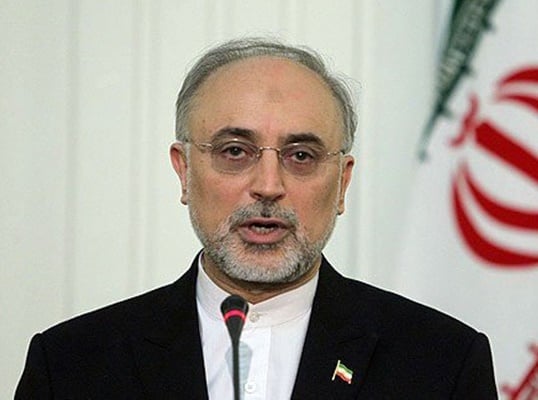
“The agency has no right to access the systems recording information as well as cameras, and we will destroy that information if sanctions are not lifted in three months’ time,” Ali-Akbar Salehi said on Friday night.

The official noted that move adopted by the government are in keeping with the legislation passed by Parliament to tackle sanctions.

“We stopped the implementation of the Additional Protocol and inspection conducted within the framework of that protocol. The move is based on the law approved by Parliament around two and a half months ago,” Salehi explained.

He added some try to create the impression that Iran does not favour talks.
“They want to make the public believe that we wouldn’t like to sit down for negotiations,” he said.

“However, talks require their own conditions,” he further said.

Iran, Syria Discuss Cultural, Media Cooperation in Damascus

The meetings were held in Damascus in line with Iran-Syria cooperation in public diplomacy, media and cultural arenas.

During his trip, Khatibzadeh held talks with Syrian Foreign Minister Faisal Mekdad where the two sides discussed the latest situation of bilateral ties as well as cultural and media cooperation.

In the meeting, the top Syrian diplomat underlined the importance of boosting mutual cooperation in cultural and media arenas.

Khatibzadeh also held talks with the Syrian minister of information and culture, minister of science and Bouthaina Shaaban, the senior advisor the Syrian president.

In the meetings, the Iranian foreign ministry spokesman stressed the need to further expand cultural and media cooperation between the two sides.

He also expressed pleasure with Syrian people’s resistance against terrorism and underlined Iran, like in the past, will stand by the Syrian government and nation in helping with the economic reconstruction of Syria and boosting cultural cooperation with that country. 

In the meetings, the Syrian authorities also underscored that the Syrian nation will never forget Iran’s support for Syrian people.

Khatibzadeh also delivered a speech at the Syrian Diplomatic Academy and took part in a meeting of the country’s Institute for Strategic Studies.

He also attended a meeting with Syria media and answered journalists’ questions.

Khatibzadeh also met the Syrian Deputy Foreign Minister Bashar Jaafari.

Iran Condemns US Airstrikes on Syria

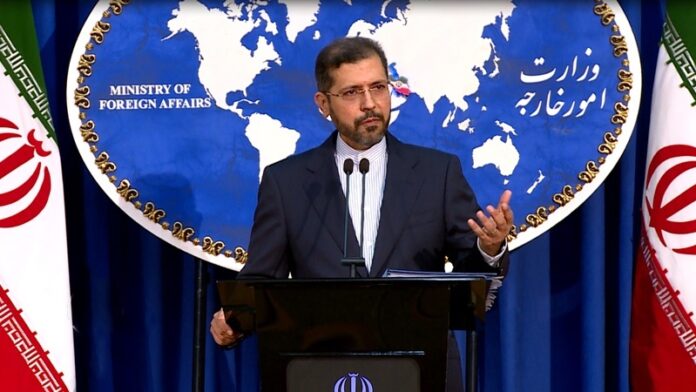
“The attacks which are a continuation of the Israeli regime’s incessant acts of aggression on the Syrian soil come at a time when American forces have, in recent years, illegally entered Syria and occupied parts of the country and looted its natural resources, including oil, which is a natural right of Syria people,” Saeed Khatibzadeh said in a statement on Friday night.

“Also, illegal US bases on Syrian soil train terrorist forces and use them as tools,” he added.
The spokesman dismissed the attacks by the new US administration as blatant violation of Syria’s territorial integrity and sovereignty and a breach of international law, which would escalate military confrontations and increase instability in the region.