Friday, January 16, 2026
Home Blog Page 2545

Iran FM, Iraq’s Top Security Official Discuss Regional Issues

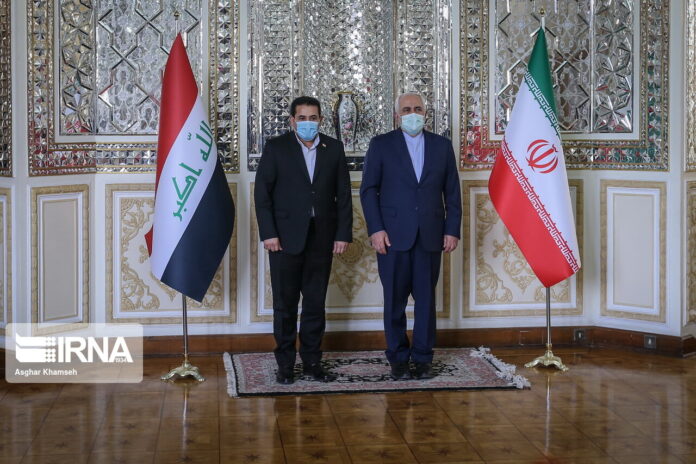
In the Monday meeting, Zarif highlighted that Iran’s priority is to boost its relations with neighbouring countries, describing Iraq as a country which has numerous and growing bonds with the Islamic Republic of Iran.

“Iran has always respected Iraq’s independence, security, territorial integrity and territorial sovereignty, and welcomes its constructive role in regional relations,” said Iran’s top diplomat.

Zarif reiterated that regional security should be ensured by countries in the region, adding foreign troops should leave the region.

He also stressed the importance of following up on the case of Lieutenant General Qassem Soleimani and Abu Mahdi al-Muhandis, who were assassinated in Iraq by the United States over a year ago.

“Our Iraqi brothers clearly realize the importance of pursuing the case of martyrs Soleimani and Abu Mahdi al-Muhandis, and we, too, stress that Iraq follow up on the issue, and Tehran-Baghdad cooperation can further expand in that regard,” Zarif added.

The Iraqi national security advisor, in turn, said his country is determined to further expand its relations with Iran on all fronts.

He also expressed his gratitude to Iran for offering support to Iraq in different areas.

Iranian Nuclear Spokesman Injured During Visit to Natanz Facility

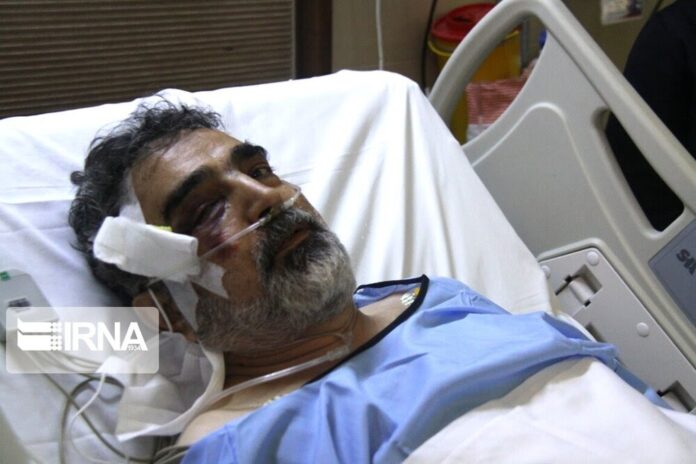
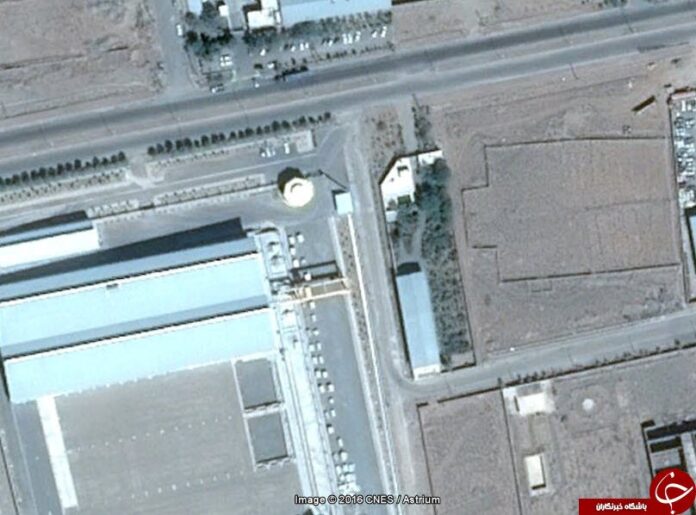
Hours after the Sunday incident in Natanz, Kamalvandi was visiting the site along with the head of the AEOI Ali Akbar Salehi when he fell into a hole with a height of seven metres, and broke both his legs and his skull.

He was then transferred to Ayatollah Yasrebi Hospital of Kashan, a nearby city, and received treatment there.

Alireza Moraveji, a health official, told local media that Kamalvadi’s overall health is satisfactory, but his ankle and head have sustained fractures.
Later on Monday, the hospitalized spokesman told state media that both of his ankles as well as his head have sustained fractures.

Emergency Power System Launched at Natnaz Following Outage: Salehi

Salehi

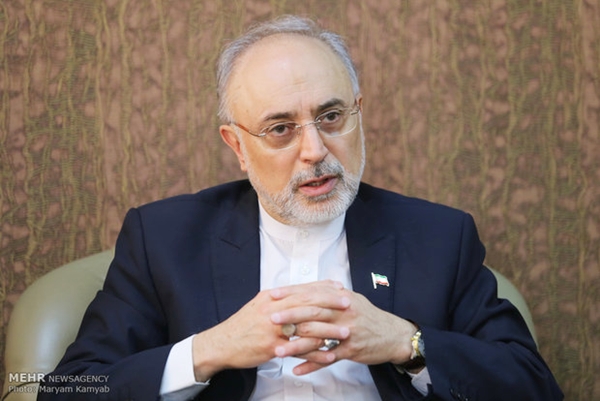
Ali-Akbar Salehi, the head of the Atomic Energy Organization of Iran (AEOI), said on Monday the sabotage had not stopped enrichment at Natanz.
He also noted that efforts are underway to restore the damages.

“I stress that a considerable part of the damages caused by the enemy’s sabotage will be repaired, and this train will not stop moving forward,” he added.

Salehi said clues have been found, and the country’s security system is seriously pursuing the issue.

Earlier in the day, sources close to Iran’s Intelligence Ministry had noted that Iran has identified the individual who caused the outage in one of the halls of Natanz site, and will arrest him soon.

Zarif Vows Revenge for Israeli Attack on Natanz Facility

US in No Position to Set Conditions for Rejoining JCPOA: Iran

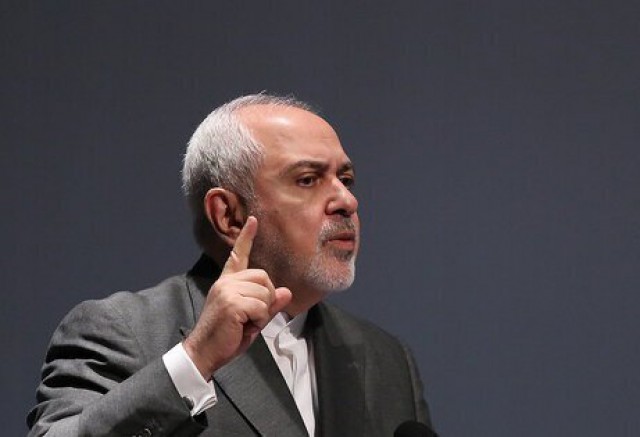
“The Zionists want to take revenge because of our progress in the way to lift sanctions,” the Iranian foreign minister said on Monday.

“They have publicly said that they will not allow this. But we will take our revenge against the Zionists,” he added.

His comments came one day after an act of sabotage led to an incident at the electricity distribution network of Shahid Mostafa Ahmadi Roshan uranium enrichment facility in Natanz.

The head of the Atomic Energy Organization of Iran (AEOI) has called the attack an act of ‘nuclear terrorism’, calling on the international community, as well as the International Atomic Energy Agency (IAEA), to deal with such moves that target Iran’s facilities.

“The Islamic Republic of Iran, while condemning this despicable act, underlines the need for the international community and the International Atomic Energy Agency (IAEA) to address this nuclear terrorism and reserves the right to take action against masterminds, perpetrators and conspirators of this [terrorist] act,” Salehi said.

Iran Identifies Person Who Disrupted Flow of Electricity in Natanz: Source

Speaking to Nour News, the media outlet affiliated with Iran’s Supreme National Security Council, the source said efforts are underway to arrest the individual.

On Sunday, an act of sabotage led to an incident at the electricity distribution network of Shahid Mostafa Ahmadi Roshan uranium enrichment facility in Natanz.

The head of the Atomic Energy Organization of Iran (AEOI) has called the attack an act of ‘nuclear terrorism’, calling on the international community, as well as the International Atomic Energy Agency (IAEA), to deal with such moves that target Iran’s facilities.

“The Islamic Republic of Iran, while condemning this despicable act, underlines the need for the international community and the International Atomic Energy Agency (IAEA) to address this nuclear terrorism and reserves the right to take action against masterminds, perpetrators and conspirators of this [terrorist] act,” Salehi said.

He added that the Islamic Republic will seriously pursue the development of its nuclear technology, on the one hand, and make efforts to remove the oppressive US sanctions, on the other hand, so that those who ordered the terrorist act would not reach their goals.

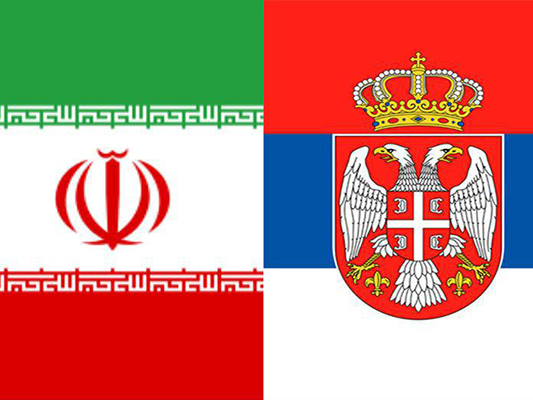
Serbian Foreign Minister to Visit Iran on Apr. 17: Spokesman

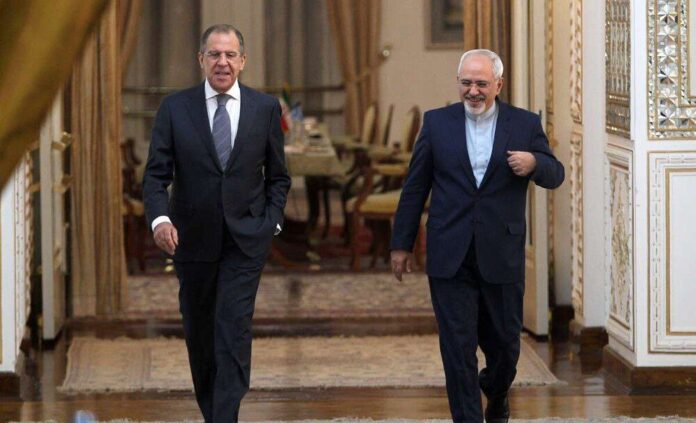
Speaking in his virtual press conference on Monday, Khatibzadeh said the Russian Foreign Minister Sergei Lavrov will also arrive in Tehran tonight.

The South Korean prime minister is also visiting Iran on a two-day trip, Khatibzadeh added.

Iran Says IR-1 Centrifuges Damaged in Israeli Attack on Natanz

Speaking in a virtual press conference on Monday, Khatibzadeh described the Sunday morning’s attack on Natanz as a crime against humanity, saying that it could result in a catastrophe.
He said Iran reserves the right to respond to the Israeli attack in an appropriate time.

The spokesman also said the Israeli attack will result in an achievement for Iran as it leads to the replacement of old machines with advanced ones.

Seoul Must Unblock Iran’s Frozen Assets As Soon As Possible

Es’haq Jahangiri made the remarks in a joint press conference with the visiting South Korean Prime Minister Chung Sye-Kyun in Tehran on Sunday.

“The measure taken by South Korean banks to block Iran’s foreign exchange assets has marred the image of South Korea among the Iranian people,” Iran’s VP said, adding, “We want the South Korean government to unblock Iran’s assets in the shortest time possible and make up for the problems it has caused in recent years.”

“Unfortunately, during the past three years, South Korea has followed suit with US illegal sanctions against Iran, which lack any international legitimacy, as a result of which, relations between the two countries have become stagnant,” Jahangiri said.

He added, “The decline in relations between Iran and South Korea took place at the time that there were no international sanctions, including the United Nations’ sanctions, against Iran,” he added.

The mutual relations have been seriously strained by the South Korean banks’ move to freeze some seven billion dollars of Iran’s foreign exchanges resulting from the legal sale of its oil and gas condensates to this country, he said.

“The move by the South Korean banks to block Iran’s foreign resources took place at a time that the Iranian people are in dire need of them due to the coronavirus pandemic and its economic and health consequences. This measure by Koreans has deprived the Iranian government of major foreign exchange resources it needs to buy medical equipment, medicine and other essential goods for the country,” Iran’s vice president said.

Jahangiri expressed hope that South Korea would take proper steps to improve its position in Iran, saying that the Iranian government is ready to help Seoul make up for its past mistakes if it takes “effective and tangible” steps in this regard.

For his part, the South Korean prime minister said Tehran and Seoul have agreed to work on ways to expand mutual relations and make decisions to boost cooperation in the fight against the COVID-19.

Chung added that South Korea will increase dispatch of humanitarian aid, including medicines and medical equipment, to Iran via the two countries’ working group, expressing hope that it would be useful for the Iranian people.

The two countries would also resume an academic program to exchange medical experts and hold professional training courses, which had previously played a leading role in boosting relations between the two nations, he noted.

The South Korean prime minister noted that the two countries will make efforts to strengthen cooperation at a faster pace in parallel to their endeavor to revive the multilateral nuclear deal signed between Tehran and world powers in 2015, officially known as the Joint Comprehensive Plan of Action (JCPOA).

Iran is struggling to return the funds frozen by South Korean banks amid a shortage of hard currency in the country which has been contending with the coronavirus pandemic over the past year.

Several billions of dollars of Iran’s money, mostly from oil and gas exports, are held abroad and are difficult to access because of tightening US sanctions in recent years.

About $2.7 billion deposited by the Seoul branch of Iran’s Bank Mellat is held by the Bank of Korea, while more than $7 billion worth of Iranian oil money is stuck at the Industrial Bank of Korea and Woori Bank, according to Yonhap news agency. South Korea’s refusal to free them has turned to a diplomatic spat.

The South Korean prime minister arrived in Tehran earlier on Sunday for talks with senior Iranian officials on bilateral issues, particularly the release of the frozen funds.

Iran Condemns Natanz Incident as ‘Nuclear Terrorism’

In comments on Sunday, Ali-Akbar Salehi called for global action against the “cowardly” move.

“While condemning this cowardly act, the Islamic Republic of Iran highlights the need for the international community and the International Atomic Energy Agency (IAEA) to deal with this nuclear terrorism, and reserves the right to act against those ordering and perpetrating the attack,” he said.

“Also, in order to foil the objectives of this act of terror, the Islamic Republic of Iran will seriously press ahead with developing nuclear technology on the one hand, and striving to have cruel sanctions on the other,” Salehi added.

“The act committed against Natanz uranium enrichment facility indicates the defeat of those who are opposed to the country’s industrial and political progress in order to stop the extensive development of our nuclear industry on the one hand and [disrupt] successful talks aimed at lifting cruel sanctions on the other,” he said.

“On National Nuclear Technology Day, the latest achievements of the country’s young and diligent scientists were displayed and at the same time the prospects for the removal of sanctions came to light,” he noted.

South Korean Prime Minister in Tehran for High-Level Talks

Iran’s Foreign Ministry spokesman Saeed Khatibzadeh had earlier said the South Korean prime minister will meet with Iranian officials and discuss bilateral issues including the unlawful restrictions imposed against the access of the Central Bank of Iran to its assets in the East Asian country.

“Technical arrangements are being made by the two countries to finalise the details of the visit,” he added.

During his stay in Tehran, the South Korean official will hold talks with Iran’s First Vice-President Es’haq Jahangiri and Parliament Speaker Mohammad-Baqer Qalibaf.

He will also hold a friendly meeting with Ali Larijani, the Supreme Leader’s advisor, considering the history of relations between the two Iranian and Korean officials.