Sunday, April 12, 2026
Home Blog Page 2504

Iran to Annul Imprisonment Penalty over Failure to Pay Mahr

Iran Grants Leave to 70,000 Prisoners amid Coronavirus Outbreak

Legislator Hassan Norouzi said Sunday criminal courts should not arrest people with regards to private and religious rights including the payment of Mahr “unless the individual deceives the court and refuses to declare his property and assets to the court.”

“With regards to personal rights, when an individual is entitled to receive Mahr, the creditor declares the debtor’s property and assets to the court; then an order is issued ant that property is confiscated in favour of the creditor,” said Norouzi, the spokesman for the Parliament’s Judicial Commission.

He said it is no use incarcerating people for offences related to Mahr, blood money and debts.

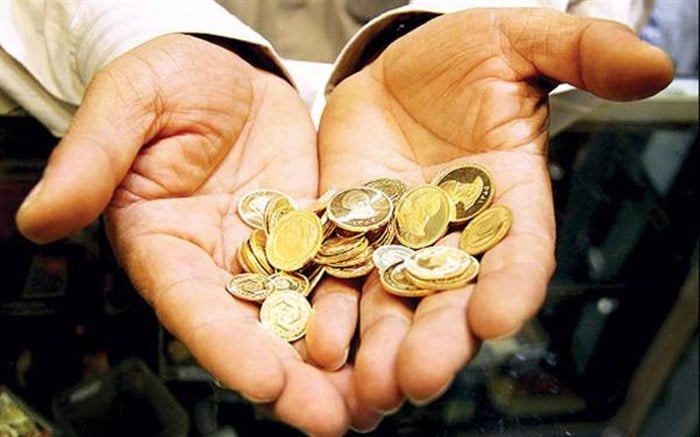
“Some lawmakers are seeking changes in the Mahr law. The law has been changed in the past, too, and if a lady’s Mahr was, for instance, 1,000 gold coins, only 110 would be paid,” he added.

He said the intended changes focus on repealing the imprisonment punishment for failure to pay Mahr.

“We want to insert a clause in the Mahr law indicating ‘no one should be arrested or jailed for [failure to pay] Mahr,” he said.

Mahr is a mandatory payment in the form of money or possessions paid by the groom or by groom’s father to the bride at the time of marriage or later on bride’s demand. Mahr is typically specified in the marriage contract signed during an Islamic marriage.

The move is seen to be part of the country’s ongoing efforts to decrease the number of prisoners and introduce alternative punishments for minor offences.


Gold Coin’s Growing Price Nightmare for Mahr Debtors

The exponential growth of gold coin in Iran over the past few months has not only increased the number of judicial cases in the family courts but also significantly boosted the number of men behind bars over being unable to pay their Mahr.

Right now, 4,181 men across the country are behind bars for not affording to pay their wives’ Mahr. This comes as the figure stood at 3,550 back in July 25 and the issue gains further momentum when we come to know that it was 2,450 in August last year.

Today, the huge increase in the gold coin price has heavily impressed Iranians’ livelihood, jobs and families. It goes without saying the gold coin’s price hikes send shock waves through the lives of men who are on the verge of divorce; men who used to imagine themselves as staunch lovers resemble today more to economic debtors.
Iran to Annul Imprisonment Penalty over Failure to Pay Mahr

What Happens in Family Courts?

If you walk through the long corridors of each judiciary complex in Iran dealing with family disputes, you can see plenty of men and women paying and receiving Mahr. But their number has significantly increased as of May following the high jump of gold coin prices.

The judge of 261 Branch, Mahmoud Sa’adat, told the Iran daily newspaper that since May when the gold coin’s price began to jump, the number of family cases filed for overdue installments of Mahr has increased dramatically.

“For example over the past month, out of 190 cases referred to our branch, 63 cases were related to Mahr installment. This comes as the figure stood at only 10 during the same period last year,” he noted.

Elaborating on the judicial process of such cases, Sa’adat said courts first make a general assessment of the financial status of men and issue their verdicts based on their affordability. “This means that verdicts may be totally different for each case.”

Gholam-Hossein Gholavar, the judge of 264 Branch, sheds further light on the issue from another point of view.

“In cases filed over Mahr, women are always the winner because they receive the Mahr based on the latest rate of gold coin. So, this is the men who are hardly impressed financially because they have to choose between going to jail or starting to pay Mahr installments, which they usually opt for the latter,” he noted.


Shocking Statistics of Mahr Prisoners

The worrying growth of Mahr prisoners particularly over the past few months along with the regretful consequences of the high jump of gold coin and jewelry price lead us to this conclusion that the current chaos will collapse not only the country’s economy but also the foundations of families.

Blood Money Organization’s Director Asadollah Jolaei says today 10,000 people are behind bars across the country over unintentional crimes including 4,181 Mahr debtors.

“Fars province with 580 cases, Tehran province with 453 cases, and Isfahan province with 370 cases are respectively the first three leading provinces in the country in terms of Mahr debtors.

“The recent jump in the price of gold coin and jewelry has dramatically increased the number of male prisoners. This comes as five years ago the overall number of people behind bars over unintentional crimes was less than 4,000,” he said.

Jolaei underlined that Mahr is a financial commitment which must be paid unconditionally but it can’t be invested anywhere. “If the amount of Mahr is less than 110 gold coins, it won’t be categorized as a criminal case and the groom won’t go to jail over not paying it.”

Doubtlessly, no one except for the couples themselves can resolve their disputes over Mahr. But getting familiar with the judiciary laws and raising public awareness about marriage laws can decrease the number of the current financial, family, social and economic cases in the courts.
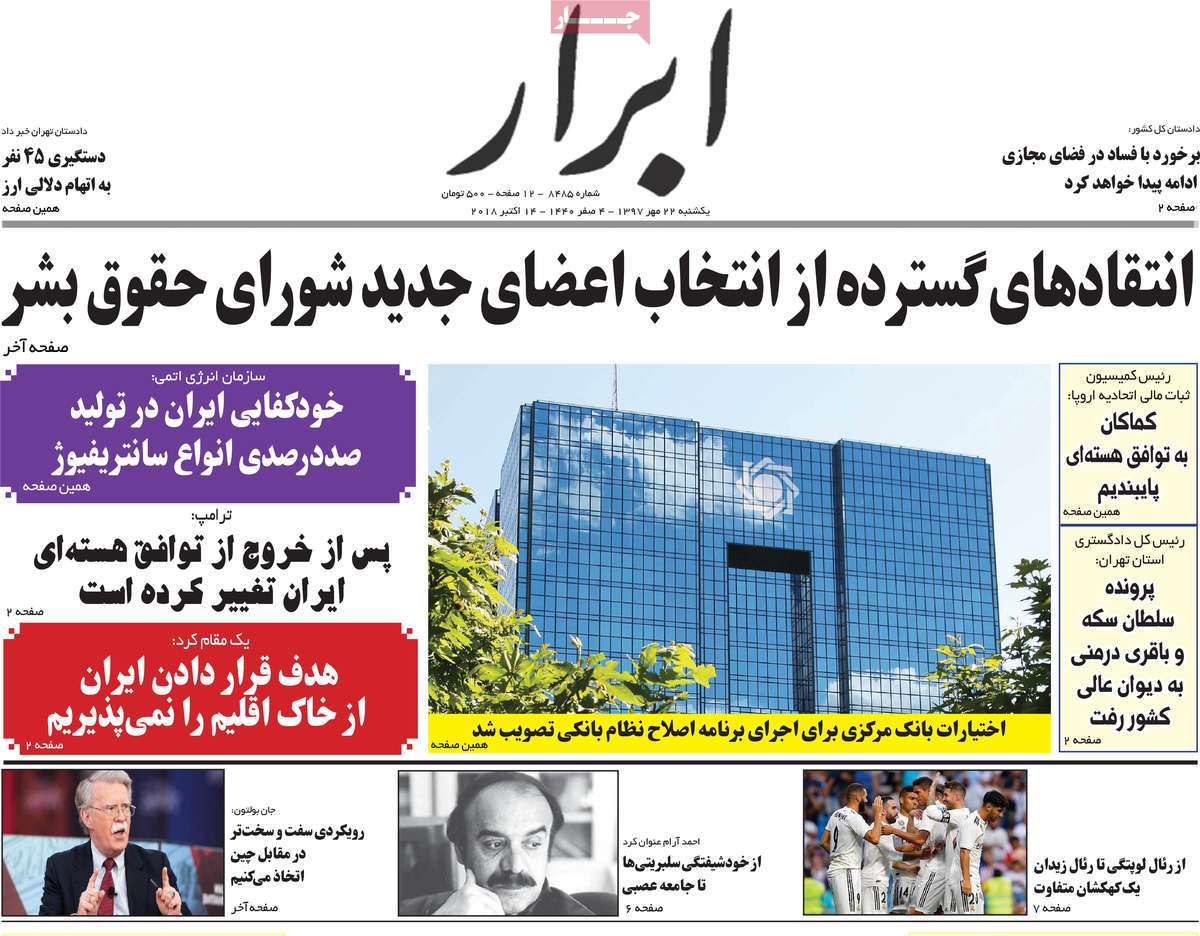
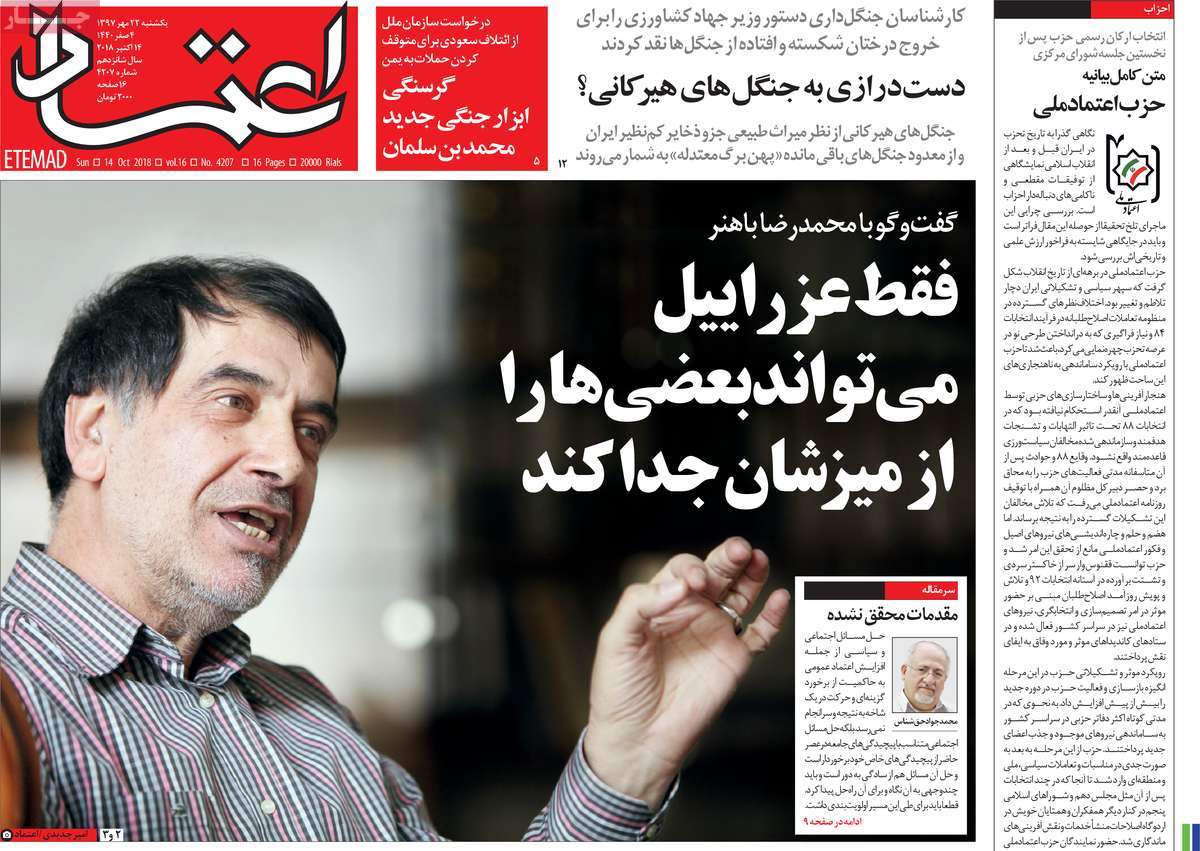
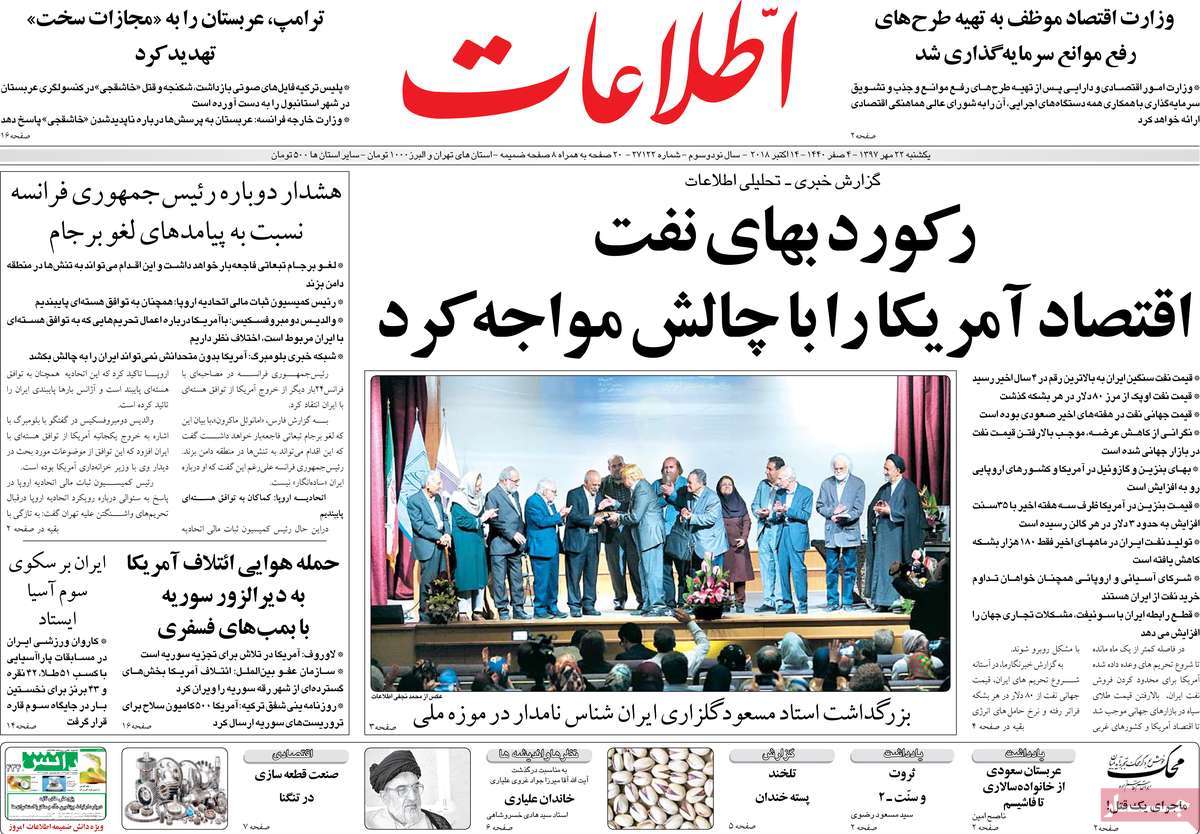
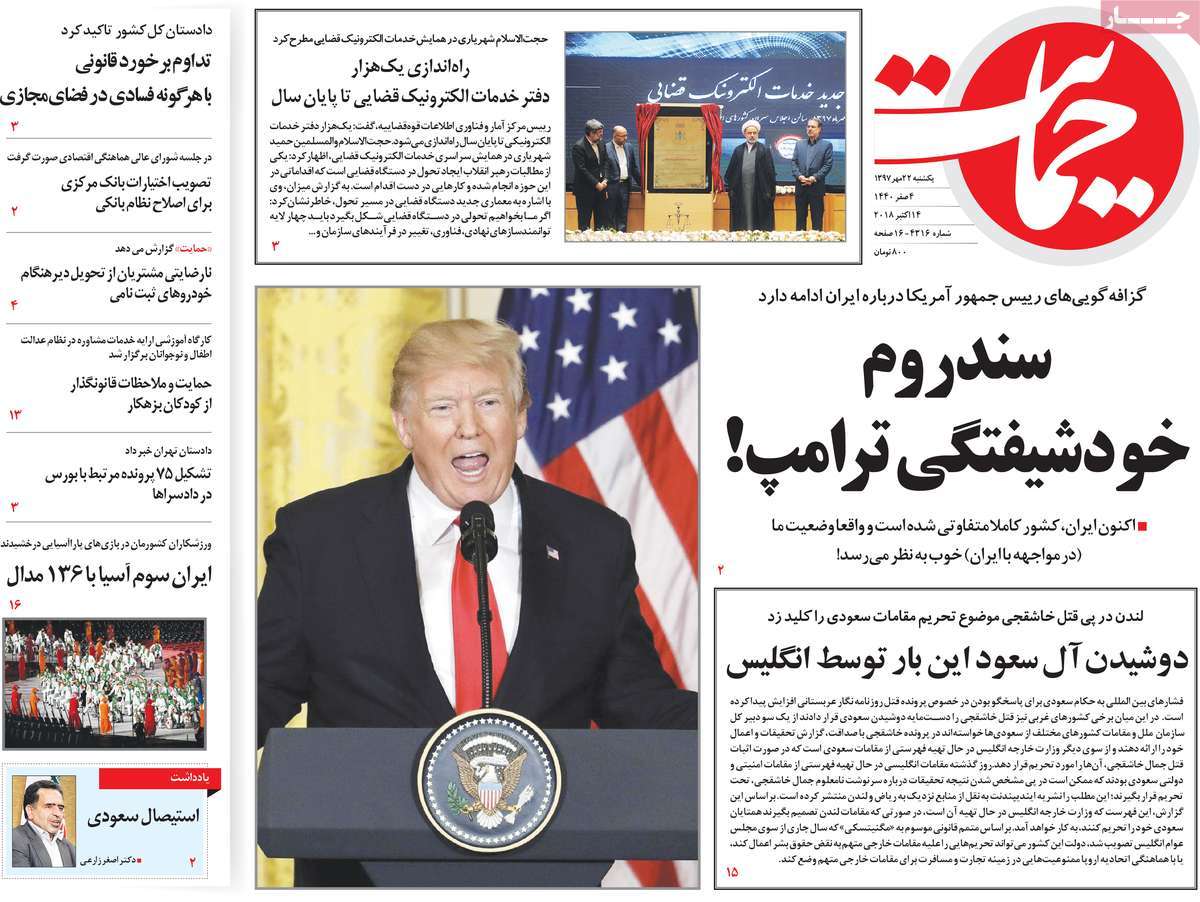
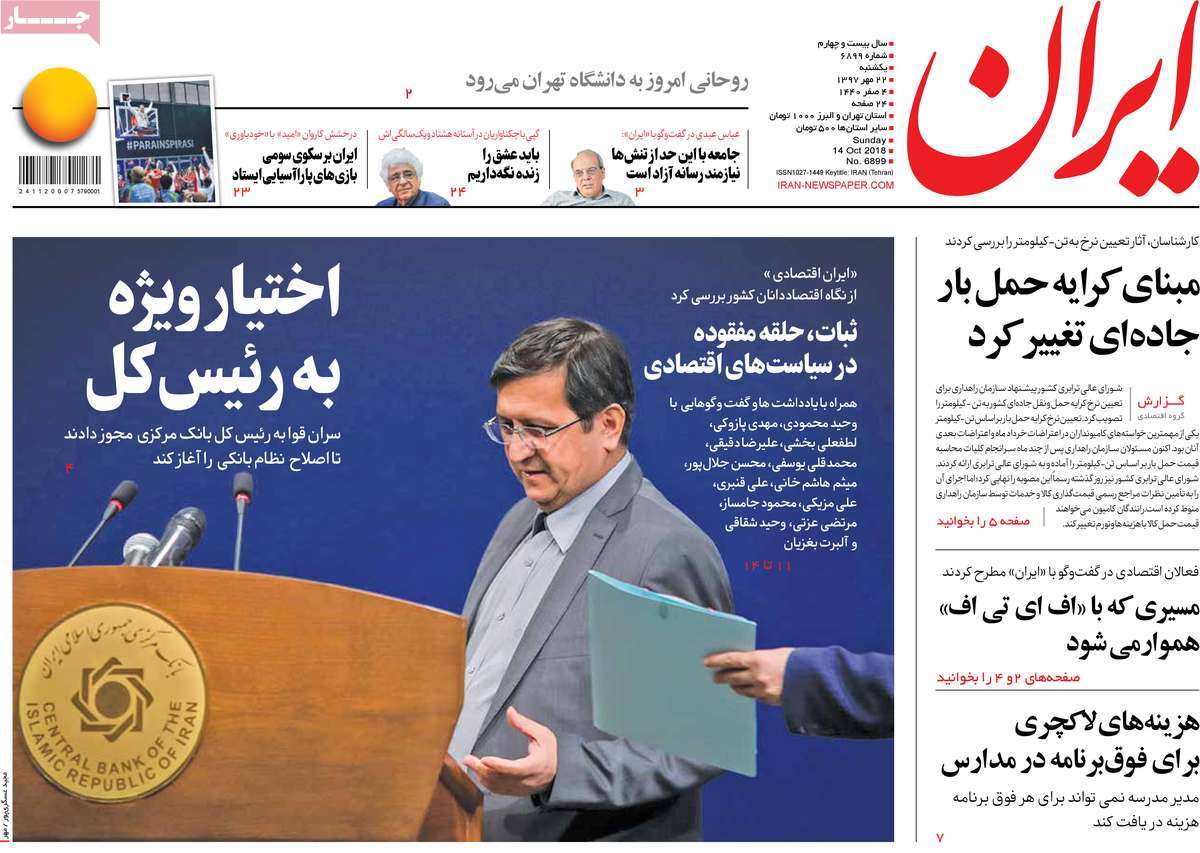
A Look at Iranian Newspaper Front Pages on October 14

A Look at Iranian Newspaper Front Pages on November 19

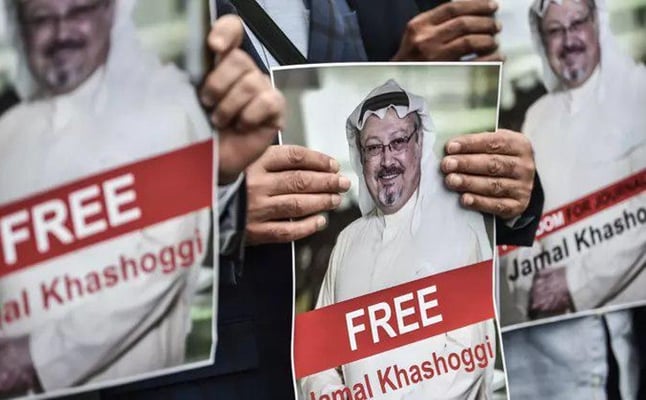
The top story in all papers today was the alleged murder of Saudi journalist Jamal Khashoggi in the Turkish city of Istanbul, which is blamed on the government of Saudi Arabia.

Also a top story was the success of Iranian athletes in the 2018 Jakarta Asian Para Games, in which the Iranians claimed the third title in final medal ranking.

The above issues, as well as many more, are highlighted in the following headlines and top stories:


Abrar:

1- UN Widely Slammed for Electing Controversial Members to Human Rights Council

2- We’re Still Committed to Iran Nuclear Deal: EU Commissioner

3- Trump: Iran Has Changed after US Withdrawal from JCPOA

4- Iran Self-Sufficient in Building Centrifuge

5- Bolton: We’ll Adopt Tough Approach to China

A Look at Iranian Newspaper Front Pages on October 14


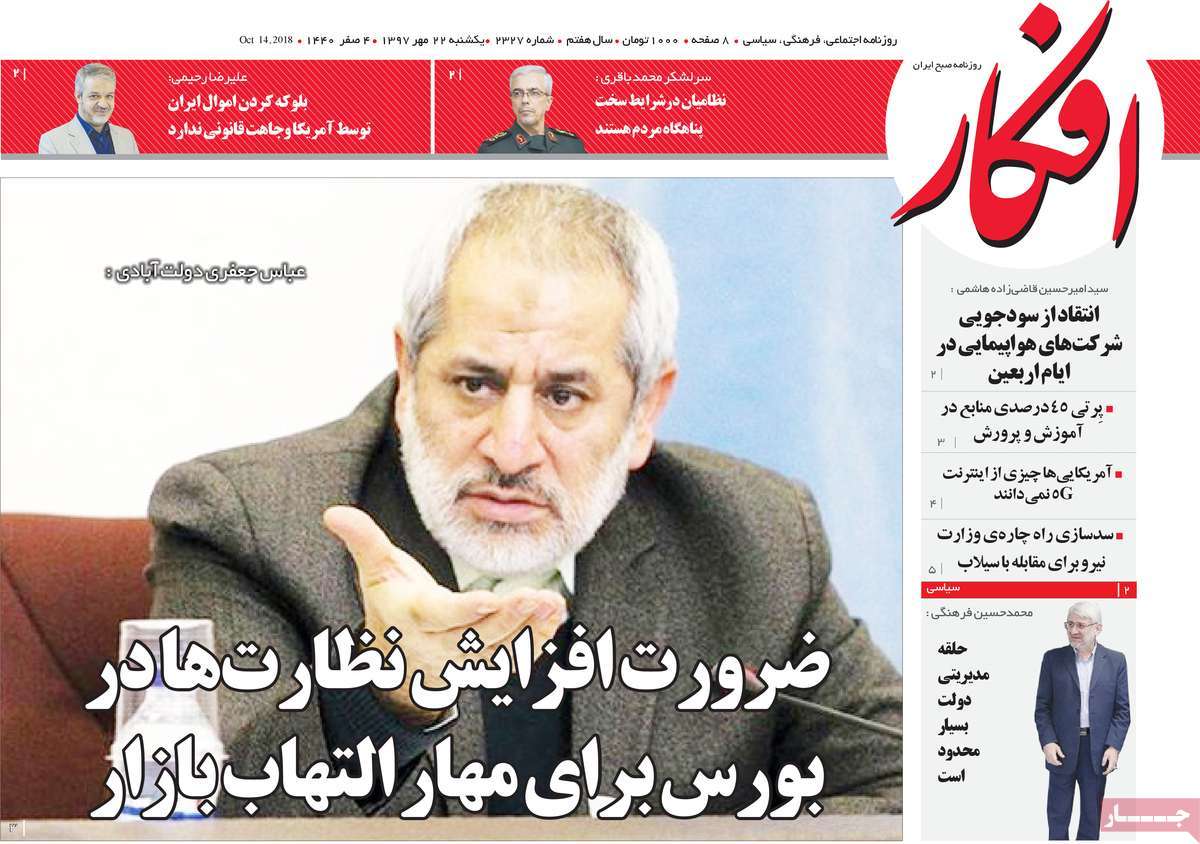
Afkar:

1- MP: US’ Freezing of Iran’s Assets Not Legally Justified

A Look at Iranian Newspaper Front Pages on October 14


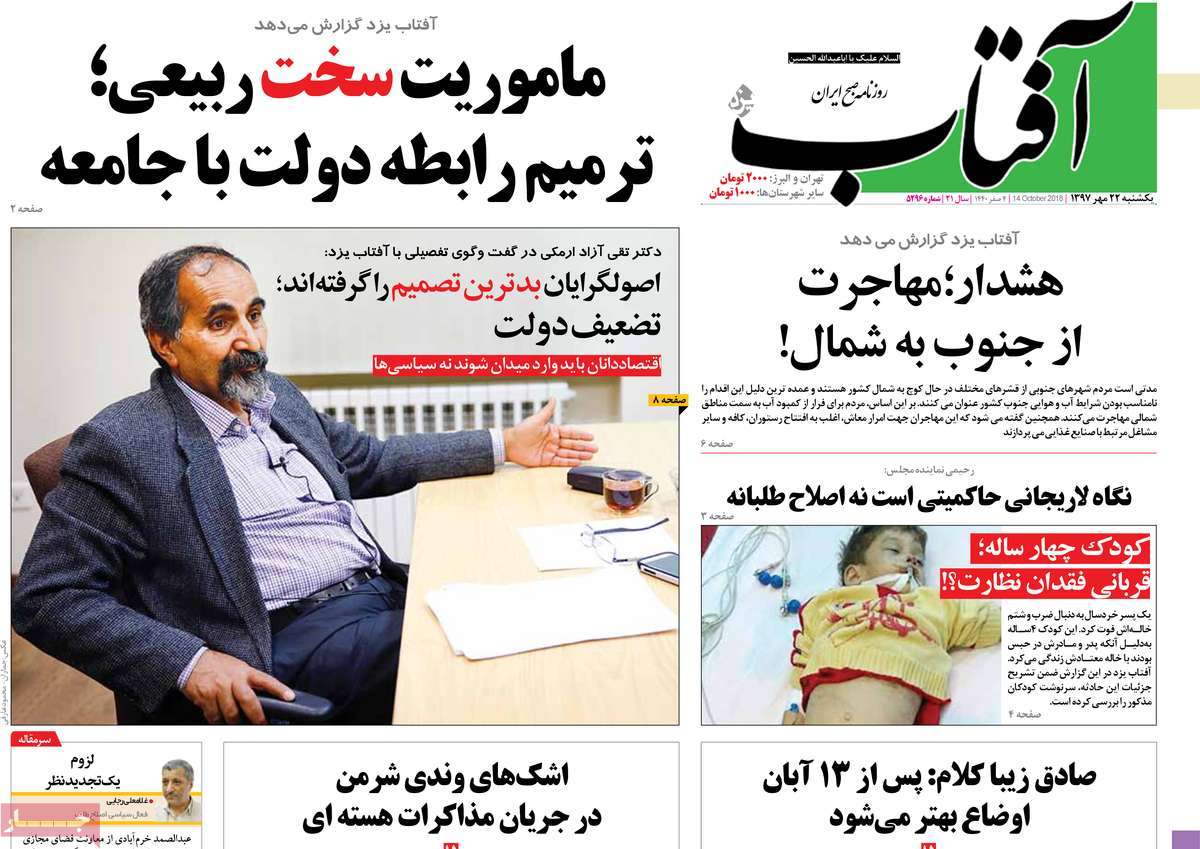
Aftab-e Yazd:

1- Wendy Sherman’s Tears in Course of Nuclear Negotiations with Iran

2- Zibakalam: Things to Get Better after November 4 [US Sanctions]

A Look at Iranian Newspaper Front Pages on October 14


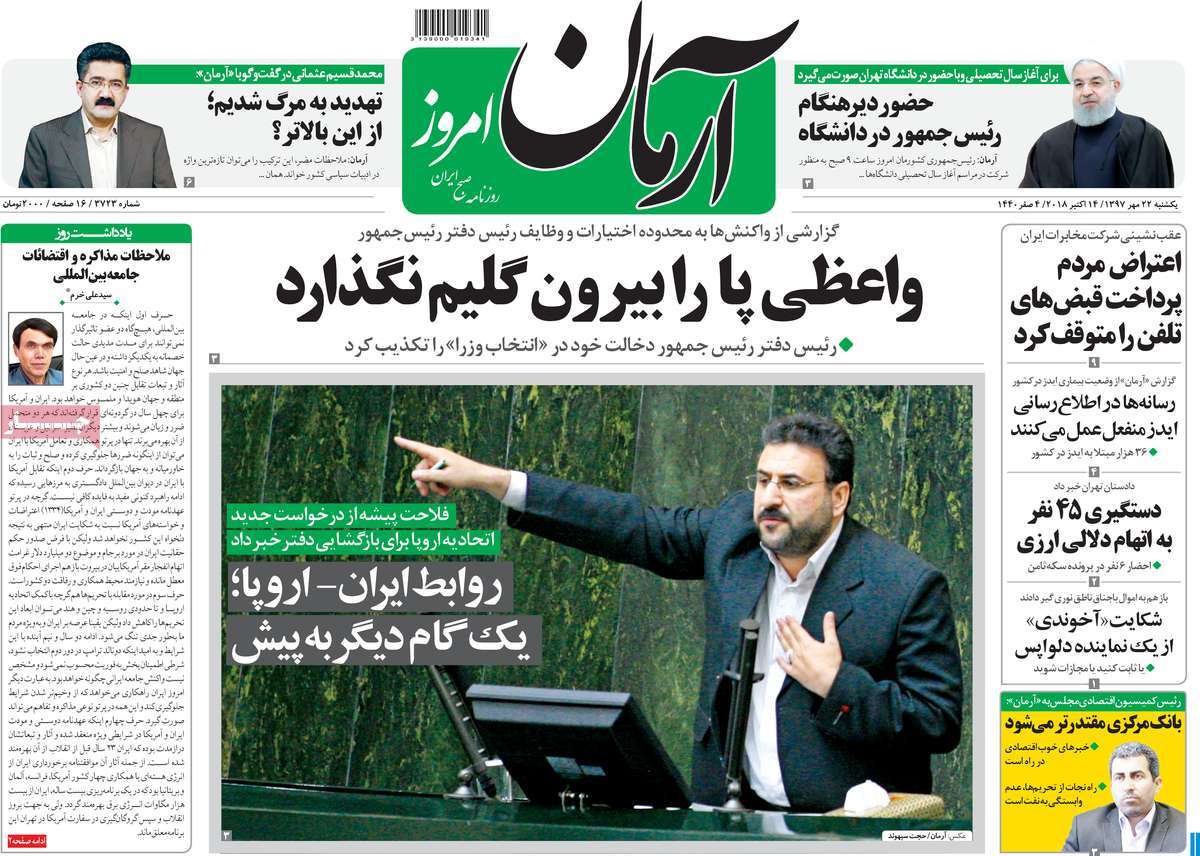
Arman-e Emrooz:

1- Rouhani’s Late Appearance at University

2- Iran’s Central Bank to Grow Stronger: Lawmaker

3- Iran-EU Ties, One Step Ahead; Senior Lawmaker Says EU Seeks to Open Office in Tehran

A Look at Iranian Newspaper Front Pages on October 14


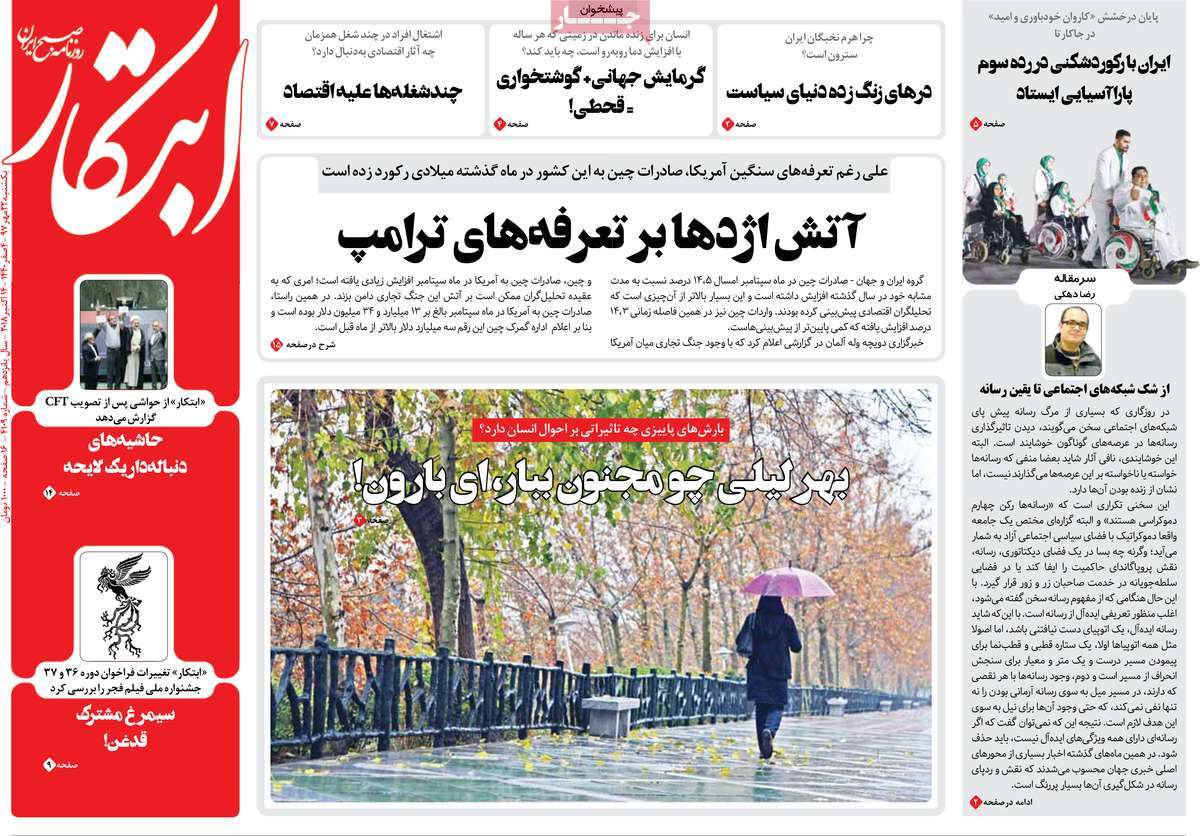
Ebtekar:

1- Iran Breaks Records, Finishes Third in 2018 Asian Para Games

2- Chinese Dragon Sets Fire on Trump’s Tariffs

  • China Breaks Records of Exporting to US despite Trump’s Heavy Tariffs

A Look at Iranian Newspaper Front Pages on October 14


Etemad:

1- Starvation, New Warfare of Bin Salman

  • UN Urges Saudi-led Coalition to Stop Attacking Yemen

A Look at Iranian Newspaper Front Pages on October 14


Ettela’at:

1- Record-Breaking Oil Prices Challenge US’ Economy

2- Trump Threatens to Severely Punish Saudi Arabia

3- French President Once Again Warns about Consequences of Cancelling JCPOA

4- US Coalition Attacks Syria’s Deir ez-Zor with Phosphorus Bombs


A Look at Iranian Newspaper Front Pages on October 14


Hemayat:

1- Trump’s Narcissism Syndrome: US President Continues Making Anti-Iran Claims

2- Iran Finishes Third in Asia with 136 Medals

3- Milking Saudi Arabia, This Time by London

  • UK Considering Sanctions against Saudi Officials over Khashoggi’s Murder

A Look at Iranian Newspaper Front Pages on October 14


Iran:

1- The Way to Be Paved by FATF

2- Iran Claims Third Title in Medal Ranking of Asian Para Games 2018

A Look at Iranian Newspaper Front Pages on October 14


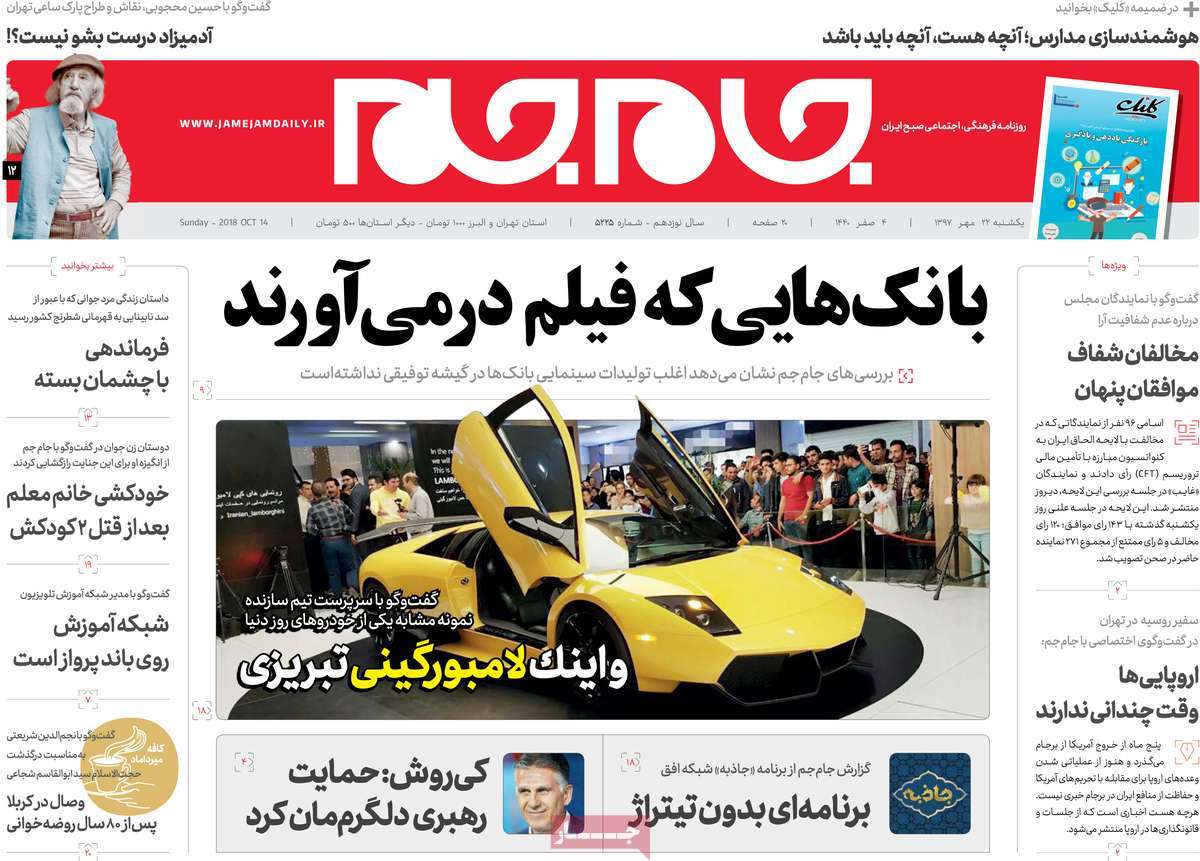
Jame Jam:

1- And Now a Lamborghini from Tabriz

  • Interview with Designer of a Copy of Modern Lamborghini Car

2- Europeans Don’t Have Much Time: Russia Ambassador to Tehran

3- Queiroz: Iran Leader’s Support Made Us More Resolute

A Look at Iranian Newspaper Front Pages on October 14


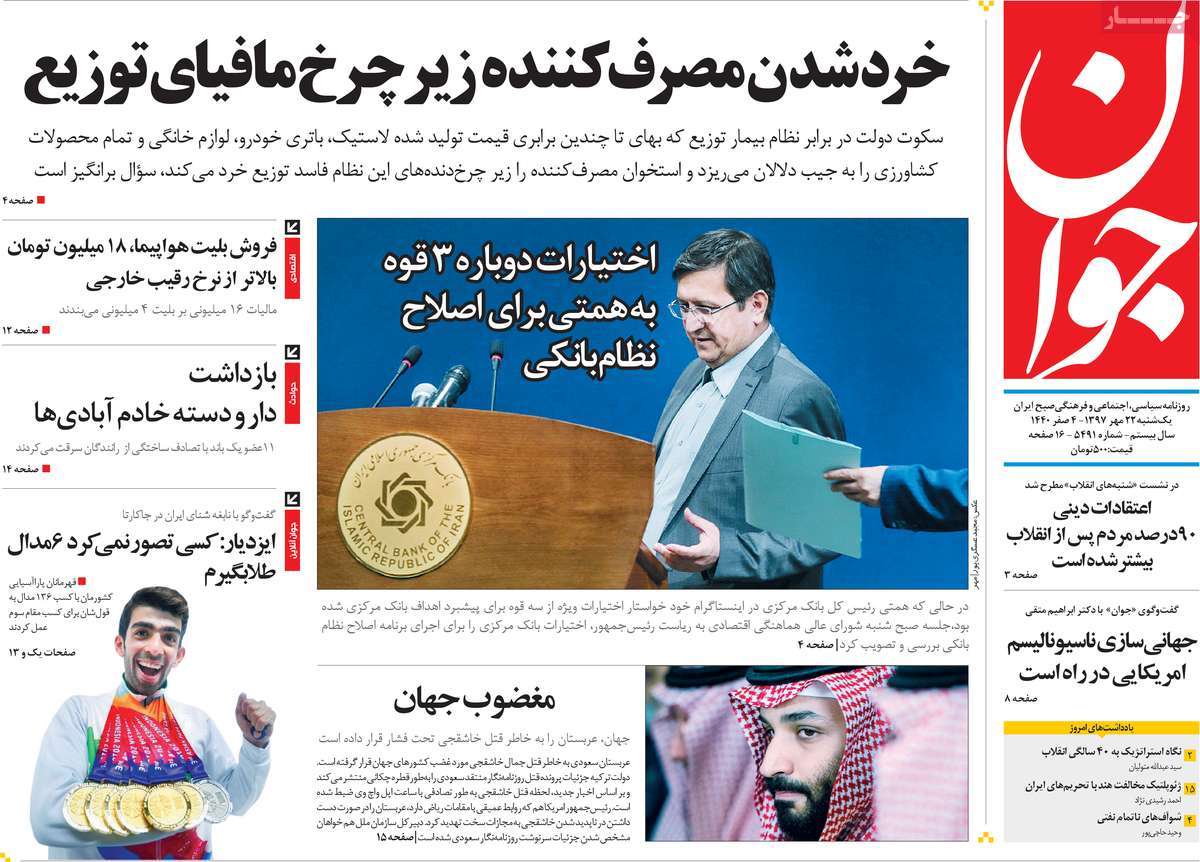
Javan:

1- Entire World Angry with Saudi Arabia: World Pressurizes Saudi over Khashoggi’s Murder

A Look at Iranian Newspaper Front Pages on October 14


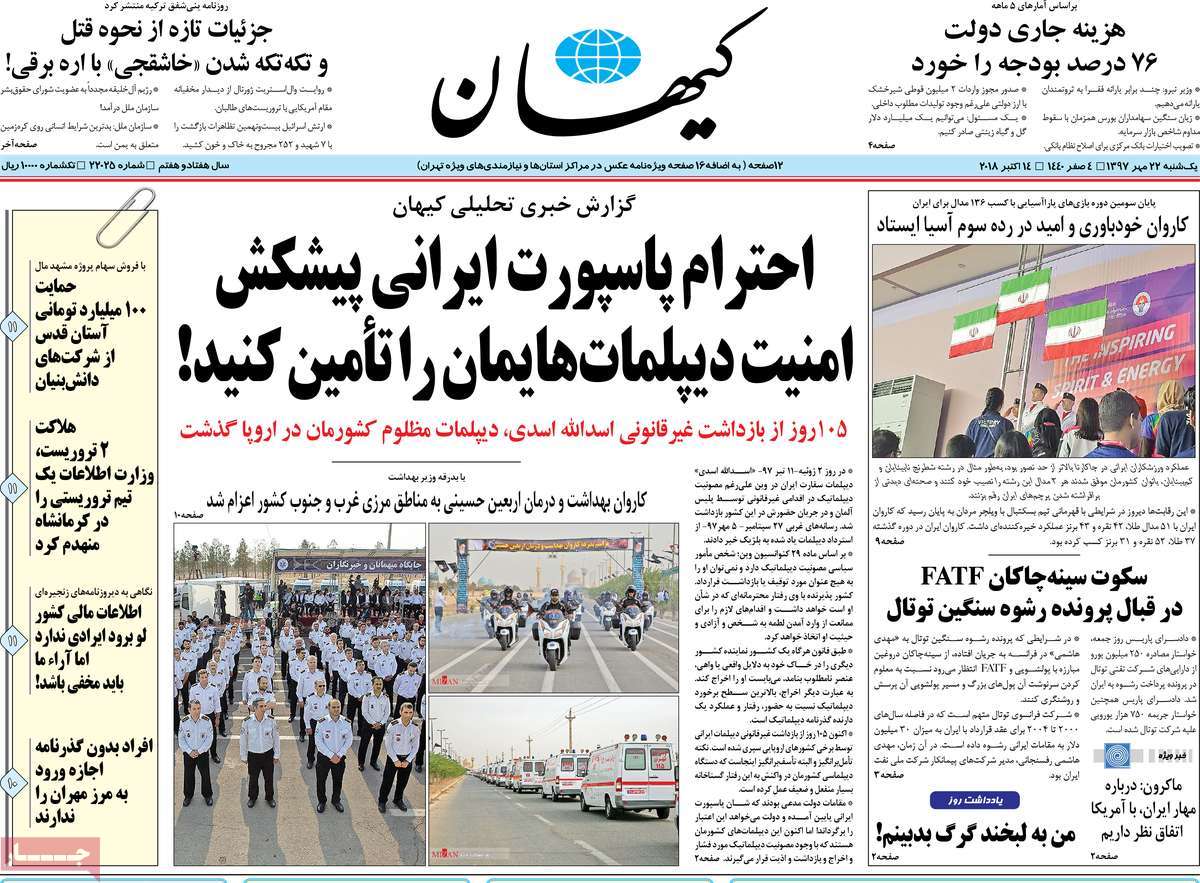
Kayhan:

1- No Need to Increase Respect for Iranian Passport; Just Provide Security for Our Diplomats!

  • Oppressed Iranian Diplomat Assadi Has Been Illegally Detained in Europe

2- New Details of the Way Khashoggi Was Murdered, Dismembered with Chainsaw

3- Two Terrorists Killed, Terror Cell Smashed by Intelligence Ministry in Kermanshah

4- Macron: We Have Consensus with US over Iran

A Look at Iranian Newspaper Front Pages on October 14


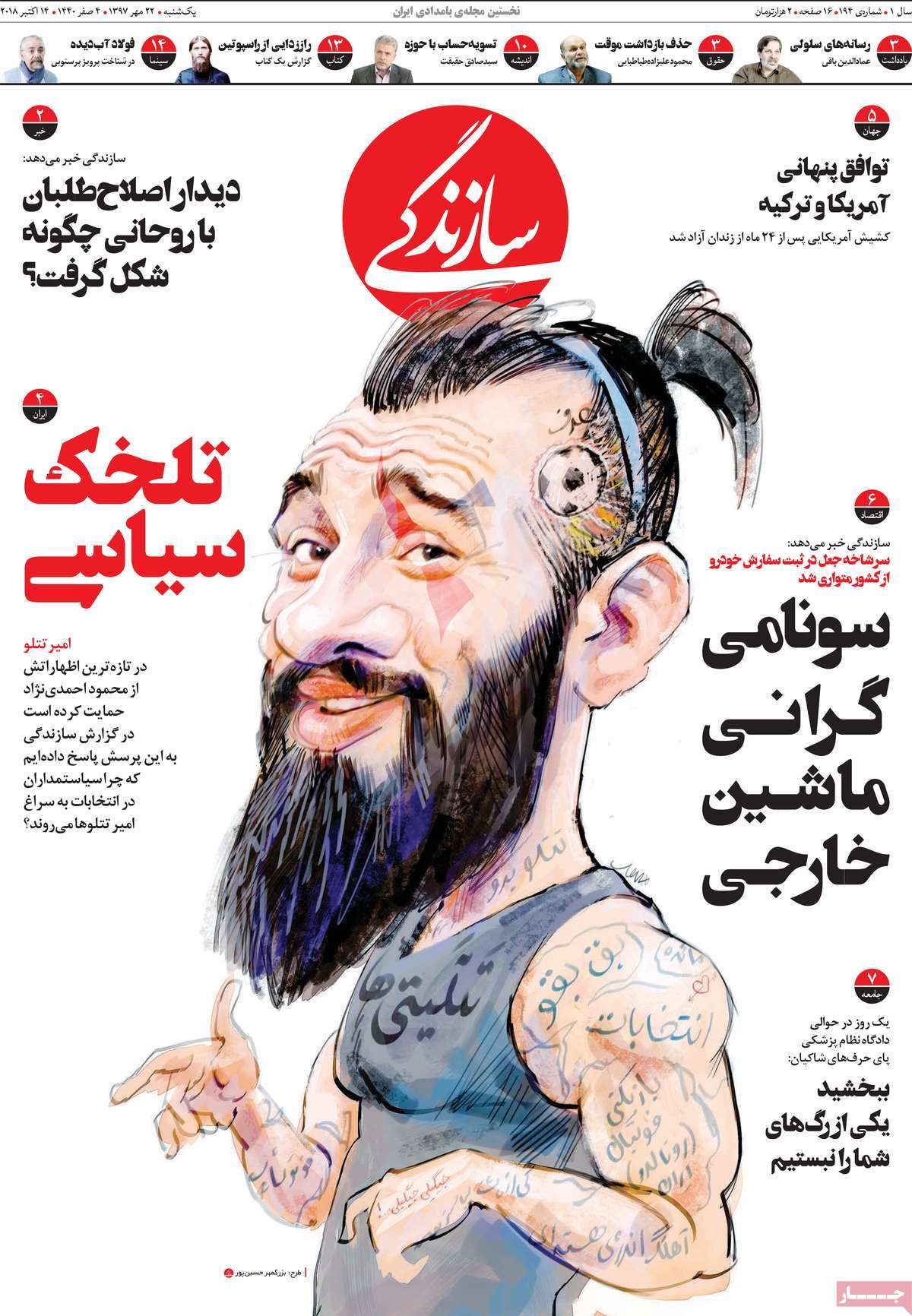
Sazandegi:

1- Secret US-Turkey Deal: American Pastor Released after 2 Years

A Look at Iranian Newspaper Front Pages on October 14


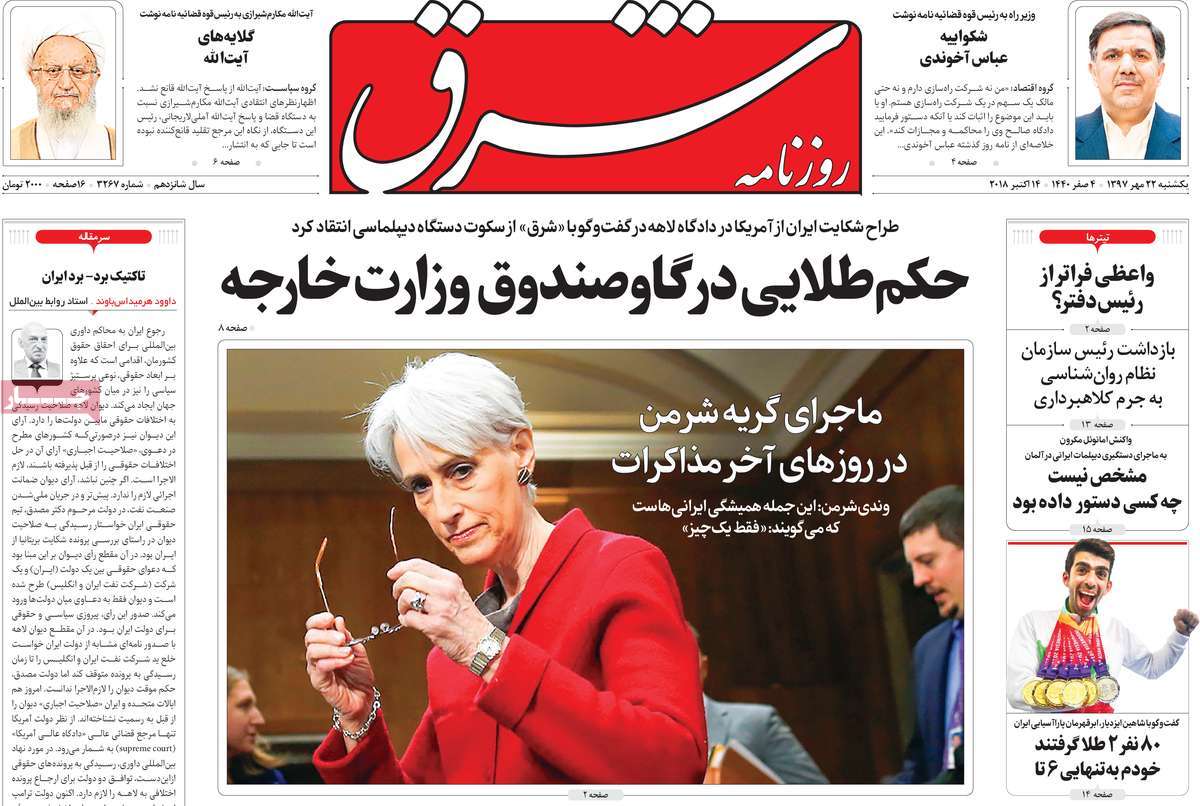
Shargh:

1- Golden Ruling in Iranian Foreign Ministry’s Safe

  • Mastermind of Iran’s Lawsuit against US at The Hague Criticizes Silence after Ruling

2- Sherman’s Tears in Last Days of Talks with Iran

  • Iranians Always Say “Just One Thing”

3- Iran’s Win-Win Tactic [Editorial]

4- Not Clear Who Ordered Arrested of Iranian Diplomat in Germany

A Look at Iranian Newspaper Front Pages on October 14


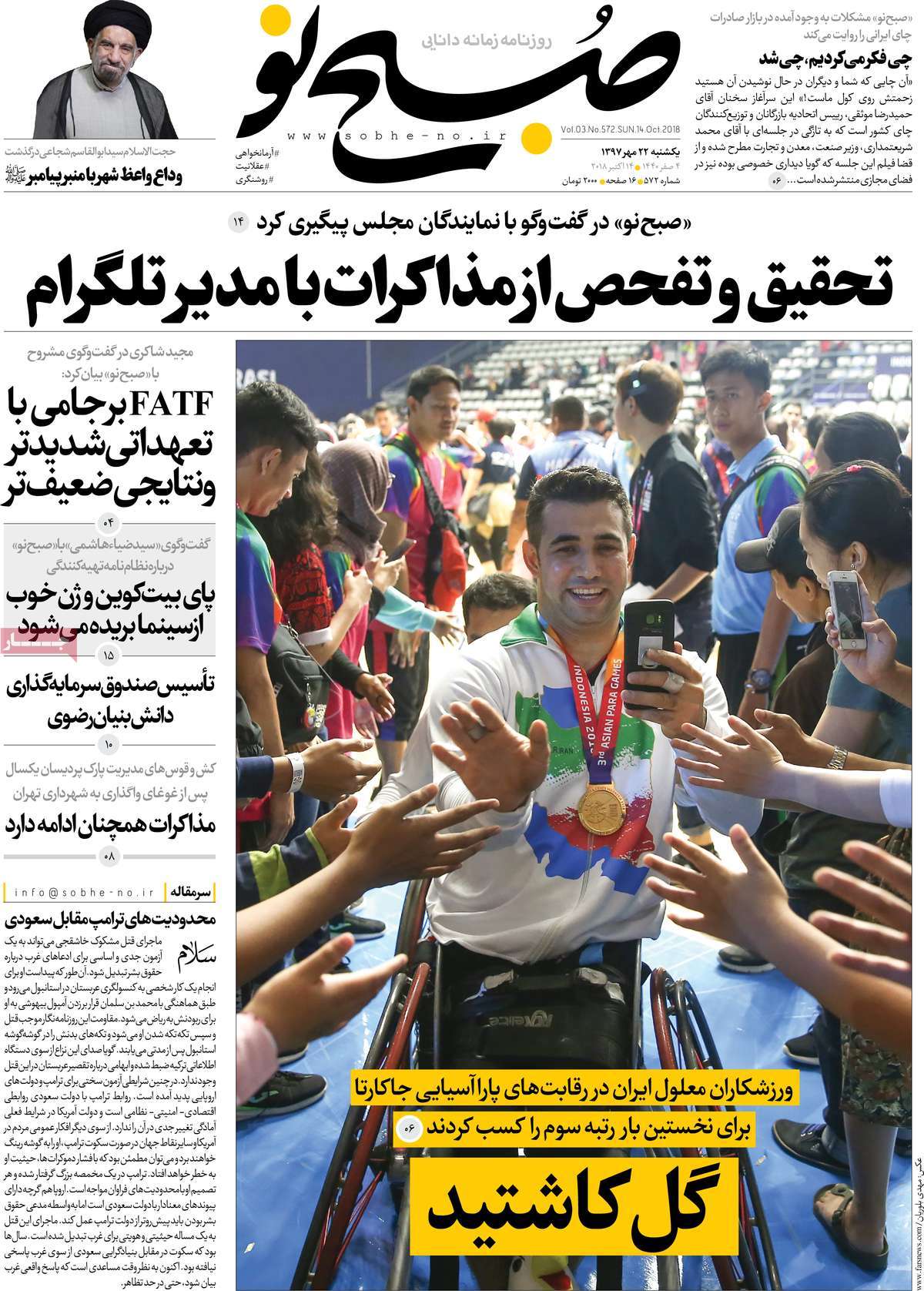
Sobh-e Now:

1- FATF, a JCPOA with Stricter Commitments, Weaker Results

2- Trump’s Limitations in Dealing with Saudi Arabia [Editorial]

A Look at Iranian Newspaper Front Pages on October 14


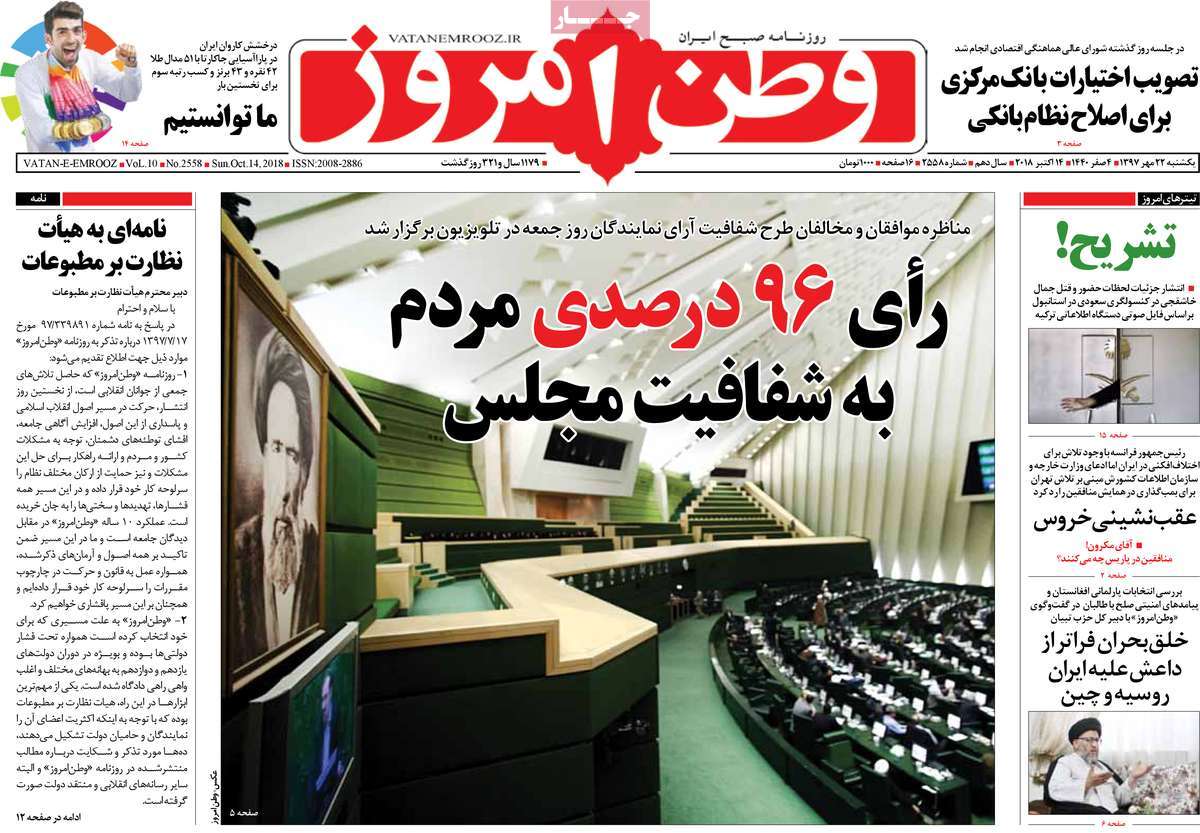
Vatan-e Emrooz:

1- Creation of a Crisis beyond ISIS against Iran, Russia, China

  • A Review of Afghanistan’s Parliamentary Votes, Outcome of Peace Talks with Taliban

A Look at Iranian Newspaper Front Pages on October 14

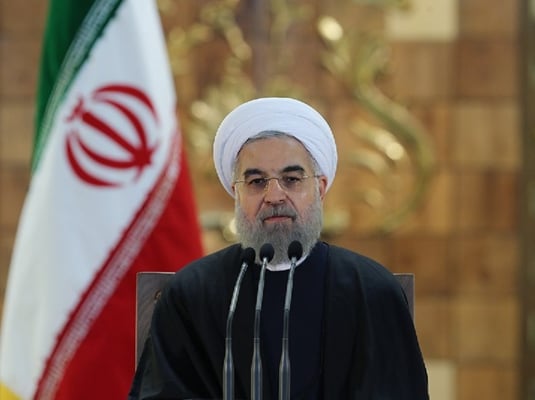
US Defeated in Standoff with Iran on Political Front: Rouhani

Speaking in a Sunday ceremony in Tehran marking the beginning of the academic year for universities, Rouhani said, “Politically speaking, Iran is the winner in this story.”

“With regards to foreign policy, Iran is the winner in this saga at the moment, and I don’t think anyone has any doubts about this issue,” he said.

President Rouhani said almost all countries have criticized Washington’s withdrawal from the Iran nuclear deal known as the Joint Comprehensive Plan of Action (JCPOA).

“Except a handful of countries, nobody in the world regards the United States’ pullout from the JCPOA was the right decision. Even those who are too cautious express regret. Those who speak more straightforwardly say the US made a mistake, and those who are even more straightforward say the US move was against laws and regulations,” said the president.

Rouhani also referred to US President Donald Trump’s anti-Iran position at the United Nations.

“You saw the recent meeting of the UN General Assembly and the speeches made there. Mr. Trump even chaired the UN Security Council meeting in order to deal a blow to Iran and get confirmation for his policies. But what response did he get? All 14 other Security Council members hailed the JCPOA,” he said.

The president further touched upon Washington’s grudge against Iran.

“During the past 40 years, no team at the US government has been more spiteful to Iran than the incumbent US government,” he said.

“Currently, the worst individuals have assembled at the White House,” he said.

President Rouhani also referred to the psychological warfare launched by the US against Iran.

“They began their work with a war of nerves, and their medium-term objective is an economic war. Their third objective is [to target] the [Iranian] system’s efficiency, and their final objective is to delegitimize the system,” he noted.

The president highlighted that the Iranian nation will thwart all these plots through unity and solidarity.

Elsewhere in his remarks, the president touched upon Europe’s trade cooperation with Iran.

“Today, under the United States’ unfair laws, the fate of European firms is such that if they stop cooperation with us, they will be fined by the European Court, and if they continue their cooperation as agreed, they will be fined by the US, and such a thing has been unprecedented in the history of Europe-US relations,” said Rouhani.

The president further reiterated that Iranian people do have economic problems, saying the government has undertaken to provide people’s basic necessities and urgent commodities at reasonable prices.

He said the first priority of the country is to solve economic problems.

“We should settle these problems with calm and further hope,” he said.

President Rouhani also highlighted universities’ key role in promoting national culture as well as training students to be knowledgeable, responsible and skillful.

The president also urged universities to marry theory and practice and not settle for theoretical lessons alone.

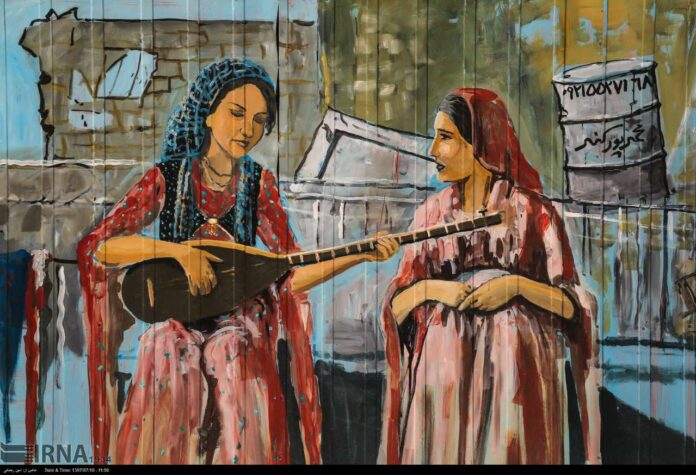
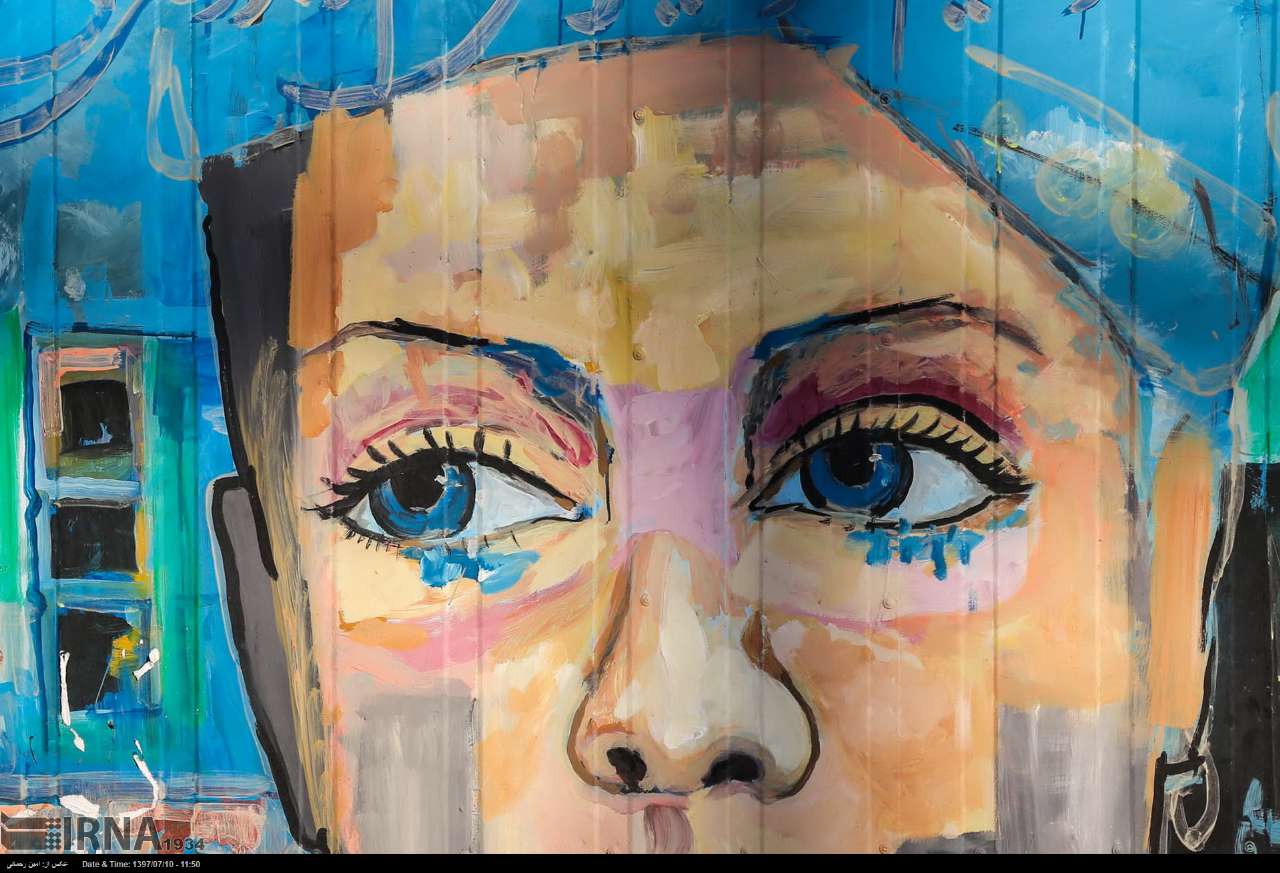
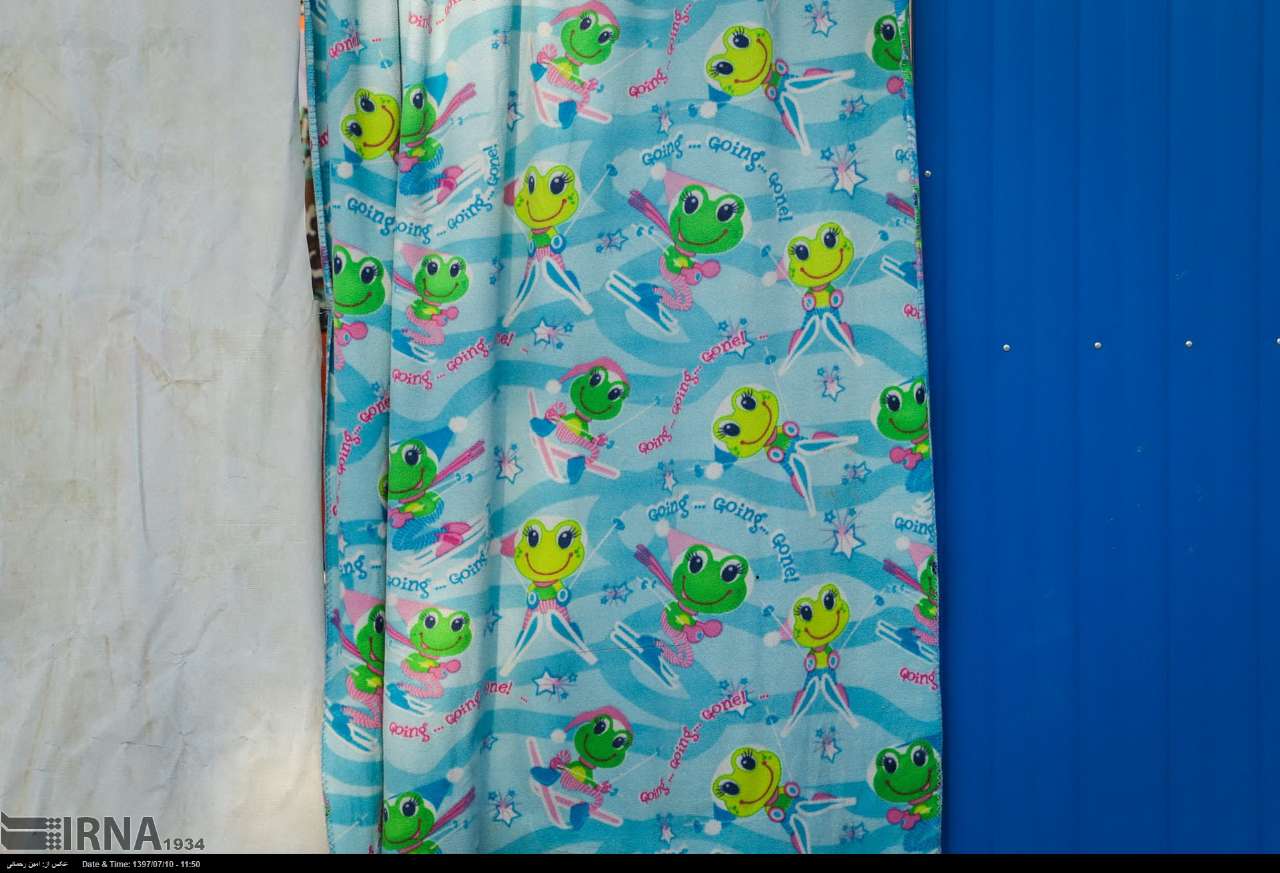
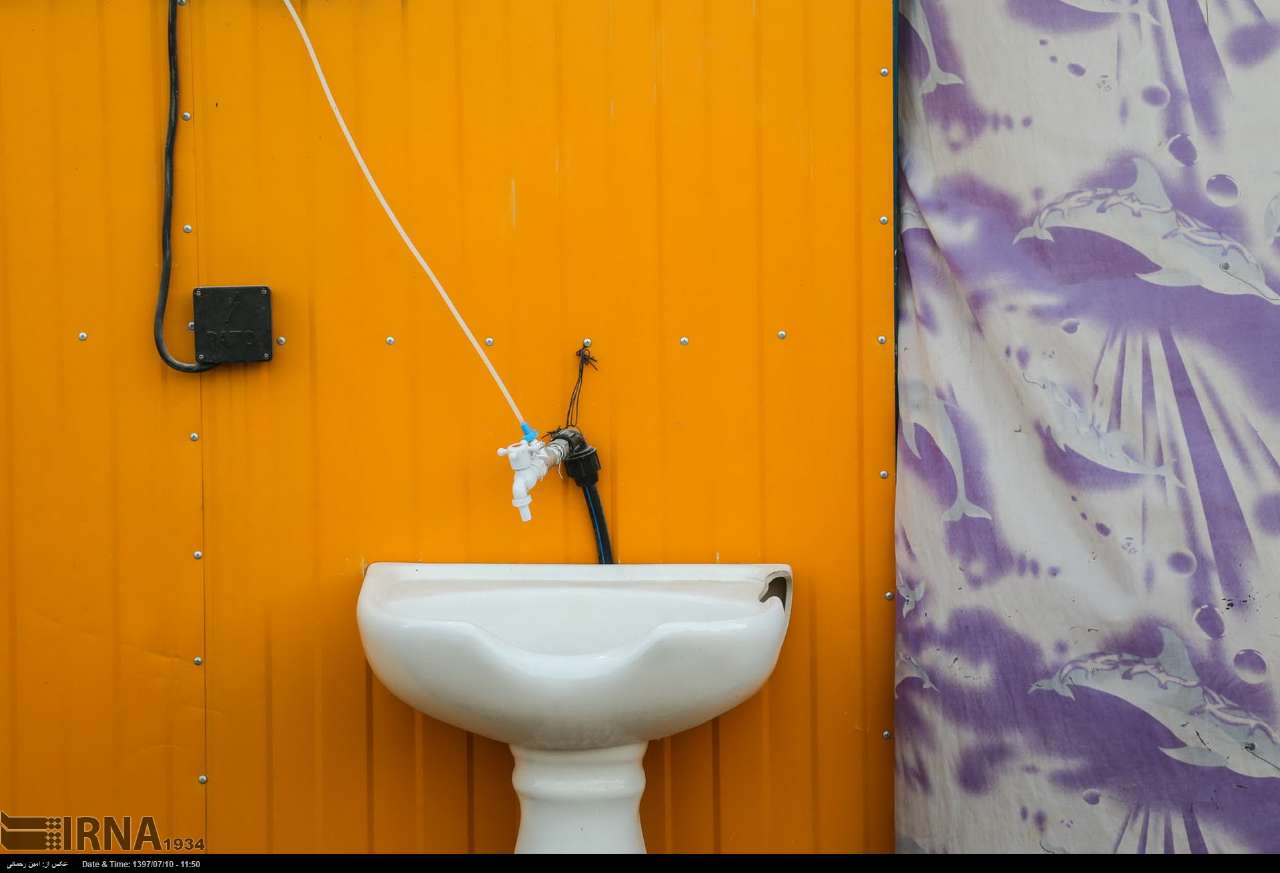
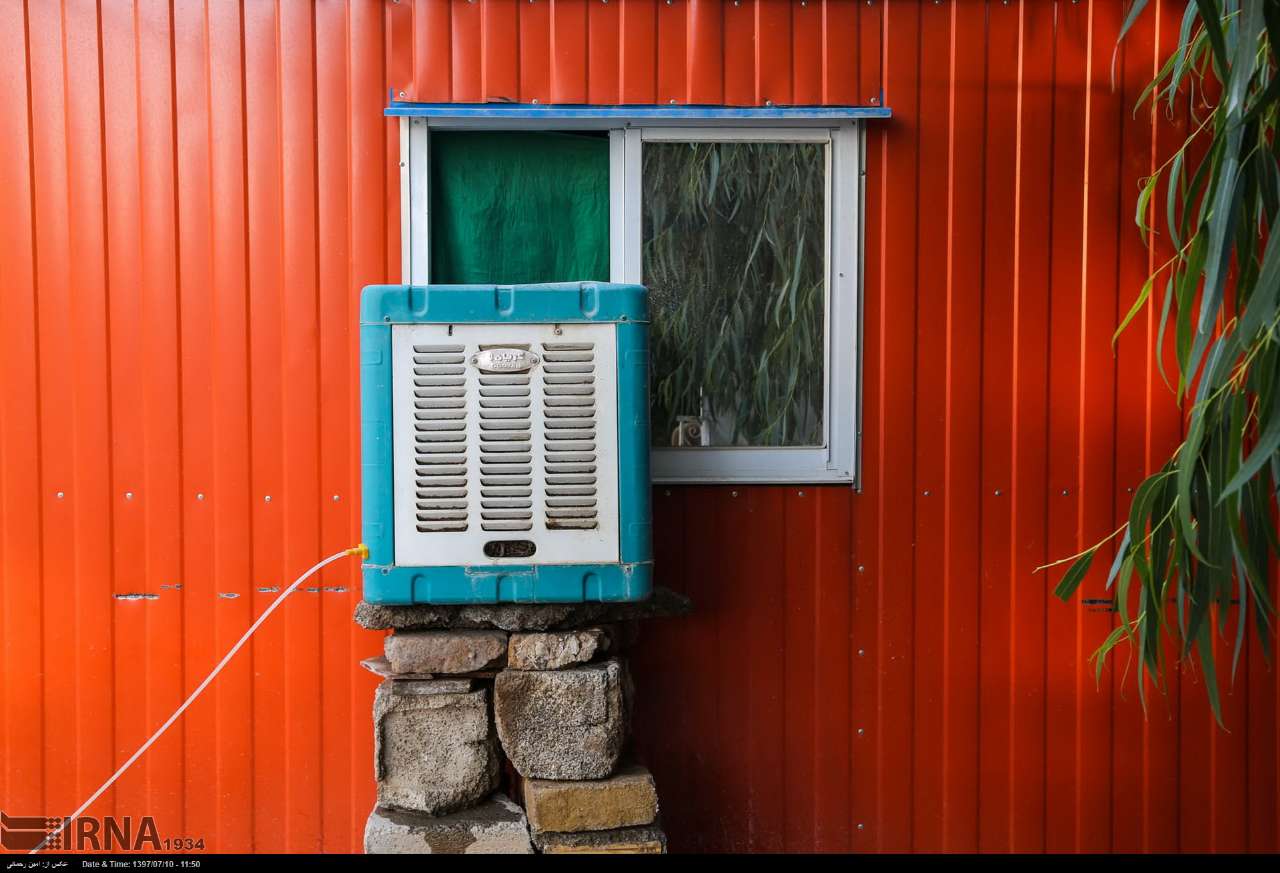
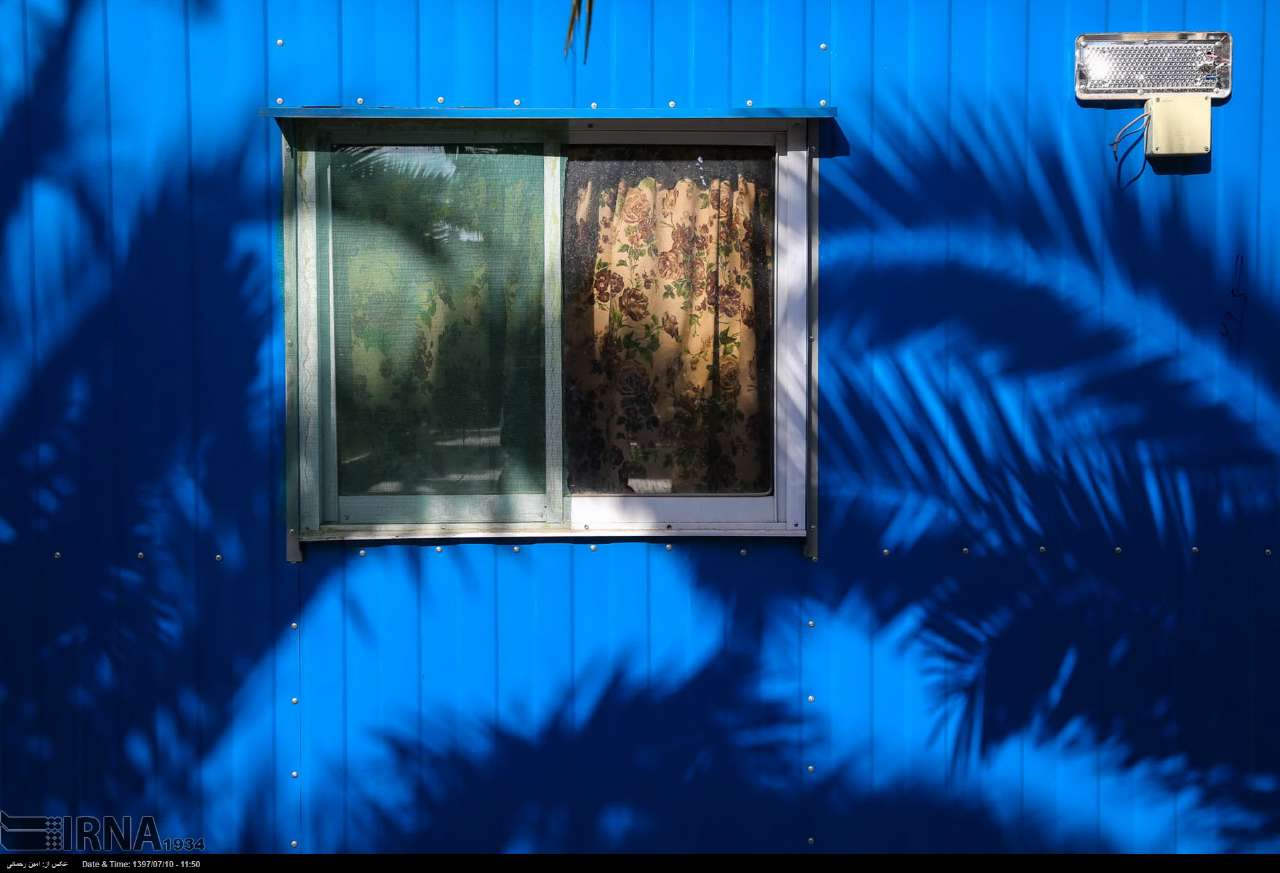
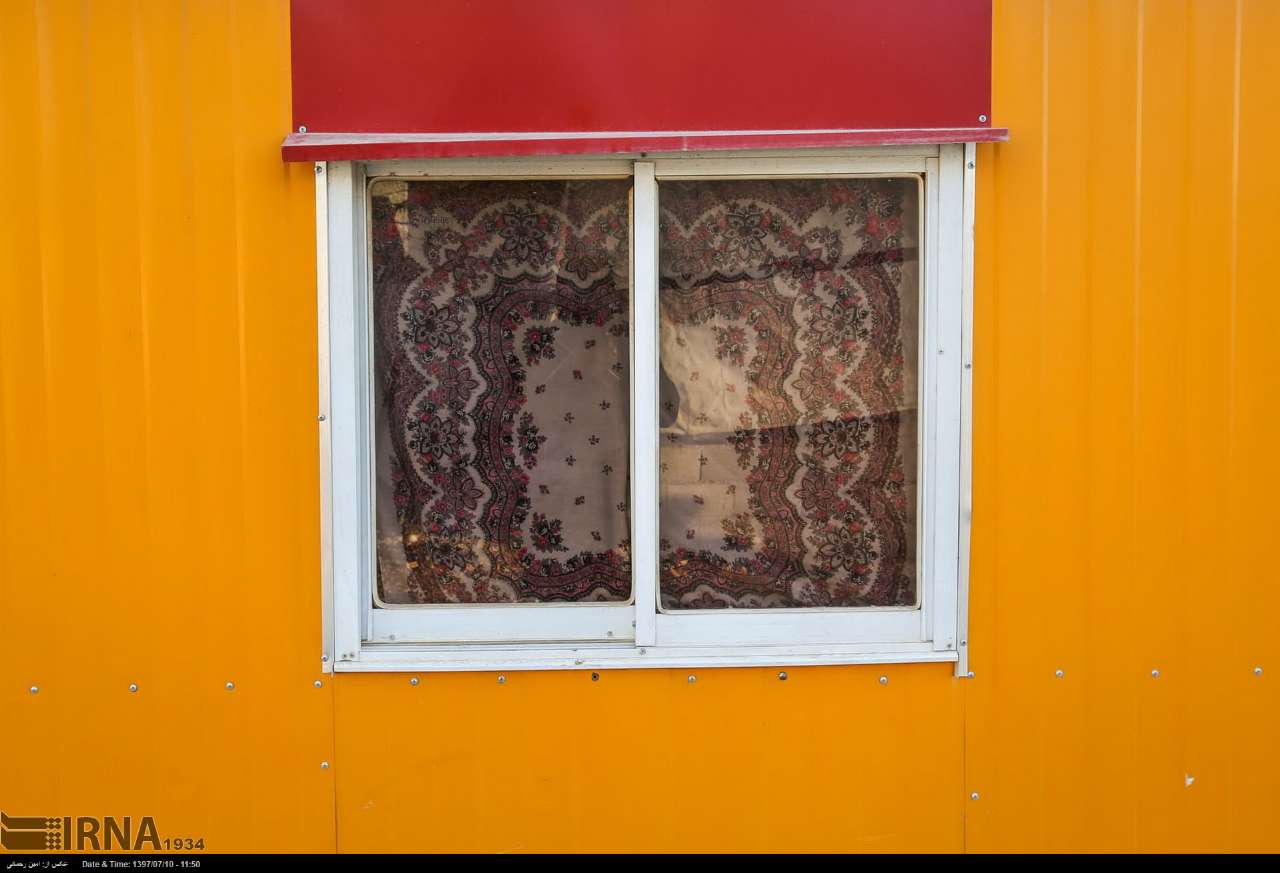
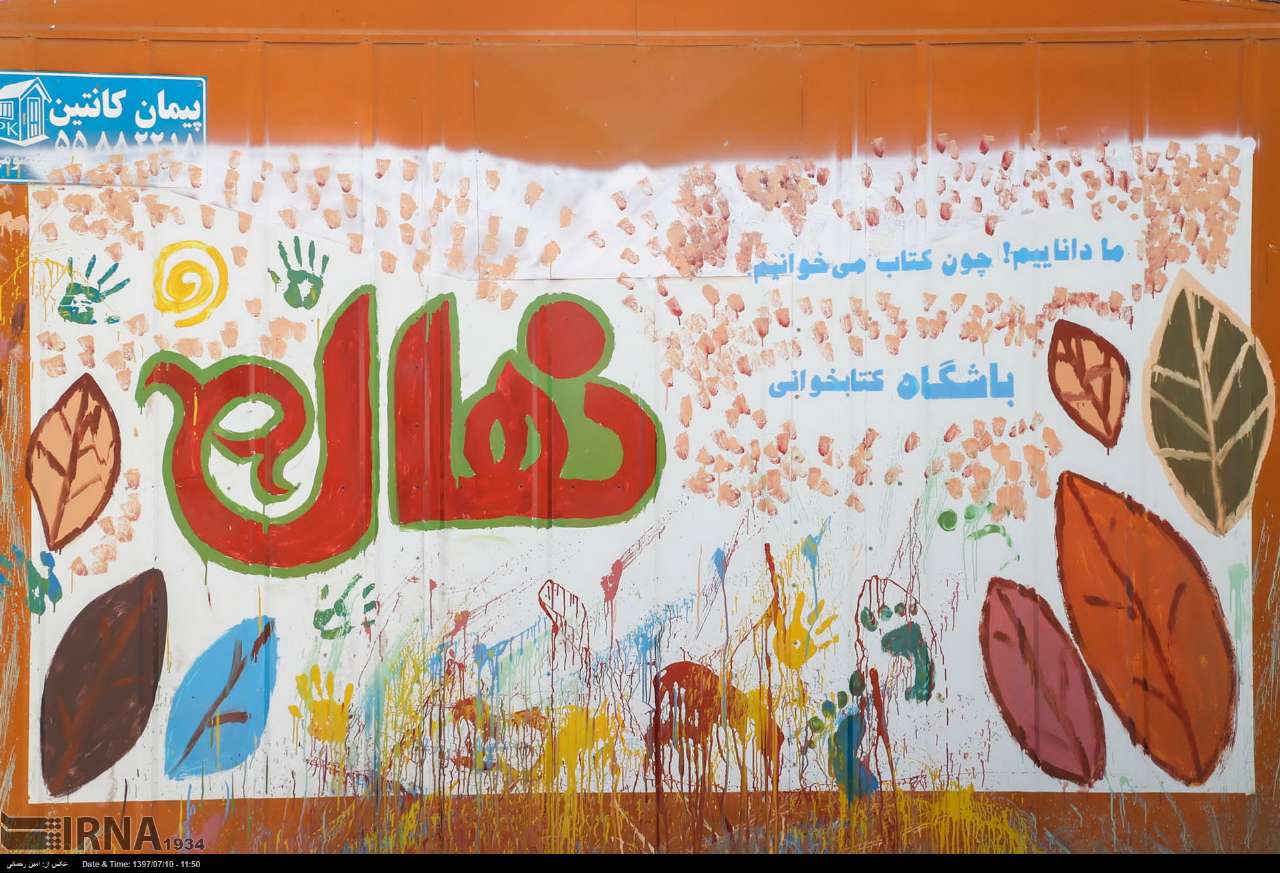
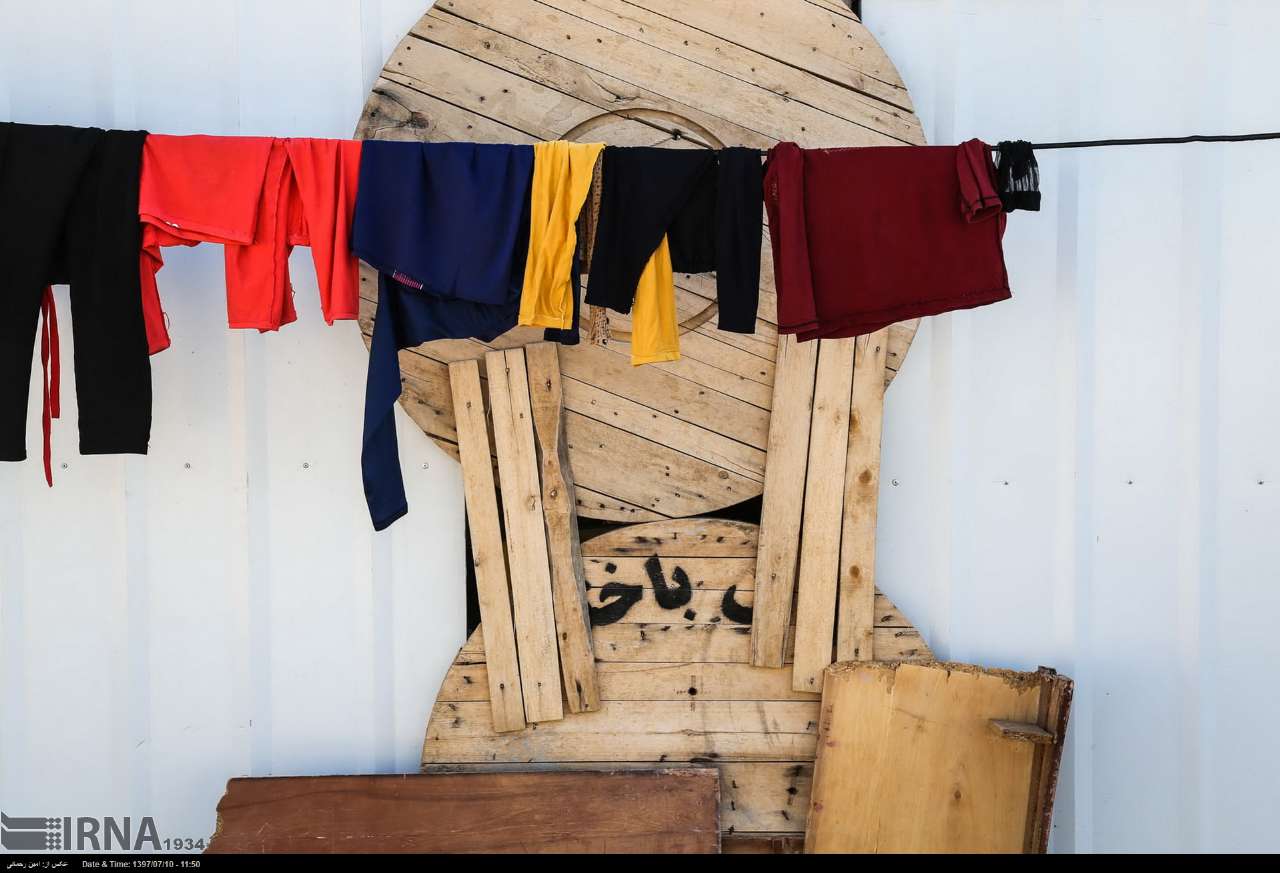
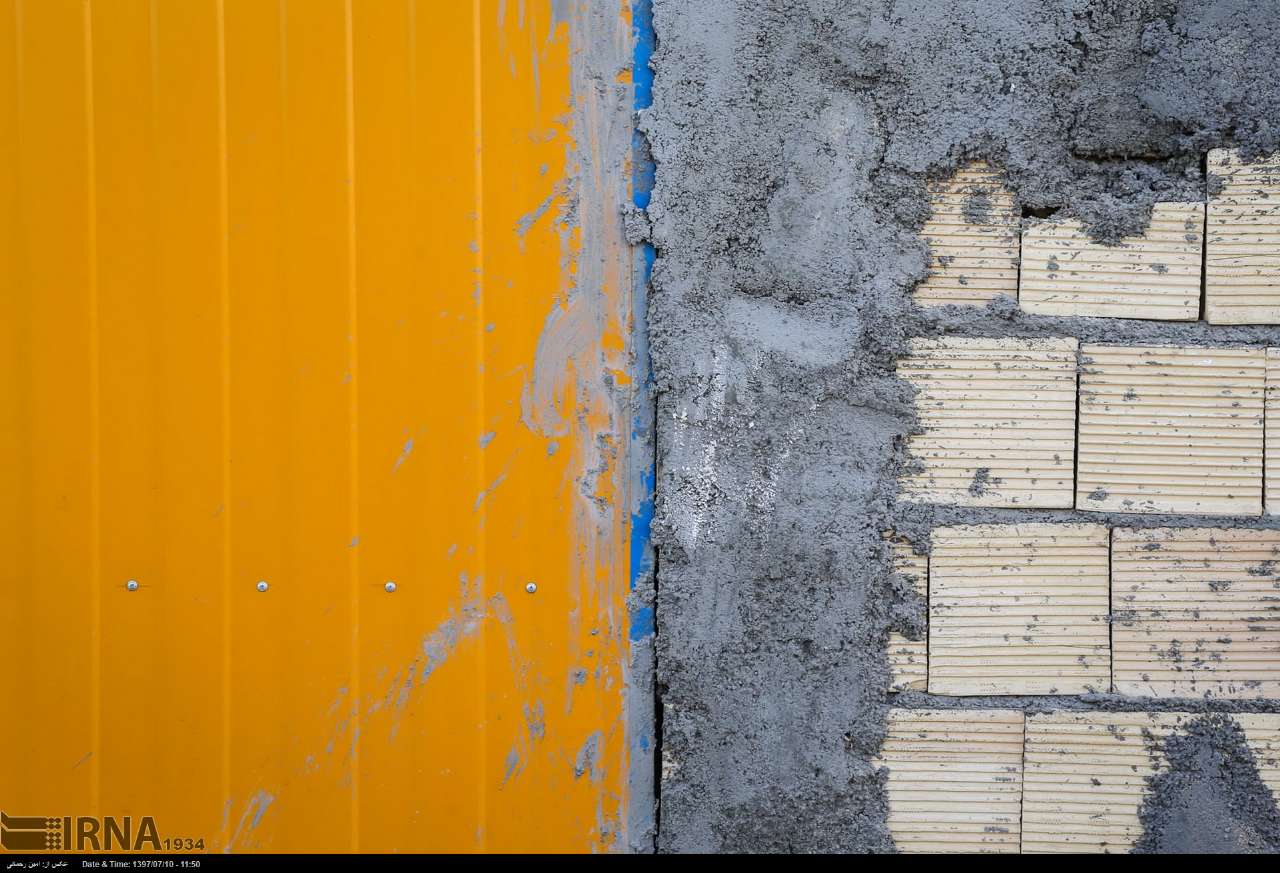
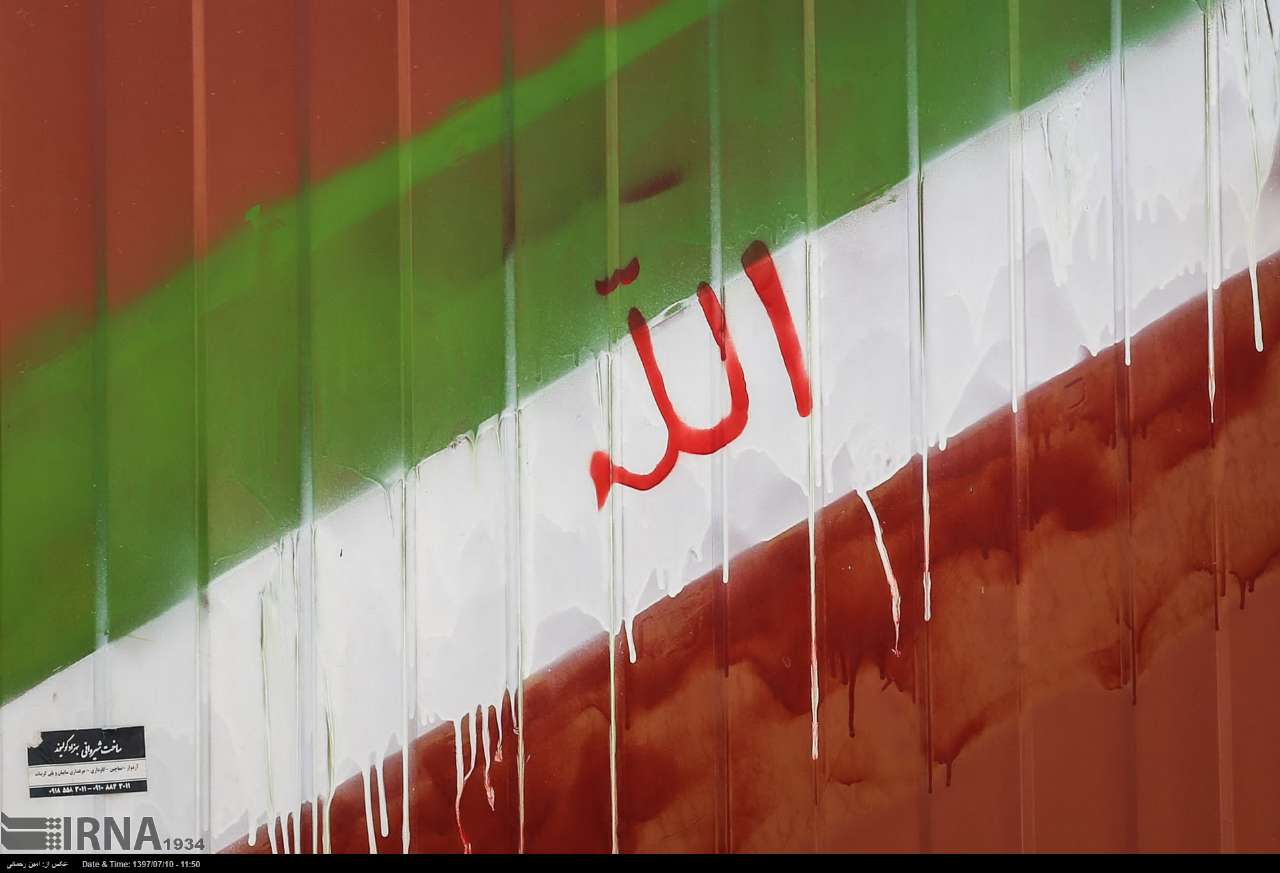
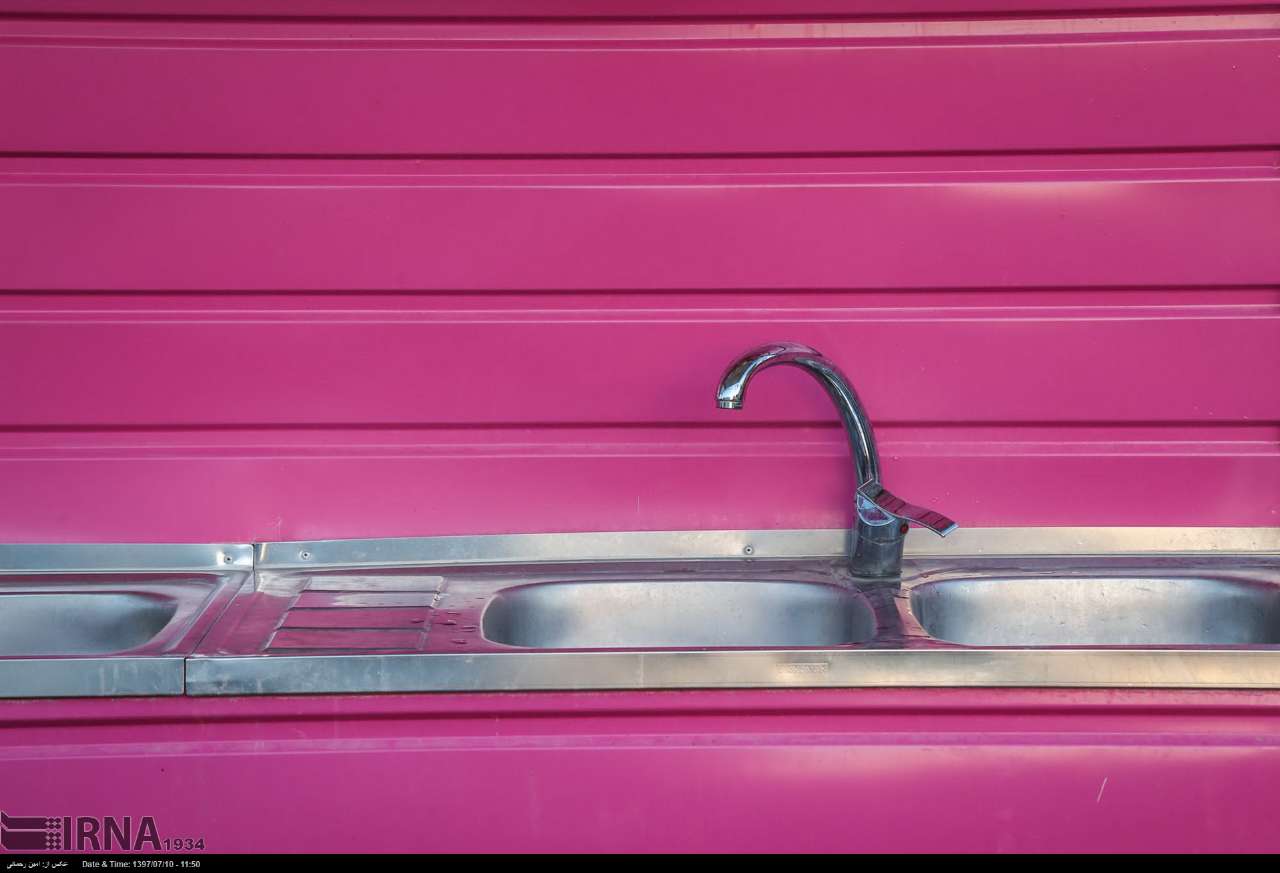
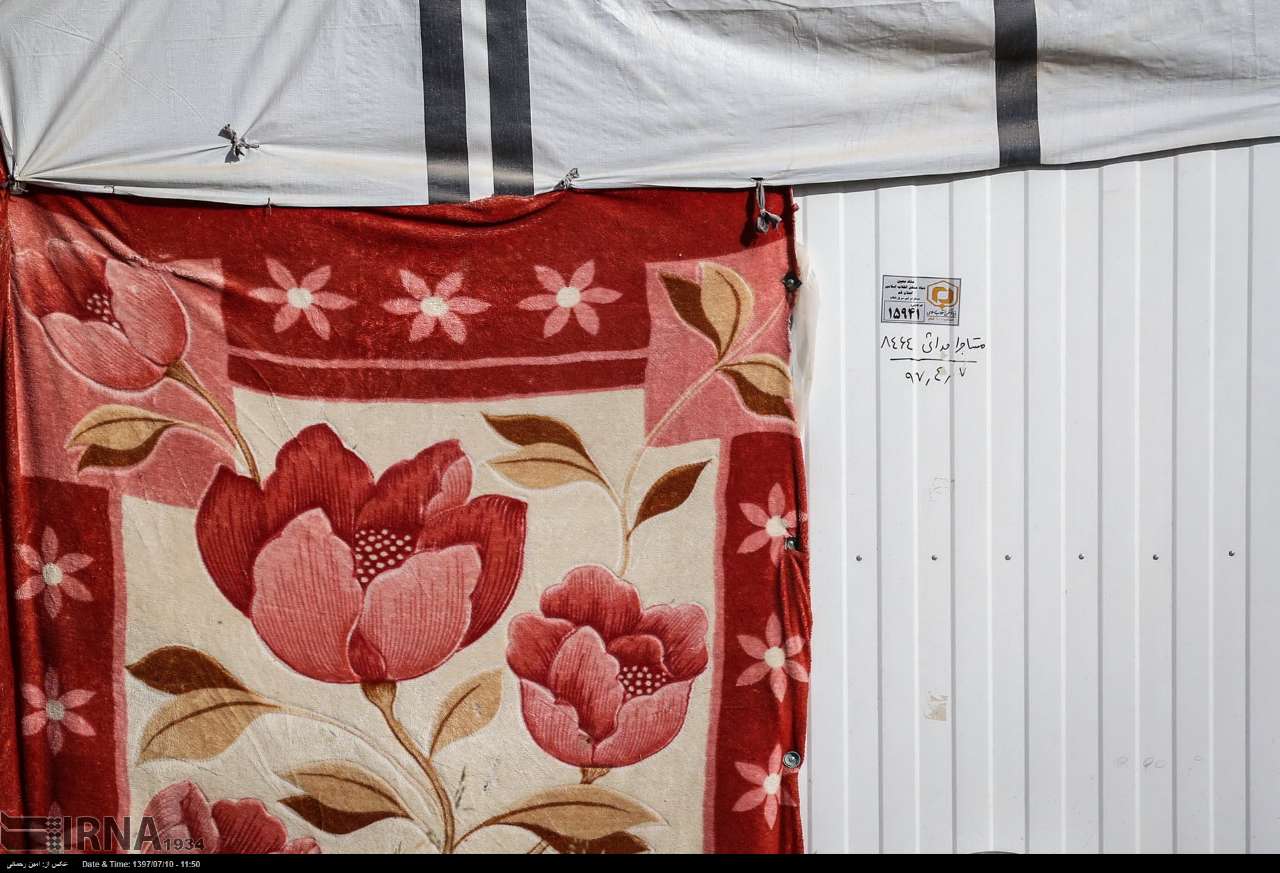
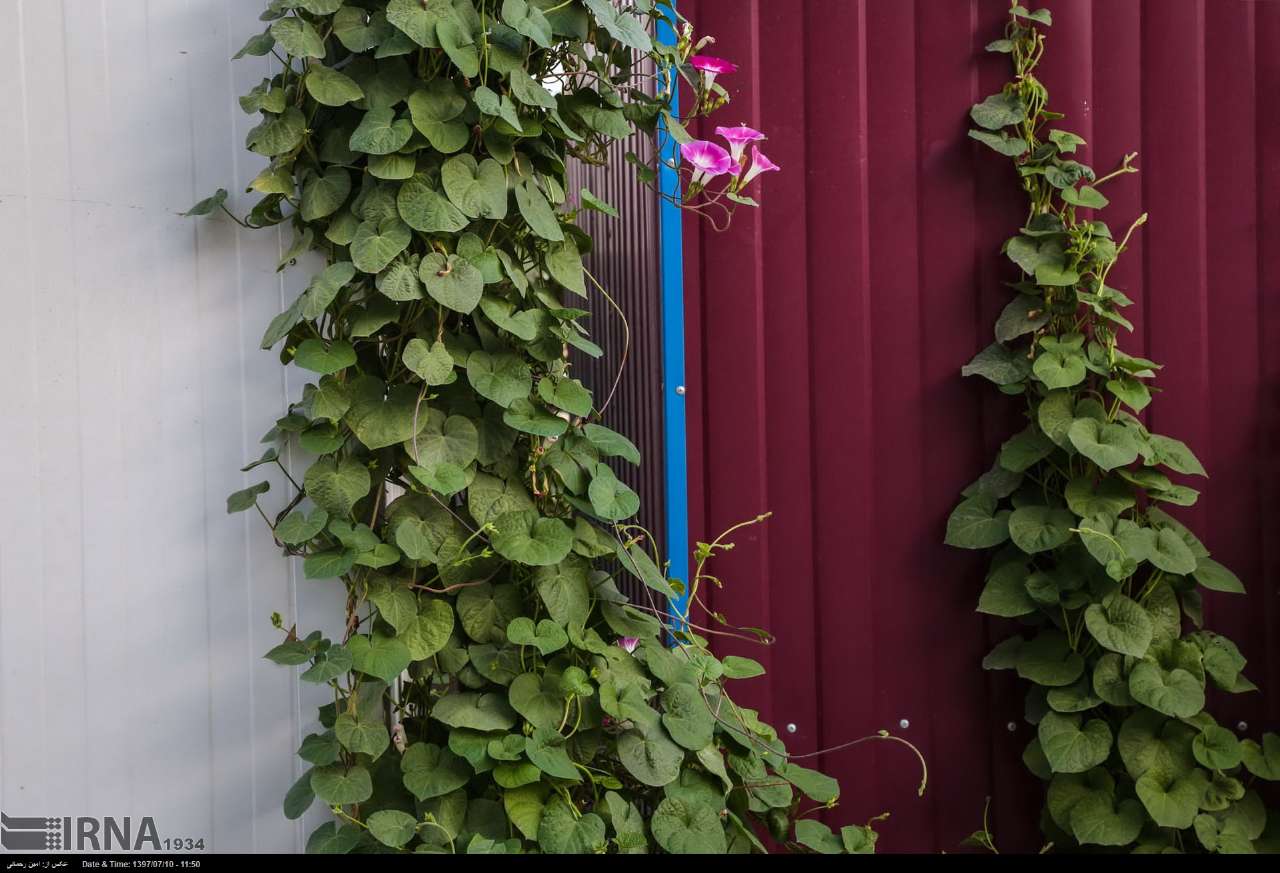
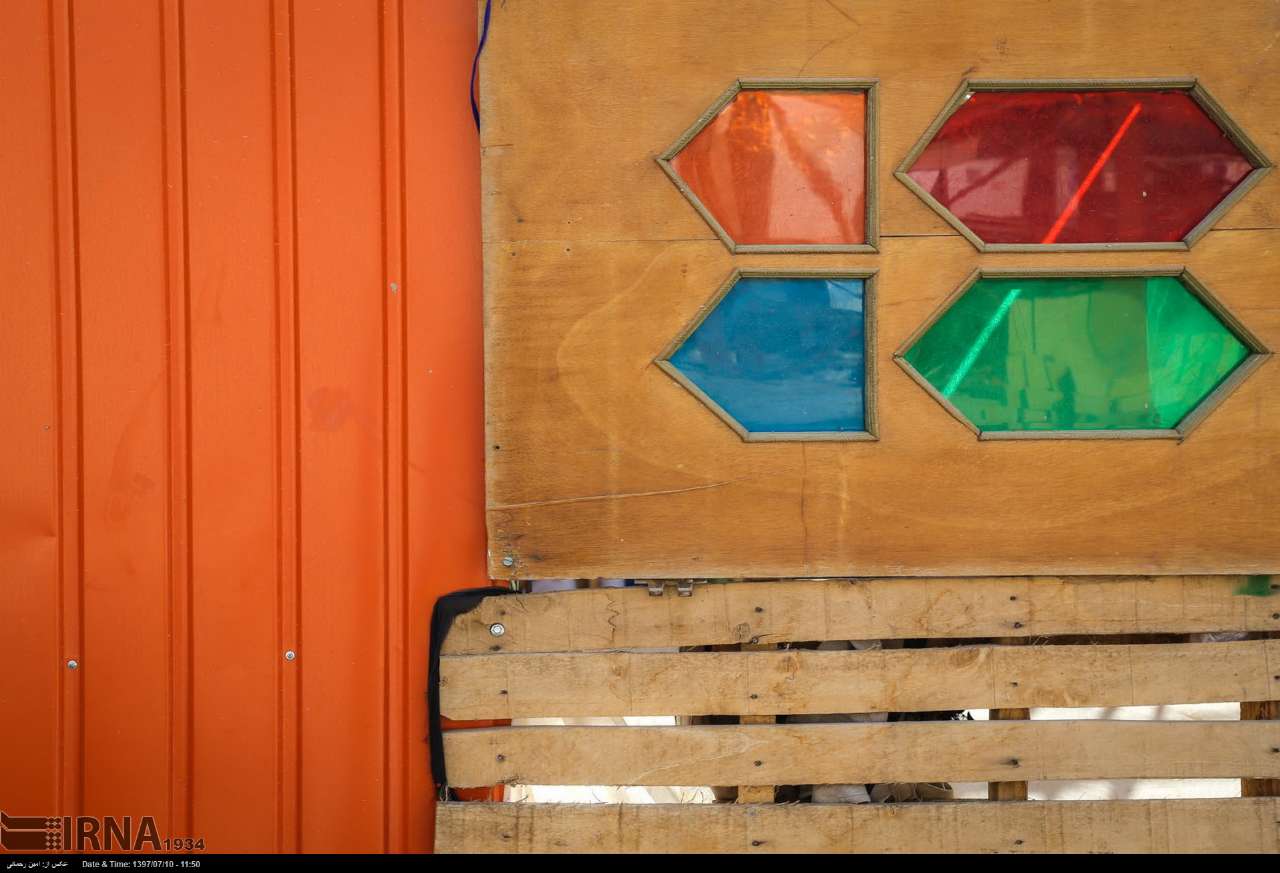
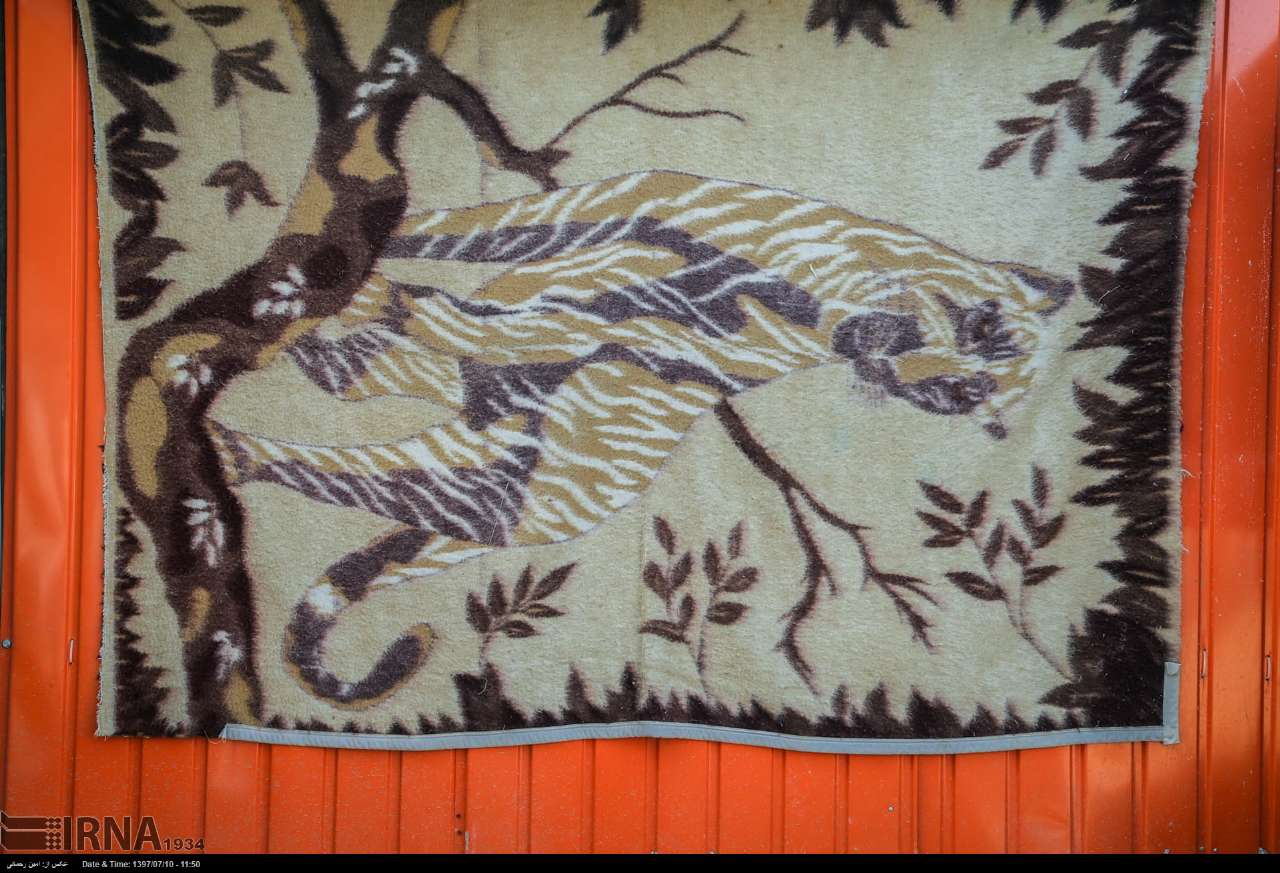
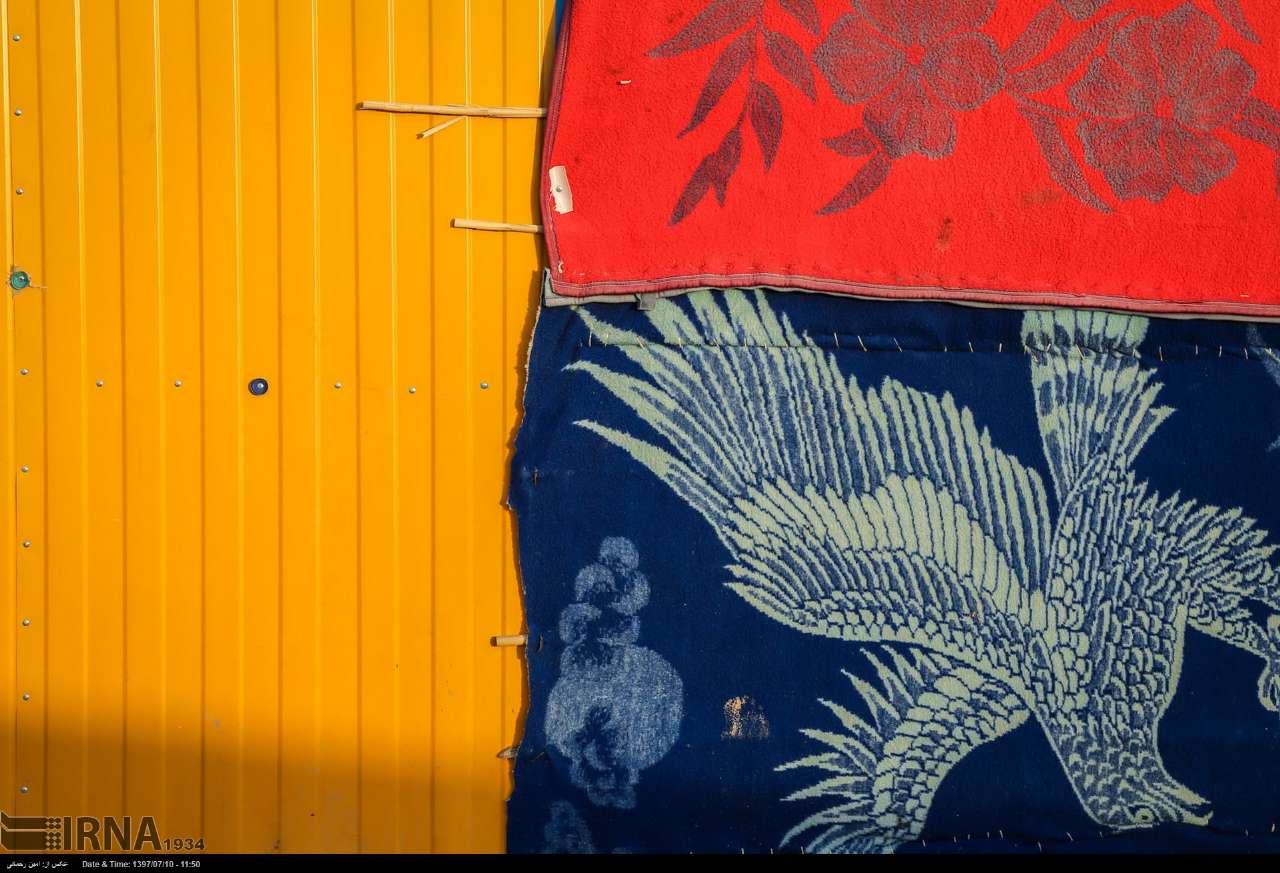
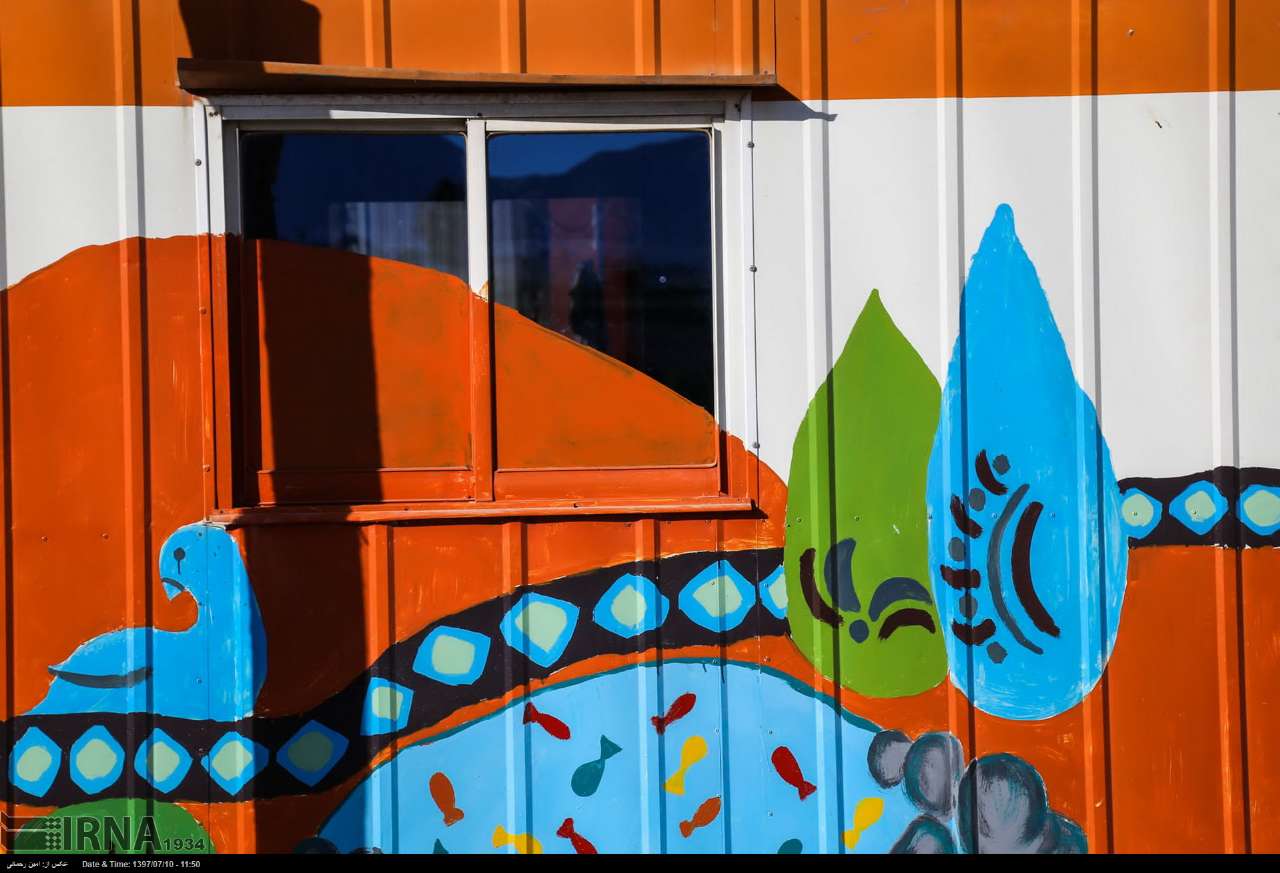
Quake-Hit Iranians Add Colour to Their Lives in Conex Boxes

With about 100 months after the deadly 7.3-magnitude earthquake in Iran’s western province of Kermanshah, which razed to the ground most of the houses in Sarpol-e Zahab and Tazehabad cities, most residents of the province prefer living inside temporary conex boxes to staying inside concrete and brick buildings.

These people have already got accustomed to their iron conex boxes. They have even turned the soulless cubes into some colourful and green houses for their families.

The people of Kermanshah province see the conex boxes not as temporary but permanent houses filled with a sense of life and joy.

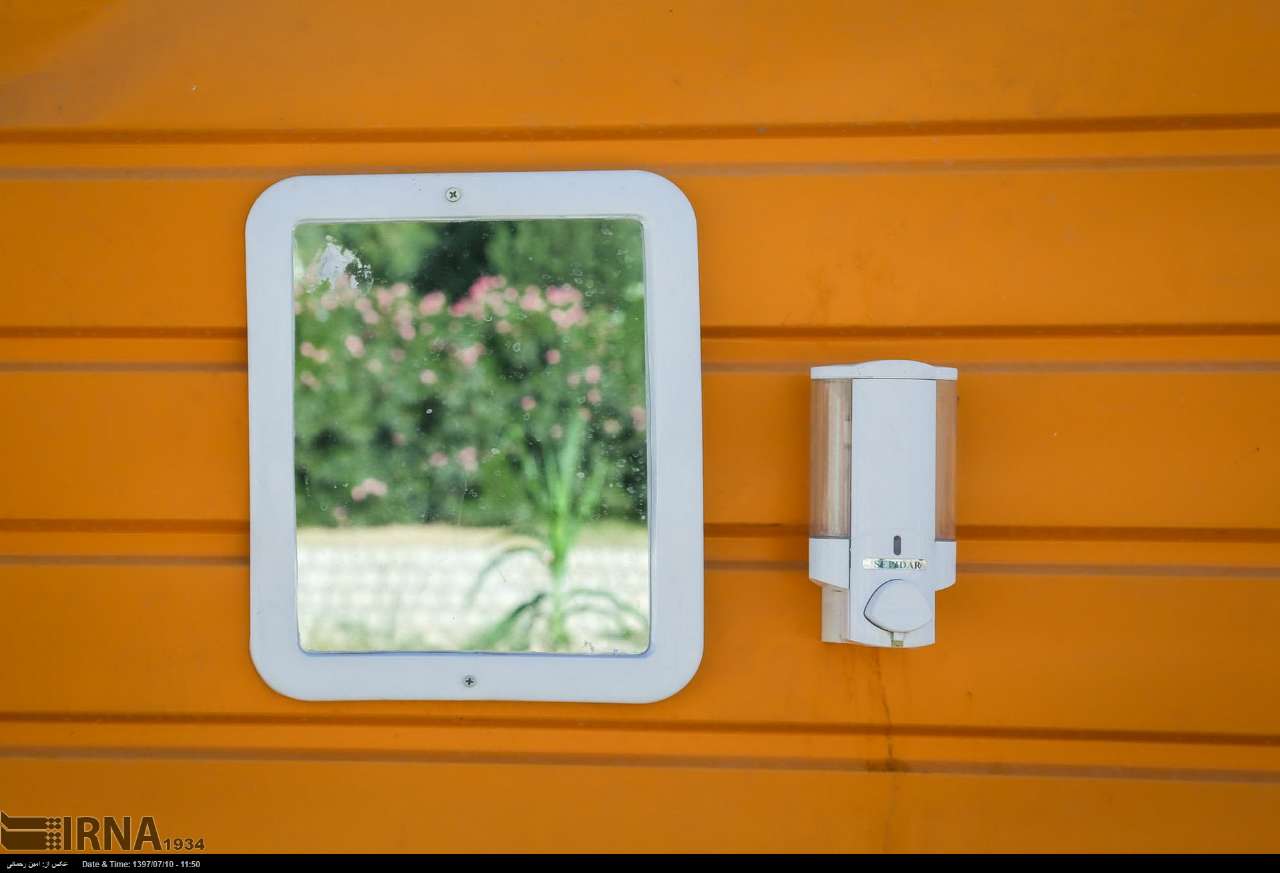
What follows are IRNA’s photos of the colourful conex boxes:

Saudi Media Start Blame Game over Khashoggi Disappearance

According to a report by the London-based pan-Arab newspaper Al Quds Al Arabi, international reactions to the kidnapping of Khashoggi has made Saudi media panicky, prompting them to publish unfounded allegations and accusations. These concerns grew further after Western media’s strong reaction as Khashoggi used to write columns for Washington Post.

The baseless accusations by Saudi media target international media outlets or specific individuals, adds Al Quds Al Arabi.

For example, adds the report, the highly circulated Al-Riyadh newspaper published a report claiming news released about Khashoggi was directly targeting the Saudi government.

The Saudi newspaper claimed that the New York Times had, by releasing a report whose authenticity cannot be confirmed, adopted a hostile policy vis-à-vis Saudi Arabia.

Meanwhile, the Saudi newspaper Al Jazeera claimed, in an article, that comments on social media networks with regards to the Khashoggi issue are made via fake accounts with the support of Iran, Qatar and Turkey. The writer of that report expressed dismay over the performance of pro-Saudi media such as Reuters as well as the American newspapers Washington Post and New York Times that those media had reiterated Qatari media’s account of the incident.

Also, a Saudi newspaper ran an article accusing Washington Post of submitting to Qatari money.

Al Quds Al Arabi further added that the finger has been pointed not only at media, but at certain individuals as well.

According to the report, Saudi media, including Al-Arabiya, has launched groundless accusations against Khashoggi, the director of the Association of Turk-Arab Media, without turning the key issue of his disappearance. Accusations have also been levelled against Khashoggi’s fiancée Hatice Cengiz.

According to IRNA, Khashoggi has been missing since returning to the Saudi Consulate building in the Turkish city of Istanbul. Some unofficial news sources announced that Khashoggi was tortured and killed at the consulate by agents of the Saudi security apparatus.

According to filed evidence and remarks by Saudi Consul General in Istanbul Mohammad al-Otaibi, all evidence and documents showing the presence of Khashoggi at the Saudi consulate, including images of CCTVs at the diplomatic building, have been destroyed by security agents of the Al Saud regime.

Following Khashoggi’s disappearance, the Saudi consul general opened the consulate’s doors to Reuters journalists and announced that images of Khashoggi’s entrance into and leaving the building had not been recorded as the CCTVs were not working.

59-year-old Khashoggi left Saudi Arabia for the United States after bin Salman was picked as the Saudi crown prince. In his articles in Washington Post, the dissident Saudi journalist had taken a swipe at Riyadh’s war on Yemen, the economic crisis with Canada and the apprehension of supporters of women’s rights in Saudi Arabia.

Iranian Firm Offering Nano-Products on Chinese Market

Nanocomposite layers have specific features; among others, they are resistant to friction and corrosion, and their mechanical properties have been improved.

Nano-composites are placed on different parts with the help of special instruments and through a special process.

These coating layers are mainly used in producing metal parts required for automobile, oil and gas, petrochemical, aerospace, nuclear, textile, marine and steel industries.

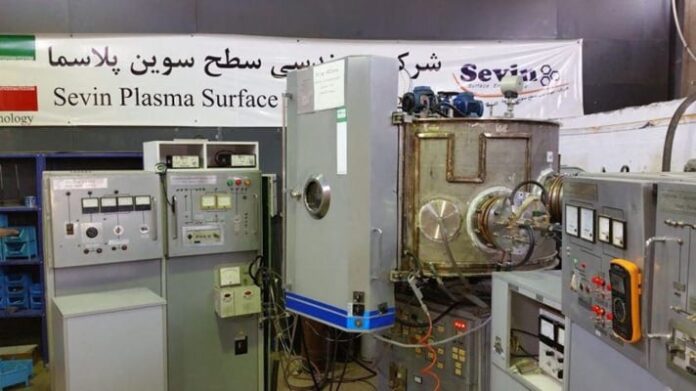
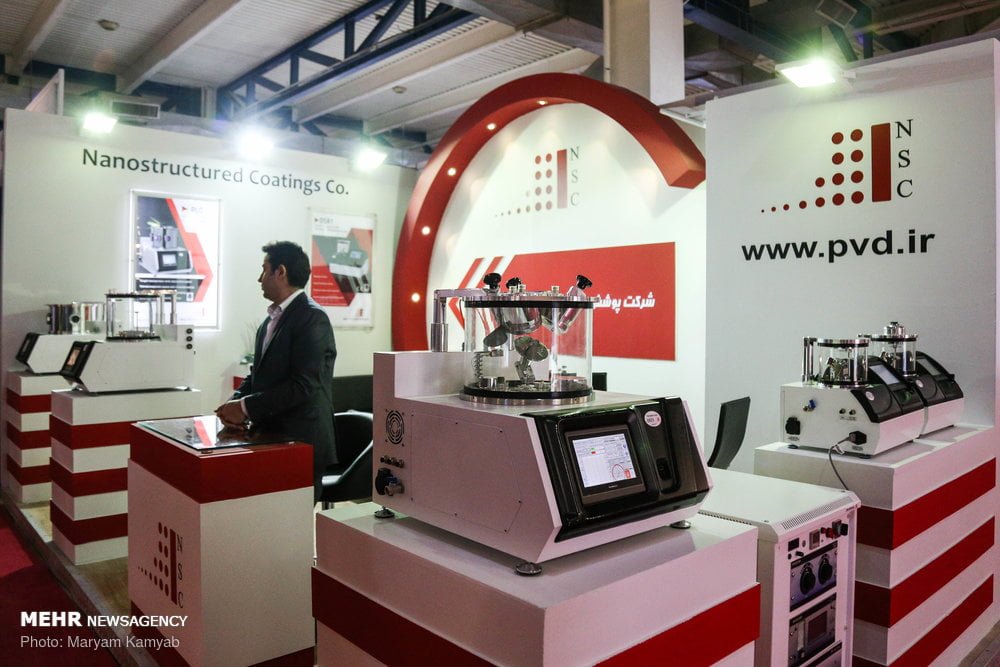
Having worked as a knowledge-based firm for seven years, the Sevin Plasma surface engineering company was introduced to the world as an international company manufacturing state-of-the-art equipment to produce thin layers used as super-hard coating. The firm operates using nano-layer technology and holds a nanoscale certificate from the Nanotechnology Development Commission of the Presidential Office.

Offering surface coating services, the company has developed the physical vapor deposition (PVD) technology and secured a good share of the market in automobile, oil and gas, and nuclear industries. The company’s activities have improved the properties and performance of layers in different conditions. The improvement of the properties of layers will increase their lifetime and resistance to corrosion, and decrease the friction coefficient and the cost of parts.
For a brief review of Iran’s achievements in various fields of science and technology, check the book “Science and Technology in Iran: A Brief Review

In addition to producing heavy-duty layers with high resistance on different parts, the company has also produced a layer marking apparatus. It has several features, namely a higher operational capacity and lower price compared to similar apparatuses made by foreign countries. So, the device can increase the quality of the product while being economical, which contributes to economic growth.

The company has also managed to design and develop the first ultramodern coating reactor which measures up to international standards and is planned to be exported to China. Now, the company is concluding exports agreements in that regard.

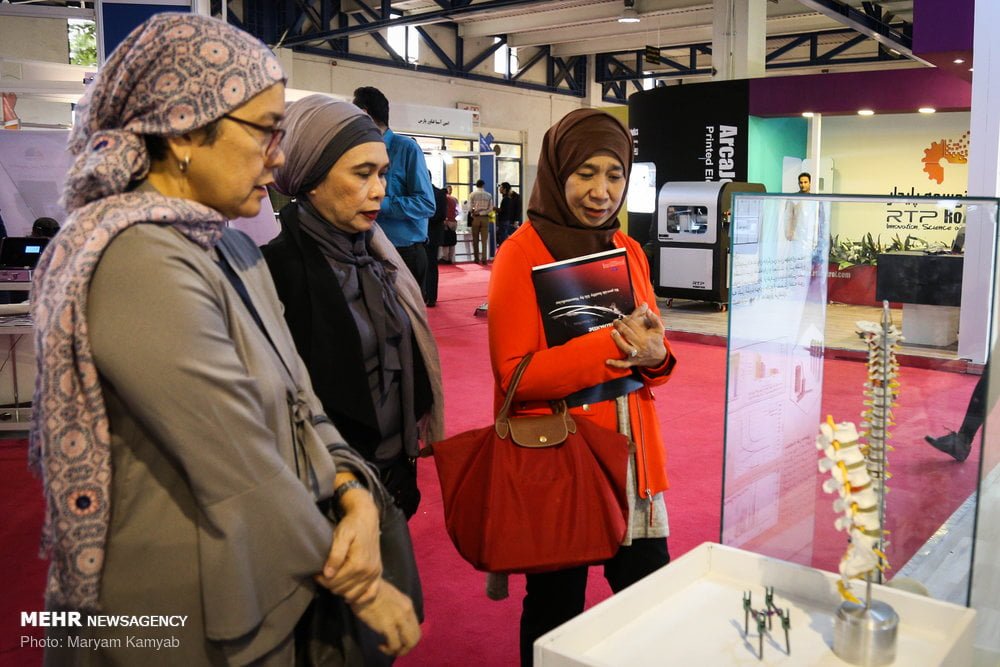
The company is one of the major firms attending the 2018 International Nano Exhibition which is underway in Tehran from October 13-16. The event brings together many companies from Iran and other countries, which are displaying their latest achievements in the domain of nanotechnology.

Iranian Car Designer Builds Nice Copy of Lamborghini

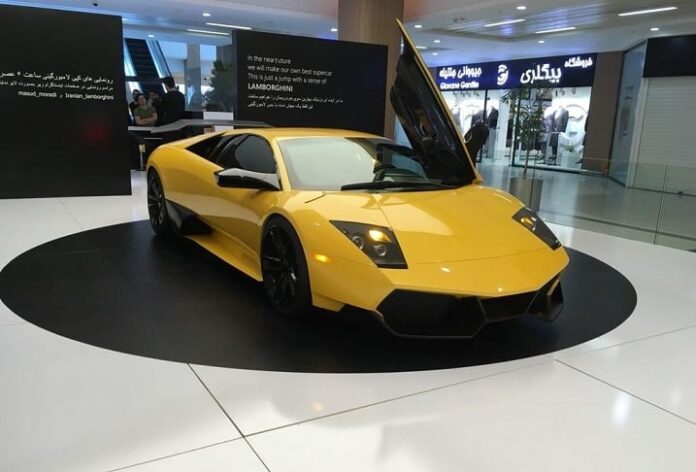
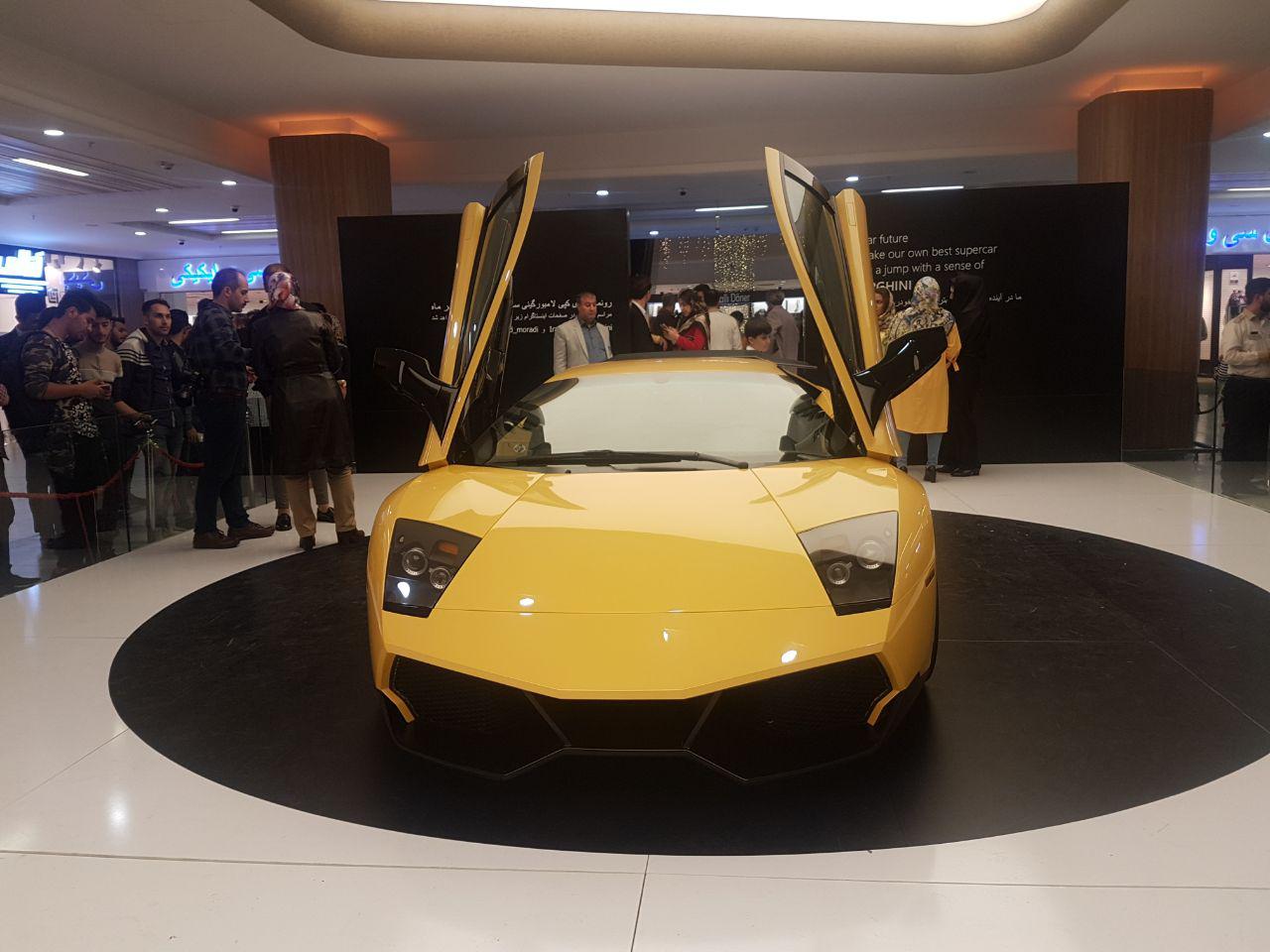
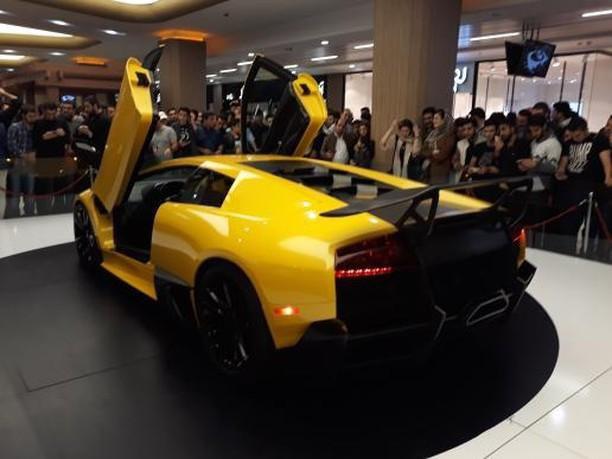
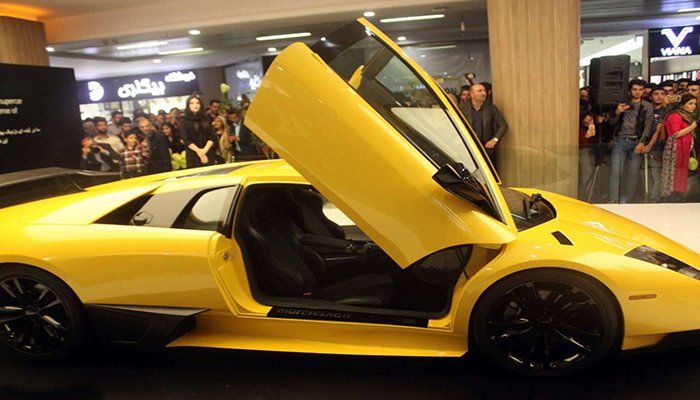
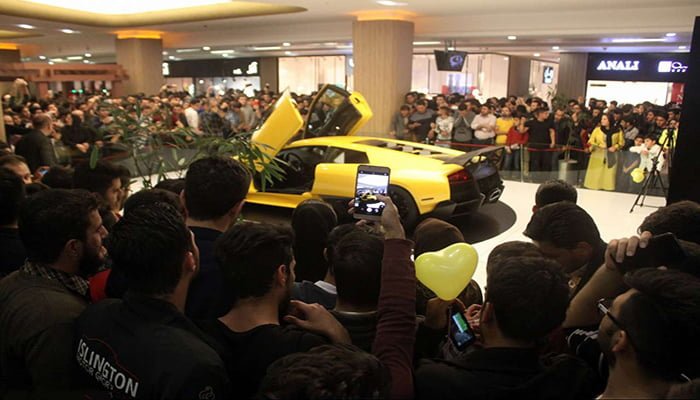
A Lamborghini Murciélago designed and built by Iranian car designer Massoud Moradi, unveiled on October 13, 2018, in Tabriz.

Massoud Moradi unveiled his Lamborghini Murciélago on Saturday. Although the appearance of the car is similar to the original, its engine has been made built based on the Korean technology.

The Stnews.ir has conducted an interview with Moradi, the director of the project, the full text of which follows:

Q: When did you start designing this car and how much did it cost?

A: We started this project about four years ago, and we spent a lot of time on doing research. A fairly large amount of money was spent on the production, but since we wanted to commercialise it, I’d rather not disclose the final cost.

Q: To what extent are the dimensions and size of your car similar to the Lamborghini Murciélago?

Iranian Car Designer Builds Nice Copy of Lamborghini
A Lamborghini Murciélago designed and built by Iranian car designer Massoud Moradi, unveiled on October 13, 2018, in Tabriz.

A: The size and dimensions of the car are exactly the same as the original one, so is the size of the parts, the body frame and the car’s details. For example, at the beginning of the project, we thought we would not be able to build a windshield, so we had to buy an original windshield from a European company that supplies the Lamborghini stock parts. In fact, one of our concerns was that the designed model would not be in harmony with the original windshield. So after the end of the physical work, we brought the windshield to the modeling workshop, and at the time of installation we realised that there was only 2 millimetres of difference in dimensions, so we resolved it during the modeling process. At this stage, we found out how rigorous the original designing was because our designed car was a little different from the original one. In fact, it can be said that the differences are very small and only specialists and designers of the car can recognise them.
Q: How did you design the car?

A: The design of this vehicle is computer-based and the data code is prepared based on the same model which is checked out at each stage of the data coding. By the end of the modelling, the finishing process was started, during which we made the body charming. Moulded parts were re-manufactured and sent to the assembling hall. We built the chassis based on the original Murciélago platform and according to the data we received. The original windshield fractured during the transport process and we had to mould and produce it again. Thus, the only part provided by Lamborghini was removed from the car.

Q: Of course, it has not been easy to access the platform, so what platform and chassis did you use for this car?

Iranian Car Designer Builds Nice Copy of Lamborghini
A Lamborghini Murciélago designed and built by Iranian car designer Massoud Moradi, unveiled on October 13, 2018, in Tabriz.

A: We were lucky that in the process of construction we could receive the car’s data code. Based on this, we did not spend any time planning or testing the car. By checking the chassis with the body and fixing it with the body fittings, we began to build a chassis and platform, which is exactly the same as the platform and chassis of the original version of Murciélago.

Q: You earlier mentioned that a Hyundai engine and a German gearbox were used on the vehicle. Why didn’t you use the Lamborghini engine and gearbox?

A: We used a 3.8-litre six-cylinder engine on this car. The gearbox was also suitable for this engine. We also used electronic components and options of Hyundai. One of the main concerns about super sport vehicles is the place where a car should go for repairs and services. Lamborghini is a brand that does not have any offices in our country. So we designed a car that has the appearance of a Lamborghini, but based on its technical specifications, you can easily go to repair shops in the country and fix it. In fact, you can drive a Lamborghini, whose maintenance costs are the same as imported cars, and it does not incur extra costs for the owner.

Q: Is the engine and gearbox capable of generating the power needed for such a car?

Iranian Car Designer Builds Nice Copy of Lamborghini
A Lamborghini Murciélago designed and built by Iranian car designer Massoud Moradi, unveiled on October 13, 2018, in Tabriz.

A: Of course, the acceleration and speed of the car will not be as much as that of Murciélago, but its power is high enough to be considered as a fast-moving car. In the future, if the vehicle is manufactured, we will install different engines on it. I should also point out that it is designed to be powered by a 12-cylinder engine. As a result, in the next models we will be able to use 8 and 10 cylinders on the vehicle.

Q: In the photos released of the car, the exterior design and details of the car are exactly the same as the Murciélago. Is the interior design the same as the original one as well?

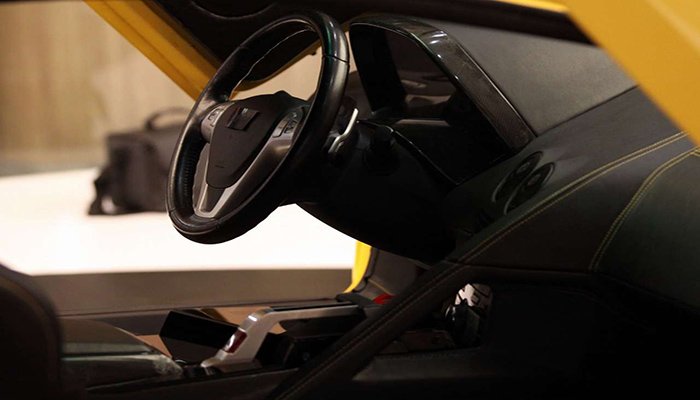
A: We designed all the parts inside the car like the outer parts. Everything was designed and then modelled based on the original design. After that, we went through the moulding, parts production, and assembling stages. Then, we sent them to the interior designing section. For example, the leather used in this car meets the standards, and all car lights are designed and manufactured based on the original model. None of the vehicle parts has been purchased from Lamborghini. In fact, decorative pieces are all designed and manufactured inside Iran.

Q: If you’d decide to manufacture it, how many can you produce each year?

Iranian Car Designer Builds Nice Copy of Lamborghini
A Lamborghini Murciélago designed and built by Iranian car designer Massoud Moradi, unveiled on October 13, 2018, in Tabriz.

A: The annual production of this car depends on investment on this project. If the investment is appropriate, we can produce 50 to 100 ones each year.

Q: Is the suspension, steering and the vehicle’s handling the same as the original one? Have you tested the car so far?

A: It’s definitely not possible to compare the handling of this car with the original version, but the point that our test driver mentioned after the road test was the proper handling of the car on the road. In fact, the car is under the control of driver and its safety is perfect. Due to lack of proper infrastructure, the speed test is not done on this car, but it can be said that with regards to the engine and gearbox used in this car and its heavy body it can easily reach 280 km/h. However, given its lightness, we expect it to have more power.

Q: What kinds of alloys are used in the body, and how the moulds are produced for the production of body parts?

A: The body is made of composite material. The parts have passed the thermal cycle tests and retrofitted. The team in charge of producing the parts had earlier been sent to France by a car company to increase their knowledge of producing the parts. Therefore, we produced the parts based on the same knowledge. Carbon fibre has been used to make the body parts, but it has a lot of difference with other commercially available carbon fibres. This material is used in the engine, rear fins and the bases.

Q: What were the problems at the time of designing?

Iranian Car Designer Builds Nice Copy of Lamborghini
A Lamborghini Murciélago designed and built by Iranian car designer Massoud Moradi, unveiled on October 13, 2018, in Tabriz.

A: During the designing process, we had to study the details in order to know how parts were made and assembled. There were also problems with wood modelling and prototype moulding. For example, creating a constant temperature in the assembling workshop was a serious challenge for us. If the temperature was not steady, the length of the car or parts could change, and that could result in problems in the assembling process.

Q: If the domestic automotive companies ask you to co-operate with them, do you want to work with them?

A: Domestic automakers’ mission is to solve the problem of the community in terms of transportation, so they try to produce cars that all people can buy. Never has their mission been to produce sports cars or super sport ones, so I’m doubtful we could work together in this area.

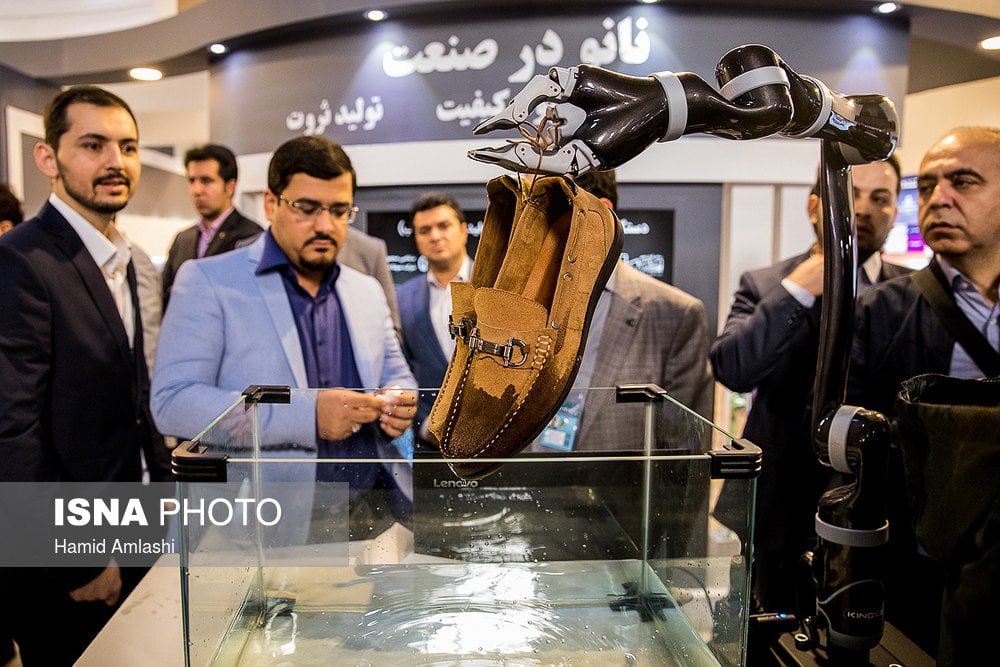
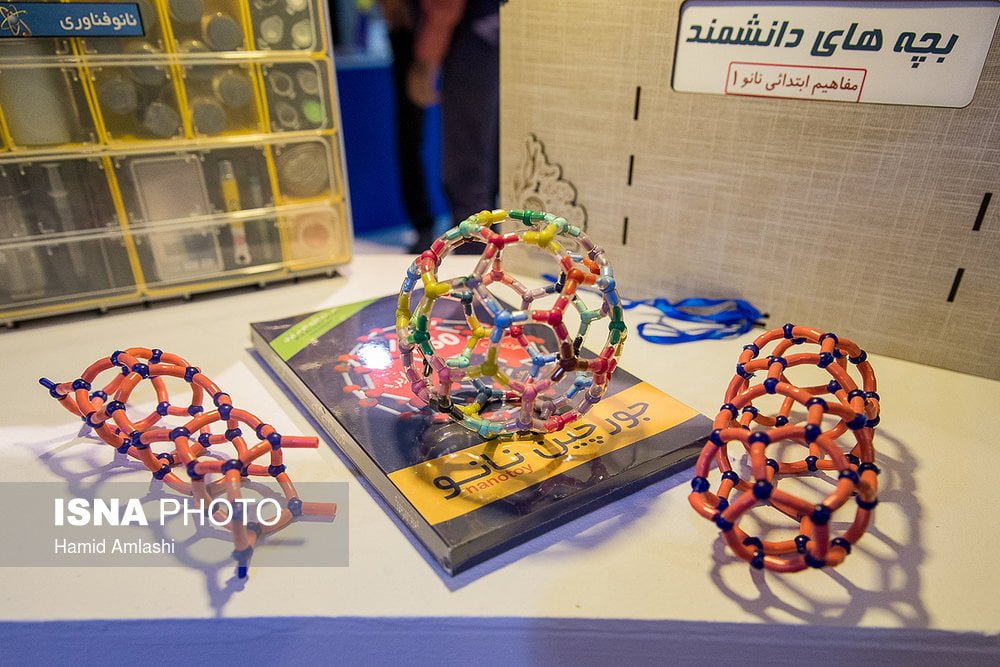
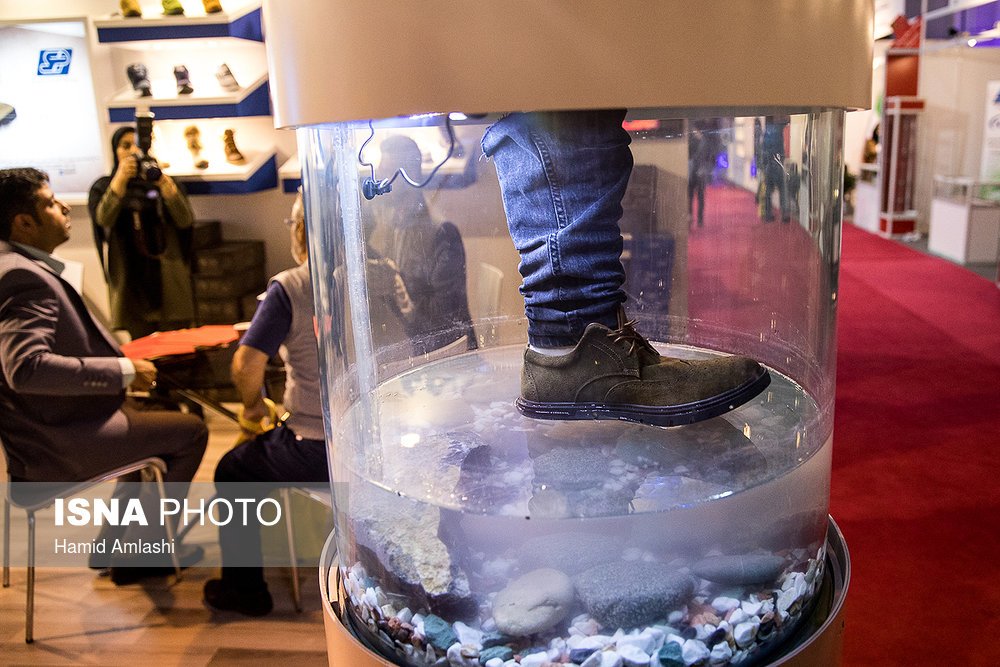
Nanotechnology Exhibition Opens in Tehran  

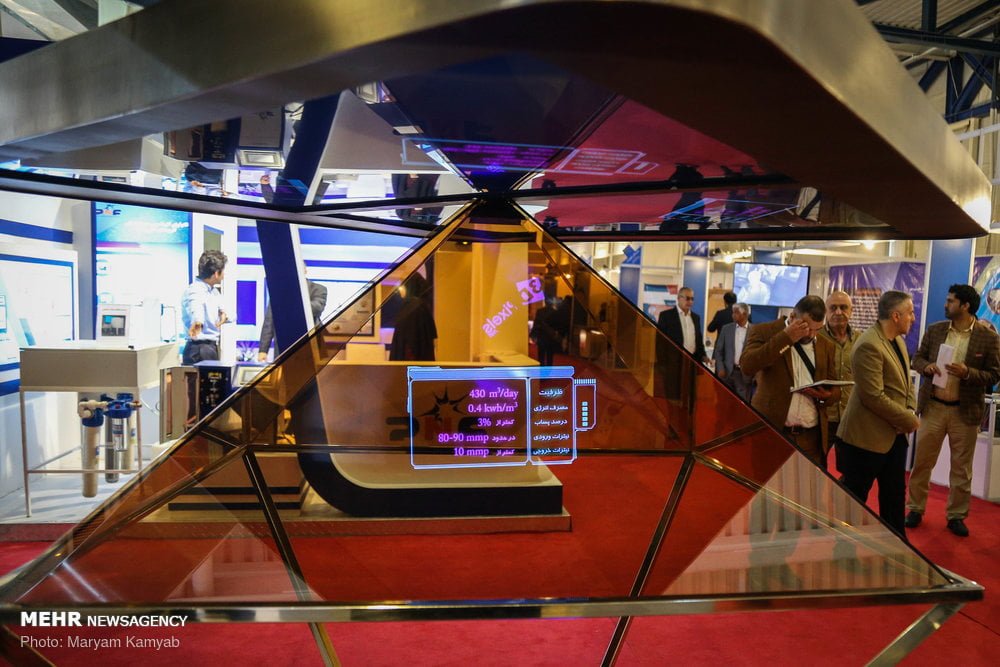
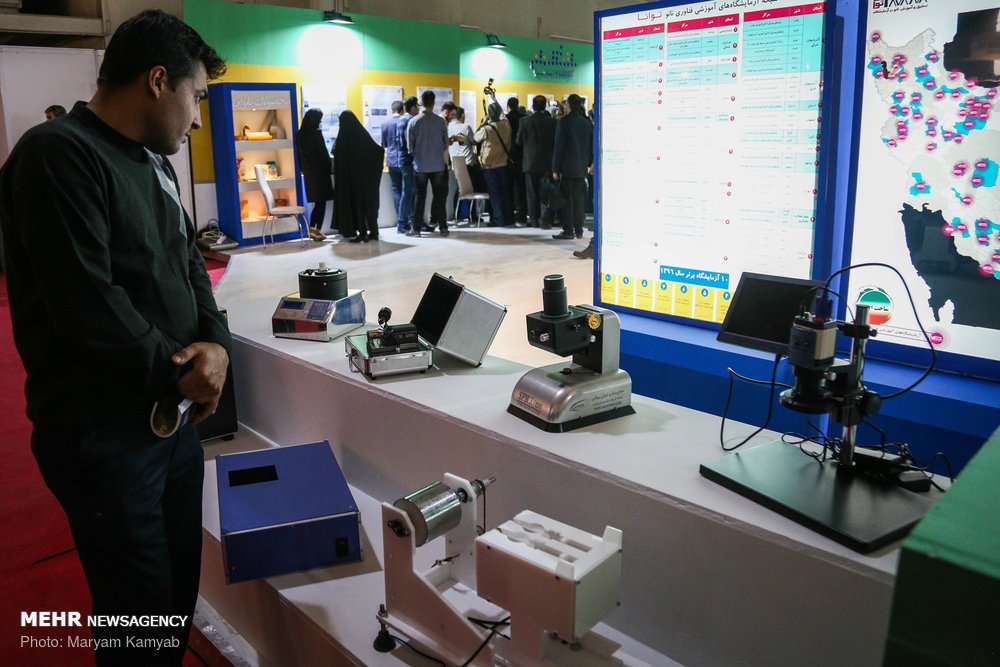
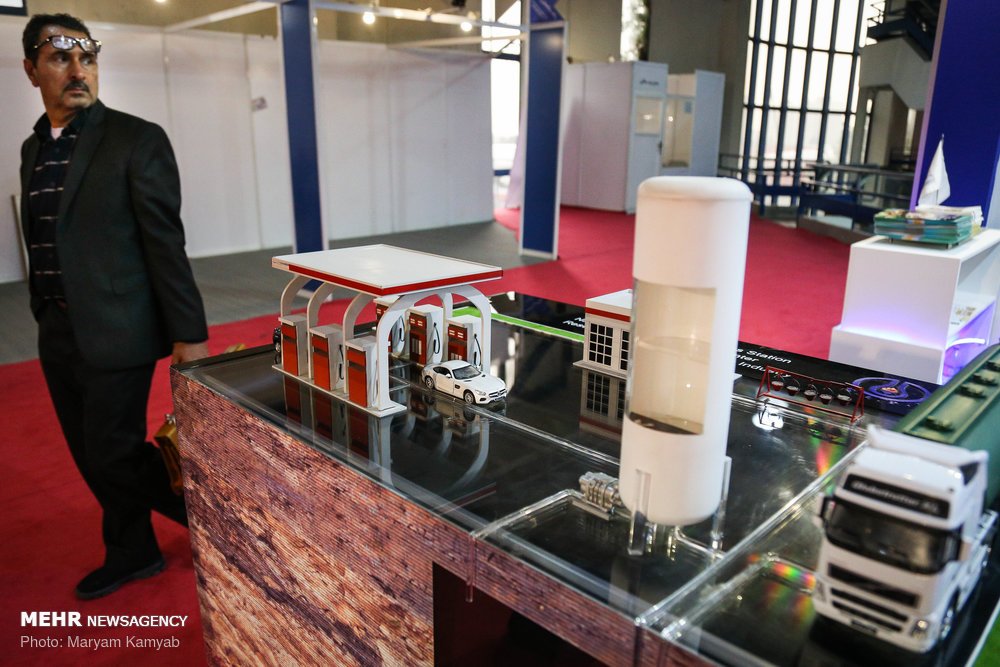
Hamed Afshari, the secretary of the 11th edition of the exhibition, says 28 technologies that can attract investments have been featured in this year’s exhibition.

Speaking on the sidelines of the exhibition, Afshari announced that 114 booths have been created and 75 companies are offering their products here.

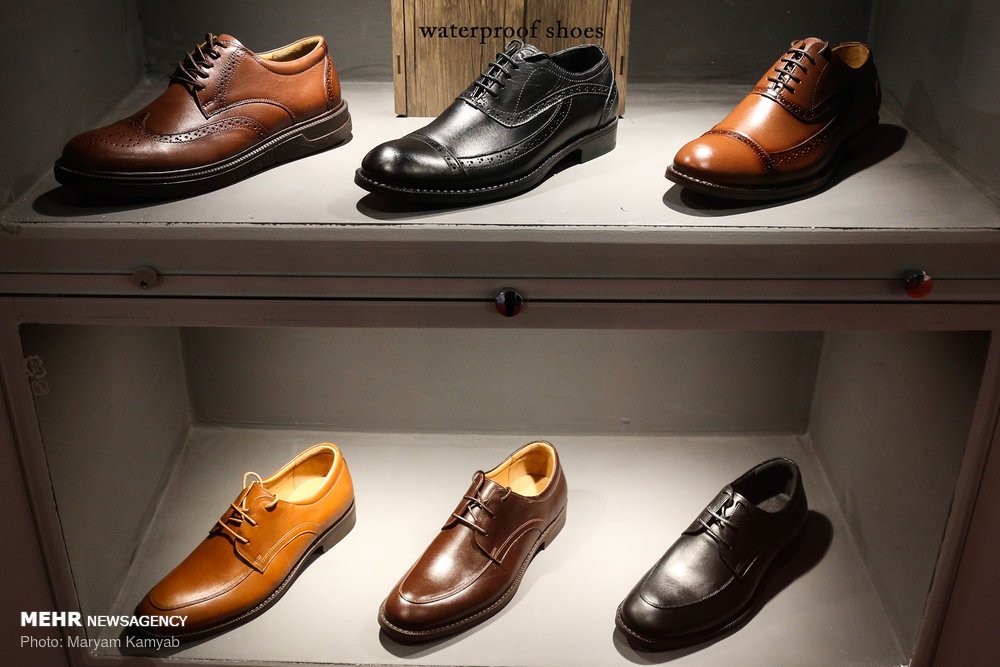
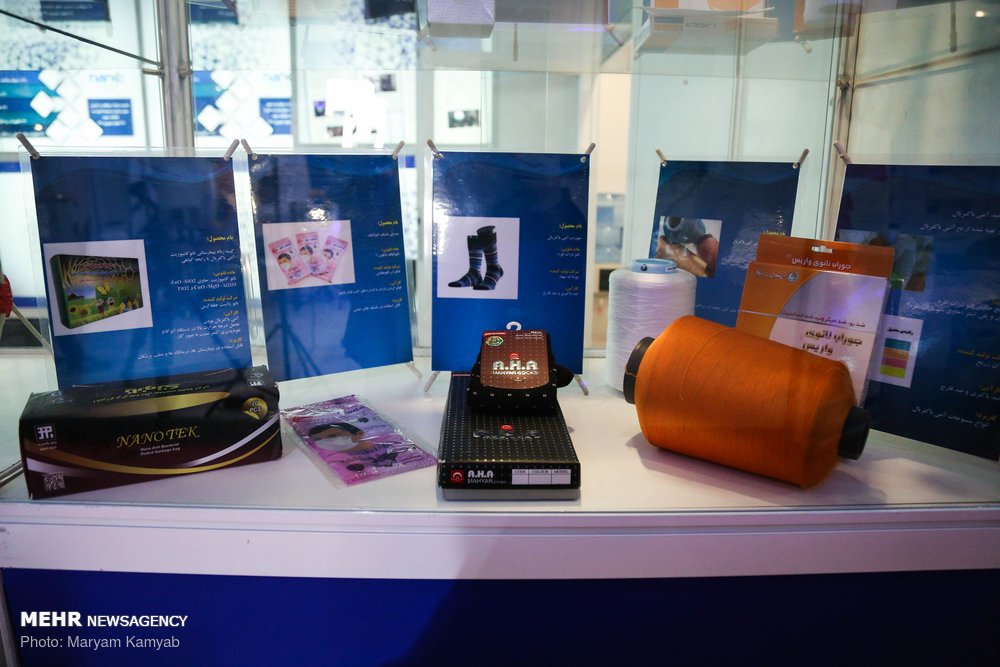
He further touched upon the commercialisation of nanotechnology-based products and stressed that 33 nano-industrial designs that were introduced into the industry have been showcased at this edition.

Referring to the Nano Match section, Afshari said in this section, 47 companies are offering 28 products, all of which have a business plan with the capability of attracting investment.

The official noted that 40 special guests will also visit this exhibition in eight groups from South Korea, Oman, Indonesia and Malaysia.

He also expressed hope that a suitable ground would be provided for attracting foreign investment.

Nanotechnology Exhibition Opens in Tehran  

Iran’s Global Position in Nanotechnology

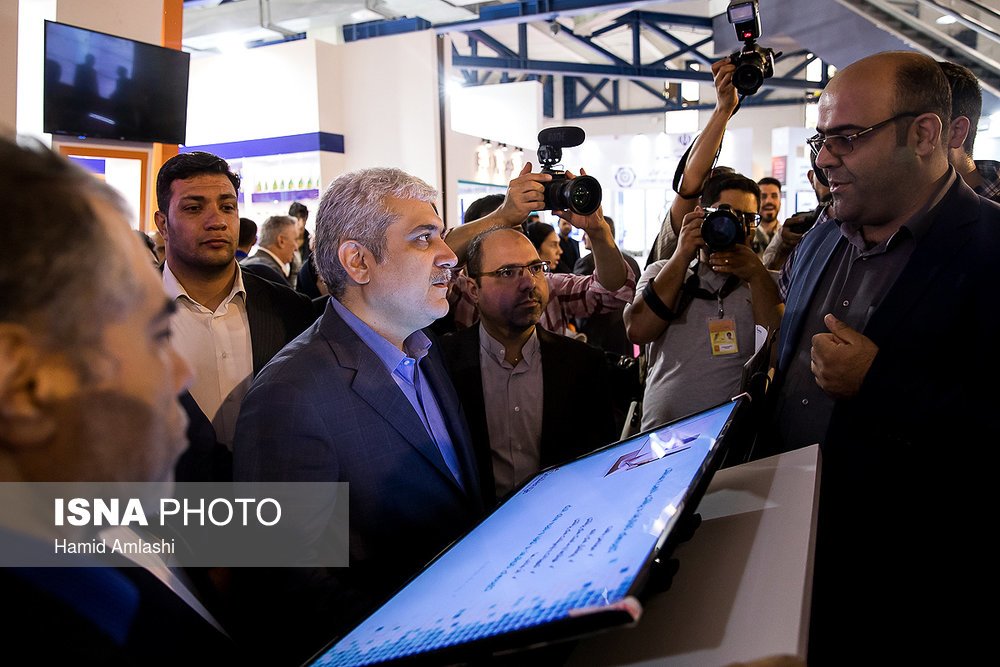
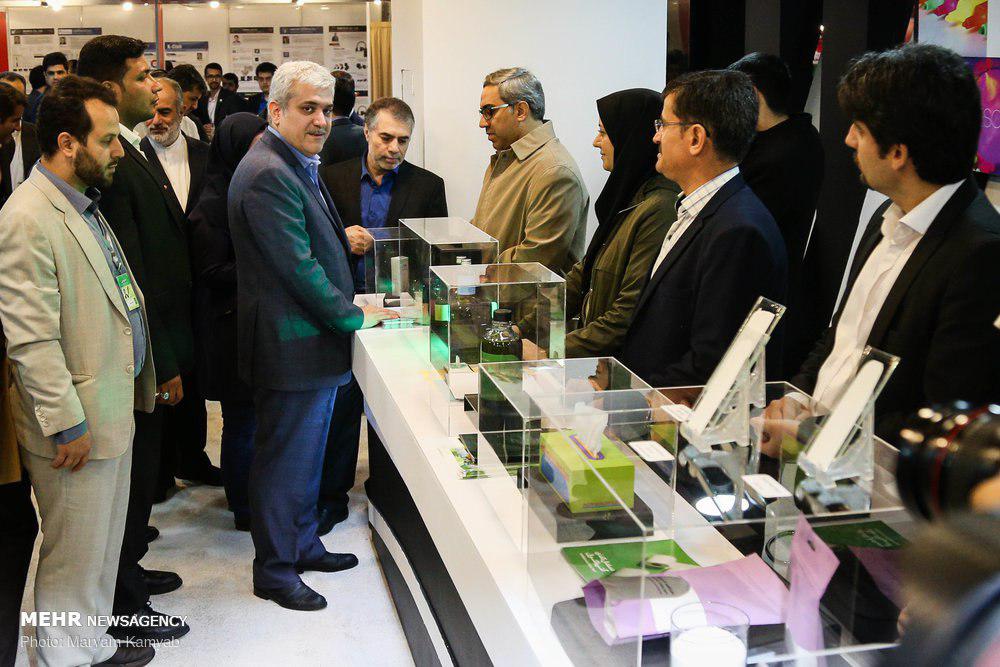
Iranian Vice-President for Science and Technology Sorenna Sattari was the highest-ranking official who attended the exhibition in its opening day.

Speaking on the sidelines of the event, Sattari hailed the country’s scientific growth in the past few years, and said Iran’s nanotechnology ranking has improved from the ninth and tenth to the fourth across the world.

In addition to the improved ranking, which was achieved thanks to increased publication of Iranian papers in international journals, the Islamic Republic managed to develop and sell the technology last year, underlined the Iranian VP.

For a brief review of Iran’s achievements in various fields of science and technology, check the book “Science and Technology in Iran: A Brief Review

Sattari went on to say that the sales of nano products last year amounted to $92 million, adding that the amount was higher than the target projected by the Nano Headquarters.

Sattari underscored that the country’s exports is expected to further increase this year.

Nano is a new and up-to-date science in the world, he said, adding that Iran entered the field 15 years ago, and today it is one of the countries manufacturing nano-based products.

He also noted that the industrial sale of these products has exceeded $9 million, and will certainly increase in the coming years. “This shows that nanotechnology has found its place among the Iranian industries.”

He expressed satisfaction that a proper ecosystem is in the making across the country while more companies are getting involved in this field day by day.

Pointing to the establishment of more than 3,400 knowledge-based companies in the country, Sattari emphasised that “we are doing our best to ensure that this ecosystem would not be a state-owned one.”

He said the hard currency fluctuations in Iran certainly influenced companies over the past few months, but I must say that knowledge-based companies have suffered the least impact from these fluctuations.

Referring to sanctions due to be imposed on Iran in November, Sattari said, “With the imposition of these sanctions, I do not think something special would happen in the country on November 4, and the knowledge-based companies will not be affected because sanctions have long been in place.”

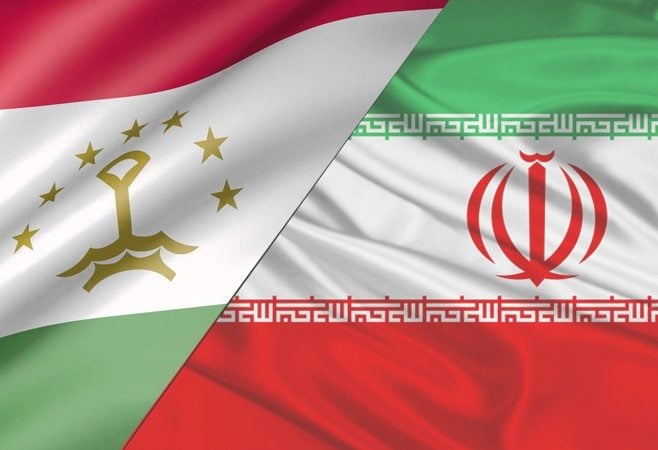
Iran, Tajikistan Discuss Mutual Cooperation, Reciprocal Ties

Sarmadi on Thursday held separate talks with Tajik Minister of Energy Osman Ali Osmanzadeh as well as the country’s Foreign Minister Sirojiddin Muhriddin on the sidelines of the 17th Council of the Meeting of Heads of Government of the Shanghai Cooperation Organization (SCO).

In the meeting between Sarmadi and the Tajik energy minister, who co-chairs the Iran-Tajikistan Joint Economic Commission, the two sides discussed the latest status of economic, trade and technical cooperation between the two countries. They also underlined the necessity of boosting and enhancing mutual collaboration within the framework of the joint economic commission.

In the meeting, the top Iranian official said neighbouring countries have a special status in Iran’s foreign policy. He said Tehran stands ready to forge closer cooperation with Dushanbe, especially on the economic front.

Osmanzadeh, in turn, referred to Tehran-Dushanbe good cooperation, especially in the energy sector. He also lauded the performance of Iranian companies and engineers working on projects in Tajikistan, especially a power station under construction in Tajikistan.

In his meeting with the Tajik foreign minister, Sarmadi touched upon the deep-rooted relations between the two countries. He also referred to Iran’s fundamental policy of supporting the progress and development of Tajikistan. The Iranian official underscored the need to open a new chapter in all-out cooperation between the two countries.

Muhriddin, in for his part, touched upon the constructive trips to Tajikistan by Iranian authorities, especially Foreign Minister Mohammad Javad Zarif, and expressed his country’s readiness to upgrade mutual cooperation and relations.

Iran Warns about Transfer of Terrorists to Afghanistan

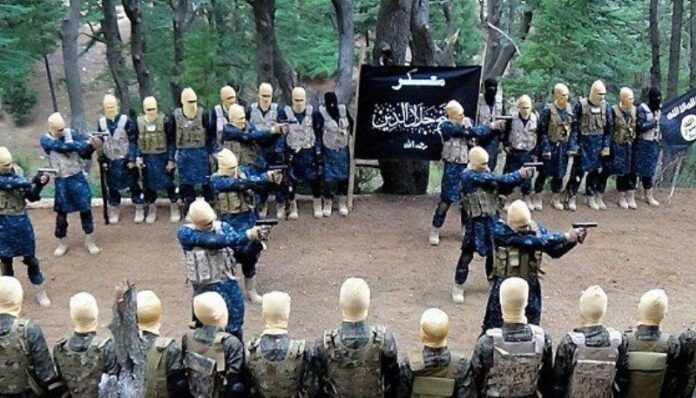
A group of ISIS loyalists being trained in Afghanistan. / Photo by Khaama Press

Sarmadi made the comments in a meeting with Afghanistan’s Chief Executive Officer Abdullah Abdullah on the sidelines of the 17th Meeting of the Council of Heads of Government of Member States of the Shanghai Cooperation Organization (SCO) in the Tajik capital of Dushanbe.

During the Friday meeting, Sarmadi pointed to the security situation in the region, particularly the transfer of members of terrorist groups to Afghanistan and Central Asia after their failure in Iraq and Syria, and said, “We consider Afghanistan’s security as our own security and will not hesitate to help Afghans.”

He pointed to the need for implementation of earlier agreements between Tehran and Kabul, saying that mutual issues are being followed up by five working groups.

Sarmadi also highlighted the Islamic Republic’s resistance against the new sanctions imposed by the US administration, the denunciation of unilateralism in the world, and the gradual formation of a global will to end sanctions.

The Iranian official finally wished success for Afghanistan in holding its upcoming parliamentary elections.

In turn, Abdullah Abdullah referred to the meeting with the Iranian President at the United Nations General Assembly last month and expressed the preparedness of the Afghan government to expedite the finalisation of the comprehensive cooperation agreement between the two countries.

“The basic issues, such as security, water and economic cooperation, as stipulated in the comprehensive agreement, are the priorities of the Afghan government and we do all we can to conclude these agreements and strengthen bilateral relations,” added the Afghan official.

The two sides also reviewed the latest status of bilateral relations and emphasised the need to strengthen the ties.