Thursday, December 25, 2025
Home Blog Page 2478

Iran’s Bushehr Nuclear Plant to Enter Circuit in Coming Days: Salehi

Iran to Produce 3k Megawatts of Nuclear Power by 2027
File photo of Bushehr nuclear power plant in southern Iran

Salehi saud “the temporary shutdown of the Bushehr nuclear power plant was due to technical issues.”

“This problem is almost resolved and the power plant will enter the circuit within the next two or three days,” he added.
Head of the Atomic Energy Organisation of Iran (AEOI) said, “The current fuel of Bushehr power plant will run out in the next two or three months, and we will load the new fuel.”

On June 20, the AEOI announced “temporary” closure of the Bushehr nuclear power plant and its disconnection from the Iranian national electricity network.

The Bushehr power plant, located 17 km southeast of the city of Bushehr and under the cooperation with Russia, began supplying electricity in September 2011.

In November 2014, Iran and Russia signed a cooperation agreement to add a second and third reactors to the plant, which are scheduled to be inaugurated in 2024 and 2026, respectively.

Salehi says Iran currently owes 500 million euros to Russia for their nuclear cooperation, and that such financial issues have kept Tehran from reaching its goal of generating ovet 8,000 megawatts of nuclear power a year.

Iran Says Negotiation Enough; Now It’s Time for Making Decisions

Abbas Araqchi

Abbas Araqchi said he discussed the latest developments surrounding the Vienna negotiations with the MPs sitting on the Parliament National Security and Foreign Policy Committee, adding he cherishes this opportunity to use the MPs’ insights.

Expressing pleasure over the meeting, he said, “There was a very good interaction today; of course, these interactions have already existed and we exchanged views with the representatives. Today, some representatives made good suggestions, some had questions that were answered. These meetings help to build national understanding and consensus.”

So far six rounds of negotiations have been held between Iran the P4+1 group for reviving the nuclear deal, officially called the JCPOA. The U.S., which quit the JCPOA during Trump’s presidency, is participating in the talks indirectly. The talks are being led by the European Union.

“We are almost reaching the final stages. There are a series of issues that have been sufficiently negotiated and it is time for the countries to decide,” Araqchi explained.

Stating that the Islamic Republic of Iran has already made “tough decisions,” he said that when the United States withdrew from the JCPOA and Iran decided to stay in the deal, it was Iran’s big and difficult decision that has led to the preservation of the nuclear deal until this date.

“Now it is the turn of the negotiation parties, and according to the negotiations we had, they must decide and reach a conclusion on the revival of the nuclear deal in order to reach an agreement,” he highlighted.

The chief nuclear negotiator underlined that it is time for all sides to make decisions. “The other parties must make their tough decisions.”

Iran Not to Share with IAEA Footage from Its Nuclear Sites after Deal Expired: Qalibaf

Qalibaf made the comment in response to a question by Alireza Taslimi, a lawmaker representing the city of Mahallat, on how the parliament is going to “defend” its own ratification.

According to a recent parliamentary law, the government should end IAEA inspections beyond what the agency’s safeguards agreement requires. That effectively ends additional inspections, under the additional protocol, which were a requirement of the 2015 nuclear deal.

However, Iran voluntarily opened a three-month window for the inspections to continue, to allow for the talks to revive the agreement to bear fruit, even as the country ended implementation of the additional protocol. The window was extended by one month during which inspections were not allowed, but footage from the sites was preserved.

The Mahallat lawmaker, Alireza Taslimi, had earlier demanded the footage to be erased, after the one-month period expired on June 24.

“Did the Supreme National Security Council make a decision on the issue [of keeping the footage] and we are not aware of it? Please issue a notice on the subject,” Taslimi demanded from Qalibaf.

“About the IAEA we have earlier issued a notice. I say this again. Nothing was extended after the three-month period expired, and after that nothing recorded inside [the nuclear facilities] will ever be handed to the agency. The recordings are at the hands of the Islamic Republic of Iran. The law is being carefully implemented,” Qalibaf answered.

Raisi to Maintain Rouhani’s Policy Towards JCPOA: Reformist Figure

Speaking to the Iranian Labour News Agency (ILNA), Hashemi said Raisi is optimistic about the settlement of problems regarding the JCPOA.

“In his first press conference, when Raisi was asked by a Russian journalist about the possibility of his meeting with US President Joe Biden if the JCPOA issue is settled, he said no. And in reaction to his negative response, the US also made it clear that they are not going to meet Raisi or ask Iran for anything at that level,” Hashemi said.

“The Americans say they will remain in the JCPOA, but want a more robust deal including the issues of Iran’s long-range missiles, Iran’s ties with the regional countries or its influence and regional reach. However, Raisi has made it clear from the beginning that the issues raised [by the US] may hinder the success or achievement of the desired results,” he added.

Hashemi said Iran’s policy regarding the JCPOA will apparently remain the same as the current policy adopted by the Rouhani administration.

“The Islamic Republic of Iran will not sit for talks on regional issues and its missiles, but the Americans seek to hold talks on these topics,” he added.

On other issues of international significance, he said the country is currently faced with issues like its ties with the US and other Western countries, its relations with the regional states including Saudi Arabia, the UAE, Bahrain, and other Persian Gulf littoral states.

“Mr Raisi has been optimistic about being able to do something [to resolve] these issues, and it is among his plans to develop Iran’s relations with its neighbours based on mutual respect and common interests and on the basis of the principles of wisdom, dignity, and interests,” he said.

According to Hashemi, Raisi plans to resume ties with countries like Saudi Arabia, with which Iran does not have relations right now.

Clove-Nailed Apple: Remembering First Love in Kurdish Culture

Cloves are the dried flower buds of the clove tree and have been in use since 2,000 years ago in traditional medicine as a form of treatment, in the forms of bracelets and necklaces as ornaments and as fragrance.

To make a “clove-nailed apple”, cloves are pinned into an apple through their sharp end and one by one, so that the apple is fully covered with cloves.

The apple dries out gradually after being nailed by cloves and turns into a dry sphere. This process takes one month to complete. But the dried apple can then keep its shape for more than 100 years. 

What is interesting is that, even after 50 years, if the apple is sprayed with a little water, a fresh fragrance of cloves fills the air, reminiscent of a first love.

Cloves have a sharp end that penetrates the apple effortlessly, but they do not come off easily. Some believe the word “Mikhak”, that is the Farsi equivalent of clove, is rooted from Farsi words for coronation or a sun crown. The reason is that cloves were among flower buds used during the coronation of ancient Greek monarchs.

Today, this flower often symbolizes love, pride, superiority and attractiveness. In the Kurdish culture, red apples are usually picked to be ornamented with cloves and are given out as a sign of love and fidelity. 

Over the past years, some Non-Governmental Organizations in Kurdish areas also prepared clove-nailed apples and sold them to help those in need or the victims of natural disasters, a move which is both an offering of friendship and an act of charity. 

Just a few days ago, the minister for cultural heritage, tourism and handicrafts, in a letter, authorized this Kurdish tradition to be nationally registered as an intangible cultural heritage of Kermanshah Province to ensure its perpetuity.

Raisi Admin. Can Move to Tackle Economic Stagnation: Experts

The full text of the article follows.

Fluctuations in markets continue, so much so that cars, houses, gold, gold coins, foreign currency and equities on the stock market assume a new price each day.

But the fluctuations in prices come as there is not much promising news nowadays about the trend of talks in Vienna on the 2015 nuclear deal, officially known as the Joint Comprehensive Plan of Action (JCPOA), a deal which has kept markets waiting for so long in the hope of leading to a drop in prices.

As announced by authorities, the trend of the negotiations will take a long time as no agreement has been reached, yet, on some key issues.

Still, market players are waiting to see what measures the 13thIranian administration will adopt to regulate markets.

Accordingly, the question which frequently crosses the minds nowadays is how the trend of markets will change in the future administration.

In this regard, economic experts and players have, over the past week, made predictions about the situation of markets in the thirteenth administration and have put forward possible scenarios.

What Will the Exchange Rate for the US Dollar Be?

Forex is among the most significant variables contributing to fluctuations in prices on markets.

Of course, the exchange rates for foreign currencies haveremained rather stable and roughly declined since May 2021 despite ups and downs in prices.

This comes as last year, there were predictions that the exchange rate would drop to as low as 150,000 rials to the dollar this year; however, the rate hovers around 240,000 rials.

Market analysts believe that from now on, too, the exchange rate for the dollar would depend on the polices adopted by the government as well as the formulas it would use.

Ali-Asghar Sami’ee, the former head of the Association of Currency Exchangers, it is not a change in people that leads to change; rather, a shift in programs and methods could bring about changes.

With regards to forex and economy, he says, no miracle will happen if future officials continue the current method, and the result will be the same.

“The prospect ahead could be viewed from two perspectives,” he says.

“Either the rise in the exchange rate will slow down and the enhancement of the economy will bring stability back to the market by changing prices into a single an real one and curbing inflation and reducing the volume of the cash flow and bringing about economic reforms, or prices will be contained by force by maintaining destructive fluctuations and sometimes injecting into the market foreign currency and cash which is surplus to demand; sometimes prices can no longer be contained and will begin to skyrocket, and any fluctuation will deal a blow to the weak body of the country’s economy,” he adds.

What Will the Stock Market Go Through?

It is said that the stock exchange is the thermometer of economy in every country, and that economic news and developments impact the trend of prices on the stock market very rapidly.

The Iranian presidential election held on June 18, 2021 is one of the important political events in the country which has always influenced forex market players and assets.

Given that the political and economic approaches adopted by presidents and Cabinet members has a direct impact on the countries’ economies, such approaches give economic playersmixed messages.

The presidents’ approaches vis-à-vis foreign policy, market players and rules, the level of the government’s interference in economy, the distribution of wealth, foreign trade and signs as such contribute to the formation of expectations by economic players and business owners as well as the decisions that citizens make for investment.

Nevertheless, the stock exchange has been one of the most challenging markets over the past year. The General Index of the stock market stood at 1 million 147 thousand units before the presidential election and has now risen to 1.2 million units.

Under such circumstance, economic analysts making predictions about the future of the stock exchange believe that at the moment, it is not clear how developments pertaining to the JCPOA will unfold on the one hand, and, on the other, it remains unknown what approach the new administration’s economic team will adopt toward some of the policies which impact capital market companies.

Meanwhile, we should wait and see how global prices will be in the coming months.

They believe such ambiguities make it difficult to predict the market in the long run. However, if global prices do not drop, the market will not see any nosedive until this year’s end.

Accordingly, Meisam Hashemkhani, a capital market expert, says a good stock exchange is one which does not face positive or negative intervention.

He says the General Index of the stock market in the next six months cannot be growth-oriented.

In his estimation, the very same people who became happy over President Hassan Rouhani’s inviting people to invest in the stock exchange adopted a different stance several months later, saying the government should not interfere.

He says the positive reports released by companies can help make indices positive, too, but it will not be the only reason which has changed this trend.

He says the course of events has fueled expectations that inflation will return to economy. On the other hand, many shares and stocks reached attractive points for investment after experiencing a nine-month nosedive.

Hamid Mirmoeini, a capital market expert, also highlights the positive trend of prices on the stock exchange.

“Whether or not this trend will continue depends on the approach adopted by the next administration,” he says.

“The make-up of its economic team and even the policies adopted by the next administration can impact the trend of equity prices on the stock market,” he adds.

“Some believe Mr. Raisi’s visit to the stock exchange was significant, but in my idea, it is not important if a single person enters the stock exchange,” he says.

“Before launching their election campaigns, all candidates and their campaign teams knew that the rate of market penetration into families in the country has increased, and that focusing their campaigns on this could be attractive for people. Therefore, many of the comments made could be viewed as a campaign strategy,” he says.

“If we believe the capital market should make its presence felt in economy, we should safeguard investors’ rights let them act in accordance with the free market mechanism in the country and let economic competition take place,” Mirmoeini says.

He says if the capital market is to grow, the cash flow into the market should not be spent on agiotage and playing with numbers and figures.

“It is necessary that a special position be defined in the government for the president of the Securities and Exchange Organization in order to be able to make better planning, so that this person can be present in the government and defend the capital market,” he adds.

“I believe the president, too, should call for the drawing up of two -5-year or two 10-year plans, so that we would know what to do in order to develop the stock exchange,” he says.

What is the Housing Market Going Through?

The housing market is in the doldrums these days.

According to experts, the major reason behind the stagnation in the market is a shortage of houses, though the role of middlemen cannot be overlook.

The latest official report on housing prices indicates that the average price for a square metre of a house or apartment sold through real estate agents in May was around 290 million rials.

At the moment, housing market experts believe the slowdown in the market is here to stay due to a more-thatn-400-percent rise in prices in the recent three years.

Meanwhile, some real estate agents say the situation of the housing market has changed from “waiting for a relative boom” to “waiting to see the performance of the future administration.”

Beitullah Sattarian, a housing economy expert, says issues such as economic growth, development budget, an increase in the cash flow, the outlook for economic growth on the back of JCPOA talks and relations with China indicate that major economic indicators in the housing market are not moving toward stagnation or a drop in prices.

Despite this analysis, some other experts such as the head of the Realtors’ Trade Union are optimistic about the future of the housing market.

Mostafa Gholi Khosravi says President-elect Ebrahim Raisi has put the development and growth of the housing market high on his agenda.

“An increase in supply will lead to stability in housing prices, and we expect that in the second half of the current year, the effects of the president-elect’s programs will emerge as stability or even reduction in housing prices,” he says.

“My prediction is that that in the future, variables which will bring down housing prices will overcome factors which could increase prices. So, we expect prices to become stable. Moreover, we will get out of the current stagnation,” he highlights.

Will the Auto Market Get out of Stagnation?

The auto industry has faced numerous challenges in recent years, and car sales have hit rock-bottom due rising car prices and people’s dwindling purchasing power.

Domestic auto makers have faced many difficulties due to unprecedented stagnation in the car market.

Many experts believe the auto market will grow in the future administration, but the current problems will definitely be removed in the long run.

Some experts predict that prices of domestically-manufactured cars will increase in the future again, but “how much” remains to be seen.

They also believe it would be risky to purchase foreign cars as their prices are likely to drop.

On the other hand, some believe the auto market will not become turbulent in the next four years and that prices will remain relatively stable.

In their estimation, the revocation of price fixing by the government, reduction of tariffs and allowing imports are the only factors which could solve the problems facing the auto market.

In this regard, auto industry expert Farbod Zaveh says the automobile industry has, due to frequent intervention by government executives, turn into a symbol of inefficiency and corruption caused by state management.

“It seems the president-elect does not have much time to make difficult decisions in the domain of economy as a whole as well as in every single constituent of the auto market because the problems are so great that they should be tackled head-on, and it will be risky to keep moving on with the motto-oriented management,” he says.

He says Iran’s economy expects the new government to open up the market and industries.

Markets have always been an arena for conflict of consumers and suppliers’ interests,” he says.

According to him, launching a large chain of small and medium-sized companies can create many job opportunities in the auto industry.

He also says providing inexpensive financial resources as well as using financing and re-financing lines can make it possible to supply cars to consumers by installments, which could help tackle the stagnation on the market.

IRGC: Time for US to Get COVID-19 Vaccines from Iran

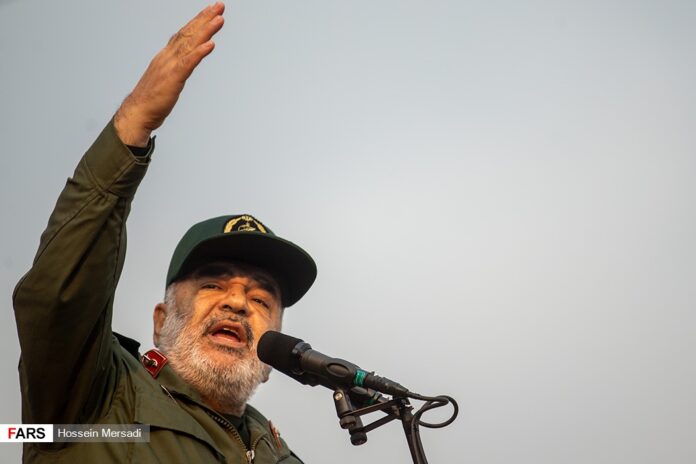
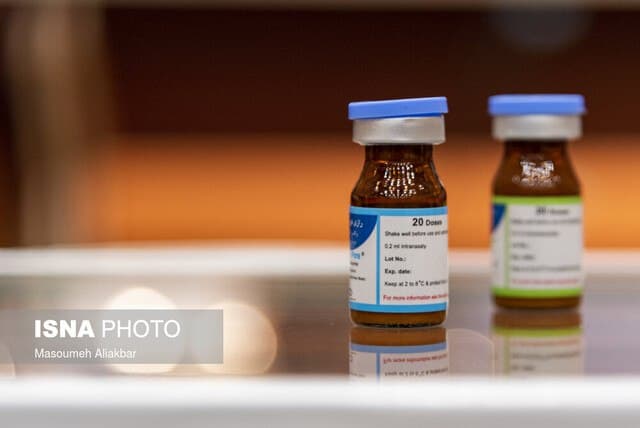
Major General Hossein Salami made the comment as the IRGC began the first phase of the clinical trial of its Noora vaccine.

“I think now it is time for us to tell the Americans that we will give you vaccines. If you face any shortage we are ready to help you,” Salami said.

“This will happen in all areas. I promise the Americans and I promise the Iranians, too.

Everything they sanctioned to prevent us from accessing it, rest assured we will achieve it.

But we are ready to share those advancements with all of them. They should rest assured that the Iranian nation will stop at no advancement. We will never stop making new steps.

I give this promise to the entire Iranian nation that the fruit of all these difficulties is the great progress they see we’re making and these advancements will continue.”

IRGC: Time for US to Get COVID-19 Vaccines from IranThe US re-imposed punishing anti-Iran sanctions, removed under the 2015 nuclear deal, back in 2018. Washington has refrained from easing the portion of the sanctions that prevent Iran from accessing the international banking system amid the coronavirus pandemic. The sanctions have made it almost impossible for Iran to buy coronavirus vaccines and medical equipment needed to curb the spread of COVID-19.

In response, Iran has developed its own vaccines. These include the Noora jab, which was unveiled by Baghiyyatollah Medical University of the IRGC on Sunday.

Iran Denies Media Reports, Says Didn’t Apply for Security Council Membership

Asked by reporters about these reports, Khatibzadeh said, “A few days ago when this issue was raised, it was made clear that the news of Iran’s candidacy for UN Security Council membership is false.”

However, he added, now that the issue has been raised once again, it should be stressed that the Islamic Republic of Iran has not filed any application for non-permanent membership in the UN Security Council for the 2022-23 period of time, and the United Arab Emirates is the only candidate of the Asian group.

The Foreign Ministry spokesman added, “Since the Security Council’s non-permanent members are selected by secret ballots, the intention of the country that has secretly voted for Iran is not clear. But one cannot rule out the possibility of a mischievous intention behind the move.”

Khatibzadeh added, “The Islamic Republic of Iran has supported and voted for the UAE’s bid in the Security Council non-permanent membership election, and that has been announced in Foreign Minister Mohammad Javad Zarif’s letter to his Emirati counterpart and in an official note to the UAE embassy in Tehran.”

The Iranian Foreign Ministry went on to say, “Of course this is not unprecedented. For example, in the Latin American group, Brazil was the group’s only candidate, but one country voted for Peru. Congo had also withdrawn before the voting, but still won the votes of three countries.”

Iran Unveils Several Homegrown Knowledge-Based Products

During the visit, which was made on the sidelines of opening the 47th Sci-Tech Fund at Alborz Science and Technology Park, Vahdat unveiled a laser-therapy machine produced by Exon Medical Equipment Company, TMC made by Hafez Varesh knowledge-based firm, and a coronavirus identification kit produced by Topaz Gene Kavosh company.

Vahdat also visited Laser Afarinan Zist Arman (LAZAR) company which operates in the field of electronics and electricity.

The INIF has provided 177 billion rials in aid and facilities for these companies in various forms of loan and support.

Iran’s Judiciary Launches New Technological Systems to Facilitate People’s Access to Justice

In a ceremony on Saturday, Iran’s Judiciary Chief Ayatollah Seyyed Ebrahim Raisi offered congratulations to all those involved in the technological leap and transformation in the judiciary.

The president-elect of Iran said that the status quo has been identified and the desirable situation has been mapped and the judiciary is to take action and reduce the gap between these two situations as much as possible to facilitate people’s access to justice.

“As a result of launching these technological projects in the judiciary, the number of referrals to the judiciary has been reduced by four million, and this, in addition to facilitating and accelerating people’s access to justice, also preserves their dignity, and this is one of the main goals of moving towards smart judiciary,” added Raisi.

He further noted that the use of artificial intelligence has been very effective in speeding up the trials. Online trials and e-trials that are taking place across the country today have also facilitated the people’s affairs, reiterated Raisi.

Ayatollah Raisi stressed that one of the important benefits of smart judiciary is to create a basis for transparency of actions.

“Transparency can certainly prevent corruption and unhealthy relationships. We think that the more transparency exists, the less unhealthy relationships will be formed and the more it prevents corruption. This approach has been very effective in the judiciary, and may its effects and blessings be for both the judiciary and the government in the future,” he underlined.

At this meeting, Issa Zarepour, head of the Statistics and Information Technology Centre of the Judiciary, said facilitating people’s access to judicial services, increasing the pace and accuracy of proceedings, increasing the pace and accuracy of implementation of rulings, clarifying processes and decisions and combating corruption, as well as maximum prevention of crime, are the five basic strategies for making the judiciary smarter.

“The first step is to make the judiciary smarter by focusing on facilitating people’s access to judicial services and increasing the speed of proceedings by carrying out about 65 large and small technological projects, including establishing and upgrading 40 systems and electronicising 25 judicial inquiry centers and launching more than 3,000 e-courtrooms. Among its results are the increase in public satisfaction, the reduction of processing time and a significant reduction in face-to-face referrals and the elimination of nearly 4.5 million people referring to the judiciary and other executive bodies of the country,” underscored Zarepour.

In the second step of smartening the judiciary, priority is given to the development of technological infrastructure, noted Zarepour, adding that more than 80 projects have been devised, 30 of which will be inaugurated during the Judiciary Week.

Elaborating on the actions of this centre and referring to the elimination of more than 4 million referrals to the judiciary as a result of technological and electronic actions of the judiciary, he said technological actions of the judiciary have also eliminated more than 2 million public referrals to other organizations.

Referring to the 12 percent decrease in the remaining cases, despite a 5 and a half percent increase in the number of cases received by the judicial units, he said, increasing the pace and accuracy of proceedings, reducing procrastination and increasing the speed of issuing verdicts, as well as the development of online monitoring, are among the priorities of the second step of smartening the judiciary.

Regarding the opening of the new electronic systems of the judiciary, which were put into operation on Saturday, Zarepour said people can file their complaints in the field of theft by staying at home thanks to the automation system of theft complaints.

Referring to the launch of the “Financial Records Inquiry System”, he said through this system with the permission of the individuals, the background of the financial convictions can be viewed online.

Zarepour also talked about the launch of the system called “issuance of electronic certificate of no criminal record for each organization and institution” saying that this move will help reduce the number of people’s in person referrals and eliminate the possibility of forging this certificate.
He further referred to the opening of 5,000 electronic courtrooms, which have made it possible to hold court hearings via video calls with people at homes, adding that the infrastructure for this great action is now in place throughout the country.

“In the last 15 months, we have held nearly 100,000 online trials, many of which held with one of the parties outside the borders of the Islamic Republic of Iran. Approximately 60% of the branches are equipped with electronic courtrooms, and God willing, the rest of the branches will be equipped by the end of September.”

Zarepour also announced the launch of the system for “video meeting of prisoners with their families” in 15 provinces underlining that “with the delivery of 3,000 electronic tags, the number of electronic tags reached 7,000, which we are trying to increase to 20,000 by the end of this year.”

Regarding the inauguration of five new monitoring dashboards, he said, the opening of these management dashboards will boost the online supervision of the judiciary, which means that managers can instantly monitor their scope of work with a few clicks and check the characteristics of the desired branches and judicial units.

Speaking about the inauguration of the “all-electronic communication project of the judiciary and the police”, he reiterated that millions of correspondences are carried out between the judiciary and the police every year, and thank God, all these correspondences are done online as of today.

“From now on, if people go to the police stations, they will no longer be sent to the judiciary to get a court order and file a case, and all the necessary measures will be taken by the system there. This measure was previously implemented as a pilot case in 20 provinces, and as of now, we will see online communication between the police and the judiciary. This important step can be a huge step towards reducing delays in criminal cases,” concluded Zarepour.