Sunday, December 28, 2025
Home Blog Page 243

US calls on Europe to join potential secondary tariffs on Russian oil

Russia Oil

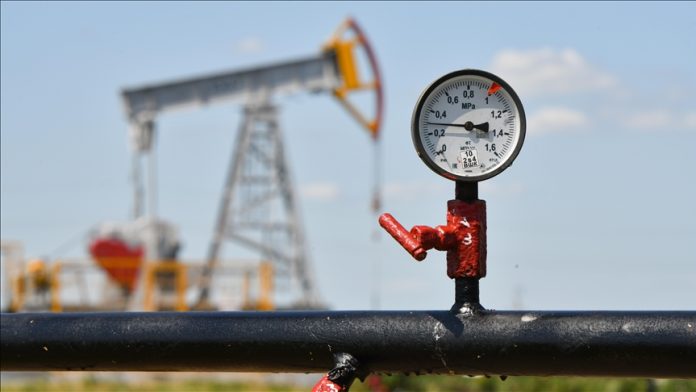
“Russian oil is going to be subject to up to 100% secondary tariffs,” Bessent said. “I urge our European allies, who have talked a big game, to follow us if we implement these secondary tariffs.”

Bessent’s remarks follow U.S. President Donald Trump’s July 14 announcement that the U.S. will impose “severe” tariffs on Russia unless it agrees to end the war in Ukraine within 50 days.

“We call them secondary tariffs,” Trump said during a joint press conference with NATO Secretary General Mark Rutte at the White House. “Tariffs that are about 100%.”

Secondary tariffs are penalties targeting countries or companies that continue doing business with a sanctioned nation by charging extra for access to the U.S. market or financial system.

If a third country like China keeps buying Russian oil, exports to the U.S. could face a further 100% tariff, significantly raising prices for American consumers and squeezing Chinese exporters.

Trump, who had promised to broker a peace deal within 24 hours of taking office, has grown increasingly frustrated with what he described as Russia’s delays in moving forward with peace talks.

The U.S. strategy seeks to pressure Moscow by curbing its oil income, which accounts for roughly one-third of federal revenue and remains a vital source of funding for its war effort.

Kremlin spokesperson Dmitry Peskov responded on July 15 by calling Trump’s threat “serious,” but said Moscow needs time to analyze Washington’s message.

Israel says attacked Houthi targets in Yemen’s Hodeidah port

Yemen Houthi

Minister of Defence Israel Katz on Monday said the military was “forcefully countering any attempt to restore the terror infrastructure previously attacked”.

The Israeli military claimed that the “port serves as a channel for weapons used by the Houthis to carry out terrorist operations against Israel and its allies”.

The Houthi movement, which controls large parts of northern Yemen, later claimed responsibility for drone and missile attacks on locations in Israel, including Ben Gurion airport, Ashdod and Jaffa.

In a statement, Houthi military spokesperson Yahya Saree stated that the strikes were a direct response to the attacks on Hodeidah and Israel’s continued bombardment of Gaza.

“The drone attack successfully achieved its objectives,” he continued, adding that operations would continue until Israel ends its offensive on Gaza and lifts the siege.

Since Israel launched its war on Gaza in October 2023, the Houthis have carried out several attacks on shipping lanes in the Red Sea, saying they were acting in solidarity with Palestinians in Gaza. Israel has responded with repeated strikes on Houthi targets, particularly in Hodeidah, a key entry point for goods and aid into Yemen.

“The Houthis will pay a heavy price for launching missiles toward the State of Israel,” Katz noted.

Earlier this month, the Houthis claimed responsibility for an attack on the Greek-owned vessel Eternity C, which maritime officials said had killed four people.

In May, the United States brokered a deal with the Houthis to halt their bombing campaign in exchange for reduced attacks on international shipping. However, the Houthis clarified that the agreement did not extend to operations involving Israel.

Third round of Ukraine-Russia peace negotiations set for July 23: Zelensky

“Today I discussed with (National Security and Defense Council Secretary) Rustem Umerov the preparation of a (prisoner) exchange and another meeting in Turkey with the Russian side,” the president said.

“Umerov reported that the meeting is scheduled for Wednesday. Tomorrow there will be more details.”

The latest round of direct talks between Ukraine and Russia took place in Istanbul on June 2, following a previous meeting on May 16 after more than three years without negotiations.

Earlier in the day, Zelensky noted that the meeting would focus on three key issues: the return of prisoners of war, the return of abducted children, and preparations for a leaders’ summit.

“The agenda from our side is clear,” Zelensky wrote on X, adding, “It is clear to all that truly effective talks can only take place at the level of national leaders.”

Kremlin spokesperson Dmitry Peskov has stated that Moscow supports holding the next round of talks, although he claimed that no final date had been agreed.

While Zelensky has expressed readiness for face-to-face talks, Russian President Vladimir Putin has repeatedly declined to participate in person, sending lower-level officials instead.

Peskov said there would be “no changes” to the Russian delegation, which continues to be led by Putin’s aide, Vladimir Medinsky. Top Russian officials, including Foreign Minister Sergey Lavrov, will not take part.

President Recep Tayyip Erdogan has stated Turkey is working to organize a Zelensky-Putin meeting with the possible participation of U.S. President Donald Trump.

The peace talks, characterized by great distance between the two sides’ minimal demands, have been given new energy after Trump’s warning on July 14 that he would impose “severe” tariffs on Russia unless it agrees to end the war within 50 days.

Peskov had reiterated that Moscow’s war goals remain unchanged and are to be achieved “on the battlefield,” reflecting an increasingly open admission that Russia has no intention to stop on the battlefield.

Ukraine has proposed a 30-day unconditional ceasefire in both rounds of talks — a position supported by the U.S. — but Russia has so far rejected the proposal.

Ukraine’s First Deputy Foreign Minister Sergiy Kyslytsya has told the Kyiv Independent that Russia’s approach at the Istanbul meetings amounts to ultimatums rather than genuine negotiations.

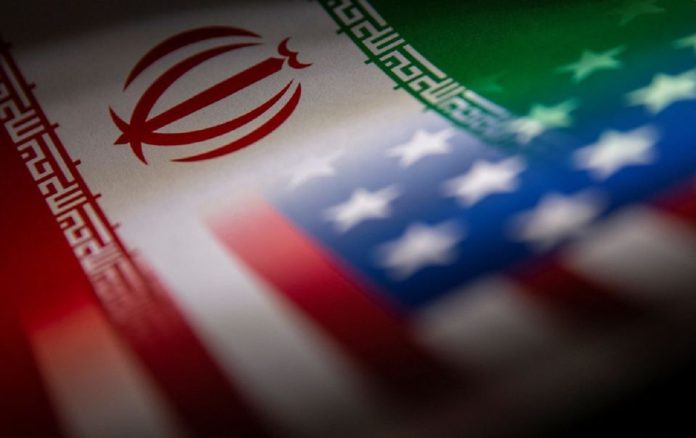
Nuclear enrichment will continue, but Iran still open to talks: Iran’s FM

“It is now stopped because, yes, damages are serious and severe, but obviously, we cannot give up our enrichment because it is an achievement of our own scientists, and now, more than that, it is a question of national pride,” Araghchi told the US broadcaster Fox News in an interview aired on Monday.

Araghchi said at the beginning of the interview that Iran is “open to talks” with the United States, but that they would not be direct talks “for the time being”.

“If they [the US] are coming for a win-win solution, I am ready to engage with them,” he added.

“We are ready to do any confidence-building measure needed to prove that Iran’s nuclear programme is peaceful and would remain peaceful forever, and Iran would never go for nuclear weapons, and in return, we expect them to lift their sanctions,” the foreign minister continued.

“So, my message to the United States is that let’s go for a negotiated solution for Iran’s nuclear programme.”

Araghchi’s comments were part of a 16-minute interview aired on Fox News, a broadcaster known to be closely watched by US President Donald Trump.

“There is a negotiated solution for our nuclear programme. We have done it once in the past. We are ready to do it once again,” Araghchi said.

Tehran and Washington had been holding talks on the nuclear programme earlier this year, seven years after Trump pulled the US out of the Joint Comprehensive Plan of Action (JCPOA), which Tehran signed with several world powers in 2015. Under the pact, Iran opened the country’s nuclear sites to comprehensive international inspection in return for the lifting of sanctions.

Trump’s decision to pull the US out of the deal came after Israeli Prime Minister Benjamin Netanyahu accused Iran of pursuing a “secret nuclear programme“.

Iran has long maintained that its nuclear enrichment programme is strictly for civilian purposes.

The US and Iran engaged in talks as recently as May to reach a new deal, but those negotiations broke down when Israel launched surprise bombing raids across Iran on June 13, targeting military and nuclear sites.

More than 1,000 people were killed in Iran before a ceasefire took hold on June 24.

The US also joined Israel in attacking Iranian nuclear facilities, with the Pentagon later claiming it had set back the country’s nuclear programme by one to two years.

Araghchi stated on Monday that Iran’s Atomic Energy Organisation is still evaluating how the attacks had affected Iran’s enriched material, adding that they will “soon inform” the International Atomic Energy Agency (IAEA) of its findings.

He added any request for the IAEA to send inspectors would be “carefully considered”.

“We have not stopped our cooperation with the agency.”

IAEA inspectors left Iran after Iranian President Masoud Pezeshkian signed a law suspending cooperation with the IAEA earlier this month.

Tehran had sharply criticised the IAEA and its chief, Rafael Grossi, over a June 12 resolution passed by the IAEA board accusing Tehran of non-compliance with its nuclear obligations.

Iranian officials said the resolution was among the “excuses” that Israel used as a pretext to launch its attacks, which began on June 13 and lasted for 12 days.

Speaking to journalists earlier on Monday, Stephane Dujarric, the spokesperson for the United Nations secretary-general, stated that the UN welcomed renewed “dialogue between the Europeans and the Iranians”, referring to talks set to take place between Iran, France, Germany and the United Kingdom in Turkiye on Friday.

The three European parties to the former JCPOA agreement have announced that Tehran’s failure to resume negotiations would lead to international sanctions being reimposed on Iran.

Tehran air quality reaches hazardous levels amid extreme heat

Iran Air Pollution

According to real-time monitoring data, most air quality stations in Tehran are reporting red and purple alerts. Only one station has reported a safer AQI of 37.

The AQI just 24 hours earlier had been at a 87, within the “moderate” range.

Currently, eight stations report “very unhealthy” (purple) conditions, six are marked “unhealthy for all groups” (red), and the rest are in the “orange” zone, meaning high health risks. Since the beginning of the current Persian year (starting March 21), Tehran has experienced only six days of “clean” air.

Iranian official urges sun protection as UV radiation levels rise

Deputy Director of the Air Quality and Climate Change Research Center at Iran’s Shahid Beheshti University of Medical Sciences Abbas Shahsavani referred to social media reports on elevated UV levels in Tehran and other cities, saying this is not a new phenomenon.

“Countries in West Asia, due to their geographic location, typically experience high UV index levels from June to September, particularly between 11 a.m. and 4 p.m”, he said. Shahsavani noted that climate change is intensifying both temperatures and UV radiation in the region.

He advised the public to wear sunglasses, wide-brimmed hats, long-sleeved clothing, and sunscreen, especially during peak sunlight hours, and to limit outdoor activities whenever possible.

Shahsavani warned that long-term exposure to UV can lead to skin cancer, premature aging, weakened immune function, and eye damage.

He said UV levels in Tehran have reached an average index of 11.28 during the summer months, peaking at 12 in August, levels which are considered very high.

Israeli soldiers arrested in Belgium after Gaza war crimes complaint by rights groups

A statement by the Hind Rajab Foundation (HRF) and the Global Legal Action Network (Glan) said the pair were in the country to attend a music festival and that legal proceedings were ongoing.

“The suspects were identified and arrested with a clear show of force at the Tomorrowland festival in Boom,” the groups announced on Monday.

HRF director Dyab Abou Jahjah stated: “Within the framework of the long fight for accountability, this is a major milestone. This is the first time that a European country acknowledges universal jurisdiction against Israeli soldiers and acts upon it in a forceful way, arrests them, and brings them to a police station to interrogate them.”

Dearblah Minogue, Glan’s senior lawyer who worked on the case with HRF, noted the arrests are “the biggest step for accountability since the beginning of the genocide, because law enforecement in Europe actually took action and arrested some suspects”.

“I think we will now see a domino effect across Europe and around the world,” she told Middle East Eye, explaining that the accusations brought against the two soldiers include the use of human shields and wanton destruction.

The evidence was collected from the soldiers’ own social media feed.

“One of them posted videos of his unit blowing up property in Gaza and Lebanon,” added Minogue.

“The other posed next to a Palestinian who was being used as a human shield by his unit.”

The Federal Prosecutor’s Office on Monday said it received two complaints on Friday and Saturday from the HRF and Glan, concerning “serious violations of international humanitarian law allegedly committed in the Gaza Strip by two members of the Israeli army” who were in Belgium to attend the Tomorrowland festival.

The prosecutor’s office announced it has determined that it might have jurisdiction on the case based on the new Article 14/10 of the Preliminary Title of the Code of Criminal Procedure, which entered into force on 28 April 2024. The article grants Belgian courts jurisdiction over crimes committed outside Belgium based on the Geneva Conventions of 1949 and the Convention against Torture of 1984.

“In light of this possible jurisdiction, the Federal Prosecutor’s Office instructed the police to locate the two individuals mentioned in the complaint and to proceed with their questioning. After the interviews, they were released,” it said, adding that no further information will be provided at this stage of the investigation.

The HRF is a Brussels-based NGO focused on taking international legal action for war crimes committed in Gaza since the start of the war in October 2023. Its founder Dyab Abou Jahjah has told MEE that it has more than 8,000 pieces of evidence documenting war crimes by Israeli soldiers in Gaza.

It has pursued war crimes cases against Israeli soldiers and officials in Europe and Latin America, but this is the first time its efforts have led to arrests.

“The Hind Rajab Foundation and Glan welcome this breakthrough with determination and humility,” they said in a press release, adding, “We will continue to support the ongoing proceedings and call on Belgian authorities to pursue the investigation fully and independently. Justice must not stop here – and we are committed to seeing it through.”

The arrests came on the same day Belgium’s King Philippe described the situation in Gaza as “a disgrace to humanity”. He stated in speech on Sunday that Belgium backs calls by the UN for “an immediate end to this unbearable crisis”.

Israeli army admits major manpower shortfall amid Gaza war for 1st time: Report

Israeli Army

“For the first time, the Israeli army admits that its forces are significantly depleted. It estimates a shortage of around 7,500 soldiers,” the Hebrew-language daily Maariv said.

According to the report, the army is currently lacking 300 platoon commanders in combat units across its ground forces.

The army admitted that it has been “difficult to convince capable soldiers to join the officer training program,” and said it had resorted to appointing experienced sergeants as acting platoon commanders to fill the gap.

Maariv reported that another shortfall lies in company-level leadership.

“In recent months, the army has been forced to assign officers to roles in both regular and reserve units who have not completed the official company commander course,” the newspaper added.

As for the war in Gaza, Maariv noted that “a significant number of officers and commanders have been killed,” and that “hundreds have been injured.”

Commanders in both regular and reserve units told the newspaper that the leadership crisis extends beyond platoon and company levels, reaching battalion commanders, who bear a heavy combat burden while remaining away from home and family.

Many battalion commanders have expressed interest in retiring due to workload and extended deployments, the paper noted.

Despite more than 21 months since the start of the genocidal war on Gaza in October 2023, Palestinian resistance factions continue to conduct well-planned ambushes in the area, inflicting casualties on Israeli forces, showcasing Tel Aviv’s inability to achieve its war objectives.

Israel maintains strict censorship on reporting its military losses in Gaza and has not published an updated toll for its dead and wounded, prompting speculation that actual figures may be significantly higher.

Rejecting international calls for a ceasefire, the Israeli army has pursued a brutal offensive on Gaza since Oct. 7, 2023, killing more than 59,000 Palestinians, most of them women and children. The relentless bombardment has destroyed the enclave and led to food shortages and a spread of disease.

Last November, the International Criminal Court issued arrest warrants for Israeli Prime Minister Benjamin Netanyahu and his former Defense Minister Yoav Gallant for war crimes and crimes against humanity in Gaza.

Israel also faces a genocide case at the International Court of Justice for its war on the enclave.

25 states, EU condemn Israel ‘inhumane killing’ of civilians in Gaza

In a joint statement, the foreign ministers of 25 countries and the EU Commissioner for Equality, Preparedness and Crisis Management Hadja Lahbib, said the suffering of civilians in Gaza has reached “new depths.”

“The Israeli government’s aid delivery model is dangerous, fuels instability and deprives Gazans of human dignity,” it added.

“We condemn the drip feeding of aid and the inhumane killing of civilians, including children, seeking to meet their most basic needs of water and food.”

Labelling the killing of over 800 Palestinians while seeking aid since the start of operations by the controversial Gaza Humanitarian Foundation in late May as “horrifying,” the statement noted that the Israeli government’s denial of essential humanitarian assistance to the civilian population is “unacceptable.”

“Israel must comply with its obligations under international humanitarian law,” read the statement, signed by the foreign ministers of Australia, Austria, Belgium, Canada, Denmark, Estonia, Finland, France, Iceland, Ireland, Italy, Japan, Latvia, Lithuania, Luxembourg, The Netherlands, New Zealand, Norway, Poland, Portugal, Slovenia, Spain, Sweden, Switzerland and the UK as well as the EU commissioner.

Also condemning the detention of hostages, they called for their “immediate and unconditional release.” Hamas took around 250 Israeli hostages in its Oct. 7, 2023 attack. Around 20 are still believed to be alive.

“We call on the Israeli government to immediately lift restrictions on the flow of aid and to urgently enable the UN and humanitarian NGOs to do their life saving work safely and effectively.”

Calling on all parties to protect civilians and uphold the obligations of international humanitarian law, the statement said proposals to remove the Palestinian population into a “humanitarian city” are “completely unacceptable.”

“Permanent forced displacement is a violation of international humanitarian law. We strongly oppose any steps towards territorial or demographic change in the Occupied Palestinian Territories.”

The parties also reaffirmed their “complete support” to the efforts of the US, Qatar and Egypt to achieve immediate, unconditional and permanent ceasefire.

Beijing slams EU for including Chinese firms in anti-Russia sanctions

On Friday, Brussels blacklisted two Chinese banks and five companies as part of the 18th sanctions package against Russia over the Ukraine conflict, claiming that they helped circumvent earlier sanctions.

“China has consistently opposed unilateral sanctions that lack a basis in international law and are not authorized by the UN Security Council,” a spokesperson for the ministry told journalists on Monday, warning that the EU’s move will severely impact bilateral trade, as well as economic and financial cooperation.

The ministry called for an immediate halt to “the erroneous practice,” adding that China will “take necessary measures to resolutely safeguard the legitimate rights and interests” of its sanctioned businesses.

Heihe Rural Commercial Bank and Heilongjiang Suifenhe Rural Commercial Bank were included in the EU sanctions list for allegedly providing cryptocurrency services which, according to Brussels, were “frustrating the purpose of the sanctions” on Russia. This is the first time Chinese lenders have been added to the EU sanctions list since the escalation of the Ukraine conflict in February 2022.

The latest round of EU sanctions also targets seven UAE-based enterprises accused of engaging in oil trading or ship management services supporting Russian exports. Nayara Energy, an Indian oil refinery in which Russia’s Rosneft holds a 49% stake, was also included.

In addition, the bloc sanctioned eight Belarusian-based companies in the military-industrial sector, claiming that they support Russia through manufacturing or facilitating military technologies. Four Turkish companies were also targeted for allegedly supplying dual-use goods and technologies that could support Russia’s military-industrial complex.

Kremlin spokesman Dmitry Peskov described the EU’s latest sanctions as a “double-edged sword,” warning that “each new package adds a negative effect for the countries joining it.” He stressed that Russia has already developed “a certain immunity” to the “illegal” Western sanctions.