Sunday, December 21, 2025
Home Blog Page 2416

France warns UK about pushing back migrant boats

Relations between London and Paris plunged to a new low as the UK was accused of breaking maritime law and of “blackmail”, after the British government threatened to withhold funds for France to beef up its coastal patrols.

The clash came as leading lawyers, a senior Tory MP, the union representing Border Force officers, and a former chief of the naval staff all agreed that the pushback policy was likely to be unworkable without French cooperation.

Lord West, the ex-naval chief, also warned that the plan – which Home Secretary Priti Patel hopes to launch within weeks – could easily end up with “someone being killed”.

Nicolas Pillerel, diplomatic adviser to French Interior Minister Gerald Darmanin, echoed Lord West’s fear, saying, “Intercepting boats in the sea when they don’t want to be escorted is extremely dangerous. And this can lead to tragedies.”

“It risks the Channel becoming a new theatre of human tragedies, as we have already seen in other seas,” added Pillerel, referring to mass drownings in the Mediterranean and Aegean.

However, according to a report, the home secretary is determined to plough ahead, believing French officials will have no choice but to cooperate if boats are forced back into French waters.

Patel intends to speak personally to any Border Force commanders who have assessed that migrant boats can be pushed back, to make clear she fully supports that decision.

Training has been going on for 18 months already and is expected to finish by the end of September, with Border Force officials being trained to physically bump boats backwards.

The home secretary’s plan, which came in response to orders from Prime Minister Boris Johnson to curb the crossings, sparked a furious reaction when the French interior minister met with Patel on Wednesday.

Darmanin tweeted, “France will not accept any practice that is contrary to the law of the sea, nor any financial blackmail.”

The minister said he had told Patel that “Great Britain must stick to its commitments”, adding, “The friendship between our two countries merits better than posturing, which harms the cooperation between our services.”

The Home Office announced it had received legal advice indicating that boats could be turned back in some circumstances, but it was thought that this would not require any maritime laws to be broken, or place passengers at risk.

Colin Yeo, a specialist immigration lawyer, said it was a policy that “sounds tough but will never be implemented”, akin to earlier UK threats to “install wave machines or a floating fence”.

Pushback has been used previously by the Italian authorities in the Mediterranean, and by the Australian and US governments, but there has always been another nation willing to accept refugees back.

James Turner, a QC specialising in shipping disputes, agreed with the view that turning back migrant boats in the middle of the Channel would “not be lawful under international law”.

Lucy Moreton of the ISU union, which represents Border Force staff, called the idea “dead in the water”, noting, “In practical terms, if this happened even once I’d be surprised.

“You also need the consent of the French to do it because, as you turn the vessel back towards France – when it crosses the median line – it has to be intercepted and rescued by the French, and it appears the French will simply not engage in this,” Moreton added.

Moreton stated that officers were concerned migrants and refugees would “panic” and put themselves at even greater risk, now that the policy had been made public.
Tim Loughton, a Conservative member of the Commons Home Affairs Committee, agreed the plan was unworkable, saying, “In practice it’s just not going to happen.”

And Lord West, the former first sea lord, added, “People forget how dangerous the sea is. It’s flat, calm, and people have been coming across, but it doesn’t take much suddenly for people to go into the water and drown.”

Johnson’s spokesperson refused to discuss the new approach, stating, “I’m not going to get into the operational tactics used by Border Force staff.”

However, they denied any plan to rewrite maritime laws, and brushed off the French protests and refusal to cooperate, insisting that the UK was “confident” the policy would work.

The spokesperson said, “It’s right that our Border Force has the right range of tactics to address this problem. They will make sure it is tested and that it is carried out by trained Border Force staff and that it is safe and legal.”

More than 12,500 migrants have arrived from France so far this year – including 1,500 in the last week alone – a sharp rise from around 8,000 in 2020.

Source: The Independent

UN chief calls for dialogue with Taliban

“We must maintain a dialogue with the Taliban, where we affirm our principles directly — a dialogue with a feeling of solidarity with the Afghan people,” he stated in an interview with AFP.

“Our duty is to extend our solidarity to a people who suffer greatly, where millions and millions risk dying of hunger,” Guterres added.

The UN chief said there were “no guarantees” about what might come out of talks but that discussions are a must “if we want Afghanistan not to be a center of terrorism, if we want women and girls to not lose all the rights acquired during the previous period, if we want different ethnic groups to be able to feel represented”.

“Until now, in the discussions that we have had, there is at least a receptivity to talk,” noted Guterres, who does not rule out going to Afghanistan one day if conditions are right.

What the UN wishes is “an inclusive government”, where all components of Afghan society are represented, and “this first preliminary government” announced a few days ago “does not give that impression” he added, regretfully.

“We need respect for human rights, women and girls. Terrorism must have no base in Afghanistan to launch operations in other countries and the Taliban must cooperate in the struggle against drugs,” Guterres continued.

He said Afghanistan must be governed “in peace and stability, with the rights of the people respected.”

Guterres stated that the Taliban wants recognition, financial support and sanctions to be abolished.

“That gives a certain leverage to the international community,” he said, adding that “an economic collapse situation which could create appalling humanitarian consequences” must be avoided.

Guterres suggested that, as with Yemen, it is possible to foresee the granting of “financial instruments” to Kabul that would not be subject to current sanctions.

“It is in the interest of the international community and I am not talking about the lifting of sanctions or recognition. I am talking about targeted measures to allow the Afghan economy to breathe,” he told the news agency.

Iran raps ‘Arab Quartet Committee’ statement

Iran's Foreign Ministry

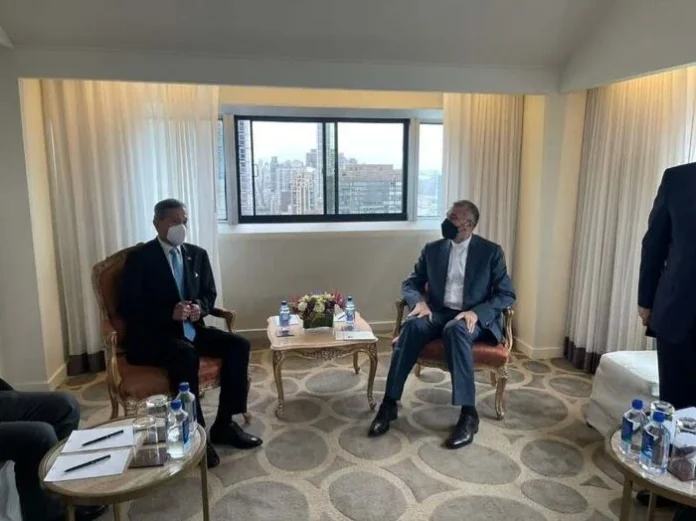
“Such statements show that the members of the committee lack the least understanding of regional developments,” Khatibzadeh said in a statement on Friday.

The foreign ministry spokesman dismissed allegations of Iranian interference in the domestic affairs of other countries as hackneyed.

He said countries that have a history of intervention, creating tension, breeding terrorists and war mongering especially in West Asia and Africa are in no position to make accusations against Iran.

He said the main concern of those behind such statements is to serve Israel overtly and covertly.

Khatibzadeh advised the four countries to focus on the Israel’s crimes against Palestinians.
He said issuing such statements simultaneously with the actions of some of these countries to mend ties with Iran is contradictory.

On Thursday, the self-proclaimed Arab quartet committee comprising Saudi Arabia, the United Arab Emirates, Bahrain, and Egypt repeated its allegations of support for terrorism against Iran. It also accused Iran of aggressive acts in the region.

Taliban cancels inauguration ceremony for Afghan interim govt.

“The inauguration ceremony of the new Afghan government was canceled a few days ago. In order not to confuse people further, the leadership of the Islamic Emirate (the name the Taliban calls itself) announced the part of the Cabinet, and it has already started to work,” Inamullah Samangani, a member of the Taliban’s cultural commission, wrote on his Twitter page, without specifying the further date for the event.

Furthermore, he denied previously disseminated information that the inauguration was supposedly scheduled for September 11, calling it rumors.

Earlier, several foreign and regional media reported that the Taliban planned to inaugurate the new Afghan government on September 11, 2021. As it was stated, Russia, Iran, China, Qatar and Pakistan were invited to the ceremony.

On August 15, Taliban fighters swept into Kabul without encountering any resistance, and gained full control over the Afghan capital within a few hours. Afghanistan’s President Ashraf Ghani claimed he had stepped down to prevent any bloodshed and subsequently fled the country. On September 6, the Taliban took over the entire country, while the next day, it announced the new interim Afghan government, which included only members of the movement itself.

Source: TASS

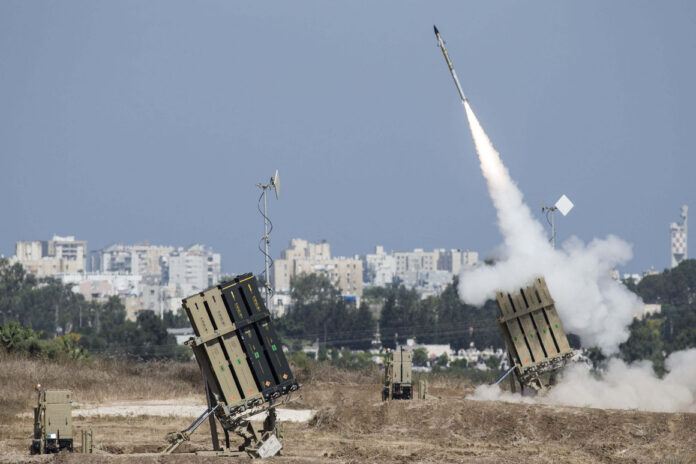
Iran says reserves right to respond to Israel threats

In a tweet, Foreign Ministry spokesman Saeed Khatibzadeh described Israel as an outlaw regime. Khatibzadeh also lashed out at Israel for going on at Iran’s peaceful nuclear program while the regime itself is sitting on an illicit arsenal of nukes and refuses to sign the Nuclear Non-proliferation Treaty.

He added that Iran is a signatory to the NPT and has had its nuclear facilities inspected by the International Atomic Energy Agency, IAEA, more than any other country. Khatibzadeh said Iran reserves the right to respond to Israel’s threats and that the world is waking up to the destabilizing nature of the “West’s darling”.

Israel’s military chief Aviv Kohavi recently said the regime has prepared plans on striking Iran. Israel has frequently threatened Iran with war over the past years without making good on its threats. Iran says the saber-rattling is merely part of Israel’s psychological warfare.

Lebanese president, PM sign decree on gov’t formation

Lebanon's President Michel Aoun meets with leading businessman Najib Mikati at the presidential palace in Baabda, Lebanon July 26, 2021. Dalati Nohra/Handout via REUTERS ATTENTION EDITORS - THIS IMAGE WAS PROVIDED BY A THIRD PARTY

“The situation is very difficult. But it’s not impossible if we united as Lebanese. We have to put our hands together,” Mikati told the press on Friday, adding, “We are all going to work together, united with hope and determination.”

The new prime minister made the remarks at a press conference at the presidential Baabda Palace following a meeting with Aoun to sign the government formation decree with Parliament Speaker Nabih Berri also present. He arrived to the presidential palace waving a paper to the press with what was the finalized list of ministers, before meeting the president.

Lebanon had been without a government for over a year as it descended further into economic meltdown.

Like the country’s previous government, the lineup consists of newcomers, including Finance Minister Yousef Khalil, a senior Central Bank official, and Health Minister Firas Abiad of the government-run Rafic Hariri University Hospital, who came to prominence during the COVID-19 pandemic.

Mikati vowed to help Lebanon through “exceptional circumstances”, as its economy continues to crumble, expressing his concern about the state of education, the country’s brain drain, and medicine shortages.

Lebanon’s economy continues to spiral. The Lebanese pound has lost 90 percent of its value in less than two years, while gasoline, diesel fuel, and medicine shortages plagued the country. The United Nations recently estimated that almost three-quarters of the population in Lebanon live in poverty.

The international community has repeatedly urged Lebanon to reform its wasteful and ineffective economic sectors, restart negotiations with the International Monetary Fund, and hold general elections scheduled for May 2022.

With the government now formed, Parliament will soon convene to issue a vote of confidence for the Mikati government.

Mikati was appointed almost two months ago on July 26, soon after previous Prime Minister-designate Saad Hariri’s resignation.

Since then, he, Aoun, and other political leaders engaged in political horse trading to agree on the sectarian and political allocation of ministerial appointments as per the country’s fragile sectarian power-sharing system.

Mikati is currently a parliamentarian representing the northern city of Tripoli, and heads a three-member bloc. He has previously had two stints as Lebanon’s prime minister, once in a caretaker capacity in 2005, and more recently from June 2011 until February 2014. He is also multi-billionaire businessman, and one of the wealthiest men in Lebanon.

Lebanon has not had a full-fledged government in 13 months, after caretaker Prime Minister Hasan Diab’s government resigned in August 2020 in the wake of the Beirut Port explosion.

Since then, two government formation attempts have failed, once by diplomat and Ambassador to Germany Mustafa Adib, the other by former PM Hariri. The political paralysis continued to persist, despite attempts from the Macron government in France to break the deadlock, and the European Union dangling sanctions threats at obstructing officials.

Source: Al-Jazeera

Xi criticizes US China policy, warns confrontation could cause disaster

Ties between Beijing and Washington have been strained in recent years by a bruising trade war and America’s tough stand on China’s human rights track record – while competition over tech dominance and disputes over the origins of the coronavirus have further sullied relations.

In “candid, in-depth” talks with Biden, Xi warned that confrontation between the world’s top economies “would spell disaster for both countries and the world”.

“Whether China and the US can properly handle their relations… is critical for the future and destiny of the world,” Xi said, adding, “And this is a question of the century that both countries must answer.”

Xi told Biden the recent US political steps toward China had caused significant difficulties in the bilateral relations.

“The US policy toward China conducted for some time has caused serious difficulties in the relations between Beijing and Washington, which is not in line with the basic interests of the peoples of the two countries and the interests of all nations of the world,” Xi stressed.

It was the first call between the two leaders in seven months.

Xi stressed that the two sides should continue their dialogue on climate change, epidemic prevention and the global economic recovery, while “respecting our differences”.

“China-US relations are not a multiple-choice question involving whether or not to do a good job,” Xi continued, stating it is “a must-answer question on how to do a good job”.

The White House also announced that Biden and Xi have held a phone conversation to discuss each other’s national interests and the competition between the two countries.

“President Joseph R. Biden, Jr. spoke today with President Xi Jinping of the People’s Republic of China (PRC). The two leaders had a broad, strategic discussion in which they discussed areas where our interests converge, and areas where our interests, values, and perspectives diverge,” the White House said in a statement on late Thursday.

The leaders also agreed to cooperate on both sets of problems “openly and straightforwardly”, it added.

“This discussion, as President Biden made clear, was part of the United States’ ongoing effort to responsibly manage the competition between the United States and the PRC. President Biden underscored the United States’ enduring interest in peace, stability, and prosperity in the Indo-Pacific and the world and the two leaders discussed the responsibility of both nations to ensure competition does not veer into conflict,” the statement read.


Source: CCTV and China Central Television

Putin: US left world with a mess in Afghanistan

Western countries have withdrawn from Afghanistan but now the whole international community has to deal with the possible consequences, Putin warned.

Speaking to a video conference of the BRICS economic international group, Putin said the crisis in Afghanistan results from an attempt to impose foreign ideas in a country where they won’t be accepted.

“I have said many times that the current crisis in Afghanistan is a direct consequence of irresponsible attempts to impose alien values from outside and the desire to build so-called democratic structures by political engineering, which takes into account neither historical nor national characteristics of other nations,” Putin stated, accusing the US and its allies of “ignoring the traditions that other countries live by”.

He stressed that such actions lead to destabilization and ultimately to chaos.

“The authors of these experiments then hastily retreat, leaving their subjects to fend for themselves as well. The whole international community has to deal with the consequences,” he summed up.

BRICS, named for an acronym of Brazil, Russia, India, China, and South Africa, is a group of five major emerging economies that have significant influence in their regions. The five nations meet every year, each hosting on a rotating basis. Speaking to his heads-of-state counterparts, Putin noted that the group has “consistently advocated the establishment of long-awaited peace and stability on Afghan soil.”

Source: RT

UN warns of freezing Afghanistan’s assets

Internally displaced Afghans at a camp outside Kabul, Afghanistan, during a visit by United Nations Secretary General Antonio Guterres June 14, 2017. REUTERS/Josh Smith - RTS170LZ

UN special envoy on Afghanistan Deborah Lyons warned on Thursday that the freezing of billions of dollars in Afghan assets to keep them out of Taliban hands would inevitably spark “a severe economic downturn” and could push millions more Afghans into poverty and hunger.

Lyons said a way needed to be found to get money quickly flowing to the country “to prevent a total breakdown of the economy and social order” and with safeguards to ensure it is not misused by the Taliban.

Lyons told the UN Security Council that Afghanistan could be set “back for generations”.

“The economy must be allowed to breathe for a few more months, giving the Taliban a chance to demonstrate flexibility and a genuine will to do things differently this time, notably from a human rights, gender, and counter-terrorism perspective,” Lyons added.

Much of the Afghan central bank’s $10 billion in assets are parked overseas, where they are considered a key instrument for the west to pressure the Taliban. The US Treasury Department announced it is not easing Taliban sanctions or loosening curbs on the group’s access to the global financial system.

The International Monetary Fund has also blocked the Taliban from accessing some $440 million in new emergency reserves.

“The Taliban seeks international legitimacy and support. Our message is simple: any legitimacy and support will have to be earned,” senior US diplomat Jeffrey DeLaurentis told the Security Council.

Russia and China both argued for the release of Afghanistan’s frozen assets.

At the start of 2021 half of Afghanistan’s population – more than 18 million people – needed help. The UN Development Programme warned on Thursday that Afghanistan was facing universal poverty by the middle of next year.

The Taliban last month seized power 20 years after they were ousted by a US-led invasion for refusing to hand over Al-Qaeda leader Osama bin Laden in the wake of the September 11, 2001, attacks on the United States.

Afghanistan’s UN Ambassador Ghulam Isaczai, who was appointed by Washington-backed government ousted by the Taliban, urged the Security Council to “withhold any recognition of any government in Afghanistan unless it’s truly inclusive and formed on the basis of free will of the people.”

Source: Reuters

First intl. flight from Afghanistan since US withdrawal in Doha

The plane carried 113 passengers, including citizens of the UK, Germany, Canada, the US and Ukraine.

The charter flight was organized by Qatari government under the request from a number of countries that were unable to evacuate their citizens from Afghanistan on time.

Civilian passenger flights in Afghanistan were suspended after the Taliban movement took control over the country. This was followed by emergency evacuation, carried out by a number of countries at once.

The chaos at the Kabul Airport during the evacuation and a terror attack that happened near it caused significant damage to the airstrip and terminals. Specialists from Qatar and Turkey assist in repairing the airport. Internal flights resumed on September 4. In the last few days, foreign flights with humanitarian aid started arriving in Kabul.

Source: Sky News