Sunday, December 21, 2025
Home Blog Page 2410

Iran-IAEA agreement under the media spotlight

Afkar:

1: Eslami in a joint press conference with Grossi: Talks were useful

Iran-IAEA agreement under the media spotlight


Aftab Yzd:

  1. We withdrew or they did?
  • Iran and the International Atomic Energy Agency issue a joint statement. Iran says there has been an agreement over the continuation of technical negotiations. The West, however, talks about cameras monitoring the nuclear sites.

Iran-IAEA agreement under the media spotlight


Arman Melli:

  1. A positive step; Consensus in Tehran-talks in Vienna

Iran-IAEA agreement under the media spotlight


Ebtekar:

1.Agreement, the result of the nighttime visit of Grossi

  • Inspectors are allowed to carry out overhaul of the monitoring equipment and replace the memory cards

Iran-IAEA agreement under the media spotlight


Etemad:

  1. Hassn Beheshtipour, an analyst on nuclear issues, tells Etemad: Cooperation with the Agency should continue so that the events of the years 2006-2010 will not be repeated
  • Sanctions will not be lifted without talks

Iran-IAEA agreement under the media spotlight


Ettelaat:

  1. The agreement between Iran and the International Atomic Energy Agency over servicing the monitoring equipment

Iran-IAEA agreement under the media spotlight


Farhikhtegan:

  1. Nuclear talks out of the shadow of the bad cop pressure

Iran-IAEA agreement under the media spotlight


Iran:

  1. An understanding between Iran and the IAEA ahead of the meeting of the Agency’s board of governors meeting

Iran-IAEA agreement under the media spotlight


Jame Jam:

  1. The Diplomatic Sunday of Tehran
  • The Iraqi prime minister and the head of the IAEA simultaneously visiting our country

Iran-IAEA agreement under the media spotlight


Javan:

  1. Iran did not reveal its secrets to the IAEA

Iran-IAEA agreement under the media spotlight


Jomhouri Eslami:

  1. Iran and the IAEA agree to continue cooperation

Iran-IAEA agreement under the media spotlight


Khorasan:

  1. Conditional agreement with the IAEA
  • IAEA inspectors are allowed to replace the memory cards, jointly sealed and kept in Iran
  • An informed source told Khorasan, the permit will be valid if only the Agency does not approve any resolution against Iran

Iran-IAEA agreement under the media spotlight


Shahrvand:

  1. Agreement reached

Iran-IAEA agreement under the media spotlight


Shargh:

  1. Rouhani’s JCPOA in Raisi’s hands
  • The head of the Atomic Energy Agency visits Iran, his first trip in the new administration

Iran-IAEA agreement under the media spotlight


Vatan Emrooz:

  1. Eyes wide shut
  • The Agency still does not have access to the footage of its monitoring cameras

Iran-IAEA agreement under the media spotlight


Qatari FM visits Kabul, meets acting Afghan PM

The foreign minister visited Afghanistan’s capital and met Mullah Mohammad Hassan Akhund, the acting Prime Minister in the Taliban’s new government.

He also met on Sunday with former President Hamid Karzai as well as Abdullah Abdullah, the head of the National Reconciliation Council, as he encouraged Afghan parties and groups to engage in national reconciliation.

It is the highest-level visit by an official since the United States military withdrawal from Afghanistan. Al Thani met a number of officials in the new government, including the foreign minister and their deputy.

The officials discussed the current political situation and the efforts Qatar is currently making to support the Afghan people.

Qatar is considered one of the countries with the most influence over the Taliban, which took control of Afghanistan last month as US troops were preparing to finally withdraw from the country after 20 years.

It played a pivotal role in the massive US-led airlift of its own citizens, other Western nationals and Afghans who helped Western countries.

It is also supporting tens of thousands of Afghans who were evacuated in the final weeks of the US-led occupation as they are processed before heading to other nations.

Foreign donors led by the US provided more than 75 percent of the public expenditure for the Afghan government that crumbled as the US withdrew its troops after 20 years in the country.

President Joe Biden’s administration has announced it is open to donating humanitarian aid but says that any direct economic lifeline, including unfreezing central bank assets, will be contingent on Taliban actions including allowing safe passage to people to leave.

The International Monetary Fund has also blocked the Taliban from accessing some $440m in new emergency reserves.

“The Taliban seeks international legitimacy and support. Our message is simple: any legitimacy and support will have to be earned,” senior US diplomat Jeffrey DeLaurentis told the Security Council.

No country has yet formally recognised the new Taliban government – and only three did during the first rule of the group from 1996-2001.

Source: Al-Jazeera

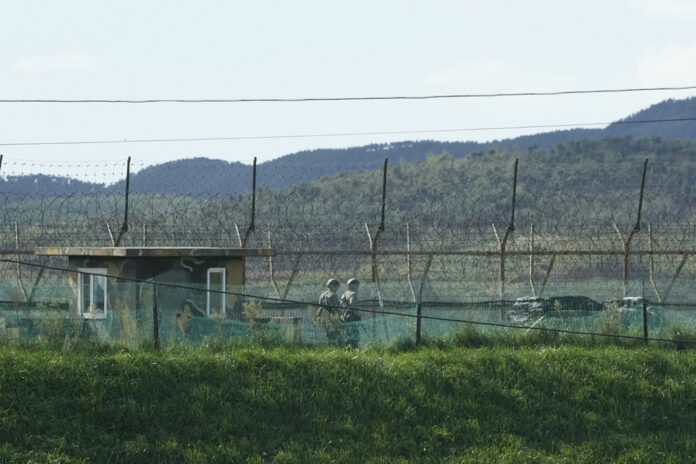
North Korea says has tested new cruise missile

The tests were carried out over the course of two days, on Saturday and on Sunday, Korean Central News Agency (KCNA) reported. As part of the tests, the missiles destroyed targets some 1,500 km (930 miles) away from the launch site and fell into the country’s territorial waters.

Pyongyang hailed the tests as success, claiming that the launch has confirmed all the technical features of the new weapon, including the power of its propulsion system, the missile’s controllability and its accuracy.

The missile is designed to serve as yet another “effective deterrence means” to “ensure the security” of the country, while “strongly suppressing the military movements of hostile forces”, according to the KCNA.

North Korean leader Kim Jong-un reportedly did not oversee the launch. Instead, an array of high-profile party and military officials were present at the tests.

The tests of what has been touted as a brand-new weapon come on the eve of US special envoy for North Korea Sung Kim’s visit to Japan next week, where he is set to meet with South Korean and Japanese officials to discuss the denuclearization issue.

Pyongyang has repeatedly threatened to resume testing of long-range missiles after denuclearization talks with former US President Donald Trump fell through. The negotiations stalled after Washington refused to offer partial relief of sanctions, demanding Pyongyang dismantle its nuclear program first.

The soured relations did not warm up under the President Joe Biden administration, despite its declared efforts to meet North Korean officials at any place and time. North Korea has spoken dismissively about diplomatic advances on part of Washington, demanding the US reverses its “hostile policy” as a starter.

The new long-range missile that was test-fired by North Korea over the weekend did not reach Japan’s airspace or territorial waters and did not enter its exclusive economic zone, the NHK broadcaster reports citing government sources.

NHK said citing military sources on Monday that with such a range, the new type of missile appears to be capable of reaching Tokyo.

Japan’s Chief Cabinet Secretary Katsunobu Kato told reporters on Monday that the Japanese government is concerned about the new test launch, since, if the 1,500-kilometer range is proved to be correct, it poses a threat to regional security and global stability.

Kato added that Japan is closely cooperating with the US and South Korea on the issue of North Korean military activity.

Earlier, the Pentagon announced that it was aware of reports on North Korea’s cruise missile test launches and warned that such activity is a threat to Pyongyang’s neighbours and the international community.

Khatibzadeh: Taliban caretaker govt. not what Iran expects

Iranian Foreign Ministry Spokesman Saeed Khatibzadeh says the recently announced Taliban government in Afghanistan is serving in a caretaker capacity and is not what Iran and the international community expect.

He made the remarks in his weekly briefing on Monday in Tehran. 

Asked whether Iran would recognize the Taliban, the foreign ministry spokesman said Iran has its own relations with all sides in Afghanistan and holds talks with all of them.

“Iran has held more comprehensive talks with some parties while it engaged in more limited dialog with others. We have always tried to talk to these groups,” he added.

Asked whether the Islamic Republic would send any representative to a Taliban government inauguration ceremony, the foreign ministry spokesman said Iran will make a decision in this regard based on the actions of the Taliban.

On the situation in Afghanistan’s Panjshir Valley, Khatibzadeh said the two sides can only resolve the issue through dialog and warned against any path that would push Afghanistan into a “fratricidal war”.

He also stressed that the future of Afghanistan should be decided by its people and warned against foreign intervention.

Kharibzadeh also blasted the West’s double standard in dealing with Israel’s nuclear weapons program.

“The Zionist regime is an illegitimate entity that has turned into a base for terror and state terrorism and has created a dangerous situation for the region and the world. This regime is sitting on hundreds of atomic warheads, has an active military nuclear program, has always refused to join the Nuclear Non-Proliferation Treaty, has rejected any international monitoring regime in this field and has rejected the safeguards agreement,” Khatibzadeh stated. 

“Unfortunately, the West has employed a very shameful double standard. They (the West) not only exert no pressure on the regime to disarm, they have provided this illegitimate regime, as their darling, with all their resources to violate international law and permanently threaten the region and the world,” Khatibzadeh said. 

He said the Israeli regime is in no position to make statements about signatories to the Nuclear Non-Proliferation Treaty.  

The foreign ministry spokesman also said Iran and other regional countries want the Middles East to be free from nuclear weapons, slamming the United States for blocking efforts to create such a zone.

India to host Iranian, Saudi FMs

Iran Saudi Flags

According to sources, newly appointed Iranian Foreign Minister Hossein Amir Abdollahian was due to travel to Delhi on Monday, but his visit has been “postponed” due to scheduling issues and the upcoming summit of the Shanghai Cooperation Organisation, where he is expected to meet External Affairs Minister Subrahmanyam Jaishankar, with a visit to India at an “early date” in the future .

Meanwhile Saudi Prince Faisal bin Farhan Al Saud is expected in New Delhi this weekend, for his first visit to India as foreign minister.

While both engagements are expected to focus on bilateral issues, the developments in Afghanistan will be a key component, as they have been in bilateral conversations with partners in Europe and Australia in the past few weeks.

Officials stated the outreach by the rival countries in west Asia indicates that all partner countries want to speak to India and vice versa. While the new Iranian government has been keen to send its minister to discuss taking the relationship ahead, particularly on connectivity projects, the Saudi government and the UAE have “much common ground” with the Narendra Modi government on both bilateral and regional issues.

Unlike in the previous Taliban regime in 1996, this time around Saudi Arabia and the UAE have not recognised or kept embassies open in Kabul after the Taliban takeover, while Iran has maintained its embassy in Kabul and has maintained close contacts with the Taliban.

Speaking to the Iranian FM over the telephone last week, Jaishankar had spoken about the situation in Afghanistan and their shared position on the need for an inclusive and representative government in Kabul, a message aimed at the Taliban that announced an interim cabinet including many designated terrorists. Jaishankar also thanked Iran’s facilitation of India’s evacuation flights from Afghanistan that had needed to overfly Iran and bypass Pakistan.

Source: The Hindu

Al-Qaeda leader seen in video after death rumors

The SITE Intelligence Group that monitors jihadist websites said Al-Zawahri also noted the US military’s withdrawal from Afghanistan after 20 years of war. It added that his comments do not necessarily indicate a recent recording, as the withdrawal agreement with the Taliban was signed in February 2020.

Al-Zawahri made no mention of the Taliban’s takeover of Afghanistan and the capital Kabul last month, according to SITE. But he did mention a January 1 attack that targeted Russian troops on the edge of the northern Syrian city of Raqqa.

Rumors have spread since late 2020 that Al-Zawahri had died from illness. Since then, no video or proof of life surfaced.

“He could still be dead, though if so, it would have been at some point in or after Jan 2021,” tweeted Rita Katz, SITE’s director.

Al-Zawahri’s speech was recorded in a 61-minute, 37-second video produced by the group’s as-Sahab Media Foundation.

In recent years, Al-Qaeda has faced competition in jihadi circles from its rival, the Islamic State group. IS rose to prominence by seizing large swaths of Iraq and Syria in 2014, declaring a “caliphate” and extending affiliates to multiple countries across the region.

IS’s physical “caliphate” was crushed in Iraq and Syria, though its militants are still active and carrying out attacks. Abu Bakr Al-Baghdadi, the shadowy leader of IS, was killed by US special forces in a raid in northwestern Syria in October 2019.

Al-Zawahri, an Egyptian, became leader of Al-Qaeda following the 2011 killing of Osama bin Laden in Abbottabad, Pakistan, by US Navy SEALs.

Source: POLITICO

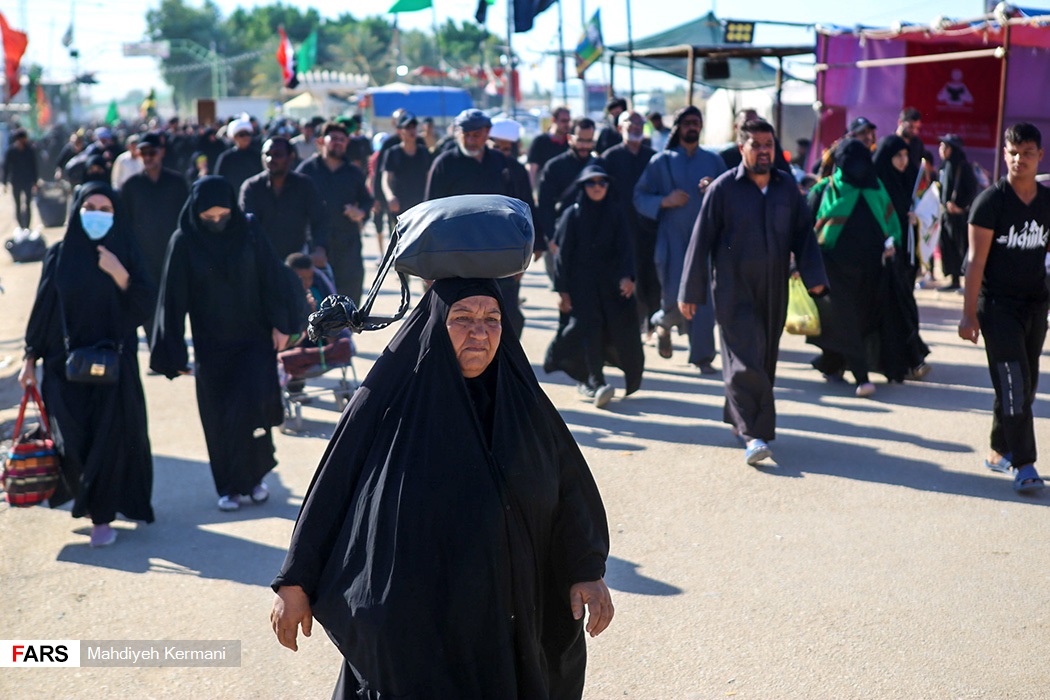
Iraqi PM promises to increase Arbaeen visas for Iranians

The announcement was made on Sunday after Kazemi’s meeting with Iran’s first vice president Mohamamd Mokhber in Tehran.

Kazemi said the visa quota for Iranians is 60 thousand due to the Covid pandemic, promising to increase the number given their eagerness for participation in the Arbaeen ceremonies.

Kazimi thanked Iran for standing by Iraq in the war on terrorist groups including Daesh.

He also said most US forces will leave Iraq by the end of this year.

Kazimi said Iraq needs Iran’s gas and electricity and that “we declare all doors of Iraq are open to Iranian companies”.

Mohamamd Mokhber, Iran’s First Vice President, also underlined the need to use the capacities and capabilities of the two countries, especially in the economic field, saying, “Tehran and Baghdad can boost their relations by relying on these capacities.”

Mokhber also referred to the assassination of Iran’s anti-terror icon and top general Qassem Soleimani, saying the participation of huge crowds of Iranians in General Soleimani’s funeral sent a very important message and showed close bonds between the Iranian and Iraqi nations. Mokhber also praised Iraq for hosting the recent Baghdad summit to resolve regional crises.

He said Iran believes that foreign countries’ presence in the region is detrimental to West Asian nations.

IAEA Chief: No Need to Adopt Resolution against Iran

Upon return from his day-long trip to Tehran, Rafael Mariano Grossi told reporters at Vienna airport that some issues between the IAEA and Iran were settled during his visit to Tehran.
Grossi underlined the IAEA had reached an agreement with the previous Iranian administration, adding the new Iranian government, too, should abide by the agreement in order to settle the outstanding issues between the agency and Iran.
The IAEA chief, however, underlined that his agreement with Tehran was not a permanent one; rather, he explained, the agreement would give diplomacy some time with the IAEA missing any information on Iran.
He said he discussed Tehran’s uranium enrichment program with the Iranian nuclear chief Mohammad Eslami.

Grossi added that after the IAEA’s monitoring camera are serviced, the agency will need to sit down for talks again with the new Iranian administration and discuss issues which are cause for concern.

Grossi added he will share his views with the IAEA’s Board of Governors, which will accordingly make a decision on whether or not to adopt a resolution against Iran.

However, he added, there is no need to issue such a resolution as had settled the most immediate issue with Tehran, i.e., the possibility of imminent losing of information.

Grossi also discussed his negotiations with Eslami as straightforward and constructive.

Following Grossi’s talks with Eslami, the two sides issued a statement under which IAEA inspectors will be allowed to service specific monitoring equipment at Iranian atomic sites and replace their memory cards, which will be maintained under the Iran-IAEA joint seal.

The meeting of the IAEA’s Board of Governors kicks off on Monday in Vienna.

Iran and the IAEA had been at odds over a number of issues, namely Iran giving the agency access to the footage recorded by monitoring cameras installed at Iranian nuclear sites.

Difference grew between Iran and the IAEA after Tehran scaled down its commitments under the 2015 Iran nuclear deal known as the Joint Comprehensive Plan of Action (JCPOA) following former US President Donald Trump’s unilateral withdrawal from the deal.

Iran restricted the IAEA’s access to monitoring cameras at its nuclear sites, saying the country will fully comply with its nuclear obligations only if the other signatories to the JCPOA keep their side of the bargain.

EU mulls security, economic pacts with Afghanistan neighbors

Germany and France tabled a proposal that the EU set up a deal with Iran, Pakistan, Turkmenistan, Tajikistan and Uzbekistan among others, according to a document seen by Bloomberg.

“Special thought should be given to potential involvement of Russia, China and Gulf countries,” the document reads.

After the US withdrew its troops from Afghanistan last month, there have been concerns by global powers that it left a power vacuum that could be filled by the likes of China or Russia.

The proposal goes on to mention Norway, Turkey, the US and the UK getting involved as financial partners.

The proposals were shared with the EU’s foreign ministries, and four topics were outlined: Security and stability, including counter-terrorism measures, migration and the prevention of human trafficking, humanitarian support for Afghanistan, and economic cooperation and development.

UN Secretary-General Antonio Guterres appealed for an injection of cash into Afghanistan to avoid an economic meltdown that would spark a “catastrophic” situation for the Afghan people and be a “gift for terrorist groups”.

His remarks came after his special envoy on Afghanistan, Deborah Lyons, warned the Security Council on Thursday that the freezing of billions of dollars in international Afghan assets to keep them out of Taliban hands would inevitably spark “a severe economic downturn”.

“At the present moment the UN is not even able to pay its salaries to its own workers,” Guterres told reporters.

“We need to find ways to avoid a situation that would be catastrophic for the people and, in my opinion, a source of instability, and an action, gift for terrorist groups still operating there,” he continued.

Iran nighttime driving ban lifted as Covid vaccination accelerates

The spokesman for Iran’s National Coronavirus Combat Taskforce said the driving ban had been imposed only to prevent gatherings and to protect people’s health. Alireza Raisi added that authorities lifted the restriction to help accelerate the vaccination drive in Iran and this does not mean gatherings are allowed.

Since last autumn amid a rise in the Coronvirus pandemic, Iranians have been banned from driving from 22 pm to 3 am. But the rule did not apply to ambulances and service vehicles.
The spokesman for Iran’s National Coronavirus Combat Taskforce also spoke of the need for people to get vaccinated and observe health protocols.

He warned citizens to be wary and keep wearing masks because mere vaccination is not enough.

The vaccination process has accelerated in Iran in recent weeks after an increase in vaccine imports and production.

Authorities say they will soon hit the record of administering 2 million vaccine shots per day. They also say all citizens will be fully vaccinated in a few months.