Thursday, April 9, 2026
Home Blog Page 2400

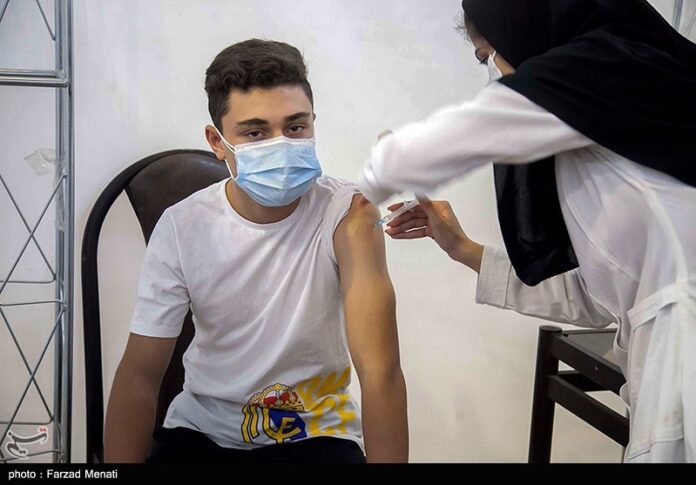
Afghans residing in Iran’s Mashhad receive over 62,000 COVID-19 shots

The head of foreign nationals and immigrants’ affairs department in Iran’s Razavi Khorasan province said over 52,000 Afghans have received their first dose and about 10,000 others have been fully vaccinated against Covid-19.

“All vaccination centers in this province are required to inject coronavirus vaccine to foreign nationals,” Mohammad Taghi Hashemi noted.

The northeastern Iranian province bordering Afghanistan hosts a very large number of Afghan refugees. The Islamic republic has repeatedly announced, despite several problems due to US sanctions, it will spare no effort to vaccinate Afghan refugees. Following the Taliban takeover of Afghanistan in last August, thousands of Afghans have flocked into Iranian borders.

Iran, which has intensified its vaccination program in recent weeks, seems to have managed to contain the outbreak of the deadly respiratory disease to some extent.

The country has suffered five waves of the outbreak with official figures showing nearly 121,000 Iranians have lost their lives so far. Now only 16 cities across the country are marked red in which the risk of covid contraction remains high.

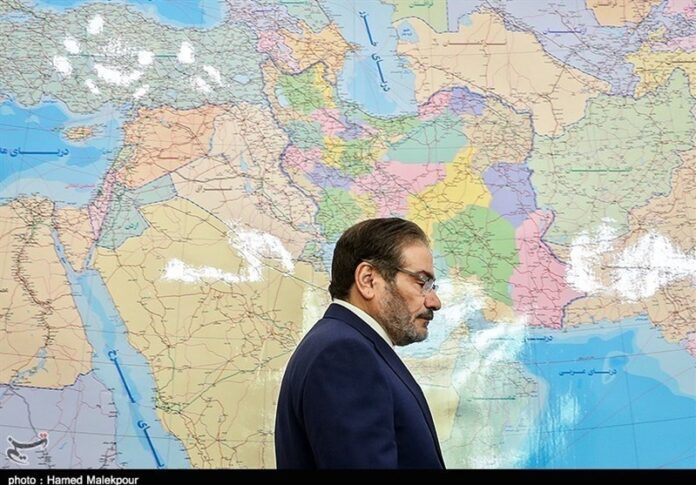
Iran advises neighbors to remain vigilant against foreign influence

He added that any dispute between Iran and neighbors can be resolved through cooperation and solidarity. Shamkhani added that the presence of foreign countries in the region will only lead to mischief and schism.

Iran has warned the Republic of Azerbaijan and other neighbors against allowing the Zionist regime to gain a foothold in the countries near the Islamic Republic’s borders.

Tehran says it will deal with the regime’s presence in those areas.

Meanwhile, Iranian armed forces have started military drill near the border with the Republic of Azerbaijan and Armenia in a bid to send a message to the nation’s adversaries.

Azeri President Ilham Aliyev has criticized the maneuvers. But Iran has brushed off the criticism, saying the war games pose no threat to anyone.

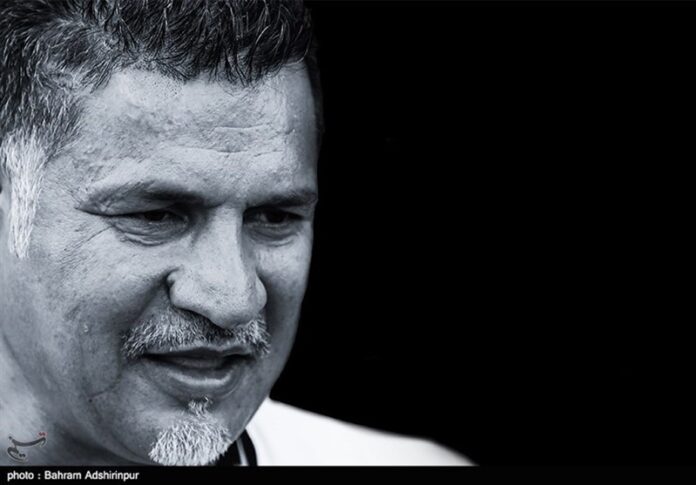
Ali Daei helps release 18 unintentional offences inmates

Chief Justice of Ardabil Province Hujjat al-Islam Hossein Kassirlou announced on Saturday that the inmates were released on the occasion of Arbaeen, the 40th day after the martyrdom anniversary of Imam Hussein, the third Shiaa Imam. The city of Ardebil, Deai’s hometown, is the capital of Ardebil Province in northwestern Iran.

Kassirlou added that Daei and other philanthropists paid a sum of 4,230,000,000 rials [around 170,000 USD].

The former Iran striker has spearheaded many humanitarian aid campaigns in the country and is known as a prominent benefactor.

Daei was the world’s top international goalscorer with 109 goals, until Portuguese forward Cristiano Ronaldo broke his record earlier this year.

The football legend was captain of the Iranian national team between 2000 and 2006 and played for major German clubs such as Bayern Munich.

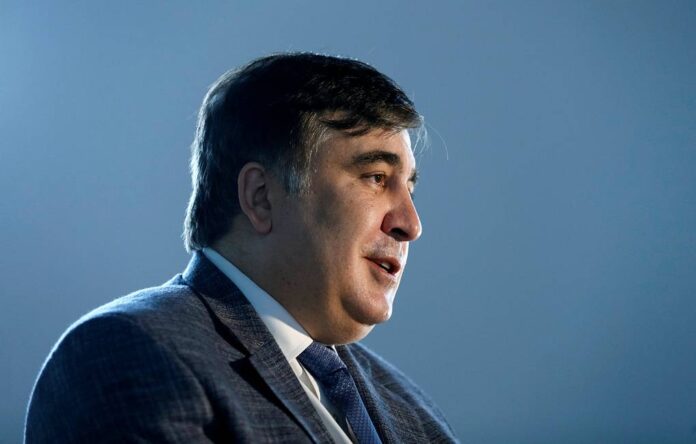
Georgian ex-president back home, arrested upon arrival

Saakashvili ruled the Caucasus country from 2004 to 2013. He was convicted in absentia on corruption charges, which he denies. He had called for protests in the capital, Tbilisi.

Georgian police on Friday arrested ex-president Mikheil Saakashvili in Georgia after the opposition politician returned to the country despite facing imprisonment and called for post-election street protests this weekend.

Saakashvili, who had been living in Ukraine and was sentenced in absentia in Georgia in 2018, announced this week he would fly home for Saturday’s local elections in order to help “save the country”. read more
On Friday, he said on social media that he had secretly returned to Georgia and told his supporters to vote for the opposition and to rally in the heart of the capital Tbilisi afterwards on Sunday.

The government initially denied he had returned, but Prime Minister Irakli Garibashvili announced late on Friday that Saakashvili had been detained and handed over to a detention facility, the TASS news agency reported.

He was shown in handcuffs grinning broadly and being led away by two police officers in footage aired on Georgian television. A rights ombudswoman who visited him in custody later said he had declared a hunger strike and demanded to see a Ukrainian consul.

Garibashvili had warned that the 53-year-old would be arrested if he returned. Saakashvili was convicted in absentia of abuse of power and covering up evidence in two court cases in 2018 that he has called politically motivated.

Saakashvili’s lawyer denounced his arrest on Friday as a “political detention”, Interfax Ukraine reported.

Saakashvili told supporters in a pre-recorded Facebook video: “In all likelihood, I’m being arrested now in Tbilisi, but I want to tell you, I’m not afraid. Go to the elections tomorrow, vote and we’ll celebrate victory on (Sunday).”

The local elections in the country of less than four million people feature an array of votes including one for the mayor of the Georgian capital of Tbilisi.

The votes come amid a standoff between the ruling Georgian Dream party and the United National Movement founded by Saakashvili and a political crisis that began at last year’s parliament election which the opposition said was rigged.

International observers said at the time the election had been competitive and that fundamental freedoms had generally been respected.

There were no immediate signs of protests after his arrest. But the United National Movement party told supporters to focus on the vote and that it would announce its further plans on Saturday.

The party chief, Nika Melia, accused the government of making Saakashvili a “refugee” and said he had known the risks of returning home.

Saakashvili, who led Georgia’s Rose Revolution in 2003 that culminated in the resignation of long-time President Eduard Shevardnadze, posted a video early on Friday from what he said was the Georgian city of Batumi on the Black Sea.

He called on his supporters to vote for United National Movement or for any small party that opposes Georgian Dream.

“Everyone must go to the polls and vote, and on Oct. 3 we must fill Freedom Square. If there are 100,000 people, no one can defeat us,” he posted in the video.

“You see – I risked everything – my life, freedom, everything, in order to come here. I want only one thing from you – go to the polls,” he said.

President Salome Zourabichvili said she would not pardon Saakashvili, TASS news agency reported.

Ukraine’s foreign ministry said it had summoned the Georgian ambassador after his detention.

Iran: 56 million+ doses of Covid vaccine administered

Meanwhile, 16,532,554 people have been fully vaccinated.

Health officials announced Saturday, 217 more people died of the Coronavirus in the last 24 hours. That pushes the death toll from the start of the pandemic to 120,880.

A huge rise in vaccine imports and production inside Iran accelerated the vaccination drive in the country over the past few weeks. Iranian officials have said the entire population will soon be fully vaccinated. Only 16 cities and towns are marked red in Iran now, which is the highest level of Convid contraction risk.

The downward trend in deaths and hospitalizations has held over the past few weeks.

Philippines leader announces retirement from politics

Duterte said on Saturday he was retiring from politics, a surprise move that fuelled speculation he was clearing the way for his daughter to run to succeed him, despite her filing for re-election as mayor.

“Today, I announce my retirement from politics,” Duterte stated, accompanying loyalist Senator Christopher “Bong” Go from the ruling PDP-Laban party as he registered to run for vice president in next year’s election.

Duterte, 76, had been expected to run for the No. 2 job, a plan which most Filipinos oppose as violating the spirit of the constitution, which sets a one-term limit for the president to stop power from being abused.

“In obedience to the will of the people, who after all placed me in the presidency many years ago, I now say to my countrymen, I will follow your wish,” Duterte added as he urged the public to support the candidacy of his longtime aide.

Political analysts say it is crucial for Duterte to have a loyal successor to insulate him from potential legal action, at home or by the International Criminal Court, over the thousands of state killings in his war on drugs since 2016.

Duterte, a maverick leader famous for his embrace of China and disdain for the United States, a close ally, remains popular even as his opponents accuse him of being authoritarian and intolerant of dissent.

More than 60 million Filipinos will vote in May for a new president, vice president and more than 18,000 lawmakers and local government officials.

Political observers had long suspected Duterte could spring a surprise, such as a presidential run by his daughter, Sara Duterte-Carpio, next year.

Duterte-Carpio’s filing for re-election as Davao mayor, which happened shortly after her father announced his retirement, did little to douse speculation she has still her eyes set on the presidency.

She has topped opinion surveys on prospective candidates, but said last month she was not running for higher office next year because she and her father had agreed only one of them would run for national office in 2022.

The older Duterte’s decision not to join the race next year would clear her way.

“This allows Sara Duterte to run,” said Antonio La Vina, professor of law and politics at the Ateneo de Manila University, adding, “She sees through the father’s scheme or it is a drama to confuse everyone.”

Candidates have until Friday to register, but withdrawals and substitutions are allowed until Nov. 15, leaving scope for last-minute changes of heart, like the 11th-hour entry of Duterte for the 2016 election, which he won by a huge margin.

Political analyst Earl Parreno noted he suspected the Dutertes were using the same playbook and that Duterte-Carpio would join the race at the last minute.

She did not immediately respond to a request for comment.

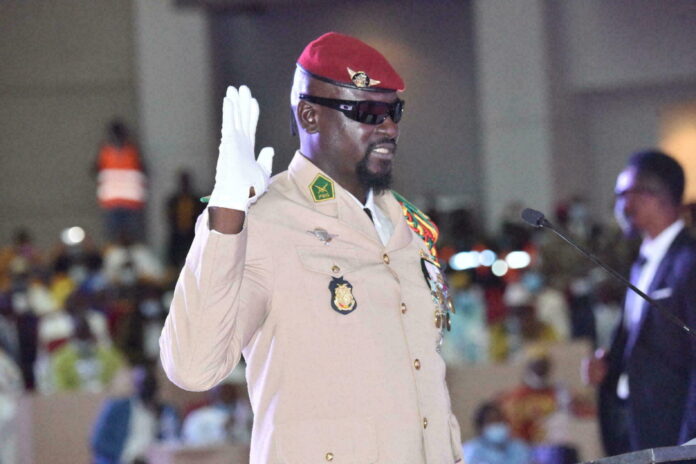
Guinea coup leader inaugurated as interim president

The swearing-in ceremony was held at the Mohamed V Palace in the capital Conakry with the marked absence of most West African heads of state, who agreed last month to impose sanctions on junta members and their relatives.

West and Central Africa has seen four coups since last year — political upheaval that has intensified concerns about a slide towards military rule in a resource-rich but poverty-stricken region.

Wearing military dress uniform, a red beret and wraparound sunglasses, Doumbouya held up a white-gloved hand as he took the oath of office.

“I fully appreciate the magnitude and immensity of the responsibilities entrusted to me,” he said in a speech afterwards.

He promised to oversee a transition that would include the drafting of a new constitution, fighting corruption, electoral reform and the organization of free and transparent elections.

The junta has announced its members will be barred from standing in the next elections, but has not made clear when these might take place, saying this will be decided by an 81-member Transitional National Council.

The Economic Community of West African States, a regional bloc, has frozen assets and imposed travel bans on the junta, hoping to encourage a swift return to democracy.

Coup leaders have stated they ousted Conde because of concerns about poverty and corruption, and because he was serving a third term only after altering the constitution to permit it.

Fears that the political crisis would hinder Guinea’s production of bauxite, a mineral used to make aluminum, have eased. The country’s largest foreign operators say they have continued work without interruption.

Baku Should Beware of Unsavoury Friends: Analyst

Azerbaijan Republic’s provocative moves began by stopping Iranian commercial trucks at the border and holding them for 48 hours.

The campaign continued with interventionist remarks by some members of the Azerbaijan Republic’s Parliament, insults and verbal attacks by Azeri media against Iranian authorities, including Ayatollah Ameli, the representative of Leader of Iran’s Islamic Revolution Ayatollah Seyyed Ali Khamenei in Ardebil, etc.

This unfriendly trend finally entered a new phase with outrageous remarks by Azeri President Ilham Aliyev, which fueled tensions and pushed bilateral friendly relations into an unwanted negative atmosphere.

In an interview with Turkey’s Anadolu Agency, Aliyev levelled accusations against Iran without referring to Baku’s provocative moves triggered by untrue information.

Such accusations indicate that either he is unaware of the consequences of his stances and such behaviour, or he has set foot in this path only to please countries which are against cordial ties between Tehran and Baku.

Such behaviour, which stands in stark contrast to Iran’s cordial policies vis-à-vis the Azerbaijan Republic and whose origin is crystal clear to Tehran, has resulted in unwanted circumstances which we will discuss later.

Since the historic collapse of the Soviet Union, Iran has proved its brotherhood and friendship with the Azerbaijan Republic in different ways and has, by observing the principles of good neighbourliness, sought to promote Tehran-Baku ties on different fronts both quantitatively and qualitatively.

Nevertheless, ill-wishers of the two countries have long been provoking Baku authorities under different pretexts to launch anti-Iran moves.

During the conflict between the Azerbaijan Republic and Armenia a few months back over the occupied territories of the Kharabak region, Iran recognized Baku’s right to take over part of its occupied territories and sought to push the two countries toward dialogue and reconciliation in order to prevent further bloodshed and a flare-up of tensions. However, Azeri officials seem to have mistaken this friendly stance of Iran.

During the Kharabak war, Iran’s Leader straightforwardly stressed the need to return the Azerbaijan Republic’s occupied territories to that country as well as evacuate and hand over the areas to Baku.

Throughout his speeches at a time when the Kharabak conflict was ongoing, Ayatollah Khamenei underscored that Yerevan need to realized that the perpetuation of the war was not in its favour. Still, it seems that Azeri officials have forgotten everything very soon.
It is perfectly clear to Iran that the United States and the Israeli regime have, for years, been bent on touching off a crisis in Tehran-Baku relations.

Moreover, some ambitious countries in the region are piggybacking on the regional developments and turning a blind eye to the necessity of observing geostrategic requirements for the Caucasus and just thinking about expanding their own influence.

Iran’s strategic position on the major East-West corridor, which recently entered a new phase with Iran’s joining the Shanghai Cooperation Organization (SCO) as a permanent member, is the very same trump card that has prompted some expansionist regional countries provoked by Washington and Tel Aviv to cash in on Baku’s strategic mistakes, use military muscle-flexing and make geopolitical changes to the region in a bid to strip Iran of this strategic position and take possession of it through the Zangezur corridor.

This dangerous game being played by triggering ethnic-religious tensions and taking advantage of Iran’s patience has long been underway engineered by joint US-Zionist think tanks led by figures such Brenda Shaffer, a member of the Foundation for Defense of Democracies (FDD), and Baku has unfortunately got involved in this game despite Tehran’s warnings.

Interesting enough, Azeri officials have used the presence of Iranian military forces in northern Iran as well as the “Conquerers of Khaybar” war game as a pretext to try to accuse Iran of disrupting security and stability in the region.
This comes as any country is entitled to conduct, inside its borders, any move it deems necessary to boost its security, and military exercises staged in northern Iran are part of such moves.
The point is, if military maneuvers are to be criticized, then the joint drills that the Azerbaijan Republic holds with countries beyond the region should be slammed because not only Iran, but also some other Caspian Sea littoral states are seriously critical of such war games.
The joint drills held recently by Pakistan, Turkey and the Azerbaijan Republic was obviously an unprecedented and provocative move which amounts to muscle-flexing by these countries against other regional powers.

In recent days, many political and military analysts have described the joint maneuvers by Baku, Islamabad and Ankara in the Caspian Sea as a warning to Russia which lies to the north of the sea.

Naturally, given Pakistan’s American tendencies along with Baku and Ankara’s relations with Tel Aviv and other Western governments, this provocative approach by the Azerbaijan Republic is, by no means, regarded as a constructive move aimed at ensuring stability in the region.

Azeri analysts had better remind their politicians of the important point that Baku’s expansion of ties with the Israeli regime, which is hated by most people, is the greatest threat against regional security and will destabilize relations among countries.

The history of Azerbaijan-Israel military cooperation and Tel Aviv’s cashing in on Iran’s determination to enhance its relations with the Azerbaijan Republic should not lead Baku to believe that Iran is indifferent toward that which threatens its security.

Given the principles of neighbourliness, cultural exchanges, a common past and a shared religion with Azeri people, Iran has always emphasized the enhancement of relations with the Azerbaijan Republic. This country, in turn, should not only pay attention to bonds between Iran and Azerbaijan, but should also beware of Tel Aviv and Washington’s objective, which is to foment tensions in the region, especially between Iran and the Azerbaijan Republic.

The border sensitivities in any country follow requirements and principles which should be understood by other countries. These sensitivities particularly become all the more important when it comes to countries such as Iran which has, over the past two centuries, not only not initiated any wars, but has fallen victim to the expansionist policies of other countries.

Iran has shown that it, by no means, has an eye on the territory of other countries. However, it monitors the smallest moves by other countries which concern its territorial integrity and national security, and will respond to them in the right place, at the right time and in accordance with legal frameworks.

The emergence of unwanted circumstances in recent weeks in the Caucasus should draw Azeri officials’ attention to the destructive role of their disreputable friends and to the necessity of paying more attention to the requirements of neighbourliness and the considerations of Azerbaijan’s real friends.

15 million Britons facing higher energy bills

Millions of people face huge rises in their energy bills as the UK’s energy regulator’s latest price cap comes into force amid soaring wholesale prices.

Bills will increase by at least £139 – a record high – for about 15 million households due to a rise in wholesale prices, Ofgem announced.

Energy customers on default tariffs who pay by direct debit have seen the sharpest jump in prices since the cap was introduced in January 2019, taking average bills to £1,277.

Pre-payment customers will see costs rise by £153, from £1,156 to £1,309.

The increase has been driven by a rise of more than 50% in energy costs over the last six months, with gas prices hitting a record high as inflation jumped amid the easing of pandemic restrictions.

The latest cap, announced in August, was determined before further unprecedented increases in global prices, which has seen nine small UK suppliers collapse since the start of September.

Energy watchdog Citizens Advice warns people will face “desperate choices” this winter with customers of the five largest failed suppliers set to pay £6.70 more a week when they moved on to the default tariffs of a replacement firm.

Although households that shop around and sign up to fixed plans with suppliers are not subject to the price cap, the recent rise in wholesale costs have seen companies hiking their fixed plan fees significantly above the cap to deter people.

The regulator reviews the price cap once every six months, and changes it based on the cost suppliers have to pay for their energy, cost of policies and operating costs, among other things.

In further bad news for energy customers, research agency Cornwall Insight has already predicted that Ofgem’s next price cap will rise by £178 from April.

The new energy cap comes after the cost of gas on wholesale markets rocketed at unprecedented rates, up 70% since August and 250% since the beginning of the year, according to trade body Oil & Gas UK.

Adam Scorer, chief executive at fuel poverty charity National Energy Action, said, “The massive devastating increases in energy prices will drive over 500,000 more households into fuel poverty, leaving them unable to heat or power their homes.

“Just when they were needed most, the uplifts to Universal Credit are also being withdrawn and inflation is soaring. The new Household Support Fund will provide some welcome support for those who can access it, but on its own it is not enough to halt the erosion in incomes and deal with rising prices,” Scorer added.

“Without a wider package of support – keeping Universal Credit uplifts and more rebates to protect those on the lowest incomes from spiralling energy prices – vulnerable people are still at dire risk of premature death this winter,” he continued.

The End Poverty Coalition warned fuel poverty could become “endemic” in the UK and published a map showing the worst affected places in England.

It said the number of households in fuel poverty could rise from 4.1 million to 5.3 million.

The worst place in England for fuel poverty is Barking and Dagenham, followed by Stoke-on-Trent and Newham, according to the coalition.

Meanwhile Bracknell Forest, Runnymede and East Hampshire are among the areas least affected by fuel poverty.

The coalition – which includes Age UK, Fuel Poverty Action Group, Unison and Generation Rent – has launched a petition calling on the government to take immediate action to avert the fuel poverty crisis this winter.

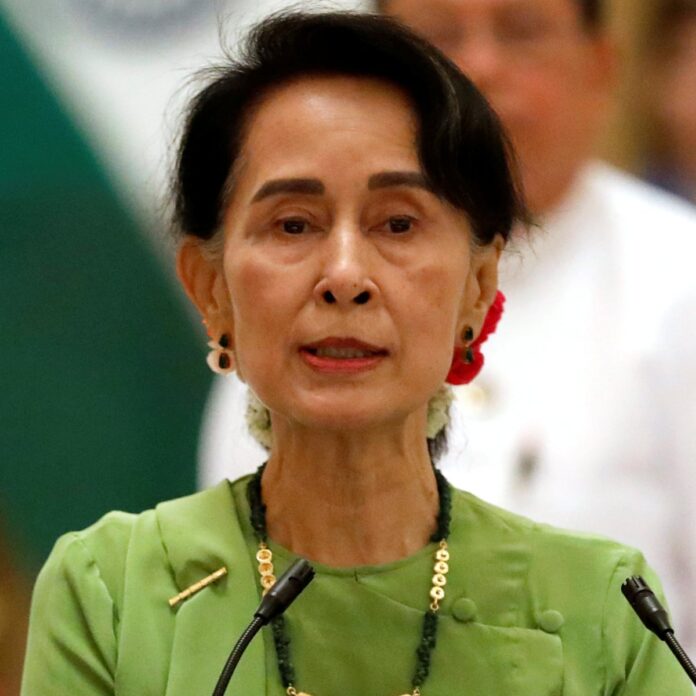
Myanmar’s ousted leader on trial for corruption

A Special Court in the capital Naypyitaw is hearing four corruption cases against Suu Kyi, each carrying a penalty of up to 15 years’ imprisonment, the longest possible prison term of the several offences with which she has been charged.

All the proceedings against the 76-year-old are closed to the public and press. She has been detained by the military at an undisclosed location in Naypyitaw since the February 1 military coup that deposed her government.

Like other top members of her party and government, Phyo Min Thein, who testified on Friday, was arrested by the military when it took power. The allegations of pay-offs were first raised in March by the military junta and have been denied by her lawyers. 

Suu Kyi faces two charges of accepting bribes and two of conspiring to carry out corruption in connection with real estate transactions. A fifth corruption charge has not yet gone to trial.

Phyo Min Thein, a top figure in Suu Kyi’s National League for Democracy party who held the important job of chief minister for the Yangon region before the military seized power, testified for the prosecution. He said he had personally handed over $US600,000 ($826,000) and seven gold bars to Suu Kyi in 2017-18, lawyer Min Soe stated.

The military at a March news conference had presented a videotape of Phyo Min Thein making the same allegations. In his court testimony, he added that he presented the Nobel Prize laureate with a statue from a prominent Buddhist monk, Min Soe noted.

Suu Kyi’s supporters and independent analysts say all the charges against her are politically motivated and an attempt to discredit her and legitimise the military’s seizure of power while keeping her from returning to politics.

Suu Kyi is also being tried on lesser charges of sedition, two counts of flouting COVID-19 pandemic restrictions, illegally importing walkie-talkies and the unlicensed use of the radios.

Preparations have also begun to try her for breaching the official secrets law, which carried a maximum prison term of 14 years. Australian Sean Turnell, a former economics advisor to Suu Kyi, has also been accused of a breach of the colonial-era Burmese Official Secrets Act. He’s been held in prison since February 6.

The military announced it seized power because last November’s election, won in a landslide by Suu Kyi’s party, was tainted by massive fraud. Its claim has almost no independent support, and the takeover was quickly met by widespread public protests.

Security forces used deadly force to try to quash the peaceful protests, killing more than 1100 people, according to the detailed tallies of the Assistance Association of Political Prisoners and human rights groups. Opponents of military rule have turned to armed self-defence, sabotage and killings of soldiers and officials on a near-daily basis.

A group of former MPs and democracy activists have formed a parallel civilian government – the National Unity Government – which is seeking to bring an end to military rule.