Sunday, December 28, 2025
Home Blog Page 2391

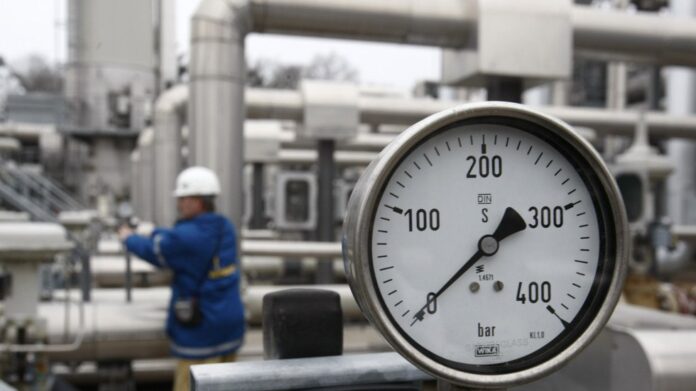
Iran Protest to IAEA over “Biased” Report

AEOI spokesman Behrouz Kamalvandi also warned the IAEA to avoid filing biased reports that undermine the constructive cooperation between Iran and the agency.

He was responding to an I-A-E-A report that said Tehran has allowed the Agency to service its monitoring equipment at Iran’s nuclear sites except for the Centrifuge Component Manufacturing Workshop at the Tesa Karaj Complex, near Tehran.

Kamalvandi said that Grossi and his colleagues know well that the deal they agreed with Iran earlier this month does not cover cameras at Karaj complex.

The AEOI spokesman noted that the site is still under security and judicial probes, following the sabotage incident in June, therefore was left out of the Iran-IAEA deal.

He further explained that Grossi has asked for inspection of Karaj site, but his request was rejected twice. He stressed that the agreement with the agency clearly refers to “designated” equipment to exclude the site from the IAEA operation to replace surveillance CCTV memory cards.

Kamalvandi underlined that the IAEA officials should avoid politicking and filing wrong and biased reports against Iran.

Tunisians call for president resignation

Demonstrators gathered on Sunday in the centre of Tunis along Habib Bourguiba Avenue under a heavy police presence to demand his resignation, chanting, “The people want the fall of the coup.”

Brushing aside much of the 2014 constitution, Saied gave himself the power to rule by decree on Wednesday, two months after sacking the prime minister, suspending parliament, and assuming executive authority.

About 2,000 people attended the rally in front of the iconic National Theatre, historically home to all the major demonstrations in Tunis.

“I’m really, really angry,” said Soumaya Werhani, a 30-year-old student amid the roar of the crowd and the sweltering heat, adding, “We are demonstrating to denounce the president’s decisions to stop the constitution and his coup against state institutions.”

About 20 global and Tunisian human rights groups issued a statement on Saturday condemning the move as a “power grab”.

The signatories argued the decree, which strengthens the powers of the president’s office at the expense of those of the prime minister and parliament, is “implicitly abrogating the constitutional order in … a first step towards authoritarianism”.

Belgassen Bounara waved a copy of the 2014 constitution that Saied plans to rewrite. He came from Tataouine, in southern Tunisia, a poor region forgotten by the state.

The computer salesman said he came to demonstrate because “Saied wants to get rid of the constitution and our democracy. He is taking us back into dictatorship”, Bounara told Al Jazeera.

Sunday’s protest was the second since Saied dismissed the government and suspended parliament on July 25.

However, Saied’s move has the consensus of large swaths of the population, who see his actions as necessary to address a crisis of political paralysis, economic stagnation and a poor response to the coronavirus pandemic.

On the other side of the street, a small but vocal group of Saied supporters chanted, “Kais Saied is good”.
“The decree is nothing important, the Tunisian people want a clean, honest president who doesn’t steal from the people,” artist Mohamed Khaled told Al Jazeera, adding, “It’s stressful. People just want to fill their shopping bag and eat.”

Cherif El Kadhi, a former parliamentary officer, told Al Jazeera the demonstrations were a sign that Saied’s actions are loathed as much as they are accepted.

“These protests I think will continue to gain momentum depending on the economic situation,” he said.

“It’s quite clear Tunisians are fed up with the political elite 10 years after the revolution,” which is why they have put their trust in Saied, a former law professor, he added.

However, discontent could lead to more protests in the coming weeks and months, he continued.

Tunisia’s largest political party, the moderate Islamist Ennahdha, decried Saied’s moves as “a flagrant coup against democratic legitimacy”, and called for people to unite and defend democracy in “a tireless peaceful struggle”.

Ennahdha is itself grappling with internal dissent after 113 senior party members announced their resignation on Saturday. They blamed the head of the party, Rachid Ghannouchi, and his entourage for failing to form a united front to oppose Saied and confront the country’s political crisis.

Envoy: IAEA report on Iran complex inaccurate

In a tweet thread, Ghariabad said, “It’s deeply regrettable that after 3 terrorist attacks in Iran’s nuclear facilities over the past year, the Agency has not yet condemned the acts of terror, as it is required to do and even for the sake of its own equipment, safety and security of its inspectors.”

Ghariabadi added that the joint statement by the head of the Atomic Energy Organization of Iran and the IAEA director general on Sep 12 was achieved due to Iran’s good-will to replace the storage media of the “identified equipment”. These activities were performed by the Agency from 2o-22 Sep.

According to Gharibabadi, during the discussions in Tehran and Vienna, Iran said, since the Tessa Karaj Complex is still under security and judicial investigations, any equipment related to the complex will not be serviced.

He said the IAEA chief’s report on Sep 26 isn’t accurate and goes beyond the agreed terms of the joint statement.

Gharibabadi noted that any decision taken by Iran on monitoring equipment is only based on political rather than legal considerations and the Agency cannot and should not consider it as a right.

Turkey says intends to buy more S-400, likely to infuriate US

“I explained everything to President [Joe] Biden,” Erdogan stated in an interview with host Margaret Brennan that aired on CBS’ “Face the Nation“.

He added that the United States’ refusal to deliver F-35 aircraft that Turkey agreed to purchase and Patriot missiles it wished to acquire gave Turkey no choice but to turn to Russia for its S-400 antiaircraft missile system, a point of contention between Turkey and the NATO alliance during both the Donald Trump and Biden administrations.

“In the future, nobody will be able to interfere in terms of what kind of defense systems we acquire, from which country at what level. Nobody can interfere with that. We are the only ones to make such decisions,” Erdogan continued, noting, “Are we going to keep on expecting delivery of weapons from other countries that didn’t give us those weapons?“

NATO fears that deploying Russia’s S-400 missiles alongside the F-35 would allow the S-400 to collect vital data about the aircraft it otherwise would not have access to, potentially compromising security.

Discussing another point of contention with the United States, Erdogan said the U.S. must choose between supporting Turkey and offering support to Kurdish groups that wish to carve out a state from an area that includes parts of Turkey.

The Kurdish forces had joined the U.S. and Turkey in combating Daesh in Syria. Erdogan called these Kurdish groups “terrorist organizations“.

“Receiving this kind of support should be stopped once and for all,” he stated, adding, “Turkey is [a] NATO member and we are in a position to be obliged to forge a solidarity under the roof of NATO. But so long as the terrorist organizations receive such logistical support that upset us … we would be vocal about this.”

The Turkish leader noted he would like to see the remaining U.S. forces withdrawn from Syria, something that critics have said could give Turkey a free hand in persecuting the Kurds.

Erdogan was critical of U.S. actions in Afghanistan.

“With the American footprints dating back to two decades, the region was not any safer,” he stated.

He also added that Turkey hopes to maintain some sort of relationship with the new Taliban regime in Afghanistan, though it withdrew amid the chaos accompanying the American withdrawal there.

“We have historic relations with the Afghan people,” he said, “and we’ve always been very supportive of [Afghanistan] in an unprecedented fashion, unlike any other. And in terms of infrastructure, in terms of superstructure, we were involved in major investments, which we will continue for the future. But because of the mistakes made in the field, we had to withdraw our troops and evacuate our civilians. And right now, we are not present in Afghanistan“.

Source: CBS

‘Bennett disagrees with Biden on Iran, consulate for Palestine, settlements’

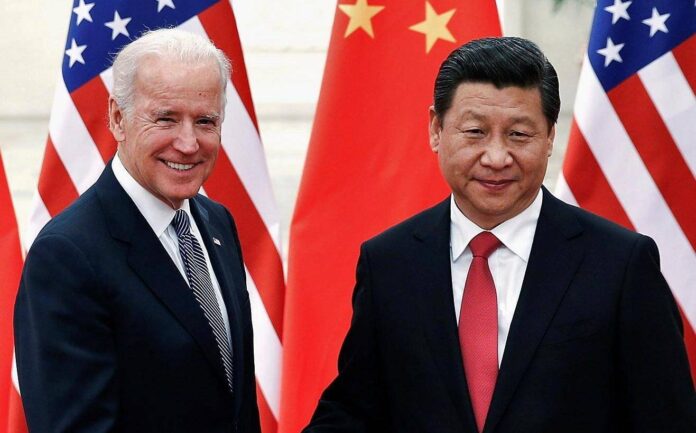
“I told Biden ‘no’ three times,” he said during a meeting with leaders of the Yesha Council settlements umbrella group, sources present told Zman Yisrael, referring to his meeting with the American leader at the White House in August.

“Once on the Iranian issue, but I can’t tell you exactly about what — they requested something and I said ‘no’. The second time was about the Palestinian consulate in Jerusalem — it won’t happen. And the third time was about settlements,” he added.

The Biden administration is holding indirect negotiations with Iran on its nuclear program, which have been stalled since June. The new administration has also announced plans to reopen its Jerusalem consulate, which had served Palestinians in the West Bank and East Jerusalem and acted as a de facto US mission to the Palestinians.

When the Donald Trump administration moved the US embassy to Jerusalem, the mission was subsumed into the embassy as the Palestinian Affairs Unit, which was regarded by Palestinians and others as a major blow to their diplomatic standing. Israel opposes the reopening of the consulate.

The administration has also voiced support for a two-state solution and has been reported to convey its disapproval of settlement construction to Jerusalem on multiple occasions.

Bennett, a former director of the settlement umbrella movement who opposes the establishment of a Palestinian state, reassured the settler leaders that construction in the West Bank and East Jerusalem would not slow despite US pressure.

“We know what the Democrats are saying,” Bennett told them, noting, “The settlements are illegal and all that. They told me to build less. Guys, you know where I’m coming from. I’m committed to you — as it was so shall it remain.”

“You know what’s the most relevant [takeaway] from my visit to the United States?… If I am not for myself, who will be for me,” added the prime minister.

Settler leaders present at the meeting earlier this week said that they were taken aback by his candidness.

“We were surprised by his openness,” stated an official present at the meeting, while two other participants contrasted his approach with that of his more circumspect predecessor Benjamin Netanyahu.

Bennett is currently in the US, ahead of his first speech to the United Nations General Assembly on Monday.

Bennett will seek to portray Israel as a global player, whose expertise can offer solutions to pressing world problems, during his speech, a senior adviser said on Sunday.

Bennett’s first UN General Assembly address will focus on the “Israeli ethos of action, of solutions, of innovation, of optimism”, the adviser added in a phone briefing from New York City.

The speech will also address “Israel’s place in the less sympathetic region we live in, and Israel’s place in the wider global context, where there is good news and there is bad news”.
Iran’s nuclear program will also be a focus of the speech, with the message that the time has come for concrete action.

However, Bennett will not speak much about the Palestinians, reflecting his belief that Israel is an important, multi-faceted country, and that its role on the global stage should not be seen through the prism of its conflict with the Palestinians.

“Israel’s relations with the world don’t need to be defined by this specific issue,” the adviser stated.

New Portico at Imam Reza Shrine: An Architectural Wonder

The walls of the Darolhojjeh portico are decorated with dado work containing an amalgamation of stucco, mirror work and paintings on plaster.

The two main entrance gates to the portico open to two adjacent porticos on either side.

The newest portico at the Imam Reza mausoleum, Darolhojjeh has been constructed using the most modern excavation engineering techniques.

Among the wonders of this colossal portico is that excavation work was conducted underneath two of the most massive portals of the shrine weighing around 7,000 tonnes each without any harm or risk of damage to the portals thanks to the reinforcements installed.

The portico is decorated with more than 8,000 square meters of mirror work and as much masonry.

The floor of the portico has been covered with white, cream and pink stones.

Mirror work, gold decorations, silverwork, stucco and colouring have joined hands to create an exquisite form of art which is unique and eye-pleasing in its own right.

The concave structures on the ceiling are decorated with petal-shaped relief stucco covered with silver leaves.

The centre of the petals are embellished with convex mirror work.

Taliban claims soon to be recognized by world

In front of a Taliban flag, Taliban spokesman Zabihullah Mujahid speaks at at his first news conference, in Kabul, Afghanistan, Tuesday, Aug. 17, 2021. For years, Mujahid had been a shadowy figure issuing statements on behalf of the militants. Mujahid vowed Tuesday that the Taliban would respect women's rights, forgive those who resisted them and ensure a secure Afghanistan as part of a publicity blitz aimed at convincing world powers and a fearful population that they have changed. (AP Photo/Rahmat Gul)

Mujahid, the deputy minister of information and culture, has said that representatives of a number of countries have visited Afghanistan and they (the Taliban) have also sent a letter to the UN Secretary-General for recognition.

Mujahid added that this is their right to be recognized and stated that the leaders of the Taliban are busy talking with the UN.

It has been more nearly 45 days since the Taliban took over entire Afghanistan but they are not yet recognized by any country.

Respecting human and women’s rights, forging an inclusive government, and not allowing Afghanistan to be safe haven for terrorism and extremism are the conditions put by the international community for recognizing the Taliban.

The Islamic Emirate of Afghanistan has promised to be implementing all these, but none of them seems to be implemented yet.

On the other hand, the US has frozen nearly ten billion dollars of Afghanistan’s assets in its banks which can lead to an economic and humanitarian crisis if not unfrozen.

Russian official: US no longer ‘global hegemon’

US Forces

The US failed in Afghanistan because it miscalculated its own abilities and wanted to install its social model in a foreign land, the head of Russia’s Foreign Intelligence Service (SVR), Sergey Naryshkin, has told RT.

“What happened in Afghanistan with the rushed withdrawal and fleeing of the puppet government is a consequence of America’s destructive policies, as it tried to impose its social development model on Afghanistan,” Naryshkin stated.

The spy chief added the blame for how the situation unfolded should be shared by the whole US intelligence community, including the CIA, as well as the State Department and the White House’s office of the national security advisor.

“I am also convinced that the US leadership had all the intelligence about the situation on the ground and potential developments. They didn’t take into account one thing – their own capabilities. They didn’t want to face the truth, if you will. And the truth is that the US is no longer capable of playing the role of the global hegemon, which it had assigned itself,” he stressed.

The US led the invasion of Afghanistan in 2001 shortly after then-president George W. Bush declared a global campaign against terrorism in retaliation for the 9/11 attacks on American soil. At the time, the international community predominantly assumed that US troops would have the situation under control, Naryshkin said.

“The US and NATO military presence has been viewed as a solid barrier for the terrorist threat that didn’t allow it to spread further to Eurasia. Unfortunately, it wasn’t true,” the head of the SVR noted.

“The Americans withdrew, fled from Afghanistan, and we now see the ruins they left behind: a devastated economy, terrorists roaming free, deepening conflicts between different ethnic groups, increased drug and gun trafficking,” he added.

At the same time, Naryshkin reiterated the SVR’s commitment to partnership with other national spy agencies.

“We genuinely value the cooperation we have with our partners from the CIA when it comes to fighting global terrorism,” he noted, expressing hope that the changing situation in Afghanistan would “provide our American partners with a good opportunity to reassess their current threat rankings.”

The Taliban reconquered nearly the whole of Afghanistan in a matter of weeks, while the planned withdrawal of US forces was reaching its final stage. The militants’ sweeping offensive culminated with the capture of Kabul on August 15.

In July, President Joe Biden hailed the US-trained Afghan Army as a capable fighting force and expressed confidence that the UN-backed Afghan government would survive after the Americans left. In reality, the Afghan military largely dissipated in the face of the Taliban onslaught and the country’s capital fell with little or no resistance. The militantss seized a large stockpile of military hardware, including high-tech, US-made weapons and gear.

The fall of Kabul prompted chaos at Hamid Karzai International Airport, as locals swarmed the tarmac in the hope of escaping the reestablishment of Taliban rule.

Western countries launched hectic last-minute evacuations of their nationals and Afghan helpers. The airlifts were completed shortly before the last American troops left Afghanistan on August 30.

Social Democrats win German election, eyes on coalition talks

The SPD, led by Olaf Scholz, secured 25.7% of the vote, while the CDU-CSU bloc, helmed by Armin Laschet, got 24.1%, according to preliminary figures.

This translates into 206 seats for the SPD in the federal parliament, also known as the Bundestag, and requires the party to enter into coalition talks to secure the 162 seats it needs to get a majority.

The process is expected to take weeks or even months with Merkel to remain at the helm of the country in a caretaker majority until a power-sharing deal is struck.

Scholz, who said the vote gave his party “a very clear mandate to ensure now that we put together a good pragmatic government for Germany”, will be hoping to strike what has been referred to “traffic light” coalition with the Greens and the pro-business liberal Free Democrats (FDP).

The Greens secured their best score ever in a federal election, coming in third with 14.5% of the vote. That gives them 118 seats in the Bundestag. The FDP came behind them with 11.5% of ballots to take 92 seats.

But, despite getting its worst-ever result in a federal contest, the Union bloc said it too would reach out to smaller parties to discuss forming a government.

Laschet, the governor of North Rhine-Westphalia state who outmaneuvered a more popular rival to secure the nomination of Merkel’s Union bloc, had struggled to motivate the party’s base and suffered a series of missteps.

“Of course, this is a loss of votes that isn’t pretty,” Laschet stated of results that looked set to undercut by some measure the Union’s previous worst showing of 31% in 1949. But he added that with Merkel departing after 16 years in power, “no one had an incumbent bonus in this election.”

Laschet told supporters that “we will do everything we can to form a government under the Union’s leadership, because Germany now needs a coalition for the future that modernises our country.”

Laschet, whose union bloc got 196 seats, will be courting the same parties as Scholz, although the Greens have expressed a preference for the SPD.

Voters also seem to favour Scholz’s traffic light coalition, according to a YouGov poll released during the night. And 43% believe that Scholz, the country’s current finance minister, should become the next chancellor of Europe’s largest economy.

The other option is a repeat of the outgoing “grand coalition” of the Union and Social Democrats that has run Germany for 12 of Merkel’s 16 years in power, but there was little obvious appetite for that after years of government squabbling.

“Everyone thinks that … this ‘grand coalition’ isn’t promising for the future, regardless of who is No. 1 and No. 2,” Laschet said, adding, “We need a real new beginning.”

The “grand coalition” took six months to build after the 2017 election, leading to political paralysis in Germany, especially on the European issues.

Both the SPD and the centre-right have said they are aiming for a conclusion before Christmas.

“Germany will take over the G7 presidency in 2022,” Laschet noted, which is why a new government must “come very quickly”.

The Free Democrats’ leader, Christian Lindner, appeared keen to govern, suggesting that his party and the Greens should make the first move.

“About 75% of Germans didn’t vote for the next chancellor’s party,” Lindner said in a post-election debate with all parties’ leaders on public broadcaster ZDF.

“So it might be advisable … that the Greens and Free Democrats first speak to each other to structure everything that follows,” Lindner added.

Green leader Annalena Baerbock insisted that “the climate crisis … is the leading issue of the next government, and that is for us the basis for any talks … even if we aren’t totally satisfied with our result”.
While the Greens improved their support from the last election in 2017, they had higher expectations for Sunday’s vote.

The Left Party was projected to win only 4.9% of the vote and risked being kicked out of parliament entirely. The far-right Alternative for Germany — which no one else wants to work with — received 10.3%. This was about 2 percentage points less than in 2017, when it first entered parliament.

Due to Germany’s complicated electoral system, a full breakdown of the result by seats in parliament is still pending.

Source: Euro News

Taliban urges airlines to resume Afghan flights

The Taliban’s foreign ministry spokesman, Abdul Qahar Balkhi, stated the absence of international flights has left many Afghans stranded abroad and prevented others from traveling for work and study.

“As the problems at Kabul International Airport have been resolved and the airport is fully operational for domestic and international flights, the [Islamic Emirate of Afghanistan] assures all airlines of its full cooperation,” Balkhi noted.

Some airlines like Pakistan International Airlines have recently begun offering limited international flights in and out of Afghanistan, though the prices for tickets are significantly higher than they usually are.

The Kabul international airport was the site of the suicide bombing that killed dozens of Afghans and 13 U.S. service members during the final evacuations from the country after the Taliban took control. The airport has since been reopened with the help of teams from Qatar and Turkey.

The Taliban’s appeal for resumed international flights comes as it seeks to gain legitimacy and recognition on the international stage. The global community has thus far refrained from recognizing the militant group, which implemented strict policies when it ruled Afghanistan in the 90’s.

Source: Reuters