Sunday, December 21, 2025
Home Blog Page 2391

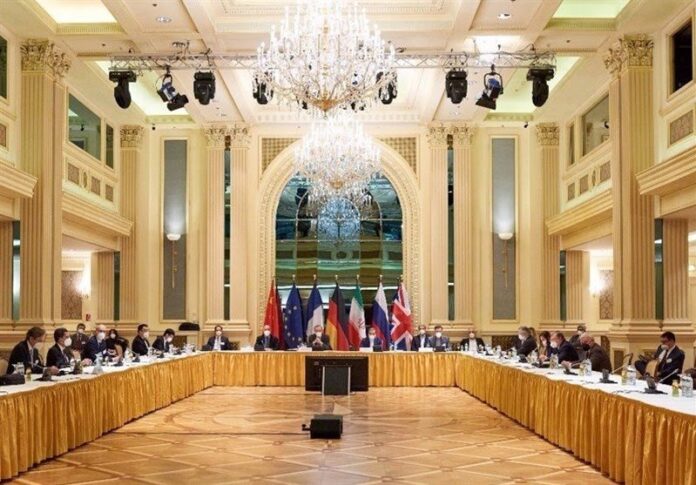
Iran FM: Vienna talks not aimed to produce new deal

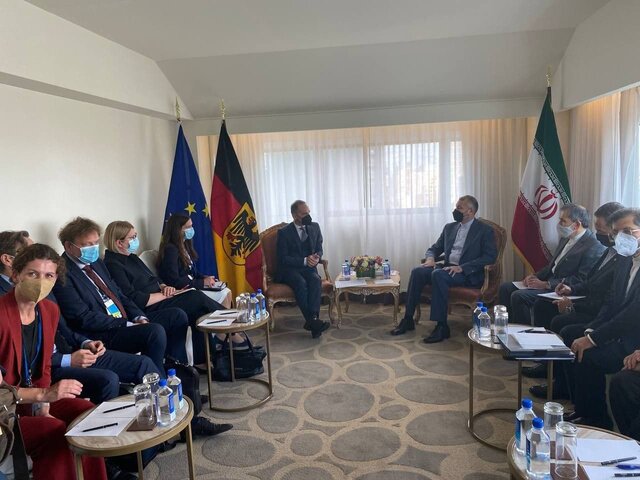
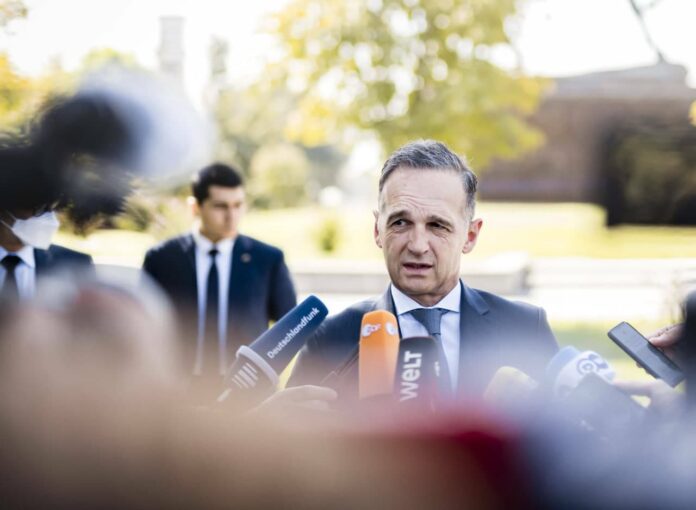
He made the comment in a meeting with his German counterpart Haiko Maas on the sidelines of the 76th session of the UN General Assembly in New York.

He underlined the importance of the Vienna negotiations being result-based, adding the Iranian people rightfully expect to enjoy the economic benefits of the nuclear deal this time around as this expectation has not been realized yet because the other sides have failed to live up to their part of the JCPOA.

Amirabdollahian said the administration of US President Joe Biden’s policy is a continuation of his predecessor’s and the policy is to impose sanctions on the Islamic Republic.

He also called the European troika’s excuses about its failure to stick by its part of the JCPOA “unacceptable”. The German foreign minister also said his country is committed to the nuclear agreement and will do its utmost to revive and safeguard the deal.

Maas underlined the need for all sides to do their best to make sure the Vienna talks pay off.

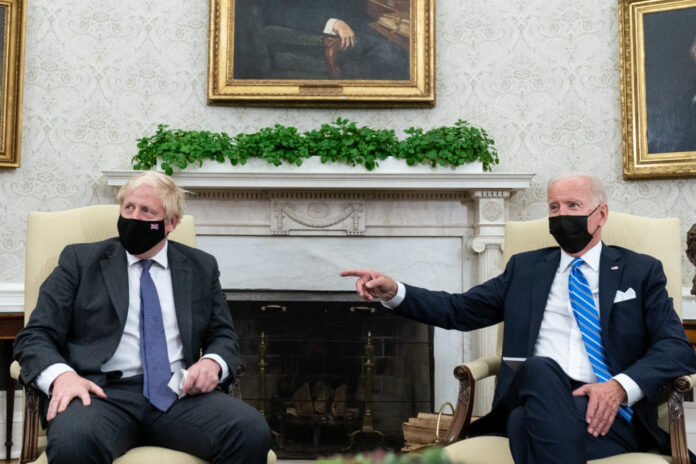
Biden and Johnson agree on approach to Russia and China

According to the statement, the two leaders discussed several international topics and among them China and Russia. They agreed to pursue these issues based on the common values.

Johnson added that he is looking forward to the Democracy Summit, which will take place on December 9-10, 2021. Biden previously invited the British PM to it.

The summit will be held via video conference, and will focus on three issues – the fight against corruption, protection from totalitarianism and the respect for human rights. During their shared values conversation, Biden and Johnson spoke of the new security partnership for Australia, the United Kingdom and the United States – AUKUS.

In mid-September, Australia, the UK and the US announced the new AUKUS security partnership. Under the agreement, Australia plans to construct eight nuclear-powered submarines and equip its forces with US-made cruise missiles; the made Canberra void its defense contract with France – the largest in its history.

In response to this development, France immediately withdrew its ambassadors from the US and Australia but not from the UK. According to French Foreign Minister Jean-Yves le Drian, Paris made this decision, “knowing London’s policy of constant opportunism”.

Biden and Johnson also agreed that Taliban’s international recognition has to be coordinated and be conditional in nature, according to the statement.

According to the statement, the two agreed that any international recognition of the Taliban must be coordinated and on the condition that the they respect human rights.

Both leaders expressed the opinion that the diplomatic approach the best way to prevent a humanitarian crisis in Afghanistan and doing so will be the best way to honor the memory of those who gave their lives for peace and stability in the country.

The Taliban launched a large-scale operation to regain control over Afghanistan after the United States announced the withdrawal of its military personnel from the country. On August 15, Afghan President Ashraf Ghani stepped down and fled the country, and the Taliban forces swept into Kabul, meeting no resistance.


Source: TASS

Taliban asks to address world leaders at UN

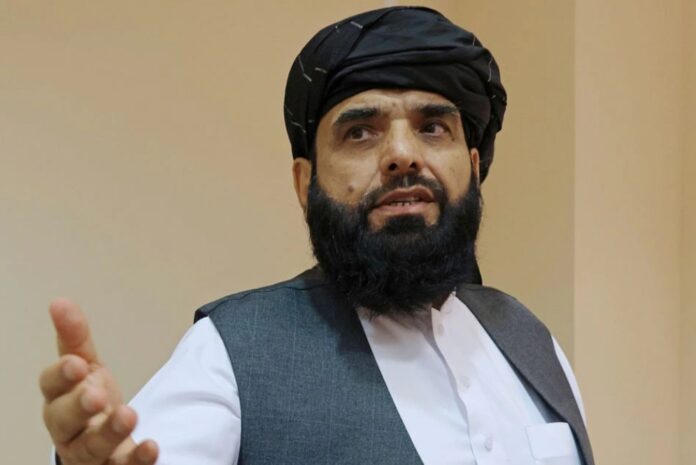
According to a letter seen by Reuters, the Taliban also nominated Doha-based spokesman Suhail Shaheen as Afghanistan’s U.N. ambassador in a letter from Foreign Minister Amir Khan Muttaqi.

A spokesperson for United Nations Secretary-General Antonio Guterres told Reuters that the letter was sent to the U.N.’s credentials committee which includes the United States.

Though Muttaqi requested time to speak during the high-level General Assembly meeting that concludes on Monday, the speaking request will probably be denied, as the committee is unlikely to meet before Monday.

As for appointment of an ambassador, this would be an important step in the Taliban’s pursuit of international recognition. Yet Reuters reported that such recognition is a major leverage point for Guterres to press for rights of people like women and girls in Afghanistan.

When the Taliban last controlled Afghanistan over two decades ago, the Afghan ambassador in place before the Taliban’s takeover remained until after the committee met.

Amnesty: Taliban not serious about protecting human rights

Dinushika Dissanayake, Amnesty International’s deputy director for South Asia, said in a statement, “In just over five weeks since assuming control of Afghanistan, the Taliban have clearly demonstrated that they are not serious about protecting or respecting human rights. We have already seen a wave of violations, from reprisal attacks and restrictions on women, to crackdowns on protests, the media and civil society.”

The international human rights organization added the Taliban have already gone back on their promises of amnesty for government officials and protection for journalists.

Based on Amnesty International’s research on the situation in Afghanistan, the Taliban have begun targeting Afghan police officers, including reportedly killing one who was pregnant at the time.

The Taliban also allegedly kidnapped popular Afghan comedian Nazar Mohammad, a former police officer, from his home and had him killed.

“While it is now almost impossible to carry out any human rights work, attacks on human rights defenders have reportedly been on the rise without any sign of abating,” Amnesty International said, adding, “Since 15 August, the Taliban and armed groups have engaged in large-scale door-to-door searches, forcing human rights defenders into hiding, and moving clandestinely from one place to another.”

One Afghan female human rights activist named only as Kobra noted in Amnesty’s briefing that she was questioned by Taliban sympathizers in the weeks before Kabul fell. She left the country about four days after Kabul was overtaken and said Taliban fighters went to her home on the day she left and questioned her neighbors.

“Today, for what sin did we have to leave our homeland, our loved ones, and our life and for which sin we suffered such hardship at the gates to enter the Kabul airport,” Kobra added.

The human rights group called for countries to cease deportations and forced returns to Afghanistan, prioritize female Afghans as refugees and suspend visa requirements for those leaving the country and for neighboring countries to maintain open borders with Afghanistan.


Source: The Hill

Iran jumps higher in Global Innovation Index 2021

The 2021 edition of the GII shows the Islamic Republic advanced seven steps and now ranks 60th in terms of innovation among world countries.

Meanwhile, Knowledge-based companies and creative startups have grown over the past five years, and Iran has risen 45 steps in the Global Innovation Index. Switzerland topped the league table, followed by Sweden, the U.S., and the UK, said the report by the World Intellectual Property Organization (WIPO).

Among Asian economies, South Korea jumped to the fifth position, up from 10 in previous years. China was in the 12th position.

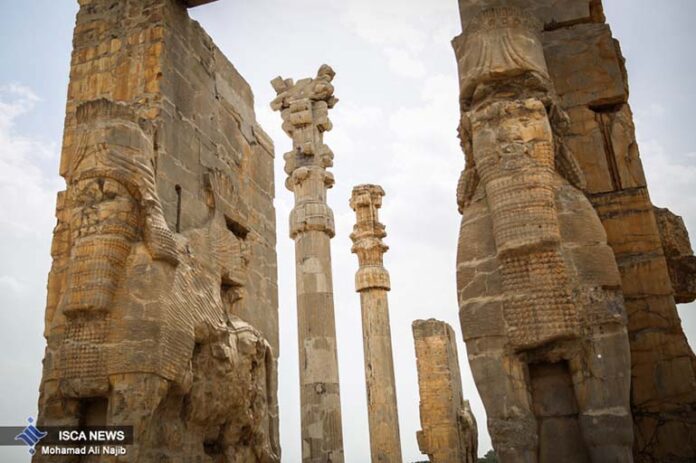
Iran discovers new inscriptions at Persepolis

Takht-e Jamshid033

The head of the International Takhte Jamshid Database said the readings of one inscription show that the inscription was engraved in the fourth imperial year of Yazdgerd with the aim of commemorating a given person. Hamid Fadaee added that the inscription is of the buried type.

He added that inscriptions count as being among the most credible historical proofs.

Fadaee said the related research center has started deciphering the inscriptions.

Takhte Jamshid, also known as Persepolis, was the ceremonial capital of Achaemenid Empire (c.

550–330 BC) and it is situated in the plains of Marvdasht, some 60 kilometers from the southern Iranian city of Shiraz.

Germany urges Iran to return to nuclear talks

“Time is running out with regard to the nuclear agreement with Iran,” Foreign Minister Heiko Maas said in a statement prior to his departure for New York to attend the 76th session of the United Nations General Assembly.

“The invitation to Tehran to return to the negotiations on the JCPOA (Joint Comprehensive Plan of Action) cannot be extended indefinitely. The new government must now be quick to find its way back to the negotiating table,” he added.

“We will also be holding talks on this issue in the coming days,” the FM continued.

Source: The website of The Federal Foreign Office

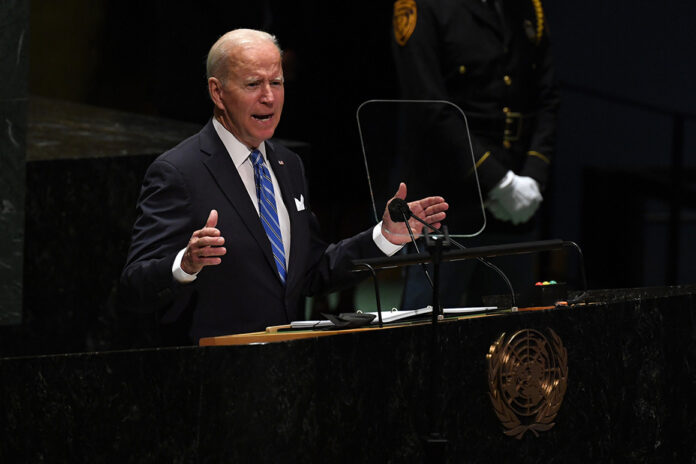
Biden renews offer to return to ‘full’ nuclear deal ‘if Iran does same’

He said the U.S. was “working” with China, France, Russia, Britain and Germany to “engage Iran diplomatically and to seek a return to” the Joint Comprehensive Plan of Action (JCPAO), officially known as Iran’s Nuclear Deal.

“We’re prepared to return to full compliance if Iran does the same,” he added.

Iran’s Supreme Leader Ayatollah Seyed Ali Khamenei has said the United States must be first to return to its commitments under the nuclear deal.

Germany, France and the United Kingdom – the three European powers that signed the nuclear deal along with the U.S. – also no longer have the right to set conditions since they reneged on their commitments first, he added.

The supreme leader stressed that Iran has set its conditions for the deal, which it will not go back from.

“If they want Iran to return to its JCPOA commitments, the U.S. must completely lift sanctions. And not just verbally on the paper. They must revoke the sanctions in action and we will verify it,” he stated.

Biden also used his first address before the U.N. General Assembly to summon allies to move more quickly to address the festering issues of the COVID-19 pandemic, climate change and human rights abuses, while insisting the U.S. is not seeking “a new Cold War” with China.

The president said the halting of U.S. military operations in Afghanistan last month, ending America’s longest war, set the table for his administration to shift U.S. attention to intensive diplomacy at a moment with no shortage of crises facing the globe.

Biden defended his decision to end the U.S. war in Afghanistan, a chaotic withdrawal of American troops that frustrated some allies and hurt his standing at home. He called for the world to make the use of force “our tool of last resort, not our first” going forward.

“Today, many of our greatest concerns cannot be solved or even addressed by the force of arms,” he stated, noting, “Bombs and bullets cannot defend against COVID-19 or its future variants.”

“To deliver for our own people, we must also engage deeply with the rest of the world,” he added.

“We’re opening a new era of relentless diplomacy, of using the power of our development aid to invest in new ways of lifting people up around the world,” he continued.

Biden sought to play down concerns about China tensions escalating into something more, stressing, “We are not seeking a new Cold War or a world divided into rigid blocs”, addressing recent criticism by UN Chief Antonio Guterres, who warned the United States to repair their “completely dysfunctional” relationship with Beijing before it turns into a Cold War even more dangerous than the last one.

Biden also stressed that the U.S. is seeking the “complete denuclearization of the Korean Peninsula”.


Sources: The AP, AFP, Al-Jazeera

Iran favors nuclear talks that would see lifting of all sanctions

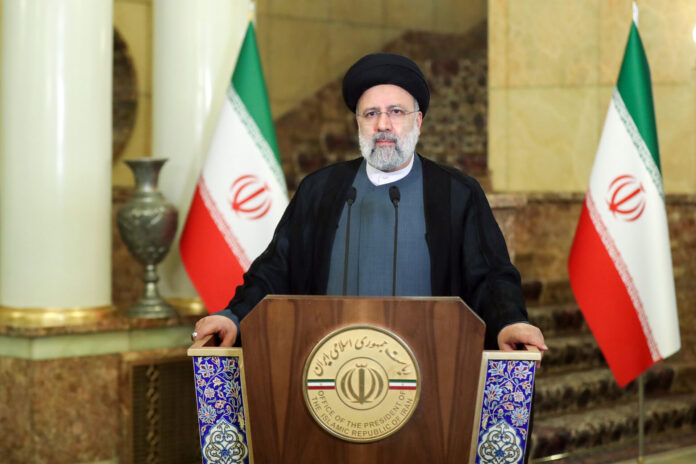
President Ebrahim Raisi told the 76th session of the UN General Assembly in New York on Tuesday; all parties must stay true to the nuclear deal and the UN resolution in practice. He added the US has not yet discharged its obligation, which is lifting sanctions.

Raisi also reiterated nuclear weapons have no place in Iran’s defense doctrine and deterrence policy.

The full text of President Raisi’s speech is as follows:

In the Name of God, the Compassionate, the Merciful
Praise is due to Allah, the Lord of the Worlds, and His Peace and Blessings be upon Muhammad and His Pure Household and His Select Companions

Mr. President,
At the outset allow me to extend my congratulations to Your Excellency for your election as the chair of the 76th Session of the UN General Assembly.

Ladies and Gentlemen,

Iran is the land of culture and civilisation. The land of knowledge and spirituality. The land of perseverance and independence. The Iranian people are monotheist and patriotic. They have their unique identity and love to explore the world.

For hundreds of years, our nation have safeguarded their right to self-determination and freedom against the hegemonists and have made their country the most progressive in the election-based political system in the west of Asia. The Islamic Revolution was indeed a great leap for the fulfilment of national and Islamic ideals of Iranians including freedom, independence and religious democracy.

I, as the elected President of the great people of Iran, am honoured to be their representative to convey to the world at large the message of rationality, justice and freedom which are the three most fundamental principles of the life of the contemporary man. However, those three principles that all the Abrahamic religions have in common will not be able to attain their purpose without spirituality.

Freedom and justice as two sacred and innocent words that are too broad to define, are indeed very tough and intricate when it comes to practicing. Freedom means the right to think, decide and act for all the human beings. Peace and lasting security are tied to the administration of justice and, basically, the divine prophets emerged so that people would demand justice and exercise their rights. Justice and freedom may be achieved only when the rights of all nations are fulfilled. As a matter of fact, any violation of the rights of nations will, more than anything, endanger global peace and security.

Ladies and Gentlemen,
This year, two scenes made history: one was on January the 6th when the US congress was attacked by the people and, two, when the people of Afghanistan were dropped down from the US planes in August. From the Capitol to Kabul, one clear message was sent to the world: the US’ hegemonic system has no credibility, whether inside or outside the country.

What is seen in our region today proves that not only the hegemonist and the idea of hegemony, but also the project of imposing Westernised identity have failed miserably. The result of seeking hegemony has been blood-spilling and instability and, ultimately, defeat and escape. Today, the US does not get to exit Iraq and Afghanistan but is expelled. And, at the same time, it is the oppressed people, from Palestine and Syria to Yemen and Afghanistan, as well as the US taxpayers, who have to pay for this lack of rationality.

Today, the world doesn’t care about “America First” or “America is Back”. If rationality prevails in the minds of the decision-makers, they have to realise that nations’ perseverance is stronger than the power of the superpowers. Over the past decade, the US has been making the mistake of modifying its “way of war” with the world instead of changing its “way of life”. An erroneous path cannot be brought to fruition by merely adopting a different method.

Sanctions are the US’ new way of war with the nations of the world. Sanctions against the Iranian nation started not with my country’s nuclear program; they even predate the Islamic Revolution and go back to the year 1951 when oil nationalisation went underway in Iran, which in turn led to a military coup backed by the Americans and the Britons against the then government of Iran that was elected by the people. Sanctions, especially sanctions on medicine at the time of the COVID-19 pandemic, are crimes against humanity.

The Holy Quran introduces the destruction of nature and mankind as a major characteristic of the tyrants. The Islamic Republic of Iran proposes that any kind of sanction-induced restriction or disruption in the supply of good health and environment as two humanitarian issues, be declared forbidden. Moreover, I, on behalf of the Iranian nation and millions of refugees hosted by my country, would like to condemn the continued illegal US sanctions especially in the area of humanitarian items, and demand that this organised crime against humanity be recorded as a symbol and reality of the so-called American human rights.

Despite the fact that the Islamic Republic of Iran was keen from the outset to purchase and import COVID-19 vaccines from reliable international sources, it faced inhumane medical sanctions. Therefore, from the very beginning, we started to sustainably produce vaccines domestically.

In addition to peaceful nuclear and satellite technologies, Iran is the medical hub of the region and numerous Iranian physicians and scientists, such as Avicenna, shine in the history of humankind. Knowledge that is beneficial to humanity cannot be sanctioned. We ourselves have been able to produce fuel for the Tehran research reactor which makes radiopharmaceuticals for more than one million cancer patients in Iran. We have also made astonishing progress in the area of biotechnology and stem cells in spite of all sanctions.

And today despite all sanctions targeting human rights, we have become one of the manufacturers of COVID-19 vaccines.

Cooperation amongst the countries of the world in the realm of health and especially on vaccines is tantamount to helping the spirit of humanity and the policy based of divinity-humanity in international relations. The Coronavirus is a wake-up call for the whole world, reminding us once again that the security of all human beings are interdependent. Crises in human societies, such as violence, poverty, unemployment, moral and economic corruption, collapse of family foundations, regional wars, organised terrorism and environmental crises are all the result of inattention to the principles of rationality, justice and freedom.

Ladies and Gentlemen,
The strategic thoughts of the Islamic Republic of Iran are rooted in the ideas of the founder of the Islamic Revolution, the late Imam Khomeini (May His Soul Rest in Peace) as well as in the genuine concepts of true Islam, i.e. rationality, prudence and pondering and have resulted in the resistance in line with the national interests of countries. Speaking about the rights of nations without speaking of the obligations of their governments cannot bring about the fulfilment of their rights, as the independence of a nation is its freedom. The Islamic Revolution supports this kind of freedom and, hence, obstructs extremism. And this is the nature of the true strength of the Islamic Republic of Iran which does good to all.

The Islamic Republic of Iran is inspiring and, as such, the power emanating from it creates security. The security-making model of the Islamic Republic of Iran is based on forming intra-regional mechanisms through diplomacy that is pivoted on and free from outside interferences.

It has been our policy to strive for the preservation of stability and territorial integrity of all the countries of the region. If not for the power and role of Iran alongside the governments and peoples of Syria and Iraq as well as all the selfless efforts of Martyrs Abu Mahdi al-Muhandis and General Qassem Soleymani, today ISIS would be the Mediterranean neighbours of Europe. And, of course, ISIS will not be the last wave of extremism.

The new drive to come up with Cold War-esque divisions will not help foster the security of humans by isolating independent countries. An arbitrary attitude is not the way to solve terrorism because terrorism has its roots in various crises such as identity and economy.

The fact that modern lives have become devoid of meaning and spirituality as well as the spread of poverty, discrimination and oppression have helped the rise of terrorism. The increasing growth of indigenous terrorism in the West bears witness to this bitter truth.

Even more bitter is the use of terrorism as an instrument for foreign policy because you cannot fight terrorism with double standards. You cannot make a terrorist group, such as ISIS, in a certain place and claim to fight it somewhere else.

After seeking the grace of the Almighty God, the solution to skirmishes and conflicts in our region lies in the following:

Making the will of nations rule over their own destiny by referring to the results of public vote. But in order for this to materialise, two basic preconditions need to be met: 1- halting the aggressions of the outsiders and occupation, and 2-sincere cooperation of governments to counter terrorism.

The military presence of the US in Syria and Iraq is the biggest hindrance to the establishment of democracy and will of nations. Freedom does not fit in the backpacks of soldiers coming from outside the region.

If an inclusive government having an effective participation of all ethnicities shouldn’t emerge to run Afghanistan, security will not be restored to the country. And like occupation, paternalism is also doomed to failure.

The humanitarian crisis in Yemen is very worrying and the world needs to break its silence towards crimes against humanity. The solution? The speedy and unconditional stop to the Yemeni aggression, opening of channels for providing humanitarian aid, and facilitation of constructive talks between Yemeni groups.

The occupier Zionist regime is the organiser of the biggest state terrorism whose agenda is to slaughter women and children in Gaza and the West Bank. Today, an all-out blockade has turned Gaza to the biggest prison in the world. The so-called “deal of the century” failed just like any other deal forced on Palestinians. There is only one solution: holding a referendum with the participation of all Palestinians of all religions and ethnicities including Muslims, Christians and Jews. This solution was set forth by the Supreme Leader of the Islamic Republic of Iran many years ago which is now registered as one of the official documents of the United Nations.

Mr. President,

Today, the whole world including the Americans themselves have admitted that the project of countering the Iranian people, which manifested itself in the form of violating the JCPOA and was followed by the “maximum pressure” and arbitrary withdrawal from an internationally recognised agreement, has totally failed. However, the policy of “maximum oppression” is still on. We want nothing more than what is rightfully ours. We demand the implementation of international rules. All parties must stay true to the nuclear deal and the UN Resolution in practice. Fifteen reports released by the IAEA have attested to the adherence of Iran to its commitments. However, the US has not yet discharged its obligation, which is lifting sanctions. It has encroached upon the agreement, withdrawn from it and levied even more sanctions on my people.

The United States mistakenly believed it would render us desperate and devastated, but our perseverance has yielded results and will always do, for the smart and dynamic resistance of the Islamic Republic of Iran comes from our strategic rationality. And we don’t trust the promises made by the US government.

It is the strategic policy of the Islamic Republic of Iran to consider the production and stockpiling of atomic weapons as forbidden based on the religious decree by His Eminence, the Supreme Leader, and Nukes have no place in our defense doctrine and deterrence policy. The Islamic Republic considers the useful talks whose ultimate outcome is the lifting of all oppressive sanctions.

While decisively defending all is rights and the interests of its people, Iran is keen to have large-scale political and economic cooperation and convergence with the rest of the world. I seek effective interaction with all the countries of the world especially with our neighbours and shake their hands warmly.

A new era has begun,
The Islamic Republic of Iran is ready to play its part for a better world. A world brim-full of rationality, justice, freedom, morality and spirituality.

Thank you all for your attention.

Peace and Mercy of Allah be upon you

Iran: JCPOA revival talks to resume in Vienna in weeks

Foreign Ministry Spokesman Saeed Khatibzadeh said on Tuesday that the 4+1 group of countries that remain party to the Joint Comprehensive Plan of Action has been informed about the upcoming talks.

Khatibzadeh explained that the JCPOA and the upcoming Vienna talks will be high on the agenda of bilateral meetings between European Union Foreign Policy Chief Josep Borrell and foreign ministers of the 4+1 group who have come to New York to attend the UN General Assembly.

On Monday, the U.S. State Department’s Bureau of International Organization Affairs Senior Official Erica Barks-Ruggle said America remains committed to pursuing meaningful diplomacy to achieve a mutual return to compliance with the Joint Comprehensive Plan of Action.

She also said, “I know that we have said that we are ready to return, and we are hopeful to hear from the Iranians soon.”

Former U.S President Donald Trump withdrew America from the deal in May 2018 and re-imposed unilateral sanctions on Iran in a bid to force Tehran to renegotiate the nuclear deal, but the Islamic Republic refused to do so and in response rolled back some of it commitments under the JCPOA

Iran and the remaining parties to the 2015 nuclear deal namely Russia, China, Britain, France and Germany have held six rounds of talks in Vienna in recent months on a possible return of the United States to the agreement.

The exact date of the seventh round of talks is yet to be announced.