Thursday, December 25, 2025
Home Blog Page 2358

“Decision to Cut off Instagram not up to Communications Ministry”

Best Practices For Creating Instagram Video Ads

He noted that the ministry must provide conditions in cyberspace to protect the rights of the people in this space.

Zarepour added that when the whole life of the people is tied to cyberspace, the government must definitely provide the necessary infrastructure to protect their rights and that this does not mean blocking at all, but it means legalizing and systematizing.

The Iranian minister of communications and information technology noted that this administration views information technology as an opportunity, saying, “We can use this tool to solve the country’s problems, improve efficiency, speed things up, establish a smart government, remove golden signatures, etc”.

Zarepour said all these are the capacities that information technology has created and they can be used to provide services to people.

The minister of communications and information technology added, “We will definitely make the most of this technology to solve people’s problems.”

Asked whether he meant people and businesses should not worry about cutting off Instagram, Zarepour said relevant authorities must make a decision in this regard. He said, “Our vision is to make maximum use of this tool to solve the country’s problems”.

He however noted that everything must be lawful so that if someone’s right is violated, he can follow it up, but the decision as to which platform to use or not is not up to the ministry of communications and information technology.

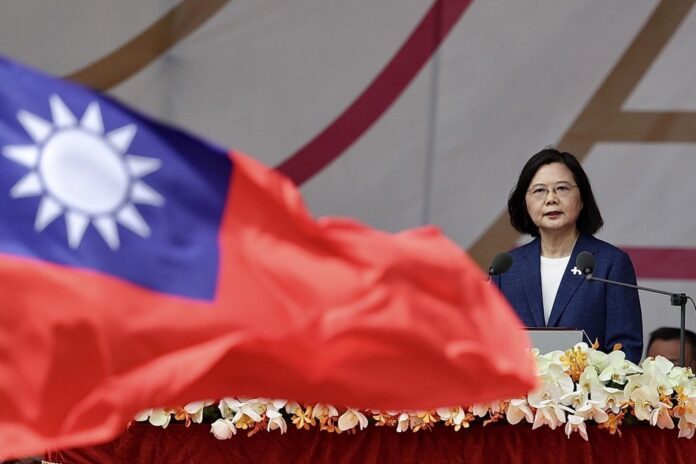
Taiwan says won’t ‘bow to China’s pressure’

Speaking at a national day rally on Sunday, Tsai pledged that Taiwan would “continue to bolster” its national defence and demonstrate its determination to defend itself “in order to ensure that nobody can force Taiwan to take the path China has laid out for” Taipei.

“This is because the path that China has laid out offers neither a free and democratic way of life for Taiwan, nor sovereignty for our 23 million people”, she asserted.

Tsai also vowed that Taiwan will not “act rashly” in developing its national defence, adding, however, “there should be absolutely no illusions that the Taiwanese people will bow to pressure”, in an apparent nod to China.

“The more we achieve, the greater the pressure we face from China. So I want to remind all my fellow citizens that we do not have the privilege of letting down our guard”, the Taiwanese president said.

She insisted that the situation around Taiwan had become “more complex and fluid than at any other point in the past 72 years”, accusing China of increasing its military presence in the island’s air defence zone, which Tsai claimed had seriously impacted her country’s national security.

The remarks come a day after Xi reiterated Beijing’s readiness to implement his country’s plan for “reunification” with Taiwan “by peaceful means”, in line with the “one country, two systems” policy.

“No one should underestimate the Chinese people’s determination and strong ability to defend [our] national sovereignty and territorial integrity. The historical task of the complete reunification of the motherland must be fulfilled, and it will definitely be fulfilled,” Xi pointed out.

The statement followed a Wall Street Journal (WSJ) report earlier this week that US Marines and special operations forces have been secretly training Taiwanese soldiers on the island “for at least a year” as a way to prepare them for potential threats coming from China.

Neither the US government nor Taiwanese officials have commented on the matter yet. Beijing has repeatedly condemned Washington over its perceived meddling in the affairs of Taiwan, which it considers an integral part of China.

The WSJ report was preceded by Taiwanese Defence Minister Chiu Kuo-cheng arguing that China might mount a full-scale invasion of the island by 2025. The claims came after China in recent days sent almost 150 military aircraft close to Taiwan, while US and other allied forces conducted drills in the South China Sea.

Taiwan has been governed independently from mainland China since 1949. Beijing views the island as a breakaway province, while Taiwan maintains that it is an autonomous country, which wants a dialogue with China, but cannot accept Beijing’s proposal for the “one country, two systems” model.

The US does not recognise Taiwan as a sovereign nation, but has informal relations with the island, remaining its biggest supplier of military equipment.

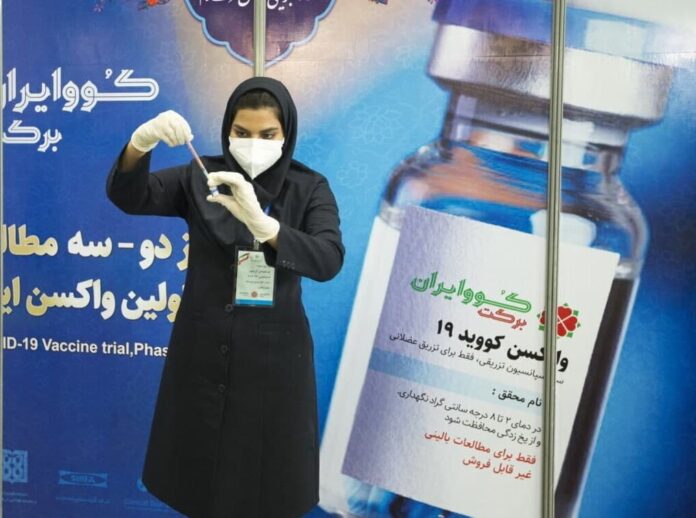
Over 16 million doses of Barakat vaccine produced in Iran

According to Fars News Agency, Hassan Jalili, Imam Khomeini‘s Order Executive Headquarters’ project manager for the production of the vaccine, informed reporters of the production of the first Iranian Covid vaccine.

He said the production of Barakat vaccine in the phases one and two is underway round the clock at Shafa Pharmed company and to date more than 16 million doses of the jab have been produced.

In response to a question about the complaints of some people regarding the lack of Barakat vaccines in public vaccination centers in some provinces, he said Imam Khomeini’s Order Executive Headquarters has no role in distributing the vaccine.

Jalili added that so far more than 7 million and 500 thousand doses of Barakat vaccine has been delivered to the Ministry of Health and that the way and amount of distribution of these vaccines in different provinces and cities are entirely determined by the Ministry of Health.

In response to another question about the numerous follow-ups of families and parents to get their children inoculated with Barak vaccine, he said clinical studies performed in the previous three stages were for people 18 years and older, and therefore the general vaccination license for the age group of over 18 years old has been issued.

Germany calls on Iran to resume stalled nuclear talks

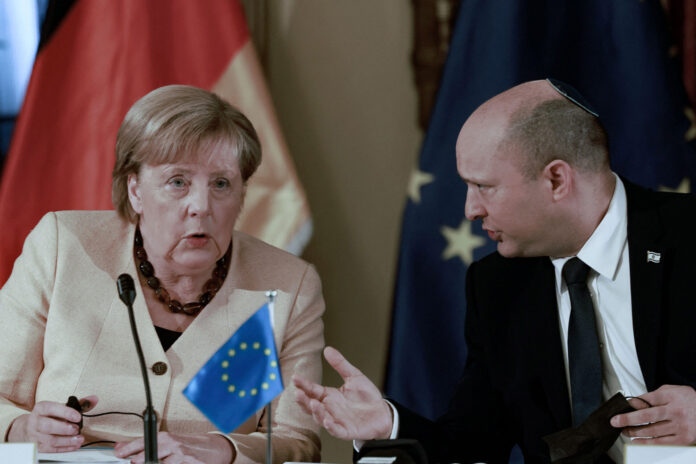
German Chancellor Angela Merkel attends a cabinet meeting with Israeli Prime Minister Naftali Benett in Jerusalem, on October 10, 2021. - Germany's outgoing Chancellor Angela Merkel said Israel's security will be a top priority for "every German government" during a farewell tour in the Jewish state today, as she prepares to end a 16-year term in office. (Photo by Menahem KAHANA / AFP) (Photo by MENAHEM KAHANA/AFP via Getty Images)

The U.S. has warned time is running out to revive a 2015 accord with Iran that would lift sanctions in return for limiting its nuclear work.

A sixth round of negotiations ended inconclusively in June and no date’s been set for the next one after a transition of power in Iran complicated diplomacy.

The international community is in a very difficult situation, Merkel stated.

Although the administration of U.S. President Joe Biden has sought a return to the deal, “the days go by without Iran giving any indications that it wants to restart the talks”, while it continues sensitive uranium enrichment work.

“This is a very critical situation,” she noted at a news conference in Jerusalem with Israeli Prime Minister Naftali Bennett.

“There are very, very decisive weeks ahead of us,” she added.

Western countries and Israel suspect the program is aimed at making a bomb. Iran denies it.

“The message to Iran is unambiguous: There must be a quick return to the negotiating table,” Merkel said.

The original deal was not ideal but it was better than nothing, she added.

Bennett reiterated Israel’s position that a revived nuclear accord would embolden Iran.

Merkel, who will leave office soon, said the new German government will remain committed to Israel’s security, a position it’s taken for decades to try to atone for the country’s Nazi past. She also added Israel’s settlement policy has made a two-state solution of the Israeli-Palestinian conflict difficult.

In September, Foreign Ministry Spokesman Saeed Khatibzadeh stated the 4+1 group of countries that remain party to the JCPOA will resume nuclear negotiations in Austrian capital Vienna within the next few weeks.

During the last official meeting with the president and the cabinet members of the twelfth government in late July, Leader of the Islamic Revolution Ayatollah Seyyed Ali Khamenei has said that one key lesson for future administrations to learn from the experience gained during the tenure of Hassan Rouhani is that there is no benefit in putting one’s trust in the west.

“The others should use your experience,” Ayatollah Khamenei told the meeting, adding, “There is a specific experience… that I have noted to you and the people many times before, and let me repeat the same thing here, which is [the need for] a lack of trust in the west.”

“This is an experience that the posterity should use. As it became manifest during the tenure of this administration, nothing can be gained from putting one’s trust in the west,” the leader stated.

The leader added that domestic programs should in no way be tied to western states under any circumstances due to the proven failure of such an approach.

“Wherever you tied your work to the west, you failed, and wherever you rose and moved forward without trusting the west, you succeeded,” he said in an address to members of the outgoing administration.

“Wherever you tied issues to an agreement or talks with the west, America and the like, you failed to move forward,” he said, adding, “Because they don’t help. They are the enemies, of course.”

“The Americans say [in words] and promise that ‘we will remove the sanctions’ but they have failed to do so,” stressed the leader, denouncing the US attempts to add new terms to the agreement to push Iran to begin talks on other issues.

By adding such a clause, according to the leader, the Americans are seeking to gain an excuse for further meddlesome acts regarding the JCPOA, Iran’s missile program and regional issues.

“And if Iran refuses to talk about [those issues], they would say ‘you have violated the JCPOA and therefore there won’t be an agreement anymore,’” he stated.

Ayatollah Khamenei drew attention to the fact that the US has refused to provide Iran with a guarantee that it will not violate its commitments again.

He noted that Washington will not shy away from violating its contractual commitments in the same manner it did in 2018, a move that was “completely costless” for them.


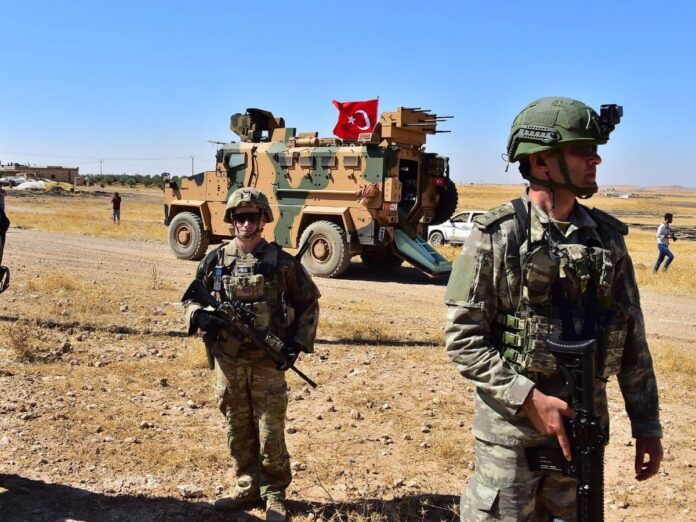
Turkey says US should be honest with Americans about Syria

“Instead of blaming Turkey, the US should abandon its own wrong policies, and should be more honest with the American people and its Congress,” Mevlut Cavusoglu said during a joint news conference with his visiting Venezuelan counterpart Felix Plasencia.

The US on Thursday extended the state of emergency decree issued in 2019 for another year, claiming that Turkey’s activities in Syria pose a threat to national security.

In 2019, then President Donald Trump withdrew most of the US troops in the region from Syria before Turkey’s anti-terror operation.

Cavusoglu, who described the letter as a “copy-paste”, noted the US administration had previously used the same sentences.

“The reason for this is the US’ cooperation with the YPG terrorist organization, which the US takes very seriously,” he asserted.

“We know very well that the purpose of being here is not to fight against Daesh,” he stated, emphasizing that this position is illegal under US law.

“We have fought against Daesh. The only army that is fighting against it is our army in NATO and the world,” he continued.

Around 4,000 terrorists have been killed as a result of this struggle, he said and added that Turkey is supporting the international efforts by taking measures against foreign terrorists.

He went on to say that the US’ Syria and Iraq policies, as well as all of its policies, are discussed in Europe and NATO. All of these policies are implemented without a plan and foresight, he added.

Since 2016, Ankara has launched a trio of successful anti-terror operations across its border in northern Syria to prevent the formation of a terror corridor and enable the peaceful settlement of residents: Euphrates Shield (2016), Olive Branch (2018), and Peace Spring (2019).

Blinken to talk Iran with Israeli, UAE FMs

his is the first such meeting since the signing in 2020 of the “Abraham Accords”, normalization agreements Israel struck with Bahrain and the UAE. It is a substantial step by the Joe Biden administration to strengthen the treaty between the countries.

Israel’s Yair Lapid and the UAE’s Abdullah Bin Zayed initiated the gathering, telling Blinken they would be coming to Washington at the same time and proposing the meeting, Israeli officials told Axios.

A similar meeting took place in secret in 2009 when the UAE’s ambassador to Washington, Yousef al-Otaiba, and his Israeli counterpart, Salay Meridor, reached out together to the Barack Obama administration to raise their concerns about Iran.

Jeremy Issacharoff, then the deputy head of mission at Israel’s embassy in Washington, reached out to Dennis Ross, then the State Department’s point man on Iran, and proposed the meeting.

Ross was surprised by the unprecedented proposal and agreed immediately. The meeting was held in secret in al-Otaiba’s suite at the Four Seasons in Georgetown.

This week’s trilateral meeting will be held in public and on foreign minister level.

Israeli officials say the meeting will focus on boosting U.S.-Israeli-Emirati cooperation on a set of issues as part of the strengthening of the Abraham Accords.

But Israeli officials say the meeting will also be an opportunity to present Israel and the UAE’s concerns about Iran’s nuclear program and regional activity.

“They will discuss progress made since the signing of the Abraham Accords last year, future opportunities for collaboration, and bilateral issues, including regional security and stability,” the State Department announced in a statement.

Iran FM: Pivot to East Doesn’t Mean Abandoning West

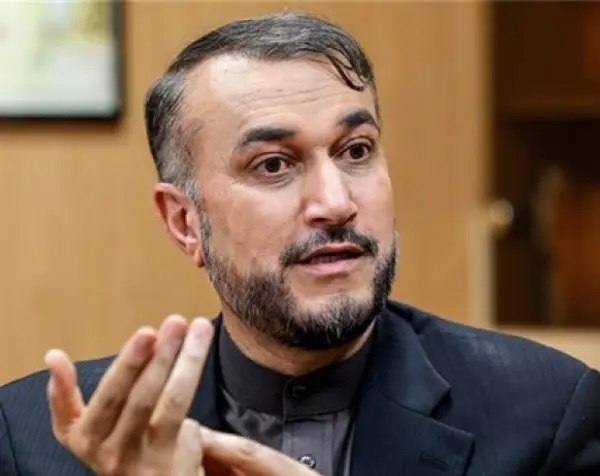
“Our keywords we use for the foreign policy in the 13th administration [government of President Ebrahim Raisei] are a balanced foreign policy coupled with an active, dynamic and smart diplomacy,” Hossein Amirabdollahian said when asked about his recent visit to Moscow and Iran’s focus on interaction with Asian countries.

“A focus to Asia does not mean we do not pay attention to other regions including the west,” he said.

Amirabdollahian stressed that a balanced foreign policy requires attention to priorities while tapping all opportunities in different areas of the world in line with national interests.

“However, the westerners should know this and we have clearly told them that […], due to the policies of the US and your own failure to fulfill your obligations to Iran, you are suffering losses every single day and are getting farther away from investments in and interaction with Iran in different areas of trade and economy,” he said.

Amirabdollahian also touched on the Vienna talks on the Iran nuclear deal. He said the negotiations will be advanced using the common wisdom of experts in the legal, technical, economic and other fields, but will be led by the foreign ministry’s deputy in charge of political affairs.

He added that the ministry is in the process of wrapping up its consultations on how to advance the talks.

Report: Khashoggi killers trained in U.S.

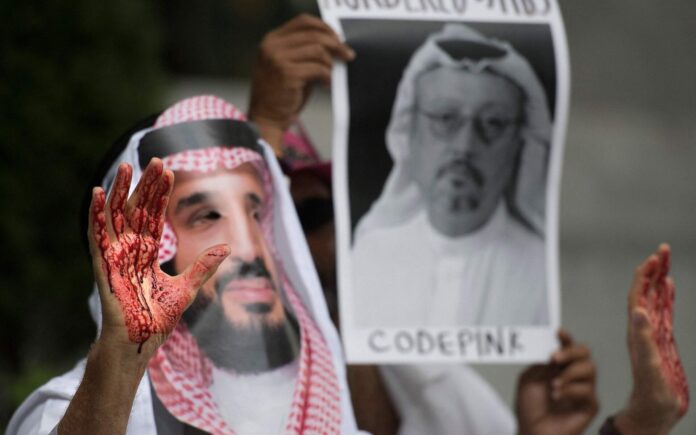
The 59-year-old, who had angered Crown Prince Mohammed bin Salman with his criticism of the kingdom, was murdered in October 2018, after he entered the Saudi consulate in Istanbul. His body has never been recovered, and Western intelligence services believe it was dismembered.

The prince, commonly known as MBS, has always denied any involvement in the writer and broadcaster’s death, though earlier this year the Biden administration released an intelligence report saying he knew about and approved of the plan.

Now a report claims that four of the dozen-strong “kill team” received paramilitary training in the United States, as part of a contract approved by the State Department.

The New York Timessaid the men received the training from the Arkansas-based security company Tier 1 Group, which is owned by the private equity firm Cerberus Capital Management.

The company has said the training, which included “safe marksmanship” and “countering an attack”, was intended for the protection of Saudi leaders.

It quoted Louis Bremer, a senior executive of Cerberus, the group’s parent company, as having confirmed its role last year in written answers to questions from politicians in Washington DC.

He was being questioned as part of his nomination for a senior Pentagon job during the Trump administration, a nomination that was later withdrawn.

It said that Mr Bremer provided his answers to the newspaper, and confirmed four members of the Khashoggi kill team had received Tier 1 Group training in 2017, and two of them had participated in a previous version that ran between October 2014 until January 2015.

“The training provided was unrelated to their subsequent heinous acts,” Mr Bremer said in his answers.

He said a review in 2019 review by Tier 1 Group “uncovered no wrongdoing by the company and confirmed that the established curriculum training was unrelated to the murder of Jamal Khashoggi”.

The training would have been carried out at a time when Barack Obama was president.

There was no immediate response from Cerberus to inquires from The Independent .

In a statement, State Department spokesman Ned Price said: “We are restricted under Section 126.10 of the International Traffic in Arms Regulations (ITAR) from commenting on individual companies’ licencing status or confirming related activities. As such, we can’t confirm or comment on any of the licenced defence export licensing activity alleged in media reporting.”

He added: “Saudi Arabia faces significant threats to its territory, and we are committed to working together to help Riyadh strengthen its defences. At the same time, the American people expect that US policy towards its strategic partnership with Saudi Arabia will prioritise the rule of law and respect for human rights, which are inseparable from the interests that the United States brings to that partnership.”

In March, lawyers for the fiancee of Mr Khashoggi said they had the crown prince legal complaint – allowing proceedings against the Saudi royal to proceed.

Report: One in six UK shoppers unable to buy goods

Some 17% of adults said they had not been able to purchase such goods because they were not available, according to newly released data from the Office for National Statistics (ONS).

Almost a quarter (23%) said the same for non-essential food items.

The figures, based on a weighted count of 52,375,337 adults by the ONS, emerged as separate estimates indicated the fuel supply crisis was easing, with only a small number of areas still suffering significant petrol shortages.

The ONS estimates were based on analysis of responses from 3,326 adults between 22 September and 3 October as part of its Opinions and Lifestyle survey.

Of those people asked about their experiences of shortages over the past fortnight, 57% said everything they needed had been available to buy – while one in seven (15%) could not buy fuel.

Six in 10 respondents said their food shopping experience had been different to usual, with 43% saying there was less variety, and 14% saying they had to go to more shops to get what they needed.

Meanwhile, a fifth said items they needed were not available but that they could find a replacement, with a further fifth saying they could not find a replacement.

A total of 13% of adults also reported waiting longer for prescriptions, with 4% saying they had to go to more pharmacies to find what they needed.

It came as the latest figures suggested the fuel supply crisis had eased significantly.

No areas of the country remain in the red fuel stocks category, meaning they have levels below 20%, while only three – eastern, London and South East – remain in the amber bracket, with supplies of between 20% and 40%.

All other areas are now classed as in the green category, meaning fuel stocks were deemed to be average.

Transport Secretary Grant Shapps told Sky News, “we’re right at the tail end” of the situation with fuel supply pressures”, adding problems had ended in “most parts of the country”.

He stated that around 3,500 people had applied for provisional HGV licences in the past week.

“They’re struggling to do what they love doing because there’s a shortage of food and of course it’s something that we’re going to have to find an answer to, and quickly as well because you know people are out there and they need the meals and especially going into winter,” he told BBC Breakfast.

Another 6mn Doses of COVID-19 Vaccines Arrive in Iran

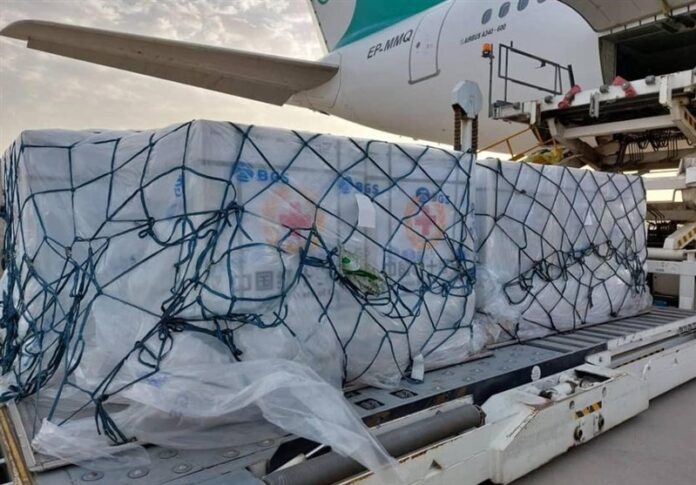
The shipment touched down at Imam Khomeini International Airport to the west of the capital, Tehran, through the good offices of the Iranian Red Crescent Society (IRCS).

The vaccine batch is one of three consignments arriving in the country this week, says IRCS Director Karim Hemmati.

“With the coordination of the first vice president and the cooperation of the health ministry, the foreign ministry, the Central Bank and the Customs administration, for the first time in the country some 18 million doses of the Sinopharm vaccine will be imported in one week, and the first 6-million-dose shipment of the overall 18 million doses arrived in Iran today and was handed over to the health ministry,” he said.

He said the IRCS has imported more than 58 million doses of COVID-19 vaccines since May 2021, and the figure will cross 70 million once the mentioned 12 million doses enter the country.

He added the number of vaccination centres has increased across the country to speed up the pace of inoculation.

This comes as Iran itself has, so far, produced several types of coronavirus vaccines, which are widely used in the national COVID-19 vaccination drive.