Tuesday, December 23, 2025
Home Blog Page 2352

Tehran Takes Delivery of New 6mn-Dose Covid Vaccine Shipment

“We managed to import the second six-million-dose shipment of covid-19 vaccines this week.

With the imports of the third such consignment, the Red Crescent [Society’s] promise to import 18 million doses of coronavirus vaccines will be fulfilled,” Director of the Red Crescent Society Karim Hemmati said.

Hemmati said his organization has imported over 64 million doses of Covid vaccines over the past five months.

He added that the Red Crescent Society has also provided the medicine needed for coronavirus patients.

“Fortunately, with the work of our colleagues in the medical supplies organization of the society, currently almost all [previous] shortages of medicine for patients affected with Covid-19 at the pharmacies of the Tehran Province have been addressed,” he said.

Hemmati also said his organization will continue its push to ensure the availability of drugs and to provide the needed medical services to Covid patients until the pandemic ends.

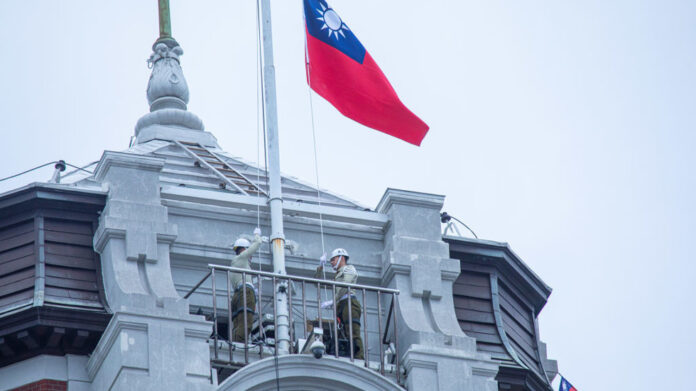
China says conducted beach landing drills amid tension with Taiwan

The official People’s Liberation Army Daily newspaper in a brief report on Monday said the drills had been carried out “in recent days” in the southern part of Fujian province. The action had involved “shock” troops, sappers and boat specialists, the report added.

The troops were “divided into multiple waves to grab the beach and perform combat tasks at different stages”, it noted.

A video circulating on the net also showed soldiers in small boats storming a beach, throwing smoke grenades, breaking through barbed-wire defenses and digging trenches in the sand. The report, however, did not link the exercises to current tensions with the Taipei.

Fujian would be a key launching site for any Chinese takeover of the self-ruled island due to its geographical proximity. China routinely carries out military exercises up and down its coast as well as in the South China Sea.

Over the weekend, China’s President Xi Jinping reiterated opposition to the Chinese Taipei’s “independence separatism” and vowed to realize a peaceful reunification with the self-ruled island.

China recently flew dozens of military aircraft over the Taipei’s airspace after Britain sent a warship through the Taiwan Strait in a move aimed at challenging Beijing’s claim to the strategic waterway.

China has sovereignty over the Chinese Taipei, and under the “One China” policy, almost the entire international community recognizes that sovereignty. Beijing also opposes other countries pursuing ties with the self-ruled island and has consistently warned Washington against engaging with the Chinese Taipei.

China has already declared that its military exercises near the Chinese Taipei are a “solemn warning” to secessionist factions in the self-ruled island and their foreign backers, particularly the United States.

Washington and its allies side with Beijing’s rival claimants in maritime disputes in the South China Sea, while China has always warned the US against military activities in the sea.

Beijing says potential close military encounters between the air and naval forces of the two countries in the region may cause accidents.

Relations between the US and China have grown tense in recent years, with the world’s two largest economies clashing over a range of issues, including trade, the Chinese Taipei, Hong Kong, military activities in the South China Sea, and the origins of the new coronavirus.

China, India talks to ease border tensions fail

The continuing standoff means the two nations will keep troops in the forward areas of Ladakh for a second consecutive winter in dangerously freezing temperatures.

The Chinese Army put tank regiments through their paces near the Indian border, state media reported, as territorial talks between the two sides failed at the weekend.

The Xinjiang military district of the People’s Liberation Army (PLA), which faces Indian troops at an elevation of 5,000 metres (16,400 feet) in the Karakoram Mountains, had been actively improving its high-altitude tank battle capabilities, state broadcaster CCTV reported.

The report came as the 13th round of negotiations between Indian and Chinese military commanders broke down on Sunday, with both sides blaming the other for the flashpoints along their disputed mountainous border.

In another report, Chinese state media reported a brigade had for the first time staged a live ammunition test-fire of grenade launchers in western Sichuan.

This came as frontline military commanders from China and India resumed talks on Sunday after a two-month break. However, the 8½-hour negotiations, in the border village of Moldo on the Chinese side of the Line of Actual Control (LAC), once again led to no resolution in the 17-month stand-off.

PLA spokesman Long Shaohua blamed the deadlock on India’s “unreasonable and unrealistic demands” despite “the Chinese side’s tremendous efforts to promote the cooling and de-escalation of the border situation”.

Meanwhile, Indian officials emphasised that the situation along the LAC had been triggered by “unilateral attempts of [the] Chinese side to alter the status quo … in violation of bilateral agreements”.

This series of commander-level talks began in May 2020, when friction first broke out on multiple locations along the LAC, which stretches over thousands of kilometres. The military confrontation peaked in June 2020 when at least two dozen soldiers were killed in the Galwan Valley in Ladakh.

Amid the marathon talks, both sides have increased infrastructure build-up and deployed extra troops at the border.

Some of the previous rounds saw the two sides reach agreements to disengage from some of the hotspots but troops remain in close proximity in other parts of Ladakh.

CCTV did not say when the latest tank drill took place but PLA companies practised various manoeuvres and forms of firing.

“This exercise highlighted the use of equipment in extreme cold weather on the plateau and effectively improved the troops’ combat capability,” according to the report.

The PLA has also deployed its latest Type 15 lightweight tank – specialised for mountainous regions – to soldiers in Xinjiang and Tibet.

In another drill by the Xinjiang military district two weeks ago, artillery battalions carried out overnight live-fire drills with self-propelled guns and rockets on the Karakoram range in minus 10-degree Celsius snowy conditions.

Iran’s Army, IRGC Begin Joint Air Defense Drills

The Velayat 1400 maneuvers feature domestically developed equipment, including missile, radar, reconnaissance, electronic warfare, communications and electro-optical systems as well as a visual monitoring network.

The locally produced systems used in the drills include Meraj, Fat’h 2, Bashir and Qods radar systems.

Phase one of the military exercises featured rapid reaction forces conducting operations while observing passive defense principles in order to deceive the enemy.

Multi-layered and safe communications were also established between air defense systems and command and control centers as well as the country’s integrated air defense network to get prepared for making decisions in times of threats.

“In this phase of the drills, intelligence and reconnaissance flights were conducted using the IRGC and Army’s manned and unmanned aircraft in the general area of the war game,” said Brigadier General Qader Rahimzadeh, the commander of Iran’s Air Defense Base.

“Defending troops carried out tactical and defense operations using detection and combat systems against hostile aircraft,” he added.

“In these maneuvers, control and command centers use active and passive radar systems to monitor the war game area using signal and electro-optical surveillance, and as soon as they detect a hostile target, they activate a radar system proportionate to the target to counter it,” the commander noted.

He said all detection, reconnaissance, interception and combat systems used in the drills are domestically produced.

Hezbollah chief: Daesh aims to ignite civil war in Afghanistan

In his speech on Monday, Hezbollah Secretary General Sayyed Hassan Nasrallah denounced the bombing that took place inside a mosque in Kunduz province a few days ago in Afghanistan.

He stressed that the perpetrator is “Daesh, the Wahhabi terrorist organization”, allocating the responsibility of the attack to the US given that it previously transferred Daesh members from Iraq to Afghanistan.

Nasrallah said that “Daesh job today is to create a state of internal turmoil that would lead to a civil war in Afghanistan”, emphasizing the responsibility of Afghan authorities to protect its citizens regardless of their color or sect.

Nasrallah also addressed the electricity crisis in Lebanon, revealing that multiple offers have been made from Eastern and Western states to solve the local problem.

Furthermore, he stressed the need to respond to the proposal made by Iranian Foreign Minister Hossein Amir Abdollahian, which hinged on building two electric power plants in Lebanon, thus largely alleviating the country from the current power outages.

The Secretary-General also demanded the Lebanese Government to prioritize dealing with the electricity crisis by placing it at the top of its agenda in its next session, wondering along the way about the existence of a US veto obstructing the solving of this issue on the internal level.

This attempt by the US would ease the privatization of the energy sector once it collapses.

To counter this sabotaging, he called on the Lebanese government to request an exception from the US, adding, “Let’s allow the Lebanese companies to buy diesel from Iran, as we will subsequently offer them facilitations before completely withdrawing from this issue.”

Nasrallah also touched on the subject of the Beirut Port investigation, stating that the current judge handling the case, Tariq Bitar, is exploiting the victims’ blood in service of political goals as he continues the path set by his predecessor.

Countering doubt about Hezbollah’s commitment to the search for the truth, he asserted the party’s unwillingness to abandon the investigation, notably as it was scathed on the moral, political and reputational level by the Beirut Port explosion.

The Secretary-General wondered how the judge has not yet concluded who the importer of the nitrate was, viewing his approach to the investigation as erroneous and one that will not lead to the truth. He called on assigning an “honest judge” to lead the investigation.

Nasrallah also made an appeal to the Supreme Judicial Council, decrying the unlawful practices of Bitar and suggesting that the government solve this issue in case the Council remains idle towards this issue.

Report: 2k UK police officers accused of sexual misconduct

An investigation by Channel 4 and analysis by The Times have uncovered cases of misconduct within the Metropolitan Police, prompting calls for more transparency.

Nearly 2,000 officers, special constables, and community support officers at 39 forces have faced accusations of sexual wrongdoing since 2017, according to the report. More than half of the allegations failed to result in disciplinary action, while 8% were dismissed.

Nearly 300 officers had previously been reported for misconduct when facing fresh allegations.

Former Prime Minister Theresa May has come out in favour of an investigation into corruption and misconduct in policing.

“Surely now, it is time for the police to properly ensure that where instances of corruption and misconduct do occur, they are rooted out with vigour on every occasion . . . and that this is done openly for all to see,” May said, adding that the public inquiry into the Wayne Couzens case should investigate the transparency issue.

Wayne Couzens, 48, a diplomatic protection officer, kidnapped, raped, and murdered Sarah Everard, 33, in March.

Since Everard’s murder, a national outcry against violence and misconduct by the police has gained momentum in the UK.

The police are required to publish misconduct notices outlining the results of hearings for a minimum of 28 days. After that deadline, most are deleted from the internet, which also happened with the notice from the Met that detailed why Couzens was sacked in July.

“Forces are adhering to the letter of the law but not the spirit of the law. Accused police officers invoke mental health concerns knowing it will result in their case being held in closed session. The public just don’t find out about a lot of these cases,” a policing source stated.

In the past 30 days there were more than 40 misconduct outcome notices published concerning officers and staff in England and Wales, with nearly 50% of them anonymised.

Other reported figures included information about 1,147 hearings since 2018, while the police couldn’t confirm whether 502 of them were held in public or private. In the remainder, one in four were held in private.

Examples of misconduct included instances of a senior officer having sex with a female colleague on police premises, and another officer sleeping with a drug dealer.

Louisa Rolfe, who leads public protection for the National Police Chiefs Council, has suggested that “sadly” some people want to be police officers “because of the power, the control, and the opportunity it affords them”.

She added that the “vetting processes are designed to root those people out”.

A spokesman for Kit Malthouse, the policing minister, said that the police should be transparent “when officers have fallen below the standards the public expect of them, and being clear on the forces’ response”.

Iranian FM congratulates Iraqis on successful vote

Amirabdollahian expressed hope that with unity and solidarity among all Iraqis and their elected representatives at parliament and with the formation of a new government in Iraq, the country will be on track toward stability and prosperity.

The Iranian foreign minister also announced Iran’s support for Iraq’s stability and security, saying the Islamic Republic is ready for cooperation with Baghdad on the path toward development and progress in relations between the two nations.

Official: Iran soon to stop Covid vaccine imports

Mohammadreza Shanehsaz said Iranian pharmaceutical companies will meet the domestic demand.

Shanehsaz however noted that the vaccine shipments for which orders were placed will be imported.

The head of Iran’s Food and Drug Organization added that Iran’s Barakat vaccine was nominated to receive the World Health Organization’s approval for use, adding necessary arrangements have been already made for this purpose.

According to Shanehsaz, vaccine imports constituted only 10 percent of the jabs provided for vaccination of citizens.

Domestic production of Covid vaccines and their imports in combination accelerated the inoculation process in Iran.

Covid deaths, infections and hospitalizations have seen a downward trend in recent weeks. And the worst of the crisis is reportedly over.

Diplomats say Iran, Saudi Arabia on verge of normalizing ties

Regional arch-rivals Saudi Arabia and Iran are showing signs of warming relations, but experts say more work is needed to ease tensions after a five-year rift.

Sunni kingpin Saudi Arabia and Shiite-majority Iran cut ties in 2016 after protesters attacked Saudi diplomatic missions in the Islamic republic following the kingdom’s execution of a revered Shiite cleric.

In recent weeks, officials from both countries, on opposing sides in multiple Middle East conflicts, have spoken positively about breakthrough talks held in Baghdad since April.

The discussions were launched under Iran’s former moderate president Hassan Rouhani and have continued under his ultraconservative successor, Ebrahim Raisi.

A foreign diplomat residing in the kingdom who is privy to the negotiations said that the two sides “were on the verge of agreeing… to ease tensions between them and the (diplomatic) proxy war in the region” during the last round of talks.

Saudi Foreign Minister Prince Faisal bin Farhan has confirmed a fourth round took place in September, and expressed hope they would “lay the foundation” to address issues between the countries.

His Iranian counterpart, Hossein Amir Abdollahian, has stated the discussions are “on the right track”.

“We have achieved results and agreements, but we still need more dialogue,” he noted earlier this month.

The foreign diplomat added the two sides would “most likely put the final touches to an agreement” in a new round of talks that could come within days.

“They, in principle, have reached an agreement to reopen consulates… and I think an announcement of normalisation of ties may come in the next few weeks,” the diplomat told AFP on condition of anonymity.

Saudi media have toned down their rhetoric towards Tehran, with the state-run Al-Ekhbariya television last week reporting “direct and honest” discussions that would “achieve stability in the region”.

It also cited Crown Prince Mohammed bin Salman’s statement this year that Riyadh wants “a good and special relationship” with Tehran.

Last month, Saudi King Salman expressed hope that talks with Iran would “lead to tangible outcomes to build trust” and revive bilateral cooperation.

But he also called on Tehran to cease “all types of support” for armed groups in the region, referring especially to Yemen’s Huthi rebels, who have escalated missile and drone attacks on the kingdom.

Since 2015, Riyadh has led a military coalition to support the government against the Huthi insurgents after they seized the capital Sanaa.

Riyadh accuses Iran of supporting the Huthis with weapons and drones, but Tehran says it only provides the rebels with political support.

“Saudi Arabia is interested in ending the conflict in Yemen… which has cost it billions of riyals,” the foreign diplomat stated.

But Tehran also seeks economic opportunities with Riyadh as it looks to revive its sanctions-battered economy, according to the diplomat.

Saudi government adviser Ali Shihabi said that while the atmosphere was positive, Tehran would have to take “substantive” action, particularly on Yemen, before Riyadh would agree to measures like the reopening of embassies.

“Iran needs to take real steps, not just (engage) in nice talk,” Shihabi told AFP.

Yasmine Farouk, of the Carnegie Endowment for International Peace, noted Saudi Arabia wants attacks on the kingdom to stop as it diversifies its economy away from oil and spends billions on ambitious megaprojects to attract tourists and investors.

“There is a greater chance for an agreement now, because Saudi Arabia is sure there will be no US military response to Iran attacking” the kingdom, she added.

Farouk was referring in particular to a 2019 Huthi-claimed assault that temporarily knocked out half of the kingdom’s crude production and drew international condemnation, but no action.

Despite signs of a “positive atmosphere”, Farouk warned the dialogue lacked assurances that Iran would “commit to what is agreed upon — as well as the international support for such negotiations”.

Hussein Ibish, a Washington-based Middle East expert, said indications of warming ties were mostly coming from Iran and Iraq, which has been positioning itself as a regional mediator.

“Now that the whole region has entered into an era of de-confliction, it’s not that hard to imagine a process leading to the reversal of the rupture… but it’s going to take considerably more progress in my view,” he told AFP.

According to Iranian journalist Maziar Khosravi, Riyadh and Tehran will likely never see eye to eye, but the two have “reached an impasse in their regional rivalry”.

“Both sides realise they have no choice but to reach a compromise,” he added.

Iran, S Africa FMs discuss bilateral ties, cooperation

In this telephone conversation, different topics such as holding the 10th political committee at the level of deputy foreign ministers in Tehran, holding the 15th meeting of the joint commission between the two countries at the level of foreign ministers of the two countries, the official visit of the Iranian president to South Africa and others topics of mutual interest were discussed.

Mrs. Pandor expressed satisfaction with the meeting with the Iranian foreign minister on the sidelines of the annual session of the United Nations General Assembly in New York. She stressed the importance of developing bilateral relations and South Africa’s interest in this regard. The South African foreign minister also mentioned the Iranian president’s visit to Pretoria and the holding of the 15th meeting of the joint commission, which will be hosted by South Africa during the first six months of 2022 in Pretoria.

The top Iranian diplomat welcomed the planned joint commission meeting, and emphasized on the formation of investment, energy and health subcommittees, as well as working on areas of mutual interest for cooperation and in order to expand trade and economic relations.

At the end of their phone conversation, the two sides stressed the need to strengthen cooperation in international and regional fields.