Tuesday, December 23, 2025
Home Blog Page 2351

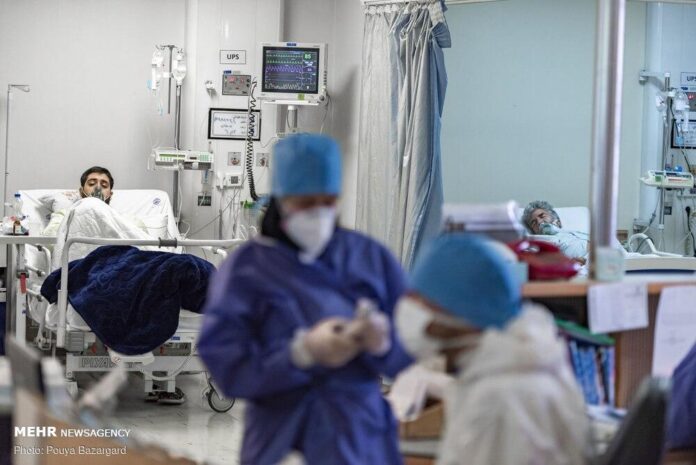
Worshippers Critically Wounded in Afghan Terror Attack to Be Treated in Iran

At the request of the officials of Afghanistan’s Islamic government, some of the people who suffered severe wounds in the blast and could not be treated in Kunduz are being taken to Iran to undergo treatment at one of Iran’s well-equipped hospitals, reported Tasnim News Agency.

A suicide bomber of the ISIS terrorist group set off an explosion at Shiites’ mosque in Kunduz last Friday, killing upwards of 100 worshippers and wounding many more.
ISIS claimed responsibility for the attack.

U.S. Capitol Police accused of ‘failures’ during riot

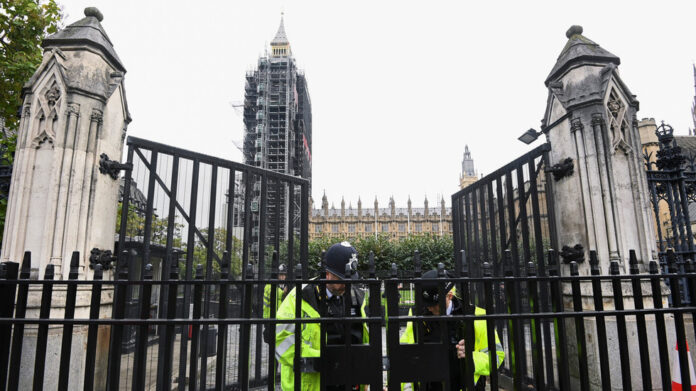
A U.S. Capitol Police whistleblower sent a letter to congressional leaders late last month accusing the agency’s two senior leaders of mishandling intelligence surrounding the Jan. 6 riot at the Capitol.

In the letter, the whistleblower accused Sean Gallagher, the acting chief of uniformed operations, and Yogananda Pittman, the assistant chief for protective and intelligence operations, of significant “failures” in the lead-up to and aftermath of the attack.

The whistleblower accused Gallagher and Pittman of failing to take appropriate action “which directly contributed to the deaths and wounding of officers and civilians.”

They also accused Pittman, who was the agency’s acting chief from Jan. 6 to July 23, of lying to Congress about having sent “the single most critical” intelligence report to other Capitol Police staff members the day before the attack. The whistleblower said the report was never shared.

The letter — addressed to Senate Majority Leader Chuck Schumer, D-N.Y., Senate Minority Leader Mitch McConnell, R-Ky., House Speaker Nancy Pelosi, D-Calif., and House Minority Leader Kevin McCarthy, R-Calif. — also accused Congress of not holding Capitol Police leaders accountable in the fallout.

In response, Capitol Police said: “Although there is more work to do, many of the problems described in the letter have been addressed.”

The agency announced in a statement, “USCP leaders, under new Chief Tom Manger, are committed to learning from prior mistakes and protecting our brave officers, who fought valiantly on January 6, so we can continue to carry out the Department’s critical mission.”

Last week, the White House formally blocked an attempt by former President Donald Trump to withhold documents from Congress related to the Jan. 6 attack, setting up a legal showdown between the current and former presidents over executive privilege.

Turks believe Erdogan party to fall from power in next vote

Only 37.8 percent of respondents think that the AKP will stay in power, even though this number jumps to 65.8 percent among AKP voters. Still, 25.7 percent of AKP voters don’t foresee their party staying in office.

Among voters of ruling alliance partner Nationalist Movement Partner (MHP), the portion that believe the AKP will stay in office was 55.2 percent, and only 38.3 percent thought the party would fall.

A large majority of 83.2 percent among voters of the main opposition Republican People’s Party (CHP) believe that the AKP will leave office in 2023, and only over 10 percent think that they will stay in power.

Meanwhile, 79.7 percent of pro-Kurdish Peoples’ Democratic Party (HDP) voters agreed that the AKP’s two-decade time in office will come to an end in 2023.

The AKP had also emerged as the party with the largest drop in voter share in an August survey by Metropoll as 37 percent of undecided voters were revealed to be former AKP voters.

‘UK response to COVID public health failure’

Britain’s early handling of the coronavirus pandemic was one of the worst public health failures in UK history, with ministers and scientists taking a “fatalistic” approach that exacerbated the death toll, a landmark inquiry has found.

“Groupthink”, evidence of British exceptionalism and a deliberately “slow and gradualist” approach meant the UK fared “significantly worse” than other countries, according to the 151-page “Coronavirus: lessons learned to date” report led by two former Conservative ministers.

The crisis exposed “major deficiencies in the machinery of government”, with public bodies unable to share vital information and scientific advice impaired by a lack of transparency, input from international experts and meaningful challenge.

Despite being one of the first countries to develop a test for Covid in January 2020, the UK “squandered” its lead and “converted it into one of permanent crisis”. The consequences were profound, the report says.

“For a country with a world-class expertise in data analysis, to face the biggest health crisis in 100 years with virtually no data to analyse was an almost unimaginable setback,” it adds.

Prime Minister Boris Johnson did not order a complete lockdown until 23 March 2020, two months after the government’s Sage committee of scientific advisers first met to discuss the crisis.

“This slow and gradualist approach was not inadvertent, nor did it reflect bureaucratic delay or disagreement between ministers and their advisers. It was a deliberate policy – proposed by official scientific advisers and adopted by the governments of all of the nations of the UK,” the report states.

“It is now clear that this was the wrong policy, and that it led to a higher initial death toll than would have resulted from a more emphatic early policy. In a pandemic spreading rapidly and exponentially, every week counted,” according to the report.

Decisions on lockdowns and social distancing during the early weeks of the pandemic – and the advice that led to them – “rank as one of the most important public health failures the United Kingdom has ever experienced”, the report concludes, stressing that “this happened despite the UK counting on some of the best expertise available anywhere in the world, and despite having an open, democratic system that allowed plentiful challenge”.

The report from the Commons science and technology committee and the health and social care committee draws on evidence from more than 50 witnesses, including the former health secretary Matt Hancock, the government’s chief scientific and medical advisers, and leading figures from the vaccine taskforce and NHS Test and Trace.

It celebrates some aspects of the UK’s Covid response, in particular the rapid development, approval and delivery of vaccines, and the world-leading Recovery trial that identified life-saving treatments, but is highly critical of other areas.

Some of the most serious early failings, the report suggests, resulted from apparent groupthink among scientists and ministers which led to “fatalism”. Greg Clark, the chair of the science and technology committee, said he dismissed the allegation that government policy sought to reach “herd immunity” through infection but the outcome came to be seen as the only viable option.

“It was more a reflection of fatalism,” Clark said, adding, “That if you don’t have the prospect of a vaccine being developed, if you think people won’t obey instructions to lockdown for very long, and have a wholly inadequate ability to test, trace and isolate people, that is what you are left with.”

The “impossibility” of suppressing the virus was only challenged, the MPs say, when it became clear the NHS could be overwhelmed.

The report questions why international experts were not part of the UK scientific advisory process and why measures that worked in other countries were not brought in as a precaution, as a response was hammered out.

While Public Health England told the MPs it had formally studied and rejected the South Korean approach, no evidence was provided despite repeated requests.

“We must conclude that no formal evaluation took place, which amounts to an extraordinary and negligent omission given Korea’s success in containing the pandemic, which was well publicised at the time,” the report adds.

The MPs stated the government’s decision to halt mass testing in March 2020 – days after the World Health Organization called for “painstaking contact tracing and rigorous quarantine of close contacts” – was a “serious mistake”.

When the test, trace and isolate system was rolled out it was “slow, uncertain and often chaotic”, “ultimately failed in its stated objective to prevent future lockdowns”, and “severely hampered the UK’s response to the pandemic”. The problem was compounded, the report adds, by the failure of public bodies to share data, including between national and local government.

Further criticism is levelled at poor protection in care homes, for black, Asian and minority ethnic groups and for people with learning disabilities.

Prof Trish Greenhalgh, of the University of Oxford, said the report hinted at a “less than healthy relationship” between government and its scientific advisory bodies.

“It would appear that even senior government ministers were reluctant to push back on scientific advice that seemed to go against commonsense interpretations of the unfolding crisis,” she stated.

“It would appear that Sage, Cobra, Public Health England and other bodies repeatedly dismissed the precautionary principle in favour of not taking decisive action until definitive evidence emerged and could be signed off as the truth,” she continued.
Jonathan Ashworth, the shadow health secretary, said the report was damning. Hannah Brady, of the Covid-19 Bereaved Families for Justice group, said the report found the deaths of 150,000 people were “redeemed” by the success of the vaccine rollout.

“The report … is laughable and more interested in political arguments about whether you can bring laptops to Cobra meetings than it is in the experiences of those who tragically lost parents, partners or children to Covid-19. This is an attempt to ignore and gaslight bereaved families, who will see it as a slap in the face,” she added.

Iran Says Has Documents on Transfer of Terrorists to Azerbaijan

“Iran has even acquired [the audio files of] their conversations, and has them on its intelligence radar,” said Iranian Foreign Ministry Spokesman Saeed Khatibzadeh in a Tuesday interview with Iran’s national radio.

“We told the Azeri side that this is not acceptable, and their highest-ranking officials promised to ally our concern,” he said.

“Our relations with the Azerbaijan Republic are very cordial, good and multi-layered, and visits to both countries’ by the two sides’ officials are ongoing,” the spokesman explained.

“There are some third groups in the region that wouldn’t want Iran and the Azerbaijan Republic to have friendly ties. Accordingly, they release fake and untrue news and try to cash in on the sentiments of the people of both countries in order to advance their own objectives,” he added.

“In the Caucasus developments, we stressed that the rights of neighbouring countries should be restored; accordingly, we welcomed the restoration of the Azerbaijan Republic’s rights; meanwhile, we believed war was not the right method to realize this and stressed the need for diplomatic ties,” he added.

“Iran and Russia helped push for diplomatic negotiations between the warring sides,” said the spokesman in a reference to the war between Armenia and the Azerbaijan Republic over Karabakh region last year.

Elsewhere in his remarks, Khatibzadeh touched upon negotiations on Iran’s nuclear program, stressing that the talks will be held in Vienna.

“We do insist that these negotiations should ensure the necessary guarantees to secure Iranian people’s interests,” he said.

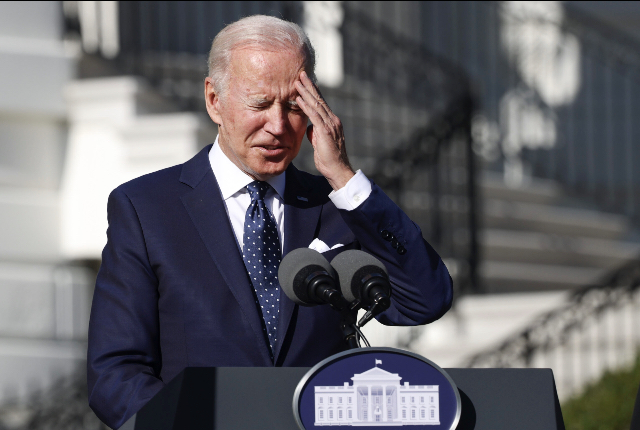
“A few months after coming to power, the Biden administration decided to take part in the Vienna talks, and he has entered into these negotiations pursuing Trump’s unilateral approach,” the spokesman underlined.

“The US government has also adopted a unilateral policy on the lifting of sanctions and just wants to remove the sanctions that it wants and would like to make decisions unilaterally in this regard, but Iran insists that all sanctions should be lifted and the necessary guarantees should be given to Iran in this regard,” he noted.

He then referred to the approach adopted by the administration of new Iranian President Ebrahim Raeisi.

“Among the priorities of the Raeisi administration is interaction with neighbouring countries,” he explained.

“Between 70 to 80 percent of our trade transactions take place with neighbouring and regional countries plus China,” he said.

Tehran Experienced Only 2 Days of Clean Air in 9 Months: Reports

During the roughly 9-month period, air quality in the metropolis was “acceptable” for 165 days, “unhealthy for sensitive groups in society” for 37 days, and “unhealthy for all” for one day.

During the similar period a year ago, Tehran experienced 15 days of clean air and 147 days of acceptable air quality. Forty-one days were also unhealthy for sensitive groups and two days unhealthy for all residents.

Currently, the air quality index in Tehran hovers around 95, meaning it verges on the state of pollution.

Different factors contribute to air pollution, including the burning of fuel oil at power stations, aging vehicles still being used, and the production of low-quality vehicles.

Nevertheless, air pollution could mainly be attributed to the trapping of pollutants, a phenomenon known as inversion.

Taliban to hold talks with EU-US envoys in Doha

Taliban

The Taliban will hold joint face-to-face talks with European and US envoys, the EU announced on Monday, as the group pursue their diplomatic push for international support.

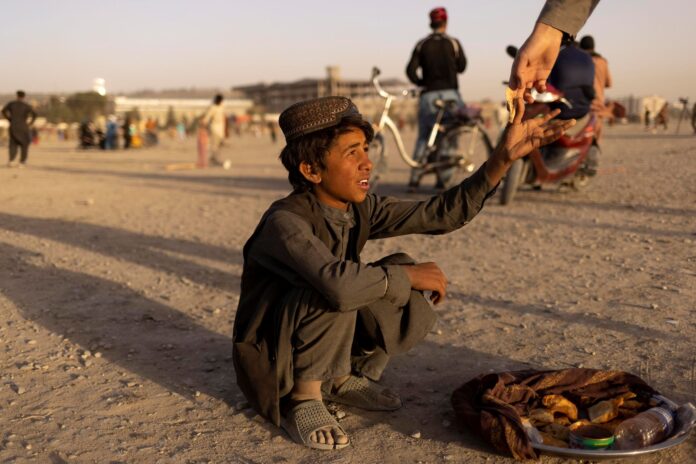
Afghanistan’s new rulers are seeking recognition, as well as assistance to avoid a humanitarian disaster, after they returned to power in August following the withdrawal of US troops after 20 years of war.

UN Secretary-General Antonio Guterres urged the world to donate more money to Afghanistan to head off its economic collapse, but also slammed the Taliban’s “broken” promises to Afghan women and girls.

EU spokeswoman Nabila Massrali said officials from the US and Europe would meet representatives of Afghanistan’s new authorities for talks facilitated by Qatar in Doha on Tuesday.

She noted the meeting would “allow the US and European side to address issues” including free passage for people wanting to leave, access for humanitarian aid, respect for the rights of women and preventing Afghanistan becoming a haven for “terrorist” groups.

“This is an informal exchange at technical level. It does not constitute recognition of the ‘interim government’,” she added.

The Taliban badly need allies as Afghanistan’s economy is in a parlous state with international aid cut off, food prices rising and unemployment spiking.

The regime, still yet to be recognised as a legitimate government by any other country, is also facing a threat from the Daesh, who have launched a series of deadly attacks.

A meeting with the EU was announced earlier by the Taliban’s acting Foreign Minister Amir Khan Muttaqi, days after he led its first in-person talks with United States officials since the American pullout.

“We want positive relationships with the whole world. We believe in balanced international relations. We believe such a balanced relationship can save Afghanistan from instability,” Muttaqi said in translated remarks at an event in Qatar.

Ahead of the talks, EU foreign policy chief Josep Borrell stated the bloc was looking to bolster its direct aid to the Afghan people in an effort to stave off “collapse”.

“We cannot ‘wait and see’. We need to act, and act quickly,” Borrell added after discussions with EU development ministers.

The international community is facing a tough balancing act trying to get urgently-needed aid to Afghans without endorsing Taliban rule.

Guterres underscored discontent with the Taliban over its treatment of women despite vows it would not repeat its earlier hardline rule.

“I am particularly alarmed to see promises made to Afghan women and girls by the Taliban being broken,” he told reporters.

Without the participation of women “there is no way the Afghan economy and society will recover”, Guterres continued.

Afghanistan’s boys were allowed to return to secondary schools three weeks ago, but girls have been told to stay at home along with women teachers in much of the country, though they can attend primary school.

Asked about the exclusion of girls, Muttaqi said schools had been closed because of Covid-19 — a threat he said had lessened.

“Covid… has been controlled and incidences are very few, and with the reduction of that risk, opening of schools has already started and every day it is increasing,” he added.

Muttaqi also insisted there was no discrimination against the Shiite community and also claimed that Daesh was being tamed.

“Whatever preparations they had made have been neutralised 98 percent,” he stated.

Daesh claimed a bombing of a Shiite mosque that killed tens of people on Friday, the deadliest attack since the Taliban regained power.

Underlining the shaky security situation, the US and Britain warned their citizens on Monday to avoid hotels in Afghanistan, and singled out one hotel in Kabul.

“US citizens who are at or near the Serena Hotel should leave immediately,” the US State Department warned, citing “security threats” in the area.

The Serena, a luxury facility popular with business travellers and foreign guests, has twice been the target of attacks by the Taliban.

In 2014, just weeks before the presidential election, four teenage gunmen with pistols hidden in their socks managed to penetrate several layers of security, killing nine people.

Empty shelves across UK, people ‘stockpiling for Christmas’

Pictures and videos of empty shelves across the UK are emerging among reports that up to a third of lorries on the roads are completely empty.

Depleted supermarket shelves have been seen across London, with supplies of milk, bread, sandwiches and fizzy drinks running low in certain stores.

And a nearly empty fresh fruit and veg section was also seen in an Asda store in Cardiff, where some of the freezer and fridge sections were completely empty.

The news comes as millions of Brits have been unable to buy essential food in the past fortnight, with one in three already having started stockpiling for Christmas.

This has led to calls for Britain’s supermarkets to ditch their traditional rivalries in a bid to boost the beleaguered supply chain this Christmas and prevent almost one in three lorries on the road being completely empty.

Rival retail chains have been told that they need to collaborate in the run-up to the festive season as the shortage of haulage drivers continues to threaten stock deliveries across the country.

Trade magazine The Grocer reported that supermarkets have been urged to avoid a “survival of the fittest Christmas” this year to prevent further stresses piling onto an already creaking logistics network.

The call comes as statistics from the Department for Transport show that poor utilisation of distribution capacity sees around 31 per cent of lorries on the road completely empty while those that contain goods are on average only 60 per cent full.

The Grocer said that the UK’s ongoing driver shortage has created stiff competition among supermarkets for limited haulage availability, with each retailer intent on minimising their own disruption.

But as demand builds in the run-up to Christmas they have been urged to show greater collaboration to ease the burden on supply chains.

Shane Brennan, chief executive of the Cold Chain Federation, told the magazine: “The biggest choice every one of the major supermarkets has got this week is: are we going to have a survival of the fittest Christmas or are we going to all work together and try and get through Christmas.

“The problem with crisis is everyone fights to protect their own. So what you are finding is businesses fighting to protect the certainty of their own deliveries and that pushes against collaboration and co-ordination of efficiencies,” Brennan continued.

Tesco announced this week that it was increasing its use of rail freight by almost 40 per cent to help keep its shelves stocked during the driver crisis.

It has also been reported that bus drivers are quitting to take up better-paid work as lorry drivers, leaving some key routes understaffed or axed entirely from the timetable, as operators point the finger at road haulage bosses for poaching their drivers in recent months.

Britain’s supply chains were brought to a standstill by the exodus of European truckers, leading to fuel shortages and empty shelves in supermarkets, as a result of the Boris Johnson’s government’s disastrous Brexit plan.

Tehran Takes Delivery of New 6mn-Dose Covid Vaccine Shipment

“We managed to import the second six-million-dose shipment of covid-19 vaccines this week.

With the imports of the third such consignment, the Red Crescent [Society’s] promise to import 18 million doses of coronavirus vaccines will be fulfilled,” Director of the Red Crescent Society Karim Hemmati said.

Hemmati said his organization has imported over 64 million doses of Covid vaccines over the past five months.

He added that the Red Crescent Society has also provided the medicine needed for coronavirus patients.

“Fortunately, with the work of our colleagues in the medical supplies organization of the society, currently almost all [previous] shortages of medicine for patients affected with Covid-19 at the pharmacies of the Tehran Province have been addressed,” he said.

Hemmati also said his organization will continue its push to ensure the availability of drugs and to provide the needed medical services to Covid patients until the pandemic ends.

China says conducted beach landing drills amid tension with Taiwan

The official People’s Liberation Army Daily newspaper in a brief report on Monday said the drills had been carried out “in recent days” in the southern part of Fujian province. The action had involved “shock” troops, sappers and boat specialists, the report added.

The troops were “divided into multiple waves to grab the beach and perform combat tasks at different stages”, it noted.

A video circulating on the net also showed soldiers in small boats storming a beach, throwing smoke grenades, breaking through barbed-wire defenses and digging trenches in the sand. The report, however, did not link the exercises to current tensions with the Taipei.
Fujian would be a key launching site for any Chinese takeover of the self-ruled island due to its geographical proximity. China routinely carries out military exercises up and down its coast as well as in the South China Sea.

Over the weekend, China’s President Xi Jinping reiterated opposition to the Chinese Taipei’s “independence separatism” and vowed to realize a peaceful reunification with the self-ruled island.

China recently flew dozens of military aircraft over the Taipei’s airspace after Britain sent a warship through the Taiwan Strait in a move aimed at challenging Beijing’s claim to the strategic waterway.

China has sovereignty over the Chinese Taipei, and under the “One China” policy, almost the entire international community recognizes that sovereignty. Beijing also opposes other countries pursuing ties with the self-ruled island and has consistently warned Washington against engaging with the Chinese Taipei.

China has already declared that its military exercises near the Chinese Taipei are a “solemn warning” to secessionist factions in the self-ruled island and their foreign backers, particularly the United States.

Washington and its allies side with Beijing’s rival claimants in maritime disputes in the South China Sea, while China has always warned the US against military activities in the sea.

Beijing says potential close military encounters between the air and naval forces of the two countries in the region may cause accidents.

Relations between the US and China have grown tense in recent years, with the world’s two largest economies clashing over a range of issues, including trade, the Chinese Taipei, Hong Kong, military activities in the South China Sea, and the origins of the new coronavirus.