Wednesday, December 24, 2025
Home Blog Page 2352

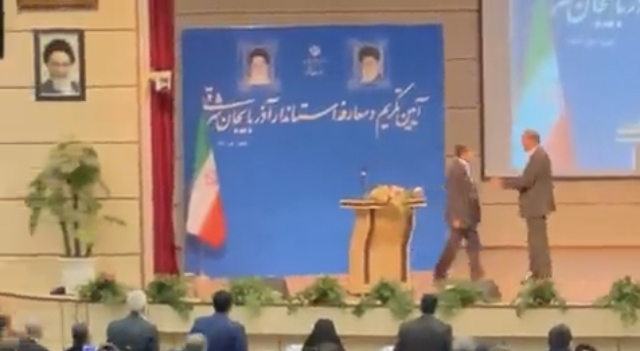
Iran Says Has Documents on Transfer of Terrorists to Azerbaijan

“Iran has even acquired [the audio files of] their conversations, and has them on its intelligence radar,” said Iranian Foreign Ministry Spokesman Saeed Khatibzadeh in a Tuesday interview with Iran’s national radio.

“We told the Azeri side that this is not acceptable, and their highest-ranking officials promised to ally our concern,” he said.

“Our relations with the Azerbaijan Republic are very cordial, good and multi-layered, and visits to both countries’ by the two sides’ officials are ongoing,” the spokesman explained.

“There are some third groups in the region that wouldn’t want Iran and the Azerbaijan Republic to have friendly ties. Accordingly, they release fake and untrue news and try to cash in on the sentiments of the people of both countries in order to advance their own objectives,” he added.

“In the Caucasus developments, we stressed that the rights of neighbouring countries should be restored; accordingly, we welcomed the restoration of the Azerbaijan Republic’s rights; meanwhile, we believed war was not the right method to realize this and stressed the need for diplomatic ties,” he added.

“Iran and Russia helped push for diplomatic negotiations between the warring sides,” said the spokesman in a reference to the war between Armenia and the Azerbaijan Republic over Karabakh region last year.

Elsewhere in his remarks, Khatibzadeh touched upon negotiations on Iran’s nuclear program, stressing that the talks will be held in Vienna.

“We do insist that these negotiations should ensure the necessary guarantees to secure Iranian people’s interests,” he said.

“A few months after coming to power, the Biden administration decided to take part in the Vienna talks, and he has entered into these negotiations pursuing Trump’s unilateral approach,” the spokesman underlined.

“The US government has also adopted a unilateral policy on the lifting of sanctions and just wants to remove the sanctions that it wants and would like to make decisions unilaterally in this regard, but Iran insists that all sanctions should be lifted and the necessary guarantees should be given to Iran in this regard,” he noted.

He then referred to the approach adopted by the administration of new Iranian President Ebrahim Raeisi.

“Among the priorities of the Raeisi administration is interaction with neighbouring countries,” he explained.

“Between 70 to 80 percent of our trade transactions take place with neighbouring and regional countries plus China,” he said.

Tehran Experienced Only 2 Days of Clean Air in 9 Months: Reports

During the roughly 9-month period, air quality in the metropolis was “acceptable” for 165 days, “unhealthy for sensitive groups in society” for 37 days, and “unhealthy for all” for one day.

During the similar period a year ago, Tehran experienced 15 days of clean air and 147 days of acceptable air quality. Forty-one days were also unhealthy for sensitive groups and two days unhealthy for all residents.

Currently, the air quality index in Tehran hovers around 95, meaning it verges on the state of pollution.

Different factors contribute to air pollution, including the burning of fuel oil at power stations, aging vehicles still being used, and the production of low-quality vehicles.

Nevertheless, air pollution could mainly be attributed to the trapping of pollutants, a phenomenon known as inversion.

Taliban to hold talks with EU-US envoys in Doha

Taliban

The Taliban will hold joint face-to-face talks with European and US envoys, the EU announced on Monday, as the group pursue their diplomatic push for international support.

Afghanistan’s new rulers are seeking recognition, as well as assistance to avoid a humanitarian disaster, after they returned to power in August following the withdrawal of US troops after 20 years of war.

UN Secretary-General Antonio Guterres urged the world to donate more money to Afghanistan to head off its economic collapse, but also slammed the Taliban’s “broken” promises to Afghan women and girls.

EU spokeswoman Nabila Massrali said officials from the US and Europe would meet representatives of Afghanistan’s new authorities for talks facilitated by Qatar in Doha on Tuesday.

She noted the meeting would “allow the US and European side to address issues” including free passage for people wanting to leave, access for humanitarian aid, respect for the rights of women and preventing Afghanistan becoming a haven for “terrorist” groups.

“This is an informal exchange at technical level. It does not constitute recognition of the ‘interim government’,” she added.

The Taliban badly need allies as Afghanistan’s economy is in a parlous state with international aid cut off, food prices rising and unemployment spiking.

The regime, still yet to be recognised as a legitimate government by any other country, is also facing a threat from the Daesh, who have launched a series of deadly attacks.

A meeting with the EU was announced earlier by the Taliban’s acting Foreign Minister Amir Khan Muttaqi, days after he led its first in-person talks with United States officials since the American pullout.

“We want positive relationships with the whole world. We believe in balanced international relations. We believe such a balanced relationship can save Afghanistan from instability,” Muttaqi said in translated remarks at an event in Qatar.

Ahead of the talks, EU foreign policy chief Josep Borrell stated the bloc was looking to bolster its direct aid to the Afghan people in an effort to stave off “collapse”.

“We cannot ‘wait and see’. We need to act, and act quickly,” Borrell added after discussions with EU development ministers.

The international community is facing a tough balancing act trying to get urgently-needed aid to Afghans without endorsing Taliban rule.

Guterres underscored discontent with the Taliban over its treatment of women despite vows it would not repeat its earlier hardline rule.

“I am particularly alarmed to see promises made to Afghan women and girls by the Taliban being broken,” he told reporters.

Without the participation of women “there is no way the Afghan economy and society will recover”, Guterres continued.

Afghanistan’s boys were allowed to return to secondary schools three weeks ago, but girls have been told to stay at home along with women teachers in much of the country, though they can attend primary school.

Asked about the exclusion of girls, Muttaqi said schools had been closed because of Covid-19 — a threat he said had lessened.

“Covid… has been controlled and incidences are very few, and with the reduction of that risk, opening of schools has already started and every day it is increasing,” he added.

Muttaqi also insisted there was no discrimination against the Shiite community and also claimed that Daesh was being tamed.

“Whatever preparations they had made have been neutralised 98 percent,” he stated.

Daesh claimed a bombing of a Shiite mosque that killed tens of people on Friday, the deadliest attack since the Taliban regained power.

Underlining the shaky security situation, the US and Britain warned their citizens on Monday to avoid hotels in Afghanistan, and singled out one hotel in Kabul.

“US citizens who are at or near the Serena Hotel should leave immediately,” the US State Department warned, citing “security threats” in the area.

The Serena, a luxury facility popular with business travellers and foreign guests, has twice been the target of attacks by the Taliban.

In 2014, just weeks before the presidential election, four teenage gunmen with pistols hidden in their socks managed to penetrate several layers of security, killing nine people.

Empty shelves across UK, people ‘stockpiling for Christmas’

Pictures and videos of empty shelves across the UK are emerging among reports that up to a third of lorries on the roads are completely empty.

Depleted supermarket shelves have been seen across London, with supplies of milk, bread, sandwiches and fizzy drinks running low in certain stores.

And a nearly empty fresh fruit and veg section was also seen in an Asda store in Cardiff, where some of the freezer and fridge sections were completely empty.

The news comes as millions of Brits have been unable to buy essential food in the past fortnight, with one in three already having started stockpiling for Christmas.

This has led to calls for Britain’s supermarkets to ditch their traditional rivalries in a bid to boost the beleaguered supply chain this Christmas and prevent almost one in three lorries on the road being completely empty.

Rival retail chains have been told that they need to collaborate in the run-up to the festive season as the shortage of haulage drivers continues to threaten stock deliveries across the country.

Trade magazine The Grocer reported that supermarkets have been urged to avoid a “survival of the fittest Christmas” this year to prevent further stresses piling onto an already creaking logistics network.

The call comes as statistics from the Department for Transport show that poor utilisation of distribution capacity sees around 31 per cent of lorries on the road completely empty while those that contain goods are on average only 60 per cent full.

The Grocer said that the UK’s ongoing driver shortage has created stiff competition among supermarkets for limited haulage availability, with each retailer intent on minimising their own disruption.

But as demand builds in the run-up to Christmas they have been urged to show greater collaboration to ease the burden on supply chains.

Shane Brennan, chief executive of the Cold Chain Federation, told the magazine: “The biggest choice every one of the major supermarkets has got this week is: are we going to have a survival of the fittest Christmas or are we going to all work together and try and get through Christmas.

“The problem with crisis is everyone fights to protect their own. So what you are finding is businesses fighting to protect the certainty of their own deliveries and that pushes against collaboration and co-ordination of efficiencies,” Brennan continued.

Tesco announced this week that it was increasing its use of rail freight by almost 40 per cent to help keep its shelves stocked during the driver crisis.

It has also been reported that bus drivers are quitting to take up better-paid work as lorry drivers, leaving some key routes understaffed or axed entirely from the timetable, as operators point the finger at road haulage bosses for poaching their drivers in recent months.

Britain’s supply chains were brought to a standstill by the exodus of European truckers, leading to fuel shortages and empty shelves in supermarkets, as a result of the Boris Johnson’s government’s disastrous Brexit plan.

Tehran Takes Delivery of New 6mn-Dose Covid Vaccine Shipment

“We managed to import the second six-million-dose shipment of covid-19 vaccines this week.

With the imports of the third such consignment, the Red Crescent [Society’s] promise to import 18 million doses of coronavirus vaccines will be fulfilled,” Director of the Red Crescent Society Karim Hemmati said.

Hemmati said his organization has imported over 64 million doses of Covid vaccines over the past five months.

He added that the Red Crescent Society has also provided the medicine needed for coronavirus patients.

“Fortunately, with the work of our colleagues in the medical supplies organization of the society, currently almost all [previous] shortages of medicine for patients affected with Covid-19 at the pharmacies of the Tehran Province have been addressed,” he said.

Hemmati also said his organization will continue its push to ensure the availability of drugs and to provide the needed medical services to Covid patients until the pandemic ends.

China says conducted beach landing drills amid tension with Taiwan

The official People’s Liberation Army Daily newspaper in a brief report on Monday said the drills had been carried out “in recent days” in the southern part of Fujian province. The action had involved “shock” troops, sappers and boat specialists, the report added.

The troops were “divided into multiple waves to grab the beach and perform combat tasks at different stages”, it noted.

A video circulating on the net also showed soldiers in small boats storming a beach, throwing smoke grenades, breaking through barbed-wire defenses and digging trenches in the sand. The report, however, did not link the exercises to current tensions with the Taipei.

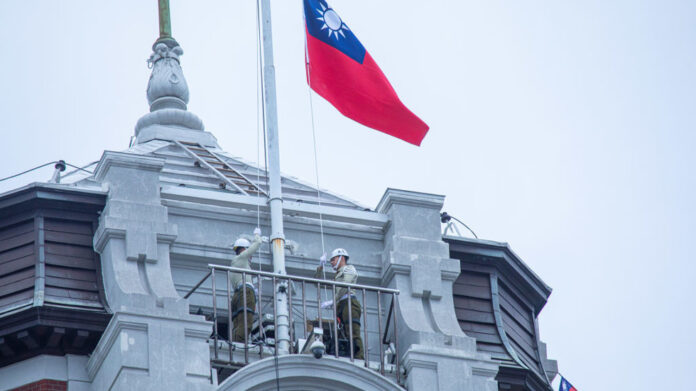
Fujian would be a key launching site for any Chinese takeover of the self-ruled island due to its geographical proximity. China routinely carries out military exercises up and down its coast as well as in the South China Sea.

Over the weekend, China’s President Xi Jinping reiterated opposition to the Chinese Taipei’s “independence separatism” and vowed to realize a peaceful reunification with the self-ruled island.

China recently flew dozens of military aircraft over the Taipei’s airspace after Britain sent a warship through the Taiwan Strait in a move aimed at challenging Beijing’s claim to the strategic waterway.

China has sovereignty over the Chinese Taipei, and under the “One China” policy, almost the entire international community recognizes that sovereignty. Beijing also opposes other countries pursuing ties with the self-ruled island and has consistently warned Washington against engaging with the Chinese Taipei.

China has already declared that its military exercises near the Chinese Taipei are a “solemn warning” to secessionist factions in the self-ruled island and their foreign backers, particularly the United States.

Washington and its allies side with Beijing’s rival claimants in maritime disputes in the South China Sea, while China has always warned the US against military activities in the sea.

Beijing says potential close military encounters between the air and naval forces of the two countries in the region may cause accidents.

Relations between the US and China have grown tense in recent years, with the world’s two largest economies clashing over a range of issues, including trade, the Chinese Taipei, Hong Kong, military activities in the South China Sea, and the origins of the new coronavirus.

China, India talks to ease border tensions fail

The continuing standoff means the two nations will keep troops in the forward areas of Ladakh for a second consecutive winter in dangerously freezing temperatures.

The Chinese Army put tank regiments through their paces near the Indian border, state media reported, as territorial talks between the two sides failed at the weekend.

The Xinjiang military district of the People’s Liberation Army (PLA), which faces Indian troops at an elevation of 5,000 metres (16,400 feet) in the Karakoram Mountains, had been actively improving its high-altitude tank battle capabilities, state broadcaster CCTV reported.

The report came as the 13th round of negotiations between Indian and Chinese military commanders broke down on Sunday, with both sides blaming the other for the flashpoints along their disputed mountainous border.

In another report, Chinese state media reported a brigade had for the first time staged a live ammunition test-fire of grenade launchers in western Sichuan.

This came as frontline military commanders from China and India resumed talks on Sunday after a two-month break. However, the 8½-hour negotiations, in the border village of Moldo on the Chinese side of the Line of Actual Control (LAC), once again led to no resolution in the 17-month stand-off.

PLA spokesman Long Shaohua blamed the deadlock on India’s “unreasonable and unrealistic demands” despite “the Chinese side’s tremendous efforts to promote the cooling and de-escalation of the border situation”.

Meanwhile, Indian officials emphasised that the situation along the LAC had been triggered by “unilateral attempts of [the] Chinese side to alter the status quo … in violation of bilateral agreements”.

This series of commander-level talks began in May 2020, when friction first broke out on multiple locations along the LAC, which stretches over thousands of kilometres. The military confrontation peaked in June 2020 when at least two dozen soldiers were killed in the Galwan Valley in Ladakh.

Amid the marathon talks, both sides have increased infrastructure build-up and deployed extra troops at the border.

Some of the previous rounds saw the two sides reach agreements to disengage from some of the hotspots but troops remain in close proximity in other parts of Ladakh.

CCTV did not say when the latest tank drill took place but PLA companies practised various manoeuvres and forms of firing.

“This exercise highlighted the use of equipment in extreme cold weather on the plateau and effectively improved the troops’ combat capability,” according to the report.

The PLA has also deployed its latest Type 15 lightweight tank – specialised for mountainous regions – to soldiers in Xinjiang and Tibet.

In another drill by the Xinjiang military district two weeks ago, artillery battalions carried out overnight live-fire drills with self-propelled guns and rockets on the Karakoram range in minus 10-degree Celsius snowy conditions.

Iran’s Army, IRGC Begin Joint Air Defense Drills

The Velayat 1400 maneuvers feature domestically developed equipment, including missile, radar, reconnaissance, electronic warfare, communications and electro-optical systems as well as a visual monitoring network.

The locally produced systems used in the drills include Meraj, Fat’h 2, Bashir and Qods radar systems.

Phase one of the military exercises featured rapid reaction forces conducting operations while observing passive defense principles in order to deceive the enemy.

Multi-layered and safe communications were also established between air defense systems and command and control centers as well as the country’s integrated air defense network to get prepared for making decisions in times of threats.

“In this phase of the drills, intelligence and reconnaissance flights were conducted using the IRGC and Army’s manned and unmanned aircraft in the general area of the war game,” said Brigadier General Qader Rahimzadeh, the commander of Iran’s Air Defense Base.

“Defending troops carried out tactical and defense operations using detection and combat systems against hostile aircraft,” he added.

“In these maneuvers, control and command centers use active and passive radar systems to monitor the war game area using signal and electro-optical surveillance, and as soon as they detect a hostile target, they activate a radar system proportionate to the target to counter it,” the commander noted.

He said all detection, reconnaissance, interception and combat systems used in the drills are domestically produced.

Hezbollah chief: Daesh aims to ignite civil war in Afghanistan

In his speech on Monday, Hezbollah Secretary General Sayyed Hassan Nasrallah denounced the bombing that took place inside a mosque in Kunduz province a few days ago in Afghanistan.

He stressed that the perpetrator is “Daesh, the Wahhabi terrorist organization”, allocating the responsibility of the attack to the US given that it previously transferred Daesh members from Iraq to Afghanistan.

Nasrallah said that “Daesh job today is to create a state of internal turmoil that would lead to a civil war in Afghanistan”, emphasizing the responsibility of Afghan authorities to protect its citizens regardless of their color or sect.

Nasrallah also addressed the electricity crisis in Lebanon, revealing that multiple offers have been made from Eastern and Western states to solve the local problem.

Furthermore, he stressed the need to respond to the proposal made by Iranian Foreign Minister Hossein Amir Abdollahian, which hinged on building two electric power plants in Lebanon, thus largely alleviating the country from the current power outages.

The Secretary-General also demanded the Lebanese Government to prioritize dealing with the electricity crisis by placing it at the top of its agenda in its next session, wondering along the way about the existence of a US veto obstructing the solving of this issue on the internal level.

This attempt by the US would ease the privatization of the energy sector once it collapses.

To counter this sabotaging, he called on the Lebanese government to request an exception from the US, adding, “Let’s allow the Lebanese companies to buy diesel from Iran, as we will subsequently offer them facilitations before completely withdrawing from this issue.”

Nasrallah also touched on the subject of the Beirut Port investigation, stating that the current judge handling the case, Tariq Bitar, is exploiting the victims’ blood in service of political goals as he continues the path set by his predecessor.

Countering doubt about Hezbollah’s commitment to the search for the truth, he asserted the party’s unwillingness to abandon the investigation, notably as it was scathed on the moral, political and reputational level by the Beirut Port explosion.

The Secretary-General wondered how the judge has not yet concluded who the importer of the nitrate was, viewing his approach to the investigation as erroneous and one that will not lead to the truth. He called on assigning an “honest judge” to lead the investigation.

Nasrallah also made an appeal to the Supreme Judicial Council, decrying the unlawful practices of Bitar and suggesting that the government solve this issue in case the Council remains idle towards this issue.

Report: 2k UK police officers accused of sexual misconduct

An investigation by Channel 4 and analysis by The Times have uncovered cases of misconduct within the Metropolitan Police, prompting calls for more transparency.

Nearly 2,000 officers, special constables, and community support officers at 39 forces have faced accusations of sexual wrongdoing since 2017, according to the report. More than half of the allegations failed to result in disciplinary action, while 8% were dismissed.

Nearly 300 officers had previously been reported for misconduct when facing fresh allegations.

Former Prime Minister Theresa May has come out in favour of an investigation into corruption and misconduct in policing.

“Surely now, it is time for the police to properly ensure that where instances of corruption and misconduct do occur, they are rooted out with vigour on every occasion . . . and that this is done openly for all to see,” May said, adding that the public inquiry into the Wayne Couzens case should investigate the transparency issue.

Wayne Couzens, 48, a diplomatic protection officer, kidnapped, raped, and murdered Sarah Everard, 33, in March.

Since Everard’s murder, a national outcry against violence and misconduct by the police has gained momentum in the UK.

The police are required to publish misconduct notices outlining the results of hearings for a minimum of 28 days. After that deadline, most are deleted from the internet, which also happened with the notice from the Met that detailed why Couzens was sacked in July.

“Forces are adhering to the letter of the law but not the spirit of the law. Accused police officers invoke mental health concerns knowing it will result in their case being held in closed session. The public just don’t find out about a lot of these cases,” a policing source stated.

In the past 30 days there were more than 40 misconduct outcome notices published concerning officers and staff in England and Wales, with nearly 50% of them anonymised.

Other reported figures included information about 1,147 hearings since 2018, while the police couldn’t confirm whether 502 of them were held in public or private. In the remainder, one in four were held in private.

Examples of misconduct included instances of a senior officer having sex with a female colleague on police premises, and another officer sleeping with a drug dealer.

Louisa Rolfe, who leads public protection for the National Police Chiefs Council, has suggested that “sadly” some people want to be police officers “because of the power, the control, and the opportunity it affords them”.

She added that the “vetting processes are designed to root those people out”.

A spokesman for Kit Malthouse, the policing minister, said that the police should be transparent “when officers have fallen below the standards the public expect of them, and being clear on the forces’ response”.