Tuesday, December 23, 2025
Home Blog Page 2349

Khatibzadeh: Top EU official due in Tehran Thursday

In response to a question about European Union Deputy Foreign Policy Chief Enrique Mora’s visit to Tehran, Iran’s Foreign Ministry Spokesman Saeed Khatibzadeh has announced that the visit will go ahead on Thursday as previously planned.

Khatibzadeh said the trip follows consultations between the two sides on issues of mutual interest, including Iran-European Union relations, Afghanistan and the Joint Comprehensive Plan of Action.

Consultations and contacts between the two sides have never been halted and are constantly ongoing on different issues, and this trip also takes place in the same framework, the foreign ministry spokesman explained.

Iranian, Azeri FMs hold talks over Tehran-Baku ties

While emphasizing the need for mutual respect for the independence, sovereignty and territorial integrity of countries, Amirabdollahian added that Tehran and Baku have a long-standing relationship with each other.

He stressed that the two countries must prevent misunderstandings in their relations and it is worthwhile to continue their ties in the right and growing direction quickly.

Amirabdollahian also said Tehran expects that the problem of transit traffic of Iranian trucks in the Azerbaijan Republic will be solved.

The foreign minister spoke of the depth of relations between the two nations. He said Tehran and Baku have enemies and the two sides should not give the enemies the opportunity to disrupt relations between the two countries and concerns should be resolved through dialogue and cooperation.

The foreign minister of the Republic of Azerbaijan Jeyhun Bayramov also called relations with Iran friendly and added that ties with friendly countries are a priority for the Republic of Azerbaijan.

He emphasized the need to resolve the differences through dialogue and in a calm and sincere atmosphere. Jeyhun Bayramov suggested that the two countries’ customs officials hold talks to solve the problem of the transit of Iranian goods.

He stressed the pursuit of the release of two Iranian truck drivers detained in the Azerbaijan Republic.

The foreign ministers of the two countries invited each other to visit Tehran and Baku.

Israel PM to talk Iran in meeting with Putin

Moscow is one of the signatories to the 2015 nuclear deal otherwise known as the Joint Comprehensive Plan of Action.

“The two will discuss a series of diplomatic, security and economic issues involving both countries, as well as important regional matters, primarily Iran’s nuclear programme,” Bennett’s office said.

Former US president Donald Trump withdrew from the deal in 2018 and reimposed harsh sanctions, leading Tehran to gradually roll back its commitments under the agreement.

Bennett told the United Nations General Assembly last month that Israel “will not allow Iran to acquire a nuclear weapon.”

Tehran says its nuclear program is for peaceful purposes.

The UK, China, France and Germany are also parties to the 2015 agreement. After US President Joe Biden took office talks began in Vienna in April to revive the deal but they have been suspended since June when Iran elected ultra-conservative Ebrahim Raisi as president.

Iran’s Foreign Minister Hossein Amir Abdollahian stated in Moscow last week, during talks with Russia’s Foreign Minister Sergei Lavrov, that he expects discussions to start again in Austria soon.

Lavrov noted the negotiations “should be resumed as soon as possible” and called on Washington to return to its obligations under the accord.

This will be Bennett’s first official visit to Russia since taking office in June, after his predecessor Benjamin Netanyahu’s 12 straight years as prime minister.

Netanyahu had boasted of his friendship with Putin and was a frequent visitor to Russia.

Putin congratulated Bennett after he was sworn in and said that Russian-Israeli cooperation would help strengthen “peace, security and stability in the Middle East.”

Iranian diplomat slams Zionist regime’s fabricated claims against Iran

Heydar Ali Balouji made the comment in response to the rhetoric of the Zionist regime against the Islamic Republic and its peaceful nuclear program.

Balouji seized two opportunities that were given to him at the First Committee of the 76th General Assembly meeting of the UN in New York to respond to the Israeli regime’s allegations. He said, “We emphasize that no lies and fabricated crises can hide from the public the criminal, belligerent and expansionist nature of this regime.” That is a technique this regime has used for the last 70 years, he added.

The diplomat stressed that it is the Zionist regime that openly violates international law, UN resolutions, and the fundamental rights of the Palestinian people and the Arab inhabitants of the occupied territories. “As a result, the Palestinian people are deprived of their right to their land and property, and they are forcibly displaced and exposed to terror, intimidation and violence, and they are denied their right to self-determination” he said.

Balouji noted that Israel is using the Covid pandemic as a cover to press ahead with its settlement expansions in Palestinian territories.

He also spoke of Israel’s weapons of mass destruction, saying Tel Aviv has breached international regimes banning such arms.

Balouji noted that the Zionist regime is the main obstacle to creating a nuclear-weapons-free Middle East, which is an Iranian initiative.

The Iranian diplomat noted Israel’s WMDs are the most serious security threat to the entire region.

Iran arrests 10 people with links to foreign spy agencies

The statement said the Iranian operatives apprehended the spies by keeping close tabs on them in Bushehr province, in southern Iran.

It also said the spies’ apprehension was aimed at preventing their deep communication and purposefully confronting their counter-security actions.

The arrestees were handed over to the judicial authorities for sentencing.

According to the Iranian Intelligence Ministry’s statement, the goals of the spy services of the regional countries include collecting information and spying on sensitive sites in Iran and using the capacity of Iranians living in those countries for this purpose.

It noted that the spies’ movements and threats were countered, and with the coordination of the judiciary, deterrent action was taken against those involved.

EU diplomat likely to visit Iran within days

European Union (EU) deputy foreign policy chief Enrique Mora is expected in the Iranian capital for talks within days, according to the officials, who asked not to be identified in line with diplomatic rules.

Shuttle diplomacy between the participants in the talks — China, France, Germany, Russia, the U.S. and U.K. — has picked up recently, and a restart of broader talks could happen within the next three weeks, they stated.

Peter Stano, a spokesperson for the European Commission, declined to comment on any travel plans, saying it was part of the work of officials to see partners around the world.

On the Iran negotiations, the EU’s foreign policy chief Josep Borrell “has stressed repeatedly that it is urgent to resume Vienna talks very soon”, and Iranian Foreign Minister Hossein Amir Abdolahian had promised him a swift return to negotiations, Stano added.

Iranian officials did not immediately respond to a request for comment.

In late September, Foreign Ministry Spokesman Saeed Khatibzadeh stated the 4+1 group of countries that remain party to the JCPOA will resume nuclear negotiations in Austrian capital Vienna within the next few weeks.

President Ebrahim Raeisi has dismissed the idea of holding negotiations over the revival of the country’s nuclear agreement under pressure, saying such tactics has never yielded the US and Europe any result.

“Negotiation and dialog have always been and will continue to be part of the instruments that are in the service of diplomacy. We do not balk at negotiation and dialog,” he stated early September.

“But the Americans and the Westerners are after negotiation in conjunction with pressure,” he added, “This is while negotiations are there to avoid pressure.”

Such pressure tactics have nothing to do with negotiation, the Iranian chief executive said, adding, “I have directed them (the country’s authorities) to include negotiation on the agenda, but not under the shadow of the pressure that they (the West) are pursuing.”

The United States and the Europeans have experienced this in the past too that applying such tactics to negotiation procedures “do not work,” Raeisi noted.

At the same time the country rules out any such notion as “negotiation for the sake of negotiation” the president stressed.

He, therefore, urged that any interaction of the type reward the country with its expected results, namely the removal of Washington’s oppressive sanctions targeting the Iranian nation.

UN chief: COVID pushed 100mn into poverty

Guterres has lashed out at vaccine inequality which he says has meant that the burden of the COVID-19 pandemic has fallen disproportionately on the poor.

The chief told a panel at the International Monetary Fund that global solidarity had been “missing in action” and that people living in conflict zones and fragile states were suffering worst of all.

He said that 100 million people had been forced into poverty since the beginning of the pandemic and that four billion lacked social support, health care, and job protection.

Such inequality, Guterres added, was “creating a breeding ground for violence and conflict.”

A key issue, the UN chief stated, was that while the developed world had access to vaccines and had been able to vaccinate their populations, poorer nations still did not have what they needed.

“Vaccine inequality is a moral outrage that is condemning the world to millions more deaths, and prolonging an economic slowdown that could cost trillions of dollars, hitting the poorest countries hardest of all,” he said.

He urged nations to back the World Health Organization’s Global COVID-19 vaccination strategy, which aims to get 70% of people in every country vaccinated by 2022.

“In countries affected by crisis and conflict, vaccination will require targeted investment in local delivery mechanisms and capacities,” he added.

“This will not only guarantee that vaccines are delivered quickly and fairly; it will strengthen local and national health systems and help prevent future pandemics,” he continued.

Guterres also spoke about the global economic recovery which was taking place in rich nations, but not in poorer states. He said advanced economies were investing 28% of their GDP in recovery, a figure that dropped to 1.8% for the least developed countries.

“Countries affected by conflict and crisis countries have the least fiscal space to invest in the policies they need for a sustainable, inclusive recovery – policies like renewable energy, social protection and healthcare for all,” he added.

Last week, U.S. Secretary of State Antony Blinken called on the world’s most developed countries to take on and counter widening gaps between the rich and poor.

He told the Organization for Economic Cooperation and Development (OECD) in Paris on Tuesday that the coronavirus and climate change have exacerbated inequality among and within nations and that action must be taken to reverse the trend.

Iranian FM: Tehran actions in nuclear talks to be proportional to other parties’

Amirabdollahian, in the meeting, referred to the good relations between the Islamic Republic of Iran and Switzerland, describing as important parliamentary diplomacy between the legislative bodies of the two countries and the role of parliaments in the comprehensive development of cooperation.

Amirabdollahian also called the Swiss National Assembly speaker’s trip an important step for the development of parliamentary cooperation between the two countries.

The foreign minister further explained the vision of the new government of the Islamic Republic of Iran regarding balanced relations with foreign countries and said the development of ties with Switzerland in various areas is important.

Amirabdollahian also spoke of the important capacities of bilateral relations in the political, economic and cultural fields between Iran and Switzerland, saying the cooperation between their small and mid-size enterprises could be enhanced. He stressed the need to hold a joint commission for cooperation between the two countries.

The Iranian foreign minister continued to address some important issues in the region, including the latest developments in Afghanistan. Amriabdollahian explained Iran’s principled view on the formation of a comprehensive government in Afghanistan with the presence of all Afghan groups. He underlined that confronting the challenges posed by the developments in Afghanistan with regard to refugees, narcotics and terrorism requires joint international efforts.

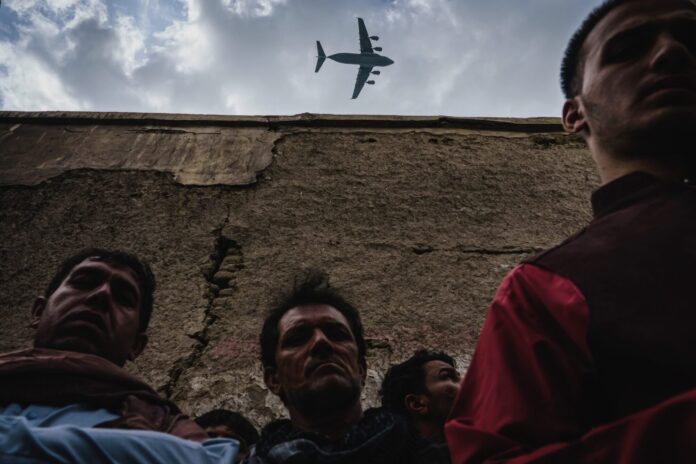
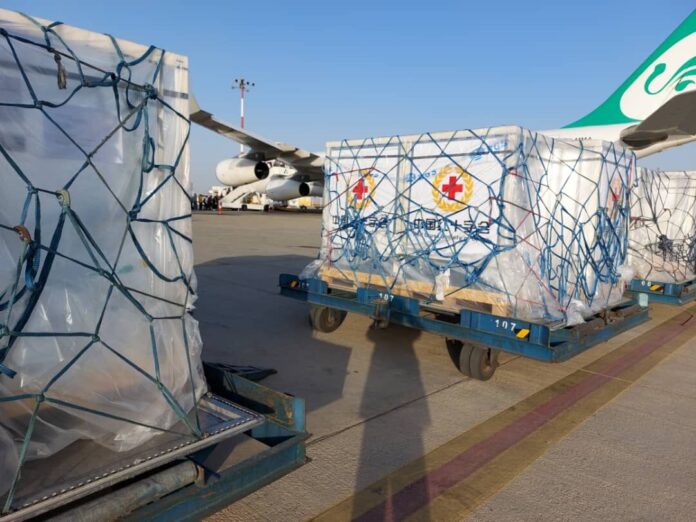
Referring to the beginning of the cold season and the escalation of difficult conditions for the people of Afghanistan, Amirabdolhian emphasized the need for collective cooperation of all countries to handle the situation there and especially the sending of humanitarian aid to the country. He added that the Islamic Republic of Iran has already been active in this field.
The Iranian foreign minister explained the 13th government’s view on the resumption of the Vienna talks, saying Iran will finalize its conclusions in this regard in the near future. He said in future talks, Iran’s actions will be commensurate with the level of actions of the other parties.

The speaker of the Swiss National Assembly also said he was pleased to visit the Islamic Republic of Iran as a country with a pivotal role in the region. Aebi described his meetings with the Iranian parliament speaker and other parliamentary officials as constructive. He went on to refer to the role of the Swiss Embassy in Tehran as a guardian of the interests of some countries and the importance of strengthening this role.

He also praised the role of the Islamic Republic of Iran in taking in millions of Afghan refugees over the past decades and Tehran’s current approach to providing services to the Afghan people.

Regarding the nuclear talks, the speaker of the Swiss National Assembly stressed his country’s interest in playing a role in bringing the parties’ views closer together.

The latest developments in the talks between Iran and Saudi Arabia, as well as the developments in Yemen, were among the other topics discussed by the Iranian foreign minister and the speaker of the Swiss National Assembly.

Russia: Deliberate attempts escalating tension in Asia

as narrow-format alliances and military blocs stick to a policy of containment, the Russian foreign minister warns.

Moscow sees attempts to destabilize the geopolitical situation in Asia made by military and narrow political structures which impede interstate interaction in the region, Russian Foreign Minister Sergey Lavrov stated on Tuesday at a meeting of the top diplomats of the Conference on Interaction and Confidence-Building Measures in Asia’s member countries.

“Unfortunately, the geopolitical situation in the region is not getting better, restraining a transition to comprehensive multilateral cooperation and integration. We see deliberate attempts to escalate the situation, undermine the existing mechanisms of interstate interaction,” the top diplomat noted.

According to Lavrov, some narrow political structures and military blocs, sticking to the logic of the cold war and a policy of containment, “contribute to the destabilization of the situation in Asia.”

Lavrov stressed the importance of preventing weapons and military equipment remaining in Afghanistan after the US-led NATO pullout from being used for destructive purposes.

“NATO’s hasty withdrawal has further confused the web of Afghan contradictions. There are a lot of weapons and military equipment left in the country. It is of great importance that they are not used for destructive purposes,” the top diplomat stated.

“The Taliban stated that they intend to combat drug trafficking and terrorism, do not create instability in neighboring states, strive for establishing the inclusive government. It is paramount to fulfill all these promises,” Lavrov added.

NATO avoids responsibility for its twenty-year presence in Afghanistan, inviting the republic’s neighbors to solve the existing problems, he said.

“Along the same lines, one can note NATO’s desire to redeploy forces to other zones of the region such as Central, South or Southeast Asia, and also send Afghan refugees there. The alliance avoids responsibility for the consequences brought by its twenty years of experiments. The global community, especially Afghanistan’s neighbors, is invited to tackle the problems,” Lavrov continued.

The Taliban embarked on a large-scale operation to take control of Afghanistan after the US had announced its intention to withdraw its forces in the spring. On August 15, Taliban fighters swept into Kabul without encountering any resistance, with Afghanistan’s then President Ashraf Ghani subsequently fleeing the country. On September 6, the Taliban gained full control over Afghanistan, and on September 7, the radicals announced the new interim government.

Probe into Beirut blast paused again

The development came moments after Judge Tarek Bitar issued an arrest warrant for ex-finance minister Ali Hasan Khalil on Tuesday, after he did not show up for questioning.

Shortly afterwards, the judge was notified that lawyers for Khalil and former public works minister Ghazi Zeiter, who has also been charged, had made a new request to dismiss him from the case, a judicial source told Al Jazeera.

Bitar’s other questioning sessions scheduled this week for Khalil, Zeiter and former interior minister Nouhad Machnouk have been suspended.

The request on Tuesday was Zeiter and Khalil’s third attempt to remove Bitar from his position as the head of the probe into the explosion at Beirut’s port last August, which killed more than 200 people, injured about 6,500 and devastated large parts of the city.

Their initial request filed late last month led to the temporary suspension of the probe. The request was rejected by the Appeals Court on October 4, followed by another rejection from the Cassation Court on Monday.

Machnouk and former Public Works Minister Youssef Finianos previously lodged two separate legal complaints against the judge. Bitar issued an arrest warrant for Finianos in September, but it has not been implemented. The judge had also summoned former Prime Minister Hassan Diab for an interrogation later this month.

The judge has come under huge pressure from groups who have accused him of political bias. On Monday, Hezbollah Secretary-General Sayyed Hassan Nasrallah accused Bitar of using “the blood of the victims to serve political interests”, and effectively called for his replacement.

Legal experts have rejected accusations that Bitar has targeted individuals for political reasons. Nizar Saghieh, a lawyer with the Legal Agenda watchdog organisation, told Al Jazeera on Monday that Bitar has charged and pursued officials with “clear documentation and evidence”.

Families of the victims who continue to back the judge have said Lebanese officials are systematically obstructing the investigation.

Bitar has led the Beirut blast probe since February, after his predecessor Judge Fadi Sawan was removed following a similar legal complaint that questioned his impartiality. In their complaint against Sawan, Zeiter and Khalil said that he could not hold a partial investigation because his home in Beirut was damaged in the blast.

Entire neighbourhoods in Beirut were destroyed in the explosion on August 4, 2020, after a huge stockpile of ammonium nitrate, which had been stored unsafely at the port for years, detonated.

An estimated 300,000 people were also left homeless in one of the largest non-nuclear explosions ever recorded.

No officials have been convicted.