Tuesday, December 23, 2025
Home Blog Page 2348

Iran, China topping agenda of Blinken talks with Israel, UAE FMs

The secretary is hosting Israeli and Emirati officials in Washington to mark the one-year anniversary of the Abraham Accords, the normalization agreement orchestrated by the Donald Trump administration that established ties between Jerusalem and Abu Dhabi.  

Blinken will meet separately with Israeli Foreign Minister Yair Lapid and U.A.E. Foreign Minister Sheikh Abdullah Bin Zayed Al Nahyan. Then the top diplomats will hold a trilateral meeting, during which they will announce a joint working group on religious coexistence, and water and energy issues.

Since announcing the accord to normalize relations in August 2020, Israel and the U.A.E. have established embassies in their respective countries and exchanged ambassadors, as well as signed more than a dozen bilateral agreements.  

The meeting in Washington is an effort to build on the ties between the three parties. All three face pressing issues related to regional security, such as Iran, and global stability, with the U.S. focused on China’s efforts to gain a foothold in the Middle East. 

“As the secretary has noted with allies and partners worldwide, we’ll be candid with our Israeli friends over risks to our shared national security interests that come with close cooperation with China,” a State Department official stated in a briefing with reporters on Tuesday. 

Chinese companies have worked on and continue to bid on Israeli infrastructure projects.

Last month, a Chinese state-owned firm inaugurated its management of a port in the Israeli city of Haifa, in a project that had earlier garnered pushback from the U.S., which docks ships and runs joint naval exercises with Israel out of the sea-side city.  

U.S. intelligence officials have also reportedly raised concerns that relations between the U.A.E. and China risk the security of the F-35 program, with Abu Dhabi set to take delivery of the advanced fighter jets as part of the original negotiations of the Abraham Accords. 

The State Department official on Tuesday declined to highlight any specific concerns about Israel and the UAE’s relations with China.  

“The U.S. views China as a competitor that challenges the existing international rules-based order,” the official said. 

On Iran, the Israeli government has put forth a tempered criticism of the Joe Biden administration’s intent to rejoin the Joint Comprehensive Plan of Action (JCPOA), the 2015 nuclear agreement that established oversight of Iran’s nuclear activities.

Lapid, during his meeting Tuesday with national security adviser Jake Sullivan, discussed “the need for an alternative plan to the nuclear agreement,” according to a readout of the meeting from the Israeli embassy. 

“When it comes to the trilateral meeting…  the leaders involved will discuss a range of regional issues and they will touch on this,” the State Department official noted, referring to Iran. 

“And we’ll also be heavily focused on the affirmative agenda of working to realize the full benefits of normalization, and the unity of America’s partners in this region in new ways, I think will send a powerful message as well,” the official added.

In the bilateral meetings between the U.S. and U.A.E., Blinken will discuss with his counterpart efforts to achieve a ceasefire in Yemen’s war and the “shared desire” to see reforms implemented in Lebanon “to rescue the country’s deteriorating economy.” 

Another point of contention is likely to arise in the U.A.E. reportedly agreeing to enhance economic cooperation with Syria.

“Our focus remains on reducing the suffering of Syrian people and working with our allies to advance a broader political solution to the conflict in which accountability for the atrocities committed by the Bashar Assad regime will be a necessary component,” the State Department official stated.

US says prefers diplomacy in Iran nuclear case, but time limited

“We, of course, keep our partners abreast of our efforts to pursue a diplomatic path forward as it relates to the P5+1 talks with Iran,” White House Press Secretary Jen Psaki told reporters on Tuesday.

“That continues to be our preferred path, our preferred choice. We believe diplomacy should always be the first option,” she continued.

“And I think you may have all seen the Secretary of State convey this weekend that time is not unlimited, and that remains the case. But we continue to pursue those negotiations. Our team remains prepared to return for another round of discussions, but I don’t have an update on when those might occur,” the press secretary added.

US Department of State spokesperson Ned Price has also noted During Under Secretary of State for Political Affairs Victoria Nuland visit to Moscow, she discussed the JCPOA among other things.

Negotiations have been underway in Vienna since April by Iran and the international quintet (Russia, Britain, Germany, China and France) on restoring the Iranian nuclear deal to its original form. The sides have been discussing the issue of canceling US sanctions against Iran, Tehran’s compliance with its commitments in the nuclear sphere and the United States’ return to the JCPOA.

Representatives from the countries that are parties to the agreement have also been holding separate consultations with US emissaries without Iran’s participation. Originally the delegates had hoped to be through with this work by the end of May, and then at the beginning of June. In late September, Iranian Foreign Ministry spokesman Saeed Khatibzadeh stated the talks on restoring the nuclear deal to the full extent would begin in Vienna within a few weeks.

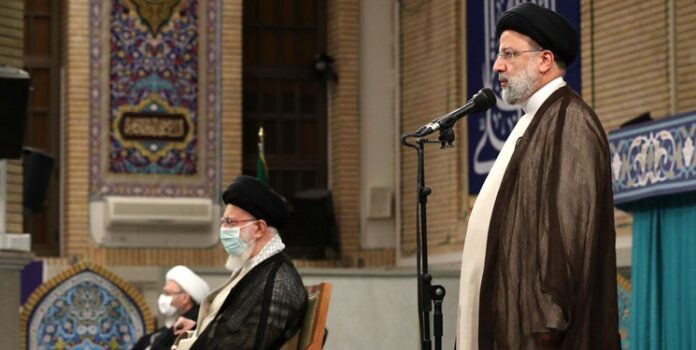
President Ebrahim Raeisi has dismissed the idea of holding negotiations over the revival of the country’s nuclear agreement under pressure, saying such tactics has never yielded the US and Europe any result.

“Negotiation and dialog have always been and will continue to be part of the instruments that are in the service of diplomacy. We do not balk at negotiation and dialog,” he stated early September.

“But the Americans and the Westerners are after negotiation in conjunction with pressure,” he added, “This is while negotiations are there to avoid pressure.”

Such pressure tactics have nothing to do with negotiation, the Iranian chief executive said, adding, “I have directed them (the country’s authorities) to include negotiation on the agenda, but not under the shadow of the pressure that they (the West) are pursuing.”

The United States and the Europeans have experienced this in the past too that applying such tactics to negotiation procedures “do not work,” Raeisi noted.

At the same time the country rules out any such notion as “negotiation for the sake of negotiation” the president stressed.

He, therefore, urged that any interaction of the type reward the country with its expected results, namely the removal of Washington’s oppressive sanctions targeting the Iranian nation.

Moscow warns Russia-US relationships could worsen

Relations between Russia and the US could worsen in the wake of long-awaited negotiations between the two countries that are making less progress than originally hoped, Ryabkov stated.

The verdict comes after Nuland arrived in the country on Monday to hold three days of talks with Russian officials. 

On Tuesday, local media reported that negotiations between Nuland and Ryabkov were floundering as the diplomats struggled to find common ground.

Earlier this week, Moscow lifted sanctions on Nuland, which allowed the US undersecretary of state to enter the country for a summit with her Russian counterparts.

Despite Nuland saying that she is “glad to be back in Russia to deal with bilateral relations,” Ryabkov said there is a high chance that the state of affairs will only worsen as a result.

“I cannot say that we have made great progress. The topics of visas, the operating conditions of diplomatic missions, the rotation of diplomatic staff, the overall normalization of the activities of Russian foreign missions in the United States and the United States in Russia retain a significant crisis potential, and it cannot be ruled out that some further exacerbations are possible in these areas,” he stressed.

“The positions of the parties do not fit well. Americans do not listen to our logic and our demands. But nevertheless, the conversation was useful,” he added.

While talks are still ongoing, Ryabkov has noted that Moscow does not want tensions between Russia and the US to escalate further and asked for international restrictions to be removed. Particular attention was paid to issues concerning the missions of Russia and the United States on each other’s territories. The Russian side emphasized that hostile anti-Russian actions will not remain unanswered, but Moscow does not seek further escalation. 

“We propose to remove all restrictions introduced by both sides over the past few years,” he continued.

The negotiations come just days after four US senators urged President Joe Biden to expel 300 Russian diplomats and take “immediate action to increase staffing at the US embassy in Moscow” over disparity between the number of personnel in the Russian and US embassies.

“Russia must issue enough visas to approach parity between the number of American diplomats serving in Russia and the number of Russian diplomats serving in the United States,” the senators said, adding, “If such action is not taken, we urge you to begin expelling Russian diplomats, to bring the US diplomatic presence to parity.”

The same week, NATO decided to slash the size of Moscow’s delegation to the military bloc’s headquarters by half, forcing Russia to bring home eight envoys from its permanent mission to the alliance’s headquarters in Brussels. 

“These actions, of course, do not allow us to pretend there is a possibility of normalizing relations and resuming dialogue with NATO. Instead, these prospects are undermined almost completely,” Kremlin spokesman Dmitry Peskov stated at the time.

Murder convict given reprieve just before execution

The inmate identified as Arman had killed a girl whom he loved seven and a half years ago. This caused other death row inmates who were supposed to be hanged Thursday morning to be given a reprieve from execution.

Arman killed the girl, Ghazaleh, after she rejected his marriage proposal. At the time, he was 18 and Ghazaleh was 19. 

After Arman pleaded guilty, he was sentenced to qisas (retribution). He was then taken to the gallows but was given a one-month reprieve from execution by the girl’s family to show then the place of her body. Arman said, after murdering the girl, he put her corpse in a suitcase and threw it into a garbage case. But no trace of the body was ever found. 

Now Arman has until Saturday to be forgiven by the victim’s family. Ghazaleh’s father says the convict’s parents came to their house several times to ask for forgiveness. He also says several celebrities including cinema actors like Parveez Parastooee and Rambod Javan also came to visit and ask he and his wife to spare Arman. But he insists that the victim’s family will not change their decision and want qisas. 

He says Arman was supposed to get executed on Wednesday morning but he granted a stay of execution for a reason he’s not aware of.

Cases of ‘Havana Syndrome’ reported at US embassy in Colombia

Hundreds of U.S. government officials have been afflicted by the mysterious illness in recent years in diplomatic missions across the world. 

The U.S. Embassy in Colombia is looking into several cases of people reporting coming down with Havana syndrome, just days before the secretary of state is scheduled to travel to the country.

The Wall Street Journal reported on Tuesday, citing emails sent by U.S. Ambassador to Colombia Philip Goldberg and other officials to embassy personnel, that the embassy in Colombia is investigating a number of potential cases of the mysterious illness.

In one email sent in mid-September, embassy personnel were informed of “an unexplained health incident,” according to the Journal, which reviewed the messages.

Days later, on Oct. 1, employees at the embassy were told that the regional security office was looking into “additional Anomalous Health Incidents [AHIs],” which is the phrase the U.S. government uses to discuss what is commonly referred to as Havana syndrome.

That email added that “there is no stigma to reporting any health-related incident in which the underlying causes are not known,” according to the Journal.

The State Department, in the emails uncovered by the Journal, stated it would respond to the situation “seriously, with objectivity and with sensitivity” as it works to find out who has been affected by the mysterious virus.

One U.S. official told the newspaper that at least two cases are known, both of whom are American citizens, but it is believed that others were affected.

The source also noted at least one family was transported out of the country through air travel to receive treatment, adding that in recent days concerns have become “more serious.”

A person with knowledge of the situation at the embassy told the Journal that one of the family members affected is a minor.

The American Citizen Service Unit at the U.S. Embassy in Bogotá told The Hill that it does not have any information about Havana Syndrome cases.

“The U.S. Department of State has no greater priority than the safety and security of U.S. citizens overseas,” the unit said, adding “we would like to inform you that unfortunately we do not have information about Havana Syndrome cases.”

Reports of potential Havana syndrome cases have surfaced in recent months among American diplomats and intelligence officers overseas. Symptoms associated with the mysterious illness include dizziness, headache, fatigue, nausea, anxiety, cognitive difficulties, ringing in the head and memory loss, according to the Journal.

State Department spokesperson Ned Price on Tuesday would not comment on the report, reiterating the seriousness that the State Department takes related to reports of “anomalous health incidents,” how the agency refers to the mysterious health occurrences that are often called Havana syndrome.

“We are just not speaking to the press. We’re speaking to our workforce,” Price told reporters in a briefing. 

Price added that the State Department has made an effort to better inform and educate State Department staff serving overseas on how to identify and report AHIs and provide care when such incidents are reported. 

“We are communicating with our workforce. We are instituting new training modules to ensure that outgoing State Department officers know how to detect a potential anomalous health incident, they know how to report a potential anomalous health incident and they know to whom to turn should they need to report it, they know the type of assistance that they can receive, their families are apprised of of these dynamics as well,” he continued.

The incident marks the latest in reports of the mysterious illness affecting travel for U.S. officials.

Vice President Kamala Harris’s trip to Vietnam was delayed in August after at least two U.S. diplomats in the country had to be evacuated because of the illness.

Last month, reports surfaced that a member of CIA Director William Burns’s team who was traveling with him to India had symptoms that coincided with Havana syndrome and had to receive medical attention.


Israeli military transfers tanks to Golan Heights

Israel’s military has moved its tanks to the occupied Golan Heights, a 500-square-mile area with strategic importance, in a dangerous move smacking of provocation.

In a report on Tuesday, Rusiya Al-Yaum (RT Arabic) said the regime in Tel Aviv had dispatched a “large number of tanks” to the rocky plateau presently under the illegal occupation of Israel.

It comes in the wake of an announcement by Israeli Prime Minister Naftali Bennett that the number of Israeli settlers would be doubled in the Golan Heights, calling it a “strategic goal.”

In his remarks on Monday, Bennett stated in six weeks his regime will present a plan to boost the population, including the construction of two new settler units, in the occupied region. The ultimate goal, he stressed, was to reach the population of 100,000 settlers, almost four times the current population of around 27,000.

In response, Syria reaffirmed its right to retake the occupied territory. In a statement, the Syrian Foreign Ministry announced the Golan Heights will “return in the arms of the motherland sooner or later,” hastening to add that there is “no other way.”

In an address to the meeting of the Non-Alignment Movement (NAM) on Monday, Syrian Foreign Minister Faisal Mikdad highlighted his country’s right to re-establish control over the Golan Heights. He noted Syria has “every right” to that end.

The top Syrian diplomat declared that Damascus will put in all efforts to reclaim its occupied territories and to combat terrorism, while lashing out at the United States, Turkey and the Israeli regime.

Earlier this week, Syrians rallied in the Golan Heights to protest the Israeli regime’s plan of constructing settler units and doubling the number of settlers in the area.

In 1967, Israel waged a full-scale war against Arab territories, during which it occupied a large swathe of Golan and annexed it four years later – a move never recognized by the international community.

In 1973, another war broke out; and a year later a UN-brokered ceasefire came into force, according to which Tel Aviv and Damascus agreed to separate their troops and create a buffer zone in the Heights. However, Israel has over the past several decades built dozens of illegal settlements in Golan in defiance of international calls for the regime to stop its illegal construction activities.

Syria has repeatedly reaffirmed its sovereignty over Golan, saying the territory must be completely restored to its control.

The United Nations has time and again emphasized Syria’s sovereignty over the territory.

In July, the United Nations Economic and Social Commission for Western Asia (ESCWA) announced in a report that it was impossible to achieve sustainable development in the occupied Palestinian territories in light of Israel’s unending occupation and the policies and practices it pursued.

“The compliance with the international law and the absence of impunity are two prerequisites for achieving peace and justice for all the peoples of the region,” the UN body added.

In March 2019, former US President Donald Trump signed a decree recognizing Israeli “sovereignty” over Golan during a meeting with former Israeli Premier Benjamin Netanyahu in Washington.

Many regional countries, including Iran, Turkey, Lebanon, Russia, in addition to the European Union were quick to reject and condemn Trump’s move.

Iran Drills: Indigenous Air Defense Systems Successfully Shoot Down Targets

Commander of Khatam al-Anbia Air Defense Base Brigadier General Ghader Rahimzadeh said Khatam and Joshan systems, used to hit the targets, were being tested for the first time during the drills.

“The Joshan missile system is an upgraded version of the Khordad-15 air defense system and uses a passive radar. [The Joshan system] was successfully tested and assessed during these drills for the first time and shot down targets assigned to it by the integrated air defense system [of Iran],” the general said.

Rahimzadeh added that the current phase of the military exercises covers countering targets at the low altitude by tactical missile systems, using multidimensional and 360-degree defense strategies during electronic warfare. 

He also stressed that the armed forces follow a strategy of “powerful Iran” and will not hesitate to improve their air defense capabilities.

“Accurate assessment of the possible threats in the air led us to move toward the development of air defense systems proportionate to these threats and, thanks God, there is now no threat but that we have found a solution for countering it.” The general said.

Survey shows Americans concerned about cyber-attacks

The poll, conducted by The Associated Press-NORC Center for Public Affairs and the University of Chicago’s Pearson Institute, found that around three-quarters of those surveyed are especially concerned about cyberattacks from the Russian and Chinese governments, while just over half were concerned about attacks from cybercriminal groups.

There was a high level of concern around attacks on financial institutions, with over 90 percent of respondents very or somewhat concerned about threats to their data as a result of these attacks. Over 90 percent of respondents were also similarly concerned about attacks on national security and defense systems, healthcare groups, and the electricity sector.

“The public is clearly worried about cyber-attacks, and many Americans see such attacks as a potential result of international conflict,” Sheila Kohanteb, the executive director of External Relations at the Pearson Institute, stated in a statement.

“The survey results show Americans are far more concerned about cyber-attacks from China and Russia than those from other governments, groups, or individuals,” Kohanteb noted.

There was a significant split in concerns based on the age of respondents. Over 75 percent of respondents over the age of 60 were concerned about cyberattacks, while less than half of respondents between the ages of 18 and 29 were similarly concerned. Older adults were also more concerned about attacks from the Russian or Chinese governments than younger adults, according to the survey.

“The study highlights significant and important generational differences in attitudes toward cybersecurity and foreign governments,” Trevor Tompson, director of the AP-NORC Center, announced in a statement.

“These findings also provide evidence of broad potential support for policies designed to increase protection against cyber-attacks on U.S. institutions,” Tompson added.

The poll was conducted over a week in September, with over 1,000 U.S. adults responding either through online survey or phone interview. The poll results were released days after AP-NORC and the Pearson Institute unveiled results from a previous poll that looked at Americans’ concerns around the spread of misinformation.

The findings were released after a difficult year in cybersecurity for the nation, with multiple major cyberattacks impacting both government and private sector groups.

The Russian government was linked to the SolarWinds hack, discovered in December, which involved the breach of numerous U.S. federal agencies and 100 private sector groups for much of 2020 as part of an espionage operation.

Only months later, Chinese, government-linked hackers exploited vulnerabilities in Microsoft’s Exchange Server to compromise thousands of groups.

Ransomware attacks have also run rampant. Attacks in May on Colonial Pipeline and meat producer JBS USA by separate Russian-based cyber criminal groups endangered key supply chains, while schools, hospitals, and government groups were hit hard throughout the COVID-19 pandemic.

The Joe Biden administration has taken action both domestically and internationally in the wake of the attacks, with President Biden levying sanctions on Russia in April in connection to the SolarWinds hack, and the U.S. and allied nations formally blaming the Chinese government for the Microsoft Exchange Server exploitation this summer.

Biden also signed an executive order to strengthen federal cybersecurity May, and numerous agencies have made confronting ransomware attacks a priority.

Khatibzadeh: Top EU official due in Tehran Thursday

In response to a question about European Union Deputy Foreign Policy Chief Enrique Mora’s visit to Tehran, Iran’s Foreign Ministry Spokesman Saeed Khatibzadeh has announced that the visit will go ahead on Thursday as previously planned.

Khatibzadeh said the trip follows consultations between the two sides on issues of mutual interest, including Iran-European Union relations, Afghanistan and the Joint Comprehensive Plan of Action.

Consultations and contacts between the two sides have never been halted and are constantly ongoing on different issues, and this trip also takes place in the same framework, the foreign ministry spokesman explained.

Iranian, Azeri FMs hold talks over Tehran-Baku ties

While emphasizing the need for mutual respect for the independence, sovereignty and territorial integrity of countries, Amirabdollahian added that Tehran and Baku have a long-standing relationship with each other.

He stressed that the two countries must prevent misunderstandings in their relations and it is worthwhile to continue their ties in the right and growing direction quickly.

Amirabdollahian also said Tehran expects that the problem of transit traffic of Iranian trucks in the Azerbaijan Republic will be solved.

The foreign minister spoke of the depth of relations between the two nations. He said Tehran and Baku have enemies and the two sides should not give the enemies the opportunity to disrupt relations between the two countries and concerns should be resolved through dialogue and cooperation.

The foreign minister of the Republic of Azerbaijan Jeyhun Bayramov also called relations with Iran friendly and added that ties with friendly countries are a priority for the Republic of Azerbaijan.

He emphasized the need to resolve the differences through dialogue and in a calm and sincere atmosphere. Jeyhun Bayramov suggested that the two countries’ customs officials hold talks to solve the problem of the transit of Iranian goods.

He stressed the pursuit of the release of two Iranian truck drivers detained in the Azerbaijan Republic.

The foreign ministers of the two countries invited each other to visit Tehran and Baku.