Tuesday, December 23, 2025
Home Blog Page 2344

Saudi FM says Riyadh-Tehran talks ‘cordial’

Saudi Arabia’s FM said the kingdom is “serious” about talks with Iran, signalling Riyadh’s desire to repair relations between two rivals that accuse each other of stoking tensions and instability across the Middle East.

“We are serious about the talks,” he told the Financial Times, adding, “For us it’s not that big a shift. We’ve always said we want to find a way to stabilise the region.”

The kingdom has held four rounds of talks with Iran since April, including a first meeting last month with the government of new hardline president Ebrahim Raisi. The negotiations reflect a tentative de-escalation in the region in the wake of the election of US president Joe Biden and with the economic hardship wrought by the pandemic.

Riyadh and Tehran, which claim leadership of the Sunni and Shia Muslim worlds respectively, cut diplomatic ties in January 2016 after Saudi Arabia’s embassy in the republic was ransacked. The diplomatic mission was attacked after Riyadh executed a senior Shia cleric.

Riyadh believes negotiations have not yet made sufficient progress to restore full relations with Tehran. But a Saudi official told the FT that it was considering an Iranian request for it to open its consulate in Jeddah. Riyadh was also considering allowing Tehran to reopen its representative office for the Organization of Islamic Co-operation in the port city. However, the kingdom was not yet ready to reopen a consulate in the Iranian religious city of Mashhad, with a senior official stating the dialogue so far lacked “substance”.

The discussions have been taking place amid European diplomatic efforts to broker a deal on Washington’s return to the nuclear deal Tehran signed with world powers in 2015. Talks have stalled since Raisi’s election in June.

The Saudi official added Tehran was “focused on signalling”.

“Especially to the west, [they are signalling] that ‘look, we have resolved our issues with the Saudis and any lingering things we can work out together so don’t talk to us about regional security’,” he said, noting, “‘Treat us like a normal country and let’s do this [nuclear] deal.’”

Tensions between Saudi Arabia and Iran soared after Riyadh backed former US president Donald Trump’s decision in 2018 to unilaterally withdraw Washington from the nuclear deal with Tehran and impose crippling sanctions on the republic. The following year, Iran was blamed for orchestrating a sophisticated missile and drone attack on Saudi Arabia’s oil infrastructure that temporarily knocked out half the kingdom’s crude output. Tehran has dismissed accusation it was behind attacks on Riyadh oil site.


But Saudi Arabia appeared to have recalibrated its more assertive foreign policy after Biden took office pledging to reassess relations with the kingdom, criticising the murder of Jamal Khashoggi by Saudi agents and freezing some arms sales to Riyadh.

Under Crown Prince Mohammed bin Salman’s stewardship, Riyadh had aggressively pursued its war with Iranian-backed Houthi rebels in Yemen; became embroiled in a bitter diplomatic dispute with Canada; and briefly detained Saad Hariri while he was Lebanon’s prime minister. But Prince Faisal insisted that Riyadh “did not pick fights”.

“The leadership has a clear policy that the priority is prosperity, building the country, Vision 2030 [reform plan], and you can’t deliver those things with a region in turmoil,” he said.

“So while we will vigorously defend our national security and our sovereignty, we will try to resolve them through diplomacy as well,” he stated.

He added that there was a “confluence of events that made it feel like it was the right moment” to talk to Iran.

“We were always willing to talk if they might actually be serious,” he continued, noting, “Various factors came into play.”

Diplomats say Riyadh wants Tehran to use its influence over the Houthi rebels in Yemen to help end the war there, with the kingdom keen to exit the conflict after intervening in 2015 to back the ousted Yemeni government.

The Associated Press reported last month that satellite imagery showed that the US had pulled its Patriot air defence system out of Saudi Arabia. But Prince Faisal said Washington had assured the kingdom that its “commitment to our security and the security of our border is ironclad, and we take them at their word”.

“We have a robust dialogue with the Americans, we agree 90 per cent of the time,” he stated.

“Are we unhappy about the general tone in Washington, not the administration? We think it’s not entirely based on where the true relationship is and the value of the relationship, but it’s affected by domestic factors,” he continued.

China urges US to lift all “illegal sanctions” on Iran

Zhao Lijian, the Chinese Foreign Ministry spokesperson, made the remark in response to a recent statement by Robert Malley, the US special envoy for Iran, that Washington was ready to consider “all options” to address the Iranian nuclear program and had talked to China about the sanctions.

Zhao rejected the use of sanctions and pressure against the Islamic Republic and said the full implementation of the Joint Comprehensive Plan of Action (JCPOA) was the “only effective way” to settle disputes on Iran’s nuclear program.

“China always believes that resuming the full and effective implementation of the JCPOA is the only effective way to resolve the Iranian nuclear issue. Facts have proved time and again that sanctions and pressure lead nowhere, and dialogue and consultation is the right way forward,” Zhao told reporters at the briefing.

“Iran has repeatedly reaffirmed its commitment to the JCPOA and its readiness to return to negotiations on the resumption of compliance. Relevant parties should respond to Iran’s reasonable demands by taking concrete actions, push for an early resumption of negotiations and strive for new progress,” he added.

The Chinese Foreign Ministry spokesman expressed Beijing’s opposition to anti-Iran sanctions and called on the administration of US President Joe Biden to remove the restrictive measures on Tehran and also refrain from imposing new ones.

“I would like to stress once again that as the one who caused the renewed tension on the Iranian nuclear issue, the US should correct its wrong policy of ‘maximum pressure’ on Iran, lift all illegal sanctions against Iran and measures of ‘long-arm jurisdiction’ over a third party, refrain from imposing new Iran-related sanctions and bring the JCPOA back on track at an early date,” Zhao said.

“The US is well aware of China’s position of opposing sanctions and China’s determination to firmly uphold its legitimate interests,” he added.

Iran and six world powers—the US, Russia, China, France, Britain and Germany— clinched the JCPOA in 2015. Three years later, the JCPOA was unilaterally abandoned by Washington under former US president Donal Trump and sanctions were reinstated as part of the so-called maximum pressure campaign, in spite of Tehran’s strict compliance with the multilateral accord.

Following a year of strategic patience, Iran resorted to its legal rights stipulated in Article 26 of the JCPOA, which grants a party the right to suspend its contractual commitments in case of non-compliance by other signatories, and let go of some of the restrictions imposed on its nuclear energy program.

The parties to the JCPOA began high-profile talks in Vienna earlier this year after the Biden administration voiced willingness to rejoin the deal and remove the draconian sanctions his predecessor slapped on the Islamic Republic.

Since the beginning of the Vienna talks, Tehran has argued that the US—as the first party that violated the JCPOA—needs to take the first step by returning to full compliance with the agreement. Tehran also says it will resume all of its nuclear commitments under the deal only after the US removes all the sanctions in practice.

Iran envoy warns about consequences of silence on Israel’s atomic program

Kazem Gharibabadi said in a tweet that the International Atomic Energy Agency’s double standards toward the members of the Nuclear Non-proliferation Treaty, send the wrong message that staying out of the NPT means being exempt from any commitment and criticism and even being rewarded.

He said in that case, membership in the NPT and the full implementations of the IAEA’s safeguards will have no benefits and the agency cannot be trusted as a neutral and professional body while it does not fairly pursue its safeguards regime with regard to all its members.

Asked why the IAEA always talks about Iran and declines to discuss the Zionist regime’s nuclear program, the IAEA chief told Energy Intelligence several days ago that Israel has not signed the NPT but Iran is a member of the treaty and has some legal obligations under the non-proliferation regime.

Israeli is widely believed to possess hundreds of nuclear warheads, while the regime is not a member of the Non Proliferation Treaty (NPT). Israel does not allow its nuclear program be under the international supervision.

Iran: Lebanon along with resistance to overcome seditions rooted in Zionist regime

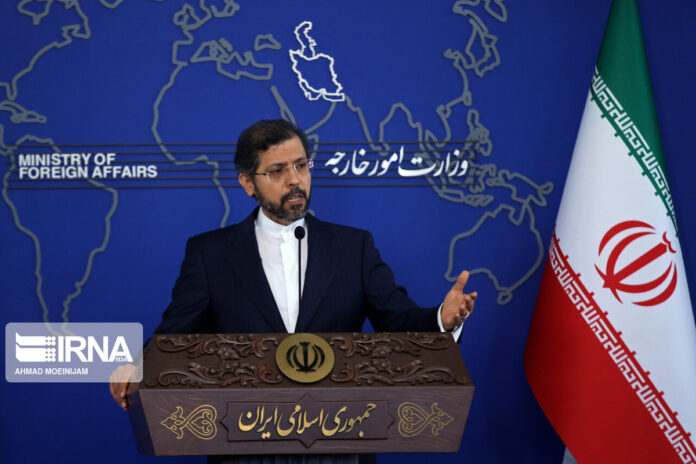
Iranian Foreign Ministry spokesman Saeed Khatibzadeh, referring to the Thursday tragic events in Lebanon, said “The Islamic Republic of Iran, while emphasizing the importance of maintaining stability and peace in Lebanon, closely monitors the developments in the country”.

He said Tehran believes that the people, government and army, along with the Lebanese resistance, through their cohesion and unity, as always, will successfully and proudly overcome the seditions and conspiracies that have their roots in the Zionist regime and are planned and carried out by the masters and agents of this regime.

He also said it is essential that the Lebanese government and officials take swift action to identify and arrest the perpetrators of these crimes and sedition among the Lebanese people.

Khatibzadeh expressed his condolences to the Lebanese government and people.

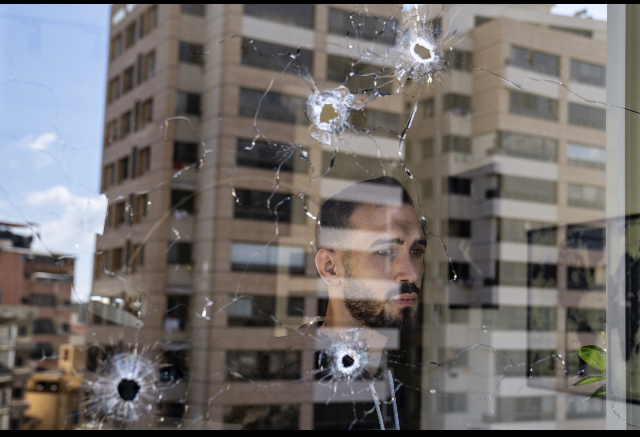
A political dispute over a probe into Beirut’s August 2020 port blast has caused the worst violence in Lebanon in more than a decade. The violence erupted after a protest by supporters of Hezbollah and the Amal movement against the judge in charge of the case was attacked by gunmen from a Christian party. The attack killed several protesters. Many more were injured. The demonstrators accuse the judge of bias and want him to be removed.

Russia welcomes resumption of Iran-EU talks

Following the negotiations between Iranian Deputy Foreign Minister Ali Bagehri Kani and Deputy Secretary General of the European External Action Service Enrique Mora in Tehran, the Iranian and Russian foreign ministers held a telephone conversation and exchanged views on the matter.

Hossein Amiraadollahian emphasized in this telephone conversation that today’s talks with Mora were positive and both sides expressed their satisfaction and readiness to continue the negotiations.

“Our current talks with Enrique Mora are focused on finding practical solutions to the current problems and impasse in Vienna, which are due to Washington’s non-aligned stance and approach to complete and effective lifting of unilateral and illegal sanctions,” he said.

Amirabdollahian also said at the end of today’s talks, the two sides agreed to continue consultations between Bagheri and Mora in Brussels in the next two weeks. Russian Foreign Minister Sergei Lavrov also welcomed today’s talks between Iran and the EU. He stressed that, following his detailed meeting with Amirabdollahian in Moscow last week, he had instructed his colleagues at the Russian Foreign Ministry to hold close consultations with their counterparts in the Islamic Republic of Iran to follow up on issues related to the nuclear deal.

In this telephone conversation, the Russian foreign minister praised Iran’s logical position on the return of all parties to the Iran nuclear deal to their obligations.

Lavrov also referred to his meeting with the foreign minister of the Republic of Azerbaijan today, saying he was informed of the good and constructive telephone conversation between Iran’s foreign minister and his Azeri counterpart.

Lavrov stressed that Moscow welcomes the agreements reached in the telephone conversation and considers them a step in the right direction.

Fire kills 46, injures dozens in Taiwan

The fire broke out in the 40-year-old building in Kaohsiung’s Yancheng district in the early hours of the morning and was extinguished around dawn.

The Kaohsiung fire department said in a statement that after completing a search of the building they were able to confirm 46 deaths.

Mayor Chen Chi-mai stated the building was partly abandoned, having previously been host to restaurants, karaoke lounges and a cinema.

The government is investigating the cause including whether arson was to blame.

Two more UK energy suppliers collapse, 250k affected

A further two energy suppliers have ceased trading as wholesale gas prices continue to soar, regulator Ofgem has announced.

Pure Planet and Colorado Energy, who have a combined 250,000 UK customers, have become the latest failures after nine other small energy supplies went bust since the start of September.

The 100% renewable energy supplier Pure Planet supplies gas and electricity to around 235,000 domestic customers.

In a statement, the firm’s co-founders Andrew Ralston, Chris Alliott and Steven Day said: “We are heartbroken that Pure Planet has entered the Supplier of Last Resort (SoLR) process due to the global energy crisis and the way it has impacted the GB supply market“.

“The government’s price cap, while protecting consumers from sky-rocketing global wholesale energy prices, is not matched by anything which protects suppliers,” it continued, adding, “Instead suppliers are being asked to fund the difference between the record costs of wholesale energy and what they are allowed to sell it for to consumers.“
“Suppliers are increasingly unable to cover their costs. Too many have gone bust already, and more will in the future unless something changes,” the statement read.

Meanwhile, Colorado Energy, which has some 15,000 domestic customers, has had to cease trading due to the current crisis facing small suppliers.

The price of gas, which makes up over a third of the UK’s electricity production, has quadrupled since the start of the year and has increased sharply in the past few months.

A global shortage of gas has increased prices around the world, with demand rising as economies emerge from the Covid-19 pandemic.

The last winter was a long and cold one across Europe and Asia, increasing demand for heating and leaving gas stocks depleted.

It has helped create huge problems for industries that use large amounts of electricity.

Ofgem has announced it will protect the customers’ supply of energy and credit in accounts.

Neil Lawrence, director of retail at Ofgem, said: “I want to reassure affected customers that they do not need to worry: under our safety net we’ll make sure your energy supplies continue.

“If you have credit on your account the funds you have paid in are protected and you will not lose the money that is owed to you,” Lawrence added.

“Ofgem will choose a new supplier for you and while we are doing this our advice is to wait until we appoint a new supplier and do not switch in the meantime,” he stated, noting, “You can rely on your energy supply as normal. We will update you when we have chosen a new supplier, who will then get in touch about your tariff.”

HRW says Saudi takeover of Newcastle aimed at sportswashing

A consortium led by Saudi Arabia’s sovereign wealth fund, the Public Investment Fund (PIF) headed by Crown Prince Mohammed bin Salman, received approval for a $400 million takeover the popular Newcastle club earlier this month.

The U.K. Premiere League has said that it received “legally binding assurances” that the Saudi state would not control the club, Sky Sports reported.

However, concerns arose after activists described the PIF as “inseparable” from the Saudi government.

Nabhan al-Hanshi, acting director of ALQST, a Saudi human rights group based in the U.K., told The Guardian daily that there is “no division between the PIF and the state.”

“The Saudi ruler is in charge of the PIF, sits at the top of the PIF and uses the PIF directly to maintain power. The Saudi monarchy is using football to hide this horrifying record, and everyone should be utterly appalled,” Hanshi told the newspaper.

The move also garnered criticism from human rights groups such as Amnesty International, which stressed the move “raises a host of deeply troubling questions about sportswashing, about human rights and sport, and about the integrity of English football.”

Amnesty’s U.K. chief, Sacha Deshmukh, added that “Football is a global sport on a global stage – it urgently needs to update its ownership rules to prevent those implicated in serious human rights violations from buying into the passion and glamour of English football.”

A report from Grant Liberty in March shed light on the Saudi investment in the world of sports, ranging from chess championships to Formula One and horse racing.

The report further added that “the regime seeks to use the glamour of elite sport to obscure its record of human rights abuse, state-sponsored murder, torture, and the continued bombing campaign in Yemen.”

“Saudi Arabia is trying to use the good reputation of the world’s best loved sports stars to obscure a human rights record of brutality, torture and murder,” the Grant Liberty report said.

A report released by the U.S. Office of the Director of National Intelligence in February said the Saudi Crown Prince approved the 2018 killing of U.S.-based journalist and Saudi critic Jamal Khashoggi at the Saudi Consulate in Istanbul.

US planning to resume Afghanistan flights

The small number of American citizens and thousands of Afghans left behind after the chaotic evacuation effort in the final weeks of the U.S. presence in Afghanistan.

“As soon as we have the right combination of documentation and logistics, we will get going again,” a senior State Department official said.

According to the official, the State Department is continuing to process visa applications so more people can become eligible for the flights.

“Until the airport is reopened, I think all we have to deal with really is charter flights, because regular airlines are going to find it very difficult to pay the insurance premiums that are required or be willing to fly into Afghanistan,” the official added.

The State Department estimated in September that fewer than 200 Americans who wanted to leave were left behind; some of those have since departed the country. Nongovernmental organizations say the number is higher.

The Taliban entered the Afghan capital of Kabul in mid-August, which led to the collapse of the previous Western-backed government, and mass evacuations of foreigners and nationals seeking to escape Afghanistan in fear of the movement. The evacuation operation was completed on August 31 along with the pullout of international forces. During massy, last-minute evacuations, a limited number of Afghans, who had previously worked for the international forces during their deployment in Afghanistan, managed to leave the country in evacuation flights.

The administration of President Joe Biden has been under pressure from lawmakers, veterans and other advocates to do more to help Afghans left behind. The U.S. and its allies airlifted almost 100,000 Afghans out of the country during a two-week operation in August after the Taliban seized power, according to the Centre For Immigration Studies, a nonprofit. State Department officials have announced most applicants for a visa program for former Afghan U.S. military and government workers were left behind.

Taiwan says not to start war with China but to defend itself

The Taiwanese defense minister has vowed that the island won’t be the one instigating conflict amid a spike in tensions with Beijing, which recently staged beach war drills in a nearby province.

Speaking on Thursday, Defense Minister Chiu Kuo-cheng told a parliamentary committee meeting that the island will defend itself if attacked, but that it will not initiate conflict and seeks to maintain the status quo.

“What is clearest is that the Republic of China [Taiwan] absolutely will not start or set off a war, but if there are movements we will meet the enemy full on,” the defense minister stated.

Chiu contended that Beijing aimed to put pressure on Taiwan – which Beijing considers to be part of China – while also warning Western nations not to get involved in the dispute over the island’s independence.

The minister concurred with a lawmaker who suggested that China’s air force was constrained by finite air-to-air refueling capacity and noted that only a limited number of Beijing’s aircraft had flown over the Bashi Channel, a body of water that sits some distance from mainland China and separates Taiwan from the Philippines.

According to maps drawn up by Chiu’s ministry, Chinese aircraft have been keeping closer to the mainland in recent incursions into Taiwan’s air defense zone.

China has stepped up its military activities in recent weeks, sending more planes into Taiwan’s air defense zone.

Chinese forces also carried out beach landing and assault drills in the southern part of Fujian province on Monday; the region sits just across the sea from Taiwan. According to the official People’s Liberation Army Daily newspaper, the drills involved “shock” troops, sappers, and boat specialists.

On Wednesday, Ma Xiaoguang, spokesman for China’s Taiwan Affairs Office, stressed that the exercise was “absolutely just” and a response to Taipei’s “bogus accusations” against Beijing and collusion with foreign powers.