Monday, December 22, 2025
Home Blog Page 2335

Iranian MP: Removal of sanctions first step in resuming talks

Mahmoud Abbaszadeh Meshkini said the ball is now in the West’s court and the notion of returning to the nuclear deal applies to those who left it or failed to live up to their commitments under the deal.

Abbaszadeh Meshkini added that under the current circumstances, it’s Iran that must set conditions for the other side.

He maintained that if the EU intends to act as a mediator, it must base its assumption on the fact that the US and the European troika including Britain, France and Germany are to blame for this stalemate in talks in the first place. Diplomat efforts to resume the nuclear talks have intensified in recent days. But no date has been set to start the negotiations nor has the venue of the talks been determined yet.

Britons think Johnson’s promises to ‘level up’ not sincere

Almost half (47 per cent) of those questioned by pollsters Savanta ComRes for The Independent said they did not believe the prime minister’s claim that “levelling up” was a central goal of his administration, with scepticism about his pronouncements strongest in the northern and Midlands areas which he has promised to help.

One third of those questioned (31 per cent) said that the target of levelling up the UK would never be achieved, and a further 16 per cent said it would take more than 10 years to complete the task that Johnson has set himself. 

Just 10 per cent said that the project could be concluded within the five-year timescale needed if the PM is to be able to boast of success by the time of the next election and a further 21 per cent said it would take up to 10 years.

The poll found deep levels of concern about financial prospects in the coming year, with more than half (56 per cent) expecting their standard of living to be hit by rises in the cost of essentials like energy, housing and food. Large numbers also said they expect to lose out financially from changes to tax rates and benefit levels, as well as the fallout from Brexit.

Overall, a quarter of those questioned (25 per cent) said they expect to be worse-off in the coming year than they were last year and one in five (21 per cent) said they would be worse-off than they were in 2019 before the Covid pandemic struck.

The gloomy picture came ahead of Rishi Sunak’s crucial autumn budget and spending review on 27 October, at which the chancellor is expected to impose tight restraints on state spending as he starts the job of paying down the £407bn bill for support during the Covid pandemic.

A new report from low-pay thinktank the Resolution Foundation called on the chancellor to prioritise action to help families hit by increases in energy bills, expected to reach an average £1,650 a year by April – a 50 per cent increase on 2020.

The Foundation said that low-income households will be disproportionately affected, as they currently spend three times as much on energy, as a proportion of their incomes, as the richest fifth of households.

By next year, energy costs could make up more than 10 per cent of the spending of the poorest tenth of households, compared to around 3.6 per cent for the richest tenth.

Resolution Foundation senior economist Jonny Marshall said that the best way to alleviate the crisis would have been for Sunak to preserve the £20-a-week uplift to Universal Credit introduced last year in response to Covid and scrapped earlier this month.

If that was no longer possible, he should instead immediately increase the Warm Homes Discount for low-income groups from its current £140 to £161, with a further uprating to £208 in April to keep pace with rising bills, said Marshall. And he said that the £25 Cold Weather Payment – issued when temperatures drop below zero for seven consecutive days – should be extended to an additional 4 million means-tested households.

“While much of the debate around rising gas prices has focused on protecting affected firms, the chancellor must prioritise protecting affected families in his upcoming budget, not least as average bills are set to increase by 50 per cent in just two years,” said Marshall.

“Having missed the best opportunity to help families by failing to maintain the uplift to Universal Credit, he should now to look to improving schemes like the Warm Homes Discount and Cold Weather Payments to help low-income families in particular,” he added.

“The current crisis reminds us all of the need to wean Britain off fossil fuels, and to heat and insulate our homes in a more sustainable way. Fixing those problems will be the ultimate test of the government’s energy policy this autumn,” he continued.

Today’s poll found that fears over rising cost of living are strongest among the elderly, with 73 per cent of over-65s saying they expect their finances to be hit by inflation on essentials – including 31 per cent who expect their standard of living to get significantly worse over the next 12 months.

Some 43 per cent of those responding to the Savanta ComRes poll said they expect their financial position to worsen over the coming year as a result of tax rises, against just 12 per cent who said changes to taxation would benefit them. Three in 10 (29 per cent) of voters said their finances will take a hit from changes to welfare benefits and a quarter (25 per cent) from problems with employment.

More than a third of voters (37 per cent) said they expect their personal finances to suffer over the coming year from the impact of Brexit on the UK economy, compared to just 17 per cent who thought EU withdrawal would be good for them financially.

No region of the UK, social class or age group believed on balance that Brexit would benefit them financially. And even among Leave voters there was little sign of hope that Brexit would deliver a boost to finances, with just 22 per cent saying they would be better off over the coming year as a result, against 21 per cent who said it would leave them worse-off.

Concerns over the cost of living crisis were strongest in the Yorkshire and Humber region and West Midlands, which include many of the so-called Red Wall seats seized from Labour by Conservatives in the 2019 general election on a promise of “levelling up” living standards.

The poll found strong support for the levelling up agenda, with 43 per cent saying it was right to make it the government’s top priority and backing highest in London, Yorkshire and the Humber, the northwest, northeast and West Midlands. Just 29 per cent said it should not be the top priority.

But just 28 per cent said they believed Johnson was sincere in his claim to have put the project at the heart of his agenda, against 47 per cent who said he was not and 25 per cent who did not know. Even among Tory voters, more than a quarter (27 per cent) did not believe the PM was sincere about it, against 48 per cent who said he was.

Meanwhile, 28 per cent said they did not understand what “levelling up” means and 17 per cent said they had never heard of it. Fewer than half (47 per cent) had heard the phrase and believed they knew what it meant.

Iran resumes exports to Saudi Arabia

Iran Saudi Flags

Rouhollah Latifi said exports to Saudi Arabia restarted after one and a half year concurrently with negotiations between Tehran and Riyadh, which is “good news”. 

He said Iran has just exported 39 thousand dollars worth of goods to Saudi Arabia that include 6 thousand dollars worth of tiles and 33 thousand dollars worth of round-shaped glass used in traffic signs. 

He said the resumption of exports to the Arab kingdom heralds a thaw in political, economic and cultural ties. Iran and Saudi Arabia have been holding talks over the past months on ways of normalizing their relations following years of tensions over a host of issues including the war in Yemen and the Syria crisis.

Iranian Foreign Ministry spokesman: Biden failed to take different path

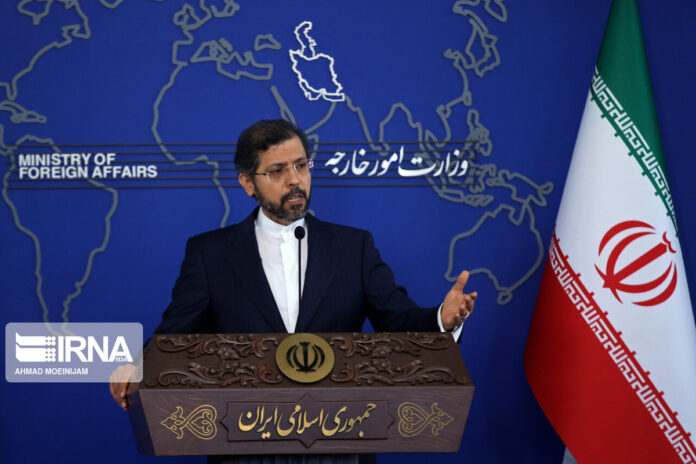
Talking to reports during his weekly briefing on Monday, Khatibzadeh added that Bagheri conveyed Iran’s message to the coordinator of the negotiations and the two sides agreed to continue talks in Brussels in the next few days.  He noted that this agreement was bilateral. 

Khatibzadeh said in Brussels, Iran and the other parties must hold talks over the challenges and obstacles they failed to resolve in Vienna. 

Khatibzadeh added that the talks will be pursued by the Foreign Ministry and the members of the negotiating team will be introduced. 

He noted that the meeting in Brussels will be the continuation of the talks over issues raised in Tehran. Khatibzadeh said the continuation of talks by Iran is a final decision, adding that Iran insists all sides return to full compliance with the nuclear deal unconditionally and under UN Security Council Resolution 2231 and all anti-Iran sanctions be lifted. 

He also referred to the Biden administration’s failure to make good on its promise to go down a different path than that taken by former US president Donald Trump.

Khatibzadeh also said during his weekly briefing that Iran will not tolerate the presence of the Zionist regime near its borders.

“From the southern region of the Persian Gulf to the regions north of Iran…, wherever the occupying regime has gone, you can see this (insecurity). We have told our neighbors in a friendly way and through various channels that Iran does not tolerate the presence of the Zionist regime near its borders and we are not joking with anyone in this regard,” the foreign ministry spokesman said.

Iran has in recent months stepped up warnings about the presence of Israeli elements on its northwestern border with the Republic of Azerbaijan.

Khatibzadeh also touched on the recent parliamentary election in Iraq saying Tehran welcomes democratic elections there.

“We have always welcomed elections; what is happening in Iraq is being followed by the Iraqi people and parties,” he added.

Later during the briefing, he referred to recent terrorist attacks against mosques in Afghanistan which left scores of people dead.

“We are in contact with all parties in Afghanistan, including the Taliban. The Taliban have a direct and special responsibility for peace, stability and tranquility of the people and the safety of all groups and minorities including Hazaras and Shias… we have heard from the Taliban and other parties that they are doing their best to prevent such incidents from happening again,” Khatibzade stated.

US says 2021 Ransomware attacks cost victims $590mn

A report released by the Treasury Department found that around $590 million had been paid by victims of ransomware to their attackers in the first six months of 2021, as such attacks skyrocketed. 

The findings were part of a report released by the Treasury’s Financial Crimes Enforcement Network (FinCEN), which concluded that based on suspicious activity reports filed during the first half of 2021, “ransomware is an increasing threat to the U.S. financial sector, businesses, and the public.”

Just over 450 ransomware payments were reported to FinCEN from the beginning of January through end of June, with the amount of suspicious activity reports increasing by 30 percent from last year. The amount paid by victims also massively increased compared to 2020, when $416 million was paid out over the entire year. 

“Ransomware actors are criminals who are enabled by gaps in compliance regimes across the global virtual currency ecosystem,” Deputy Treasury Secretary Wally Adeyemo said in a statement.

“Treasury is helping to stop ransomware attacks by making it difficult for criminals to profit from their crimes, but we need partners in the private sector to help prevent this illicit activity,” Adeyemo stated.

The report found that bitcoin was the most common payment method for victims to pay ransomware demands, highlighting an increasing area of concern for officials as a result of ransomware payments. The Treasury Department issued its first sanctions against a virtual currency exchange last month, targeting SUEX CO. for allegedly facilitating ransomware payments. 

Ransomware attacks have become an increasing concern over the past year, particularly during the COVID-19 pandemic, when malicious actors have taken advantage of more people moving online for various activities. 

Hospitals, schools and government organizations have been hit, alongside companies critical to supply chains, such as the ransomware attacks on Colonial Pipeline and meat producer JBS USA in May. 

The report was released following a two-day meeting hosted by the White House and involving the participation of over 30 countries aimed at strengthening global cooperation to confront ransomware attacks, with several nations participating reporting attacks on hospitals during the COVID-19 pandemic. 

The nations were particularly concerned with the use of cryptocurrency exchanges for ransomware attack payments, and vowed to take “concerted efforts” to disrupt illicit financial mechanisms that fueled the growth of ransomware attacks.

Assad: Afghanistan exit shows US, allies declining role

Assad received on Sunday Russian President’s Special Envoy for Syria, Alexander Lavrentiev, Deputy Foreign Minister, Sergey Vershinin and an accompanying delegation.

Talks during the meeting dealt with the standing cooperation between Syria and Russia in the war on terror, and coordination on the economic and commercial levels.

Lavrentiev and Vershinin said that this visit comes within President Putin’s directives to boost this cooperation and expand work with Syria in all fields and at all levels, reiterating that Russia is ready to actively contribute to the process of reconstruction and rehabilitation of infrastructure destroyed by terrorism and to establish investment partnerships with Syria in the fields of energy and agriculture in a way that achieves the interests of the two friendly peoples and contributes to activating the Syrian economy.

The talks also tackled the latest developments in Syria, the region and the world.

Assad considered that those developments and changes, foremost of which is the US withdrawal from Afghanistan, indicate the retreat of the role of the US and its allies, which requires from countries of the region to work to enhance security and peace with the will of their peoples without external interferences.

The two sides also discussed meetings of the committee of discussing the Constitution which will start tomorrow, affirming the importance of continuation of the political track in order to reach agreements based on the principles of the Syrian people and keep Syria’s sovereignty and territorial integrity.

China: US, Canada threatening peace and stability in Taiwan Strait

China has reacted with fury after an American warship and a Canadian warship sailed through the Taiwan Strait last week, stressing their provocative acts have seriously damaged peace and stability in the region. 

The Eastern Theater Command of the PLA organized naval and air forces to track and monitor the warships in the whole course, Senior Colonel Shi Yi, spokesperson for the Eastern Theater Command of the People’s Liberation Army (PLA), stated.

The spokesperson stressed that troops of the PLA Eastern Theater Command are ready to respond to all threats and provocations.

The Arleigh Burke-class guided missile destroyer USS Dewey sailed through the Taiwan Straits along with the Canadian frigate HMCS Winnipeg on Friday.

Israeli commander: Hezbollah to launch 2,500 missiles a day in war

Back in May, when the regime tempted a war with the Palestinian resistance movements in the Gaza Strip, “We saw a pace of more than 400 rockets fired towards” the occupied territories on a daily basis, Home Front Command chief Uri Gordin said.

In the case of a future “conflict or a war with Hezbollah, we expect more than five times the number,” he added. 

“Basically, we are looking at between 1,500 and 2,500 rockets fired daily” in the direction of the occupied territories, Gordin noted.

No earlier than in March, the same commander had put the highest number of rockets that the Lebanese resistance movement was expected to fire in retaliation during any given war at 2,000.

Hezbollah fought off two Israeli wars against Lebanon in 2000 and 2006, forcing the regime’s military to beat a humiliating retreat on both the occasions. 

The movement has invariably distanced itself from any intention to enter any new conflict, but has vowed to resolutely defend Lebanon if one was to break out.

The Israeli commander, meanwhile, reminded that even during the war against the Gaza Strip, cities such as Tel Aviv and Ashdod, which are based in the southern part of the occupied territories, were targeted with the “highest number of fire towards them in the history” of the Israeli regime.

He was apparently trying to offer a comparison with a likely war involving Hezbollah.

Pomegranate harvest starts in Middle East’s only reservoir of sour pomegranate


The program is being carried out under the supervision of Behshahr Environmental Protection Department.

Miankaleh is the only natural forest of sour pomegranates in Iran. It covers an area of 12,000 hectares, of which 8,000 hectares are dense and 4,000 hectares are scattered and wild. 

Expanding in an area of 68,800 hectares, Miankaleh is one of the most important reservoirs for plant and animal genes in the biosphere and consists of various ecosystems with plants such as raspberries, flowers and pomegranates. 

Miankaleh’s pomegranates are organic and free of fertilizer and poison. They are also natural. The pomegranates’ customers come from the cities of Amol, Babol, Ghaemshahr and Sari in the northern Province of Mazandaran and the provinces of Golestan, North Khorasan and Semnan. 

End of greenness, story of picking and the beginning of cooking pomegranate

After sour pomegranates are picked from trees in Miankaleh, a new path begins. Pomegranate seeds are collected in large containers and after rinsing with the same amount of water in large pots, they are boiled for about 5 hours. 

Then they beat the cooked pomegranate mantle with a wooden tool called “ghelyan” to separate the mantle from the pomegranate kernel. 

Then, the pomegranate juice is stirred continuously for 7 to 10 hours on low heat to obtain a semi-solid mixture. This is pomegranate paste.


Launching Miankaleh Pomegranate Cooperative Company in Behshahr

Native people of the Miankaleh Peninsula in Behshahr, suburban dwellers and non-governmental organizations have established 5 cooperatives in the region. 

UNESCO is defined for biosphere reserves. Thus, seasonal jobs have been created for people of local communities through the principled harvesting of pomegranates from the Miankale Biosphere Reserve, which is in line with the Man and Biosphere (MAB) program defined by UNESCO for biosphere reserves. Arian Aboutalebi, secretary of the board of directors of Behesht Miankaleh Ecological Cooperative and an environmental activist, says indigenous people and suburban dwellers have received the necessary training for a sound and sustainable harvest from Miankaleh pomegranate gardens. 

“The great achievement of this project is to create a sense of friendship with nature and to preserve the pristine and unique nature of this reserve as much as possible, and the proceeds will be donated to the environment as agreed and will be spent on improving the region,” he adds.

UN: Syrian govt., opposition agree to begin drafting constitution

The Syrian Constitutional Committee’s Small Body will meet in Geneva on October 18 to begin drafting the country’s new constitution, United Nations Secretary General’s Special Envoy for Syria Geir Pedersen stated on Sunday.

“The two co-chairs now agree that we will not only prepare for a constitutional reform but we will prepare and start drafting for a constitutional reform,” he noted. 

“So, the new this this week is that we actually be starting a drafting process for a constitutional reform in Syria,” he added.

He said he had met with Constitutional Committee’s co-chairs Ahmad Kuzbari (from the Syrian government) and Hadi al-Bahra (from the opposition), as well as with 15 Committee members from civil society. He describe these meetings as “good.” In his words, the discussions were “serious and frank” and all the participants demonstrated commitment to the agreed principles of joint work. 

“I hope we will be able to continue the meeting in the same spirit,” he continued.

He gave to understand that the sixth round of the Small Body’s session will last for a week and promised to speak to the press by the end of the week. The sixth round is expected to discuss constitutional principles and then begin to discuss the draft constitution.

In January 2018 at the Russia-hosted Syrian peace conference in Sochi, an agreement was reached to form a 150-member committee to draft a new constitution until September 2019, equally represented by the Syrian government, political opposition, and civil society.