Sunday, December 28, 2025
Home Blog Page 2310

Iran, China: Unilateral U.S. sanctions illegal

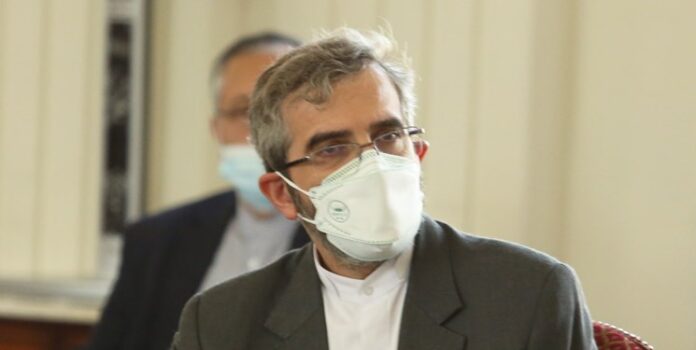
Iranian Deputy Foreign Minister Ali Bagheri Kani said in a twitter post on Monday that he and his Chinese counterpart Ma Zhaoxu stressed during a phone conversation that sanctions against Iranian individuals, entities and third parties should be removed, and that guarantees must be provided so that such illegal measures will not be repeated.

The Iranian and Chinese deputy foreign ministers emphasized the importance of the rule of law in international relations.

The phone conversation comes days after Bagheri Kani, who is Iran’s top negotiator, traveled to Brussels and Moscow, where he met with the European Union Deputy Foreign Policy Chief Enrique Mora and Russian Deputy Foreign Minister Sergei Ryabkov.

Bagheri and Mora agreed that talks between Iran and the P4+1 group in the Austrian capital Vienna will resume before the end of November on a possible return of the United States to the 2015 nuclear deal.

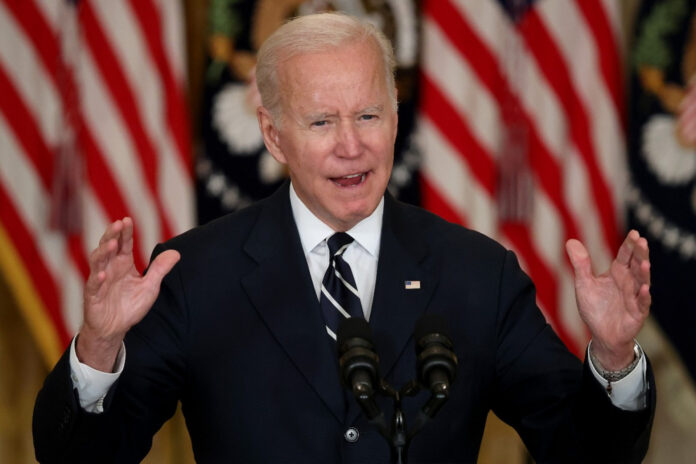
Former U.S. president Donald Trump withdrew America from the JCPOA and re-imposed unilateral sanctions against Iranians to force them to negotiate a new deal. Iran rejected this and rolled back some of its nuclear commitments in response. Trump’s successor Joe Biden says he wants to return to the deal, but has so far enforced Trump’s sanctions and failed to take concrete measures to build confidence.

Just days ago, in a move that was condemned by Iran, the US Treasury imposed new sanctions on real and legal Iranian individuals linked to the country’s unmanned aerial vehicle program.

South Korea ‘face mask donation’ triggers public backlash in Iran

The donation has outraged many Iranians, with some taking to twitter to express their anger.

Some social media users have responded to the move on the South Korean Embassy’s twitter page calling on Seoul to release Iranian funds immediately.

“Iranians are not in need of the small number of masks you have bothered to donate. And just for your information, Iran is now an exporter of masks,” a social media user wrote on the embassy’s page. “Release the Iranian nation’s funds if you are so determined to look civilized.”

Another user wrote that “Atieh Hospital should not have accepted such humiliation.”

Some others said the South Korean Embassy has insulted the Iranians rather than sending a friendly signal.

The angry reactions poured in after the Korean embassy in Tehran announced in a Twitter post that ambassador Yun Kanghyeon donated the face masks to Atieh Hospital on October 26 to “help the Iranian people overcome Covid-19.”

Iran has repeatedly called on Seoul to unfreeze nearly eight billion dollars in payment for crude imports seized because of American sanctions.

Before the re-imposition of US sanctions in 2018, the Islamic Republic was South Korea’s third-largest trade partner in West Asia.

Erdogan: US should not support terror groups

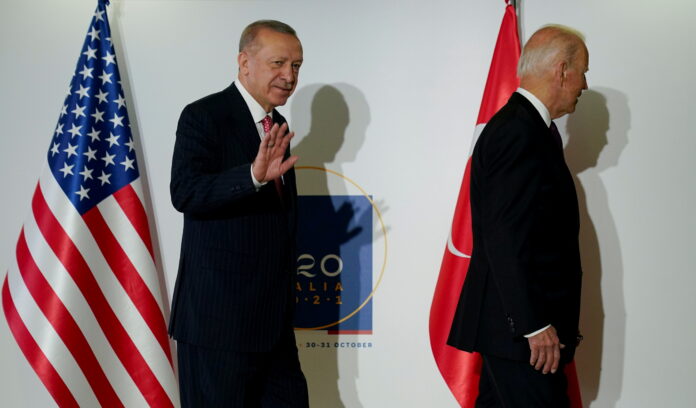
Turkey's President Tayyip Erdogan waves as he attends a bilateral meeting with U.S. President Joe Biden, on the sidelines of the G20 leaders' summit in Rome, Italy October 31, 2021. REUTERS/Kevin Lamarque

Turkey will conduct anti-terror cross-border operations ‘whenever necessary”, Erdogan stated.

“There is no stepping back from it,” he said in response to a question on a return flight from the G20 Leaders’ Summit held in Rome, Italy.
He called on NATO ally US that it “should not support terrorist organizations.”

On his meeting with US counterpart Joe Biden on the sidelines of the G20, Erdogan noted they discussed the procurement of F-16 fighter jets.

“I didn’t witness any negative approach,” he said of the meeting held on Sunday, adding that he hopes to conclude the “sensitive issue.”

He stated Turkey and the US agreed to focus “more intensely” on the economic ties, and discussed cooperation in Afghanistan, Syria, Libya, and the Eastern Mediterranean.

Erdogan added that he told the US and French presidents how establishment of a base in Alexandroupoli, Greece near Turkish border “seriously disturbs” Turkey.

Earlier, the Turkish president announced the US proposed the sale of F-16 fighter jets as compensation for Turkey’s payment for the F-35s.

In 2019, Washington announced that it was taking Turkey out of the F-35 stealth fighter jet program over Ankara’s purchase of the S-400, a Russian defense system it bought after its efforts to buy US Patriot missiles were rebuffed.

The US claimed the Russian system posed a safety risk. Turkey, however, stressed the S-400s would not be integrated into NATO systems, and thus pose no threat to the alliance or its armaments.

Ankara also repeatedly proposed setting up a commission to clarify the issue.

Russia: US likely to establish bases near Afghanistan

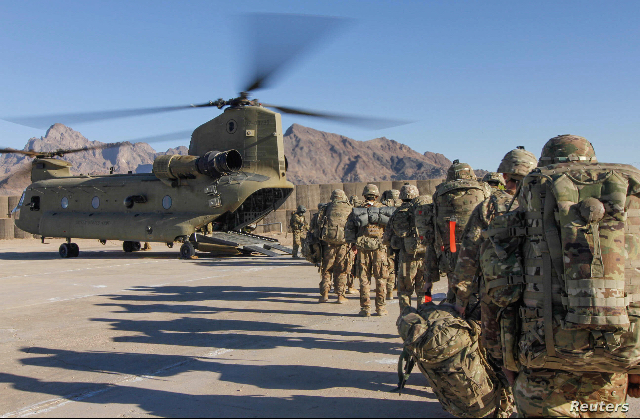
“Well aware of the Americans’ intrusiveness, I do not rule out that they will be pressing for the same aim from different sides. I’ve heard that they have been trying to persuade India to grant the Pentagon some opportunities on the Indian territory,” Russian Foreign Minister Sergey Lavrov told the Rossiya-24 round-the-clock television news channel in an interview.

Lavrov recalled that Russian President Vladimir Putin told his US counterpart Joe Biden at the Geneva summit in July “Russia is categorically against attempts to conclude agreements with the Central Asian countries on the deployment of US military infrastructure on their territory with the aim of delivering so-called over-the-horizon strikes against targets in Afghan territory.”

Lavrov stressed that such proposals from the United States had also been received by Pakistan, which rejected them, and by Uzbekistan, which stated in public that its Constitution left no room for any actions like the deployment of foreign bases in its territory.

“Kyrgyzstan, too, as represented by its president, said it does not wish this, either,” Lavrov added.

On October 27, Russia’s FM in a video message urged Afghanistan’s neighbors to prevent US and NATO military presence on their territories.

The Taliban movement, driven out of Kabul by the forces of the Northern Alliance with support from the US-led international coalition in November 2001, launched a large-scale operation twenty years later for control of Afghanistan after Washington in the spring of 2021 unveiled plans for curtailing its military mission. On August 15, the radicals entered Kabul without encountering any resistance. President Ashraf Ghani stepped down and left the country.

The Taliban on September 6 announced the whole territory of Afghanistan was under their control. On September 7, they unveiled the composition of an interim government.

Number of Covid-19 shots surpasses 88mn in Iran

Number of Covid-19 shots surpasses 88mn in Iran

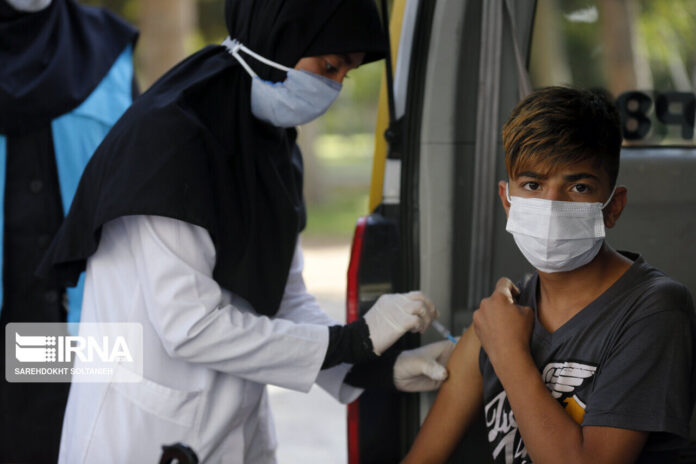
The Iranian Health Ministry said on Monday that nearly 1,050,000 doses have been given to people across the country over the past twenty four hours.

According to the latest figures over 35 million people in Iran have been fully vaccinated.

The ministry also reported 153 new fatalities from the virus over the past twenty four hours taking the total death toll to 126,456.

The country has managed to bring the outbreak under control somehow and eased many restrictions, but authorities have been warning that a sixth wave could be looming on the horizon if protocols are not observed properly.

Report: Afghan soldiers and spies joining Daesh

The US spent a staggering $88 billion arming and training Afghanistan’s military, only for Afghan forces to crumble before the Taliban’s lightning fast reconquest of the country in August. Though the Taliban have promised amnesty to these personnel, stories of violent reprisals have circulated, and according to The Wall Street Journal, a “relatively small, but growing” number of former Afghan soldiers and spies are flocking to the only outfit currently resisting Taliban rule – Islamic State terrorist group.

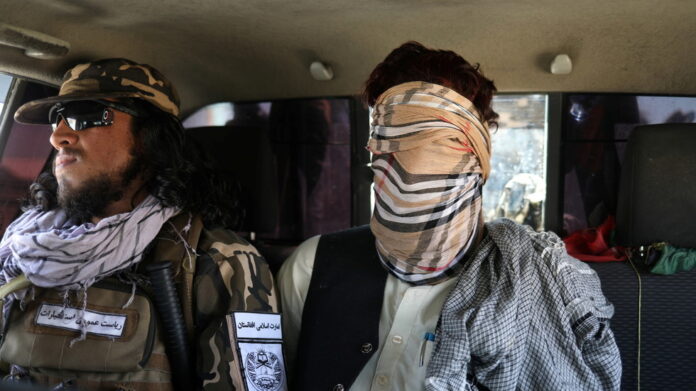
Islamic State’s (IS, formerly ISIS, ISIL or Daesh) Afghan offshoot, IS-K, is eagerly absorbing these US-trained recruits. According to the former security officials and Taliban members the Wall Street Journal spoke to, some former government troops have joined for a paycheck, and others for lack of a better alternative to Taliban rule.

“If there were a resistance, they would have joined the resistance,” former spy chief Rahmatullah Nabil told the paper, adding, “For the time being, ISIS is the only other armed group.”

Though IS-K and the Taliban are both Islamic fundamentalist groups, their ideologies differ. The Taliban are a predominantly Punjabi nationalist organization with no stated goals beyond Afghanistan’s borders, and a tolerance for the country’s other Muslim sects. IS-K, by contrast, view Shiites and other Muslim sects as apostates and aim to establish a worldwide Islamic caliphate, as IS attempted to do several years ago in Iraq and Syria.

Initially suppressed by the Taliban, IS-K mounted a resurgence amid the chaos of the US withdrawal from Afghanistan, carrying out a suicide bombing outside Kabul Airport in August that killed around 200 Afghans and 13 US troops. For the US military, it was the deadliest day in Afghanistan since 2011.

It is unclear what “critical expertise in intelligence-gathering and warfare techniques” these new recruits will bring to IS-K, given that the supposedly 300,000-strong Afghan military they came from folded before the Taliban in a matter of weeks, with its members often fleeing or surrendering without firing a shot.

However, the fact that these US-funded fighters are signing up to a hardline terror group within months of the US leaving Afghanistan illustrates a problem that decision-makers in Washington evidently haven’t learned from in four decades of experience.

Just as the US-funded Afghan Mujahideen would eventually morph into the Taliban in the late 1980s and 1990s, and the Afghan military is on track to bolster ISIS-K’s ranks, the disaffected Iraqi soldiers left without a job following the US invasion in 2003 ended up providing a steady stream of recruits for ISIS several years later.

The US security establishment has already begun to sound the alarm about ISIS-K’s resurgence, with US Undersecretary of Defense Colin Kahl telling the Senate last week that the group could be in a position to attack the West from Afghanistan within six months.

The Taliban, at least publicly, are unperturbed. “We are not faced with a threat nor are we worried about them,” Mawlawi Zubair, a senior Taliban commander, told the newspaper, noting, “There is no need, not even a tiny need, for us to seek assistance from anyone against ISIS.”

Ex-UK envoy blames US for existing problems over JCPOA

Peter Jenkins, Britain’s former ambassador to the International Atomic Energy Agency (IAEA) and other United nation (UN) organizations in Vienna, Austria, told IRNA on Monday that if Biden had returned to the Joint Comprehensive Plan of Action (JCPOA) earlier, the agreement could be in a better situation today.

According to the former diplomat, the European and American parties are not aware that Iran would have stopped scaling back from its commitments under the deal if the Biden administration had rejoined the JCPOA in the first weeks of his tenure at the White House.

However, he pointed to a statement recently issued by the E3 (Britain, France and Germany) and the US, and claimed, “The Biden administration is eager to revive the JCPOA by agreeing terms for doing so with the [Ebrahim] Raisi administration.”

“It must be hoped that those references do not distract the Iranian government from the core of the statement,” he said.

“President Biden is committed to returning the US to full compliance and to staying in full compliance, so long as Iran does the same.”

Sunday night, Biden took part in a quadripartite meeting, initiated by German Chancellor Angela Merkel, in the presence of French President Emmanuel Macron, and British Prime Minister Boris Johnson, on the sidelines of the G20 summit in Rome, Italy.

The statement urges the Islamic Republic to change its behavior to pave the way for the revival of the JCPOA.

Iran has repeatedly shown its compliance with international regulations and kept up its side of the bargain concerning implementation of the international nuclear accord, but the United States withdrew from the deal in May 2018 and re-imposed sanctions on Tehran.

Israel kicks off mass drills to simulate war with Hezbollah

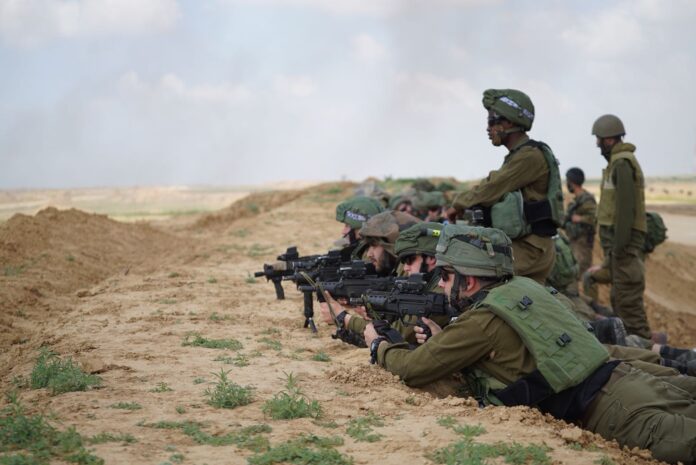
In addition to simulating a fight against Hezbollah, the drills are also meant to test how the military, emergency services and internal security forces would respond to domestic strife inside mixed Arab-Jewish cities in Israel proper.

During the May Gaza War, cities including Lod, Acre and Ramallah were engulfed in deadly clashes, which culminated in the deaths of several Palestinian protesters and two Jewish residents, caused over a thousand injuries, and led to tens of millions of dollars in property damage.

“We will test what we learned and experienced at levels I didn’t anticipate in terms of the domestic front,” IDF Home Front Command chief of Staff Brig. Gen. Itzik Bar stated Sunday, recalling May’s violence and commenting on the new drills.

“What concerns me as chief of staff of the Home Front Command: One is the issue of precision-guided munitions and the effect that they will have on our ability to function and on things in in the world of incoming fire alerts. The second is the rate of fire and Hezbollah’s ability to conduct truly massive rocket barrages at specific geographic areas – I’ll use the phrase ‘demolishing the front line’ – directed fire at the communities near the border,” the commander added.

Bar stressed the exercises would “put into practice” what he and his staff learned through a close study of May’s Gaza conflict, with the drills expected to “test how those lessons were enacted”.

The drills will include simulations of the consequences of Hezbollah firing its vast arsenal of missiles and rockets into Israel, including possible attacks, attacks striking toxic chemical storage sites inside the country, major power outages and hospitals overwhelmed with injured civilians.

Defense Ministry’s National Emergency Management Authority (NEMA) director Yoram Laredo told reporters that his agency has a document for reference “about how a multi-front war will look in terms of its scope and significance”, with the drills expected to give it “a degree of accuracy about possible events and how we direct and refine the exercise so that it can really be effective”.

He said Sunday’s drilling included a special focus on police, and simulated “nationalistic-based riots on many fronts”.

In addition to the military and NEMA, police, fire and rescue, ambulance workers and other government services are expected to be involved, carrying out simulations of the evacuation of northern populated areas, and carrying out air raid tests.

Unlike Hamas, which is concentrated in the besieged Gaza Strip, and whose fighters are forced to construct mostly simple homemade rockets out of scarce materials, Hezbollah is believed to possess over 100,000 rockets and missiles of various ranges, including precision-guided missiles. The group already demonstrated the capabilities of its rockets in the 34-day Lebanon War in 2006, when it fired nearly 4,000 of its 15,000 rocket and missile arsenal into Israel, and effectively bogged down an Israeli offensive until the United Nations brokered a ceasefire.

The Israeli military and media observers have expressed serious apprehensions about Hezbollah’s rocket and missile capabilities, given that even Hamas’s considerably weaker rocket arsenal demonstrated in May its potential to overwhelm Israel’s Iron Dome missile defense system when rockets were fired simultaneously in massed volleys.

In May, an Israeli court’s ruling to evict six Palestinian families from a neighborhood of East Jerusalem triggered public unrest which culminated in an 11-day battle between the Israeli military and Gaza-based militants led by Hamas. Nearly 300 civilians were killed in the fighting, most of them Palestinians in the Gaza Strip and the West Bank.

FM: Lebanon, Saudi crisis not to be resolved through negotiation

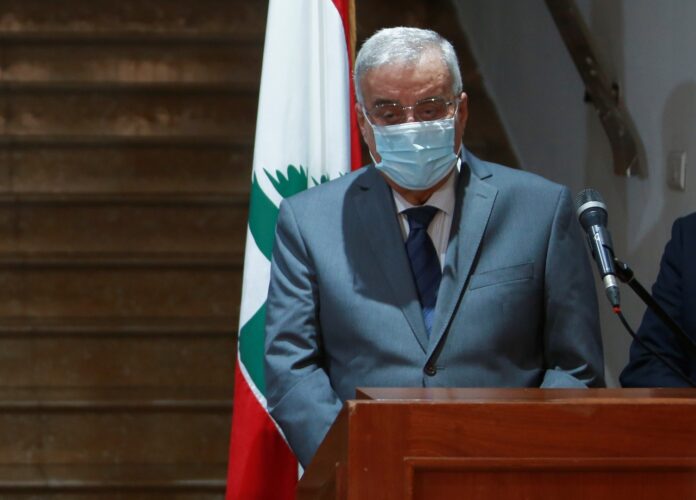
“There exists a kind of oppression on the part of Saudi Arabia, which we do not understand. Countries’ problems are [usually] resolved through negotiation, something that did not happened in this case (Lebanon and Saudi Arabia’s crisis),” Foreign Minister Abdallah Bou Habib told Lebanon’s al-Jadeed television station on Sunday.

The row began after George Kordahi, currently Lebanon’s information minister, stated during a television program, which was aired last Monday, that the 2015-present Saudi Arabia-led war on Yemen was an act of aggression by Riyadh and the United Arab Emirates (UAE), the kingdom’s most significant ally in the military campaign.

He called the war “absurd”, adding it had to stop because he was opposed to wars between Arabs. The minister also noted the Yemeni army forces and their allied fighters from the Popular Committees were “defending themselves … against an external aggression”.

The Saudi kingdom subsequently recalled its ambassador from Beirut and expelled the Lebanese envoy from the Saudi capital.

Bou Habib also roundly rejected earlier remarks made by his Saudi counterpart Faisal bin Farhan Al Saud. Speaking to the Reuters news agency on Saturday, the Saudi foreign minister had alleged that the diplomatic crisis was rooted in a Lebanese political setup that reinforced the dominance of the resistance movement of Hezbollah.

“We do not accept resolution of the crisis through the language that Saudi Arabia has adopted towards Lebanon,” Bou Habib stated, and urged mediation by the Arab League.

Iran announces huge rise in exports from Chabahar Port

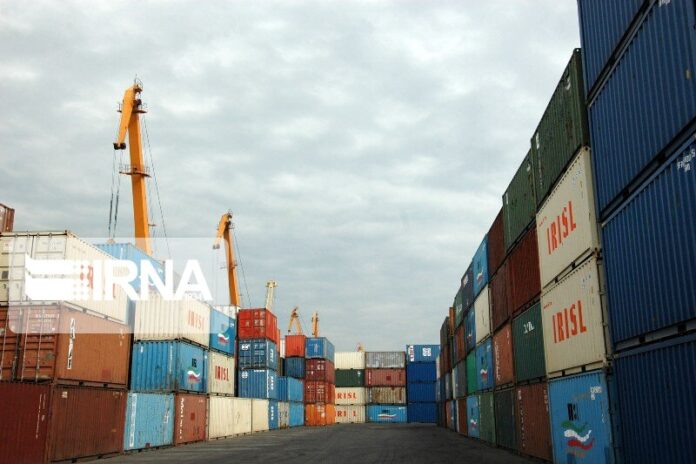
The Customs office said figures also show a 500% rise in exports during the same period compared with the period starting on March 21, 2018. 

The exports from March 21, 2021 hit 19.2 million dollars in terms of value. According to this report, Iranian goods were mostly exported to Pakistan, India, Oman, the United Arab Emirates, Thailand, Iraq, Malaysia, Somalia, Armenia and China. 

The jump in exports comes at a time when Iran is under the harshest sanctions ever imposed by the United States. 

Experts say the rise in exports is due to the capacity of Iran’s only oceanic port.   

Chabahar is located in such a strategic location that it serves as a bridge between the east and west of the world. It is because of these intrinsic capacities that the port city has not been and will not be sanctioned. 

The other key factor in making Chabahar an attractive port city is the expansion of its infrastructure that paves the way for development.     

With Chabahar Free Zone developed, the free zone and the port are now integrated. Iran’s nationwide railway is close to reaching Chabahar and Chabahar International Airport is under construction. 

The construction of these infrastructure installations helps realize a free zone in real terms and creates a suitable hub and transit network for global trade.