Sunday, December 21, 2025
Home Blog Page 23

Belgium, Egypt, New Zealand coaches react to World Cup 2026 Grouping with Iran

New Zealand head coach Darren Bazeley said his side faces “challenging fixtures” but insisted that positive results are attainable.

“It’s a great challenge to play against players from the Premier League and Champions League. There are no easy games. Our key will be defending well and creating chances,” he said.

Belgium manager Rudi Garcia noted that his team lacks direct experience against Iran and New Zealand but expects demanding matches nonetheless.

“The World Cup starts now. We aim to top the group and create the best possible scenario for the rest of the tournament,” he stated.

Egypt coach Hossam Hassan highlighted the group’s diversity. “There is a world-class team like Belgium, a major Asian team like Iran, and a hardworking side such as New Zealand. Since I took charge, we play to win, and our results have been positive,” he said.

The coaching staff of the Iran national football team also reacted with visible satisfaction after the team was placed in Group G.

Amir Ghalenoei, drew attention, as he had previously stated that his preferred opponents from Seed 1 would be either co-host Canada or Belgium. The outcome ultimately matched his expectation.

US sets 2027 deadline for Europe to lead NATO defence: Reuters

The message, recounted by five sources familiar with the discussion, including a US official, was conveyed at a meeting in Washington this week of Pentagon staff overseeing NATO policy and several European delegations.

The shifting of this burden from the US to European members of the North Atlantic Treaty Organisation would dramatically change how the US, a founding member of the post-war alliance, works with its most important military partners.

In the meeting, Pentagon officials indicated that Washington was not yet satisfied with the strides Europe has made to boost its defence capabilities since Russia’s expanded invasion of Ukraine in 2022.

The US officials told their counterparts that if Europe does not meet the 2027 deadline, the US may stop participating in some NATO defence coordination mechanisms, said the sources, who requested anonymity to discuss private conversations.

Some officials on Capitol Hill are aware of and concerned about the Pentagon’s message to the Europeans, one US official said.

Conventional defence capabilities include non-nuclear assets from troops to weapons and the officials did not explain how the US would measure Europe’s progress towards shouldering most of the burden.

It was also not clear if the 2027 deadline represented the Trump administration position or only the views of some Pentagon officials. There are significant disagreements in Washington over the military role the US should play in Europe.

Several European officials said that a 2027 deadline was not realistic no matter how Washington measures progress, since Europe needs more than money and political will to replace certain US capabilities in the short term.

Among other challenges, NATO allies face production backlogs for military equipment they are trying to purchase. While US officials have encouraged Europe to buy more US-made materiel, some of the most prized US-made weapons and defence systems would take years to be delivered if ordered today.

The US also contributes capabilities that cannot simply be purchased, like unique intelligence, surveillance and reconnaissance that have proven key to the Ukrainian war effort.

Asked for comment, a NATO official speaking for the alliance said European allies had begun taking more responsibility for the continent’s security, but did not comment on the 2027 deadline.

“Allies have recognised the need to invest more in defence and shift the burden on conventional defence” from the US to Europe, the official said.

European nations have broadly accepted US President Donald Trump’s demand they take more responsibility for their own security and have pledged big increases in defence spending.

The European Union has set a target of making the continent ready to defend itself by 2030 and says it must fill gaps in its air defences, drones, cyber warfare capabilities, munitions and other areas. Officials and analysts said even that deadline is highly ambitious.

The Trump administration has consistently argued that European allies need to contribute more to the NATO alliance, but it’s not always clear where the president stands on NATO.

On the campaign trail in 2024, Trump frequently bashed European allies, and he said he would encourage Russian President Vladimir Putin to invade NATO countries that did not spend their fair share on defence.

But at the annual NATO leaders’ summit in June, Trump effusively praised European leaders for agreeing to a US plan to boost the annual defence spending target for member states to 5 per cent of gross domestic product.

In the months since, Trump has vacillated between a harder line on Russia – the bloc’s main opponent – and, more recently, a willingness to negotiate with Moscow over the Ukraine conflict. European officials have complained that they were largely cut out of those negotiations.

At a meeting of NATO foreign ministers this week, US Deputy Secretary of State Christopher Landau said it was “obvious” NATO allies should take responsibility for Europe’s defence.

“Successive US Administrations have been saying this in one form or another pretty much my whole life…but our Administration means what it says,” Landau wrote on X.


Iran versus Belgium, Egypt and New Zealand in 2026 FIFA World Cup

The draw for the 2026 World Cup took place at the John F. Kennedy Center for the Performing Arts in Washington, DC.

Group G of the 2026 FIFA World Cup will take place from June 15 to 26, 2026. The group consists of Belgium, Egypt, Iran, and New Zealand.


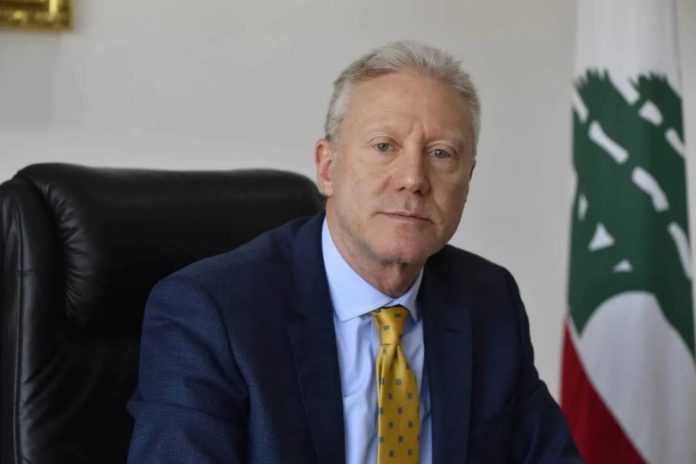
Lebanese president meets UN delegation in Beirut, urges pressing Israel to enforce ceasefire

Lebanon War

The delegation expressed support for Lebanon’s stability through the implementation of UN resolutions and conveyed their countries’ readiness to help strengthen the Lebanese army, including its full deployment in southern Lebanon and the principle that arms be held exclusively by the state.

The Lebanese government on Aug. 5 approved a plan — based on a draft proposal presented by US Special Envoy Tom Barrack — to place all weapons, including those held by Hezbollah, under state control and tasked the army with implementing it by the end of 2025.

Hezbollah has repeatedly rejected the move and insists that Israeli forces must fully withdraw from Lebanese territory before any disarmament.

The delegation also welcomed Lebanon’s decision to include a civil official in the Mechanism Committee.

The mechanism was established under the Nov. 27, 2024 ceasefire between Lebanon and Israel and includes Lebanon, France, Israel, the US, and the UN peacekeeping force in southern Lebanon (UNIFIL).

Aoun thanked the envoys for their support and reaffirmed Lebanon’s commitment to implementing international resolutions. He called for broader assistance to enable the Lebanese army to complete its mission, noting ongoing cooperation with UNIFIL and coordination through the mechanism framework.

However, Aoun told the delegation that achieving stability requires pressure on Israel to apply a ceasefire and to withdraw, saying Lebanon “looks forward” to international engagement to secure Israeli compliance.

Later, during a meeting with envoys, Prime Minister Nawaf Salam stressed Lebanon’s need for a supportive international force after the end of UNIFIL’s mandate, to fill any vacuum that may result from its withdrawal and to help reinforce stability in the country’s south, according to a statement from his office.

According to the statement, Salam proposed that such a force could operate under the framework of the UN Truce Supervision Organization, or that in terms of its mission and border-monitoring duties, it could be a small-sized force with a role similar to that of the UN Disengagement Observer Force in the Golan Heights.

The delegation members affirmed their countries’ commitment to supporting Lebanon’s stability by ensuring the full implementation of international resolutions, praising the government’s efforts on reform and strengthening state authority, particularly with regard to restricting weapons to state institutions.

Separately, Lebanese Parliament Speaker Nabih Berri warned during his meeting with the delegation that Israel’s continued attacks would lead to a renewal of the war that Tel Aviv fought with Hezbollah for nearly two years.

Berri said: “It is unacceptable to negotiate under fire.”

He affirmed that stability in the south requires “Israel’s commitment to UN Resolution 1701 and to the ceasefire agreement by ending its daily violations and withdrawing behind the international border.”

Berri stressed that “after the intensified meetings of the Quintet Committee formed under the agreement (the mechanism), Israel is obligated and must immediately cease fire and halt its unilateral war on Lebanon.”

During Foreign Minister Youssef Raggi’s meeting with the delegation, he expressed his appreciation for “the UN and the Security Council’s lasting support for Lebanon, and for the role UNIFIL has played and the sacrifices its soldiers have made over the past years.”

He noted that “discussions are currently underway to find a formula for the post-UNIFIL phase.”

He stressed that “the Lebanese government is moving forward with its decision to assert its authority over all its territory, and that it is the only party responsible for defending Lebanon.”

In response to questions from delegation members regarding Hezbollah’s weapons, the foreign minister affirmed that “the government’s decision to keep all weapons under its authority is not aimed at pleasing any external party, but is a Lebanese interest necessary for building the state and enabling it to exercise control over all its territory.”

The representatives began their visit to Lebanon earlier in the day after arriving from Syria, according to an Anadolu correspondent.

On Wednesday, a rare meeting brought together civilian-led Israeli and Lebanese delegations with the ceasefire monitoring mechanism in Naqoura in southern Lebanon.

Former Lebanese ambassador to Washington, Simon Karam, and senior director for foreign policy of Israel’s National Security Council, Uri Resnick, attended the meeting chaired by US Special Envoy to Lebanon Morgan Ortagus as civilian participants, according to the US Embassy in Lebanon.

Aoun said civilian-led meetings with Israel will resume on Dec. 19 to advance the implementation of a ceasefire agreement between the two sides.

A ceasefire was reached between Tel Aviv and Beirut last year, after more than a year of attacks against the backdrop of the war in the Gaza Strip. More than 4,000 people were killed and 17,000 injured.

At least 335 people have been killed and 973 others wounded in 1,038 Israeli attacks since the ceasefire agreement came into effect in November 2024, according to Lebanon’s Health Ministry.

The Israeli army was supposed to withdraw from southern Lebanon this January under the ceasefire, but instead only partially pulled out and continues to maintain a military presence at five border outposts.

EU leaders fear US ‘betrayal’ on Ukraine peace negotiations: Report

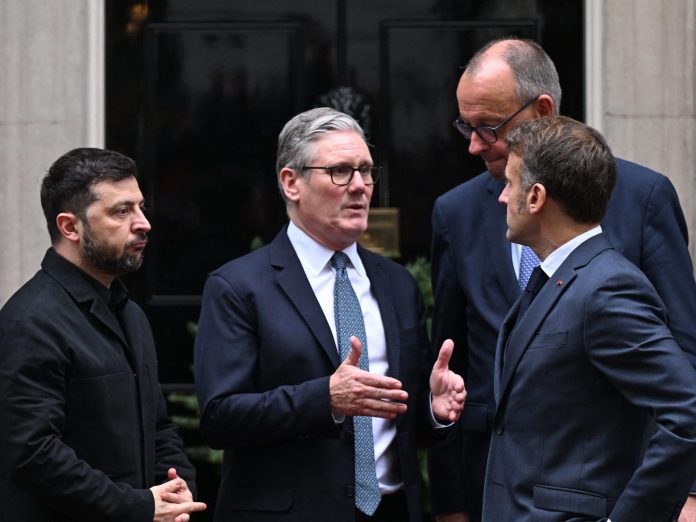
On Monday, French President Emmanuel Macron and German Chancellor Friedrich Merz held a call with Ukraine’s President Volodymyr Zelensky and several other European leaders, including Finnish President Alexander Stubb and European Commission President Ursula von der Leyen.

The call came just a day before US President Donald Trump’s special envoy, Steve Witkoff, and his son-in-law, Jared Kushner, visited Moscow for talks with Russian President Vladimir Putin.

“There is a possibility that the US will betray Ukraine on the issue of territory without clarity regarding security guarantees,” Macron reportedly said during the call. The issue of territories remains one of the most sensitive in the negotiations. The original US-drafted peace plan reportedly required Ukraine to cede parts of Donbass it still controls among other things. The EU outright rejected this condition, insisting that Kiev should not give up any territories.

Macron also stated that continued peace talks could pose a “great danger” for Zelensky personally – an assessment shared by Merz, Stubb, and NATO Secretary General Mark Rutte, who also took part in the conversation, according to Der Spiegel.

EU leaders were also desperate to secure a seat at the negotiating table, the German magazine reported. “Right now we’re out,” Stubb reportedly said during the call, “but we have to get in.”

They had reportedly hoped to arrange a meeting with Witkoff in Brussels on Wednesday, with Merz offering to speak to Trump about it, but the meeting never took place.

Brussels has shut itself out of the peace process by refusing contacts with Moscow, Russian presidential aide Yury Ushakov said on Wednesday. Putin stated this week that the bloc was still living in an illusion about the possibility of Russia’s defeat and had no “peaceful agenda.”

Iran’s former transport ministry adviser sentenced for selling government posts

Mohammad Ghassem Makarem was convicted of abusing his authority and influence to sell managerial posts in exchange for large sums of money.

The court sentenced him to four years and eleven months in prison, two years of dismissal from all public and governmental services, and a two-year travel ban. Makarem is said to have used his position to pressure or remove managers who refused to pay him.

In one instance, he demanded 12 billion tomans from a then-serving manager to secure the official’s continuation in office. After the manager rejected the offer, Makarem reportedly submitted a negative performance report that led to the manager’s dismissal.

The dismissed manager later reported the scheme to intelligence authorities that finally led to Makarem’s arrest.

Following the arrests and issuance of the indictment, the court convicted Makarem as the primary defendant on the charge of attempted bribery.

His intermediary, Reza Daryanavard, received a sentence of two years and eleven months in prison, a financial penalty, dismissal from public service for two years, and a two-year travel ban. After the defendants appealed, the case was reviewed by the Court of Appeal, which upheld the original verdicts in full.

IRGC arrests armed team linked to terrorist group near Tehran

Enayatollah Alipour stated that extensive investigations were initiated by the IRGC intelligence agents in Pardis following the anti-security activities and disruptive operations of this team.

Alipour noted that, thanks to the vigilance of the IRGC intelligence forces in Tehran province, the movements of this group were closely monitored. Ultimately, on Thursday night, under judicial orders and after the prosecutor’s involvement in the case, all field operatives of this group in Pardis were apprehended.

The Pardis prosecutor added that the members of this team had carried out disruptive operations over the past months, attacking more than ten security, military, and governmental centers in Tehran and Alborz provinces.

The arrested individuals had also identified several other targets for future actions and were recently in the process of procuring materials for making homemade bombs when they were apprehended before any destructive acts could be carried out.

IRGC Navy showcases missile capabilities in ongoing Persian Gulf exercise

The drill, named after the martyred IRGC commander Mohammad Nazeri, began on Thursday and marks one of the force’s most extensive exercises in recent years.

According to the media, the second phase of the drill featured the launch of a large number of long-range precision ballistic and cruise missiles.

IRGC Navy units fired Qadr-110, Qadr-380 and Qadir cruise missiles, as well as the 303 ballistic missile, from various inland locations toward pre-designated maritime targets in the Gulf of Oman.

All missiles struck their targets simultaneously and with high accuracy, demonstrating enhanced operational capability and long-range strike readiness.

Iran frequently holds maritime drills in the region, stating that such exercises are necessary for safeguarding national security and ensuring stability along key waterways, including the Strait of Hormuz, against the backdrop of a conflict with the US-Israeli coalition earlier this year.

Iran says US must be held accountable for “crimes against humanity” over unilateral sanctions

Marking December 4 — designated by the United Nations as the International Day of Countering Unilateral Coercive Measures — Esmail Baqaei wrote in a post that the day was proclaimed under UN General Assembly Resolution 79/293.

He added that this date also coincides with the adoption of the Declaration on the Right to Development, on December 4, 1986, pursuant to UN General Assembly Resolution 41/128.

According to Baqaei, unilateral coercive measures — including economic, financial, and banking sanctions — violate fundamental human rights, including the right to development, the right to life, the right to health, and the right to education.

The spokesman stressed that these measures, which target the health and lives of entire populations in affected countries, amount to “crimes against humanity.”

IRGC navy conducts 2nd phase of major drill, launches long-range precision missiles

The large-scale drill, named after the late martyr Mohammad Nazari, commenced on Thursday in the Persian Gulf, around the Naze’at Islands (Abu Musa, Greater Tunb, Lesser Tunb, and Siri Island), the Strait of Hormuz, and the Sea of Oman.
On Friday, during the second phase of the exercise, a significant number of long-range precision ballistic and cruise missiles were fired.

In this phase of the drill, the Qadr 110 and Qadr 380 cruise missiles, along with the Qadir cruise missile and the 303 ballistic missile, successfully destroyed all predetermined targets in the Sea of Oman with high precision from various locations deep within the country.

Simultaneously with the missile launches, drone systems were able to attack simulated enemy bases and successfully destroy them.

Additionally, in this segment of the exercise, air defense systems deployed on vessels conducted heavy countermeasures against aerial targets intending to attack fast boats and the Iranian coast.

The resilience of combat systems and countering enemy electronic warfare in a simulated combat environment are among the primary objectives of this exercise, taking place in the waters of the Persian Gulf, the Strait of Hormuz, and around Iranian islands.