Monday, December 22, 2025
Home Blog Page 2299

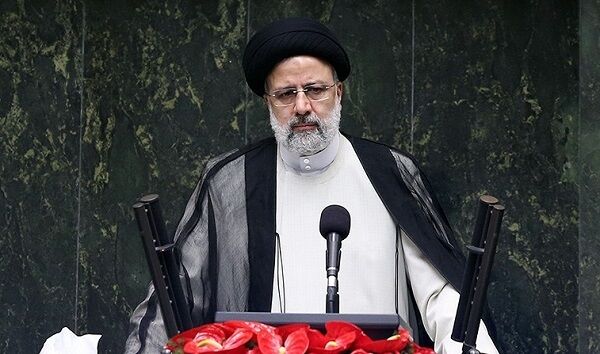
Minister: Iran Oil products’ exports to resume in 2 weeks

He added that oil sales have increased under the current administration and that domestic and foreign capacities have been used to achieve that goal.

Ouji was speaking on Tuesday to journalists after attending a session of the Iranian Parliament’s Economic Commission. In the meeting, he briefed lawmakers on his first 70 days as Iran’s oil minister.

Ouji said he gave a report to the MPS on the sales of crude as well as oil and gas condensates. He said in several days, Iran will resume oil products’ exports.

Ouji noted that the parliamentarians were briefed on future plans of the Oil Ministry, including the development of joint fields, optimization of energy consumption and other issues.

According to the Iranian oil minister, Iran’s 13th government is looking to increase the country’s refinery capacity to 1.4 million tons per day in the next 4 to 5 years.

Commander: Iran’s deterrent power evident at borders

Brigadier General Mohammad Pakpour underlined the unity of the Armed Forces in ensuring the country’s security and said their deterrent might is manifest along the country’s borders.

Speaking at a ceremony in the northeastern city of Mashhad on Tuesday, he described unity and collaboration among the Army, IRGC and Police as a necessary infrastructure of ensuring security in the country.

Thanks to their unity and constructive and sincere cooperation, the manifestations of the Iranian Armed Forces’ deterrent power are evident all over the country’s border areas, he underscored.

The senior commander also hailed the active contribution of residents of border areas in upholding security, which he noted has frightened the counter-revolutionary elements.

Given that the adversaries and counter-revolutionary group lets seek to exploit problems and deprivations in border areas, the IRGC, in addition to efforts to maintain security, has taken effective strides to tackle these problems to ensure sustainable security, he added.

The Iranian Border Police, the IRGC Ground Force, and the Army Ground Force are tasked with protecting Iran’s land borders.

Iranian interior minister urges caution against 6th wave of Covid

He added that Covid-related restrictions will remain in place until all concerns are dispelled. 

Vahidi noted that decision to remove them including the nigh-time driving ban must be taken by the National Covid Taskforce. 

The Iranian interior minister also spoke of the reopening of schools, saying classes will be held both in-person and online. 

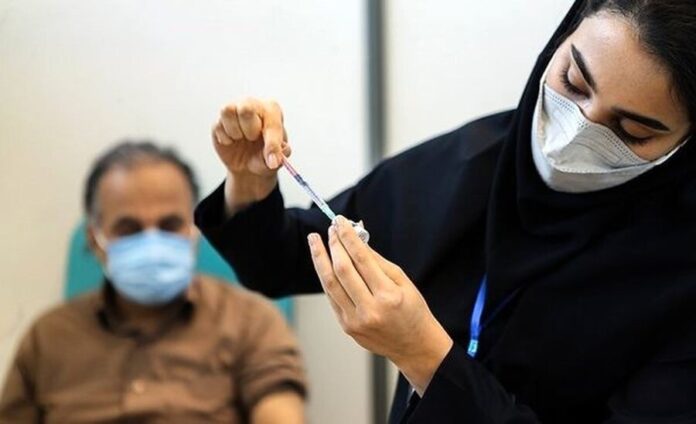
Meanwhile, the Covid vaccination process is continuing in Iran at full speed. According to the Tuesday announcement of the Health Ministry, Iranian healthcare centers administered 1,018,659 doses of vaccine to people over the past 24 hours. So far, 53,102,837 people have received the first dose of Covid vaccine and 36,054,893 have been fully inoculated. 

Some 100 thousand people have also received the booster shot, the third dose of Covid vaccine. 

Despite the accelerating vaccination campaign, Covid is still taking a toll of people in Iran. The disease has killed 160 more Iranians over the past 24 hours. The fatalities push the number of those killed so far since the start of the Pandemic to 126,616. 

The daily death toll now is way lower than that during the heyday of the fifth wave of Covid in Iran when around 700 died in a single day. The downward trend in Covid deaths, infections and hospitalizations has held over the past couple of months thanks to the vaccination process.

Iranian FM: Negotiations must produce tangible results

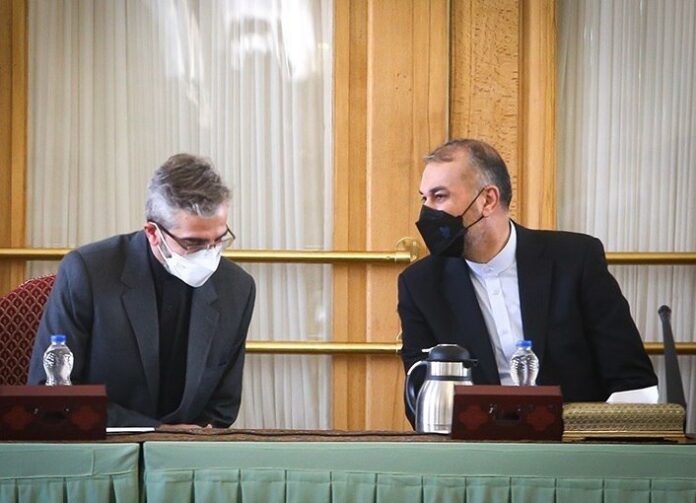
In a tweet, Amir Abdollahian who is doing work in  quarantine due to infection with coronavirus, said Iran is not after talks just for the sake of talking and. 

The top Iranian diplomat reiterated any negotiations must produce tangible results based on mutual respect and interests.

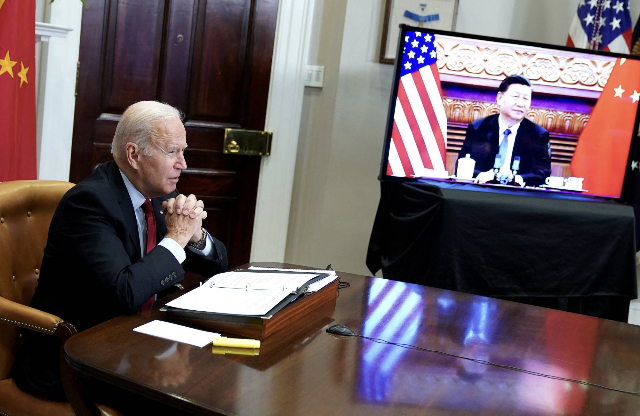
Amir Abdollahian said Iran is closely examining US President Joe Biden’s behavior.

Referring to the recent US sanctions against Iran, the chief of Iran’s diplomacy added the White House claims it wants talks with Iran and intends to return to the Iran nuclear deal, JCPOA, and at the same time imposes new sanctions on Iranian individuals and entities. 

The US Treasury imposed sanctions on a number of Iranian nationals and companies several days ago. 

This drew condemnation from the Islamic Republic. 

Iran says it’s hypocritical of Washington to ask for talks with Tehran and impose new bans on the country. 

Iran has however noted that it will not give in to pressures over its nuclear energy program.

Tehran says talks over possible returning of the US to the JCPOA will resume by November’s end in Vienna.

Analyst: Saudis don’t know what to do with Iran influence in Lebanon

A televised remark by a game show host turned Cabinet minister in Lebanon about the war in Yemen has taken the country’s crisis with Saudi Arabia to new depths.

Anger over George Kordahi’s comments led to steps by Gulf Arab countries that further isolate Lebanon and threaten to split its new coalition government, tasked with halting the country’s economic meltdown.

Punitive measures from Saudi Arabia, once an important ally that poured millions of dollars into Lebanon, could cause more economic pain. The kingdom has banned all Lebanese imports, a major blow to a country whose main trading partners are in the Persian Gulf.

It is the latest escalation in the rivalry that has long played out in Lebanon between Saudi Arabia and Iran. Tensions have dragged on for years over the dominant role in Lebanon of the Iranian-backed group Hezbollah.

Now Saudi officials insist it is pointless to deal with the government in Beirut after so much drift toward Iran.

But what is really behind Saudi’s angry response, and what does it mean for the already embattled Lebanon?

WHAT WAS THE SPARK?

The immediate spark was comments by Kordahi, who had gained popularity in the Arab world for hosting “Who Wants to Be a Millionaire” on a Saudi-owned TV network.

During a mock parliament streamed online last week, Kordahi fielded questions from an audience of young people from the region. In one answer, he called the war in Yemen “absurd” and said the Iran-backed Houthi rebels have attacked no one and have the right to defend themselves.

The online program was recorded about a month before Kordahi was named information minister in the government of Prime Minister Najib Mikati, formed in September. Kordahi was named by a mainly Christian party allied to Hezbollah.

Saudi officials blasted his remarks as “offensive” and biased toward the Houthis. 

Yemen has been mired in a war since late 2014. The protracted conflict in Yemen has claimed the lives of more than 230,000 people, displaced an estimated 4 million, and left 80 percent of the country’s 29 million citizens in need of aid.

The UN has called this situation “the world’s worst humanitarian crisis”, as heavy artillery and air strikes have hurt access to medical care and put pressure on those few remaining facilities.

Most commentators have stated they believe Kordahi’s comments were a pretext for the Saudis to vent their frustration at Iran’s influence in Lebanon.

WHAT DO THE SAUDIS WANT?

The Saudis know what they don’t want — growing Iranian influence in Lebanon — but they don’t know what to do about it, said Joseph Bahout, research director at the American University of Beirut.

Saudi Arabia has long been a close ally of politicians in Lebanon’s Sunni Muslim community, which chooses the prime minister under the country’s sectarian system. But the kingdom never forged the divided community into a strong political proxy the way the Shiite Hezbollah — with its powerful armed force — became Iran’s stalwart ally in Lebanon.

Particularly since the 2005 assassination of its most powerful ally, former Prime Minister Rafik Hariri, the kingdom lost its tools of influence.

Under Crown Prince Mohammed bin Salman — known for his assertive, some say brash, foreign policy — Saudi Arabia took sporadic action trying to impose its will but failed to develop a cohesive strategy or find new well-rooted allies. It could only watch as Hezbollah and its allies came to dominate most recent Lebanese governments.

Saudi Arabia’s most drastic move came in 2017, when it forced then-Prime Minister Saad Hariri to announce his resignation, citing Hezbollah’s domination, in a televised statement from a brief visit to the kingdom, where he was apparently held against his will.

The incident backfired. Hariri returned home and revoked his resignation, supported by Hezbollah and its allies. He lost Saudi backing.

Relations have been chilly since. Last spring, Saudi authorities banned imports of all Lebanese produce over allegations they were used for drug smuggling.

Most recently, Riyadh refused to back Mikati as prime minister because of his coalition with Hezbollah. The Saudis found themselves alone when Washington and Paris expressed support for Mikati, after Lebanon had been without a government for over a year.

Frustrated, the Saudis appear to have gone for a strong move over Kordahi’s comments. Saudi Arabia, as well as the United Arab Emirates, Kuwait and Bahrain, withdrew their ambassadors from Lebanon and expelled Lebanese envoys to the kingdom.

IMPACT ON LEBANON

The Saudi measures are a huge blow to Mikati’s new government.

The import ban means the loss of millions of dollars in desperately needed foreign currency. Any further escalation could undermine jobs of more than 350,000 Lebanese in Gulf Arab states who send home millions in remittances.

Mikati and other officials have appealed to Kordahi to resign from the Cabinet, but it’s uncertain that would resolve the rift.

Hezbollah has stood firmly behind the minister, stressing his resignation won’t resolve what they called “extortion” to force Lebanon to change its foreign policy.

It all portends more internal divisions in a government already paralyzed over the investigation into last year’s massive Beirut port explosion that killed more than 200 people.

Hezbollah has demanded the chief investigating judge’s removal. A recent burst of street violence, the worst in years, raised the specter of social tensions ahead of crucial parliamentary elections in March that are expected to be a test for Hezbollah and its allies.

In a WhatsApp message to his Cabinet read on local TV stations, Mikati noted the country is “at the edge of a precipice.”

He flew to Glasgow to seek French and U.S. mediation but his options are limited.

“We know they are upset. We know that they don’t want a government with Hezbollah as strong,” Bahout said of the Saudis.

“We know that they know that we can’t have a government without Hezbollah,” he continued, adding, “It is kind of a completely blocked and stalemated situation,” he added.

Blasts, gunfire rock Kabul; dozens killed and wounded

At least 20 people were killed and 50 others injured in an attack on a military hospital in Kabul on Tuesday, the latest assault to rock Afghanistan since the Taliban seized power.

Two blasts struck close to the entrance of the sprawling site followed by reports of shooting inside the hospital, the Taliban and a witness said.

“Nineteen dead bodies and about 50 wounded people have been taken to hospitals in Kabul,” a health ministry official who asked not to be named told AFP.

The Taliban spent 20 years waging an insurgency against the ousted US-backed government.

Now they face the struggle of bringing stability to Afghanistan, which has been hit in recent weeks by a series of bloody assaults by the Islamic State group’s local chapter.

Tuesday’s attack has not yet been claimed by any group.

“I am inside the hospital. I heard a big explosion coming from the first checkpoint. We were told to go to safe rooms. I also hear guns firing,” a doctor at the Sardar Mohammad Daud Khan hospital in Kabul told AFP.

“I can still hear gun firing inside the hospital building. I think the attackers are going from room to room… like the first time it was attacked,” the doctor added.

The hospital, which treats wounded soldiers from both the Taliban and former Afghan security forces, was previously attacked in 2017, when gunmen disguised as medical personnel killed at least 30 people in an hours-long siege.

A Taliban media spokesman confirmed two explosions hit the hospital area on Tuesday.

“One explosion has happened at the gate of the military hospital and a second somewhere near the hospital, this is our initial information, we will provide more details later,” he told AFP.

Qari Saeed Khosty, a spokesman for the interior ministry, stated Taliban special forces had rushed to the scene to secure the area after “a bomb” exploded.

AFP journalists heard a second blast followed by gunfire.

Ambulances speeding through Kabul.

IS have claimed four mass casualty attacks since the Taliban takeover on August 15, including suicide bomb blasts targeting Shiite Muslim mosques.

In the 2017 attack on the military hospital, militants went room to room killing people, switching to knives when they ran out of ammunition.

That attack was claimed by the Islamic State group, and the Taliban denied responsibility.

However, survivors told AFP that the attackers chanted “Long live Taliban” in Pashto and attacked all but two wards on the hospital’s first floor where Taliban patients were admitted.

An Italian NGO which runs a separate hospital in the capital tweeted on Tuesday that it has received nine patients with injuries from the blast site.

Pictures shared on social media showed black smoke billowing into the air after the explosions, the first of which went off at around 1:00 pm (0830 GMT).

AFP journalists saw Taliban fighters racing to the scene in at two armoured personnel carriers (APCs) and pick-up trucks.

Roads close to the heavily fortified “Green Zone” where the buildings of several former Western embassies are located were closed off to traffic and Taliban guards scaled up searches.

Sirens could be heard in the streets and ambulances were seen speeding towards the blast site, and two helicopters circled above the city throughout the afternoon.

Ex-Afghan VP: US envoy lobbying for Taliban

Saleh has urged the former leader of the country, Ashraf Ghani, to release the records of conversations with Khalilzad about the peace process.

Saleh wrote on Twitter that Khalilzad allegedly “smilingly lobbying” for the Taliban movement and the Haqqani Network.

The former vice president has accused Khalilzad of concealing “secret annexes” to the Doha agreement, which the US signed with the Taliban in 2020.

“I call on Ashraf Ghani to release the tapes (esp Jul/Aug) of the conversations with Khalilzad & other relevant foreign diplomats on peace process to counter the growing propaganda that it was & is all the Afghan fault. I know these tapes exist & hope you have them,” Saleh tweeted.

In July and August, Khalilzad participated in negotiations in various formats on the situation in Afghanistan. In particular, he called on the Taliban to stop their offensive in the country.

The Taliban intensified its offensive against Afghan government forces a month ago and entered Kabul on 15 August. On 31 August, the US military left the Kabul airport, bringing an end to the nearly twenty-year American military presence in Afghanistan.

On 7 September, the Taliban announced the composition of the interim government of Afghanistan. It is headed by Mohammad Hasan Akhund, who served as a foreign minister during the first Taliban rule. Akhund has been under UN sanctions since 2001.

Saleh had declared himself acting president after the Taliban takeover.

Colorful autumn along fantastic Poumel-to-Khalkhal road

Another such road, with captivating sights, is the one that links Pounel to Kahkhal. Pounel is a village in the  county of Rezvanshahr in Gilan province and is 75 kilometers (almost an hour’s drive) away from Khalkhal in the southern part of Ardebil province. 

The road is among the most beautiful tourist routes in Iran and boasts mountains covered with thick forests and green ranges. 

This is given a fantastic touch by the foggy mountainous atmosphere, which is a famous feature of highlands in northern Iran.

Palestine PM: Israeli settlements major environment danger

The Prime Minister stated, “Israel’s colonial measures that target land, trees, and water resources call for an immediate cessation of these attacks.”

“Around 2.5 million trees have been uprooted since 1967,” he added.

“Additionally, Israel annually steals 600 million cubic meters from Palestine’s water reservoirs, has been exhausting the resources of the Dead Sea, which threatens to dry it up, and restricting Palestine’s access to its shores,” noted the Prime Minister.

Additionally, the Prime Minister clarified that Palestine was among the leading countries to prepare its national plan for climate adaptation.

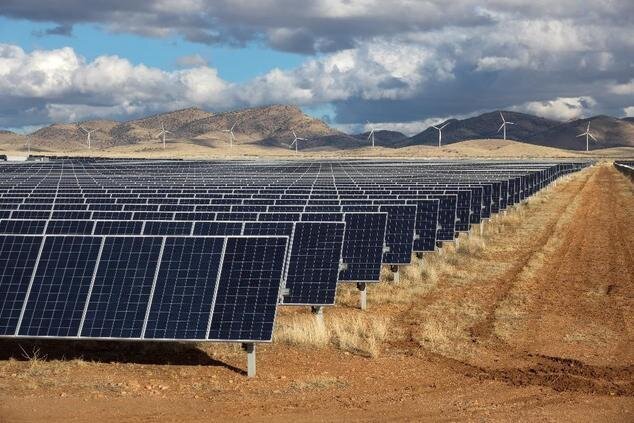
“Ten years ago, we adopted the Greening of Palestine Program, planted thousands of trees, and set programs to generate energy from solid waste and solar energy,” he continued.

In conclusion, the Prime Minister announced, “In cooperation with our international partners, Palestinians are making a great effort in wastewater treatment and renewable energy. For this to succeed, the Palestinian people must control their land and water along with their national and natural resources.”

‘Israeli delegation visits Sudan after military coup’

An Israeli delegation has visited Khartoum and met Sudanese leaders, including deposed Prime Minister Abdullah Hamdok, Israeli sources revealed.

Members of the Israeli delegation met with the different sides involved in the coup in an attempt to mediate a reconciliation among them.

According to Walla, the delegation likely included representatives from Mossad spy agency, pointing out that they met with Abdel Rahim Hamdan Dagalo, who is believed to hold the most power in the country.

Dagalo was part of the Sudanese military delegation which visited Israel several weeks earlier, meeting with members of the National Security Council and other officials in the Israeli Prime Minister’s Office, the Times of Israel reported.

Last week, the military in Sudan dissolved the transitional government and detained Hamdok, numerous other officials have also been detained or are uncontactable. A state of emergency has been declared in what the Sudanese have called a coup against the revolution.

While much of the Arab and Western world leaders have condemned the coup, Israel has remained silent.