Thursday, December 25, 2025
Home Blog Page 2262

Ex-fighters say US-backed Kurds releasing prisoners for money

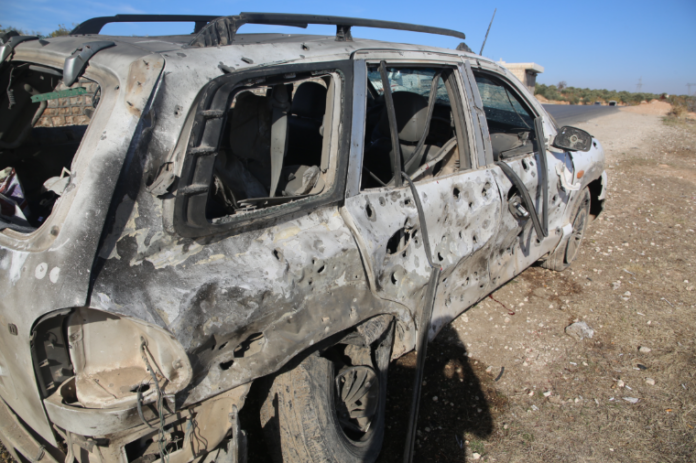
According to a report in the Guardian newspaper, former Daesh fighters, who fought for the militant group until it was defeated in 2019, secured their freedom from the Syrian al-Hawl prison facility through the scheme.

Currently, three SDF-controlled jails in northeast Syria are thought to hold around 8,000 Iraqi and Syrian individuals who are accused of fighting for Daesh, as well as 2,000 foreigners who are waiting to be deported back to their home nations.

The ex-Daesh militants claimed that at least 10 people, to their knowledge, have bought their freedom through what’s been reportedly dubbed a ‘reconciliation’ scheme. The two men provided the British-based newspaper with documentation to back up their claims, as well as testimony of how they’d been released from detention.

One individual, Abu Jafar, who claims he was released after his family sold some property, stated he paid $8,000 as a fine, as well as a further $22,000 in bribes to SDF officials. Similarly, Abu Muhammad, who says he fought alongside Daesh on the frontline, stated he had paid the $8,000 figure and $14,000 in bribes.

SDF spokesperson Farhad Shami has denied the existence of the scheme, rejecting the documentation seen by the daily and noting that no payment has been taken to free former Daesh fighters. However, Shami did accept that some individuals, who worked in “IS-run offices or were forced to join IS” were freed if their “hands were not stained by blood”. However, he added anyone released is “monitored by security forces” to ensure they don’t seek to rejoin or aid the militant group again.

The international anti-IS coalition refused to comment on the reported scheme, stating that the prison facilities are controlled by the SDF.

Covid in Iran: Eight cities still red, 132 killed

Iran's COVID-19 Cases Rise to 530,000: Ministry

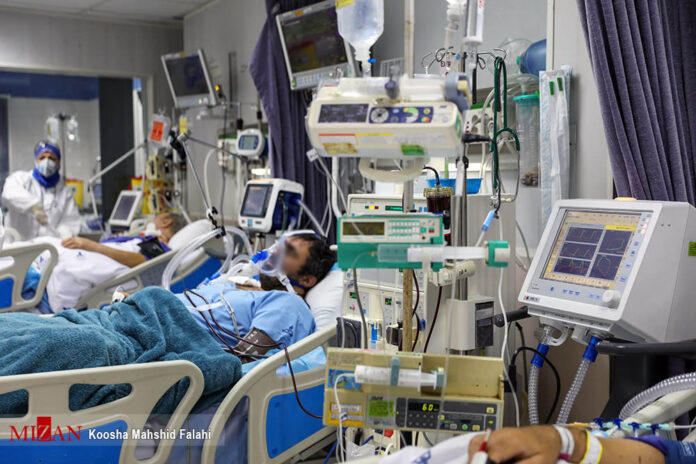
Red zones are areas facing the highest risk from the Coronavirus. Meanwhile, 58 cities across Iran are orange, 236 yellow and 146 blue with the latter showing the lowest level of risk.

So far, 56,944,774 people have received the first dose of the vaccine while the number of those who have been given the second shot is 45,382,073.

Hundreds of thousands have been given the third dose, known as the booster shot. Their exact number is 833,605.

Unlike the number of red cities which saw a significant decrease, Covid deaths have jumped by over two dozens compared to Monday.

132 people died of Covid in the past 24 hours, pushing the total number of fatalities since the pandemic started to 129,185. Yesterday, the deaths became 2-digit for the first time in 234 days.

Meantime 5,144 new infections have been logged since Monday with 762 people being hospitalized.

Since the Covid outbreak began in Iran, 6,088,009 people have contracted the disease. Of that figure, 8,807,089 people recovered from the Coronavirus.
Authorities say people should be careful because another wave of the pandemic is still a possibility.

Iran police bust illegal crypto trade network

The network was engaged in the sales of Darik Cryptocurrency, which is illegal in Iran. 

The economic security branch of the police traced the group’s members and arrested the main figures, with the coordination of the Special Prosecutor’s Office for Economic Crimes.

The police said a sum of 1,500 billion rials, roughly more than 6 million dollars, of buyers’ money was discovered in the defendants’ bank accounts and was blocked to prevent their transfer abroad.

The money belongs to 1,715 people, who had tried to purchase Darik Cryptocurrency from the network.

The police called on the people to avoid such deals saying that Cryptocurrencies’ trade is illegal in Iran and they could lose their money. 

The force also called on the people to report any suspicious case to the authorities.

Saudi-led coalition pounds Yemen’s Sanaa

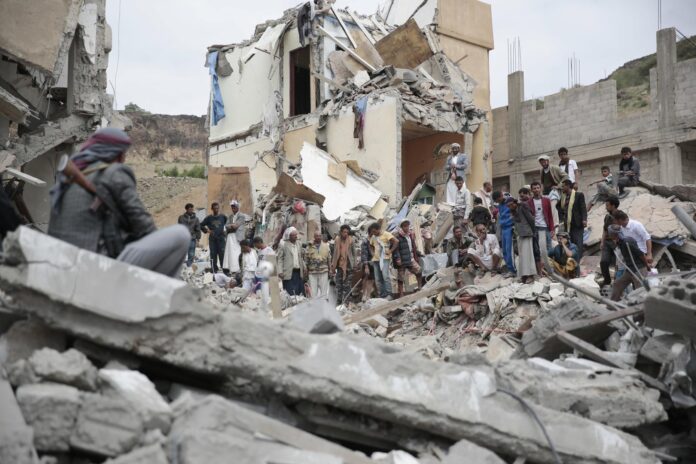
Violent explosions have rocked the northern neighborhoods of Sanaa hours after the Saudi-led military coalition announced it was launching airstrikes on “legitimate” Houthi military targets in the Yemeni capital.

The raids targeted two military sites, residents told Reuters.

Houthi-run Al Masirah TV confirmed the attacks that took place early on Tuesday, reporting at least three raids have struck parts of Sanaa.

One attack resulted in a fire breaking out in a plastics factory, while the other attacks have damaged several residential homes, according to the Al Masirah TV report.

There have been no immediate reports of deaths or injuries.

Saudi Arabia, backed by the US and regional allies, launched the war on Yemen in March 2015, with the goal of bringing the government of former Yemeni President Abd Rabbuh Mansur Hadi back to power and crushing popular Ansarullah resistance movement.

The war has left hundreds of thousands of Yemenis dead, and displaced millions more. According to the United Nations Office for the Coordination of Humanitarian Affairs, the conflict has killed more than 233,000 people.

The conflict has also destroyed Yemen’s infrastructure and spread famine and infectious diseases. The World Health Organization (WHO) has warned more than 16 million Yemenis are food insecure. The body has also estimated 75 percent of Yemeni children suffer from acute malnutrition.

Yemeni armed forces and allied Popular Committees have grown steadily in strength against the Saudi-led invaders, and left Riyadh and its allies bogged down in the country.

Raisi calls for enhanced trade cooperation with the Netherlands

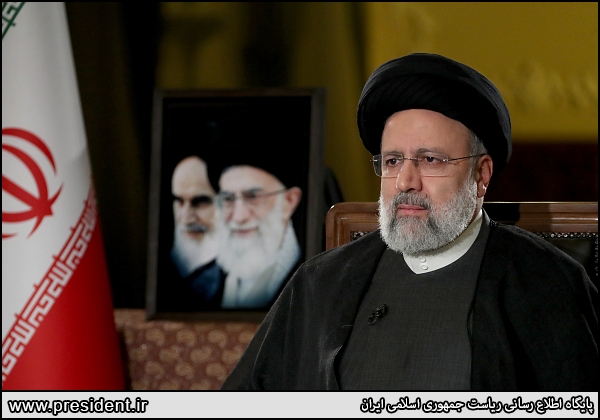
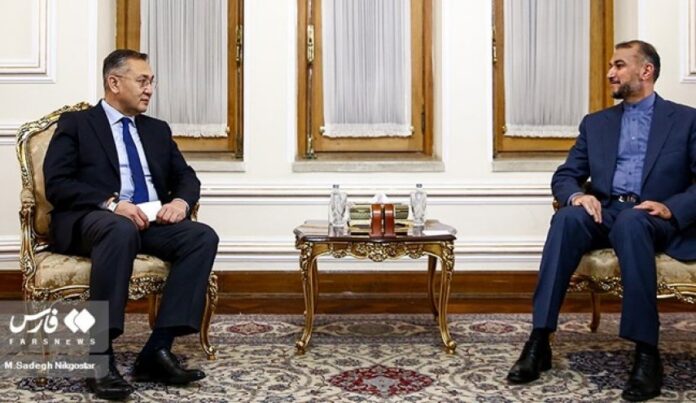
Raisi made the comments during a meeting with the new ambassador of the Netherlands to Tehran.

“Countries with [old] roots, such as the Netherlands, should be independent [in political terms] and should not be affected by the views of the hegemonic powers,” Raisi said.

The president also touched on the fact that the Netherlands hosts hundreds of mosques, underlining the significance of respect for the rights of Muslims in Europe as a key cultural step forward.

“Today, the hegemonic system is using human rights as an excuse to exert pressure on developing countries. This is while, in line with our religious and revolutionary teachings, we consider it a duty to respect the rights of human beings, adding that a case in point is Iran hosting 4 million Afghan refugees,” Raisi said.

The ambassador, Frank Mollen, in turn conveyed his government’s warm greetings to the Iranian president.

“The relations between Iran and the Netherlands goes back to 400 years ago and Iran has always been an important trade destination for us,” Mollen said. 

Iran is a powerful country in the region and there are great opportunities for trade and investment between the two countries”.

He also touched on the situation in Afghanistan and thanked Iran for hosting “a large population of Afghan migrants.”

Iran atomic chief: IAEA has found no diversion

“Grossi stated several times in talks today that he has not seen any diversion in Iran’s nuclear program, and that Iran’s nuclear activities are ongoing based on treaties,” Mohammad Eslami said in a joint press conference with IAEA chief Rafael Grossi in Tehran after their talks on Tuesday .

Eslami said the important point is that all issues between Iran and the IAEA are technical, and the international agency’s work will not be affected by political issues, and the conspiracies of Iran’s enemies.

Eslami clarified that Iran has answered the agency’s questions about certain documents which were provided to the IAEA by the enemies and that the case of some of these documents has now been closed and the two sides will address the outstanding cases.

The Iranian nuclear chief noted that Iran is determined to advance its nuclear program adding Tehran and the IAEA have agreed that the agency would assist Iran in nuclear matters related to the lives of the people.

Grossi said during the press conference that Tehran and the IAEA are working together on transparency and will continue doing so.

Today’s talks and work were intensive and we want to find common grounds, he added.

Iraq launches nationwide military operation against Daesh

A statement by the Defense Ministry’s Joint Operations Command said the operation aims to kill Daesh militants and destroy their hideouts across the country.

It added the offensive is supported by the Iraqi Air Force and the US-led international coalition against Daesh.

In 2017, Iraq declared victory over Daesh by reclaiming all territories the terrorist group controlled since the summer of 2014, which was estimated to be about a third of the country’s territory.

The group, however, still maintains sleeper cells in large areas in Iraq and occasionally launches sporadic attacks.

Iranian Photographer Wins WMS Winter Sports Award

Babaei’s work won one of the four photo series awards of the WMS for his stories on the Iranian women’s ice hockey national team, during their training last year for the Asian Challenge Cup.

The photo series was first published by Iran’s official news agency IRNA in September 2021. 

It will be put on public display on the sidelines of Beijing Winter Olympics 2022 in the Chinese capital. 

Babaei is a university professor with more than two decades of experience in photo journalism. He has covered such events as the 2018 World Wrestling Championships in Budapest and the FIFA World Cup 2018 in Russia among others.

EU diplomats denounce Israeli settlement policy in WB

The diplomats visited several areas in the West Bank and those near East Jerusalem, following a recent announcement by the Israeli government to advance major settlement plans in the areas.

The visit was organized by the Israeli NGO Ir Amim, which briefed the diplomats about the extremely worrying consequences of the settlement plans for Givat Hamatos, Har Homa, E1 and Qalandia/Atarot.

During the visit, the diplomats stated that “settlements are illegal under international law and significantly undermine ongoing efforts to rebuild trust” between Israel and Palestine, and that their countries “will not recognize any changes to the pre-1967 borders, including with regard to Jerusalem, other than those agreed by the parties.”

Also on Monday, the Office of the EU Representative for the West Bank and Gaza Strip published a press release, in which it quoted EU Representative in Palestine Sven Kuhn von Burgsdorff as saying, “the recent approvals of thousands of housing units for Israeli settlers aim at disconnecting the Palestinians from their city and changing East Jerusalem’s identity.”

“Israeli settlements are in clear violation of international law and constitute a major obstacle to a just, last and comprehensive peace between Israelis and Palestinians,” Burgsdorff added.

In October, Israel’s Higher Planning Council approved the advancement of plans to build 2,860 new housing units in 30 settlements in occupied Palestinian territories, according to local media reports.

Part of the plans received final approval for validation, while others will be submitted for final approval at a later stage, the reports said.

The Jerusalem District Planning and Building Committee will hold a hearing on Dec. 6 to discuss the construction of 9,000 housing units in the Israeli settlement of Atarot in East Jerusalem.

In the June 1967 Middle East war, Israel occupied the West Bank and East Jerusalem, which are claimed by the Palestinians, and has controlled them ever since.

Since then, the Palestinians have been seeking self-determination in a bid to establish a Palestinian state on the 1967 borders with East Jerusalem as its capital.

US says not to take unilateral steps on Iran nuclear deal

“We’ve been clear – we will not take unilateral steps. Mutual return to compliance is in the interests of the United States, it is in the interests of the P5+1, it is also … in the interests of Iran,” Price stated on Monday.

Tehran has stated Washington should stop demands and remove the illegal sanctions against the country. Iran has stressed the United States should first remove the sanctions before it could return to the landmark agreement.

Iranian Foreign Minister Hossein Amir Abdollahian has recently stressed Tehran will pursue a policy in the upcoming nuclear negotiations that will be aimed at removing the illegal and cruel US sanctions.

In 2015, Iran signed a nuclear deal, known officially as the Joint Comprehensive Plan of Actions (JCPOA), with the P5+1 group, which includes the United States, China, France, Russia, the United Kingdom, Germany and the European Union. It required Tehran to scale back its nuclear program and drastically reduce its uranium reserves in exchange for sanctions relief, including the lifting of an arms embargo five years after the deal was made.

In May 2018, the US abandoned its conciliatory stance, withdrawing from the JCPOA and implementing hardline policies against Iran, prompting the latter to largely discontinue its own obligations under the accord.

Since April, Vienna has been hosting talks aimed at preventing the Iran nuclear deal from failing altogether. The sixth round of the talks finished on June 20 but the negotiations have since hit a deadlock. The negotiations are set to resume on November 29.