
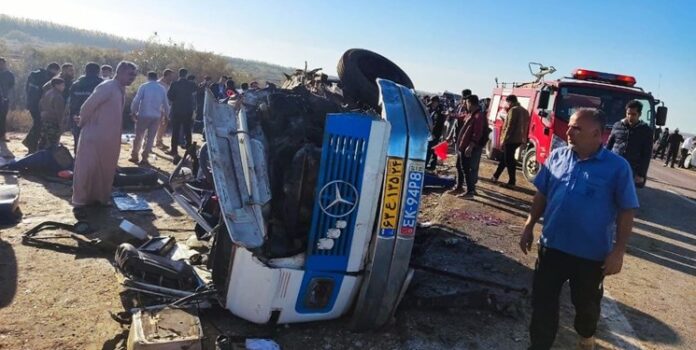
The pile-up involving five vehicles, including a truck and a minibus, occurred early morning on Saturday on the road linking the cities of Ahvaz and Khorramshahr in Khuzestan Province.
The cause of the accident is said to have been the truck sideswiping the minibus.
“The accident happened when a truck carrying cattle hit a minibus transporting workers before another three vehicles collided with the two,” said police.
Pile-up in south Iran leaves 10 dead, several wounded
Iran produces over 10mn doses of Pastokovac vaccine in fall
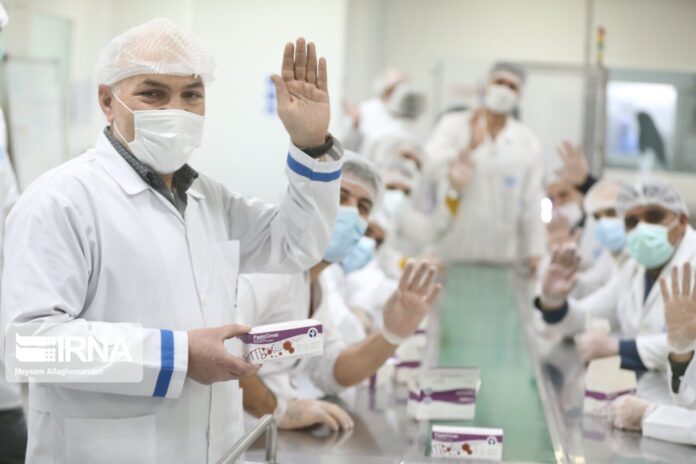
Another 13 million doses of the vaccine will be delivered to the ministry this winter, say officials at the Pasteur Institute of Iran.
“After months of efforts, the Pastokovac vaccine was produced, and people’s trust in the vaccine and their welcoming, it was the reward for our attempts and hardships,” said Alireza Rahimi, the head of the Recombinant Pharmaceuticals Formulation Department of the institute.
“Our colleagues made every effort in order for this product to be made available to our fellow countrymen, i.e., to be offered on the market and injected to the people in the shortest possible time,” he added.
He also stressed that sanctions imposed on Iran have not deterred local researchers from doing their job and developing vaccines.
Iran says not to exceed 60% nuclear enrichment even if talks fail
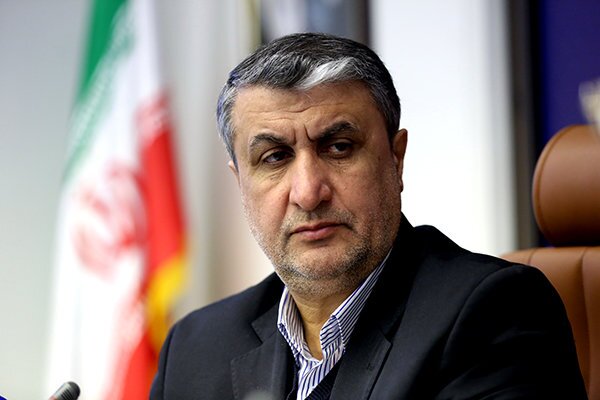
Head of Iran’s Atomic Energy Organization Mohammad Eslami made the remark in an interview with Russia’s Sputnik News Agency.
Iran began the 60% enrichment for the first time in April 2021 after an Israeli sabotage attack on its Natanz nuclear facility.
The Iran Nuclear Deal known as the Joint Comprehensive Plan of Action is in tatters largely because of the U.S unilateral withdrawal from it in May 2018 and its re-imposition of sanctions. In response to the U.S. pullout, Iran rolled back many of its commitments under the JCPOA.
Iran and the P4+1 group namely Russia, China, Britain, France and Germany have held seven rounds of talks this year to find a way to remove sanctions against Tehran and allow the U.S. to return to the agreement.
Negotiators will go back to the Austrian capital on December 27 for an eighth round.
During the interview, Eslami stressed that the Iranian nuclear program aims to meet industrial production needs, as well as the needs of Iranian consumers for certain goods.
“All our nuclear activities are carried out according to the agreements, statutes and regulations of the International Atomic Energy Agency”, Eslami stated.
Eslami also said Iran can domestically produce nuclear fuel and will soon start using it at the Bushehr nuclear power plant in southern Iran.
“Iran can already produce nuclear fuel domestically. We had talks with Rosatom and we hope that as part of our cooperation, based on the plans and contracts we will sign with it, we will be able to do this and start using Iranian fuel in the reactor in Bushehr”, Eslami added.
Iraq’s Najaf governor quits amid protests
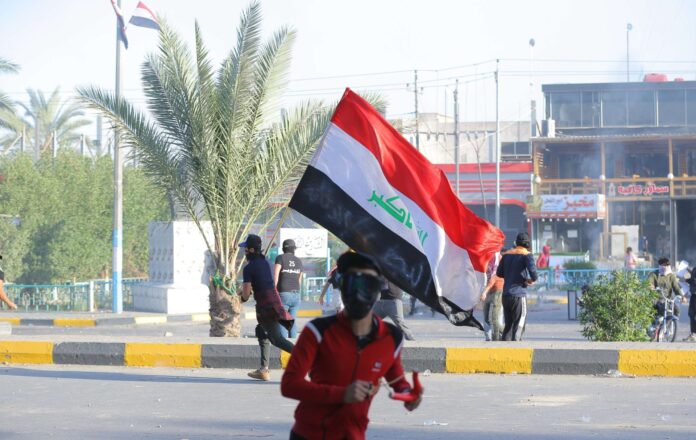
Louai al-Yasseri resigned from his leadership in Najaf, in central Iraq, on Friday after the governor of Nasiriya province in the south quit following the violent suppression of protesters.
Their departures underline the challenges facing war-scarred Iraq and how little has changed despite protests that swept capital Baghdad and the nation’s southern regions two years ago.
Tens of thousands of demonstrators took to the streets to express their anger at corruption, unemployment and crumbling public services, and hundreds lost their lives in protest-related violence.
Al-Yasseri announced at a news conference that he was leaving his post in the holy Shia city, according to the official Iraqi News Agency.
His resignation follows harsh criticism from prominent Shia leader Moqtada al-Sadr, who emerged as kingmaker following legislative elections in October.
Al-Sadr paid a public visit to the municipality in Najaf on Wednesday after “reports of corruption and shortcomings in this institution”, according to the news agency.
“We will work on dismissing the governor of Najaf and replacing him legally,” he noted.
On Friday evening, al-Sadr welcomed the governor’s resignation as a “step in the right direction”.
In the past weeks, sporadic demonstrations have broken out across Najaf and the neighbouring province of Diwaniya, as well as in Nasiriya.
Protesters have decried living conditions and called for job opportunities for young graduates.
Prime Minister Mustafa al-Kadhemi held a security meeting on Wednesday to discuss the protests, where he repeated the need to avoid “the use of force or shoot”.
The following day, the governor of Nasiriya, Ahmed Ghani Khafaji, announced his resignation after protests in which three people were shot and wounded, according to a medical source.
The 2019 demonstrations petered out after bloody crackdowns and the outbreak of the coronavirus pandemic. More than 600 people were killed and tens of thousands injured throughout the protests.
Al-Kadhemi moved the elections forward to October as a concession to the demonstrators. But anger gave way to disillusion and the ballot saw record-low turnout.
The movement of al-Sadr – who once led an armed group against the US and Iraqi government forces – won 73 out of the assembly’s total 329 seats, the election commission said.

Iran FM congratulates Christians on Nativity
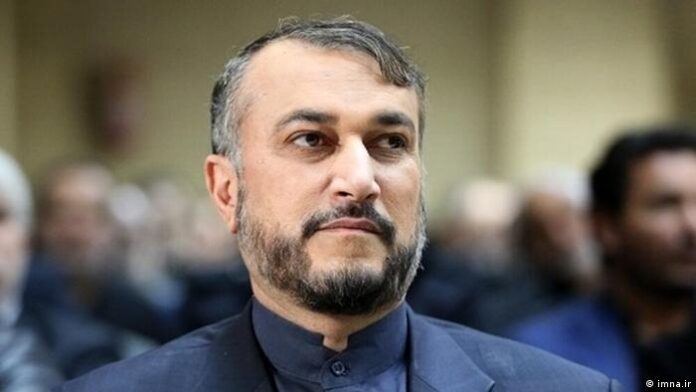
The full text of the message follows:
In the Name of God, the Compassionate, the Merciful
The Angels said, “O Mary, God gives you good tidings of a word from Him. His name is the Messiah, Jesus, son of Mary, well-esteemed in this world and the next, and one of the nearest.” (Verse 45 of Ale-Imran Sura, the Holy Koran)
I congratulate [all Christians], especially my decent and patriotic fellow countrymen, on the anniversary of the birth of Jesus Christ, a prophet of peace and reconciliation, and the flagbearer of kindness and altruism, and on Christmas, which is a period of festivity for Christians all around the world, especially my decent and patriotic Christian fellow countrymen.
Under the current tough circumstances emanating from the coronavirus pandemic, all mankind is, more than ever, in need of friendship and the realization of spiritual messages of divine prophets.
We hope for peaceful coexistence among followers of divine faiths, and the elimination of tyranny, oppression and injustice.
I wish all people around the world, particularly followers of Christianity, a year full of health, happiness and prosperity.
Hossein Amir Abdollahian
Iran says will not exceed 60% uranium enrichment if JCPOA fails
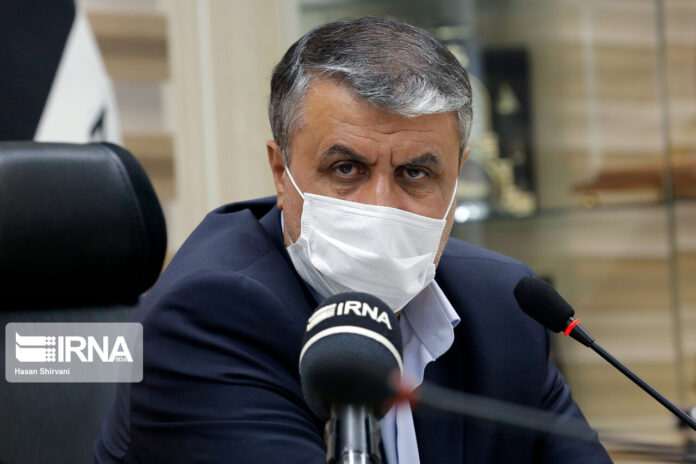
Mohammad Eslami said in an interview with Sputnik “No” when asked whether Iran will exceed 60% uranium enrichment if the parties fail to return to the 2015 Joint Comprehensive Plan of Action (JCPOA).
He stressed that Tehran’s nuclear program aims to support the country’s industrial production needs, as well as the needs of Iranian consumers for certain goods.
“All our nuclear activities are carried out according to the agreements, statutes and regulations of the International Atomic Energy Agency,” the AEOI chief added.
Tehran and the five remaining parties to the JCPOA began the talks in the Austrian capital in April with the aim of removing Washington’s unlawful sanctions after the United States voiced interest to return to the agreement.
During the seventh round of the Vienna talks, first under President Seyed Ebrahim Raisi, Iran submitted two draft proposals to the other parties concerning the removal of sanctions and Tehran’s nuclear commitments.
European Union deputy foreign policy chief Enrique Mora noted on Thursday negotiations between world powers and Iran on salvaging the 2015 nuclear deal will resume in Vienna on Monday.
Iran: Missiles have nothing to do with UNSC resolution 2231
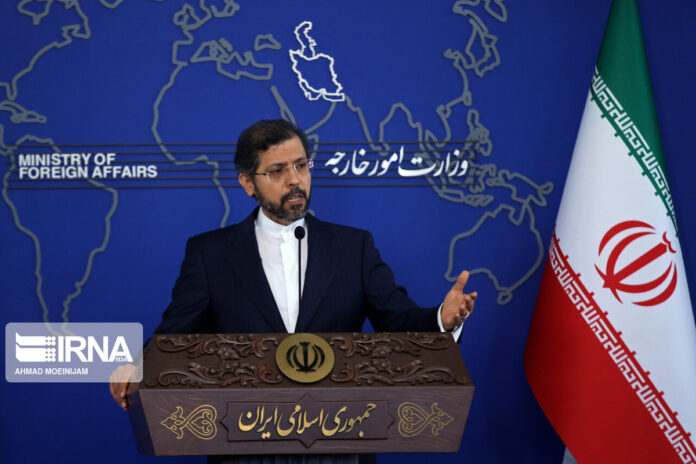
The reaction by Iranian Foreign Ministry Spokesman Saeed Khatibzadeh came after Britain slammed a launch of ballistic missiles by Iran during its military drills on Friday.
“We condemn Iran’s use of ballistic missiles in a test launch confirmed to have been conducted today. The launch is a clear breach of UN Security Council Resolution 2231,” the British Foreign Office said on Friday.
Khatibzadeh stressed that “the British know better than anyone else that Iran’s missile program has nothing to do with UN Security Council Resolution 2231 and its provisions”.
He added that Iran has not had and does not have plans to use its nuclear program for military purposes for which it wants to design its missile program.
Khatibzadeh said the UK is in a never-ending race to sell the most destructive arms to West Asia and other crisis-stricken regions of the world and signs deals such as AUKUS in violation of non-proliferation rules and at the same time it is also concerned about Iran’s routine military exercises.
The Foreign Ministry spokesman slammed Britain’s attempts to portray Iran as a threat to the region, blaming the insatiable appetite of Britain and other European countries to sell large quantities of advanced weapons to some countries for fueling regional instability and insecurity, including the humanitarian catastrophe in Yemen.
The Iranian Foreign Ministry spokesman said that such remarks and stances are not only interference in Iran’s internal affairs, but also show that Britain continues to employ double standards.
Khatibzadeh stressed that Iran acts within the framework of international law and based on its defense needs and that the Islamic Republic does not ask for permission from anyone for its defense program nor does it ever negotiate over its right.
Meanwhile, Iranian Ambassador to Britain Mohsen Baharvand said in response to the British statement that UN Security Council Resolution 2231 only covers missiles designed to carry nuclear weapons, noting that Iranian missiles are not designed to do that, but are designed to defend Iranian territory and give a crushing response to aggressors.
Iran missile drills simulate attack on Israel’s Dimona
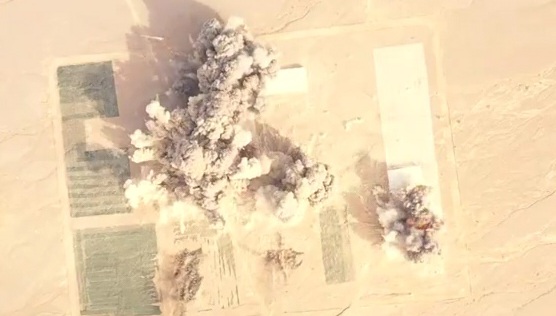
The war games conducted this week by the Islamic Revolution Guards Corps in the Persian Gulf were intended to send a warning to Israel, the country’s top military commanders said on Friday, amid concerns over possible Israeli plans to target Iranian nuclear sites.
That’s according to Iran’s Tasnim News Agency. Meanwhile, images aired by Iran’s national TV showed missiles leveling a building similar to Dimona at the end of the exercises on Friday.
High quality footage of simulated attack on Israel’s Dimona atomic site
One stage of the drills featured the firing of 16 ballistic missiles at hypothetical enemy targets.
IRGC Commander in Chief Major General Hossein Salami said after the exercises that Iran will cut off the hands of enemies if they make a wrong move and that the distance between actual operations and military exercises is only a change in the angle of launching the missiles.
Iran’s ballistic missiles have a range of 2,000 km and the entire occupied Palestine and U.S. bases in the region are within their reach.
Raisi visits family of Christian martyr on eve of Christmas
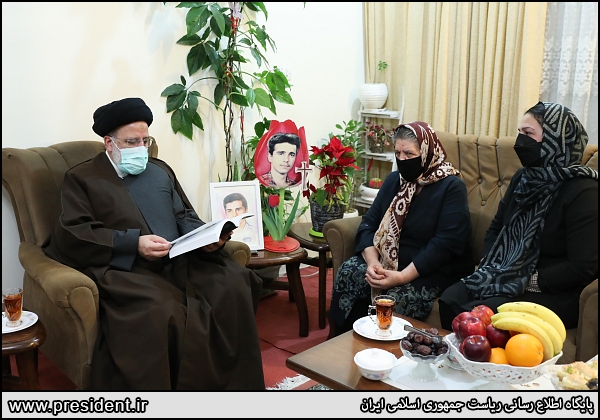
Raisi held a meeting on Friday with members of Martyr Vartan Aghakhanian’s family to offer them congratulations on Christmas.
“The reality of Christianity is no different than that of Islam, and Qur’an offers sublime descriptions of Hazrat Mary (PBUH) and Jesus Christ (PBUH),” said Raisi, expressing hope that all Christians will adhere to the teachings of their prophet.
The martyrs, he said, sent the message that the people of Iran always stand ready to sacrifice their lives in defense of their homeland against any aggression, and that “there is no distinctions among Muslim, Christian or Zoroastrian compatriots on this path.”
“To Iranians, Iran is more precious than anything else and its people are ready to sacrifice their lives for Iran,” he added.
The president described martyrs as a “source of pride for Iran and Iranians” and said, “Anyone who is prepared to sacrifice his life for his compatriots, the nation, and social security is dear and deserves respect.”
Raisi said the Iranian nation owes its independence and security to martyrs.
Aghakhanian was only 20 years old when he was martyred during an operational zone in southwestern Iran.
