Tuesday, April 28, 2026
Home Blog Page 2191

‘Iran won’t tolerate any mistreatment, rights violations in prisons’

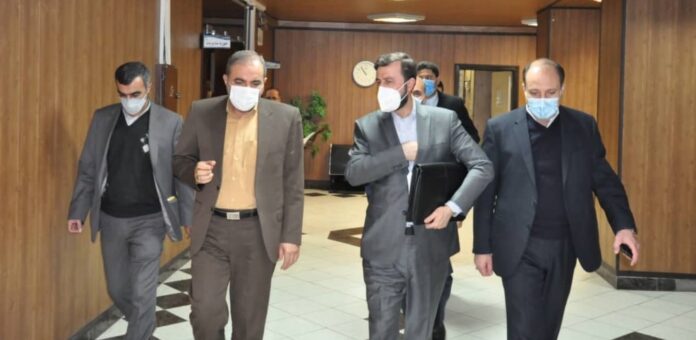
Kazem Gharibabadi, the Iranian Judiciary Chief’s Deputy and Secretary General of the country’s High Council for Human Rights, paid a visit to Evin Prison in Tehran on Wednesday to inspect the conditions under which inmates are serving their terms.

On the sidelines of the visit, Gharibabadi said Iranian prisons have a higher number of recreational facilities compared to detention centers in other countries.

He said the Council under his watch planned to set the stage for more interactions with Iran’s prison authority and international monitoring institutions.
“Our style of running prisons is based on humanitarian principles,” said Gharibabadi. “No one tolerates any mistreatment of the inmates. We do not accept any violations of their rights.”

Gharibabadi highlighted the responsibilities of High Council for Human Rights vis-à-vis the prisoners, saying under the country’s rules, the rights of inmates should be fully respected and they should have their judicial affairs pursued.

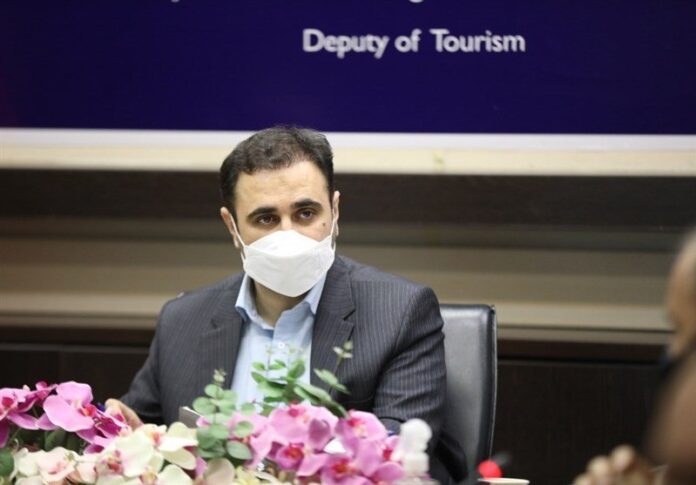
“House for Innovation and Export of Iranian-made Technology” to be launched in Istanbul

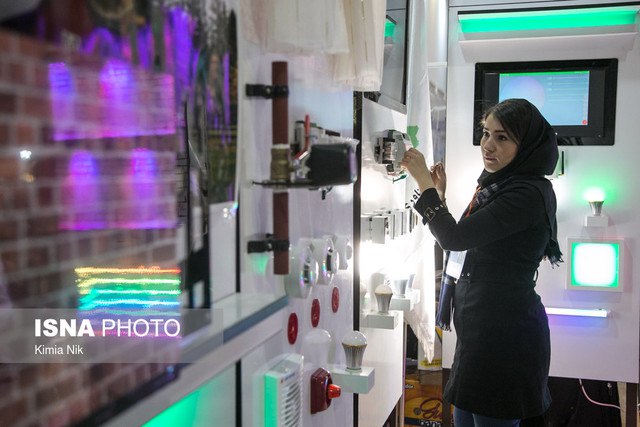
According to Iranian Students News Agency (ISNA), one of the important goals of policies to support knowledge-based and creative companies is to support them to enter the markets of target countries and offer their scientific and technological capabilities and expand their exports. Turkey, given its political and economic relations and historical and cultural commonalities with Iran as well as its convenient location in the Eurasian basin as the gateway to this geographical region, is a suitable market for creating infrastructure and developing the export of products made by Iranian knowledge-based, technological and creative companies.

The house, which is supported by the Vice President’s Office, is the fifth largest export-oriented infrastructure after Russia, Syria, China and Kenya.

It offers hardware services such as “providing private and shared workspace”, “providing Iranian innovation ecosystem in Istanbul” and “gathering and seminar infrastructure”, and providing software services such as “market research and marketing to knowledge-based and creative companies.

In short, the house seeks to facilitate the presence and export of Iranian companies and products to Turkey.

The House for Innovation and Export of Iranian-made Technology in Istanbul has been created with the investment of the private sector and the support of the Vice President’s Office in an area of more than 500 square meters in the best commercial district of Istanbul. It has been built according to international standards.

Iran regains 430 gigabytes of lost Internet bandwidth

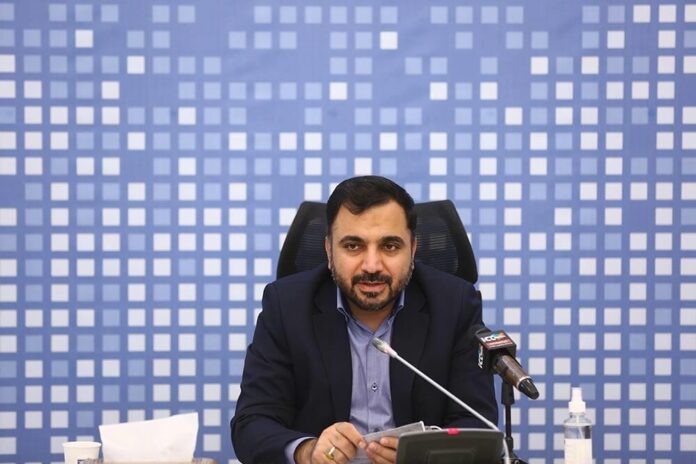
Isa Zarepour said the 430 gigabytes became unavailable some two months ago after one of the marine fiber optic cables to Qatar was cut.

The minister of communications emphasized that this disruption reduced the country’s bandwidth by seven percent, noting that now the good news is that with the relentless efforts of his colleagues in the Infrastructure Communications Company, the breakdown of this offshore fiber optic line has been repaired.

He noted that alternative routes have also been envisaged to prevent the recurrence of a similar incident.

“US, Israel making mischief between Iran, Saudi Arabia”

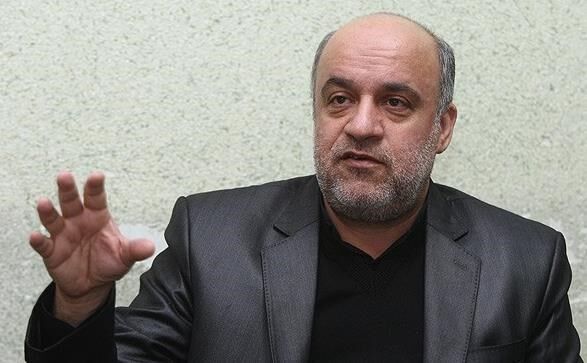
Mojtaba Amani, the former head of Iran’s interest section in Cairo, told IRNA on Wednesday that if Saudi authorities adopt a realistic approach towards Iran, they will be able to see that not only isn’t Iran “a security threat” to them but also cooperation with Tehran can be very advantageous.

“Through cooperation with Iran, they (the Saudis) will be able to do away with many unnecessary costs,” Amani said. “Such costs are not merely financial, but are also spiritual, because Saudi Arabia can have a very elevated position in the Arab world spiritually.”

He said even though Tehran-Riyadh relations have had ups and downs, the Saudi government has been generally inclined to see Iran as a security threat since the Islamic Revolution of 1979 in Iran. That perception, itself the result of wrongful analysis, has prompted Saudi Arabia, which proclaims leadership in the Arab world, to spend financial and political capital to convince other Arab countries to be hostile to Iran.

“If the Saudis change their approach in the region, a good atmosphere will emerge wherein regional countries will co-exist and cooperate peacefully without having to pay unnecessary costs,” he said.

“It would only be natural that, under those conditions, US forces will be of no use in the region, and that’s why America and the Zionists attempt to fan the flames of enmity among regional countries and project a manufactured ‘Iranian security threat’ to Saudi Arabia,” Amani said.

Head of Iranian Border Guard Command visiting Pakistan

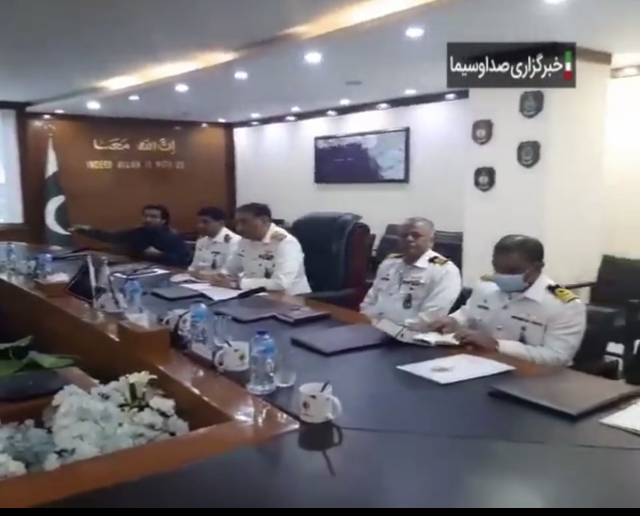
Goudarzi is heading a military delegation during the visit. He’s going to take part in the maritime drill code-named Barracuda XI.

The head of Iran’s Border Guard Command is visiting Pakistan at the invitation of the director general of Pakistan’s naval security agency.

Goudarzi will visit the agency and hold negotiations with Pakistani military officials during his stay there.

The Barracuda XI drills began Tuesday and will continue till Thursday. 19 countries are participating in the exercises.
Iran and Pakistan have strengthened their military relations in recent years.

Iran lifts Omicron-related ban on arrivals from neighbors

The ban had been put in place to prevent an outbreak of the highly contagious Omicron variant in Iran.
The National Task Force for Fighting Covid however said the ban on two European countries, namely Britain and France, and eight African countries will be maintained.

It also said traveling to Iran via ground borders are possible through observation of health protocols, vaccination and presentation of negative PCR test results. Iran has been largely remained unaffected by the Omicron outbreak that has hit much of Europe and the US.

The Islamic Republic has also successfully contained the Covid pandemic, maintaining a downward trend in Coronavirus deaths and infections thanks to a nationwide vaccination campaign that has seen the bulk of its population inoculated against the disease.

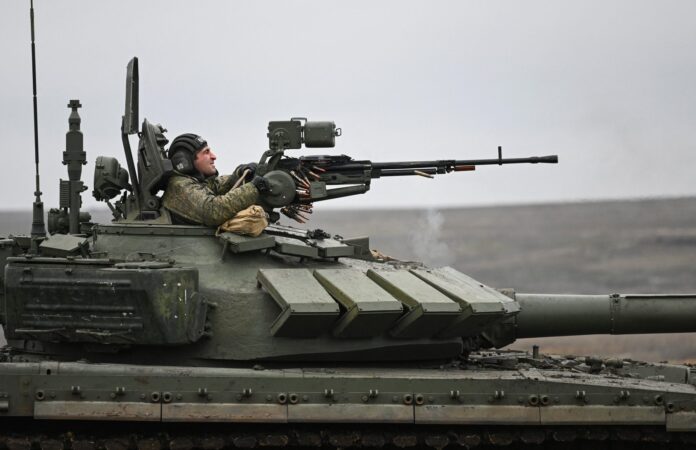
Russia launches military drills near Ukraine border

A day after the US side urged Russia at talks in Geneva to pull back an estimated 100,000 troops from near the border, the defense ministry said about 3,000 servicemen had started combat training including mock battles in four regions of southwestern Russia.

The drills suggested that the Kremlin has no intention of easing the military pressure that has brought the United States to the negotiating table, where Moscow has presented demands for sweeping security guarantees from the West.

Moscow has dismissed months of claims by Western officials and media that it has any plans to “invade” its neighbor, and rejected Western “concerns” about Russian troop movements and exercises inside the country’s own territory.

Kremlin spokesman Dmitry Peskov has said it was positive that Monday’s talks had been held in an open, substantive and direct manner, but that there was no real cause for optimism.

Russia wants quick results, he continued, adding, “There are no clear deadlines here, no one is setting them – there is just the Russian position that we will not be satisfied with the endless dragging out of this process.”

US Under Secretary of State Victoria Nuland told reporters it was “disappointing to hear” the Kremlin found no cause for optimism in the talks, and said Washington wanted the “constructive” exchange of views to continue.

Russia staging live-fire exercises “obviously goes in exactly the opposite direction” of the de-escalation Washington wants to see, Nuland added.

White House Press Secretary Jen Psaki confirmed Tuesday that President Joe Biden has been following the talks with Russia “pretty closely”, and “receives nearly daily, if not daily, updates from his national security team on how the conversations are going, what the talks look like and what the status of those conversations is”.

After the Geneva talks on Monday, Russian Deputy Foreign Minister Sergei Ryabkov stated the two sides had “in some ways opposite views”. He told reporters, “For us it’s absolutely mandatory to make sure that Ukraine never, never, ever becomes a member of NATO”.

US Deputy Secretary of State Wendy Sherman also noted, “We were firm … in pushing back on security proposals that are simply non-starters to the United States”.

NATO has no immediate plans to admit Ukraine, but says Russia cannot dictate its relations with other sovereign states – a stance reaffirmed by Ukraine’s foreign minister on Tuesday.

Biden warned Russian President Vladimir Putin in two conversations last month that any new Russian aggression would trigger severe economic costs in the form of unprecedented sanctions. Putin responded that such moves would be a colossal mistake and lead to a complete rupture in relations.

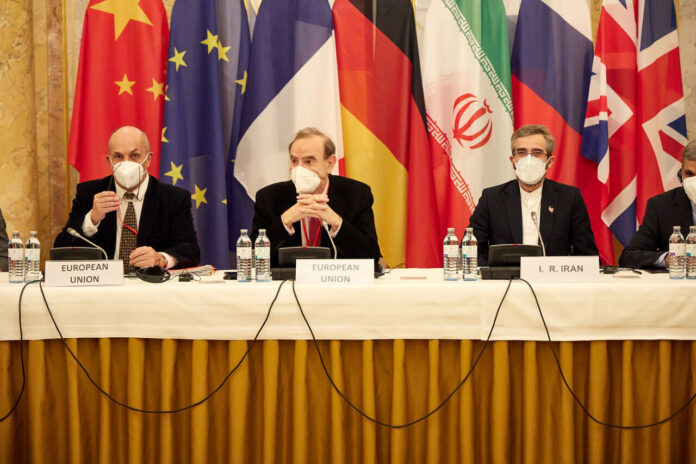
Iran says not seeking interim deal in Vienna talks

Vahid Jalalzadeh, who heads the Parliament’s National Security and Foreign Policy Committee, said on Tuesday that Tehran’s negotiating partners in Vienna were “after an interim agreement as well and have submitted relevant proposals to us in that regard.”

“This is, however, not an ideal for us, but at the same time, we have not rejected that. We are studying it,” he added.

He said the Iranian delegation is, in the first place, tasked with negotiating a permanent agreement that would meet Iran’s interests to a maximum level, but, “whenever the negotiations enter a difficult stage, the other sides keep saying that ‘we cannot achieve results and let’s discuss an interim agreement.’”

This means that each side can accept a certain set of things and reach a temporary deal on the agreed issues before proceeding to other topics, he explained.

On Monday, however, Iran’s Foreign Ministry ruled out an interim agreement with the P4+1 group – Russia, China, France, Britain and Germany- as the sides continue their talks in Vienna aimed at securing a US return to the 2015 nuclear deal and reviving the international document.

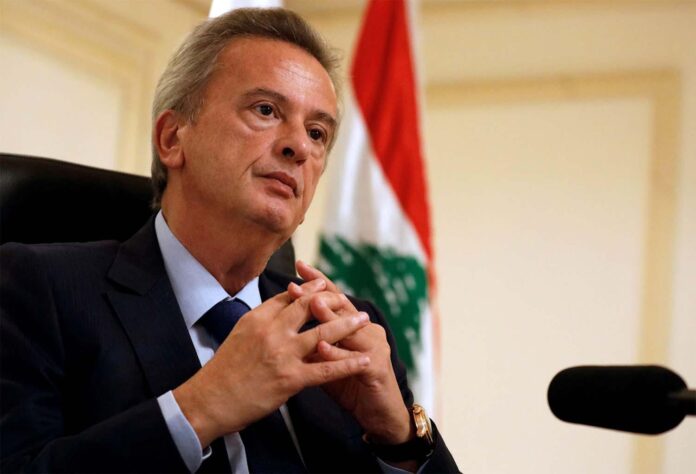
Lebanon central bank chief banned from leaving country

Judge Ghada Aoun slapped a travel ban on Banque du Liban Governor Riad Salameh on Tuesday, as the once-vaunted steward of the country’s economy faces probes for financial misconduct at home and abroad.

“He is scheduled for a questioning on Thursday, based on the clear evidence we have,” Aoun, who has been investigating Salameh, told Al Jazeera.

“There is important information we need to verify in the questioning,” Aoun added.

The judge had questioned senior central bank employees. The ban, which was first reported by Reuters News Agency, took effect immediately.

Lawyers from an activist group called “The People Demand the Reform of the Regime” filed a legal request earlier on Tuesday to impose a travel ban on Salameh.

Haitham Ezzo, one of the lawyers from the group, told Al Jazeera that Salameh is accused of a handful of financial crimes, including illicit enrichment, money laundering, embezzlement, and squandering public funds.

Ezzo added that the lawyers have evidence that Salameh rented a small apartment on the Champs-Élysées in Paris via Lebanon’s central bank, at an inflated price.

“He’s personally profiting from the difference,” Ezzo alleged.

Once heralded for financial prowess, Salameh is held responsible by many in Lebanon for a financial collapse that has left the country’s banks largely insolvent and wiped out the life savings of many Lebanese.

Salameh is under several investigations in Lebanon and four European countries. Switzerland and France last year opened probes into alleged money laundering involving him.

Salameh has repeatedly denied he engaged in any wrongdoing during his nearly three decades at the helm of the Banque du Liban. He says the allegations against him are politically motivated and that his personal wealth was amassed before he became central bank governor.

Tuesday’s travel ban comes as the Lebanese pound continues to spiral, having lost 15 percent of its value over the past few days. It’s lost over 95 percent of its value since the country first plunged into crisis in late 2019. Three-quarters of the population live in poverty, and the government has not met since last October.

Ezzo notes his activist group wants the Lebanese courts to go even further and freeze all of Salameh’s assets. They successfully filed a legal complaint to freeze some of his assets in July 2020.

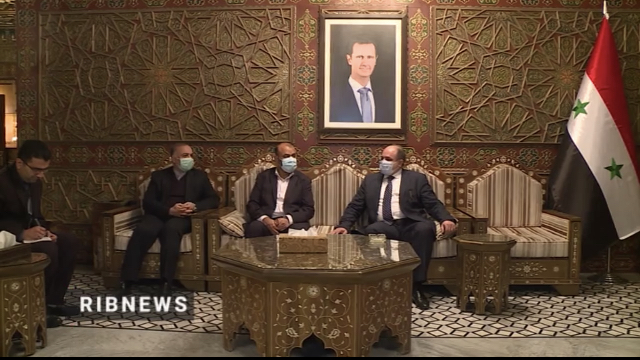
Iranian economic delegation visiting Syria for talks

He added that the end of the Syria war opens a new chapter for economic relations between Tehran and Damascus.

He suggested that these relations will be strong given that Iran and Syria fought terrorism alongside each other during the war.

Qassemi is going to meet with Syrian President Bashar al-Assad and the country’s prime minister as well as foreign and economy ministers during his three-day stay in Syria.

The Syrian economy minister said upon the Iranian delegation’s arrival in Damascus that he hopes the visit will result in agreements over launching economic and trade partnerships between the two countries.