Wednesday, April 29, 2026
Home Blog Page 2189

Biden admin. slams Trump’s Iran nuclear deal exit

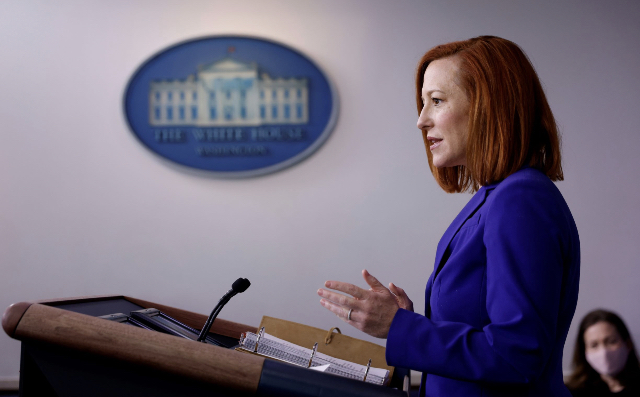
“None of the things we’re looking at now — Iran’s increased capability and capacity, their aggressive actions that they have taken through proxy wars around the world — would be happening if the former president had not recklessly pulled out of the nuclear deal with no thought as to what might come next,” White House Spokesperson Jen Psaki said on Wednesday.

“And if you look at that step and the impact of that — the fact that the former president ripped up the nuclear deal meant that Iran’s nuclear program was no longer in a box, it no longer had the most robust inspection regime ever negotiated, no longer had the tight restrictions on nuclear activity,” the spokeswoman continued.

“Because of the last administration pulling out of the nuclear agreement, now Iran’s program has been rapidly accelerating,” she noted.

Iran directly attacked our partners in the Persian Gulf, she claimed, without providing any proof.

“And its proxies began attacking US troops again in Iraq, and the United States has become totally — had become totally isolated internationally,” Psaki added.

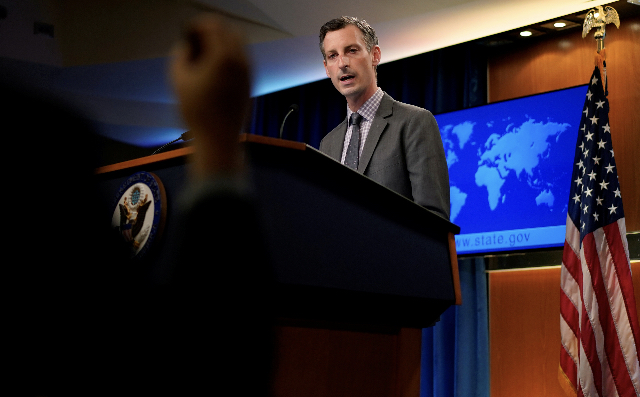
US State Department spokesman Ned Price has also stated on Wednesday the United States in some ways more isolated diplomatically than Iran because of the course that the previous administration had pursued.

With the Iran nuclear talks reaching a critical moment, the White House plans to focus much of its public messaging in the coming weeks on attacking Trump for leaving the 2015 accord, two sources briefed on the White House plans told Axios.

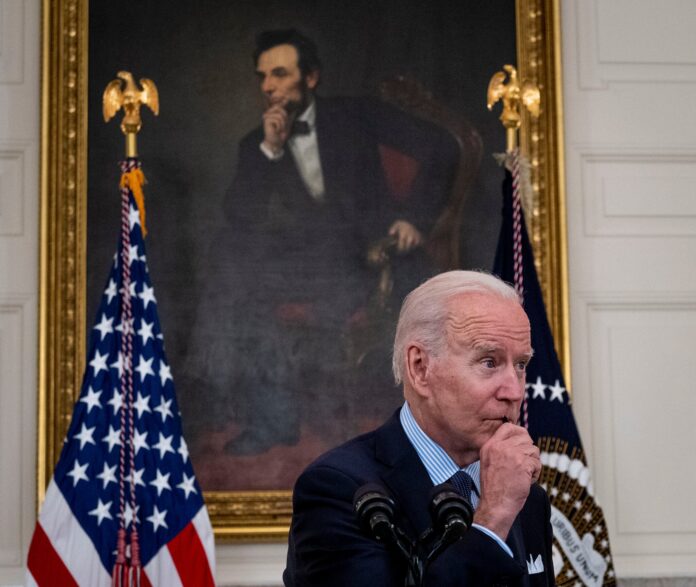
President Joe Biden has recently stated the United States is “continuing to suffer” from Trump’s decision to pull Washington out of the Iran nuclear deal. US Secretary of State Antony Blinken has also called Washington’s withdrawal from the 2015 agreement “a terrible mistake”.

The Joint Comprehensive Plan of Action (JCPOA) was inked by Iran and six world powers in 2015. Under the deal, Tehran agreed to put limits on certain aspects of its nuclear activities in exchange for the removal of draconian international sanctions imposed against the country.

In 2018, however, the US pulled out of the pact and reinstated sanctions under the so-called ‘maximum pressure campaign’ against Tehran, effectively depriving Iran of the deal’s benefits by forcing third parties to stop doing business with Iran.
Iran remained patient for an entire year, after which it began to take incremental steps away from its nuclear obligations, especially after Europeans failed to salvage the deal under the US pressure.
The Islamic Republic’s decision to ramp up its nuclear activities prompted other parties to revive talks earlier this year.
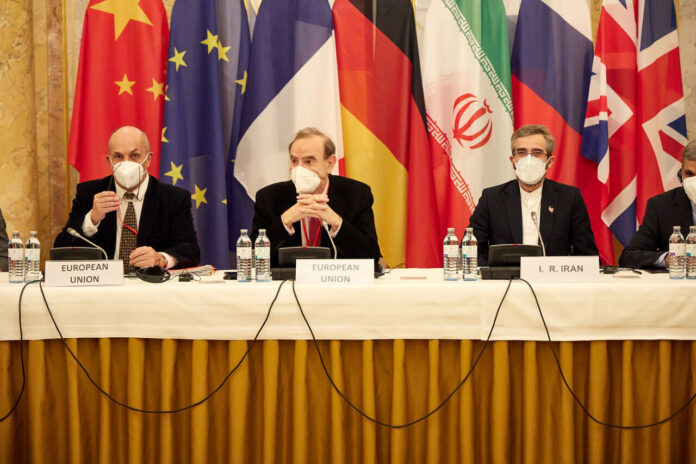
Iran and the five remaining parties to the JCPOA — Germany, Britain, France, Russia and China — began the talks in the Austrian capital in April with the aim of removing the sanctions after the US voiced its willingness to return to the agreement.
During the seventh round of the Vienna talks, the first under President Ebrahim Raeisi, Iran presented two draft texts which address, separately, the removal of US sanctions and Iran’s return to its nuclear commitments under the JCPOA. Tehran also said it was preparing a third draft text on the verification of the sanctions removal.
The eighth round of talks kicked off in Vienna in late December. The negotiations seek to restore the JCPOA in its original form and bring the US back into the agreement.
Iran insists that the talks must lead to the removal of all American sanctions that were imposed against Tehran following Washington’s unilateral withdrawal from the landmark agreement in May 2018. Tehran has also demanded credible guarantees that Washington will not abandon the deal again.
Vienna talks moving forward: Russia

Ulyanov added he had constructive talks with US Special Envoy for Iran Robert Malley about the settlement of the most difficult outstanding issues.

Meanwhile, a senior Iranian parliamentarian said recently that Tehran was not seeking an “interim” agreement in the talks in Vienna with the P4+1 states, but it was “reviewing” the opposite side’s proposal for such a deal.

Vahid Jalalzadeh, who heads the Parliament’s National Security and Foreign Policy Committee, said that Tehran’s negotiating partners in Vienna were “after an interim agreement as well and have submitted relevant proposals to us in that regard.”

“This is however, not an ideal for us, but at the same time, we have not rejected that. We are studying it,” he added.

He said the Iranian delegation is, in the first place, tasked with negotiating a permanent agreement that would meet Iran’s interests to a maximum level, but, “whenever the negotiations enter a difficult stage, the other sides keep saying that ‘we cannot achieve results and let’s discuss an interim agreement.’”

This means that each side can accept a certain set of things and reach a temporary deal on the agreed issues before proceeding to other topics, he explained.

On Monday, however, Iran’s Foreign Ministry ruled out an interim agreement with the P4+1 group – Russia, China, France, Britain and Germany- as the sides continue their talks in Vienna aimed at securing a US return to the 2015 nuclear deal and reviving the international document.

US says ‘weeks, not months’ remain for salvaging JCPOA

“On the timeframe, I would make a couple points. You’ve heard from us that the runway is short. The runway is very, very short,” Spokesperson Ned Price said on Wednesday.

“We are not talking about a protracted period of time that remains. We are talking about potentially weeks, not months,” he added.

“Second, it is impossible for us, at least at this point, to point out a date on the calendar and say that is the deadline,” he continued.

Tehran says the Iranian negotiators in Vienna talks on removal of US sanctions will continue their presence in the Austrian capital as long as needed and will not pay attention to the deadlines set by the other sides.

Iran and the five remaining parties to the Joint Comprehensive Plan of Action (JCPOA) — Germany, Britain, France, Russia and China — began the talks in the Austrian capital in April with the aim of removing the sanctions after the US voiced its willingness to return to the agreement.

During the seventh round of the Vienna talks, the first under President Ebrahim Raeisi, Iran presented two draft texts which address, separately, the removal of US sanctions and Iran’s return to its nuclear commitments under the JCPOA. Tehran also said it was preparing a third draft text on the verification of the sanctions removal.

The eighth round of talks kicked off in Vienna in late December. The negotiations seek to restore the JCPOA in its original form and bring the US back into the agreement.

Iran insists that the talks must lead to the removal of all American sanctions that were imposed against Tehran following Washington’s unilateral withdrawal from the landmark agreement in May 2018. Tehran has also demanded credible guarantees that Washington will not abandon the deal again.
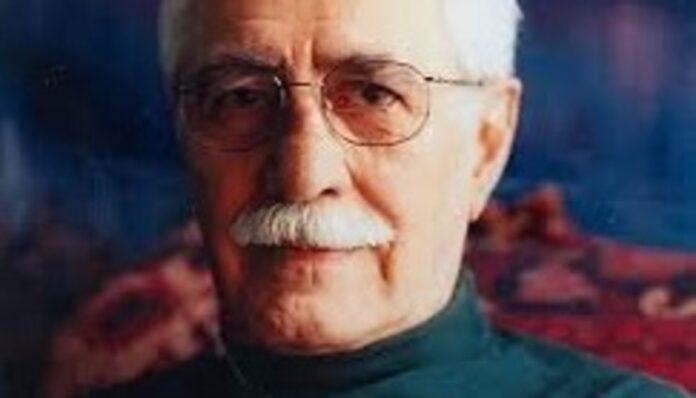
Iranian author Iraj Pezeshkzad dies aged 94

He is mostly known for his novel My Uncle Napoleon published in Tehran in Persian in 1973. The novel was adapted to a highly successful TV series in 1976 directed by Nasser Taghvai.
The book and the TV series are often regarded as “the most important and well-loved work of Iranian fiction since World War II”.

It is noted for its lampooning of the common social attitudes and beliefs in Iran during the period of Allied Occupation of Iran. The novel has been translated by Dick Davis into English.

The story takes place at the time of Iran’s occupation by the Allied forces during the Second World War.

Most of the plot occurs in the narrator’s home, a huge early 20th-century-style Iranian mansion in which three wealthy families live under the tyranny of a paranoid patriarch Uncle.

A multitude of supporting characters, including police investigators, government officials, Indians, housewives, a medical doctor, a butcher, servants, and a shoeshine man also appear throughout the development of the story.

Iran presidential office rejects claims of Raisi involvement in controversial appointment

Mahdi Rahimi, the head of the Public Relations Office of the Presidential Office, rejected allegations by some social media users who claimed the president had ordered the oil minister to appoint Ai-Asgari to the top job.

“This news is a sheer lie,” said Rahimi.

His reaction came after some individuals on social media claimed the president had instructed Oil Minister Javad Oji to install Asgari to the post in order to resolve differences which had reportedly emerged on the appointment of the new CEO of the company, the second largest petrochemical company in the Middle East.

Ali-Asgari’s appointment has drawn widespread criticism over its competence to run the petrochemical giant.

Iran says sanctions barred payment of UN membership fee

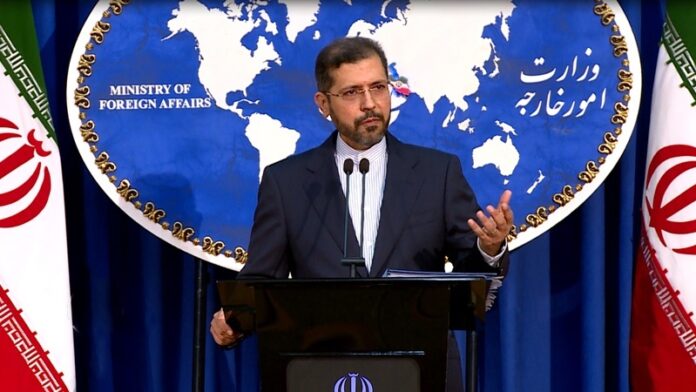
“The Islamic Republic of Iran, as a founding and active member of the United Nations considers full and timely payment of its membership fee in the UN and other international organizations and agencies an obligation,” the ministry’s spokesman Saeed Khatibzadeh said.

“Unfortunately, for the second year in a row, and due to cruel and illegal sanctions of the United States, the payments by our country have hit a roadblock.”

Khatibzadeh stressed, adding that Iran has is now engaged in the necessary consultations to resolve the matter.

He said Tehran is also considering a new safe channel to ensure its UN membership fee is paid faster.

The spokesman also called on the UN secretary general to take into account “the special situation of countries that face illegal sanctions” on the issue of membership fee payments, and to help them in the process.

The unilateral sanctions the US slapped on Iran after withdrawal from the 2015 nuclear deal in 2018, impose severe punishments on any bank or financial institution that offers Tehran access to the dollar-based global payment system. The restrictions mean Iran cannot transfer money through conventional international channels even for food and medicine, still less its UN membership fee.

Iran’s nine-month exports to Syria up 90%

Keyvan Kashefi, however, said Tehran-Damascus trade volume has not been satisfactory, adding the economic experts are convinced that the two countries have failed to take optimal advantage of their potentials.

Iran has been focused on the markets of the neighboring and regional states in the recent years, increasing its exports to Arab countries including Iraq and the United Arab Emirates, but its trade with Syria has failed to flourish.

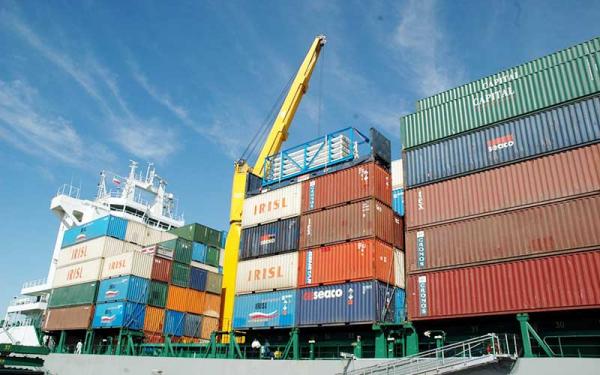
According to Kashefi, Iran’s exports to Syria during the nine-month period have fetched the country $160 million, showing a 90 percent hike compared to $84 million revenues during the corresponding period last year.

Steam turbine parts, foodstuff, and pharmaceutical products mainly constituted the Syria-bound commodities, continued the official.

Iran’s exports to the world countries in the nine months are valued at $35 billion, revealed Kashefi, adding Syria stood 21st in the country’s export target table.

He also mentioned that Iran’s imports from Syria in the nine months hit $22.9 million, indicating a 53 percent increase as compared to nearly $15 million during the same period of its previous year.

He added, given the restored security in Syria and the beginning of reconstruction operations in the war-hit country, Iran has now the opportunity to boost its exports to the Arab country.

US lawmakers urge Biden to abandon nuclear talks, impose new sanctions on Iran

“We write to urge you to immediately withdraw from the fruitless Vienna talks to re-enter the Joint Comprehensive Plan of Action (JCPOA) and instead strongly enforce existing sanctions against Iran, particularly with respect to the oil trade between Iran and the People’s Republic of China,” the lawmakers write in a letter spearheaded by House Foreign Affairs ranking member Michael McCaul (R., Texas) and cosigned by 109 other lawmakers.

“Further delay of action on this only further enables Iran’s malign activities, including their aggressive nuclear pursuits,” they added.

The letter is a sign that Republicans are united against reentering the 2015 accord.

“Iran is charging forward with its nuclear program, using advanced centrifuges and producing equipment for such centrifuges while stockpiling increasing quantities of uranium enriched at 20 percent and 60 percent purity,” the GOP lawmakers write.

“Iran also continues to gain irreversible knowledge through this nuclear work. While the Administration has consistently indicated a willingness to negotiate toward a return to the JCPOA, Iran has made a return even less valuable for the [international community] as it makes greater nuclear gains and gets closer to the deal’s sunsets,” they said.

The letter claims that Iran also refuses to comply with the International Atomic Energy Agency’s oversight work, blocking inspectors and preventing them from accessing contested nuclear sites. Iran’s intransigence is “further diminishing the world’s visibility on Iran’s nuclear program”, the lawmakers claim.

Iranian officials have stressed Tehran and the UN nuclear watchdog continue cooperation and interactions within the framework of the safeguards agreements. They stated the IAEA has failed to treat Iran fairly under the influence of big powers but that cannot be an excuse to leave the agency. Iran has also provided the body with voluntary access to its nuclear sites to prove its goodwill. Recently, Tehran voluntarily allowed the IAEA replace the damaged CCTV cameras at Karaj’s site with new cameras after reaching an agreement with the UN nuclear watchdog.

The US lawmakers maintain only increased sanctions and full enforcement of restrictions will stop Iran’s march toward a nuclear weapon, not endless negotiations in Vienna.

Tehran denies seeking nuclear weapons, stressing it wants to master nuclear technology for peaceful purposes.

Iran’s oil shipments, which skyrocketed in 2021 as China boosted its imports are the latest flashpoint in the talks. The Biden administration says it is prepared to lift all sanctions on Iran’s oil sector, drawing ire from Republicans who say this decision will give Tehran access to billions of dollars in cash windfalls.

Iran says it is still selling its oil despite US sanctions, and Washington’s “maximum pressure” on Tehran had failed. Tehran is determined to increase its oil exports despite sanctions imposed by the United States, Iranian Oil Minister Javad Owji said in September, adding that the use of oil sanctions as a “political tool” would harm the market.

Republican lawmakers want the Biden administration to immediately issue new sanctions on Iran for its ongoing “illicit oil shipments” to China, Venezuela, Russia, and other countries. Iran is taking in at least $1.3 billion a month from these sales, the lawmakers disclose.

“Reports in November showed that [China] continued to import an average of over half a million barrels of Iranian oil per day,” according to the Republicans.

“It is well past time for the Administration to end these farcical negotiations and fully enforce our existing sanctions to slash this vital source of revenue for the Iranian regime,” they continued.

The State Department told the Free Beacon last week that it is prepared to waive all sanctions on Iran’s oil program but that for now these sanctions are still being enforced—a claim that Republicans and watchdog groups dispute.

“We are engaging in meaningful diplomacy through the talks in Vienna to achieve a mutual return to compliance with JCPOA commitments, which would of course include lifting sanctions on Iranian oil exports,” a State Department spokesman told the Free Beacon.

The GOP leaders say in their letter that this strategy has not borne fruit and urge the Biden administration to reverse course and implement further sanctions.

The JCPOA was inked by Iran and six world powers in 2015. Under the deal, Tehran agreed to put limits on certain aspects of its nuclear activities in exchange for the removal of draconian international sanctions imposed against the country.

In 2018, however, the US, under President Donald Trump, pulled out of the pact and reinstated sanctions under the so-called ‘maximum pressure campaign’ against Tehran, effectively depriving Iran of the deal’s benefits by forcing third parties to stop doing business with Iran.

Iran remained patient for an entire year, after which it began to take incremental steps away from its nuclear obligations, especially after Europeans failed to salvage the deal under the US pressure.

The Islamic Republic’s decision to ramp up its nuclear activities prompted other parties to revive talks earlier this year.

Iran and the five remaining parties to the JCPOA — Germany, Britain, France, Russia and China — began the talks in the Austrian capital in April with the aim of removing the sanctions after the US voiced its willingness to return to the agreement.

During the seventh round of the Vienna talks, the first under President Ebrahim Raeisi, Iran presented two draft texts which address, separately, the removal of US sanctions and Iran’s return to its nuclear commitments under the JCPOA. Tehran also said it was preparing a third draft text on the verification of the sanctions removal.

The eighth round of talks kicked off in Vienna in late December. The negotiations seek to restore the JCPOA in its original form and bring the US back into the agreement.

Iran insists that the talks must lead to the removal of all American sanctions that were imposed against Tehran following Washington’s unilateral withdrawal from the landmark agreement in May 2018. Tehran has also demanded credible guarantees that Washington will not abandon the deal again.
Iran reaffirms support for Kazakhstan’s sovereignty

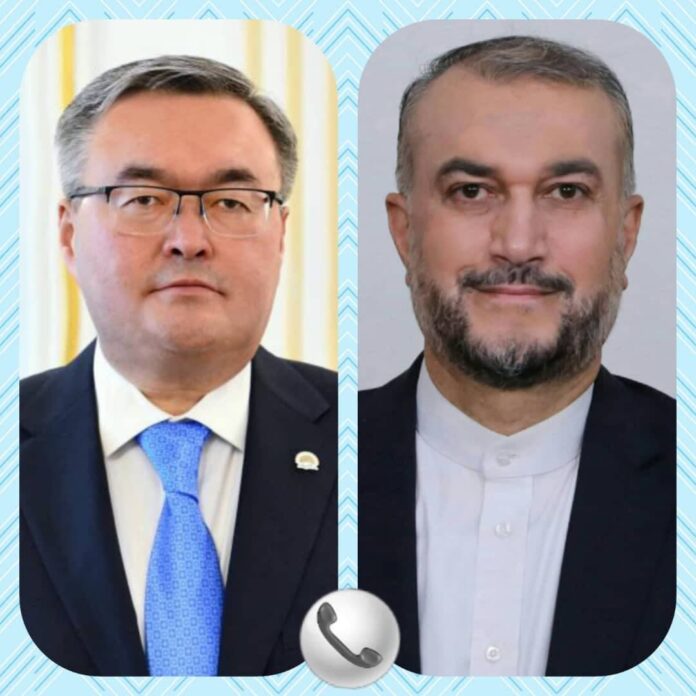
Amir Abdollahian also condemned foreign interference in Kazakhstan’s internal affairs. He added that the Islamic Republic of Iran has closely monitored developments in Kazakhstan since the beginning of the recent unrest there.

Amir Abdollahin stressed positive and friendly relations between Iran and Kazakhstan and the will of the two sides to continue, expand and strengthen ties as well as regional and international cooperation.

Tileuberdi also expressed pleasure with Iran’s position during the recent unrest, noting that the visit of Kazakhstan’s President Kassym-Jomart Tokayev to Iran is still on and the development of trade between the two countries is important for his country.

He also briefed Amir Abdollahian on the recent developments in his country, saying Kazakhstan will maintain friendly relations with the Islamic Republic of Iran.

Kazakhstan was the scene of violent protests several days ago over energy price hikes. The protests started on January 2. More than 160 people were killed and thousands were arrested after security forces intervened to quell the unrest.

Calm later returned to the country after the Collective Security Treaty Organization (CSTO) led by Russia deployed troops to the country’s capital Nur-Sultan and main city Almaty as well as several other cities to help with ending the violence.

Analyst: Iran, P4+1 talks making progress, moving forward

Kourosh Ahmadi told Entekhab new and analysis website, the fact that no reports are leaking from the negotiations is a positive sign and shows the two sides are making progress in talks.

He referred to Iranian Foreign Minister Hossein Amir Abdollahian’s comment in an interview with Al-Jazeera that Iran is for the time being pursuing the removal of JCPOA-related sanctions but will definitely push for the lifting of all bans imposed on the country in future. Ahmadi said logic dictates that Iran should push for the removal of other sanctions as well, namely those placed on the country over its missile program and other issues like human rights.

The former diplomat also spoke of Amir Abdollahian’s demand for guarantees that Iran can sell oil and earn the revenues easily through its banking system.

Ahmadi said if the US is ready to access all terms of the JCPOA, it must abide by all provisions of the deal.

Regarding the fact that Iran and the US are divided at the end of the 6th round of talks over verification of sanctions removal, Ahmadi said, “My understanding is verification has two levels: One level is about the US measures to lift the sanctions,… the other level [I’m not sure if Iranian officials are pushing for that or not] is whether banks and economic institutions will do business with Iran or will remain worried about the consequences.”

Asked what the key differences between Iran and the United States are, the former diplomat said, “I think the most important differences that have pitted Iran and the United States against each other are, according to US officials, regional issues.”