Saturday, December 20, 2025
Home Blog Page 2

EU agrees on $105bn loan to support Ukraine against Russia

The leaders decided early on Friday ‍to borrow cash on capital markets to fund Ukraine’s defence against Russia rather than use frozen Russian assets, diplomats noted.

“We have a deal. Decision to provide 90 billion euros [$105.5bn] of support to Ukraine for 2026-27 approved. We committed, we delivered,” Costa said in a post on social media early on Friday.

Costa did not specify the source of the funding, which came after EU leaders worked deep into Thursday night to reach an agreement.

But a draft text of the summit’s conclusions, seen by the Reuters news agency, said it would come from capital markets, secured against the ⁠EU budget, rather than the bloc proceeding with its contentious plan to use frozen Russian assets for a loan supporting Ukraine’s war effort.

At the same ​time, EU governments and the European Parliament will continue discussing setting up a loan for Ukraine that would be based on Russian central ‍bank assets.

Friday’s deal will not affect the financial obligations of Hungary, Slovakia and the Czech Republic, which did not want to contribute to the financing of Ukraine, the text said.

Kyiv will only repay the EU loan based on joint borrowing once it receives war reparations from Moscow. Until then, the Russian assets will remain immobilised, while the EU has also reserved the right to use them to repay the loan, according to the text.

“It’s good in the sense that Ukraine will secure funding for two years,” one unnamed EU diplomat told Reuters.

The move followed hours of discussions among leaders on the technical ‍and legal details of a loan based ⁠on frozen Russian assets – which turned out to be too complex or politically demanding to sort out at this stage, diplomats announced.

“We have gone from saving Ukraine to saving face, at least that of those who have been pushing for the use of the frozen assets,” a second EU diplomat added.

The main difficulty in the use of the Russian money was providing Belgium – where about 185 billion ($217bn) of the total 210 billion euros ($246bn) of frozen assets are held – with sufficient guarantees against financial and legal retaliation from Moscow.

The Kremlin has announced it will launch legal action and seize foreign assets in Russia should the plan to use its assets go ahead.

Senior PM aide says Japan needs nukes

The unnamed official, who advises the prime minister on national security, argued that Japan’s long-standing reliance on the US nuclear deterrent may no longer be fully reliable, according to media reports. Under these conditions, a departure from the country’s postwar non-nuclear policy could become necessary, the adviser said, as cited by NHK.

Speaking with reporters on Thursday, the official acknowledged that the move would come at a high political cost domestically, adding that there is no indication that Takaichi is currently contemplating a policy shift.

Japan remains the only country to have suffered a nuclear attack. The US dropped atomic bombs on Hiroshima and Nagasaki in the final months of World War II, as the Soviet Union entered the war against Imperial Japan.

After the war, Japan joined the Nuclear Non-Proliferation Treaty, which recognizes only five nuclear-armed states – China, France, Russia, the US, and UK. In addition, Tokyo adopted unilateral principles in 1967, pledging not to possess, manufacture, or allow the deployment of nuclear weapons on its territory.

The adviser reportedly suggested that Japan might have to reconsider its commitments in order to establish an independent deterrent in response to perceived threats from China, Russia, and North Korea.

Israeli ex-premier confirms Telegram account hacked

Telegram

“It appears that while my actual phone device was not breached, access to my Telegram account was indeed gained through various means,” Bennett said in a statement, adding, “The contents of my contact list, as well as numerous photos and chats — both authentic and fabricated… have been distributed.”

Bennett stated that the breach was intended to stop him from returning to the premiership.

“Israel’s enemies will do everything in their power to prevent me from serving as prime minister again. It will not work,” he continued, adding, “No one will stop me from acting and fighting for the state of Israel and the people of Israel.”

The Times of Israel reported that material taken from Bennett’s account was published on a website allegedly operated by the Iran-linked Handala hacker group.

The group claimed to have left a message on Bennett’s phone, which it published on its website.

“Dear Naftali Bennett. You once prided yourself on being a beacon of cybersecurity, parading your expertise before the world,” it said on the website.

“For all your boasts and bravado, your digital fortress was nothing more than a paper wall waiting to be breached,” it added.

The daily newspaper Haaretz carried out checks and confirmed that many of the phone numbers are authentic and belong to senior officials in Israel and abroad — among them, members of the government, as well as senior officials and international leaders.

Before entering politics, Bennett had co-founded a device protection software and an online security company.

Bennett has declared his intention to run for prime minister in the next parliamentary elections due in October 2026, in a bid to oust Prime Minister Benjamin Netanyahu.

Bennett first served as prime minister from June 2021 to June 2022 in a coalition of right-wing, left-wing and centrist parties that unseated Netanyahu.

That government collapsed a few months later, paving the way for Netanyahu’s return.


Iran, Russia agree on three-year roadmap to expand cooperation

Iran and Russia Flags

He made the announcement following the conclusion of his visit to Moscow.

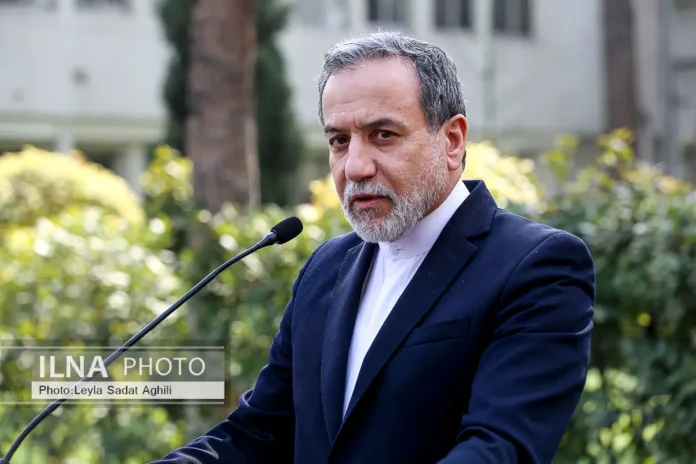
Speaking at the end of the trip, Araghchi said that under the Iran–Russia Strategic Partnership Treaty, the foreign ministries of the two countries reached an agreement on a structured plan to better organize coordination and elevate relations to a higher level.

He noted that closer cooperation between Tehran and Moscow would enable more effective action against illegal Western sanctions, help strengthen regional stability, advance major infrastructure projects, and prevent unlawful actions at the United Nations Security Council.

Araghchi also reiterated Iran’s foreign policy priority. He went on to stress that neighboring countries remain at the center of Tehran’s diplomatic focus.

Saudi Arabia, France, US to discuss Lebanese army support in Paris meeting

Lebanon Army

The talks will focus on mechanisms to support the Lebanese army in its security duties, the implementation of the southern deployment plan, the presentation of maps related to border demarcation, and Lebanon’s role in maintaining stability.

The meeting is also seen as a test of the Lebanese state’s seriousness in implementing reforms, curbing illegal weapons, and outlining a roadmap for future international support.

A ceasefire agreement reached in November 2024 ended a war that lasted more than a year between Hezbollah and Israel.

However, Israel has continued to carry out air attacks on various areas in Lebanon, claiming they are aimed at preventing Hezbollah from rebuilding its capabilities after suffering heavy losses during the war.

The ceasefire deal stipulated an end to hostilities, the withdrawal of Hezbollah north of the Litani River, ultimately leading to its disarmament across Lebanon, as well as the withdrawal of Israeli soldiers from positions they advanced to during the latest conflict.

Israel has nevertheless maintained five strategic positions inside Lebanese territory, while Hezbollah has refused to disarm, arguing that the agreement applies only to the area north of the Litani River near the border.

In August, Lebanese authorities approved a plan to disarm Hezbollah as part of the agreement. The army has begun implementing the plan, with the first phase, covering the border area with Israel south of the Litani River, set to be completed by the end of the year.

EU kicks off summit on Russian fund plan for Ukraine

European Parliament

The 27-nation bloc is scrambling to bolster its ally Ukraine, as US President Donald Trump pushes for a deal with President Vladimir Putin to end the fighting.

Officials have insisted the talks will last as long as it takes to hammer out an agreement, saying both Ukraine’s survival — nearly four years into the war — and Europe’s credibility are at stake.

“We will not leave the European summit without a solution for the funding of Ukraine,” European Commission head Ursula von der Leyen stressed.

The EU’s executive wants to fund a loan to Ukraine by using frozen assets from Russia’s central bank, though it is holding on to a back-up plan for the bloc to raise the money itself.

Ukraine President Volodymyr Zelenskyy will join the EU summit to try to press the case for using Russia’s assets — with German Chancellor Friedrich Merz among those insisting there was “no better option.”

Zelensky stated Thursday that any failure by EU leaders to agree on a plan to use frozen Russian assets to support Ukraine would be a serious challenge for his war-torn country.

“I will speak with all the leaders, present our arguments, and I very much hope we can obtain a positive decision. Without it, there will be a big problem for Ukraine,” Zelensky told reporters, ahead of a visit to Brussels for an EU summit.

But Belgium’s Prime Minister Bart De Wever said he had not been convinced so far.

“I have not seen a text that could persuade me to give Belgium’s agreement,” he told Belgian lawmakers, adding that he hoped to see something convincing on Thursday.

The vast bulk of the funds are held by international deposit organization Euroclear in Belgium, and the government fears it could face crippling financial and legal reprisals from Moscow.

EU officials say they have gone out of their way to allay Belgian worries and that multiple layers of protection — including guarantees from other member states — mean the risks are minimal.

“At this stage, the guarantees offered by the Commission remain insufficient,” De Wever added.

The EU estimates Ukraine needs an extra 135 billion euros ($159 billion) to stay afloat over the next two years — with the cash crunch set to start in April.

In a bid to plug Kyiv’s yawning gap, the Commission has proposed tapping 210 billion euros of frozen assets, initially to provide Kyiv 90 billion euros over two years.

The unprecedented scheme would see the funds loaned to the EU, which would then loan them on to Ukraine.

Kyiv would then only pay back the “reparations loan” once the Kremlin compensates it for the damage.

In theory, other EU countries could override Belgium and ram the initiative through with a weighted majority, but that would be a nuclear option that few see as likely for now.

The commission’s back-up plan involves the EU raising the money itself, but it would require unanimous approval from the EU’s 27 leaders and Hungary has ruled it out.

De Wever nonetheless is planning to try to revive that idea, and other countries may be open to his argument.

Bubbling close to the surface of the EU’s discussion are the US efforts to forge a deal to end the war.

Zelensky also confirmed Thursday that Ukrainian and US delegations would hold new talks on Friday and Saturday in the United States aiming to end the Russian invasion.

Ukraine has announced that Washington was “pressuring” the EU not to use the assets as they view them as a vital bargaining chip in winning over Russia.

But EU officials deny that and say that, if anything, the push for peace has spurred the efforts to tap the Russian funds.

Given that Ukraine has only months before the shortfalls bite, diplomats and officials insist leaders will find a way to keep funds flowing — even if this week yields only a loose deal with details to be hammered out later.

“I hope that we get this over the finishing line,” EU top diplomat Kaja Kallas said, adding, “Putin is banking on us to fail, so we shouldn’t give him that.”


Red shores of Iran’s Hormuz Island capture global media attention

According to reports, recent downpours washed the island’s iron-rich red soil into the sea, creating dramatic scenes along the coastline.

Videos circulating online show rainwater mixed with mineral sediments flowing from the island’s hills toward the shore, transforming the beaches into deep crimson hues.

Fox News described the phenomenon as the result of rainwater blending with mineral-rich deposits and seawater, noting that Hormuz is locally known as the “Rainbow Island” because of its colorful soils and rocks.

The network reported that intense rainfall earlier this week caused the island’s already red shoreline to darken further.

The UK’s Daily Telegraph referred to the event as a “blood rain” spectacle, reporting that nearly 100 millimeters of rain, about five times Iran’s monthly average, washed iron-rich soil into the sea.

French outlets such as 20 Minutes and France Info also highlighted the event, calling it rare and visually stunning.

India’s NDTV described the scene as a “breathtaking natural phenomenon,” explaining that Hormuz is rich in iron oxide, particularly hematite, which gives the soil and water their vivid red color.

Located near the Strait of Hormuz, the island is a major tourist attraction known for its unique geology and natural beauty.

US ‘pressuring’ EU not to use frozen Russian funds for Kyiv: Ukraine official

The European Union has laid out a plan to use the frozen assets to harness 90 billion euros ($105 billion) for a loan to help Ukraine repel Moscow’s forces, with the money to be paid back by any eventual Russian reparations to Ukraine.

“The US administration is pressuring European countries to abandon the idea of using Russian assets to support Ukraine,” a senior Ukrainian official said Wednesday.

The plan has the strong backing of many member states, including Germany, but has drawn opposition from others, including Belgium — home to international deposit organisation Euroclear, which holds most of the assets — whose leaders fear Russian reprisals.

The Ukrainian official said that seven countries so far opposed the plan.

Zelensky “is going to Brussels to motivate European countries to adopt this decision” and tap the frozen assets, the source added.

Belgian Prime Minister Bart De Wever has been in the spotlight over his opposition to using Russian assets for Ukraine, but there had been speculation that US President Donald Trump’s administration was also weighing in on the debate.

Washington appears to view the assets as a key bargaining chip and has looked to tempt Moscow to play ball by dangling the prospect it could get back some of the cash.

A US official, speaking on condition of anonymity, told AFP on Wednesday that the Europeans were “quietly asking us to intervene on this matter as they do not want to be publicly against it”.

“They are afraid of the long-term damage it will do to long-term investments in their system and the credibility of their institutions,” the official added.

A previous version of Trump’s plan to end the war also provided for Washington to use some frozen Russian assets for a US-led reconstruction of the war-torn country.

Around 200 billion euros in Russian central bank assets were frozen over Moscow’s February 2022 invasion of Ukraine.

White House deputy press secretary Anna Kelly stated: “Both the Ukrainians and the Russians have clearly stated positions regarding the frozen assets, and our only role is to facilitate a back-and-forth that can ultimately result in a deal.”


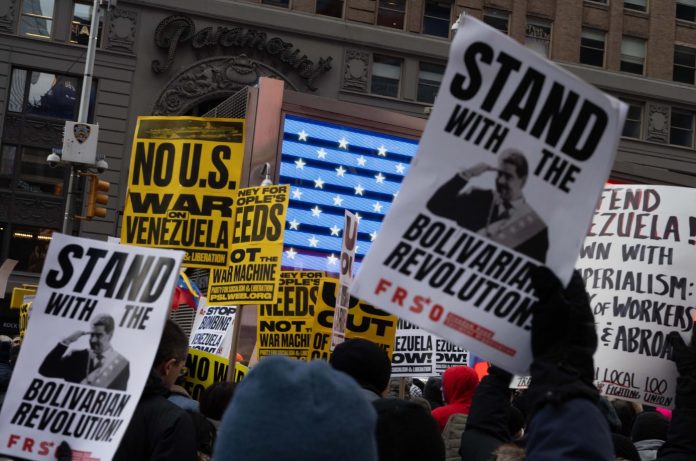
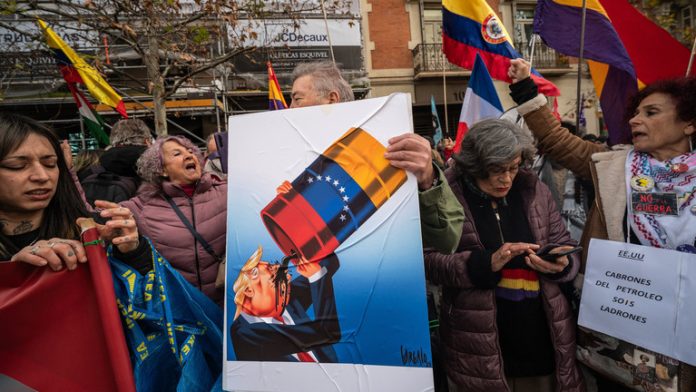
Iran condemns “unlawful actions” of the US against Venezuela as piracy

Ministry of Foreign Affairs of the Islamic Republic of Iran

In a statement, Iran’s Foreign Ministry announced that these positions and actions represent blatant manifestations of a policy based on coercion and systematic bullying, in clear violation of well-established principles and rules of international law and the UN Charter, including freedom of navigation, maritime security, and the freedom of international trade.

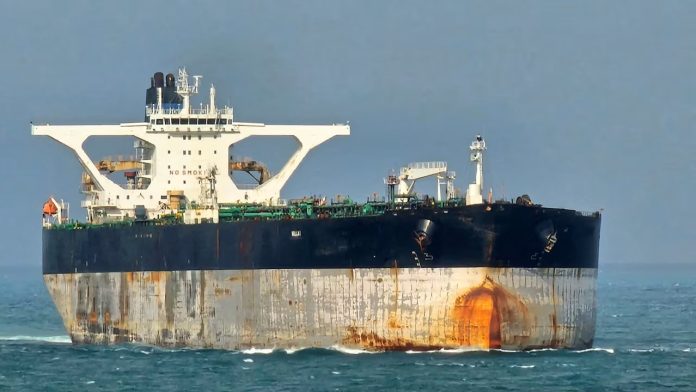
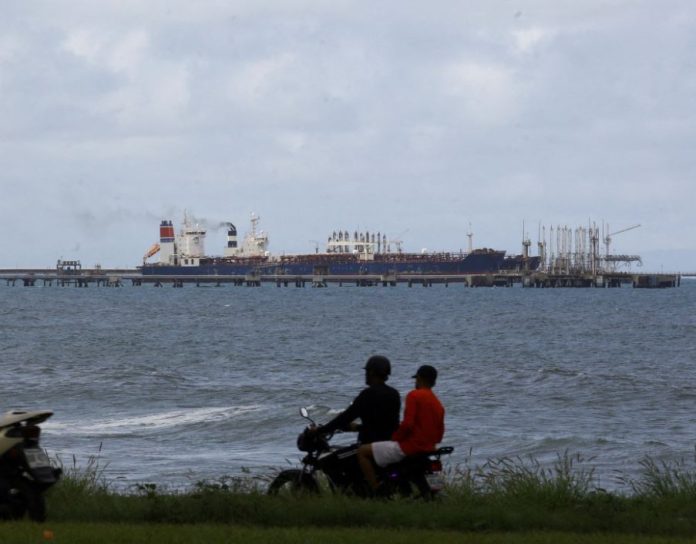
It said the US interference with as well as its seizure and obstruction of the free passage of commercial vessels to or from Venezuela constitutes a clear case of state piracy and armed robbery at sea.

The statement pointed out that invoking the US domestic laws and unilateral, illegal sanctions to justify these actions cannot, in any way, serve as a basis to legitimize such criminal acts.

It said threats, economic blockades, and the use of force against an independent member state of the UN constitute a direct violation of the fundamental principles of the world body’s Charter.

The Iranian Foreign Ministry added the continuation of the US’s aggressive unilateralism against independent countries, if not responsibly addressed by the international community and the UN, will set a dangerous precedent and normalize violations of international law, which would disrupt global peace and security. Accordingly, the UN, the Non-Aligned Movement, all responsible states, and relevant international bodies are expected to recognize the gravity of the current situation, condemn the unlawful and coercive actions of the US, and hold Washington accountable for its blatant violations of international law and the UN Charter.

German Chancellor warns of direct NATO-Russia conflict

NATO

Moscow has outright rejected the idea of NATO members contributing to peacekeeping forces in a post-conflict Ukraine. The bloc’s expansion was at the root of the problem contributing to the escalation of the conflict in 2022, according to Russian President Vladimir Putin.

The security guarantees allegedly discussed by Vladimir Zelensky and the US delegation on Tuesday would require Western forces to act should a ceasefire be breached.

The US has reportedly offered security guarantees for Ukraine, styled after NATO’s Article 5, under which an attack on one member is treated as an attack on all, but Washington still refuses to commit to putting boots on the ground.

However, Merz claimed that under a potential peace deal, troops from guarantor states would occupy a demilitarized zone separating Russian and Ukrainian forces. If a ceasefire was breached, they would “very specifically” respond to Russian “incursions and attacks.”

The chancellor stated the guarantees under discussion would treat Ukraine “as if it were NATO territory,” describing this as a notable shift in Washington’s position, as the US has ruled out Ukraine formally joining the military bloc.

Previous ceasefire arrangements in Ukraine, like the 2014 Minsk agreements, failed despite EU countries acting as guarantors. Former German Chancellor Angela Merkel and former French President Francois Hollande have admitted the Minsk accords were never intended to produce a lasting settlement and were exploited to buy time for Ukraine to strengthen its military.

Merz’s remarks come as several European leaders, including France’s Emmanuel Macron, have been floating the idea of deploying Western forces in Ukraine for months, while calling for increased militarization in response to what they describe as a Russian threat.

Moscow has consistently dismissed claims that it poses a threat to the EU or NATO, warning any foreign troops deployed during hostilities will be treated as legitimate military targets.