Wednesday, April 8, 2026
Home Blog Page 18

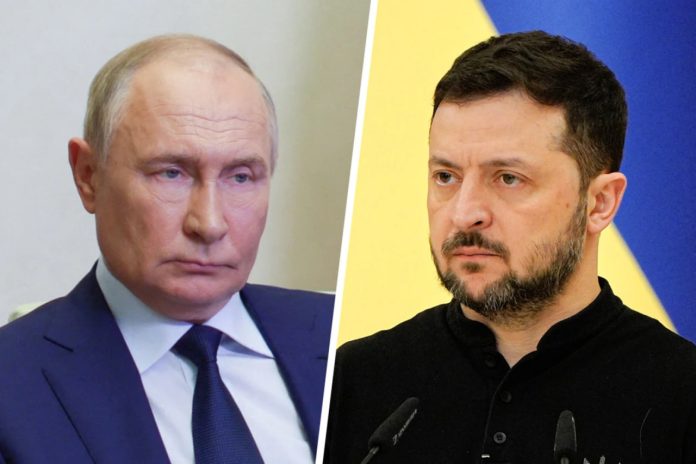
Zelensky says Putin “doesn’t want Ukraine to succeed”, contradicting Trump

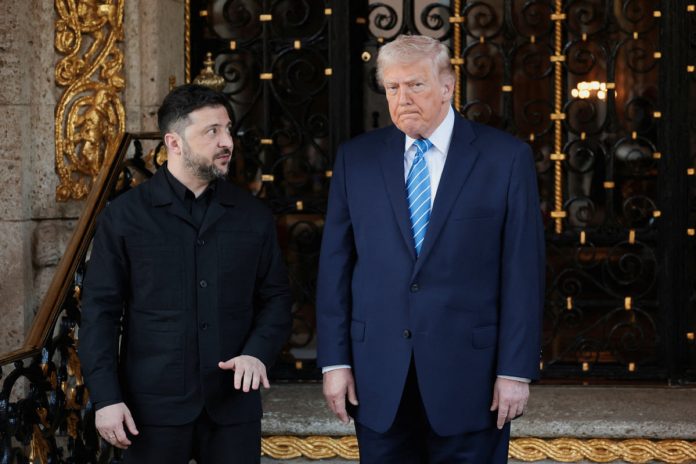
“I don’t trust Putin. And he doesn’t want success for Ukraine, really, he doesn’t want — he can say it. I believe that he can say such words to President Trump. I believe in it, that he can say it, but it’s not true,” Zelensky told Fox News’s Bret Baier on “Special Report,” in an interview that aired Monday.

“Really, he doesn’t want to have — from President Trump — more pressure with sanctions and etcetera.”

During a press conference with Zelensky on Sunday after a meeting between the two leaders, the president was asked by a Reuters reporter about discussion with Putin on the subject of “what responsibility Russia will have for any kind of reconstruction of Ukraine.””

“They’re going to be helping, Russia is going to be helping. Russia wants to see Ukraine succeed,” Trump replied.

After Trump made the comments in the press conference, Zelensky appeared briefly puzzled.

Throughout his first year back in office, Trump’s administration has pushed for an end to the war in Ukraine to little success. Trump has met with Zelensky multiple times, including one notable February meeting that was rife with public tension.

Also on Sunday, Zelensky stated that Ukrainian and American negotiators had made notable progress on a 20-point peace proposal.

“We discussed all the aspects of the peace framework … [the] 20-point peace plan [is] 90 percent agreed,” Zelensky added alongside the president at the press conference.


UN Security Council member states condemn Israel’s recognition of Somaliland

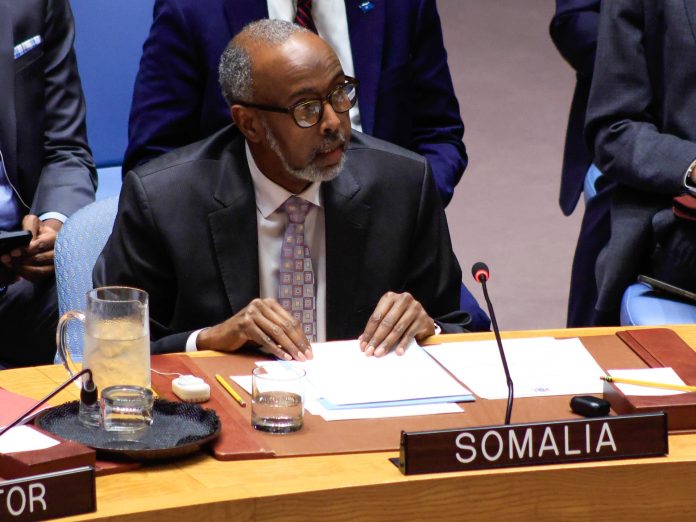
The United States was the only member of the 15-member body not to condemn Israel’s formal recognition of the breakaway region of Somalia at the emergency meeting in New York City on Monday, although it said its own position on Somaliland had not changed.

Addressing the UNSC, Somalia’s UN ambassador, Abu Bakr Dahir Osman, implored members to firmly reject Israel’s “act of aggression”, which he said not only threatened to fragment Somalia but also to destabilise the wider Horn of Africa and the Red Sea regions.

In particular, Osman stated that Somalia was concerned the move could be aimed at advancing Israel’s plans to forcibly “relocate the Palestinian population from Gaza to the northwestern region of Somalia”.

“This utter disdain for law and morality must be stopped now,” he added.

The emergency meeting was called after Israel last week recognised the self-declared Republic of Somaliland as an independent and sovereign state.

Tammy Bruce, the US deputy representative to the UN, told the council that “Israel has the same right to establish diplomatic relations as any other sovereign state”.

However, Bruce added, the US had “no announcement to make regarding US recognition of Somaliland, and there has been no change in American policy”.

Israel’s deputy ambassador to the UN, Jonathan Miller, told the council that Israel’s decision was “not a hostile step toward Somalia, nor does it preclude future dialogue between the parties”.

“Recognition is not an act of defiance. It is an opportunity,” Miller claimed.

Many other countries expressed concerns about Israel’s recognition of Somaliland, including the implications for Palestinians, in statements presented to the UNSC.

Speaking on behalf of the 22-member Arab League, its UN envoy, Maged Abdelfattah Abdelaziz, said the group rejected “any measures arising from this illegitimate recognition aimed at facilitating forced displacement of the Palestinian people, or exploiting northern Somali ports to establish military bases”.

Pakistan’s deputy UN ambassador, Muhammad Usman Iqbal Jadoon, said at the meeting that Israel’s “unlawful recognition of [the] Somaliland region of Somalia is deeply troubling”, considering it was made “against the backdrop of Israel’s previous references to Somaliland of the Federal Republic of Somalia as a destination for the deportation of Palestinian people, especially from Gaza”.

China and the United Kingdom were among the permanent UNSC members to reject the move, with China’s UN envoy, Sun Lei, saying his country “opposes any act to split” Somalia’s territory.

“No country should aid and abet separatist forces in other countries to further their own geopolitical interests,” Sun Lei stated.

Some non-members of the UNSC also requested to speak, including South Africa, whose UN envoy, Mathu Joyini, said that her country “reaffirmed” Somalia’s “sovereignty and territorial integrity” in line with international law, the UN Charter and the constitutive act of the African Union.

In addition to defending Israel’s decision, US envoy Bruce compared the move to recognise Somaliland with Palestine, which has been recognised by more than 150 of the UN’s member states.

“Several countries, including members of this council, have unilaterally recognised a non-existent Palestinian state, yet no emergency meeting has been convened,” Bruce said, criticising what she described as the UNSC’s “double standards”.

However, Slovenia’s UN ambassador, Samuel Zbogar, rejected the comparison, saying, “Palestine is not part of any state. It is illegally occupied territory… Palestine is also an observer state in this organisation [the UN].”

“Somaliland, on the other hand, is a part of a UN member state, and recognising it goes against… the UN Charter,” Zbogar added.

The self-declared Republic of Somaliland broke away from Somalia in 1991, after a civil war under military leader Siad Barre.

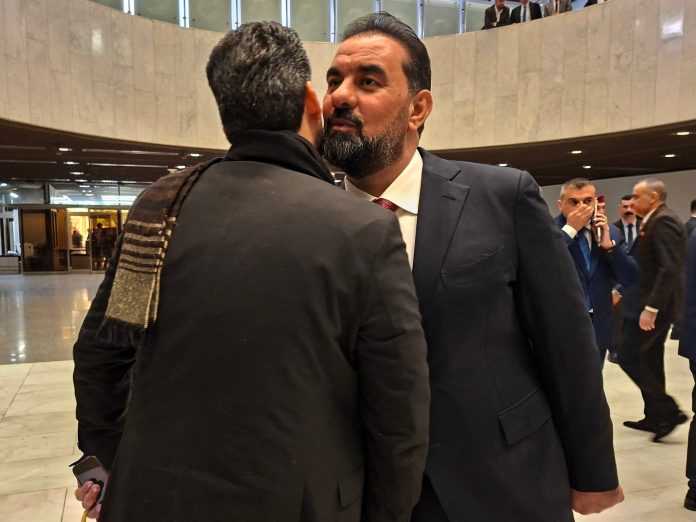
Iraq’s new parliament elects Haybat al-Halbousi as speaker

Iraqi media reported on Monday, citing parliament’s media office, that al-Halbousi, from the Taqaddum (Progress) Party, had received 208 votes, in a clear victory over two rival contenders with 66 and nine votes, respectively.

Al-Halbousi’s party draws its support largely from Sunni heartlands in the west and north of the country.

Iraqis have been eagerly awaiting the first sitting of parliament, called the Council of Representatives of Iraq, as they look for certainty over the leadership of the country following the November 11 vote, which left a complicated outlook for the formation of the new government.

Under Iraq’s customary muhasasa system, in place since the first government under the post-2003 constitution, parliament is to elect a speaker – a consensus Sunni candidate – along with two deputies during its first session.

Following that is the vote for the presidency, a Kurdish candidate, according to muhasasa. The president then nominates the candidate of the largest Shia bloc – the Shia Coordination Framework (SCF) – to be named prime minister.

Before the election, Supreme Judicial Council President Faiq Zaidan urged lawmakers to stick to the constitutional timeline for government formation – a maximum of 90 days – and the Federal Supreme Court (FSC) ratified the results faster than usual.

But few are expecting a swift result. The process typically takes months – in 2021, it took more than 300 days – and there are questions over who the SCF will choose as the right candidate for prime minister.

Incumbent Prime Minister Mohammed Shia al-Sudani had been nominated by the SCF four years ago, but had tried to break free from the alliance, running an independent electoral list that won big with about 46 out of 329 seats for his Reconstruction and Development Coalition (RDC).

But an FSC decision last month sent him back to the SCF and its leadership, many of whom do not hold parliamentary seats but operate as external power brokers.

The SCF now faces the question of whether it backs al-Sudani or an alternative candidate as prime minister, while it grapples with how to respond to the growing parliamentary presence of lawmakers linked to Shia parties with pro-Iran, anti-West armed wings.

Of the SCF’s 180-odd lawmakers, 80 to 90 belong to groups and armed factions close to Iran – most of them under United States sanctions. In 2021, such groups held only 17 seats.

Their growing presence in parliament potentially presents a problem not only for Iraq’s relations with foreign powers, but for Iraqi Shias who resent Tehran’s powerful influence in the country.


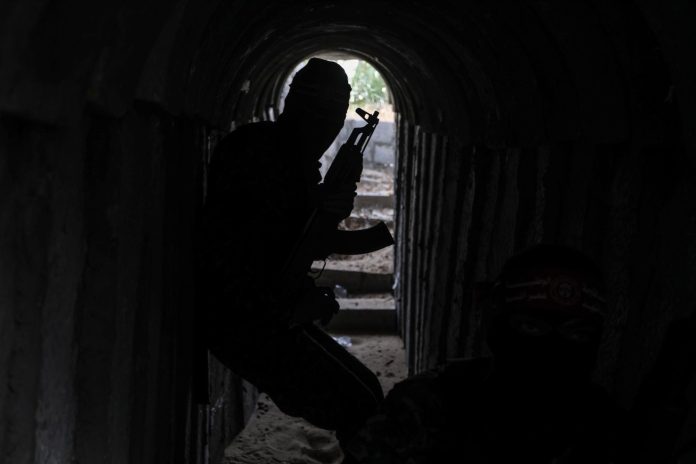
Hamas armed wing confirms spokesperson killed by Israel

Hamas

Ezzedine Al-Qassam Brigades released a video statement on its Telegram channel, saying: “We pause in reverance before… the masked man loved by millions… the great martyred commander and spokesperson of the Qassam Brigades, Abu Obeida”.

Israel had announced it had killed Abu Obeida in a strike on Gaza on August 30.

This marks the first official confirmation of the death of the figure who became the face of the group’s media strategy during the devastating two-year war on Gaza.

In the statement, the new spokesman revealed the true identity of Abu Obeida for the first time, stating his real name was Hudhayfah Samir Abdullah al-Kahlout.

“We announce with pride the martyrdom of the great leader … Abu Obeida,” he continued, adding, “We have inherited his title.”


Russia claims Ukraine launched 91 kamikaze drones at Putin’s state residence

“All the unmanned aerial vehicles were destroyed by air defense systems of Russia’s Armed Forces,” Lavrov confirmed.

Kiev has fully switched to state terrorism policies, and Moscow will review its negotiating position accordingly, he added.

The attack came amid “intensive negotiations between Russia and the US,” the top diplomat pointed out, adding that the “reckless actions” of Kiev will not remain unanswered.

Moscow has already designated targets and the timing of the impending retaliatory strikes, Lavrov warned.

The incident is bound to affect the Ukraine conflict settlement process, the foreign minister said without providing any exact details on the potential shifts in Russia’s positions.

“We do not intend to withdraw from the negotiation process with the US. However, given the complete degeneration of the criminal Kiev regime, which has shifted to a policy of state terrorism, Russia’s negotiating position will be revised,” Lavrov stated.

Ukrainian President Volodymyr Zelensky has accused Moscow on Monday of trying to undermine US-led diplomatic efforts to end the Russia-Ukraine war, after Moscow accused Kyiv of attacking Putin’s residence.

“Russia is at it again, using dangerous statements to undermine all achievements of our shared diplomatic efforts with President Trump’s team,” Zelensky said on social media.

“This alleged ‘residence strike’ story is a complete fabrication intended to justify additional attacks against Ukraine, including Kyiv, as well as Russia’s own refusal to take necessary steps to end the war,” he added.


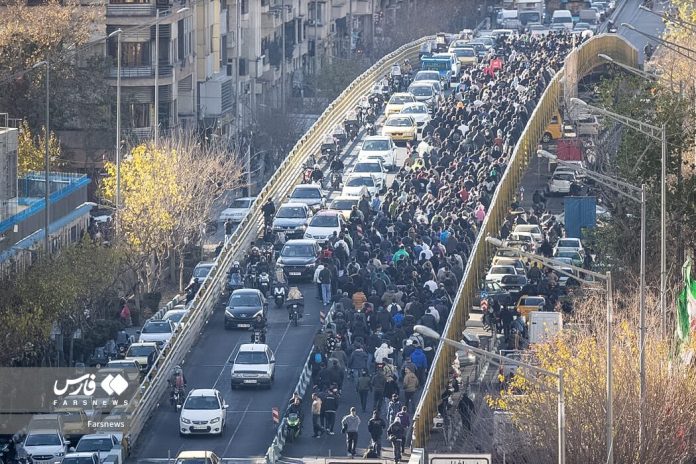
Tehran protests fizzle out as dollar drops 10,000 tomans after central bank shake-up

Field observations by a Tasnim News Agency correspondent in Enghelab and Jomhuri Streets and nearby shopping centers show that businesses and malls are operating normally, with no visible signs of the protests reported earlier on Monday.

Contrary to claims circulated by anonymous online channels, the vast majority of shops in the area have remained open and active.

The easing of tensions coincided with a swift and positive reaction in financial markets following the resignation of Mohammad Reza Farzin as head of the Central Bank of Iran and his replacement by former economy minister Nasser Hemmati.

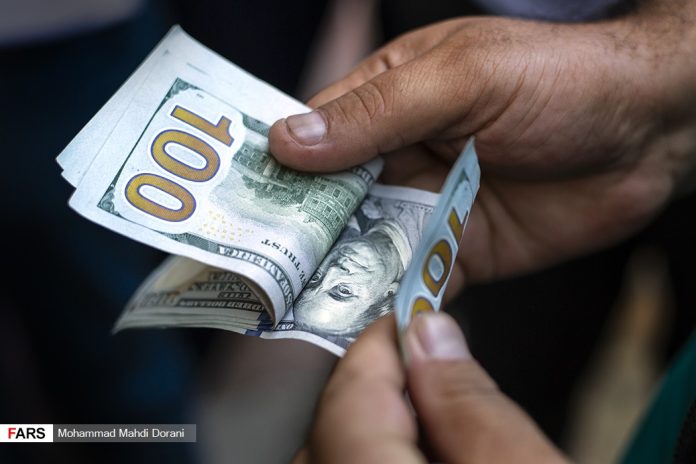
Within hours of the leadership change, the U.S. dollar fell by around 10,000 tomans, while gold coin prices dropped by nearly 20 million tomans.

Market sources say the downward trend is continuing, with selling pressure increasing in both currency and gold markets.

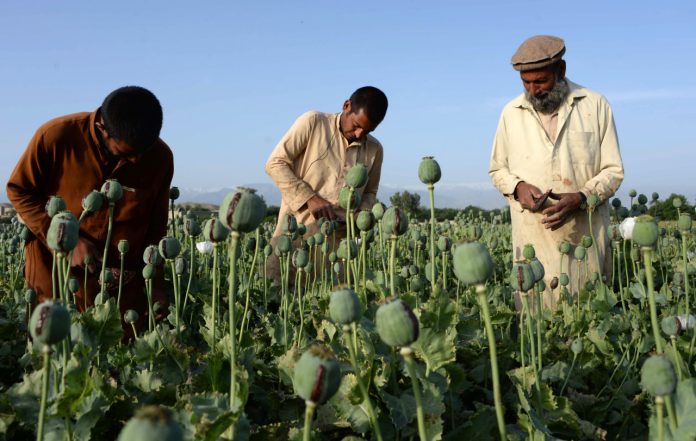
UN says Afghan farmers taking heavy hit from opium poppy ban

The ban has slashed poppy production overall to just 10,200 hectares (25,200 acres) this year, “one of the lowest levels ever recorded” in Afghanistan, the UN Office on Drugs and Crime (UNODC) said.

However, it also resulted in a shift from traditional growing areas in the south to northern provinces further from the control of the Taliban authorities.

In Badakhshan on the border with Tajikistan, surveyed in the agency’s most recent report, poppy production has jumped since the Taliban returned to power in 2021.

In that province and in nearby Kunduz and Balkh, “on average, 85 percent of families… reported either no replacement or only partial replacement of their poppy income” after abandoning production, the report found.

Many farmers are instead growing wheat and other cereals, but in 2023 “the average per-hectare income from wheat was just $770, whereas opium poppy yielded around $10,000 per hectare”.

“This income loss goes far beyond households, weakening rural purchasing power, reducing local economic activity, and increasing communities’ overall vulnerability to poverty and food insecurity,” stated Oliver Stolpe, the UNODC’s regional representative.

The agency urged more efforts to encourage growing of high-value crops such as saffron, nuts, herbs and fruits such as apricots and grapes, which are better suited to the arid and high-altitude landscapes.

Poppy revenues had long been a major source of Afghanistan’s economic output before the Taliban returned to power in 2021.

Output of opium, the core ingredient in heroin, was estimated at 296 tons this year, the agency had reported last month, a 32 percent drop from the year before.

Farmers’ income from opium sales fell by nearly half, to $134 million this year from $260 million in 2024.

The government’s deputy ministry on counter-narcotics welcomed what it called an “important reflection of the realities and genuine challenges of farmers”.

In a response included in the UN findings, it said the authorities would pursue policies aimed at “sustainable rural development and reducing dependency on narcotics crop cultivation”.


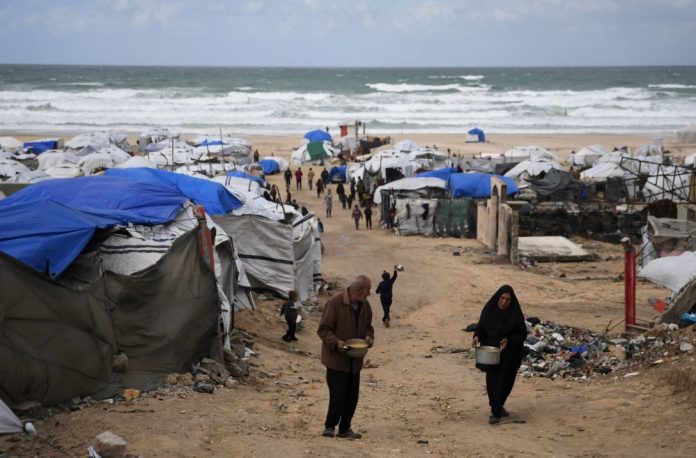
Tents flooded by heavy rains in Gaza amid Israeli siege

Flimsy tents were flooded and makeshift camps engulfed in mud on Monday following heavy winter rains lashing the enclave in recent days.

The harsh conditions have added to the suffering of Palestinians in Gaza, most of whom are reduced to sheltering in tents and other makeshift structures since Israel’s war destroyed an estimated 80 percent of the buildings there.

Officials are warning that severe conditions also bring new dangers, with the threat of disease and illness as overwhelmed and damaged sewage systems contaminate floodwaters, and the risk that damaged buildings could collapse amid heavy rainfall.

At least 15 people, including babies, have died this month from hypothermia following the rains and plunging temperatures, according to the authorities in Gaza.

Two-month-old baby Arkan Firas Musleh was the latest infant to die Monday as a result of the extreme cold. Gaza’s Ministry of Health also announced the death of a Palestinian man in a building collapse onto a tent in the Tel al-Hawa neighbourhood of Gaza City.

On Sunday, a 30-year-old woman was killed when a partially destroyed wall collapsed onto her tent in the Remal neighbourhood to the west of Gaza City amid fierce winds, Al Jazeera Arabic reported.

Officials have warned people not to shelter in damaged buildings, but the tents offer limited protection from the heavy rain and no real protection against flooding.

Aid groups have called for the international community to pressure Israel to lift restrictions on life-saving aid deliveries into the territory, which they say are falling far short of the amount called for under the US-brokered ceasefire.

“More rain. More human misery, despair and death,” Philippe Lazzarini, commissioner-general of UNRWA, the top United Nations group overseeing aid in Gaza, wrote on social media on Sunday.

“Harsh winter weather is compounding more than two years of suffering. People in Gaza are surviving in flimsy, waterlogged tents and among ruins.”

There was “nothing inevitable about this”, he continued, adding, “Aid supplies are not being allowed in at the scale required.”

Meanwhile, despite the ceasefire that came into effect on October 10, Israeli attacks on Palestinians have continued in Gaza.

Since the truce went into effect, more than 414 Palestinians have been killed and more than 1,100 wounded in ceasefire violations, according to Gaza’s Ministry of Health.

US slashes UN humanitarian aid to $2bn: report

The reduced commitment, released on Monday, is a sharp contrast to the assistance of up to $17bn the US has provided as the UN’s leading funder in recent years, about $8 -$ 10bn of which were voluntary contributions, US officials say.

It comes as critics have levelled sharp criticism against the US’s dramatic aid reductions under Trump, leading to deaths and hunger as millions around the world lose shelter, sustenance and other essential aid.

The $2bn will create a pool of funds that can be directed at specific countries or crises, with 17 countries – including Bangladesh, the Democratic Republic of the Congo, Haiti, Syria and Ukraine – initially targeted.

Afghanistan is not included on the list, nor is Palestine, which officials say will be covered by money included in Trump’s yet-to-be-completed Gaza plan.

Earlier this month, the UN launched a 2026 appeal for $23bn – half the amount it needs – as the extent of Western funding losses became clear.

The UN had previously warned in June it would be forced to enact substantial programme reductions amid “the deepest funding cuts ever” to the international aid sector.

Trump has effectively dismantled the US’s primary platform for foreign aid, the US Agency for International Development (USAID), as his administration has called upon UN agencies to “adapt, shrink or die” in response to its approach.

Other Western countries, including Germany, have also slashed funding.

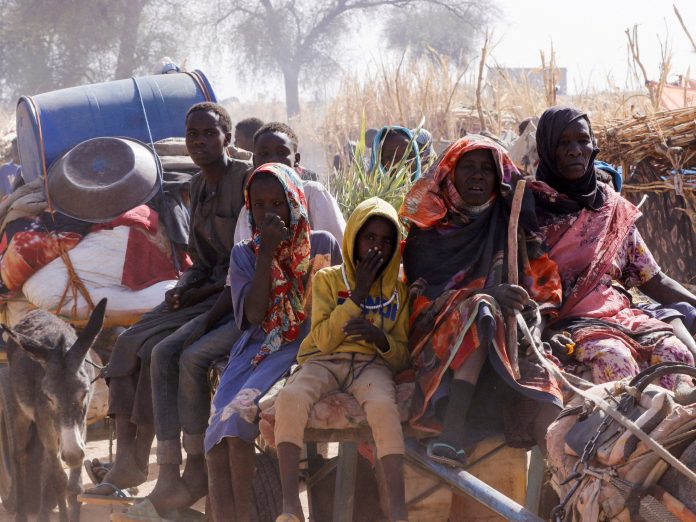
The fallout across the Middle East, South Asia and Africa has been swift.

In July, the UN High Commissioner for Refugees (UNHCR) said more than 11 million refugees would lose access to aid. At the time, the agency had received just 23 percent of its $10.6bn budget, and expected an overall budget of only $3.5bn by the end of the year to meet the needs of 122 million people.

Basic services for Rohingya refugees living in Bangladesh were at risk of collapsing, UNHCR said, while education for more than 230,000 Rohingya children was expected to be suspended.

The same month, the UN predicted a surge in HIV/AIDS deaths by 2029 due to the funding withdrawals, while the French charity Doctors Without Borders said more than 650 children had died from malnutrition in Nigeria as a direct result of international aid cuts.

Speaking on condition of anonymity, a senior US official told The Associated Press news agency that the $2bn is part of a broader plan that will see the UN humanitarian agency (OCHA) “control the spigot” of funds.

Trump’s administration wants to see “more consolidated leadership authority” among UN agencies, the official added.

OCHA chief Tom Fletcher has previously criticised international “apathy” to ballooning humanitarian needs and said his agency was “under attack”.

But Fletcher appeared to praise the $2bn deal, telling the AP the US is “demonstrating that it is a humanitarian superpower”.


Iranian Interior Ministry official warns of hostile propaganda amid economic woes

Dollar

Aliakbar Pourjamshidian, Deputy Minister of Interior for Security Affairs, urged the public and business community not to be influenced by hostile propaganda.

Pourjamshidian added that recent currency fluctuations are largely driven by market psychology rather than real shortages.

“All responsible institutions, including the government, are seriously working to resolve the problems and volatility seen in the currency market”, Pourjamshidian said, responding to criticism over sharp exchange rate fluctuations.

He warned that hostile actors are seeking to exploit the situation. Pourjamshidian called on the public to remain vigilant and not fall victim to enemy inducements, noting that government officials and parliament are fully committed to stabilizing the market.

Addressing protests by some shopkeepers and traders over currency volatility, Pourjamshidian urged market players to show patience and cooperation.

“Psychological warfare should not be allowed to disrupt the market,” he said.

The Interior Ministry official underlined that there is no shortage of goods or supplies in the country, assuring that market activity should continue calmly and that the public has no reason for concern.