Wednesday, April 8, 2026
Home Blog Page 160

France among six more states to formally recognise Palestinian statehood

Alongside France, which co-convened the meeting with Saudi Arabia on Monday in New York, Andorra, Belgium, Luxembourg, Malta and Monaco said they were recognising a Palestinian state.

Leaders from Australia, Canada, Portugal and the United Kingdom, which formally made the move to recognise Palestine a day earlier, also spoke at the meeting.

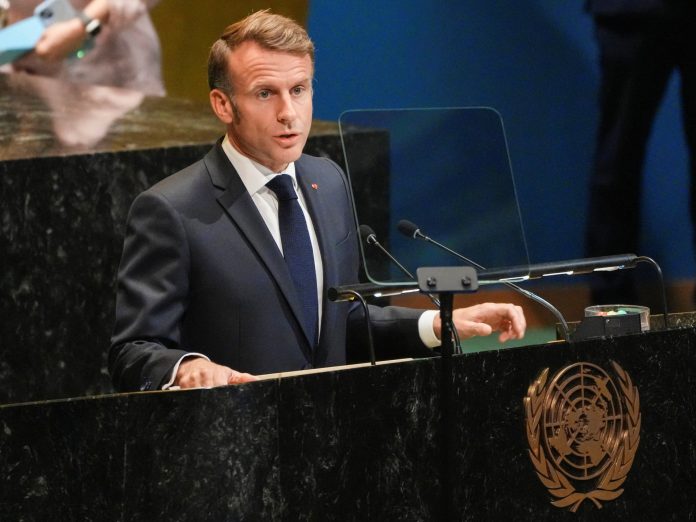
“We have gathered here because the time has come,” Macron said at the summit convened to revive the long-delayed two-state solution to end the Israel-Palestine conflict.

“It falls on us, this responsibility, to do everything in our power to preserve the possibility of a two-state solution,” Macron stated.

“Today, I declare that France recognises the state of Palestine,” he added.

The additional countries recognising Palestine now join some 147 of the 193 UN member states that had already formally recognised Palestinian statehood as of April this year.

With more than 80 percent of the international community now recognising the state of Palestine, diplomatic pressure has ramped up on Israel as it continues its genocidal war on Gaza, where more than 65,300 Palestinians have been killed and the has been enclave turned into rubble.

Spain, Norway and Ireland recognised Palestinian statehood last year, with Madrid also imposing sanctions on Israel for its war on Gaza.

Spanish Prime Minister Pedro Sanchez told the summit on Monday that a two-state solution was not possible “when the population of one of those two states is the victim of a genocide”.

“The Palestinian people are being annihilated, [so] in the name of reason, in the name of international law and in the name of human dignity, we have to stop this slaughter,” Sanchez stressed.

Macron, in his speech to the summit, also outlined a framework for the creation of a “renewed Palestinian Authority”. The post-war framework envisages an International Stabilisation Force (ISF) that would assist in preparing the Palestinian Authority (PA) to take over governance in Gaza.

PA President Mahmoud Abbas commended the countries that had recognised Palestine. He made his statement to the conference by video because he was denied a visa by the administration of US President Donald Trump to attend the UNGA this week.

“We call on those that have not yet done so to do so to follow suit”, Abbas said, adding that the PA also demanded “support for Palestine’s full membership in the United Nations”.

Israel and the US, which are becoming increasingly isolated internationally on the issue, boycotted the summit.

Although the vast majority of UN member states now recognise Palestinian statehood, new UN member states must have the support of the UN Security Council, where the US has used its veto to block Palestine from becoming a full UN member state.

Speaking at the summit, UN Secretary-General Antonio Guterres reiterated his support for the two-state solution, framing it as the only viable path towards peace after years of failed negotiations and ongoing violence.

Guterres said that statehood for Palestinians “is a right, not a reward”, rejecting US and Israeli claims that it was a reward for Hamas.

Saudi Arabia’s Foreign Minister, Prince Faisal bin Farhan Al Saud, thanked Macron and the UN chief for their efforts towards a two-state solution, which he stated is “the only way to achieve just and lasting peace”.

He added the conference comes at a time when “the Israeli occupation authorities continue their aggression and their brutal crimes” against Palestinians in Gaza.

Israel also continues its “violations in the West Bank, and its repeated attacks on Arab and Muslim countries, with the most recent attack on Qatar”, he continued.

“These actions underline Israel’s insistence on continuing aggressive practices that threaten regional and international peace and stability and undermine efforts of peace in the region,” he added.

The US, Israel’s closest ally, has criticised Western governments for their recognition of Palestine, with Secretary of State Marco Rubio earlier saying that the move will “embolden [Hamas]” and make it harder to end the war.

On Monday, White House press secretary Karoline Leavitt said that US President Donald Trump believes the countries’ recognition of Palestine “is a reward to Hamas”.

Israeli Prime Minister Benjamin Netanyahu has repeatedly emphasized that he would not allow the establishment of a Palestinian state. Last September, the UNGA passed a resolution calling on Israel to end its occupation of the Palestinian territory within a year.
 

US vows to ‘defend every inch of NATO territory’

NATO scrambled jets after three Russian MiG-31 fighters on Friday breached Estonian airspace for some 12 minutes, triggering complaints of a dangerous new provocation and a denial from Moscow.

Estonia, a NATO member, called for a meeting of the UN’s top body, the Security Council, “in response to Russia’s brazen violation of Estonian airspace”, and talks with other NATO allies.

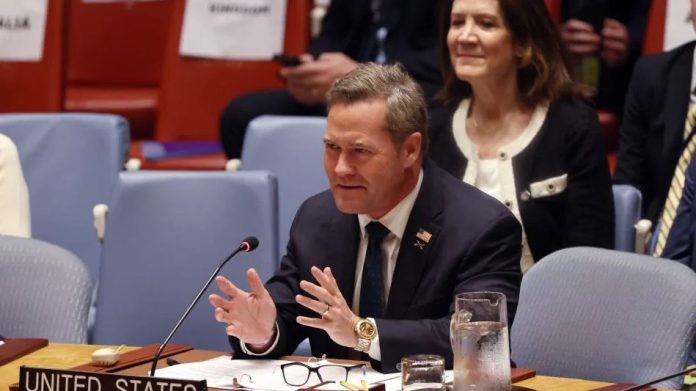
“As we said nine days ago, the United States stands by our NATO Allies in the face of these airspace violations. And I want to take this first opportunity to repeat, and to emphasize, the United States and our Allies will defend every inch of NATO territory,” said US Ambassador Mike Waltz.

The incursion came after fellow NATO member Poland announced earlier this month Russian drones had repeatedly violated its airspace during an attack on Ukraine, in what Warsaw called an “act of aggression.”

US President Donald Trump on Sunday joined the condemnation of the latest airspace violation, vowing to defend Poland and the Baltic states in case of escalation from Russia.

Asked whether he would help defend the EU members if Russia intensifies hostilities, Trump told reporters: “Yeah, I would.”

Trump’s relationship with Russian President Vladimir Putin has blown hot and cold, with the Kremlin leader pressing his invasion of Ukraine and the US president urging peace but showing little concrete sign of pressuring Moscow.

Trump stated Thursday at the close of a state visit to Britain that Putin had “really let me down” by continuing the war, now in its fourth year.

“At a time when President Trump and the United States has been focused, and spent an enormous amount of time and effort to end this horrific war between Russia and Ukraine, we expect Russia to seek ways to de-escalate — not risk expansion,” Waltz added in his maiden speech to the Council.

Western powers have warned that Russia is playing with fire with its repeated ventures into NATO airspace, whose members have a mutual defense assistance pact.

In the incident in Estonian airspace, Italian F-35 fighters attached to NATO’s air defense support mission in the Baltic states, along with Swedish and Finnish aircraft, were scrambled to intercept the Russian jets and warn them off.

Hungary calls for deal to lower risk of war with Russia

Moscow has long characterized the conflict as a proxy war led by the US-led military bloc against Russia using Ukrainian manpower.

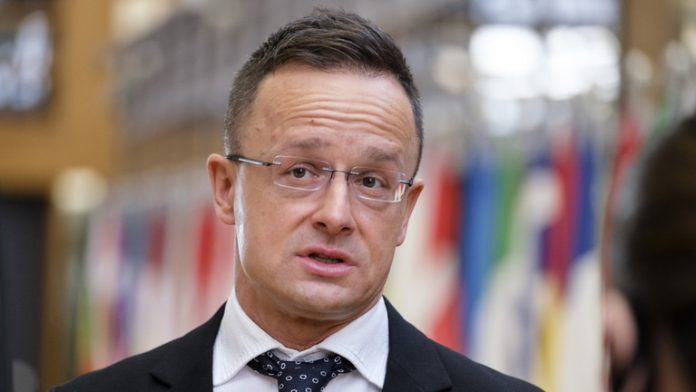
Speaking to the Russian news agency on the sidelines of the UN General Assembly in New York, Szijjarto suggested peace in Ukraine as a way to prevent a dangerous escalation between Russia and NATO.

“If there is peace, if this [Ukraine] war ends, then we can reduce the risk of escalation to zero. But as long as this war continues, I fear that events will occur that carry the risk of escalation, and that is truly bad news,” he said.

Earlier this month, the top diplomat stated that Ukraine and the EU were attempting to “drag” Hungary into the conflict. Despite pressure from Brussels, Budapest has resisted providing military support to Kiev and opposed the bloc’s sanctions against Russia, instead calling for a diplomatic solution.

In recent weeks, EU and NATO members Poland and Estonia have both accused Russia of violating their airspace – claims Moscow has denied as baseless.

In response to Russian drones allegedly crossing into Polish territory earlier this month, NATO launched its Eastern Sentry operation to increase the US-led military bloc’s presence near its eastward flank.

The Russian Foreign Ministry has stated that the drone allegations were fabricated for the purpose of derailing the Ukraine peace talks. Russia has long accused European NATO members of working to prolong and escalate the conflict.

According to Moscow, the US-led military bloc is already “de facto” fighting a war against Russia.

“NATO provides both indirect and direct support to the Kiev regime,” Kremlin spokesman Dmitry Peskov stressed last week. Despite this, Moscow remains “ready and willing” to work towards diplomatically settling the Ukraine crisis, he added.

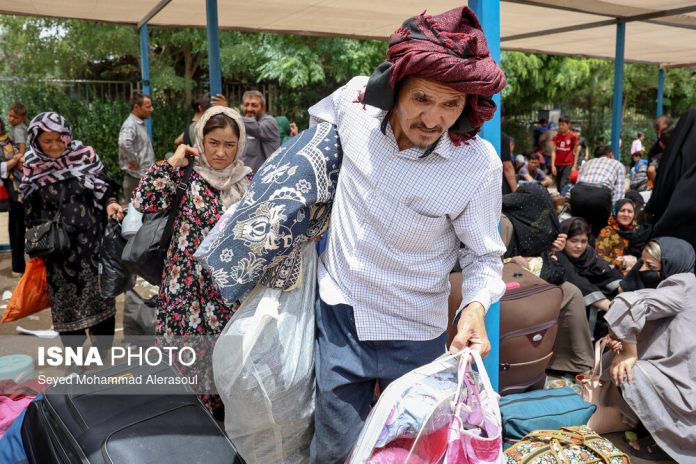
Tehran governor announces deportation of 1.4 million illegal foreign nationals

According to Mohammad Sadegh Motamedian, the removal of these individuals has freed up more than 3,000 classrooms and contributed to a 30–35 percent decrease in rental prices.

He further noted that the second phase of deportations will begin this week to ensure a more comprehensive resolution of the issue of illegal foreigners.

Motamedian underlined that the recent measures have significantly reduced the strain on public services and housing, adding that the authorities are determined to continue until the situation is fully stabilized.

Iran has hosted millions of Afghans since the 1980s when their country was occupied by the former Soviet Union. After the end of the Soviet occupation, wars did not end in Afghanistan and the refugee influx into Iran continued, putting a huge strain on the Iranian economy.

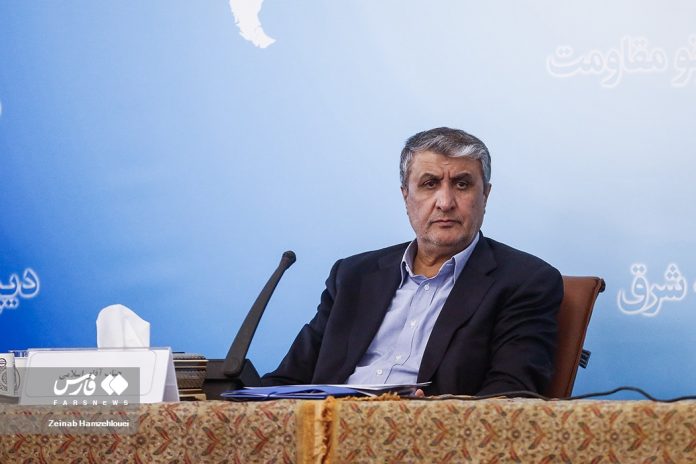
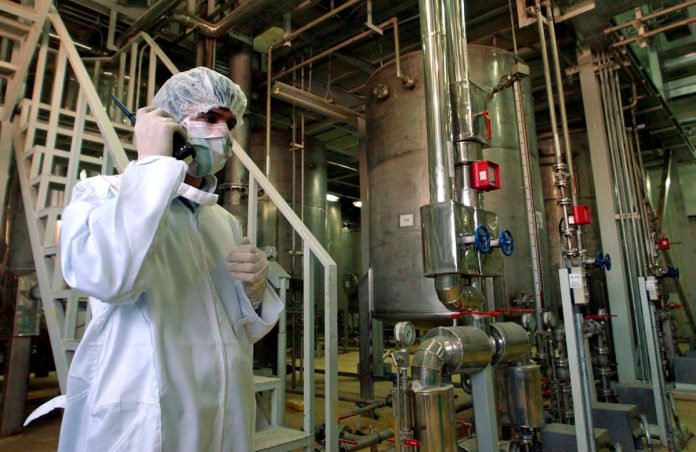
Nuclear chief: Iran to continue its programs within safeguard obligations

Mohammad Eslami

Upon arrival in Russia, Eslami referred to recent remarks by Russian President Vladimir Putin during his meeting with Iranian President Masoud Pezeshkian in January. Eslami said nuclear energy remains the most prominent area of cooperation between the two countries.

He noted that the construction of the second and third units of the Bushehr nuclear power plant is progressing rapidly, thanks to the support of senior Iranian officials.

The head of the Atomic Energy Organization of Iran stressed that Russia plays a defined role in Iran’s ambitious plan to generate 20,000 megawatts of nuclear power.

He spoke about Iran’s participation in the Atomexpo exhibition and related events, saying Tehran and Moscow would sign bilateral cooperation documents.

Eslami also criticized the International Atomic Energy Agency (IAEA) for its silence over the recent US and Israeli attacks on Iranian nuclear facilities that are under safeguards.

He stressed that Iran continues its programs within safeguard obligations and will expand cooperation with the IAEA only if the agency acts impartially and in line with Iran’s parliamentary law.

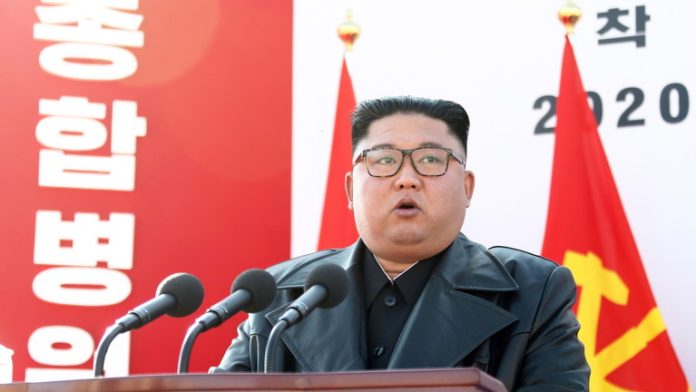
North Korean leader teases ‘secret weapons’

In a speech carried by the state-run KCNA news agency on Monday, Kim said Pyongyang must “continuously stockpile even more formidable forces capable of repelling all military threats,” and accused Washington and its allies of destabilizing the region by staging “provocative actions that further escalate tensions” and disregarding North Korea’s security concerns.

To offset the perceived threat, North Korea has “acquired new secret weapons and has achieved a significant number of research achievements in defense science,” Kim said, without elaborating.

He added that Pyongyang also “successfully built a strategic axis for safeguarding maritime sovereignty by producing destroyers capable of performing various maritime military missions.”

His comments come after North Korea said earlier this month it completed the final ground test of a solid-fuel engine intended for the Hwasong-20 intercontinental ballistic missile, a weapon that could potentially reach the continental US.

Last week, Kim also oversaw tests of tactical attack drones known as Kumsong and an unmanned strategic reconnaissance aircraft. In March, he observed tests of AI-powered “suicide drones.”

In his speech, Kim also reiterated his criticism of the concept of “phased denuclearization,” stressing that “we will never give up our nuclear weapons,” while noting that North Korea’s nuclear status is a “national law.”

At the same time, he struck a peaceful tone, saying if the US abandons what he called a “vain obsession with denuclearization and acknowledges reality,” the two countries would have an opportunity to forge ties.


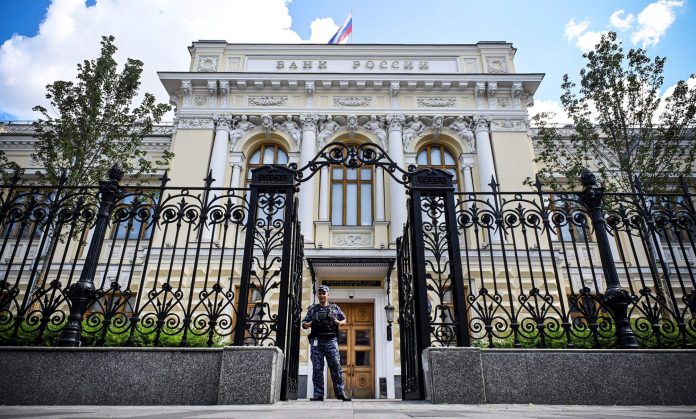
France warns against seizing frozen Russian assets

Russian Central Bank

In an interview with CBS’s Face the Nation aired on Sunday, Macron was asked about what the West was planning to do with the $300 billion in Russian sovereign assets which were frozen after the escalation of the Ukraine conflict in 2022.

“We are all very much attached to being compliant with international rules. You cannot seize these assets from the central bank, even in such a situation,” the French leader said, describing it as “a matter of credibility.”

“When some countries start to disrespect international laws… this is the beginning of a total chaos. So we will respect international law. We are predictable, and we will not do all impossible things with these frozen assets,” he added, recalling that Kiev’s Western backers are already using proceeds from the frozen assets to prop up Ukraine.

Throughout the conflict, Western policymakers have considered seizing Russian assets – most of which fall under EU jurisdiction – but have so far refrained due to the lack of a legal basis and fears it would damage global trust.

Last year, however, G7 nations supported a $50 billion loan to Ukraine secured by the income from Russian reserves. Western nations have also directly handed over to Kiev approximately $4.3 billion in proceeds from Russian assets. This month, the EU Commission floated a proposal to use Russian assets to back a reparation loan to Ukraine, which Kiev would be obligated to repay only if it receives “compensation” for damages from Moscow.

Russia has denounced both the freeze and the profit-transfer scheme as “theft,” warning that confiscation would damage the global financial system and trigger retaliation from Moscow.

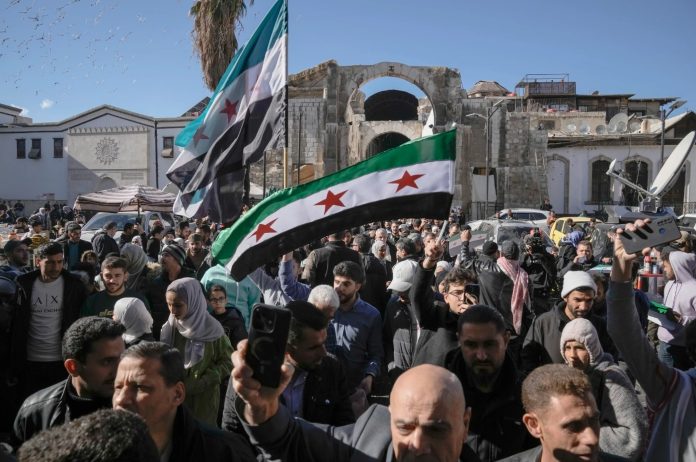
Syria sets October date for first election since al-Assad’s overthrow

Syria War

The vote for members of the parliament will take place “across all electoral districts”, the state-run SANA news agency reported on Sunday.

The announcement comes as the new government seeks to rebuild state institutions and gain legitimacy amid regional and international efforts to stabilise the war-battered country.

A third of the assembly’s 210 seats will be appointed directly by President Ahmed al-Sharaa. The rest will be chosen by local committees supervised by the electoral commission. The chamber will be tasked with approving legislation aimed at overhauling decades of state-controlled economic policies and ratifying treaties that could reshape Syria’s foreign policy.

The new parliament is also expected to “lay the groundwork for a broader democratic process” following al-Assad’s removal in December after nearly 14 years of war, SANA added. Critics, however, warn that the current system does not adequately represent Syria’s marginalised communities.

Authorities had initially said the vote would take place in September. The electoral commission previously indicated that polling in the provinces of Suwayda, Hasakah and Raqqa would be delayed because of security concerns.

Suwayda witnessed clashes in July between Druze fighters and Sunni Bedouin tribes, while Hasakah and Raqqa remain partly under the control of the Kurdish-led Syrian Democratic Forces.

In March, al-Sharaa’s administration issued a constitutional declaration to guide the interim period until the election.

The document preserves a central role for Islamic law as well as guarantees women’s rights and freedom of expression. Opponents have expressed concern that the framework consolidates too much power in the hands of Syria’s leadership.

Al-Sharaa, a former al-Qaeda commander whose Hayat Tahrir al-Sham (HTS) group played a key role in al-Assad’s fall, has also turned to regional diplomacy to bolster his government and Syria’s security.

He told local media that security talks with Israel are a “necessity”, stressing that any agreement must respect Syria’s territorial integrity and end Israeli violations of its airspace.


Dozens of Iranian lawmakers call for production of nuclear weapons

Iran Nuclear Program

In their letter, the lawmakers referred to the Supreme Leader’s fatwa prohibiting nuclear weapons, stressing that under current circumstances this ban applies to the use of nuclear weapons; however, the construction and possession of such weapons, as a means of deterrence, is a different matter.

Hojjatoleslam Hassanali Akhlaqi Amiri, a representative from Mashhad, drafted the letter calling for a reconsideration of the Islamic Republic of Iran’s defense doctrine.

The letter stated that the fatwa issued in 2010 by the Supreme Leader of the Islamic Revolution, Ayatollah Khamenei, declaring the production and use of nuclear weapons forbidden, came at a time when international institutions and Western countries exercised at least minimal control over the illegitimate Zionist regime. Today, however, this usurping regime has reached the brink of madness, launching assaults wherever its evil hand can reach, violating all international obligations and shedding the blood of innocent people.

The lawmakers stressed that safeguarding Islam is tied to the preservation of the Islamic Republic system, describing this as a religious duty.

Europe refutes key Trump demand over Ukraine war

US & EU Flags Iran Nuclear Talks

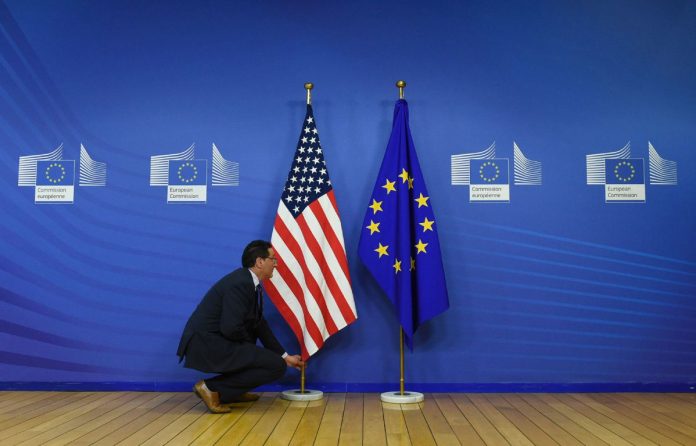
Earlier this month, the US President called on Brussels to introduce tariffs of up to 100% on Indian and Chinese goods, similar to those introduced by Washington. Trump argued that the move would increase financial pressure on Moscow to halt the Ukraine conflict by isolating countries that maintain economic ties with Russia.

”The EU will make its own decisions,” von der Leyen said, emphasizing that the bloc’s latest package of “ambitious and substantial” sanctions is enough to bring Russia to the negotiating table.

She stressed that the “increasingly complex geopolitical environment” forces the EU member states to “strengthen their partnerships based on shared interests,” adding that “closer cooperation between the EU and India is more essential than ever.”

She also stated that the bloc would continue to coordinate efforts on both sides of the Atlantic as well as with the G7 countries to help bring the Ukraine conflict to an end.

Brussels has reportedly included twelve Chinese and three Indian entities in its 19th sanctions package for allegedly helping Russia bypass previously introduced Western restrictions.

Washington, meanwhile has targeted trade with India and China.

In late August, the US imposed a 25% punitive tariff on India, bringing total import duties to 50% on most goods, citing its failure to curtail purchases of Russian oil. New Delhi’s Foreign Ministry called the move “unfair and unjustified.”

Tariffs on Chinese goods had reached as high as 145%, prompting Beijing to respond with retaliatory duties of up to 125%. After both sides agreed to temporarily lower the rates to 30% and 10% respectively earlier this year, they extended the tariff pause until November.