Friday, January 2, 2026
Home Blog Page 1407

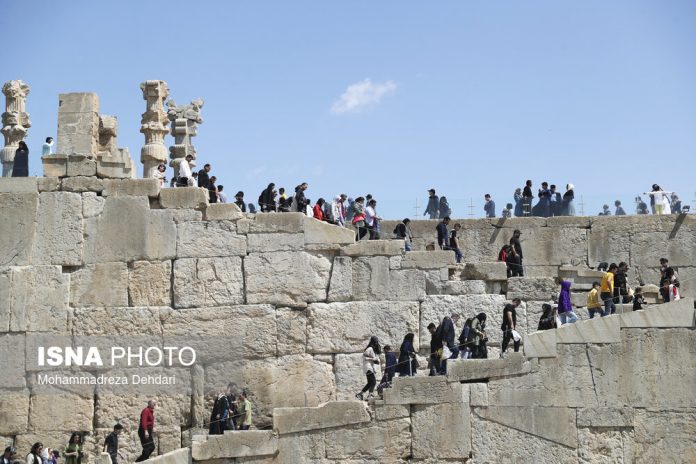
Iranian student registers smart tourism initiative at IFIA

Takht-e-Jamshid

Ehsan Aghajani Rizi is a PhD student in tourism and an expert in smart tourism and artificial intelligence.

According to the expert, the initiative would enable close relationship between tourist destinations and tourists with the aim of solving the existing problems, including a lack of knowledge of the details of the destinations and the inability of tourists in real time analysis, via promoting the culture of human stem cells and boosting the capability of nerve cells and other structures.
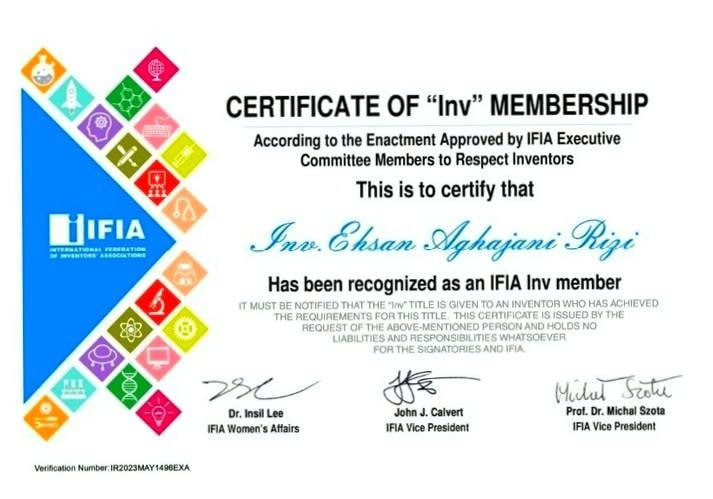
Iranian student Ehsan Aghajani Rizi registers smart tourism initiative at IFIA

Tourism with smart gloves and shoes with human cellular structure

Aghajani Rizi said the initiative will become operational via smart gloves and shoes mainly made of human skin and cellular structure, which are connected to human nerve cells by a membrane and serve actually as a conduit for receiving data and sending nerve messages to the brain chip.

The results and feedback of the analysis performed by the brain chip are then transferred to the human nervous system through the gloves and the shoes.

The operation seeks to increase the tourist’s analytical ability to the extent of 70 to 110 times the analytical power of a normal person.

“The idea will be completed by using smart eye lenses made of the cornea that enjoy special features such as farsightedness, imaging, and adjusting the amount of eye sight.

The energy required for the smart lenses to remain active and stable is provided by the energy sourced from the natural eye movements and blinking, and the process of analyzing tourist sites will be carried out through the connection to the smart chip,” Aghajani Rizi said.

Two smart wings for tourists to pass through rough regions

The final step, he added, is the design of two smart wings to enable tourists to visit destinations that are hard to get at.

“The energy required to operate these wings comes from the battery and micro solar panels designed on the surface of the wings. Motion sensors to predict encounters with unknown objects in the sky as well as olfactory sensors to enter unknown tourist destinations are also installed on the wings,” according to the expert.

Registration of “Ehsan; The Smart Creative Tourist” at IFIA

He said the initiative was registered on April 15, 2023 under the title “Ehsan; The Smart Creative Tourist” at the intellectual property department of the country’s Organization of Deeds and Real Estate Registrations under the number 140250140003000487, and later globally at the International Federation of Inventors’ Associations (IFIA) in Geneva, Switzerland.
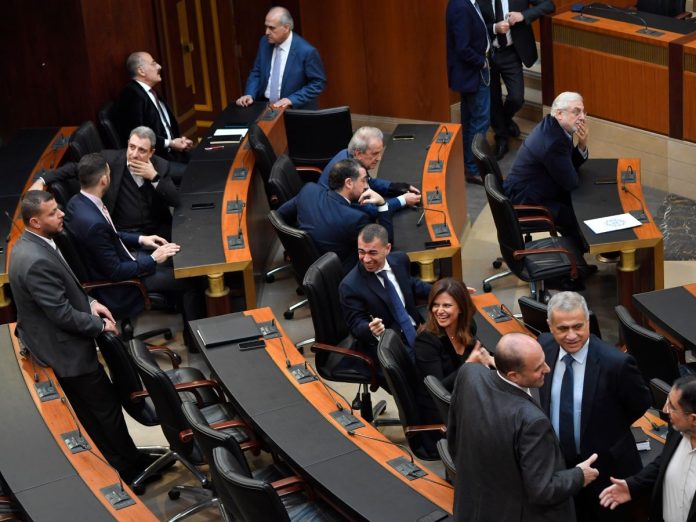
Lebanon’s MPs fail to elect president for 12th time

Lebanon parliament

Lawmakers cast ballot to elect between Hezbollah-backed candidate Suleiman Frangieh and his competitors Jihad Azour and Ziad Baroud.

None of the candidates, however, were able to secure enough votes to win the first round of voting, with Frangieh obtaining 51 votes, Azour 59 votes and Baroud 7 votes, according to results announced by Parliament Speaker Nabih Berri.

Azour, a former finance minister, is backed by Lebanese opposition parties.

A candidate needs two-thirds of the vote, or 86 lawmakers, to make it through the first stage. An absolute majority is needed in subsequent rounds.

A second round of voting failed to take place due to lack of a quorum after lawmakers of Hezbollah and its ally Amal Movement withdrew from the session.

The post has been vacant since Oct. 31 when President Michel Aoun left office after the end of his 6-year term.

Since 2019, Lebanon has been facing a crippling economic crisis that, according to the World Bank, is one of the worst the world has seen in modern times.

The country has been without a fully functioning government since May, with Prime Minister Najib Mikati and his Cabinet having limited powers in their current caretaker status.

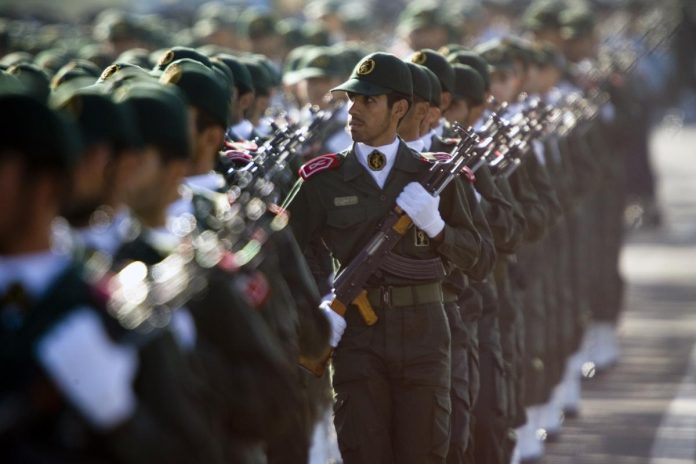
In drill, IRGC clears western Iranian city of counter-revolutionary terrorists

IRGC Ground Force

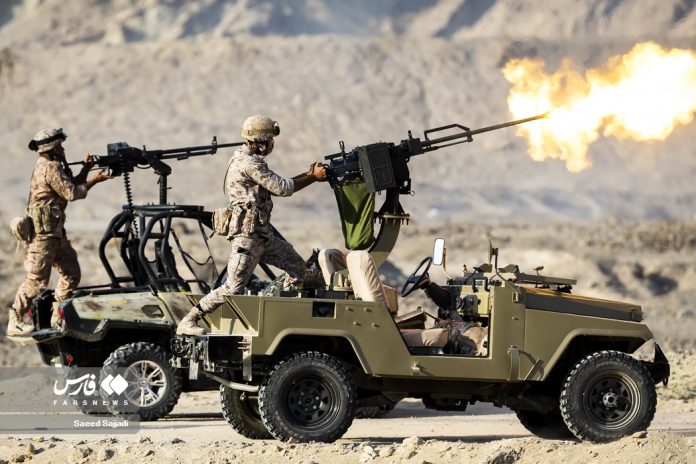
Speaking to reporters on the sidelines of the drill on Wednesday, Commander of the IRGC’s Hamze Sayyid al-Shohada Base said the Kusalan heights in Sarvabad city of Kurdistan Province have been fully cleared of the hostile elements.

The hideouts of the counter-revolutionary elements, which have long been upsetting security in the region, are now being removed, he added.

The commander added that the security operation would help restore calm and enable the local people to resume their economic activities freely in the region, which borders Iraq’s semi-autonomous Kurdistan region.

The IRGC has launched several rounds of military strikes on the positions of separatist groups based in the Iraqi Kurdistan, as officials of the Iraqi region failed to heed Tehran’s warnings and get rid of the anti-Iran terror bases there.

Iran envoy says US sanctions impede efforts to tackle climate change

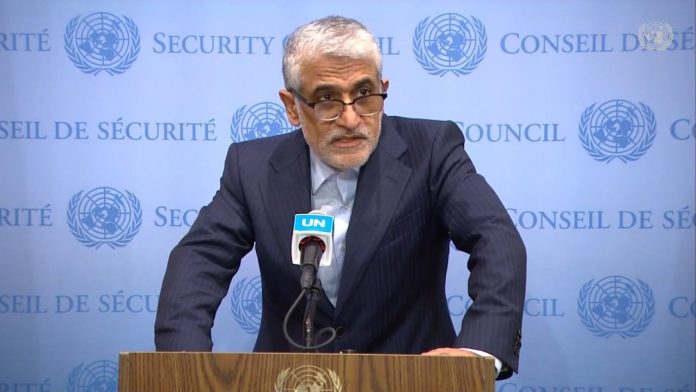
Amir Saeed Iravani

Iravani made the remarks in an address to the United Nations Security Council session entitled “Climate Change, Peace and Security” in New York on Tuesday.

“Iran, like other nations, confronts environmental challenges and climate change impacts such as pollution, water scarcity, sand and dust storms, desertification, and biodiversity degradation,” he stated.

“These challenges are worsened by restrictions on accessing foreign goods and services due to unilateral coercive measures imposed by the United States,” he said.

Iravani highlighted that illegal US sanctions impede international funding, hinder renewable energy investments as well as access to environmentally sound technology, and restrict joint environmental research and educational opportunities.

“Consequently, environmental degradation in Iran negatively affects the rights of people to a healthy environment and a decent standard of living,” Iran’s UN envoy pointed out.

The senior Iranian diplomat went on to call for an immediate end to the imposition of sanctions, stating that the unilateral coercive measures act as barriers to the targeted countries’ contributions to “climate change mitigation efforts.”

“Economic, financial, and technological assistance should be provided to countries in need, and relevant platforms such as the General Assembly, the Economic and Social Council, and the UNFCCC (the United Nations Framework Convention on Climate Change) should address these issues appropriately,” Iravani added.

He underlined that the Security Council should refrain from encroaching upon the mandates of other UN bodies, as it lacks the expertise and tools to effectively respond to climate-related security risks.

“Iran firmly opposes the idea of linking climate change to international peace and security and strongly rejects any attempts to politicize technical matters such as climate change,” Iravani underscored.

“Climate change is essentially an issue related to sustainable development rather than a matter of international peace and security,” the Iranian ambassador to the UN said.

Iravani stressed that the issue needs to be addressed and pursued within the appropriate organs of the United Nations, in accordance with their respective mandates.

He stated that developed countries should fulfill their obligations under the UNFCCC and the Paris Agreement, and provide sufficient support, including financial assistance and technology transfer, to developing countries and help them effectively implement their commitments.

Developing countries, within their capabilities and national circumstances, should receive assistance from the international community to overcome obstacles hindering the implementation of their commitments, the Iranian envoy noted.

Iravani stated that the Islamic Republic of Iran, despite pressing challenges, is determined to honor its commitments, and is organizing with UN support the “International Conference on Combating Sand and Dust Storms” to be held between September 9 and 10 in Tehran.

“The conference aims to bring together all affected countries and interested partners to discuss the means and ways to address the key challenges posed by sand and dust storms, and to find the best solutions and mechanisms possible for mitigating global risks and impacts,” he added.

Mentally disabled Palestinian killed by Israeli forces in WB

Israeli Forces

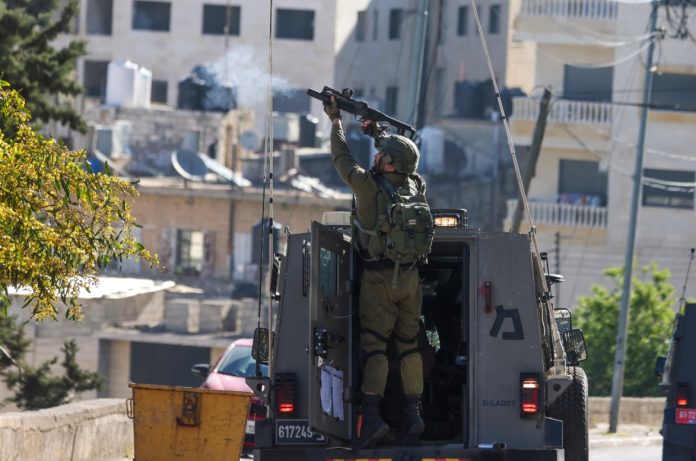
The official Palestinian news agency WAFA reported that Israeli forces stormed Balata refugee camp and surrounded the house of a wanted resistance fighter, triggering armed confrontations with Palestinians.

The Palestinian Health Ministry said Faris Abdul Munim Hashash, 19, was shot by Israeli forces during the clashes. He was brought to Rafidia Surgical Hospital in Nablus with bullet wounds to the chest, abdomen and lower limbs. He was pronounced dead shortly afterward.

Eight other Palestinians were treated for gunshot wounds, including one who was hit in the head, the Palestine Red Crescent Society (PRCS) said.

The Israeli military announced that the military operation was to chase down Issam al-Salaj, a resistance fighter residing in the area.

“The military bombed the house, they damaged it,” Husam Sallaj, Issam’s uncle, told Reuters news agency. He added his nephew was wounded but not captured.

The Palestinian man’s brother, Suhaib Sullaj, stated an Israeli commander rang to demand that Issam turn himself in. “He said, ‘We want to bomb the house. If you don’t leave, we will kill you, Issam, your mother and sisters, the entire family.’”

Local media reported the family’s house was partly destroyed. Furniture, mattresses and children’s toys were seen scattered in one of the rooms. A car parked in a narrow alley near the targeted house was also torched.

Tensions have been running high in the occupied West Bank over the past year, with the Israeli military conducting violent raids under the pretext of detaining what it calls “wanted” Palestinians.

As a result of these attacks, nearly 160 Palestinians, including 28 children, have lost their lives and many others have been arrested in 2023.

Israeli soldiers face no charges over death of elderly Palestinian-American

Omar Assad

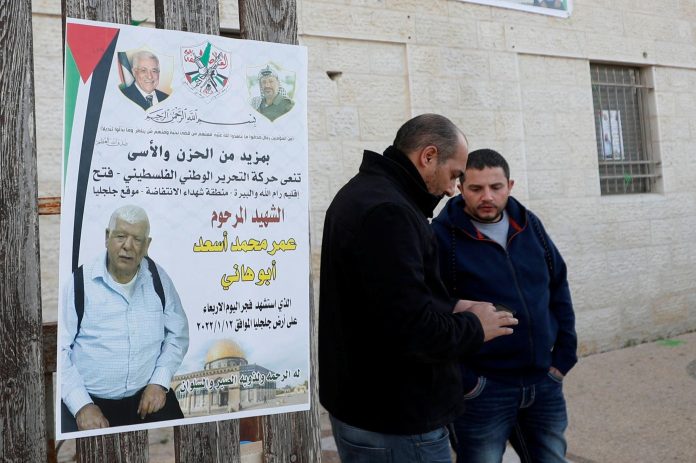
Palestinian leaders had called for the Israeli troops that detained 80-year-old Omar Assad at a makeshift checkpoint in his West Bank hometown of Jiljilya to be prosecuted in an international court.

Israel’s Military Advocate General – the Israeli army’s chief legal body – said in a statement on Tuesday that the soldiers involved would face only disciplinary measures.

A Palestinian autopsy found that Assad, a former resident of Milwaukee, Wisconsin, in the United States, had a history of heart problems and suffered cardiac arrest caused by stress. Palestinian officials attributed this to him having been manhandled by the Israeli soldiers.

Assad died in January 2022 after Israeli forces cuffed his hands with a zip tie, temporarily gagged, blindfolded and left him on the cold ground because, they claimed, he had refused to show identification when they stopped him at a checkpoint while he was driving home late one night, according to an Israeli military investigation.

The investigation also said the Israeli soldiers assumed that Assad was asleep when they cut off the cable binding his hands and did not offer medical help when they saw that the 80-year-old was unresponsive. They then left Assad lying on the ground without checking to see if he was alive. He was later found dead in the early morning with a plastic zip-tie still around one wrist.

Israeli investigators said the soldiers were forced to restrain Assad because of his “aggressive resistance”. Assad’s family had expressed scepticism that the behaviour of an ailing 80-year-old could justify such harsh treatment.

On Tuesday, the Israeli military acknowledged the soldiers’ misconduct, saying their actions “did not correspond with what is required and expected” of the Israeli military.

But the decision to not prosecute the Israeli soldiers involved was made “following the hearings and after a thorough examination of the investigation materials, which indicated no causal link was found between the errors in the conduct of the soldiers and [Assad’s] death”, the Israeli military’s advocate general announced in a statement.

According to the statement, an Israeli military medical official said it was impossible to determine that Assad’s death was caused specifically by the soldiers’ conduct and that the soldiers could not have been aware of the 80-year-old’s medical condition.

Two commanders would be dismissed and barred from serving in senior military positions for two years, the military said. One of the commanders would be “reprimanded”, the Israeli military said, without elaborating, the Associated Press (AP) reported.

The news that Israel would not file charges in the case did not surprise Nawaf Assad, Omar’s brother living in Virginia, in the US.

“Israel somehow gets away with anything it wants,” he told the AP, adding, “It’s still clear to us that the soldiers acted criminally.”

A report by Israeli rights group Yesh Din based on military data from 2017 to 2021 found that Israeli forces were prosecuted in less than 1 percent of hundreds of complaints filed against them on alleged offences against Palestinians.

In rare cases where soldiers were convicted of harming Palestinians, the military courts handed extremely lenient sentences, demonstrating “a reluctance on the part of the military law enforcement system to take appropriate action concerning crimes committed by soldiers against Palestinians”, the group said.

Assad was one of two US citizens killed by Israeli forces last year – along with Al Jazeera journalist Shireen Abu Akleh.

The two cases caused outrage in Arab-American communities amid the failure of US President Joe Biden administration to hold Israel accountable and continued unconditional support for the country.

“It’s not just that Israel sees two classes of American citizens, it is that the US treats us as separate classes of citizens [when] they do not give us equal protection,” James Zogby, president of the Arab American Institute think tank, told Al Jazeera last month.

“We’re all deserving of the same rights. We’re not children of a lesser God,” he added.

The US State Department, which often says it has no higher priority than the safety of US citizens abroad, called last year for “a thorough criminal investigation and full accountability of Mr. Assad’s death”.

“We continue to closely track this case with the Israeli government,” the State Department told Al Jazeera at the time.

American Muslims for Palestine, a Washington, DC-based advocacy group, said in a social media post on Tuesday that “a criminal government cannot be trusted with prosecuting its own crimes. Omar Assad“.

“According to the Israeli investigation, dragging an 80 y/o man from his car, brutalizing him and leaving him for dead couldn’t have possibly led to his death,” the group added.

US says Iran, Bahrain likely to restore diplomatic relations soon

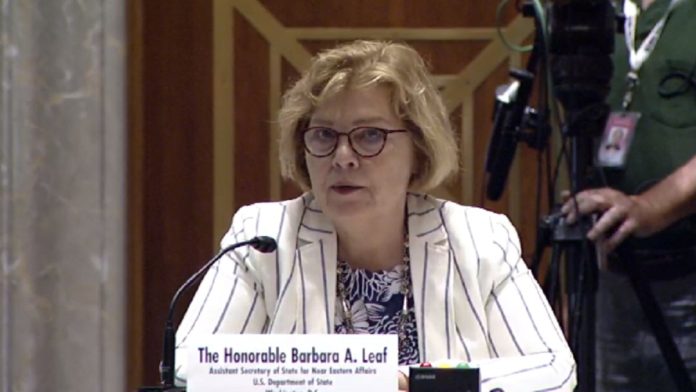
US Assistant Secretary of State for Near Eastern Affairs Barbara Leaf

Speaking about the possibility of Bahrain restoring diplomatic ties with Iran, US Assistant Secretary of State for Near Eastern Affairs Barbara Leaf told lawmakers, “I think it will happen sometime soon.”

Back in early January 2016, Bahrain followed Saudi Arabia’s decision by severing diplomatic relations with Iran, after Iranian protesters, enraged by the execution of prominent Shia cleric Sheikh Nimr Baqir Al-Nimr by the Saudi government, stormed its diplomatic mission in Iran.

On Monday, Iranian Foreign Ministry Spokesman Nasser Kanaani has said that Tehran welcomes restoration of ties with Manama. He added that Bahraini officials have voiced their readiness to resume relations with Iran.

Iran and Saudi Arabia announced in March they would restore diplomatic ties and Tehran reopened its embassy in Riyadh on June 6.

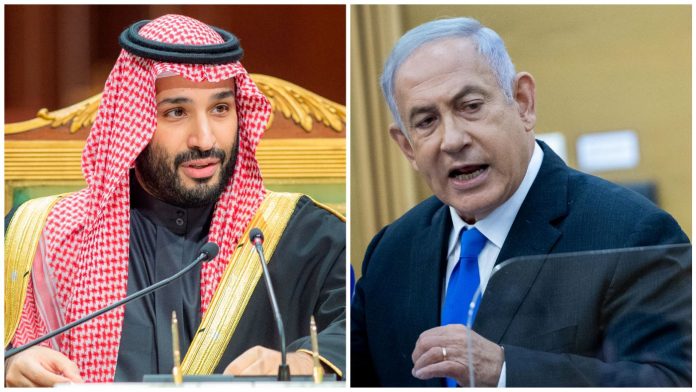
Saudi Arabia says no Israel normalisation without solution to Palestine

Netanyahu MbS

“Israel has a lot of potential and normalisation can do wonders, not just for Israelis and Palestinians, but there’s potential for trade and cultural exchanges and exchanges with Israel on multiple fronts,” Fahad Nazer, spokesman for the embassy, said in an interview with the English-speaking and state-owned Arab News.

“But for that to happen, for the kingdom to take that step, we need that core dispute [with the Palestinians] to be resolved,” he added.

The remarks are a rare instance of the Saudi embassy making a media appearance, with the embassy being one of the most closed off to the media.

Over the past few months, Israeli news outlets had been reporting near-daily updates on the Joe Biden administration’s back and forth with Israel and Saudi Arabia. A report by Axios that the White House aimed to seal a deal within 6-7 months, before the next US elections, added to the frenzy.

And prior to leaving on a trip to Saudi Arabia last week, US Secretary of State Antony Blinken gave an address to the pro-Israel lobbying group, Aipac, in which he said that Washington is committed to a Saudi-Israel deal.

Another one of Saudi Arabia’s demands for normalisation with Israel has been security guarantees from the US and assistance in developing a civilian nuclear programme.

While Saudi Arabia did not join the United Arab Emirates, Bahrain, Morocco and Sudan in the US-brokered normalisation agreement with Israel, the kingdom has been affected as a result of those deals.

The US move to put Israel in Centcom, the US military command for the Middle East, for example, expanded defence links between the two countries. Last year, Saudi Arabia and Oman publicly joined Israel in US-led naval exercises for the first time.

Nazer added that Saudi Arabia’s position on normalisation has been consistent since the Arab Peace Initiative in 2002 introduced by the late King Abdullah, which offers normalisation in exchange for peace with Palestinians that includes a two-state solution.

The embassy spokesman said the 2002 measure remains on the table and that Riyadh hopes for a return to negotiations “to try and resolve this dispute, which has brought much pain and suffering across the region”.

Saudi Arabia, a longtime and close partner of the US, has at the same time begun taking a more independent foreign policy approach under Crown Prince Mohammed bin Salman.

Nazer’s interview focused on US-Saudi relations, which he described as strong and stable.

“I think the relationship has been on solid ground for many years, even if you’re referring to the past two years, our relationship and cooperation and coordination on multiple fronts has continued,” Nazer stated.

The kingdom’s decision in March to re-establish ties with Iran in a deal brokered by China, however, appeared to be a part of this drift from Washington.

Nazer also discussed the agreement between Saudi Arabia and Iran, noting that not all the issues between the two countries have been solved.

Arab countries accounted for 25% of Israel’s record $12.5bn in arms exports: Report

The 2022 price tag marked a 50 percent jump from the previous three years and a doubling in volume over the previous decade, according to Israel’s defence ministry. Drones accounted for 25 percent of the 2022 exports, while missiles, rockets or air defence systems amounted to 19 percent, Reuters reported.

The UAE, Morocco, and Bahrain established official relations with Israel in 2020 as part of the US-Backed Abraham Accords.

The countries have since moved to cement ties in the defence sphere. Israel dispatched a senior Israeli navy officer to Bahrain last year. According to satellite images, the UAE has deployed Israeli Barak aerial defence systems.

On Friday, Israel’s top envoy to Morocco said Elbit Systems, one of Israel’s leading defence technology companies, had plans to open two sites in Morocco. The announcement followed a report that Israel is considering recognising Morocco’s sovereignty over the disputed Western Sahara territory.

The boom in arms trade underscores how defence and commercial ties have progressed between Israel and Arab states despite recent tensions in the occupied West Bank and reluctance from Arab states to sign on to a US and Israeli-backed defence group dubbed the “Middle East Nato”.

Persian Gulf states like the UAE have been cautious to embrace overt military ties with Israel that could be seen as aimed at their mutual rival, Iran. Tensions in the region have been rising, with one senior Israeli military commander warning: “There’s more chance of a large-scale war than ever before.”

Israel’s government, led by Prime Minister Benjamin Netanyahu, has been seeking a normalisation agreement with Saudi Arabia.

Although talks have been ongoing for months, Israeli media outlets had recently talked up the chances of a deal. Middle East Eye reported previously that Riyadh was likely more cautious about striking a deal as it enjoyed being courted by Israel and the Joe Biden administration, which previously vowed to make the kingdom “a pariah”.

IRGC member killed during operation to arrest suspect in west Iran

IRGC

The IRGC said in a statement that Mahdi Shah Maleki was injured, along with another comrade, in the skirmishes that broke out in the city of Eslamabad-e-Gharb as they were trying to arrest a suspect.

The two injured forces were transferred to hospital, but Maleki succumbed to his severe injuries.

The suspect was arrested and an investigation is underway.