Wednesday, December 31, 2025
Home Blog Page 137

Iran’s armed forces spokesman: Americans have no right to dictate missile range

Iran Drone Missile

Shekarchi stressed: “The Americans are in no position to tell us to shorten the range of our missiles. It is none of their business how far our missiles can reach.”

Challenging Washington’s claims, he added: “Who do the Americans think they are to decide for us or for the world? I have one simple response to them: you are in no position, and you have no right.”

Shekarchi emphasized that Iran’s defense capabilities are a sovereign matter, rooted in the nation’s right to security and deterrence, and cannot be subjected to external dictates.

Larijani meets Hezbollah leader: “Iran ready to support Lebanon, resistance at all levels”

During the meeting, Larijani reaffirmed Tehran’s unwavering support for Lebanon and its resistance movement, in line with the directives of Ayatollah Seyyed Ali Khamenei, the Leader of the Islamic Revolution, stressing that Iran stands ready to assist Lebanon and its resistance at all levels.

Sheikh Naim Qassem expressed gratitude to the leadership, government, and people of Iran for their condolences on the anniversary of the martyrdom of Sayyed Hassan Nasrallah and Hashem Safieddine, as well as for Iran’s continuous support for Lebanon and the resistance.

Underscoring Lebanon’s resilience, he noted that the Lebanese nation remains steadfast in the face of U.S. and Israeli threats, standing firmly for dignity, freedom, and independence.

He stressed that those who witness the courageous stance of the Lebanese people will recognize that, in confronting the Zionist enemy, victory belongs to its allies.

Qassem further declared that Hezbollah is prepared to cooperate with all who resist the Zionist enemy, describing it as a threat to nations, governments, and resistance movements alike.

“We are certain that this aggressive hegemony of Israel will ultimately face a humiliating and ignominious end through the shining steadfastness of those who resist it,” he said.

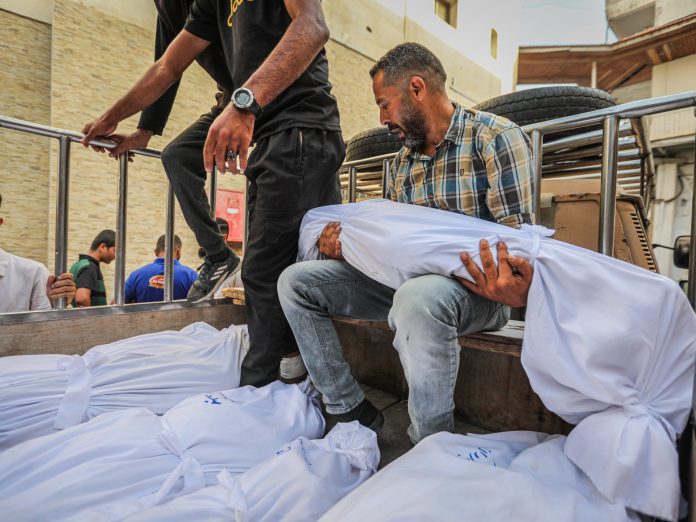
Gaza death toll surges past 66,000

Gaza War

A ministry statement said that 79 bodies, including two retrieved from the rubble, were brought to hospitals in the last 24 hours, while 379 people were injured, taking the number of injuries to 168,162 in the Israeli onslaught.

“Many victims are still trapped under the rubble and on the roads as rescuers are unable to reach them,” it added.

It also noted that six Palestinians were killed and 66 others injured by Israeli army fire while trying to get humanitarian aid in the last 24 hours, bringing the total number of Palestinians killed while seeking aid to 2,566, with over 18,769 others wounded since May 27.

The Israeli army resumed its attacks on the Gaza Strip on March 18 and has since killed 13,173 people and injured 56,121 others, shattering a ceasefire and prisoner exchange agreement that took hold in January.

Last November, the International Criminal Court issued arrest warrants for Israeli Prime Minister Benjamin Netanyahu and his former Defense Minister Yoav Gallant for war crimes and crimes against humanity in Gaza.

Israel also faces a genocide case at the International Court of Justice for its war on the enclave.

Russia pounds Kyiv, other Ukrainian regions in mass drone and missile attack

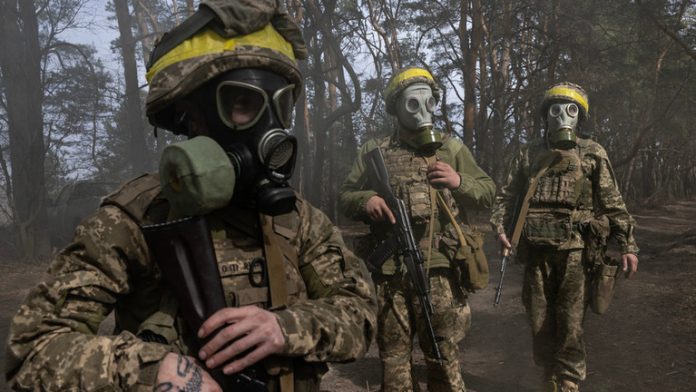
Ukraine’s military announced that Russia launched 595 drones and 48 missiles overnight and its air defences shot down 568 drones and 43 missiles. It added that the main target of the strike was the capital Kyiv.
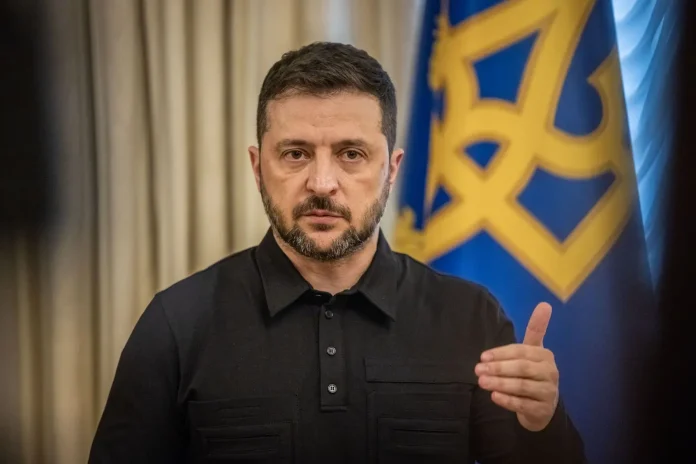
President Volodymyr Zelensky stated the attack, which lasted more than 12 hours, damaged a cardiology clinic, factories and residential buildings.
Russia’s defence ministry said on Sunday it had carried out a “massive” attack on Ukraine using long-range air and sea-based weapons and drones to target military infrastructure, including airfields.
Moscow has denied targeting civilians in its war against Ukraine, although thousands have been killed and residential areas extensively damaged by its attacks.
Zelensky again urged the international community to act decisively to cut off Russia’s energy revenues that fund its invasion. Ukraine has so far failed to convince U.S. President Donald Trump to impose punitive sanctions on Moscow.
“The time for decisive action is long overdue, and we count on a strong response from the United States, Europe, the G7, and the G20,” he said on the Telegram messaging app.
Attacks on such a scale have stretched Ukraine’s limited air defences throughout 2025. Zelensky stated on Saturday an additional Patriot missile system from Israel had been deployed and he expected two more to arrive this autumn.
He and other officials have asked international partners for more to protect Ukraine’s skies, but air defence systems are limited in availability and other nations are keen to bolster their defences amid perceived threats from Russia.
Emergency services announced that at least four people were killed, while 67 people were reported wounded across the country by local authorities.

No proposal received from mediators for Gaza ceasefire: Hamas

Gaza War

Media reports earlier said that Hamas had received a US proposal to reach a Gaza ceasefire and end the Israeli war in the enclave.

“Hamas confirms that it has not received any new proposals from mediators,” the group said in a statement.

It added the ceasefire negotiations have stalled since the Sept. 9 Israeli airstrike on Hamas leadership in the Qatari capital, Doha. Five Hamas members were killed in the attack.

“Hamas affirms its readiness to study any proposals it receives from mediators with positivity and responsibility, in a manner that preserves the national rights of our people,” the statement read.

On Sept. 25, US President Donald Trump presented a 21-point peace plan to Arab leaders, which calls for a permanent ceasefire in Gaza, the release of all Israeli hostages, governance of Gaza without Hamas, and a gradual withdrawal of Israeli forces from the enclave, according to some media reports.

Arab leaders endorsed large portions but sought additions, including guarantees against West Bank annexation, maintaining Jerusalem’s status quo, increased humanitarian aid, and addressing Israeli settlements, regional diplomats told CNN.

The Israeli army has killed nearly 66,000 Palestinians, most of them women and children, in Gaza since October 2023. The relentless bombardment has rendered the enclave uninhabitable and led to starvation and the spread of diseases.

Iran rejects baseless claims at PGCC-UK statement

Esmael baghaei

The foreign ministers of the Persian Gulf Cooperation Council member states and UK Secretary of State for Foreign and Commonwealth Affairs Yvette Cooper, met in New York on September 24 to discuss the regional and global issues. In a joint statement at the conclusion of the meeting, they questioned Iran’s sovereignty over the three Persian Gulf islands by expressing support for the United Arab Emirates’ call to reach a peaceful solution to the dispute over Greater Tunb, Lesser Tunb, and Abu Musa, through bilateral negotiations or the International Court of Justice.

In response, Spokesperson for the Iranian Foreign Ministry Esmaeil Baqaei issued a statement on Sunday, emphasizing that Greater Tunb, Lesser Tunb, and Abu Musa are an integral and inseparable part of Iran’s territory and will remain so.

He stressed that repeated political statements questioning Iran’s sovereignty cannot alter the islands’ geographic, historical, or legal reality.

Rejecting the interfering phrases of the PGCC-UK statement, the spokesperson underscored that Iran will take all necessary measures to exercise its sovereign rights, ensure the safety and security of these islands, and protect national interests within their vicinity.

Baqaei further urged the PGCC to focus on regional cooperation aimed at strengthening mutual understanding and trust among the Persian Gulf countries, instead of repeating unfounded claims or enabling interference from external actors such as the UK, whose regional policies he described as inherently destabilizing.

Iran undermines UN snapback sanctions as ‘illegal,’ vows non-compliance

He said Iran would not comply with related resolutions, including demands to suspend uranium enrichment, which he asserted remained protected under international law.

Speaking during a parliamentary session marking the anniversary of Iran’s 1980-88 war with Iraq, Ghalibaf said Russia and China, as two permanent members of the UN Security Council, have publicly rejected the legality of the snapback process. Therefore, he added, no country is obligated to follow the revived sanctions.

He warned that Iran would deliver a “serious and reciprocal response” if any state acted against Tehran under the “illegal resolutions.”

The speaker also scolded the three European signatories to the 2015 nuclear accord, Britain, France, and Germany, for triggering the mechanism, saying they “will see Iran’s reaction.”

Ghalibaf emphasized that Iran has pursued diplomacy to resolve disputes but insisted negotiations without strengthening national power only serve as tools of pressure.

He pointed out that maintaining deterrence through military capability and national unity remains the primary safeguard of Iran’s security.

Top military advisor says Iran should join Saudi-Pakistan defense pact for regional cooperation

Major General Yahya Rahim Safavi

Major General Yahya Rahim Safavi, senior advisor to Iran’s Leader, said in a televised interview that Tehran should actively pursue participation in the pact, which Islamabad has indicated is open to additional members.

He suggested Iran, Saudi Arabia, Pakistan, and Iraq could work toward a collective security arrangement, while noting that external influence, particularly from the US, remains a downside in such agreements.

Reflecting on Iran’s 12-day conflict with the US-Israeli alliance in June, General Safavi clarified Iran had launched more than 500 long-range missiles during the fight and shifted the balance of power after initial setbacks.

He acknowledged weaknesses in air defense and intelligence but asserted that international assessments viewed Iran as having achieved victory, since Israel failed to meet its objectives.

General Safavi emphasized that Iran is working to rebuild its defensive and offensive capabilities after the conflict, pledging to strengthen deterrence across military, technological, and intelligence domains.

He underlined that national unity, public resilience, and government management during the conflict contributed to Iran’s performance.

Russia says has no intentions to attack NATO, EU

Addressing the 80th session of the United Nations General Assembly in New York on Saturday, the official dismissed claims made by certain European officials, according to whom the Kremlin is considering attacking NATO in the coming years.

”Russia has not had such intentions,” Lavrov insisted, echoing Russian President Vladimir Putin, who previously described such speculations as “nonsense.”

According to the official, Moscow has repeatedly invited NATO member states to work out “legally binding security guarantees” in Europe, but the West has ignored these overtures.

The Russian diplomat expressed concern over the fact that certain EU and NATO officials “are beginning to seriously talk about a third world war as a potential scenario.”

He accused the Western powers of seeking to impose their unipolar approaches on the entire global community while ignoring other nations’ legitimate interests.

Lavrov also stated that the Russian military never intentionally launches kamikaze drones or missiles toward NATO member states.

Earlier this month, Poland accused Russia of sending a volley of unmanned aerial vehicles into its airspace – an allegation Moscow has denied.

According to subsequent media reports, the drones may have been decoys that strayed off course due to electronic warfare measures.

UN sanctions on Iran come into effect after nuclear negotiations fail

Nuclear Talks in Vienna

The sanctions, which came into effect late on Saturday and three months after Israel and the US bombed Iran, bar dealings related to Tehran’s nuclear and ballistic missiles program and are also expected to have wider effects on its troubled economy.

European and US diplomats stressed immediately after the resumption of sanctions that diplomacy was not over.

The US secretary of state, Marco Rubio, urged Tehran to “accept direct talks, held in good faith”.

He also called on UN member states to “immediately” implement sanctions to “pressure Iran’s leaders to do what is right for their nation and best for the safety of the world”.

The British, French and German foreign ministers said in a joint statement they would continue to seek “a new diplomatic solution to ensure Iran never gets a nuclear weapon”.

They also called on Tehran “to refrain from any escalatory action”.

An 11th-hour effort by Iran’s allies Russia and China to postpone the sanctions until April failed to win enough votes in the security council on Friday, leading to the measures taking effect at midnight on Sunday GMT.

The sanctions are a “snapback” of measures frozen in 2015 when Iran agreed to major restrictions on its nuclear program under a deal negotiated by former US president Barack Obama.

The US already imposed massive sanctions, including trying to force all countries to shun Iranian oil, when Donald Trump withdrew from the accord in his first presidential term.

Iran and the US had held several rounds of Omani-brokered talks earlier this year before they collapsed in June when first Israel and then the US attacked Iranian nuclear facilities.