Monday, December 29, 2025
Home Blog Page 1353

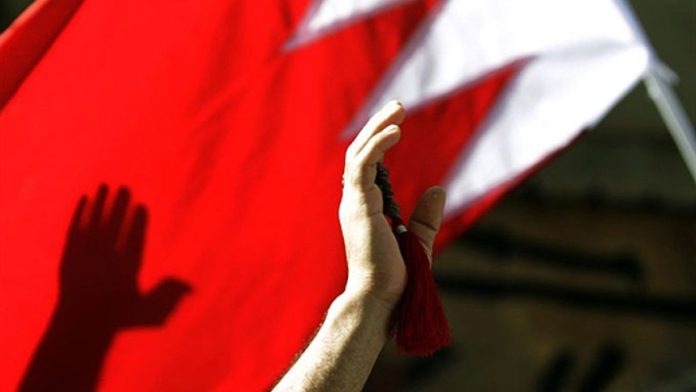
UN experts urge Bahrain to release students “tortured into confessions”

Bahrain

The students – Ahmed Yusuf, Alaa Ansaif, Husain Matar, Husain Abdulla, Mohamed Baddaw and Sayed al-Khabbaz – were arrested separately, in unrelated cases, between 2013 and 2020. At the time of their arrests, three were minors.

While in custody, a rights group has said four of the students were subjected to enforced disappearance, including one for 40 days, and five were allegedly tortured into confessions.

The UN Working Group on Arbitrary Detention, in a document released on 14 July, said it found the group’s claims of ill-treatment credible.

“These cases follow the pattern of numerous other cases brought before the Working Group in recent years concerning the arbitrary deprivation of liberty in Bahrain,” the group added.

“Warrantless, pretrial detention with limited judicial review, denial of access to lawyers, forced confession, torture and ill-treament and denial of medical care,” it noted.

The Bahraini government has announced that some of the students participated in riots, assaulted law enforcement officers and damaged property. One, it said, was involved in the formation of a terrorist organisation.

But the Americans for Democracy and Human Rights in Bahrain (ADHRB), the US-based organisation whose complaint triggered the working group’s investigation, said that most were charged on issues linked to protesting.

The UN experts also found credible allegations that the students were arrested without warrants, denied access to lawyers and not brought promptly before a judicial authority.

“The violations linked to these six individuals’ conditions of detention significantly undermined their ability to properly defend themselves,” the working group reported, adding, “When it is not possible for a person who is subjected to torture or other forms of ill-treatment or punishment to prepare an adequate defence before the judicial proceedings, this amounts to a fair trial violation.”

The Bahraini government, in its response to torture allegations raised by ADHRB, said that several of the students had not made claims of torture before official bodies, and that the four complaints raised by family members had been investigated.

According to the government, the Special Investigation Unit, which investigates such claims, found insufficient evidence for two of the complaints.

But one complaint saw an officer who assaulted 17-year-old Alaa Ansaif sentenced to three months in prison, and another resulted in four officers who attacked Husain Matar sentenced to one-year imprisonment each, the government said.

ADHRB said the officer sentenced in Ansaif’s assault avoided prison by paying a fine.

It also added that a complaint of torture raised on behalf of Matar saw him examined only after signs of torture were wearing off and resulted in the SIU saying there had been no signs of torture.

The working group said it was concerned about “the independence and effectiveness” of the SIU, a body that receives funding from the UK government.

Husain Abdulla, ADHRB’s executive director, said the experts’ opinion was one in a series that made it clear the Bahraini government “is engaged in serious systematic human rights violations against its citizens”.

“Bahrain is able to do this because it enjoys the full, unwavering support of the UK and US governments which are responsible for these violations in Bahrain to a great extent,” he added.

The Bahraini government did not respond immediately for comment.
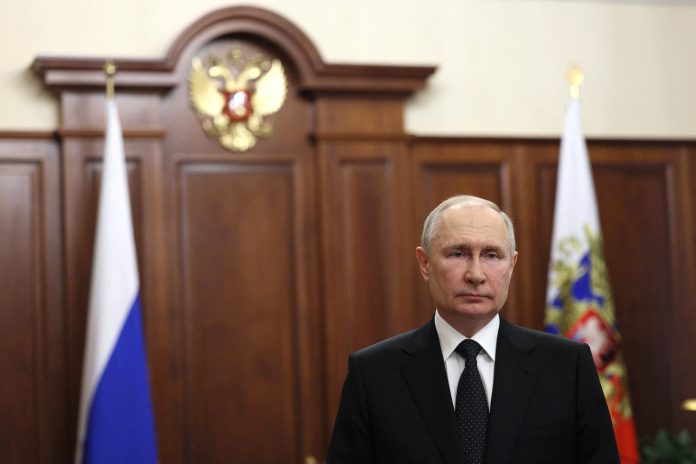
South Africa says Putin won’t attend BRICS summit in person

Vladimir Putin

Russian Foreign Minister Sergey Lavrov will represent Moscow at the high-profile event, the host nation announced.

“In due course, a comprehensive statement on the substantive issues to be covered at the summit and other related foreign policy matters will be issued,” the statement said.

Russia has yet to confirm the statement. As of last Friday, Putin’s office announced no final decision had been taken on his plans for the summit.

The event in South Africa is the first in-person gathering of BRICS leaders in several years. Covid-19 travel restrictions previously made virtual summits more feasible for Brazil, Russia, India, China, and South Africa, which comprise the bloc.

The possible visit of Putin posed a conundrum for South Africa, as the country is a member of the International Criminal Court (ICC). The body issued an arrest warrant for Putin over his alleged role in the “kidnapping” of Ukrainian children. Russia has dismissed the charges as politically motivated and misrepresenting the evacuations of minors from the conflict zone.

“Russia has made it clear that arresting its sitting president would be a declaration of war,” Ramaphosa explained in a court filing released on Tuesday.

“It would be inconsistent with our constitution to risk engaging in war with Russia.”

Kremlin spokesman Dmitry Peskov denied on Wednesday that Russia had made any implicit threats to South Africa.

“Everyone in this world understands what an attempt [against] the head of the Russian state would mean. There is no need for any explanation here,” he told journalists.

Central Bank says Iran’s foreign debt shrank by 27%

Iran Central Bank

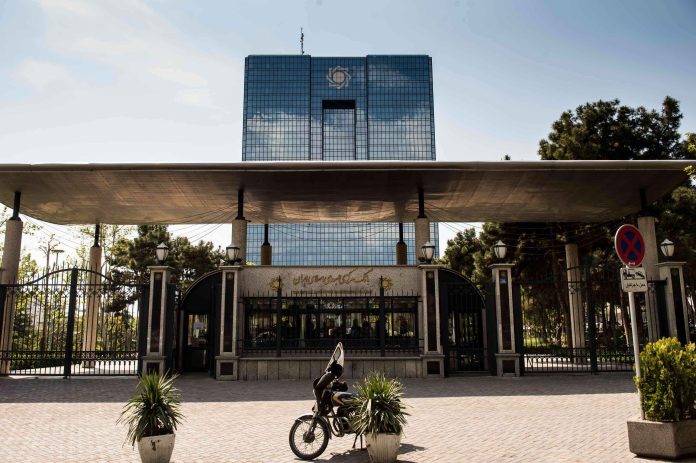
In its latest report, the CBI released the economic statistics related to the Persian calendar month of Esfand (February-March 2023) which contains the latest data and economic statistics in the monetary and banking sectors, balance of payments and the capital market.

According to the report, the foreign debts of the country at the end of the previous Iranian calendar year reached $6.282 billion, showing a 27.6 percent decline compared to a year earlier.

The report also pointed to the settlement of $2.393 billion of the foreign debts of the country in this period.

US can’t threaten Iran by military deployment: Defense minister

US Navy Destroyer

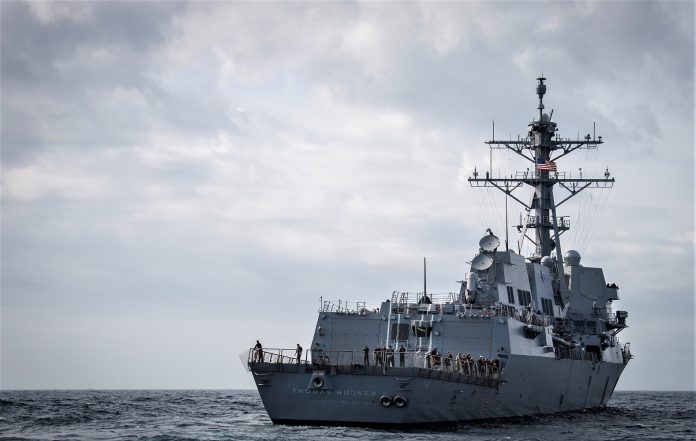
He made the remarks on the sidelines of a Wednesday cabinet session in Tehran after the Pentagon announced plans to send additional fighter jets and naval assets to the Persian Gulf region despite Iran’s warning.

Iran does not care about the US, which is pursuing its own affairs, he stated.

“Basically, the Islamic Republic has reached such a stage of might that nobody would be able to threaten it at all,” the defense minister underlined.

The general added that Iran has even moved past that level and started to play regional and international roles.

“We are pursuing that role-playing,” he underscored.

In comments on Monday, the Iranian Foreign Ministry’s spokesperson Nasser Kanaani slammed as “destabilizing and provocative” the US’ decision to dispatch fighter jets to the Persian Gulf, stressing that Iran has the right to show a reaction in order to ensure maritime and aviation security in the region.

Highlighting Iran’s sensitivity to the “provocative and illegal” actions near its borders, the spokesman said, “Considering the control and capabilities of its armed forces in regard to navigation and aviation security in the Persian Gulf region, Iran reserves the right to make the necessary deterrent arrangements in compliance with international law’s rules and regulations, and will exercise its inalienable rights accordingly.”

Report: MbS threatened to place UAE under blockade

MbS

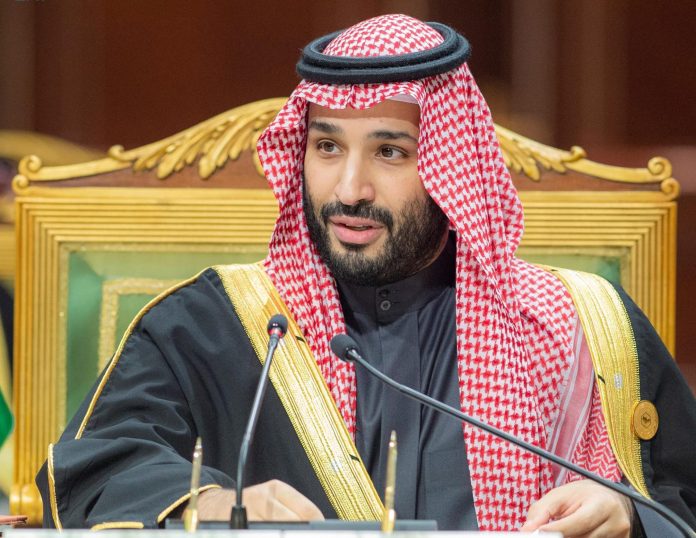
In the off-the-record briefing in December, the crown prince told journalists that he had sent Abu Dhabi a list of demands, and warned that Saudi Arabia would take punitive measures against its regional ally if the UAE continued to undercut the kingdom in the region.

“It will be worse than what I did with Qatar,” he was quoted as saying by people who had attended the meeting.

In 2017, Riyadh led a diplomatic embargo on Doha, reinforced by an economic blockade, for over three years, with the backing of Abu Dhabi and Bahrain. Relations between Saudi Arabia and Qatar were only restored in 2021.

The crown prince and bin Zayed have been locked in a power struggle as they vie for dominance in the Persian Gulf region, and have not spoken for more than six months, according to WSJ sources.

Bin Salman told Saudi journalists that the UAE had “stabbed us in the back,” and warned, “they will see what I can do.”

This rift reflects a broader competition for geopolitical and economic influence in the Middle East and global oil markets, intensified by the United States’ reduced involvement in the region. Both countries are also engaged in an outreach to Russia and China.

The growing tension has raised concerns among US officials, who fear that the rivalry could hinder efforts to establish a unified security alliance against Iran, resolve the war in Yemen, and expand Israel’s diplomatic relations with Muslim countries.

Riyadh and Abu Dhabi have divergent interests in Yemen and Sudan, while Saudi pressure to raise global oil prices has created friction with the UAE.

In Syria, Saudi Arabia took the limelight by orchestrating its return back to the Arab League, a diplomatic effort long pushed by the UAE.

Meanwhile, Saudi Arabia’s diplomatic rapprochement with Iran earlier this year also took the UAE by surprise.

Saudi Arabia’s push to diversify its economy and reduce reliance on oil has also brought it into direct competition with the UAE.

The crown prince is aiming to attract companies to relocate their regional headquarters to Riyadh, launch tech centres, and establish tourist and logistical hubs, challenging Dubai’s position as the Middle East’s commercial centre and a carefully nurtured business model.

The dispute between the two leaders spilt into the OPEC meeting in October, when the UAE accused Saudi Arabia of forcing it to agree to an oil production cut. The Emiratis expressed readiness to withdraw from OPEC, reflecting their frustration with the Saudi dominance in the organisation.

The Joe Biden administration has made efforts to reconcile the two sides, setting up a meeting in May between bin Salman and Sheikh Tahnoun bin Zayed, the Emirati president’s younger brother and the UAE’s national security advisor.

The Saudi leader told Tahnoun the UAE should not interfere with the Saudi-led ceasefire in Yemen, and promised concessions to Abu Dhabi.

However, according to WSJ sources, the crown prince later told his advisers not to change any policies towards the UAE.

“I don’t trust them anymore,” he was quoted as telling them.

Official says EU likely to keep missile sanctions on Iran

Kheibar Missile

The official, who spoke on condition of anonymity, said on Tuesday he sees a window of opportunity by the end of 2023 to try to negotiate a de-escalatory nuclear deal with Iran.

“We may have a small window of opportunity to try to resume discussions with them on (a) return to the JCPOA or at least to an agreement of de-escalation … before the end of the year,” the official told reporters in Washington.

Asked if Britain, France and Germany, which were parties to the 2015 agreement, had convinced the rest of EU to keep the ballistic missile sanctions, the European official replied: “It’s nearly agreed. I am not expecting difficulties.”

In June, sources told Reuters that European diplomats had informed Iran they planned to retain EU ballistic missile sanctions set to expire in October under the nuclear agreement, a step they said could provoke Iranian retaliation.

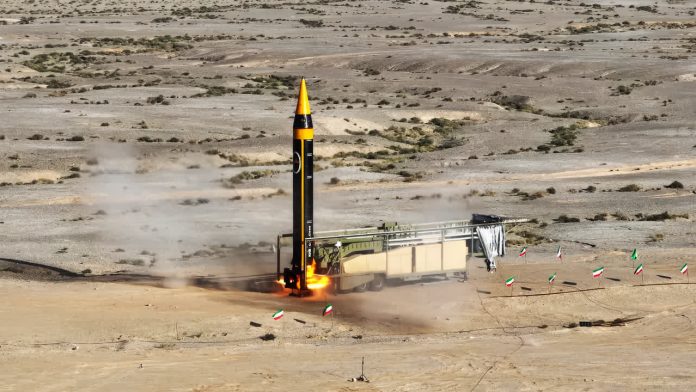
Iranian officials say the country’s missile activities are conventional, defensive and totally legitimate in accordance with international law.

Iranian President Ebrahim Raisi has reaffirmed that his administration will stick to Tehran’s policy of not sitting for talks over its ballistic missile program.

The country’s missile program is not negotiable, he stressed.

“US issues new waiver letting Baghdad pay Tehran for electricity”

Iraq Electricity

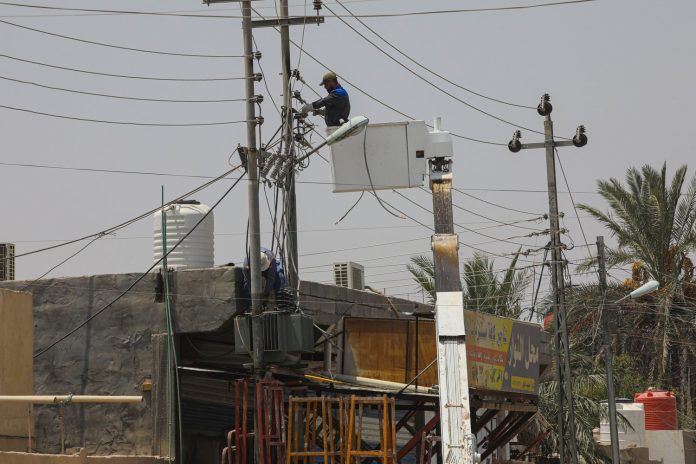
Secretary of State Antony Blinken signed a 120-day national security waiver allowing Iraq – heavily dependent on Iranian electricity – to deposit such payments into non-Iraqi banks in third countries instead of into restricted accounts in Iraq, said the official who spoke on condition of anonymity.

Monies put into the non-Iraqi accounts, like those deposited into Iraqi banks, will also be restricted, still requiring US permission for Iran to get access to them and only for spending on humanitarian goods.

The latest waiver was expanded to permit payments to banks outside Iraq at the request of the Iraqi government, apparently in the hopes that this might transfer some of the pressure that Iran has exerted on Baghdad to other countries.

“We have to help the Iraqis with this perennial pressure from the Iranians to access the money,” stated the US official.

“The Iraqis have requested, and now we have agreed, to expand the waiver,” said the official, adding this might help ensure better compliance with the US requirement that any disbursements be for humanitarian purposes.

“It also helps the Iraqis, at least somewhat, to have an argument to make (to Iran) that they are not in control of the money that they have paid (into non-Iraqi accounts),” he continued.

Iran is under extensive US economic sanctions reimposed in 2018 after then-US President Donald Trump abandoned the nuclear deal that Tehran struck with major powers Britain, China, France, Germany, Russia and the United States in 2015.

Iraq has paid some of its debts over the years, but US sanctions and economic troubles in the Arab country have made the transfer of money much slower than Iran expected.

Iran gets paid partly in cash, but it mostly receives goods from Iraq to cover the debt.

Lavrov says Russia respects Iran sovereignty following row over Persian Gulf islands

Amirabdollahian and Lavrov

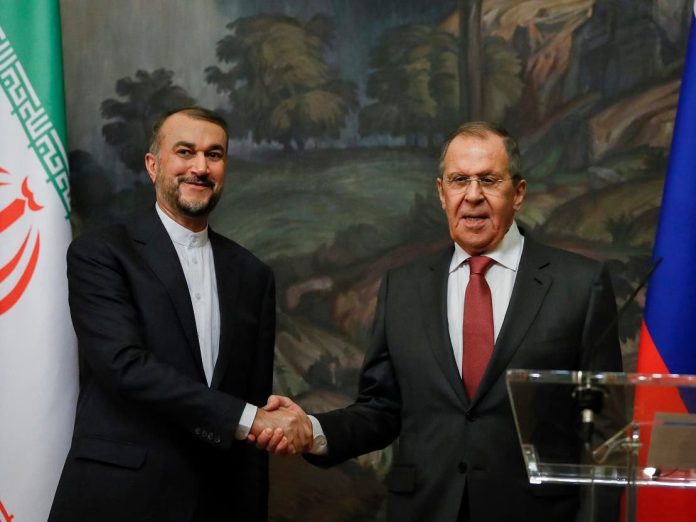
Lavrov, in a phone call with Iranian Foreign Minister Hossein Amirabdollahian, pointed to Russia’s “commitment to all principles of the United Nations Charter, including the ones related to countries’ sovereignty and territorial integrity.”

During the phone call, the top Iranian diplomat expressed surprise over the articles related to the three Iranian islands in the Persian Gulf included in a joint statement issued by Russia and the countries on the southern coast of the Persian Gulf, emphasizing that the islands belong to Iran historically and permanently.

“The Islamic Republic of Iran’s independence, sovereignty and territorial integrity has never been and is never up for negotiations,” he added.

Amirabdollahian said, however, that Iran-Russia ties enjoy strong foundations, stressing that no action should be taken to harm the deep-rooted relations between the two countries.

Russia has recently signed a joint communique with the Persian Gulf Cooperation Council (GCC) at the end of a ministerial meeting in Moscow that supported the United Arab Emirates’ efforts in pursuing sovereignty over the three Iranian islands of Abu Musa, the Greater and Lesser Tunbs.

The Russian and Iranian foreign ministers also referred to the developments in the Caucasus region, and laid emphasis on the framework of regional negotiations, including a format known as the 3+3 comprising Iran, Russia, Turkey, the Azerbaijan Republic, Armenia and Georgia.

In addition, Amirabdollahian and Lavrov discussed the convening of a second meeting of the foreign ministers of Syria, Iran, Russia and Turkey over the Syria situation.

Arresting Putin would be declaration of war with Russia: South Africa president

Putin and Ramaphosa

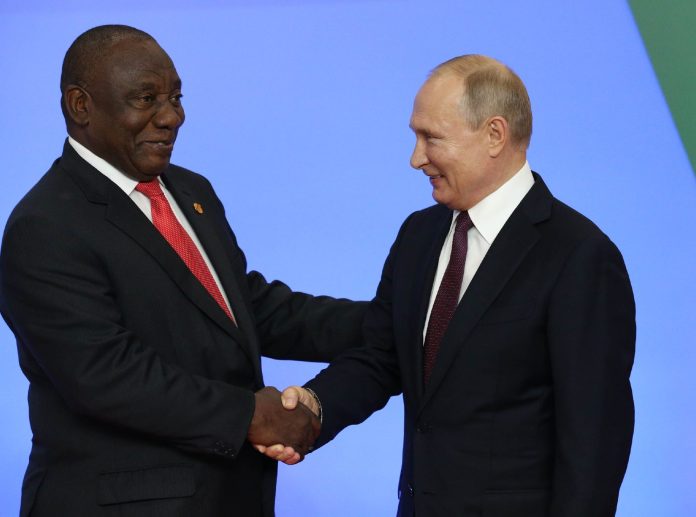
Any attempt to arrest Putin when he visits South Africa would be a declaration of war against Russia, Ramaphosa stated. He made the warning with weeks to go before an international meeting happens in Johannesburg, to which the Russian president is invited.

But if Putin leaves Russian soil, he will be subject to an International Criminal Court (ICC) arrest warrant.

South Africa is an ICC signatory and should therefore help in his arrest.

Yet it has refused to honour that obligation in the past – allowing safe passage in 2015 to Sudan’s then-President Omar al-Bashir who was wanted for war crimes against his own people.

Putin has been invited to South Africa in August, when the country hosts a summit for members of the BRICS countries – an acronym for Brazil, Russia, India, China and South Africa. This bloc of fast-growing economies is seen by some as an alternative to the G7 group of advanced economies.

South Africa’s biggest opposition party, Democratic Alliance, has gone to court to try to force the authorities to carry out an arrest on Putin should he set foot in the country.

Court documents reveal that President Ramaphosa is firmly against any such move, stating that national security is at stake.

“South Africa has obvious problems with executing a request to arrest and surrender President Putin,” he said in an affidavit, adding, “Russia has made it clear that arresting its sitting president would be a declaration of war. It would be inconsistent with our constitution to risk engaging in war with Russia.”

President Ramaphosa stated that South Africa is one of several African nations holding talks with Russia and Ukraine “with a view of ending the war altogether”, and that attempting to arrest Putin would be counter-productive.

Last month saw a peace mission to the European nations, where African presidents hoped they could bring Ukraine and Russia to the table together but ultimately failed.

Much has been made of African nations’ reluctance to back UN general assembly resolutions condemning Russia’s war in Ukraine.

Correspondents say the reasons range depending on the nation – be it South Africa’s anti-apartheid ties to the Soviet Union, or Mali’s present-day reliance on Russian Wagner mercenaries to fight jihadists.

There are economic ties between Russia and African nations too, not least in South Africa.

A sanctioned Russian oligarch, Viktor Vekselberg, is said to be one of the biggest donors to South Africa’s governing party – the African National Congress (ANC).

2 Syrian soldiers wounded in Israeli air attack against Damascus

Israeli Air Force

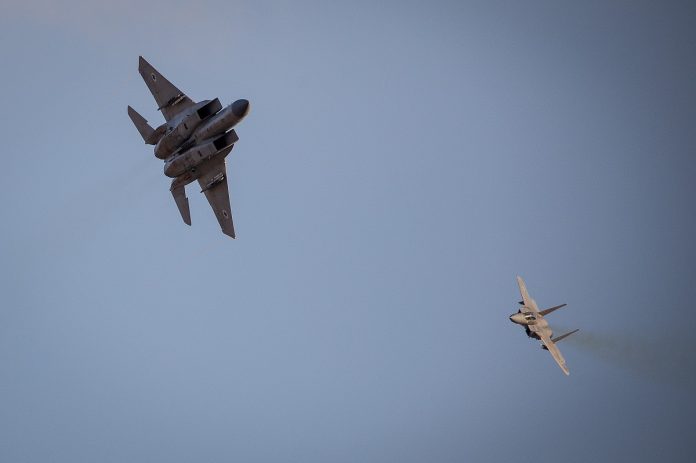
The state-run news agency SANA reported early on Wednesday morning that Syrian air defences had confronted Israeli missiles launched at 12.25 am local time (21:25 GMT) from the Israeli-occupied Golan Heights and “shot down most of them”.

SANA, citing military sources, added two Syrian soldiers were injured in the missile attack and there were “some material losses”.

The Syrian Observatory for Human Rights, a war monitor based in the United Kingdom, said the air attacks marked the 20th time Israel has struck targets in Syria so far this year.

The attacks targeted military positions near the airport in the town of Dimas as well as the Beirut-Damascus highway west of the capital, where elite members of the Syrian army are stationed, according to the monitor.

The observatory, which has a vast network of sources in the war-torn country, said the missiles hit warehouses of the Lebanese armed group Hezbollah, an ally of the Syrian government, causing a fire.

Israel has carried out hundreds of air attacks on government-controlled parts of Syria in recent years but it rarely acknowledges responsibility.

Israel has also attacked the international airports in Damascus and the northern Syrian city of Aleppo several times over the past few years, often putting the facilities out of commission temporarily.

Damascus has repeatedly complained to the United Nations over the Israeli assaults, urging the world body’s Security Council to take action against Tel Aviv’s crimes. Its demands, however, have fallen on deaf ears.