Friday, December 26, 2025
Home Blog Page 1322

Iran Leader: Superpowers cannot monopolize privilege of sailing across high seas

Ayatollah Seyyed Ali Khamenei

“What you did ensured security,” said Ayatollah Khamenei in a Sunday meeting with personnel, and their families, of Flotilla 86 of the Naval Force of the Iranian Army, which circumnavigated the globe a few months ago, sailing a marine route of more than 65,000 kilometers over a period of 8 months.

The Leader expressed his gratitude to the personnel of the armada for “having accomplished a great mission.”

“They circled the earth successfully, which was unprecedented in our country’s maritime history,” Ayatollah Khamenei said.

He underlined the journey helped boost security for the country.

The Leader said the high seas belong to all, and are not owned by anyone.

“Superpowers would take over the ownership of oceans if they could in order to prevent others from using them,” Ayatollah Khamenei explained.

“Seeking to monopolize special privileges in general issues related to humanity is among the characteristics of superpowers, including the United States,” said the Leader, adding, “But you proved it wrong.”

“You showed that the high seas belong to everyone. How dare they say they wouldn’t allow such and such ships to cross such and such straits! The high seas belong to everyone, and all should be able to sail across them,” Ayatollah Khamenei noted.

The Leader underscored that security for maritime transportation along shipping lanes should be provided for all countries.

“Today, the Americans assault oil tankers and help maritime smuggling rings. This is a major offense on their part and it’s being committed in our region, and we are hearing that they are, more or less, doing similar acts in other areas, too,” Ayatollah Khamenei added.

“This amounts to the gross violation of an international humanitarian law, which cannot be condoned,” the Leader added.
Nuclear shadow looms over globe again: UN chief

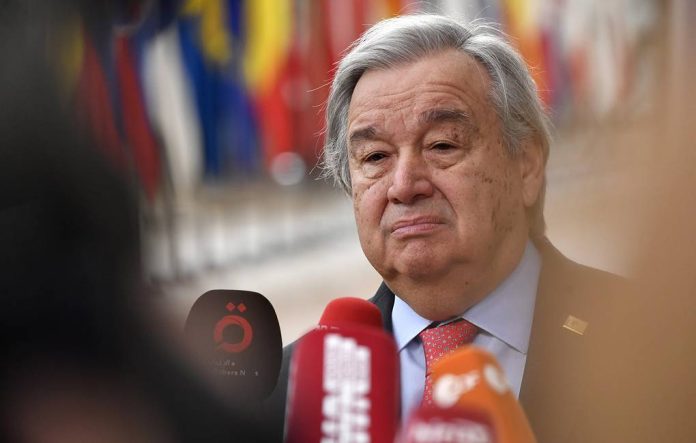
António Guterres

“The drums of nuclear war are beating once again. Mistrust and division are on the rise. The nuclear shadow that loomed over the Cold War has re-emerged. And some countries are recklessly rattling the nuclear saber once again, threatening to use these tools of annihilation,” according to his address, read by Under-Secretary-General and High Representative for Disarmament Affairs, Izumi Nakamitsu, at a memorial event at Hiroshima Peace Memorial on the 78th anniversary of the atomic bombing of Hiroshima.

Guterres also urged for a complete rejection of nuclear weapons. He pointed out that “eliminating nuclear weapons remains the United Nations’ highest disarmament priority.”

“The only way to eliminate the nuclear risk is to eliminate nuclear weapons,” the top UN official noted. “We will not rest until the nuclear shadow has been lifted once and for all,” he added.

That said, he has never mentioned the US as the country responsible for the bombing.

“Nearly eight decades ago, a nuclear weapon incinerated Hiroshima. Yet as anyone who has visited knows, the memories never fade. The United Nations is proud to stand with the people of Hiroshima and the hibakusha (the survivors of the bombing) to keep alive the memory of what happened here, and the lessons humanity must learn if we are to secure a more peaceful tomorrow. We look forward to working with the people of Japan in this essential effort,” the UN chief concluded without any mention of the US.

The US Armed Forces carried out the first-ever atomic bombing in history, striking the Japanese cities of Hiroshima and Nagasaki toward the tail end of World War II. The bombings were justified as a way to accelerate the capitulation of the Empire of Japan. These attacks are the sole instance of nuclear weapons ever being used in a military conflict in the history of humanity.

According to various estimates, the explosion of the atomic bomb dropped over Hiroshima, in one day killed between 70,000 and 100,000 people. By the end of 1945, the number of victims had increased to 140,000 due to those who died in hospitals from wounds and radiation.

Every year this sad list is replenished when a survivor dies. Almost 5,000 new names have been added to this list over the past year. Besides that, the names of those people who died during the blast but whose death has not been confirmed until now are added to the list. Currently, the total number of victims surpasses 350,000.

Moscow mayor says drone attack on city foiled

Vladimir Putin and Sergey Sobyanin

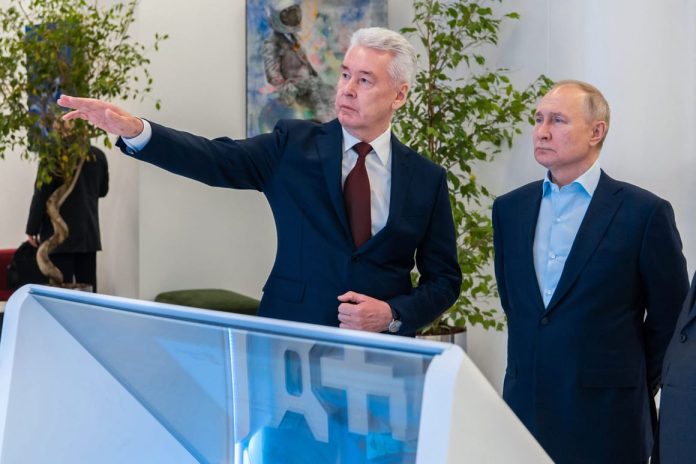
“A drone attempted to break though towards Moscow today, at around 11:00. It was destroyed by air defenses during the approach,” the mayor wrote in a brief statement on his Telegram channel, also thanking Russian military personnel for their work.

The mayor did not provide any further details on the incident. The type and the origin of the drone remain unclear. The UAV was destroyed to the south of the capital, in Moscow Region, the Defense Ministry said, adding that there were no casualties or damage on the ground.

The incident follows a series of drone attacks on Moscow in recent weeks, with multiple unmanned aircraft intercepted over Moscow’s financial district within a span of three days. Debris from the downed craft damaged two skyscrapers and injured one person.

Kiev has not openly claimed responsibility for the strikes, although Ukrainian President Vladimir Zelensky declared last Sunday that “war is returning to the territory of Russia.”

The attacks on Moscow have been condemned by the UN, with the office of Secretary-General Antonio Guterres calling for an end to “any and all attacks on civilian facilities.”

Russia has called the raids “terrorist strikes” and blamed them on Ukraine.

Israeli troops killed over 3 dozen Palestinian children since start of 2023: Report

Israel Palestine

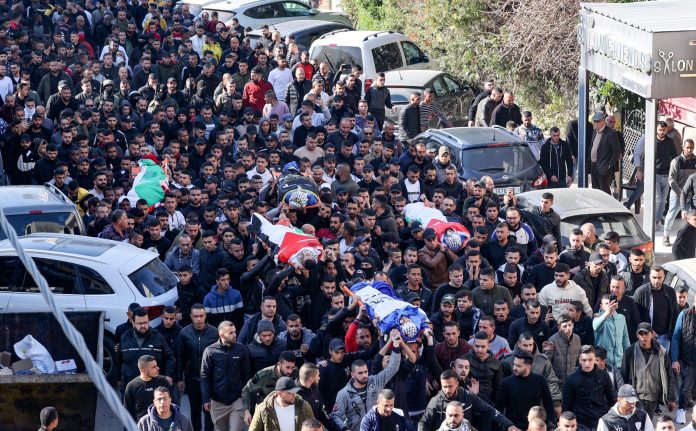
Ayed Abu Qutaish, director of the Accountability Program at Defense for Children International, said on Saturday that Israeli troops have killed 31 children in the West Bank and six others in Gaza this year.

He told the official Voice of Palestine radio station that Israeli authorities are holding 160 children behind bars, including 21 kept in administrative detention without charge or trial and based on so-called secret evidence.

Abu Qutaish added the killing and arrest of Palestinian children have escalated in an unprecedented manner, adding that the international community does not provide protection for Palestinian children and does not hold the regime to account for its crimes.

Israeli forces launch raids on various cities of the West Bank almost on a daily basis under the pretext of detaining what it calls “wanted” Palestinians. The raids usually lead to violent confrontations with residents.

Over the past months, Israel has ramped up attacks on Palestinian towns and cities throughout the occupied territories. As a result of these attacks, dozens of Palestinians have lost their lives and many others have been arrested.

More than 200 Palestinians have been killed this year in the occupied Palestinian territories and Gaza. The majority of these fatalities have been recorded in the West Bank.

At least 26 people have been killed in Palestinian retaliatory attacks against Israeli settlers during that time.

Those figures indicate that 2023 is already the deadliest year for Palestinians in the West Bank since the United Nations began keeping track of fatalities in 2005.

Previously, 2022 had been the deadliest year with 150 Palestinians killed, of whom 33 were minors, according to the United Nations.

The rising number of fatalities last year prompted UN experts to condemn the treatment of Palestinians, including attacks on their homes and destruction of their property.

Russia, Syria smash militant command center In Idlib

Russia Fighter Jet

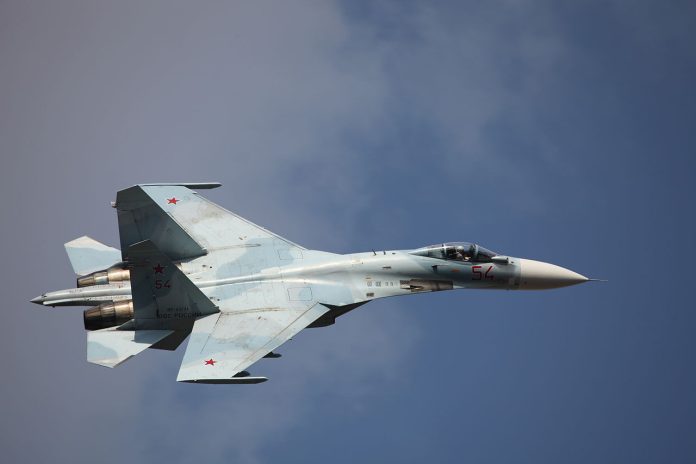
“A joint airstrike launched by the Russian Aerospace Forces and the Syrian Air Forces destroyed a headquarters of Al-Nusra Front (banned in Russia) near the city of Idlib. It was run by people responsible for plotting and conducting terror attacks against Syrian government forces and civilians,” Rear Adm. Vadim Kulit said.

The deputy head of the Russian center for Syrian reconciliation told a news briefing that Al-Nusra attacked the neighboring Aleppo province for times in the past 24 hours. A strike at a car killed a Syrian serviceman and injured four others, he added.

Russia is a key supporter of Syria, having sent its warplanes in 2015 to aid Damascus in its war against militant groups. Moscow maintains an air force base in the Middle East nation and regularly holds joint military exercises with the host country.

The US occupies part of Syria, claiming that its military presence is necessary to keep the terrorist group Islamic State (IS, formerly ISIS or ISIL) in check. Washington directly supported some anti-government forces during the lengthy war and has imposed harsh economic sanctions on the government, hampering reconstruction efforts by Damascus.

Kuwait warns ties with Lebanon could sour over Beirut port rebuilding

Lebanon

On Saturday, Kuwaiti Foreign Minister Sheikh Salem Abdullah Al-Jaber Al-Sabah criticised Salam’s comments made on Wednesday, when the minister urged Kuwait to rebuild Lebanon’s main wheat silos, a decision he said could be made with “the stroke of a pen”.

The silos were built in 1969 with a grant from the Kuwait Fund for Arab Economic Development but were destroyed during the Beirut port blast of 2020.

Al-Sabah stated Salam’s comments were “incompatible” with political norms on how decisions were made and called on him to retract them in order to protect bilateral ties.

Salam, in turn, said he meant no offence by his comments and rather was referring to how quickly the decision could be taken, Lebanese media quoted him saying.

Lebanese-Persian Gulf relations soured in 2021 when Lebanon’s then-information minister criticised the Saudi-led military intervention in Yemen. Kuwait was among the Persian Gulf countries to withdraw their envoys to Lebanon, only having them return in 2022.

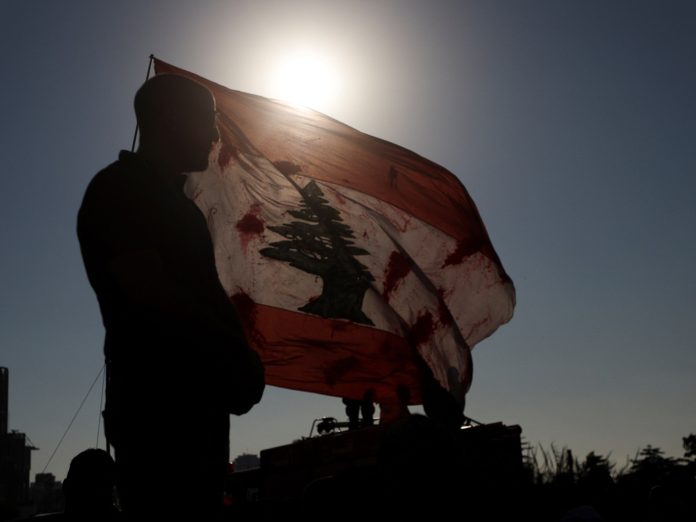
Kuwait’s response occurred just a day after Lebanon marked three years since the catastrophic blast on August 4, 2020 that destroyed many parts of the Lebanese capital, killing more than 220 people and injuring at least 6,500 others.

Report: Albanian police seize control of terror group MKO’s HQ

MKO

According to Tasnim news agency, the new restrictions preclude individuals from entering or leaving Camp Ashraf 3 without police permission.

The move came after the Albanian government ratcheted up its pressure on the MKO terrorists stationed at the camp.

Tirana has even banned KMO ringleader Maryam Rajavi, who is currently in France, from entering Albania. Albanian Prime Minister Edi Rama had already said in an TV interview that the MKO cannot use Albania to wage war against Iran.

He had noted that Albania has no intention of going to war with Iran, and will not accept anyone who seeks to cash in on Albania’s hospitality.

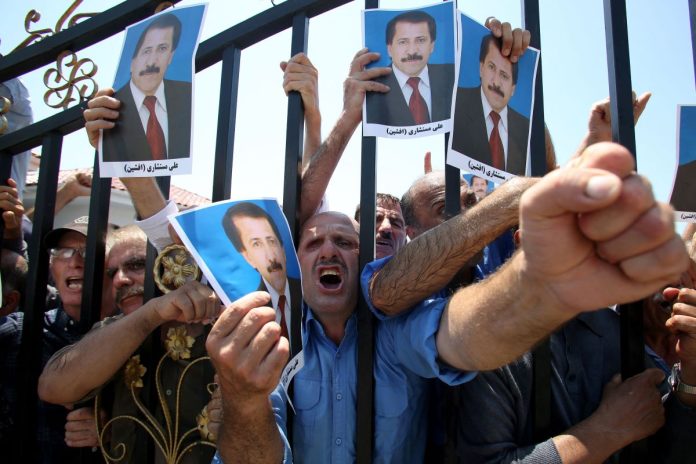
The Albanian government’s pressure on the MKO, particularly after an attack by Albanian riot police on Camp Ashraf 3 in mid-2023, has touched off a wave of criticism and protests from members of the terrorist group.

The MKO has carried out numerous terrorist attacks against Iranian civilians and government officials since the victory of the Islamic Revolution in Iran in 1979.

Out of the nearly 17,000 Iranians killed in terrorist attacks over the past four decades, about 12,000 have fallen victim to MKO’s acts of terror.

Lebanon seeks to reassure Persian Gulf states, Europe after travel warnings

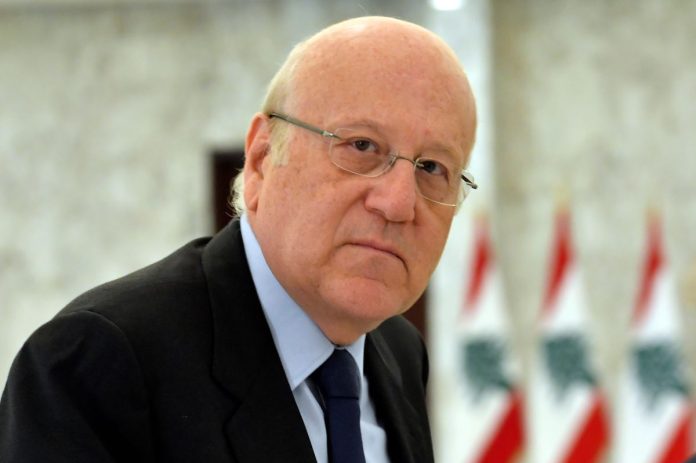
Najib Mikati

Saudi Arabia, Kuwait, Bahrain, Qatar, Germany and Britain updated their travel warnings amid clashes between rival armed groups in the Palestinian camp of Ain el-Hilweh in Lebanon’s south.

In a statement, Mikati said he had spoken with his security chiefs and assessed that the situation “does not call for concern or panic”. He stated there had been “significant progress” in resolving the violence in Ain el-Hilweh, where at least 13 people have been killed in fighting.

The statement added Foreign Minister Abdullah Bou Habib had been tasked with reassuring Arab countries that their citizens were safe in Lebanon.

The Saudi embassy on Friday urged its citizens to leave Lebanon quickly and avoid areas where there have been armed clashes. Bahrain followed suit a day later and called on its citizens to leave the country, according to a foreign ministry statement.

The Saudi statement on X, formerly known as Twitter, stressed “the importance of adhering to the Saudi travel ban to Lebanon”.

Kuwait and Qatar on Saturday urged their nationals in Lebanon to stay vigilant and avoid “areas of security disturbances,” but stopped short of asking them to leave.

The UAE on Sunday advised citizens to not travel to Lebanon. The advisory is in place to preserve the safety of UAE citizens, Wam news agency reported on Sunday, citing a decision from the Ministry of Foreign Affairs.

Last week, Germany warned citizens not to travel to Palestinian camps in Lebanon, among other areas. Britain advised against “all but essential travel” to parts of Lebanon’s south, including near Ain el-Hilweh.

Around a quarter of the camp’s 80,000 residents have been displaced by fighting there on July 29 between mainstream faction Fatah and militants.

Ain el-Hilweh is the largest of 12 Palestinian camps in Lebanon, which host up to 250,000 Palestinian refugees, according to the United Nations’ agency for refugees from Palestine (UNRWA).

Israelis back on streets to protest judicial overhaul

Israel Protest

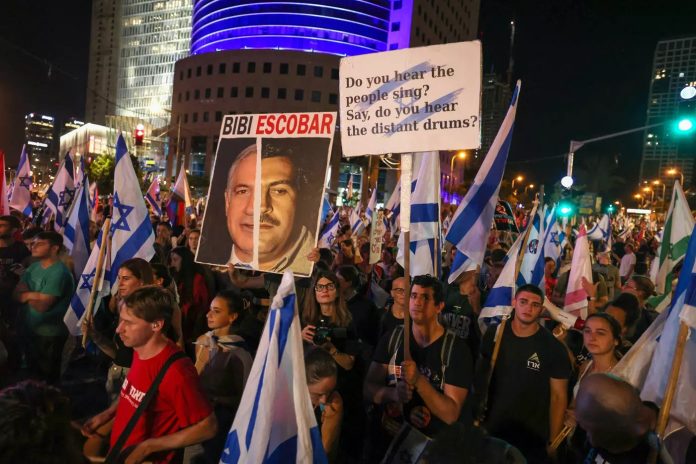
The reform package has split the nation and triggered one of the biggest protest movements in Israel’s history since being unveiled in January by Prime Minister Benjamin Netanyahu’s governing coalition, which includes extreme-right and ultra-Orthodox Jewish parties.

Demonstrators have kept up pressure on the Netanyahu government with weekly protests across the country.

Several thousand protesters gathered on Saturday in the commercial hub Tel Aviv, Israeli media reported. Some were waving Israeli flags and chanting “Democracy, democracy”.

The government views the reform, which would give politicians more power over the courts, as a necessary step to curb overreach by unelected judges.

Opponents of the overhaul fear it may lead to more authoritarian government.

Parliament last month passed the first key component of the reform package, which limits judicial oversight of some government decisions.

Netanyahu, who is fighting corruption charges in court, has said he would be willing to negotiate with the opposition though previous mediation efforts have failed.

In any case, the legislation will not move forward before parliament returns from summer recess in October.

Shooter kills Tel Aviv policeman; suspect gunned down

Tel Aviv Shooting

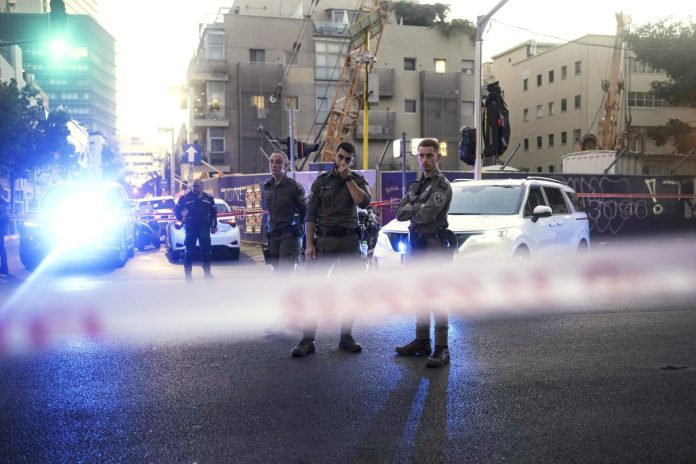
Amateur video circulated online of police and civilians on Saturday running through the cafe-lined streets in the seaside metropolis.

Police identified the gunman as Kamel Abu Bakr, 27, from a village near the flashpoint city of Jenin in the occupied West Bank.

The man wounded in the shooting was a municipal patrol worker who was targeted when he approached the suspect after noticing something suspicious. He was taken to hospital “in critical condition” and later died, according to the Magen David Adom emergency service.

“Another municipal inspector responded swiftly and managed to neutralise the terrorist,” police said, adding that “significant police forces are present at the scene”.

“We are standing at a very sad incident,” Tel Aviv’s Mayor Ron Huldai told Israel’s public broadcaster.

The shooter is suspected to be a resident of the Palestinian town of Jenin in the occupied West Bank.

The attack came a day after a settler rampage in the occupied West Bank killed one Palestinian, deepening the spiral of violence that has gripped the region for the past year and a half.

Nineteen-year-old Palestinian Qusai Jamal Maatan was killed when Israeli settlers in the Palestinian village of Burqa in the West Bank. Israeli police said they arrested two Israeli settlers in connection with the violence.

Earlier on Friday, Israeli soldiers shot dead another young Palestinian, 18-year-old Mahmoud Abu Sa’an, during one of their daily pre-dawn raids into the occupied West Bank.

Yair Lapid, an opposition leader in the Israeli parliament, stated violent settler attacks in the West Bank endanger other settlers, describing most as “law-abiding civilians”.

Jenin’s refugee camp last month was the site of the largest Israeli offensive in the occupied West Bank in nearly 20 years. Twelve Palestinians, including at least eight fighters, and one Israeli soldier, were killed in the raid, which forced thousands to flee their homes and left large swaths of the camp in ruins.

Tensions in the occupied territory have intensified since early last year when Israel began its near-nightly raids into Palestinian areas.

More than 200 Palestinians have been killed this year in the occupied Palestinian territories and the Gaza Strip, the majority in the occupied West Bank.

This year is already the deadliest for Palestinians since the United Nations began keeping track of fatalities in 2005.

Israel captured the West Bank in the 1967 Middle East war, along with the Gaza Strip and East Jerusalem. Palestinians seek those territories for their hoped-for independent state.