Saturday, April 4, 2026
Home Blog Page 131

Ukraine warns Russia exploiting lack of ‘attention’ on war

Volodymyr Zelensky

Diplomatic efforts to end Russia’s three-and-a-half year invasion of Ukraine have stalled in recent months.

Moscow has meanwhile renewed its campaign of air strikes against Ukraine’s energy grid, cutting power to hundreds of thousands of people ahead of winter.

In separate calls with US President Donald Trump and France’s Emmanuel Macron on Sunday, Zelensky requested more missiles and help strengthening his country’s “long-range capabilities”.

“Russia is now taking advantage of the moment — the fact that the Middle East and domestic issues in every country are getting maximum attention,” Zelensky said in a readout of his call with Macron.

Trump met Russian President Vladimir Putin for talks in August but failed to extract any kind of peace deal.

In his call with Trump on Sunday, his second in two days, Zelensky stated that the two countries would work to strengthen Ukraine’s “defence capabilities”.

“We agreed with President Trump that our teams, our military would handle everything we discussed,” Zelensky added, without elaborating.

The White House did not immediately comment on the call.

Zelensky has in recent weeks lobbied Washington to supply Kyiv with long-range Tomahawk cruise missiles, a request that the White House says it is considering.

Russia says that supplying the missiles to Ukraine would risk rupturing its ties with the United States and cause a new round of escalation.

Kremlin spokesman Dmitry Peskov renewed that warning on Sunday, warning Moscow could treat any launches of the missile as though they were carrying nuclear warheads.

“Just imagine, a long-range missile takes off and flies, and we know it could be nuclear-armed. What is the Russian Federation to think?” Peskov told a reporter from state television.

Russia launched its full-scale invasion of Ukraine in February 2022, describing it as a “special military operation” to demilitarise the country and prevent the expansion of NATO.

Kyiv and its European allies say the war is an illegal land grab that has resulted in tens of thousands of civilian and military casualties and widespread destruction.

Millions of Ukrainians have been forced to leave their homes since 2022, while Russia now occupies around a fifth of Ukrainian territory — much of it ravaged by fighting.


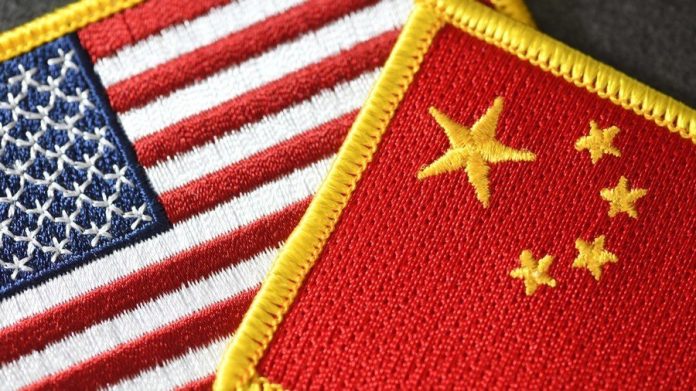
US ‘wants to help China, not hurt it’: Trump

Trump’s statements on Friday as well as his threat to cancel a meeting with Xi later this month sent Wall Street stocks tumbling into negative territory as traders worried the trade war between Washington and Beijing could reignite.

“The U.S.A. wants to help China, not hurt it!!!” Trump said in Sunday’s post on Truth Social, adding that “respected President Xi (Jinping)… doesn’t want Depression for his country.”

Trump on Friday stated that he would impose the extra levies from November 1 in response to what he called “extraordinarily aggressive” new Chinese export curbs on the rare-earths industry.

Beijing, in turn, accused Washington of acting unfairly, with its Ministry of Commerce on Sunday calling Trump’s tariff threat a “typical example of ‘double standards.'”

The ministry said Washington had ratcheted up economic measures against Beijing since September.

“Threatening high tariffs at every turn is not the right approach to engaging with China,” it added.

Chinese goods currently face US tariffs of 30 percent under levies that Trump imposed while accusing Beijing of aiding in the fentanyl trade as well as unfair trade practices.

China’s retaliatory tariffs are currently at 10 percent.

Rare earths have been a major sticking point in recent trade negotiations between the two superpowers.

They are critical to manufacturing everything from smartphones and electric vehicles to military hardware and renewable energy technology but produced and processed almost exclusively by China.

Tehran rejects invitation to Gaza summit, says it cannot sit with those who attacked Iran

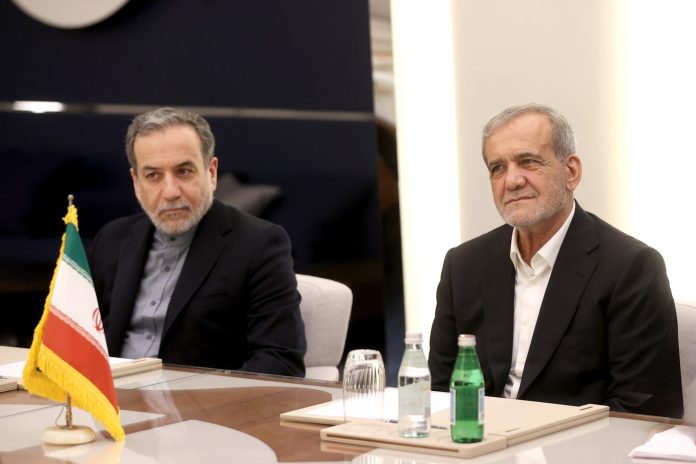
Masoud Pezeshkian Abbas Araghchi

Araghchi, in a post on X, expressed gratitude for Egyptian President Abdel Fattah el-Sisi’s invitation but made clear that neither President Masoud Pezeshkian nor himself would meet with hostile counterparts.

Araghchi was referring to US airstrikes on Iran’s nuclear facilities during Israel’s 12-day war of aggression, as well as sanctions targeting the country’s economy and energy sector.

He reiterated Iran’s firm support for any Palestinian decision that ends Israel’s genocide in Gaza.

“Iran welcomes any initiative that ends Israel’s genocide in Gaza and ensures the expulsion of occupation forces,” he said.

“Palestinians are fully entitled to secure their fundamental right of self-determination, and all states remain obliged, more than ever, to assist them in their lawful and legitimate cause.”

The minister added that Iran remains “a vital force for peace in the region,” in contrast to the Israeli regime’s pursuit of “forever wars.”

“Iran has always been, and will always remain, a vital force for peace in the region. Contrary to the genocidal Israeli regime, Iran is not after forever wars, particularly on the dime of its purported allies, but seeks forever peace, prosperity, and cooperation.”

The forthcoming Sharm al-Sheikh summit, co-chaired by el-Sisi and US President Donald Trump, was designed to formalize a ceasefire and lay out reconstruction and governance steps after the two-year war in Gaza.

More than 20 countries were expected to take part in the talks, held in the wake of a US-brokered ceasefire between Israel and Hamas.

The summit comes after two years of US-Israeli genocide in Gaza that killed around 70,000 people, injured many more, and left much of the territory in ruins.


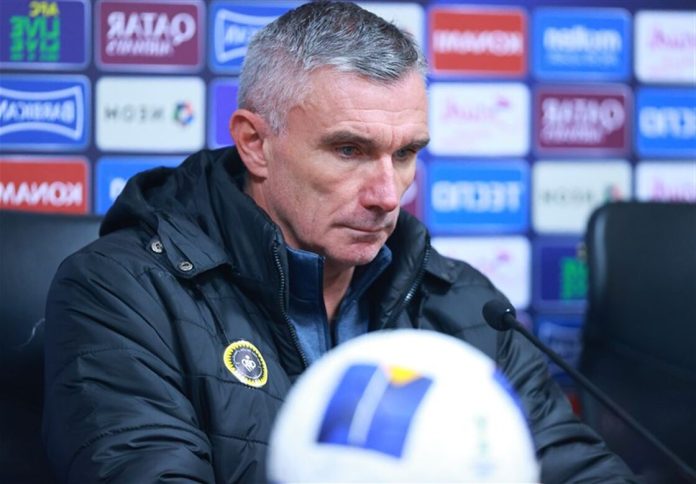
Ex-Sepahan coach: France order, Israeli war forced my Iran exit

“The French government asked all its citizens to leave Iran and did not permit their return,” Carteron said.

“I had no choice but to terminate my three-year contract. It was not a personal decision or a dispute with the club.”

Carteron praised Sepahan’s professionalism and the quality of the squad, noting the team’s strong campaig.

“I was satisfied with my life and work in Isfahan,” Carteron said. “We had a clear three-year plan and were preparing to build the team further. The war changed everything.”

While lauding players and the club atmosphere, Carteron criticized the state of domestic infrastructure.

“The players are very good and the league is strong, but the quality of pitches and training grounds is poor. You cannot play high-level football on such fields,” he said.

Two days after leaving Sepahan, Carteron joined Qatari side Umm Salal. He denied that the move reflected preexisting negotiations: “Umm Salal contacted me shortly after my resignation. It was a straightforward decision given the circumstances.”

Asked about a possible return to Iranian football, Carteron replied positively: “Yes. If an offer comes, I would gladly come back. Iran has one of the strongest football cultures in Asia—passionate fans and high-quality football.”

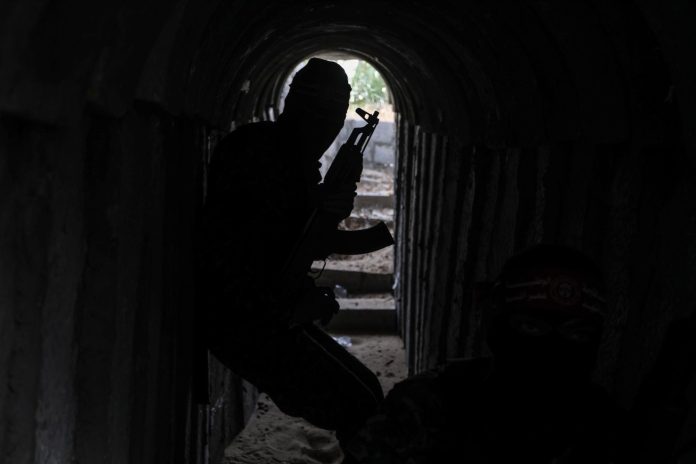
Israel says instructed to prepare for demolition of ‘Hamas tunnels’ after hostage release

Hamas

Katz called the demolition “the major challenge for Israel after the phase of returning the hostages,” claiming that it would be carried out “directly by the IDF (Israeli army) and through the international mechanism to be established under US leadership and supervision.”

The minister claimed that the demolition of tunnels is the “primary meaning” of the agreed demilitarization of Gaza and disarmament of Hamas under the ceasefire deal.

US President Donald Trump announced Wednesday that Israel and Hamas had agreed to the first phase of a 20-point plan he laid out on Sept. 29 to bring a ceasefire to Gaza, release all Israeli captives being held there in exchange for around 2,000 Palestinian prisoners, and a gradual withdrawal of Israeli forces from the entire Gaza Strip.

Phase one of the Gaza ceasefire agreement took effect at midday Friday. Israeli forces completed a gradual withdrawal to the so-called yellow line, triggering a 72-hour window for the exchange process.

A second phase of the plan calls for the establishment of a new governing mechanism in Gaza without Hamas’ participation, the formation of a security force comprising Palestinians and troops from Arab and Islamic countries, and the disarmament of Hamas.

Since October 2023, Israeli attacks have killed over 67,600 Palestinians in the enclave, most of them women and children, and rendered it uninhabitable.


Leaked files disclose secret Israeli-Arab pact against Iran amid Gaza war: WaPo

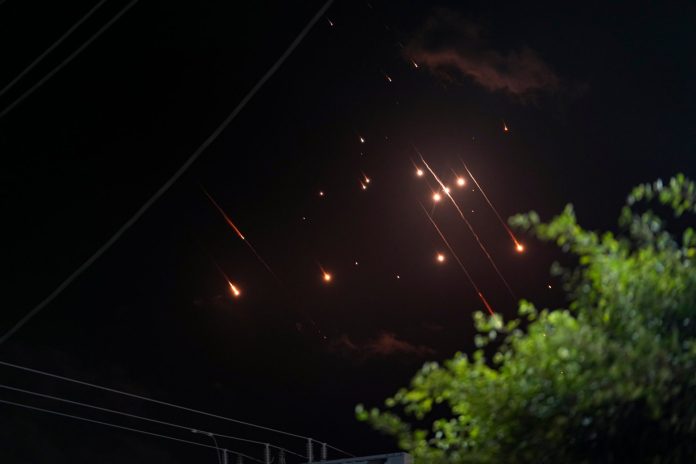
Iran Missile Attack Israel

Leaked documents in a report published on Saturday by American daily, The Washington Post, revealed that the partnership — known as the “Regional Security Construct” — was forged between Qatar, Bahrain, Egypt, Jordan, Saudi Arabia, and the UAE under the leadership of US Central Command in 2022 to confront what was claimed to be “threats” from Iran.

According to the report, the partnership quietly expanded through 2025, linking the six Arab states into a shared air-defense network designed to “combat Iran’s missiles and drones,” following the Islamic Republic’s pro-Palestine retaliatory strikes against the occupied territories and the regime’s US-backed 12-day aggression on Tehran.

“The documents show that the threat posed by Iran was the driving force behind the closer ties, which have been fostered by the US military’s Central Command, known as Centcom,” the paper said, adding that the documents labeled Iran and its regional partners as the “Axis of Evil.”

The report noted that the parties held behind-the-scenes years of secret meetings and joint trainings in Bahrain, Egypt, Jordan, Qatar, and the US, focusing on countering Iran and combating underground tunnel warfare used by the Palestinian resistance movement Hamas and other resistance factions in Gaza.

“The documents show how the centerpiece of the construct, an air-defense plan to combat Iran’s missiles and drones, moved from theory to reality over the past three years,” as Israel and the Arab countries signed on to the plan at a 2022 security conference and agreed to coordinate military exercises, it added.

“By 2024, Centcom successfully linked many of the partner states to its systems, allowing them to provide radar and sensor data to the US military and, in turn, to view the combined data of the partners.”

The report stressed that the six key Arab states quietly expanded military partnership with the Israeli regime “even as they condemned the war in the Gaza Strip.”

According to the daily, while Arab leaders, including those of Egypt, Jordan, Qatar, and Saudi Arabia, have publicly denounced Israel’s devastating war on Gaza as “genocidal,” their militaries are simultaneously working alongside Israel and the US on plans tied to an American ceasefire proposal, which envisions Arab participation in Gaza’s post-war security arrangements.

Around 200 US troops are set to deploy to Israeli-occupied territories to support the ceasefire agreement, with several of the Arab states involved expected to contribute forces.

The leaked documents said, however, the military ties among the partnership members “were thrown into crisis,” after the air-defense system “did nothing” to protect Qatar against Israel’s September 9 strike on its capital, and US satellite and radar systems “did not provide an early warning of the strike.”

US Air Force Lt. Gen. Derek France was quoted as saying by The Washington Post that the setback took place because those systems “are typically focused on Iran and other [areas] where we expect an attack to come from.”

Qatar also said that its radar systems had failed to detect the missile launches by Israeli fighter jets.

Israeli Prime Minister Benjamin Netanyahu later issued an apology to Qatar under pressure from Washington, according to the documents, but the incident exposed the fragility of the cooperation.

The leaked files also exposed US plans to establish a “Combined Middle East Cyber Center” and an “Information Fusion Center” to further integrate Israeli and Arab security capabilities.

The paper cited a former US military official, speaking on the condition of anonymity to discuss sensitive military issues, as saying, “These engagements reflected the Persian Gulf Arab states’ pragmatic ties with Israel — and their respect for its military prowess.”

The documents revealed that Centcom personnel also led planning meetings to launch information operations to counter Iran’s narrative that it is the regional protector of Palestinians, while promoting a “partner narrative of regional prosperity and cooperation.”

On June 13, Israel launched an unprovoked aggression against Iran, triggering a 12-day war that killed at least 1,064 people in the country, including military commanders, nuclear scientists, and civilians.

The United States also entered the war by bombing three Iranian nuclear sites in a grave violation of international law.

On June 24, Iran, through its successful retaliatory operations against both the Israeli regime and the US, managed to impose a halt to the terrorist assault.

The aggression on Iranian soil unfolded amid Israel’s brutal onslaught on the Gaza Strip, which has since October 2023 claimed the lives of more than 67,000 Palestinians, most of them women and children, according to Gaza Health Ministry.

 

Israel abusing Palestinian prisoners ahead of their release under exchange agreement with Hamas: Report

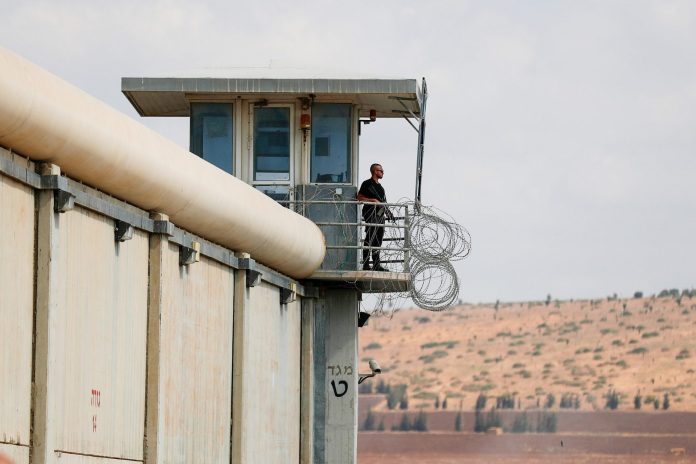
Israel Prison

The Hamas-affiliated Palestinian Prisoners’ Media Office published the video on its digital platforms, citing Israeli media sources.

The footage shows a group of Palestinian detainees with their hands tied behind their backs, forced to walk in a line while blindfolded and bending their heads downward, surrounded by Israeli soldiers and police officers.

The Prisoners’ Media Office said the video “documents a painful scene showing the brutal mistreatment of prisoners by the occupation, who are scheduled to be released under the exchange deal.”

Amjad al-Najjar, head of the Palestinian Prisoners’ Club, wrote on the US social media company, Facebook, that “Israeli media published a video from the Negev Desert Prison showing preparations for the release of several Palestinian prisoners.”

He added that the video’s translation indicates that those shown are prisoners serving life sentences who are being transferred to the Negev prison in preparation for their deportation to Gaza as part of the deal.

Israeli forces raided the home of Murad Id’ees, who is scheduled to be released under the deal, during an incursion into the Beit Amra area south of Hebron in the southern West Bank, according to the Prisoners’ Media Office.

Witnesses told Anadolu that Israeli troops also raided the homes of several prisoners in the West Bank, warning families not to hold public celebrations upon their relatives’ release. Among the homes raided were those of Khalil Abu Aram and Taleb Makhmara in the town of Yatta, south of Hebron.

Earlier Saturday, several Palestinian prisoners called their families in the West Bank to share their joy about their expected release Monday, according to the Al-Quds newspaper and circulating videos.

The Israeli Prison Service confirmed that it has completed the transfer of Palestinian prisoners to the facilities from which they will be released.

Media reports said the releases are expected to begin Monday once Israel recovers its captives held by Hamas.

Under the deal, 2,000 Palestinian prisoners, including 250 serving life sentences and 1,700 detained in Gaza since the war began in October 2023, will be released in exchange for 48 Israeli hostages.

Israel’s Justice Ministry published the names Friday of the 250 prisoners serving life terms for the exchange.

The Palestinian Prisoners’ Media Office denied reaching a consensus on the lists of prisoners included in the exchange.

Tel Aviv estimates that 48 Israelis are being held in Gaza, including 20 still alive, while more than 11,100 Palestinians are imprisoned in Israel, many of whom suffer from torture, starvation and medical neglect — conditions that have led to deaths, according to Palestinian and Israeli human rights and media reports

Phase one of the Gaza ceasefire agreement took effect at midday Friday. Israeli forces completed a gradual withdrawal to the so-called yellow line, triggering a 72-hour window for the exchange process.

Phase two reportedly envisions creating a new governing mechanism in Gaza without Hamas, forming a joint security force of Palestinians and troops from Arab and Islamic countries, and disarming Hamas.

Since October 2023, Israeli attacks have killed almost 67,700 Palestinians, most of them women and children, and left the enclave largely uninhabitable.


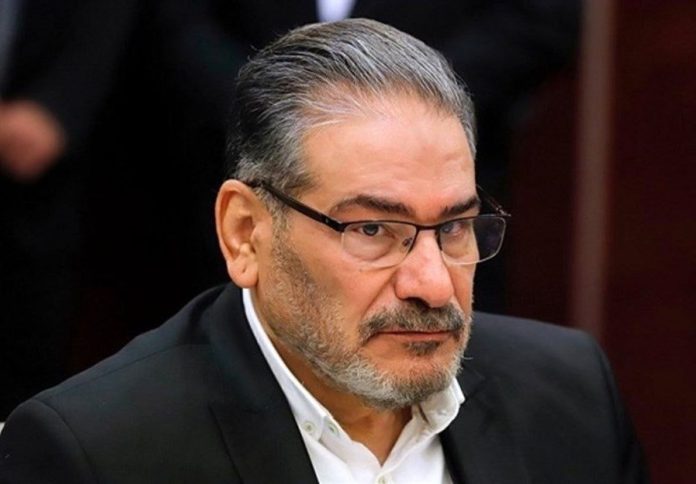
Shamkhani: “If we returned to 1990s, we would definitely build nukes”

Iran leader advisor Shamkhani in stable medical condition

Shamkhani commented on several key national security issues, including the strategic calculus behind closing the Strait of Hormuz. “To close the Strait of Hormuz, one must be at the very end of the line — we have not reached that point yet,” he stated.

Addressing speculation about possible Israeli regime’s involvement in the helicopter crash that led to the martyrdom of former Iranian President Seyyed Ebrahim Raisi, Shamkhani said: “Given the technical capability of the investigative teams, no evidence of foreign involvement has been found. However, it is possible that the incident was beyond our technical capacity to determine.”

He also referred to the downing of the Ukrainian passenger plane by Iran in January 2020 and the reason behind the three-day delay in the official announcement of the cause. “After the incident, I informed the President. Some believed the incident may have resulted from U.S. electronic warfare, and that is why there was a three-day delay in publicly announcing the results of the investigation,” Shamkhani said.

His remarks—particularly the acknowledgment that he would have supported Iran’s acquisition of a nuclear weapon if history were reversed—mark one of the most candid statements from a senior Iranian official on the country’s past strategic considerations.

Over 75% of Americans support additional sanctions on Russia: Survey

Russia Ukraine War

The poll, which survey 2,413 U.S. registered voters and was conducted between Oct. 1-2, showed overwhelming bipartisan support for additional sanctions on Moscow.

More Republican voters than Democrats supported the additional sanctions with 86% of Republican in favor of the new measures, while 71% of Democratic voters agreeing that the U.S. should impose the measures. Only 23% of respondents were opposed to new sanctions entirely.

The results illustrate the contrast between the prevailing views of the American public and the policies of the Trump administration.

Although Trump has at times threatened to impose new sanctions on Russia, he has seldom followed through on those threats and has consistently shot down domestic and international appeals to get tough on Moscow.

While Trump has reportedly called upon G7 partners to impose their own tariffs on China and India over their purchases of Russian oil, he has been reluctant to impose his own measures, having set shifting deadlines on their implementation.

In August, Trump made progress on implementing additional economic pressures, signing an executive order imposing a 25% tariff on imports from India in response to New Delhi’s continued purchase of Russian oil.

Later in September, Trump again shifted the deadline for new Russian sanctions stating that he would impose tougher sanctions on Moscow once European allies fully cease purchasing Russian oil.

When asked if the U.S. should impose tariffs on countries that buy Russian oil, a majority, some 57%, of respondent believed that countries should be punished for the imports.

Two-thirds of voters from Trump’s Republican Party supported the tariffs, while 55% of Democrats thought countries should be punished. Only 32% of respondents disagreed “for fear of antagonizing Russia.”

Despite a lack of economic pressure, last month, the Trump administration approved its first military support package for Ukraine under the NATO-funded Prioritized Ukraine Requirements List (PURL).

Respondents to the poll also overwhelmingly believed that the Trump administration should continue to provide weapons in addition to imposing further economic sanctions with 68% of respondent in agreeance.

The online poll is considered accurate +/- 1.99 percentage points 19 times out of 20.


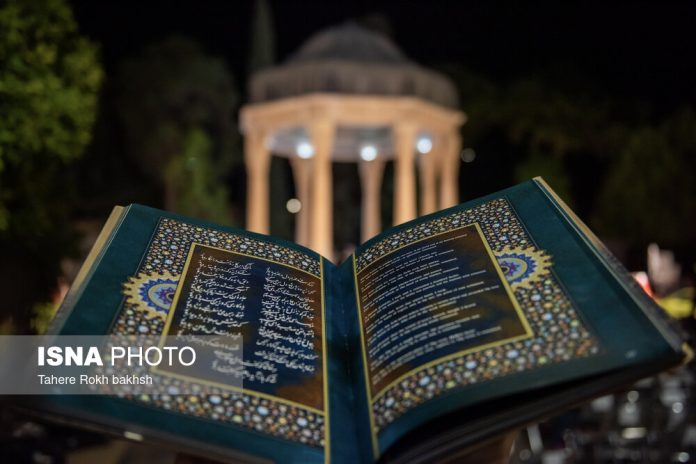
Iran marks National Hafez Day with ceremonies in Shiraz

The annual ceremony was held at his mausoleum in Shiraz with the participation of officials, cultural figures, and researchers from across Iran and abroad.

Hafez, whose full name was Khajeh Shams al-Din Mohammad Hafez Shirazi, is celebrated as one of the most beloved poets in Persian literature.

Known for his mastery of the ghazal, he blended themes of love, spirituality, and philosophy in verses that remain deeply rooted in Iranian culture.

His profound familiarity with the Qur’an infused his poetry with layers of mystical meaning, earning him the title Lisan al-Qyeb, or “Tongue of the Unseen.”

Beyond Iran, Hafez’s poetry has influenced great literary figures such as Johann Wolfgang von Goethe, whose West-Eastern Divan was inspired by the Persian master’s work.

National Hafez Day, observed annually on October 12 (Mehr 20 in the Iranian calendar), serves not only to honor a towering figure of Persian culture but also to highlight the enduring dialogue between Eastern and Western literary traditions.