Monday, December 29, 2025
Home Blog Page 129

Iran suspends IAEA cooperation but has not finalized NPT exit, lawmaker states

IAEA

Vahid Ahmadi, a member of parliament’s National Security and Foreign Policy Committee, told the media that discussions over leaving the NPT remain ongoing and need “greater precision.”

He emphasized that any decision must be backed collectively by Iran’s governing institutions. “If a decision is made, it should be one that the entire system supports so that it is implemented with unity,” he said.

Ahmadi noted that Iran has already suspended its cooperation with the International Atomic Energy Agency (IAEA), citing the agency’s violations of its own rules and international law.
He noted that while non-cooperation is already in effect, withdrawal from the NPT remains undecided.

He added that the issue is complex and requires weighing the benefits, costs, and national interests.
Future developments at the international level could influence Iran’s decision, he said, but for now, “the system has not reached a conclusion.”

Iran FM says UNSCR 2231 sanctions must end on October 18

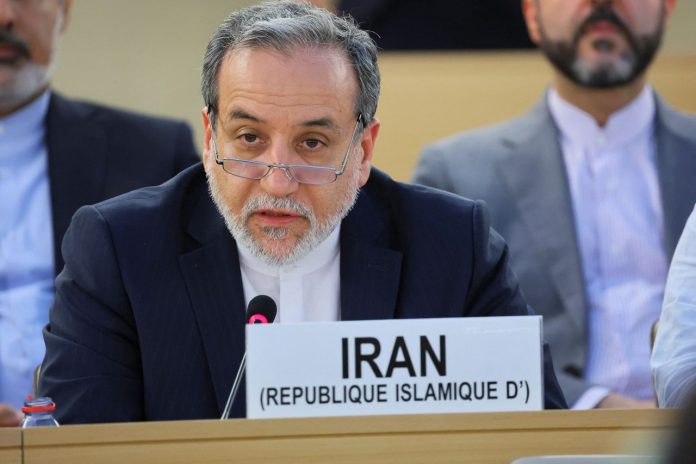
Araqchi made the remarks in a meeting with UN Secretary General Antonio Guterres in New York on Monday.

During the talks, Araqchi outlined Iran’s positions on the developments in West Asia, particularly the grave threat posed by the Israeli regime’s continued aggression and violations of international law to regional and international peace and stability.

He stressed the special responsibility of the United Nations and its secretary general in safeguarding the principles and objectives of the UN Charter.

Referring to the military aggression by the Israeli regime and the US against Iran’s sovereignty and territorial integrity in June, Araqchi condemned the unlawful attacks on Iran’s peaceful nuclear facilities amid ongoing diplomatic negotiations as a flagrant violation of international law and the UN Charter, describing it as a betrayal of diplomacy. He underlined the need to hold the aggressors accountable.

Araqchi further dismissed the US and EU3’s move to exploit the JCPOA’s snapback mechanism as baseless and illegal, warning that such an unprecedented blow to diplomacy exposes the absence of good faith in those countries. He reiterated that Resolution 2231 and all its nuclear-related restrictions must be deemed terminated in line with the resolution’s provisions on October 18.

For his part, Guterres stressed the importance of diplomacy and adherence by all sides to international commitments, reiterating the UN Secretariat’s readiness to provide any assistance in this regard.


Ukraine says wants war with Russia to end this year

Russia Ukraine War

Speaking at the Warsaw Security Forum in Poland on Monday, Sibiga said that “Ukrainian resilience is not the reason for endless war. We want to end this war this year.”

He urged Ukraine’s foreign backers to make continued hostilities “dangerous personally” for Russian President Vladimir Putin, calling for additional economic sanctions to be imposed under US leadership.

Sibiga also repeated Kiev’s demand that Putin meet directly with Ukrainian leader Volodymyr Zelensky, adding that “the outcome of this meeting should be [a] ceasefire.”

Moscow has announced it is willing to engage Zelensky in person if talks are properly prepared to yield results, but has rejected the idea of a simple ceasefire, arguing it would only allow Kiev to rebuild its forces and resume fighting later. Russian officials have said a diplomatic path towards achieving its security objectives is preferable.

Sibiga stated that Ukrainian expectations have been boosted by “positive signals” from US President Donald Trump, who met Zelensky in New York earlier this month. In contrast with his previous remarks, Trump has claimed that with European funding, Ukraine’s military could achieve its territorial goals.

Zelensky has interpreted Trump’s remarks as a commitment of continued US support, although others have suggested that the president is shifting responsibility to European NATO allies to avoid being blamed for a possible Ukrainian defeat.

EU foreign policy chief Kaja Kallas responded that Trump “was the one who promised to stop the killing,” adding, “it can’t be on us.”


20% of children in Gaza born underweight or premature amid Israeli blockade: UNICEF

Gaza War

“This week, UNICEF delivered urgently needed hygiene supplies to hospitals and health centres in Gaza City, but babies need more access to life-saving nutrition and health services,” the UN agency said in a post on the US social media company X.

“One in five babies in the Gaza Strip is born prematurely or underweight,” it added.

The organization renewed its call for the immediate delivery of large-scale aid for children, infants, and families in Gaza, alongside a ceasefire in the territory, which has been subjected to a severe blockade and deliberate starvation for months.

The Israeli-imposed siege has triggered an unprecedented famine, claiming the lives of 422 people, including 147 children, despite repeated international appeals to lift the blockade and allow aid access.

Last month, the Integrated Food Security Phase Classification declared famine in Gaza City, warning that it could spread to other areas of the territory.

Since March 2, Israel has tightened the blockade by closing all crossings into Gaza, preventing the entry of food, medicine, or humanitarian aid, pushing the enclave toward famine despite aid trucks accumulating at the border.

Limited aid is occasionally allowed, but it is insufficient to meet basic needs, and many aid trucks, according to Gaza authorities, are looted en route by gangs allegedly protected by Israel.

The Israeli army has killed over 66,000 Palestinians, most of them women and children, in Gaza since October 2023. The relentless bombardment has rendered the enclave uninhabitable and led to starvation and the spread of diseases.


US gears up for possible conflict with China: WSJ

The US Department of Defense launched the drive in June, when it invited top missile makers to a Pentagon roundtable, sources told the daily.

Led by Defense Secretary Pete Hegseth and Joint Chiefs of Staff Gen. Dan Caine, the meeting drew major arms contractors, startups like Anduril Industries and crucial component suppliers.

Deputy Defense Secretary Steve Feinberg is playing an “unusually” hands-on role in the effort, reportedly known as the Munitions Acceleration Council. The WSJ noted that the top official personally calls some executives on a weekly basis to track their progress.

“President Trump and Secretary Hegseth are exploring extraordinary avenues to expand our military might and accelerate the production of munitions,” Pentagon spokesman Sean Parnell told the newspaper.

“This effort has been a collaboration between defense industry leaders and senior Pentagon officials.”

The new acceleration council is focused on 12 weapons that the Pentagon wants on hand for a potential conflict with China, the WSJ relayed.

Some officials and experts have reportedly expressed concerns that the Pentagon’s goals may be unrealistic, citing the fact that assembling certain missile systems can take up to two years. At the same time, certifying new suppliers requires hundreds of millions of dollars to ensure the products meet military standards.

Funding remains another major concern, according to analysts cited by the news outlet. While the “Big, Beautiful Bill” recently approved by Washington provided an extra $25 billion in munitions spending over five years, meeting the Pentagon’s new targets could require tens of billions more.

China is viewed by the US as its primary strategic rival due to its rapid military modernization, expanding influence in the Indo-Pacific, and alleged growing pressure on Taiwan. Washington fears that Beijing may attempt to forcibly reunify with the self-governing island, potentially triggering a regional conflict that could draw in American forces.

Beijing has rejected the allegations, maintaining that Taiwan is an internal matter and has repeatedly accused the US of stoking tensions by arming the island and encouraging separatist sentiment.


US deports dozens of Iranians to Tehran under bilateral deal: NYT

White House

Citing senior Iranian and US officials, the report said a US-chartered flight carrying deportees departed from the US state of Louisiana Monday night and is expected to reach Iran via Qatar on Tuesday.

A US official confirmed that plans for the flight were in the final stages.

Two officials said the deportees include men, women, and some couples, with some volunteering after months in detention, while most had either been denied asylum or not had a hearing yet before a judge.

Iranian officials described the deportation as a rare instance of US-Iran cooperation after months of talks, with Iran’s Foreign Ministry coordinating the return and assuring deportees of their safety.

The US has long struggled to deport migrants to countries like Iran due to limited diplomatic ties and delays in obtaining travel documents, often resulting in prolonged detention or release.

In 2024, the US deported just over two dozen Iranians, the highest number in years, via several commercial flights.


Iran’s military chief: Army, IRGC ready for any future confrontation

Abdulrahim Mousavi

During an inspection visit to naval units of both the Army and the IRGC in the Southern province of Hormozgan, Mousavi evaluated their offensive and defensive capabilities, praising their high level of readiness to carry out assigned missions.

“Our forces in the South are prepared to execute their missions, and all defensive and offensive plans to counter the enemy are being continuously updated and practiced,” he said.

Mousavi added that significant improvements have been made in the Navy based on experiences gained during the 12-day “Sacred Defense,” referring to a recent short-term conflict.

Visiting various IRGC naval sites in Hormozgan, he emphasized that the force is fully capable of both defensive and offensive operations against any adversary.

“What we witnessed today was an extraordinary level of readiness for a possible future confrontation,” Mousavi concluded.


US announces peace deal for Israel’s war on Gaza

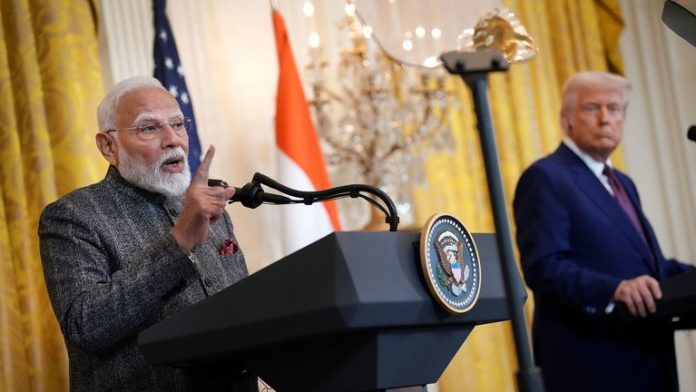
In a press briefing with the two leaders at the White House that began more than an hour late, Trump said: “We’re at a minimum, very, very close. And I think we’re beyond, very close” to securing the proposed ceasefire deal for Gaza, calling it “one of the greatest days in civilization”.

Much of Trump’s speech was peppered with his assertions that the achievement was a “historic first” and that allies had commended his administration’s ability to reach a Middle East “peace” deal.

The US president added that there had been “extensive consultation with friends and partners across the region” and that the plan had the support of Arab and Muslim leaders and European allies.

He hailed it as a “new chapter of security, peace and prosperity for the entire region”, and heaped praise on the leaders of Saudi Arabia, Qatar, UAE, Jordan, Turkey, Indonesia, Pakistan and Egypt, whom he had met with last week at the United Nations General Assembly.

He stated in many cases there had been “great men” helping and “some great women too, but they tend to be mostly men however”.

If accepted by Hamas, Trump said the proposal called for the release of living Israeli captives within 72 hours, as well as the bodies of captives who had died, and the immediate end to the war itself.

He added that “Arab and Muslim” leaders had committed to “demilitarise Gaza” and “decommission” the military capabilities of Hamas.

Trump then said he had heard Hamas wanted the deal too, and that it would result in the destruction of “terror infrastructure” including “tunnels” and “production facilities”.

Trump added that a new transitional authority would agree on timelines for Israel to withdraw and that Israel would be withdrawing in phases.

Trump then thanked his son-in-law Jared Kushner and special envoy Steve Witkoff and commented that “no one else could have come close”, and that it was the first time in “thousands of years” such a feat had been achieved.

Trump then added that if Hamas chose to reject the 20-point proposal, which was released shortly before the press conference, then “Bibi”, referring to Netanyahu, would “have our full backing to do what you have to do”.

Qatar and Egypt announced shortly after that they had delivered the proposal to Hamas.

Trump said his plan called for an international oversight body to ensure the success of the plan, which he said would be called the Board of Peace, a name he went on to say was “beautiful” and would be headed by himself as chairman.

He announced that former British prime minister Tony Blair would be on the board along with several others, who would be revealed over the next few days.

Trump then proceeded to announce that Israelis seem to really “like me”. They say two things, he added: “Please get the hostages back and please end the war. They’ve had it.”

He praised Netanyahu as being a warrior.

“Israel is lucky to have him,” he continued.

“There are many Palestinians who wish to live in peace. Many, many, many. I’ve seen so many of them. They have support. I challenge Palestinians to take control of their destiny.”

“We’re giving them responsibility for their destiny”, he said, but they must “prohibit terrorism and earn their way to a brighter future”.

“They’ve had a rough life with Hamas,” Trump said, adding, “If the Palestinian Authority does not complete the reforms that I laid out in my vision for peace in 2020, they’ll have only themselves to blame. We’re giving them an amazing footprint.”

He did not state what the “footprint” was. His focus was primarily on returning the captives.

Trump called for Hamas to accept the deal, saying: “It’s a different Hamas we’re dealing with, as 20,000 people have been killed. Their leadership has been killed three times over.”

Netanyahu then took the stage, and announced he agreed to the peace deal and “supported” Trump’s plans to end the war in Gaza. But he also took a further step – in a disconnect with Trump – and indicated that he and Trump were working on a longterm strategy to change the face of the Middle East, rather than working with Arab and Muslim leaders on Gaza only.

Netanyahu began by thanking and praising Trump, something that Ukrainian leader Volodymyr Zelenskyy famously failed to do on his first visit to the White House when Trump had tried to end the war between Russia and Ukraine.

Netanyahu called Trump the “greatest friend that Israel has ever had in the White House” and said that the competition wasn’t “even close”.

He then went on to say that Trump’s leadership was “changing the world for the better. Ending wars and advancing peace”.

“When our nations stand shoulder to shoulder, we achieve the impossible,” the Israeli prime minister stated referencing the US’s “bold decision” to help Israel in its 12-day war on Iran in June, adding it “made the region safer, and the world safer”.

He said that Israel would now take steps to “win the war and expand the peace” under Trump’s leadership.

He added Hamas would be disarmed, and that Gaza would have a civilian administration that would be run by neither Hamas nor the Palestinian Authority (PA).

Netanyahu’s plans go against European recognition of a Palestinian state where the PA would be the governing authority.

Netanyahu praised Trump for overseeing the body, despite his busy schedule, and added: “If Hamas rejects your plan, Mr President, or if they supposedly accept and then basically do everything to counter it, then Israel will finish the job by itself.”

“This can be done the easy way or the hard way,” Netanyahu continued, adding, “We prefer the easy way. But it has to be done.”

He rejected the recognition of a Palestinian state and said “it would endanger Israel’s very existence”.

“Under your leadership, we can re-energise the Abraham Accords” and expand them to more Arab and Muslim nations, he added.

He ended with declaring that “Israel and America can change the face of the Middle East”, and took a completely different direction from the one Trump had.

Netanyahu travelled to the White House to meet with Trump to discuss a ceasefire in Gaza following his appearance at the United Nations General Assembly on Friday.

The meeting is the fourth between the two leaders since Trump returned to the White House at the end of January.


UK Labour conference votes to sanction Israel and recognise Gaza genocide

The unprecedented move means that the Labour conference has officially accepted the findings of a recent UN Commission of Inquiry report, which found that Israel is committing genocide in Gaza, and has backed comprehensive sanctions on Israel and a full arms embargo.

Delegates from constituencies and affiliated organisations are voting on motions covering a range of topics at the governing party’s annual conference, which began in Liverpool on Sunday.

Palestine Solidarity Campaign director Ben Jamal said: “This is a huge defeat for the government, with the Labour Party finally accepting that Israel is committing genocide in Gaza.

“This historic vote must now become government policy: imposing comprehensive sanctions on Israel and a full arms embargo.”

Maryam Eslamdoust, general secretary of the Transport Salaried Union (TSSA), stated: “Today the Labour movement stood on the right side of history and in solidarity with the Palestinian people, sending a clear message to the Labour leadership: we will not remain silent on the crime of genocide.”

Delegates also voted on Monday evening against another motion understood to broadly support Labour policy on Israel.

On Sunday, Middle East Minister Hamish Falconer backed that motion, which falsely claimed a 16 September UN Commission of Inquiry report found “a risk of genocide against Palestinians in Gaza”.

In fact, the UN report concluded that Israel has committed genocide and is still committing genocide in Gaza.

By contrast, Middle East Eye understands the emergency motion – which Falconer spoke against on Sunday – received strong trade union support.

A copy of the motion seen by MEE notes: “Conference accepts the findings of the UN Commission of Inquiry and calls on the Labour government to… employ all means reasonably available to it to prevent the commission of genocide in Gaza.”

The motion further demands that the government “apply sanctions to put pressure on the Israeli government to respect international law” and “ensure individuals and corporations in the UK are not involved in aiding and assisting the genocide”.

Sara Husseini, Director of the British Palestinian Committee stressed: “The Labour leadership must now join their own party members, along with the UN, genocide scholars and countless human rights organisations in confirming Israel’s genocide against the Palestinian people, and end the UK’s complicity in it.”

The motion’s passing piles further pressure on the beleaguered Prime Minister Keir Starmer to cut political and military ties with Israel over its genocide in Gaza.

It signals significant discontent among the Labour rank and file with government policy. Britain recognised a Palestinian state last week but has rejected calls to denounce Israel’s actions in Gaza as genocide.

Last September, the government suspended 30 out of 350 arms export licences to Israel after a review found a clear risk that British-made weapons could be used in violation of international humanitarian law.

Licences for parts for F-35 fighter jets, which are directly used in Gaza, were among those exempted from the embargo.

Recent polling found that 72 percent of Labour’s 2024 voters back a full arms embargo on Israel.

Recent months have seen a series of diplomatic spats between the UK and Israel, two historical allies.

The UK government banned Israeli officials from Britain’s largest arms trade show earlier this month.

Israeli Prime Minister Benjamin Netanyahu denounced the UK’s move to recognise a Palestinian state last week as “rewarding Hamas”.

However, Israeli President Isaac Herzog visited Britain last week and met Starmer at Downing Street.

Herzog said afterwards that he both “argued” and had points of agreement with Starmer, whom he called Israel’s “ally”.

Israeli PM apologises to Qatar over Doha attack

Benjamin Netanyahu

Qatari Prime Minister Sheikh Mohammed bin Abdulrahman bin Jassim Al Thani received the apology on Monday in a joint call from United States President Donald Trump and Netanyahu during their meeting at the White House.

“As a first step, Prime Minister Netanyahu expressed his deep regret that Israel’s missile strike against Hamas targets in Qatar unintentionally killed a Qatari serviceman,” a White House statement said.

“He further expressed regret that, in targeting Hamas leadership during hostage negotiations, Israel violated Qatari sovereignty and affirmed that Israel will not conduct such an attack again in the future.”

At least five lower-ranking Hamas members and a Qatari security official were killed in the September 9 attack, which targeted senior Hamas leaders involved in negotiations on a US-backed ceasefire proposal. Hamas’s top leaders survived the assassination attempt.

It was the first Israeli attack on Qatar, a key mediator in ceasefire efforts and host of the US military’s largest base in the Middle East, Al Udeid.

Qatar’s Ministry of Foreign Affairs confirmed the call “as part of US efforts to address the repercussions of the Israeli aggression that targeted a residential neighbourhood in Doha city, which included housing for the Hamas negotiating delegation, resulting in a blatant violation of the sovereignty of the State of Qatar”.

“At the beginning of the call, the Prime Minister and Minister of Foreign Affairs expressed his gratitude to the US President for his efforts to achieve peace in the region, including guarantees to prevent a recurrence of aggression against the State of Qatar and the US commitment to its defense partnership with Qatar,” the ministry announced.

“For his part, the Israeli Prime Minister apologised during the call for the attack and the violation of Qatari sovereignty, which resulted in the martyrdom of Qatari citizen Badr Al-Dosari, pledging not to repeat any targeting of Qatari territory in the future,” it added.

Netanyahu’s official X account quoted him as telling the Qatari prime minister: “Mr Prime Minister, I want you to know that Israel regrets that one of your citizens was killed in our strike. I want to assure you that Israel was targeting Hamas, not Qataris.”

“I also want to assure you that Israel has no plan to violate your sovereignty again in the future, and I have made that commitment to the president.”

The prime minister then went on to claim: “Israel has grievances against Qatar, from support for the Muslim Brotherhood to how Israel is portrayed on Al Jazeera to support for anti-Israel sentiment on college campuses.”

After Netanyahu’s “deep regret” over attacking Qatar, the White House announced that Qatar’s prime minister “welcomed these assurances, emphasising Qatar’s readiness to continue contributing meaningfully to regional security and stability. Prime Minister Netanyahu expressed commitment to the same.”