Thursday, December 25, 2025
Home Blog Page 1289

8 ways to determine temperaments in Iranian traditional medicine

Temperament

This is one of the easiest ways of determining the temperament of a person. Easy though it might seem, the determination of temperaments calls for vigilance and accuracy. In many cases, ordinary people face difficulty in doing the job.

However, these factors are used in Iranian traditional medicine to determine the temperaments: checking the amount of muscle and fat in the body, checking the characteristics of the touched area in the body such as softness and hardness, skin color, hair characteristics, shape and characteristics of organs, way of sleeping and waking up, the quality and characteristics of body excrement and all factors involved in physical movements.

READ MORE:Tips of traditional Iranian medicine and healthy lifestyles for people with different temperaments

1- Check the body’s coldness and warmth

You need to first check the coldness and warmth of the body. Using this technique marks the first step to know if someone’s temperament is warm or cold. Just touch part of the body like a person’s forearm and notice how you feel by so doing.

  • If you feel hot, then that person’s temperament is warm.
  • If you feel cold, then that person’s temperament is cold.

2- To determine someone’s temperament, see if they have soft or hard body tissue

The next step to determine the type of temperament is to check the degree of softness and hardness of body tissues, muscles and skin. Different people have different body tissues. Thus, accuratelychecking them can help provide more full details to determine the type of their temperaments.

  • If you feel warm by touching the body, and in addition to the warmth, you notice that the body tissue is soft and easily sinks in with the slightest pressure of finger, then that person’s temperament is moist and warm at once. This means that he/she has the characteristics of warm and moist temperament.
  • If you feel warm by touching the body, but it’s dry and slightly rough under your finger, that person has a dry and warm temperament. This is a sign of warm and dry temperament, which is the feeling of warmth and dryness in the body tissue and in the skin.
  • You may have a different experience when you touch that person’s body. If you feel cold by touching the person’s body, but the coldness is accompanied by skin softness and fleshy body, the person is showing signs of cold and moist temperament, which is also called cold and moist temperament by traditional medicine practitioners.
  • If a person’s body is cold and hard and also dry, he/she has the characteristics of cold and dry temperament.
Cold and Wet

3-What color is your skin?

Examining the color of the skin, the body tissue and its coldness and warmth is the third step to determine the type of temperament. Iranian traditional medicine therapists check skin color in addition to body tissue and bone structure to identify the temperament type. They believe that skin color serves as a good sign to check the type of temperament.

  • White or whitish skin is a good of a person’s cold temperament. However, this also is a sign of anemia.
  • People whose skin is red or reddish have warm temperament. Such people have pinkish and red skin, and in addition to warm temperament, they are also categorized as people with much blood.
  • People whose skin is yellow or yellowish have dry temperament in addition to warm temperament. They face problems due to the predominance of bile in their bodies throughout their lives.
  • There are signs of cold and dry temperament in people whose skin is dark and dull and whose lips are eggplant-colored. They are also facing the predominance of soda in their bodies.
  • Men and women whose skin is white are categorized as people with cold and moist temperament. A key sign of such people is the prevalence of phlegm, which affects their daily life.

Cold and Dry

4- Are you muscular or bony?

Another criterion that traditional medicine therapists use to identify people’s temperament is to check the appearance and shape of the body and muscles as well as the extent of a person’s muscularity.

  • People with a broad body have a warm temperament.
  • People with big body parts, outstanding vessels and a strong pulse are also said to have a warm temperament.
  • People with thick and big muscles and finer tendons have a warm temperament.
  • To the contrary, if a person has small limbs and a small body, this is a sign of coldness.
  • Having a weak pulse and delicate muscles are other signs of coldness.
  • Traditional medicine practitioners believe people with a thin face whose skin sticks to the bones have a dry temperament.
  • Those with noticeable and protruding joints whose larynx and nose cartilage are also outstanding are put in the group of people having a dry temperament.

5- How many hours do you sleep a day?

Another way to determine people’s temperament is to check the time, quality and sleep patterns of each person. Traditional medicine practitioners can identify people’s temperament by examining the quality and quantity of sleep and examining other individual characteristics. From their viewpoint, people who sleep enough throughout the day and people who oversleep have different temperaments.

If you are one of those who sleep more than 8 hours, then you have a cold and moist temperament.

But if you sleep less than 8 hours and you wake up and work most of the day, you have a warm and dry temperament.

Hot and wet

6- Check out your hair

To determine the type of someone’s temperament, you need to check their hair and the type and quality of its growth. Thus, you can check the 5th factor that helps determine a person’s temperament. The type of hair and its growth rate are different in people with different temperaments.

  • Traditional medicine practitioners believe that people with a high hair growth rate who are in the group of hairy people have a warm temperament.
  • But people whose hair growth rate is low and those who complain about this matter are classified as having a cold temperament. These people have sparse hair and eyebrows and they do not have much hair in other parts of their body either.
  • If hair growth in a man or woman is very fast so that they feel that their hair is growing faster and longer than normal and if they have other signs, they are categorized as people with a warm and dry temperament. Meanwhile, curly hair is also a sign of warm and dry temperament and should not be overlooked.
  • Thinness of hair could also be a sign of coldness and moisture of temperament. Therefore, you should also take this issue into account and it would be better to use the advice of a traditional medicine practitioner because thin hair may be the result of a disease. In addition, having smooth and straight hair is another sign of cold and moist temperament in men and women.
  • People with thick hair also have warm and dry temperament and this shows warm temperament in men and women.
  • Men and women’s hair color is another indication of temperament. People whose hair color is black usually have a warm and dry temperament.
  • People whose hair color tends to be gray and gray strands are seen on their heads earlier than others are also among those with a cold and moist temperament.
Hot and Dry

7- Defecation: A way to determine temperament

The color of feces and its quality are other factors used by traditional medicine practitioners to determine people’s temperament. For this purpose, examining all body waste including urine, feces, sweat, hair, nails and blood would be useful to accurately identify the type of temperament.

  • If feces or urine is darker than normal in color or stinks more than normal, this shows a warm temperament and indicates the predominance of bile in the body.
  • Colorless excreta and lack of smell are signs of a cold temperament.

8- How do you adapt to the environment?

If someone adapts to heat, cold, dryness and moisture very quickly, this indicates the dominance of that temperament. For example, if you are exposed to heat or eat food with a warm nature and you feel warm quickly, this indicates you have a warm temperament.

In our next edition, we will give you some practical tips of traditional Iranian medicine for each temperament.
Iran: No reduction in amount of uranium enriched

Iran nuclear programe

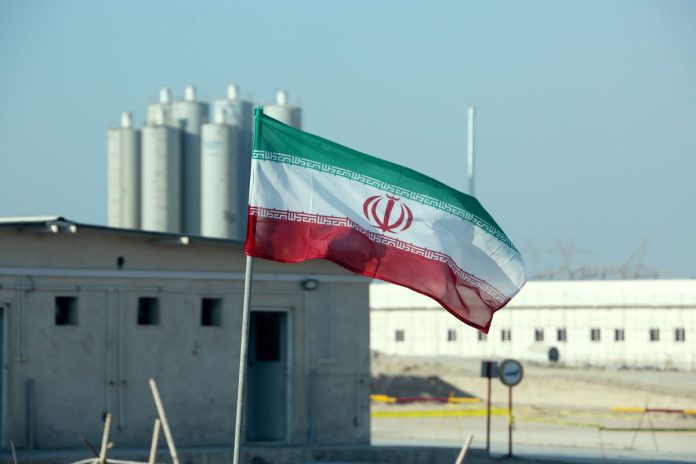
“[Uranium] enrichment is done based on the Strategic Action Plan and within the framework of the general policies of the Establishment,” said Mohammad Eslami at a Sunday press conference on the sidelines of a ceremony where Iran unveiled a new nuclear achievement.

He then took a question about sites in the country which were the subject of controversy with the International Atomic Energy Agency (IAEA).

“Negotiations with the IAEA are not at issue. Our issue is interaction with the IAEA, which takes place in line with the Safeguards agreement and the Nuclear Non-Proliferation Treaty (NPT),” he explained.

“Of the four sites in questions, two sites have remained, and we hope issues surrounding them will be resolved through engagement with the IAEA,” he said.

The IAEA informed Iran back in May it was closing the case of traces of nuclear material allegedly discovered at a site in Marivan in western Iran and Fars Province.

The other two sites are located in Varamin and Turquzabad, both on the outskirts of Tehran.
Eslami announced that IAEA Director General Rafael Grossi’s deputy is to Travel to Tehran for talks with the Iranian officials.

“I will also attend a general meeting of the IAEA to be held in Vienna and will meet Grossi,” he noted.

Syria rejects west “accusations over false-flag 2013 chemical attack” on Damascus

Syria Chemical Attack

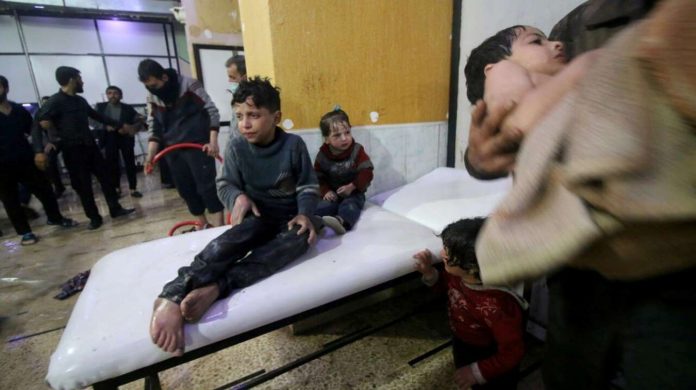
It comes after the French Foreign Ministry and the US National Security Council issued separate statements on Monday on the occasion of the 10th anniversary of the alleged attack, alleging yet again that the Syrian government made use of chemical weapons against its people.

The attack, which the militants blamed on the Syrian government, took place in the Ghouta district in the early hours of August 21, 2013, and killed hundreds of people.

At the time, the Syrian government blamed the attack on foreign-backed Takfiri terrorists fighting army forces. It rejected allegations of any involvement, emphasizing that the Damascus government would never use chemical weapons against its own people.

In their recent statements, the US and France repeated their spurious anti-Syria allegations and promised “justice” and “punishment” for the perpetrators as well as “crimes” by the Syrian government.

The Syrian Ministry of Foreign Affairs, however, condemned the statements, saying they included false accusations about the use of chemical weapons and other fabricated and forged incidents.

“The two statements fall within the framework of the campaign of misinformation and lies against Syria, and attest to the involvement of Washington, Paris, and other countries in orchestrating the heinous crime,” it added.

These states are either directly or indirectly engaged in terrorist attacks on Syria, it noted.

“Such statements are meant to put the real criminal out of sight, and act as a cover-up for the involvement of France and the US in chemical attacks carried out by terrorist groups in Eastern Ghouta in August 2013 and elsewhere in Syria,” the ministry stressed.

The Syrian foreign ministry went on to lambast the US and France for sponsoring terrorist groups and providing them with toxic materials used in all chemical attacks launched across Syria over the past years.

The ministry stressed that US and French officials “must be held to account over their connections with allied terrorist organizations, participation in the massacres of Syrian people, and enforcing the policy of starving Syrians by means of terrorism and unilateral sanctions.”

The US and its allies have already staged false-flag chemical attacks against civilians in the Syrian provinces to implicate Damascus.

On April 14, 2018, the United States, the UK, and France carried out a string of airstrikes against Syria over a suspected chemical weapons attack on the city of Douma, located about 10 kilometers northeast of the capital Damascus.

That alleged attack was reported by the White Helmets group, which published videos showing them purportedly treating survivors.

Leaked documents from the Organization for the Prohibition of Chemical Weapons (OPCW) later showed that the investigators of the Douma incident had found “no evidence” of a chemical weapons attack.

However, the organization censored the findings under pressure from the US and its allies to conceal evidence undermining the pretext of the US-led bombing of Syria days after the alleged attack.

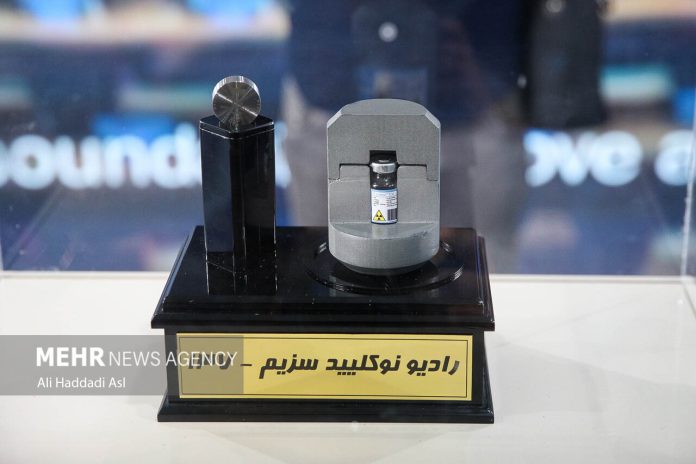
Iran unveils radionuclide cesium-137

Iran Radiopharmaceuticals

It is produced as a result of operations at nuclear reactors and mainly found in used nuclear fuel as well as radioactive waste.

As the country needs cesium-137, and it is difficult to import this radionuclide, a research plan was launched to develop the technology to separate and purify this material from products left behind from uranium fission.

The project was successfully completed in early summer, 2023.

Now, Iran has, for the first time, domestically developed the technical knowhow to separate and purify cesium-137 from the products of uranium fission.

Moreover, the laboratory established for that purpose can be used to develop the technology to separate other radioactive nuclei from the products of fission, which have specific medical and industrial applications.

The accomplishment was unveiled in a ceremony attended by Mohammad Eslami, the head of the Atomic Energy Organization of Iran (AEOI).

The progress comes as Iran has been under harsh sanctions by the US and some of its allies.

Analyst: Caspian Sea new focal point for concentration of power

Caspian Sea

“The Caspian Sea region has assumed a more important role for the littoral states and in the process of providing energy for Europe and Turkey,” said Ali Beman Eqbali Zarch in an article published on the website of the Institute for Political and International Studies (IPIS) of the Ministry of Foreign Affairs of the Islamic Republic or Iran.

“The Caspian Sea lies between Europe and Asia, the two continents regarded as the world’s biggest markets for energy consumption today,” he explained.

“So, billions of dollars are spent to connect this region to other parts of the world,” he added.

He referred to Russia and Iran as the biggest regional players, and added other Caspian Sea coastal countries, namely Turkmenistan, the Azerbaijan Republic and Kazakhstan are emerging as other regional powers, too.

The analyst touched upon Iran’s special status in the Caspian Sea and added the southernmost part of the Caspian Sea is located in Iran and is very deep, holding two-thirds of the sea’s water.

He then referred to the role of extra-regional countries in the Caspian Sea, and highlighted, “In recent years, the United States has been pursuing important goals such as boosting the Caspian Sea to turn it into a hub for transportation, sustainable and safe production of energy, monitoring movements by Iran and Russia and resolving long-running disputes.”

“On the other hand, China has made large investments in some of the infrastructural projects in Central Asia,” he explained.

The analyst further underscored Russia’s attempts to exercise influence in the Caspian region.

“Russia has the largest naval fleet in the Caspian Sea. Russian trade and investment have grown in all of the Caspian Sea’s littoral countries,” he added.

“Organizations such as Eurasia’s Collective Security Treaty Organization and the Eurasian Economic Union supported by Russia are seeking to make countries align themselves with Moscow through agreements and treaties,” he added.

“In the Caspian region, Moscow has focused on issues such as undermining the Western influence in the region, convergence among regional countries under the supervision of Moscow-backed organizations, discouraging foreign investment in Turkmenistan, Azerbaijan and Kazakhstan which can facilitate the flow of oil and natural gas supplies to the European market, and boosting economic activity with other Caspian Sea littoral states,” he said.

Saudi Arabia mulling nuclear power bids from China, Russia, France to sway US

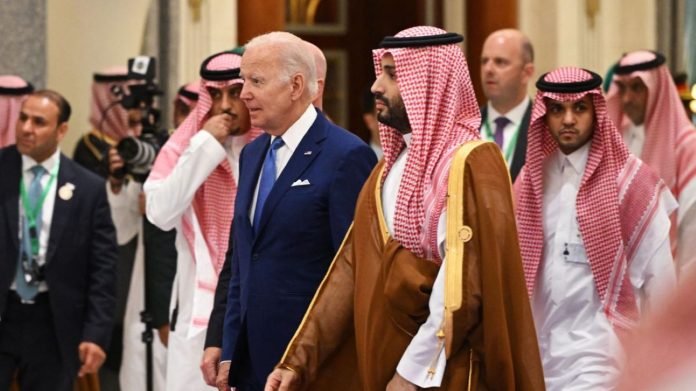
Biden and bin Salman

Saudi Arabia has long sought its own civil nuclear capability and has made US assistance with the programme a key demand in a potential deal to normalise relations with Israel.

A breakthrough in relations between Israel and Saudi Arabia, the world’s largest oil exporter, would be a major diplomatic victory for President Joe Biden’s administration, which has described it as a priority.

But Washington has baulked at Saudi Arabia’s demand for there to be no restrictions on enriching its own uranium.

With the US insisting on placing restrictions on the use of the technology, Saudi Arabia is considering alternative offers to develop the nuclear facilities from countries including China, Russia and France, according to one person familiar with the matter.

According to the FT, the person said Saudi Arabia would make its decision based on the best offer.

Meanwhile, another person familiar with the matter said that while Riyadh would prefer the US, which is considered to have better technology and is already a close Saudi ally, Washington’s restrictions on uranium enrichment would rule out cooperation.

In recent years, Saudi Arabia has drawn closer to China, its largest trading partner, and earlier this week the Gulf kingdom was invited to join the BRICS group of emerging economies.

Last year, Riyadh hosted Chinese President Xi Jinping for a regional summit, with Beijing this March brokering a rapprochement between the kingdom and its main rival in the region, Iran.

But the kingdom remains heavily reliant on US security support, and wants Washington to agree a mutual defence pact in exchange for any normalising of relations with Israel.

Earlier this month, Israel said that it would not necessarily oppose an agreement that would allow Saudi Arabia to enrich uranium for research purposes, according to Israeli national security adviser Tzachi Hanegbi.

Hanegbi told public broadcaster Kan that Israel’s consent was not needed for such a move.

“Egypt and the [United Arab] Emirates operate nuclear research centres and these are not dangerous,” he continued, adding, “Dozens of countries operate projects with civilian nuclear cores and with nuclear endeavours for energy. This is not something that endangers them nor their neighbours.”

Though the security adviser’s comments focused on a civilian nuclear programme, Riyadh has previously talked up its desire to develop a nuclear bomb.

In March 2018, Saudi Crown Prince Mohammed bin Salman stated, “Saudi Arabia does not want to acquire any nuclear bomb, but without a doubt, if Iran developed a nuclear bomb, we will follow suit as soon as possible.”

Leader of the Islamic Revolution Ayatollah Seyyed Ali Khamenei issued an official fatwa (religious decree) clearly establishing that any form of acquisition, development, and use of nuclear weapons violate Islamic principles and are therefore forbidden.

Since then, Riyadh and Tehran have re-established diplomatic relations.

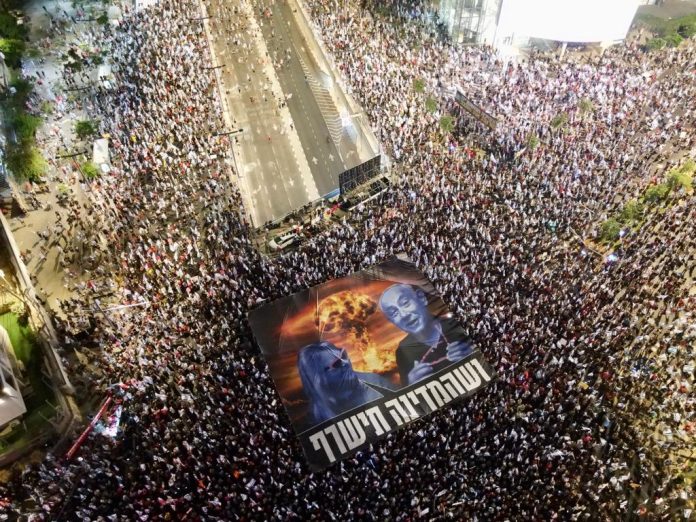
Mass demonstrations held against Israeli cabinet for 34th week

Israel Protest

The protesters packed the streets of the coastal city of Tel Aviv on Saturday, with Israeli media estimating the turnout to stand at around 100,000.

“I am here to protest. This is our 34th consecutive week of protesting,” one protester told Reuters, adding that Prime Minister Benjamin Netanyahu’s extremist cabinet “is trying to control the supreme court and that’s control all the three systems in Israel.”

Another protester said the far-right cabinet’s “drastic acts” will finally “destroy Israel.”

Demonstrators also hit the streets in other cities, including the holy occupied city of al-Quds, where thousands rallied outside President Isaac Herzog’s residence, and the city of Beersheba in the central part of the occupied territories.

Addressing the protest outside Herzog’s residence, Warda Sada, a political activist, stated, “We have gotten to a situation in … Israel in which a group of complete racists is controlling” the entire cabinet.”

The far-right cabinet’s overhaul scheme, which some denounce as a “judicial coup,” seeks to dispossess the Supreme Court of the power to overrule politicians’ decisions. It also seeks to give the regime’s politicians more say in the process of appointing judges to the court.

Proponents say the plan helps redistribute the balance of power between the politicians and the judiciary. Opponents, however, accuse Netanyahu of trying his hand at a power grab. They say the prime minister, who is on trial on several counts of corruption charges, is also attempting to use the scheme to quash possible judgments against him.

The protests have gained momentum since the end of July, when the Knesset passed the first bill of the overhaul plan, which restricted the Supreme Court’s ability to declare the cabinet’s decisions “unreasonable.”

Reacting to the plan, more than 10,000 Israeli reserve troops, including members of the intelligence unit 8200 and air force pilots, have said they would no longer show up for duty on a voluntary basis. The decision has prompted the Israeli top brass to warn about changes to the regime’s “war-readiness.”

Earlier in August, Israel’s Supreme Court began hearing the first in a series of appeals that are aimed at striking down the bill that has been approved by the Knesset.

Iran to keep manufacturing radiopharmaceuticals to meet health needs: Nuclear chief

Iran Radiopharmaceuticals

Eslami made the comment on Saturday during an interview on national TV.

He said that radiopharmaceuticals have already helped the health staff treat patients, with these types of medicines currently being supplied to hospitals and medical centers on daily and weekly bases.

The official also added that Iran has received “many demands from different countries” to provide them with radiopharmaceuticals.

“Our exports have begun as well,” Eslami stated without elaborating on the target countries receiving the Iranian-made medicines.

Back on April 9 this year, which marked Iran’s National Nuclear Technology Day, the AEOI chief announced that the country had twenty radiopharmaceutical projects in progress.

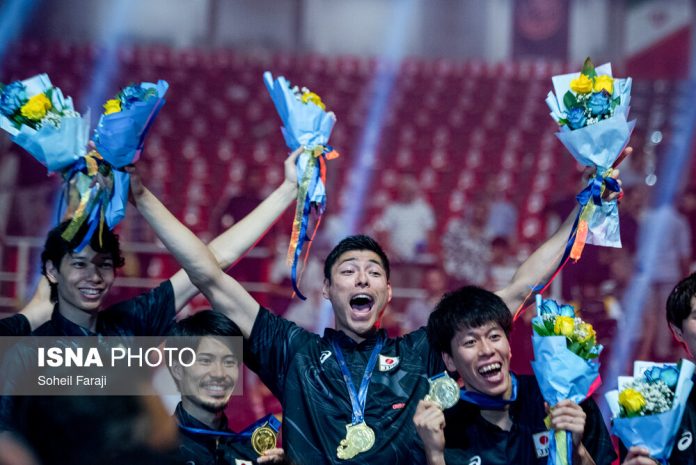
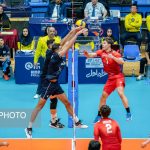
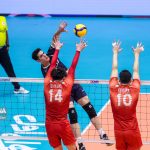
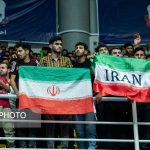
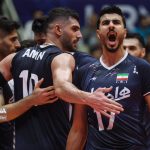
Japan beats Iran to win 2023 Asian Volleyball Championship

Japan Volleyball

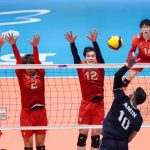
Iran’s Milad Ebadipour scored eight points, while Yuji Nishida collected 15 points for the Japanese team.

Japan clinched the title for the 10th time. Both South Korea and Iran have won the trophy on four occasions.

Iran’s national squad had defeated Hong Kong (3-0), Iraq (3-1), Pakistan (3-0) and China (3-0) to book a place in the final match.

Earlier in the day, Qatar defeated China 3-0 to win the bronze medal.

The Championship was held at the Al-Ghadir Hall in Orumiyeh, Iran from August 19 to 26.

In the latest FIVB rankings, Japan boasts the prestigious title of the highest-ranked Asian team, clinching the fifth spot. Meanwhile, Iran secured the 10th position.

Live Update: Russia’s “Special Operation” in Ukraine; Day 550

Russia Ukraine War

Ukraine’s Air Force makes plea for tools

The Ukrainian Air Force has made a plea for more tools to dispose of Russian “junk” and remove weapons from fighter jets.

Yuriy Ihnat, the spokesman for the air force, said that the focus of international donations tends to fall to F-16 aircrafts and pilot training, but troops need access to basic tools in order to fix and remove parts.

It also enables soldiers to extract anything useful from weapons, he continued.

He added, “It is necessary not only to train pilots but also to provide Ukraine with all types of weapons for this aircraft – missiles, bombs, ammunition – because in addition to jets, tools are needed to dispose of Russian junk.”


Investigators confirm Wagner boss died in plane crash

Russian investigators say they carried out DNA testing to confirm that Yevgeny Prigozhin, the Wagner mercenary chief, died in the plane crash earlier this week.

The investigation committee announced the identities of those who died in the crash match the names on the fight list.

“As part of the investigation into the accident with the crashed airplane in Tver region, molecular genetic studies have been completed. According to the results of the expertise, the identities of all 10 dead have been established, they coincide with the list specified in the passenger list,” the committee added.

Russia has named the dead as:

  • Sergey Propustin
  • Evgeniy Makaryan
  • Aleksandr Totmin
  • Valeriy Chekalov
  • Dmitriy Utkin
  • Nikolay Matuseev
  • Yevgeny Prigozhin
  • Commander Aleksei Levshin
  • Co-pilot Rustam Karimov
  • Flight attendant Kristina Raspopova

Over 20 countries join G7 declaration on security guarantees for Ukraine: Zelensky

More than 20 countries have joined the declaration of the Group of Seven (G7) on long-term security guarantees for Kiev, President of Ukraine Vladimir Zelensky stated on Sunday.

“As of today, more than 20 countries have already joined the G7 declaration on security guarantees for Ukraine. Our team continues its work. Now there are almost 30 [countries] in total, including the G7,” Zelensky said in a video statement published on his Telegram channel.

He also recalled that Ukraine has already started negotiations on a bilateral document on security guarantees with the UK, Canada and the United States.

As Head of the Office of the Ukrainian President Andrey Yermak previously reported, 13 countries joined the G7 declaration on long-term security guarantees: Belgium, Denmark, Ireland, Iceland, Spain, Latvia, the Netherlands, Norway, Portugal, Romania, Finland, the Czech Republic and Sweden. Then Greece joined the declaration. Later, Kiev announced that it had reached an agreement with Athens on the start of bilateral negotiations. Zelensky also announced his readiness to start work on such a document with Portugal.

On the sidelines of the July NATO summit in Vilnius, the G7 adopted a declaration on long-term security guarantees for Ukraine. The document, in particular, states that Kiev should receive a significant military potential.

The Ukrainian authorities hope that the first bilateral agreements with European countries will be signed before the end of this year.

Kremlin spokesman Dmitry Peskov called this decision erroneous and potentially very dangerous.


Russia shoots down two drones near border

Russia’s defence ministry announced its forces shot down two drones overnight on Sunday in two regions bordering Ukraine.

One drone was shot down over the Bryansk region in Russia’s west and another in the Kursk region, just south of it, the defence ministry said on the Telegram messaging channel.

There was no further information about possible damage or casualties.


Tensions remain high in the Black Sea: UK

Tensions remain high in the Black Sea with skirmishes between maritime and air forces, the Ministry of Defence said in its latest intelligence update.

Conflict has broken out around gas and oil platforms near to Crimea and Odesa, which are valuable strategic sites that can be used as deployment bases.


Three Ukrainian pilots die in jet collision, as Kyiv gears up to receive dozens of F-16s

Three Ukrainian pilots have died after two L-39 trainer aircraft collided in midair in central Ukraine, the country’s air force has said in a statement.

The loss of three pilots will be a blow to Ukraine, which is about to undertake a huge effort to quickly train up its air crews on Western-donated F-16 fighter jets, up to 61 of which have been pledged to Kyiv.

The crash occurred over Zhytomyr region, which lies west of Ukraine’s capital Kyiv. The air force said one of the pilots killed, using the callsign “Juice”, had become well known after giving numerous interviews to international media.

“We express our condolences to the families of the victims. This is a painful and irreparable loss for all of us,” the air force wrote on the Telegram app, adding that an investigation into the circumstances of the crash was taking place.


Ukraine ministry: Any move to extend ban on grain imports is ‘unacceptable’

Ukraine’s Foreign Ministry has condemned as “unacceptable” any continuation of EU import restrictions for its grain after a number of member states alluded to supporting an extension.

In a statement, the ministry said, “We consider it categorically unacceptable to continue trade restrictions on the import of agricultural products of Ukraine after the ban of the European Commission expires on September 15.

There is particular opposition in Poland, Slovakia, Bulgaria, Romania and Hungary towards Ukrainian grain imports due to fears they could undercut local farmers.


Der Spiegel investigation: Nord Stream pipeline sabotage points to Ukraine

German magazine Der Spiegel has published a lengthy and detailed investigation into the attack on the Nord Stream pipeline.

It cites German investigators – who are undertaking “the most important investigation of Germany’s postwar history because of its potential political implications” – and reported that “a striking number of clues point to Ukraine”.

According to Der Spiegel’s sources, investigators are certain that the saboteurs were in Ukraine before and after the attack. Indeed, the overall picture formed by the puzzles pieces of technical information has grown quite clear.

The possible motives also seem clear to international security circles: The aim, they says, was to deprive Moscow of an important source of revenue for financing the war against Ukraine. And at the same time to deprive Putin once and for all of his most important instrument of blackmail against the German government.”


Ukraine detains more military recruitment officials amid ongoing corruption purge

The Security Service of Ukraine (SBU) has detained four more employees of military enlistment offices as part of an ongoing crackdown on corruption, the agency announced in a statement.

Those detained are employees in military enlistment offices and heads of military medical commissions “who ‘helped’ evaders to avoid conscription and escape abroad,” the SBU said.

“In exchange for money, the officials offered conscripts to evade mobilization on the basis of fictitious documents on their medical unfitness for military service,” SBU added.

The cost of such “services” was up to $10,000 per person, the SBU said, adding “the amount depended on the timeframe for ‘resolving the issues’ and the financial capabilities of the ‘clients.'”

The head of the district military enlistment office and the head of one of the capital’s military medical commissions were detained “for selling fake medical certificates about the presence of severe diagnoses,” the SBU said.

“The evaders used the purchased fake documents to avoid conscription and further travel outside Ukraine,” it added.

The head of a district military enlistment office in the northeastern Kharkiv region was detained after illegally gaining around $300,000 from potential conscripts. He also involved three officials of a local hospital in illegal activities, according to the SBU.

“In exchange for bribes, they ‘found’ ‘health problems’ in conscripts, which became a formal basis for deregistration,” it said.

SBU cyber specialists also shut down a corruption scheme in Odesa involving the secretary of the local military medical commission.

“Together with a Kyiv lawyer and two accomplices, they set up a large-scale sale of falsified documents on unfitness for military service,” the SBU added.

The suspects searched for their clients all over Ukraine and then registered them with the Odesa military enlistment office “to ‘write them off’ from military service,” according to the agency.

“Currently, the secretary of this military medical commission and her accomplices have been detained red-handed. They have already been notified of suspicion and the issue of choosing a preventive measure is being decided,” it said.

Investigations involving all the cases are still active, the SBU added. The operation was conducted jointly with the National Police under the supervision of the Prosecutor’s Office.

The offenders face up to 10 years in prison as well as confiscation of property, according to the agency.

Earlier in August, Ukrainian President Volodymyr Zelensky said he has dismissed all officials in charge of regional military recruitment centers amid a widespread corruption scandal. On August 11, he said there were 112 criminal proceedings against officials at military registration and enlistment offices.

At the beginning of the year, Zelensky also fired a number of senior officials over involvement in a scandal linked to the procurement of wartime supplies.

The investigations are part of a major government shakeup aimed at eradicating corruption. Tackling corruption has been a key condition for Ukraine’s bid to join the European Union.


Man killed by shrapnel in Russia’s Belgorod region: Governor

A man was killed after Ukraine dropped an explosive device from a drone in Russia’s western Belgorod region Saturday, according to regional Gov. Vyacheslav Gladkov.

Gladkov said the attack came “when the man was in his garden mowing grass.”

“Shrapnel wounds received as a result of the explosion caused him to die,” the governor wrote in a Telegram post Saturday.

Ukraine has not yet commented on the claim, and often declines to directly acknowledge attacks on Russian soil.

Earlier Saturday, Gladkov stated six civilians had been wounded by Ukrainian shelling in Belgorod, which borders Ukraine, and that the region’s air defenses shot down another attack drone.