
But due to the hot weather, a large majority of pilgrims prefer to hit the road at night to stay away from the heat.
Arbaeen, which is expected to draw several million pilgrims from across the world, falls on September 6 this year.
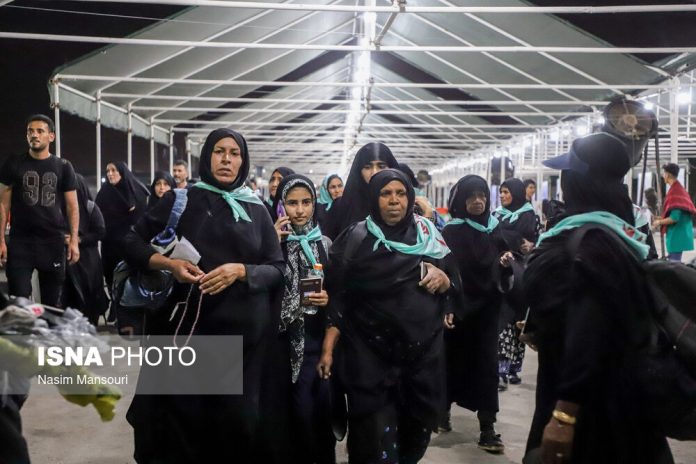
But due to the hot weather, a large majority of pilgrims prefer to hit the road at night to stay away from the heat.
Arbaeen, which is expected to draw several million pilgrims from across the world, falls on September 6 this year.
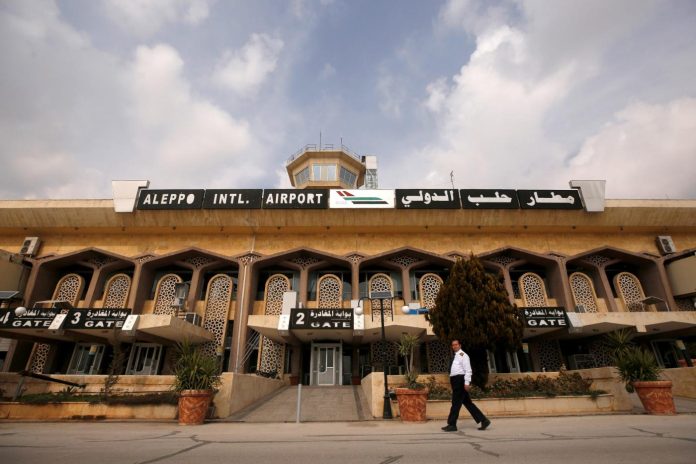
Citing a military source, the official Syrian Arab News Agency (SANA) said the air raid was conducted at around 04:30 a.m. local time (0130 GMT) on Monday.
“The Israeli enemy carried out an air aggression from the direction of the Mediterranean, west of Latakia, targeting Aleppo International Airport,” the source added.
“The aggression caused material damage to the airport runway and put it out of service,” the source continued.
There were no reports of casualties so far.
Back in May, the Tel Aviv regime staged a similar attack on the Aleppo airport, killing one Syrian soldier and wounding several other people.
It also struck the airport on two different occasions in March and put it out of commission for several days.
Israel frequently attacks the positions of Syria’s military and its allies since 2011, when the Arab country found itself in the grip of rampant foreign-backed violence and terrorism.
The regime’s attacks mostly target the positions of Syria’s allies that have been aiding the country in its uphill battle against foreign-sponsored terror groups.
Damascus has repeatedly complained to the United Nations over the Israeli assaults, urging the world body’s Security Council to take action against Tel Aviv’s crimes. Its demands, however, have fallen on deaf ears.

Khaji said in an interview with the Arabic-language al-Masirah TV that Iran is not worried that the issue of Arash gas field, known in Kuwait as al-Durra, would become problematic in bilateral relations with Kuwait.
He added Iran and Kuwait could settle the dispute over the strategically important gas field through cooperation on the basis of the historical situation of the two countries.
The diplomat stated Iran is “very optimistic” about resolving the issue notwithstanding the negative atmosphere that some media outlets seek to use to generate friction among regional countries.
“We are very optimistic about a settlement on Arash gas field regardless of the negative atmosphere that some media outlets want to use to create division among regional countries,” Khaji continued.
The remarks come after a series of statements by Kuwaiti officials claiming that the country and Saudi Arabia own exclusive rights to resources of Arash, a field that straddles an undemarcated area in Iranian and Kuwaiti waters in the Persian Gulf.
That comes as some experts believe Iran could have the lion’s share of the gas field if its boundaries with Kuwait are demarcated.
Iranian authorities have expressed dissatisfaction over a contract signed between Kuwait and Saudi Arabia last year that enables them to develop the field and share its resources without Iran’s involvement.
Khaji said, however, that Iran believes the gas filed dispute with Kuwait can be settled through peaceful means, adding that Iran and Kuwait have held rounds of technical negotiations over the issue in recent years.
“This issue will not be a complicated one and it can be resolved given the goodwill of the Iranian authorities,” he continued.
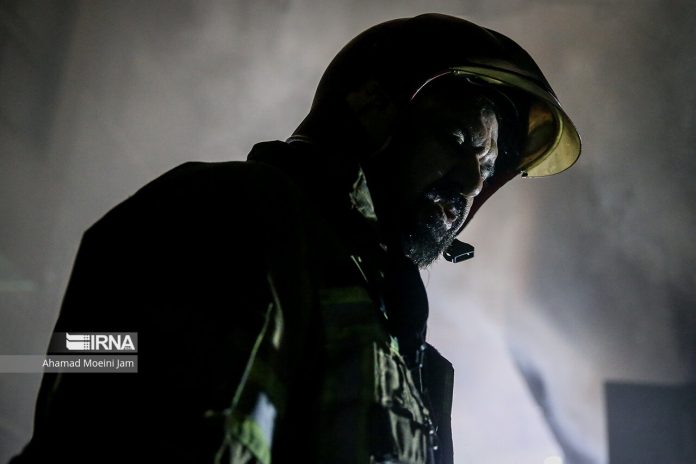
The blast hit Keshar at about 04:40 local time (01:10 GMT) on Monday and firefighters are on the site to contain the flames.
No report has been released on the casualties, if any, and the damage.
Investigation is going on to find out the cause of the incident.

France, which has enforced a strict ban on religious signs in state schools since 19th-century laws removed any traditional Catholic influence from public education, has struggled to update guidelines to deal with a growing Muslim minority.
In 2004, France banned “the wearing of signs or outfits by which students ostensibly show a religious affiliation” in schools. This ban included large crosses and Jewish kippas as well as Islamic headscarves.
In 2010, it passed a ban on full-face veils in public, angering many of its five million-strong Muslim community.
Unlike headscarves, the abaya – a garment worn to comply with Islamic beliefs on modest dress – occupied a grey area and faced no outright ban until now.
Defending secularism is a rallying cry in France that resonates across the political spectrum, from left-wingers upholding the liberal values of the Enlightenment to far-right voters seeking a bulwark against the growing role of Islam in French society.
“I have decided that the abaya could no longer be worn in schools,” Attal said in an interview with TV channel TF1.
“Secularism means the freedom to emancipate oneself through school,” he continued, describing the abaya as “a religious gesture, aimed at testing the resistance of the Republic towards the secular sanctuary that school must constitute”.
“When you walk into a classroom, you shouldn’t be able to identify the pupils’ religion just by looking at them,” he added.
The announcement was the first big move by Attal, 34, since being promoted in the summer to handle the hugely contentious education portfolio.
Along with Interior Minister Gerald Darmanin, he is seen as a rising star who could potentially play an important role after President Emmanuel Macron steps down in 2027.

In a joint statement on Sunday, the Iraqi ministries of defence and interior called on anyone who has information about graves of missing persons inside Iraq or Kuwait to come forward.
“A reward will be allocated to those who provide useful information that helps us reach tangible results,” said the statement published on X, formerly Twitter, without announcing how much the reward would be.
Efforts to find the remains of missing persons killed during the 1991 Persian Gulf War have been ongoing since the conflict ended.
The Tripartite Commission and its Technical Sub-Committee were established in 1991 and 1994, respectively, to find answers for hundreds of families in Iraq and Kuwait.
The committee is chaired by the International Committee of the Red Cross (ICRC) and composed of representatives of Iraq, Kuwait, Saudi Arabia, the United States, the United Kingdom, and France. The United Nations Assistance Mission for Iraq (UNAMI) joined in 2014 as an observer.
The issue of people missing as a result of the Persian Gulf War is still a focal point of contention between the two neighbouring countries, whose diplomatic ties were severed after the Iraqi invasion of Kuwait.
Relations were restored after former Iraqi leader Saddam Hussein was removed from power in 2003 after another US-led invasion.
According to previous figures from the ICRC, only 215 Kuwaitis and 85 Iraqis who were missing have been found, mostly in southern Iraq.
Kuwait has announced its number of missing people is 320, while Baghdad says more than 5,000 Iraqis remain unaccounted for since the end of the war.
Iraq announced in February 2017 that Kuwait received the remains of about 300 prisoners who were held in the country.
In August 2019, Iraq handed over the remains of 48 Kuwaiti prisoners killed in the war. Their remains were exhumed from mass graves in Iraq.
The Kuwaiti soldiers had been taken prisoners by Saddam’s forces and appeared to have disappeared after they were moved to the desert near Samawa in Iraq, according to the ICRC.
In February last year, Iraq completed a payment of $52.4bn to compensate individuals, companies and governments who proved damages from its 1990 invasion and occupation of Kuwait, the United Nations reparations body said at the time.
The sum was ordered paid to Kuwait by the UN Compensation Commission, set up by the UN Security Council, after the seven-month occupation of Kuwait and the US-led defeat of Saddam’s troops in the Persian Gulf War. Kuwait has received a portion of proceeds from Iraqi oil sales for the past 30 years.
The Iraqi ministries directed people with information on graves to share with Iraqi embassies and consulates or a hotline number, and provided an email for the defence ministry’s directorate of human rights.
The statement also included numbers for the Iraqi ministry of foreign affairs, the ICRC in Baghdad, the Kuwaiti embassy in Baghdad, and Kuwaiti consulates in Basra and Erbil.
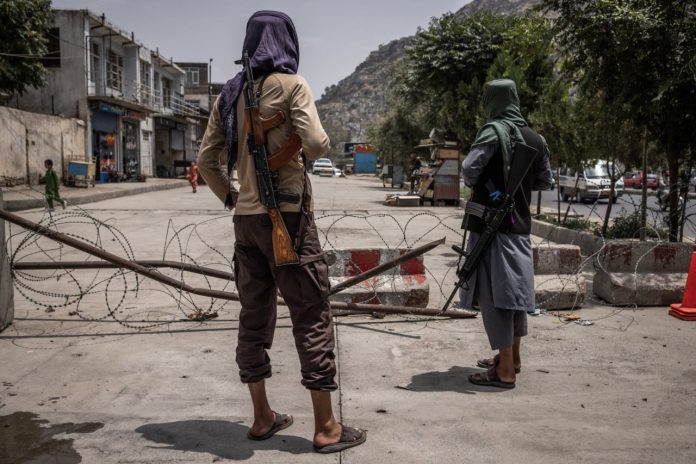
Fadahossein Maleki, who represents the people of Zahedan in Sistan and Baluchestan Province, bordering Afghanistan, warned that the Islamic Republic would have to put the options of retaliatory measures on its agenda.
He stressed that retaliation does not mean war with the Taliban, adding that Tehran ought to reconsider its relations with them.
“We have different tit-for-tat ways to deal with the Taliban. We provide both water and electricity to our neighboring provinces in Afghanistan”, said the Iranian lawmaker.
He went on to say that the Islamic Republic of Iran has no choice but to implement some options against the Taliban.
The Taliban have been refusing to allow Iran’s share of water from Helmand to stream into Iran and have caused a drought in Iran’s southeastern province of Sistan and Baluchestan which is located in a hot and dry region and receives low rainfall compared to other regions in the country.
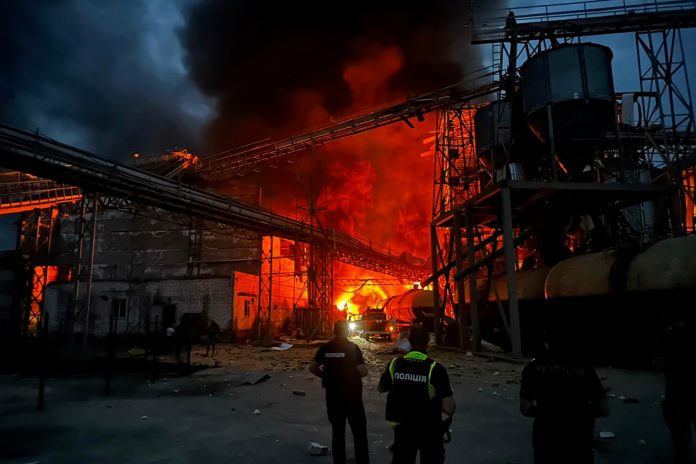
A second cargo ship to leave Ukraine since Russia withdrew from the Black Sea grain export deal has reached Istanbul, marine traffic monitors say.
Moscow has blockaded Ukrainian ports since it launched its invasion in February last year. An agreement brokered by Turkey and the UN allowed safe passage of Ukraine’s crucial farm exports across the Black Sea, but Russia pulled out of that deal last month. Since then, it has attacked Ukrainian port infrastructure and warned that it may consider any ships in the Black Sea as military targets.
Ukraine is now trying to establish a new route that its ships can use without Russia’s involvement in time for the autumn harvest. Its “humanitarian corridor” hugs the Black Sea coast of Romania and Bulgaria.
Meanwhile, Turkey has been trying to revive the original agreement, hoping to use it for broader peace talks between Kyiv and Moscow.
The Kremlin has dismissed the prospect of renewing the Black Sea grain deal as a second Ukrainian ship passes through a temporary corridor.
“The prospects for the renewal of the grain deal depend on the actual implementation, not just in words, of the promises, the pledges given to the Russian side, which means implementing the part of the deal pertaining to Russia,” spokesperson Dmitry Peskov said.
Earlier this month, Kyiv announced a “humanitarian corridor” in the Black Sea to release cargo ships that have been trapped in its ports since Russia invaded.
But Peskov stated, “That [temporary corridor] is a totally different matter, [to the grain deal] and our defence ministry is monitoring it as necessary”.
On Sunday, a vessel carrying steel products to Africa was the second ship to leave through the new corridor.
Ukrainian President Volodymyr Zelensky says he hopes that Ukraine will get security guarantees from the US that are similar to those enjoyed by Israel.
In an interview with Ukrainian media, Zelensky said that security guarantees include both a shield and a sword.
Such guarantees would come through the process of Ukraine’s accession to NATO, he stated, but would be reinforced through a bilateral agreement with the United States.
“We will probably have a similar model with the United States, like the Israeli model, where we have weapons, technology, training, finances, etc. Something like Israel has, but we have a different enemy,” Zelensky added.
Such an agreement would not depend on who was in the White House, Zelensky continued, since it would be approved by Congress.
The US and Israel have signed multiple security agreements since the founding of the state of Israel, and the US guarantees what is called a Qualitative Military Edge to Israel compared to other forces in the region.
Poland and the Baltic states have pledged to shut their borders with Belarus if a “critical incident” occurs, Polish Interior Minister Mariusz Kamiński said Monday.
“This situation is escalating. For many weeks, for several months, we have been dealing with the return of migratory pressure on our border. The same applies to the borders of our partners,” Kamiński told a news conference in Warsaw after a meeting with his Latvian, Lithuanian and Estonian counterparts.
The stationing of “several thousand mercenaries” from the Wagner Group in Belarus has added a “new element” to the situation along the border, Kamiński added.
“We are determined to act together, if there is a critical situation, regardless of whether it is a Polish, Lithuanian or Latvian border, we will apply immediate retaliation. All border crossings that have been open so far, both passenger and goods, will be closed,” Kamiński warned in a post on “X” after the news conference.
Russian investigators have confirmed that Wagner boss Yevgeny Prigozhin was among the 10 people killed when their plane crashed near Moscow on Wednesday, after carrying out genetic tests.
Prigozhin turned the Wagner Group from a shadowy band of mercenaries into a feared military powerhouse operating across multiple countries on three continents. Now that he is gone, the future of the group is uncertain.
Earlier in August, Poland announced its plans to move roughly 10,000 troops to its eastern flank amid heightened fears about the growing presence of Wagner mercenaries in Belarus.
Kamiński stressed that two things are needed “stabilize the situation on our border with Belarus.”
He called firstly on the Belarusian leader Alexander Lukashenko to order Wagner troops to “immediately leave” Belarus and ensure that the migrants that have been gathering along the Belarusian border are returned to their countries of origin.
Poland’s Prime Minister, Mateusz Morawiecki has previously warned that Wagner fighters stationed in Belarus could disguise themselves as migrants in an attempt to cross the border.
Ukraine’s Interior Minister Ihor Klymenko has said the three people killed overnight were workers at an industrial facility that was hit in the central Poltava region. Five others were wounded and another person was unaccounted for, he stated.
Volodymyr Zelensky’s Chief of Staff and the local governor had previously put the death toll at two.
A 63-year-old woman was also killed during Russian shelling in the village of Sadove, Kherson region, the local governor confirmed.
Ukrainian President Volodymyr Zelensky, responding to calls for elections in 2024, says voting could take place during wartime if partners shared the cost, legislators approved, and everyone got to the polls.
Elections cannot currently be held in Ukraine under martial law, which must be extended every 90 days and is next due to expire on November 15, after the normal date in October for parliamentary polls but before presidential elections, which would normally be held in March 2024.
Zelenskyy, in a television interview with Natalia Moseichuk of 1+1 TV channel, said he had discussed the issue with US Senator Lindsey Graham, including the question of funding and the need to change the law.
He added it cost 5 billion hryvnia ($135m) to hold elections in peacetime.
“I don’t know how much is needed in wartime,” he continued, stating, “So I told him [Graham] that if the US and Europe provide financial support … I will not take money from weapons and give it to elections. And this is stipulated by the law.”
Russian Foreign Minister Sergey Lavrov and his Turkish counterpart Hakan Fidan will hold talks in Moscow “in the nearest future”, the state TASS news agency reported, citing Russian Foreign Ministry spokeswoman Maria Zakharova.
Turkey is trying to persuade Russia to return to the Black Sea grain deal, which it quit in July after complaining that limitations to its grain exports had not been lifted.
The Kremlin has also announced President Vladimir Putin is likely to talk in person soon with Turkey’s President Tayyip Erdogan on the deal and other issues, but no date or venue has yet been announced.
Ukrainian forces appear to be making further advances along the southern frontline, Deputy Defense Minister Hanna Maliar said Monday.
Maliar told national television troops were moving southeast of the liberated village of Robotyne toward the settlements of Novodanylivka, Novoprokopivka and Ocheretuvate in the Zaporizhzhia region.
“The enemy is throwing all its forces at these areas in order not to surrender the occupied positions,” Maliar stated.
In the east, “heavy fighting” continues, in particular around Kupiansk, Lyman, Avdiivka, Mariinka and the embattled city of Bakhmut, Maliar said.
“Bakhmut is a very hot area. We have weekly advances to the east, gradual but steady,” she continued, adding, “The enemy is attacking on the northern flank, they want to recapture the positions we have taken. This is what we are fighting for now.”
Ukrainian forces have liberated an additional 1 square kilometer around Bakhmut, bringing the total area recaptured near the city to 44 square kilometers, she added.
Maliar also said fighting continues in the village of Klishchiivka and Ukrainian forces are advancing in the area of Orikhovo-Vasylivka, northwest of Bakhmut.
Elsewhere in the Donetsk region, Maliar stated fierce fighting and a “powerful confrontation” continues in Avdiivka and Mariinka, adding, “the enemy is not successful.”
In northeastern Kupiansk and nearby Lyman, “Russians are gathering new forces … regrouping, trying to use their most professional units — the air assault units,” Maliar noted, adding, “they have not been successful.”
Two Ukrainian drones were intercepted over Russian-occupied Crimea on Monday, according to Russia’s defense ministry.
“Another attempt by the Kiev regime to carry out a terrorist attack using two airplane-type UAVs against facilities on the territory of the Russian Federation was foiled at around 10.30am today,” the ministry said.
Community channels on Telegram monitoring the area of Yevtaporia on Crimea’s west coast described an air defense missile being launched and exploding in the sky.
The west coast of Crimea has seen an uptick in Ukrainian attacks this month, with drones being supplemented by special forces landings, aimed at degrading Russian air defenses and hitting other Russian military facilities.
Kyiv has announced its goal of driving Russia out of Ukraine includes reclaiming Crimea, which was annexed by Russian forces in 2014.
The UK’s Ministry of Defense suggested it is “highly likely” that Russia canceled a major joint strategic military exercise “because too few troops and equipment are available.”
ZAPAD, a joint military exercise between the armed forces of Russia and Belarus, was due to be held in September, the ministry said in an intelligence update Monday.
ZAPAD, Russian for “West,” is a major annual event in Moscow’s military calendar. Since 2010, Russia has run a four-year cycle, rotating the JSEs [joint strategic exercises] around four of its military regions.
However, since 2021, Russia has held the JSE in the west of the country every second year, “as it prioritizes confronting what it perceives as the threat from NATO,” according to the British defense ministry.
ZAPAD 2021, the largest Russian military exercise since the Soviet era, was held along Russia and Belarus’ western flanks, much to the alarm of Ukraine and some NATO countries.
“Zapad 2021 marked a major tactical, operational and strategic change of pace,” according to a report from RUSI, a UK defense and security think-tank.
That exercise involved 200,000 military personnel, more than 80 aircraft and helicopters and 15 ships, the RUSI report said, adding that “Zapad 2021 was Russia’s first preparation for operations on a scale comparable to those undertaken in Ukraine a year later.”
But the British intelligence update on Monday suggested that this year’s event might have been canceled for several reasons.
“The Russian military’s under-performance in Ukraine has highlighted how JSEs [joint strategic exercises] have had limited training value and have largely been for show. Russia has likely canceled ZAPAD 23 because too few troops and equipment are available,” the intelligence update said.
This is not the first military event that Russia has scaled back since launching its full-scale invasion of Ukraine. Putin led a more modest Victory Day parade than usual in Moscow on May 9, featuring just a single World War II-era T-34 tank. In previous years, dozens of tanks had been involved in the procession.
The British defense ministry suggested there may be some doubts among Russia’s leaders about staging flashy military exercises while its invasion of Ukraine drags on.
“There is a realistic possibility that the Russian leadership is also sensitive to domestic criticism liable from running another slickly presented JSE during wartime,” the update added.
A drone flying toward Moscow has been destroyed by Russian air defense forces, the city’s mayor Sergei Sobyanin said Monday.
The drone was destroyed near Lyubertsy, southeast of the capital, he added.
“Preliminarily, there are no casualties or damage. Response teams are working at the scene,” Sobyanin stated.
Earlier, the Domodedovo and Vnukovo airports servicing the Russian capital temporarily halted flights, state-run news agency TASS reported, citing aviation services.
The chief executive of Ukraine’s Naftogaz says Kyiv has built up about 14 billion cubic metres (bcm) of gas in its storage facilities and does not plan to import gas for the 2023-24 winter season.
“This year, we are relying on our own production, and it will be enough to get through this heating season,” Oleksiy Chernyshov stated in televised comments.
Naftogaz said earlier this year that it had launched 11 gas wells this year to try to cover Ukraine’s needs with domestic production.
Ukraine uses little gas to produce electricity but relies on the fuel for heating.
While Kyiv does not import gas directly from Russia, Ukrainian pipelines still carry some Russian gas to Europe.
Energy officials have said previously that gas consumption has dropped by almost 40 percent because of the war and the extensive damage to industrial facilities.
The coalition aiding Ukraine’s fight against Moscow’s invasion would not support Kyiv if it were to move the hostilities to Russian territory, Ukrainian President Volodymyr Zelensky stated Monday.
“I believe that this is a big risk, we will definitely be left alone,” he said in an interview with national media, where he was asked if it was time for such a move to Russian soil.
Zelensky added Ukraine’s fight to reclaim its own territory has been critically aided by its relationships with allies.
The progress and responsibility for Ukraine on the battlefield “is always bilateral,” Zelensky said, adding that international partners are a part of any victory, any hold-up in the counteroffensive, any defensive actions and any weakness.
Zelensky also stressed he believes it is possible to “push for the demilitarization of Russia” in Crimea by political means.
The last several months have seen a rise in strikes on Russian soil, with Russian officials saying Ukrainian drones and shelling are responsible for attacks that have at times wounded or killed civilians.
Officials in Kyiv have alluded to the incidents — Zelensky said after drone attacks last month, for example, that the war is “returning to Russia” — but Ukraine often declines to take explicit credit for attacks across the border.
Ukraine has, by contrast, taken credit for attacks by sea drones and other weaponry on Russian-held Crimea and surrounding Black Sea targets, promising there will be more to come.
Moscow seized the peninsula and declared it annexed Russian territory back in 2014, in a move denounced as illegal by Ukraine, the US and international bodies. Kyiv has announced its goal of driving Russia out of Ukraine includes reclaiming Crimea.
Ukraine’s forces are making more progress in the country’s southern Zaporizhzhia region, while Russian troops have intensified attacks in areas surrounding the embattled city of Kupiansk on the eastern front line, the Ukrainian military said Sunday.
Around Kupiansk: Russia “has significantly increased the number of attacks. As of yesterday, the enemy shelled the positions of our defenders 620 times and carried out 15 airstrikes,” Illya Yevlash, a spokesperson for Ukraine’s forces on the eastern front, said on national television.
“However, the enemy’s emphasis has changed somewhat. They are shifting their focus from the Kupiansk sector to Novoiehorivka,” Yevlash added, referring to a village northeast of Kupiansk.
Ukrainian forces repelled 10 attacks in the area over the past day, the spokesperson continued.
Russian shelling around Kupiansk has been so intense in recent weeks that it has prompted one of Ukraine’s largest-scale evacuations of the conflict.
Near Bakhmut: Ukraine is still on the offensive in the Bakhmut direction, and continues to advance “meter by meter,” Yevlash said. Over the past day, Russian forces shelled Ukrainian positions 590 times, using multiple rocket launchers and cannon artillery of various calibers, according to the spokesperson.
A total of 14 combat engagements took place on Saturday, Yevlash continued.
“The enemy is resorting to counterattacks, trying in vain to regain lost ground,” he added, noting that Russia’s tactics “remain virtually unchanged” in the area.
Since the Wagner private military group claimed to capture the eastern city in May, Ukraine has maintained that it is still fighting for Bakhmut and picking up gains in territory immediately surrounding the city.
Zaporizhzhia region: In southern Ukraine, Kyiv’s forces continue to advance near the village of Robotnye, said Oleksandr Shputun, a Ukrainian military spokesperson for units in the region.
Ukrainian troops are advancing in the direction of Novoprokopivka — another village, located just south of Robotyne — and north toward the settlement of Mala Tokmachka, Shputun said on national television Sunday.
“Recently, the enemy has increased the number of airstrikes,” he said. “But this also means that other firepower is no longer able to hold back the progress of our troops.”
Ukraine has claimed successes in Robotyne and surrounding areas over the past several days, with social media video and images showing troops had entered the village. Almost no buildings are still standing in Robotyne, Kyiv’s forces say.
Ukraine presidential adviser Mykhailo Podolyak has said that the only way to protect international law and territorial integrity is to “ensure Ukraine’s victory and the complete defeat of [Russian President Vladimir] Putin’s invasion”.
“This will be the best lesson for anyone who may be tempted to invade neighboring territories today,” he posted on social media platform X.
In this regard, armed assistance to Ukraine is the smallest price to pay for peace in the world,” he added.

The delegation that arrived on Sunday included three members of the US Congress – Ben Cline, Scott Fitzgerald, and French Hill – all members of the US Republican Party.
The Americans entered Syria from Turkey through the Bab al-Salameh border crossing on a visit that lasted about 30 minutes.
“Today, three members of Congress crossed into Syria to renew attention to the ongoing humanitarian catastrophe,” said Celine Kasem, a member of the Washington, DC-based Syrian Emergency Task Force, a political advocacy and humanitarian group, which organised this visit.
Kasem told Al Jazeera that the congressional delegation was greeted by orphaned children from a kindergarten in the northern Aleppo countryside that Congressman Hill’s community in Arkansas has helped support for years. They also met internally displaced Syrians, opposition figures, and aid workers.
The United Nations Office for the Coordination of Humanitarian Affairs (UN-OCHA) estimates the population in northwestern Syria has topped 4.5 million people, with 1.9 million living in displacement camps.
Many Syrians fled to the region during the 12-year war fought between President Bashar al-Assad’s forces and their allies against militant groups.
This marks the first such visit since 2017, when members of Congress went to Syria led by late Senator John McCain – one of the strongest advocates of US military aid for the Syrian opposition during the war.
Last week, the opposition’s “provisional government” announced a meeting in Turkey between its leader Abdurrahman Mustafa and Nicholas Granger, the US State Department envoy to north and east Syria.
Discussions focused on the political, military, and economic situation in areas freed from pro-al-Assad forces.
“The visit of the American delegation today was surprising and unexpected, following a hiatus that lasted years after the cessation of military support to opposition factions in 2017,” stated Riyad al-Khatib, 32, from the city of Mare in the Aleppo governate.
“We need there to be frequent visits to the region, not only by the United States but also by European Union countries to assess the humanitarian situation in the area,” al-Khatib continued.
The US launched measures to support opposition factions in Syria in 2013, but froze those efforts during former President Donald Trump’s tenure in 2017.
Subsequently, military support became limited to the US-backed Syrian Democratic Forces (SDF) located in eastern Syria, which has fought the armed group Daesh in addition to supporting opposition factions near a US base on the Syrian-Jordanian border.
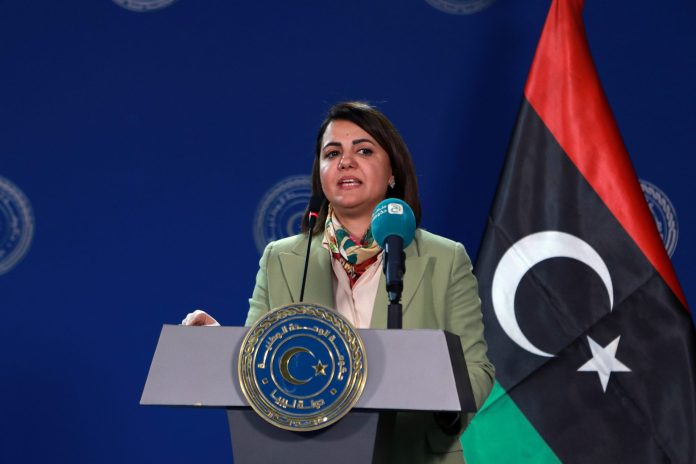
Israel’s statement on the meeting, in which it said the ministers had discussed possible cooperation, prompted small protests in Libya, which does not recognise Israel.
Libya’s Foreign Ministry announced Mangoush had rejected a meeting with representatives of Israel and that what had occurred was “an unprepared, casual encounter during a meeting at Italy’s Foreign Affairs Ministry.”
The Libyan ministry’s statement noted the interaction did not include “any discussions, agreements or consultations” and added the ministry “renews its complete and absolute rejection of normalisation” with Israel.
Since 2020 Israel has moved to normalise ties with the United Arab Emirates, Bahrain, Morocco and Sudan through the so-called “Abraham accords” brokered by the United States.
“I spoke with the foreign minister about the great potential for the two countries from their relations,” Israel’s Cohen stated in a statement.
The meeting was facilitated by Italian Foreign Minister Antonio Tajani, Israel’s foreign ministry said, adding they had discussed possible cooperation and Israeli aid in humanitarian issues, agriculture and water management.
Cohen added he had spoken to Mangoush about the importance of preserving Jewish heritage in Libya.
An Israeli official claimed on Monday the Libyan and Israeli foreign ministers spoke for more than two hours last week in a meeting approved “at the highest levels” in Libya, contradicting Libyan accounts of an encounter which prompted protests across the country.
Libyan foreign policy is complicated by its years of conflict and its bitter internal divisions over control of government and the legitimacy of any moves made by the Tripoli administration.
The Government of National Unity was installed in early 2021 through a UN-backed peace process but its legitimacy has been challenged since early 2022 by the eastern-based parliament after a failed attempt to hold an election.
Previous foreign policy moves by the GNU, including agreements it has reached with Turkey, have been rejected by the parliament and subjected to legal challenges.
The Presidency Council, which functions as head of state, issued a statement on Sunday asking GNU Prime Minister Abdulhamid al-Dbeibah for clarification on what had taken place.
The High State Council, which holds an advisory role in Libyan politics, voiced its “surprise” at the reports of the meeting and said those responsible “should be held accountable.”
© All Content by IFP News ( Iran Front Page ) is licensed under a Creative Commons Attribution 4.0 International License.
